Thunder on the Right by Mary Stewart

Mary Stewart is one of my favourite authors and when I saw that her birthday – today – was going to be celebrated in Jane at Beyond Eden Rock’s Birthday Book of Underappreciated Lady Authors, it seemed a good opportunity to pick up one of the few Stewart novels I still hadn’t read. I decided on Thunder on the Right, one of her earliest novels which was first published in 1957. I had seen a few reviews which suggested this wasn’t one of Mary Stewart’s better books, but I was pleased to find that I enjoyed it. It’s been a while since I read one of her romantic suspense novels, having taken a break from them to concentrate on her Arthurian series instead, and I’d forgotten how much fun they are.

The novel begins with Jennifer Silver, a young woman from England, arriving in the French Pyrenees to visit her cousin, Gillian Lamartine, who has written to her to say that she’s planning to enter a convent there. Waiting at Jennifer’s hotel in Gavarnie is Stephen Masefield, an old friend who may have become more than just a friend if it hadn’t been for the disapproval of Jennifer’s parents. She is unsettled by the unexpected meeting after an absence of two years, but pleased to see him again – especially as she is beginning to think that something terrible must have happened to Gillian.

Visiting the Convent of Notre-Dame-des-Orages the next day, Jennifer’s worst fears are confirmed when she is told that Gillian died after being injured in a car crash several weeks earlier and has been buried at the convent. Jennifer is devastated, but when she begins to ask questions of the nuns who nursed Gillian in her final days, she becomes convinced that something is not quite right. Is her cousin really dead? Jennifer has her doubts and, with Stephen’s help, she sets out to discover the truth.

Although Thunder on the Right hasn’t become a favourite Stewart novel, it’s as entertaining as any of her others and I flew through the pages, desperate to see whether Jennifer would find her cousin and what other secrets were being hidden in the convent. The early chapters, in which she encounters the sinister Spanish nun Doña Francisca and hears the details of Gillian’s alleged death, are wonderfully eerie and the tension builds slowly as Jennifer explores the chapels, courtyards and tunnels of the convent in search of clues. In the second half of the novel, though, things become very melodramatic – almost too fast-paced and too exciting, at the expense of atmosphere and character development.

There are other problems – the main villain is too obviously villainous to be convincing, while the romance between Jennifer and Stephen is less engaging than some of Stewart’s other romances, possibly because they already know each other before the story begins and then spend a relatively small amount of time together over the course of the novel. But the setting is wonderful, of course. A Mary Stewart novel wouldn’t be a Mary Stewart novel without lots of vivid and evocative descriptions and there are plenty of them here, as the search for Gillian is played out high in the mountains while the wind blows and the thunder crashes.

For the reasons I’ve mentioned, I would agree that this isn’t one of Mary Stewart’s very best books but it was still an enjoyable read. If you’re new to her suspense novels, I would recommend starting with Nine Coaches Waiting, Madam, Will You Talk? or This Rough Magic. Those are my favourites, along with the Merlin trilogy which begins with The Crystal Cave.

I am counting this book towards the R.I.P XIII Challenge (category: suspense).

The Love Letter by Lucinda Riley

I have been enjoying following Lucinda Riley’s Seven Sisters series over the last few years and am looking forward to starting the newest book, The Moon Sister, which is due to be published later this year. The Love Letter is not part of that series, though – it’s a reissue of one of her earlier novels, first published in 2000 as Seeing Double under the name of Lucinda Edmonds. As explained in the brief Author’s Note which opens the novel, Seeing Double was not a success on its original release, probably because of poor timing – it wasn’t long since the death of Princess Diana in 1997 and the plot involves a scandal within a fictional British royal family. Lucinda and her publisher obviously feel that enough time has now passed to give the book a second chance and a new look and title.

The Love Letter is set in 1996 and begins with young journalist Joanna Haslam reporting on the funeral of Sir James Harrison, one of the most famous actors of his generation, who has died at the age of ninety-five. The funeral is a star-studded affair, attended by celebrities including Harrison’s granddaughter Zoe, a successful actress in her own right, and his film-producer grandson Marcus. The service has only just begun when Rose, an elderly woman sitting beside Joanna, is suddenly taken ill. Joanna offers to accompany the old lady home in a taxi, unaware that by doing so she is taking the first step in a sequence of events that could destroy the British establishment. Within days Rose is dead, but not before sending Joanna a letter, the contents of which hold clues to a shocking secret that some very powerful people will stop at nothing to keep concealed.

This is a very different sort of book from Lucinda Riley…a combination of spy thriller, mystery and romance. I have to admit, I found the plot a bit far-fetched and not always very plausible, but it’s certainly a page-turner – it was difficult to stop reading until I had found out what the letter meant and what the secret was. I did manage to work some of it out for myself (especially as we are told in the Author’s Note before we even start reading that the story is going to involve members of the royal family), but not all of it, because new pieces of the puzzle are being revealed right up to the end of the novel. For a book with six hundred pages, it’s a quicker read than you might expect and a lot of fun to read too, with some surprising plot twists and characters who aren’t quite what they seem.

Unlike the Seven Sisters novels with their dual timeline stories, The Love Letter is set entirely in the modern day (although events from the past provide the answers to the mystery). Having said that, I suppose 1996 is not exactly the ‘modern day’ anymore and the absence of recent technology from the characters’ lives does set the story firmly in its time period. As for the implications for the royal family, I don’t think people would be too bothered by a novel like this today, but I can see why it might have been controversial on publication eighteen years ago.

I think one of Lucinda Riley’s strengths as a writer is in creating characters the reader can really care about and like – and there are several of those in this novel. I loved Joanna from the beginning; she’s such an ordinary, down-to-earth person with the sort of hopes, ambitions and problems that are easy to identify with. I also liked Zoe, who is embroiled in a secret and possibly dangerous love affair, and I became very fond of her brother Marcus too. The only one of the main characters I didn’t warm to was Simon, Joanna’s best friend, although I did have some sympathy with the internal conflicts he faced in trying to choose between his job and his friendships.

The developments towards the end of the book became a bit too dramatic for me, but I was happy with the final few twists which led to the conclusion I’d been hoping for. I’m looking forward to getting back to the Seven Sisters – I have a copy of The Moon Sister which I’m planning to read soon – but The Love Letter made an interesting change.

Thanks to Pan Macmillan for providing a copy of this book for review.

Post of Honour by RF Delderfield

Post of Honour is the second book in RF Delderfield’s A Horseman Riding By trilogy which begins with Long Summer Day, one of my favourite reads of last year. For me, this second novel is not as good as the first, but still very readable.

As this book and the first one were originally published in 1966 as one very long volume, Post of Honour picks up the story just after Long Summer Day ends in 1911, dropping us straight back into the daily lives of the people of the Sorrel Valley. A few years go by with small dramas taking place – weddings, funerals, births, deaths, new friendships being formed and new romances beginning to blossom. And then, in 1914, war breaks out in Europe and life in the Valley will never be the same again.

Although I had allowed a whole year to pass between finishing the first book and picking up this one, I found that I had no problem remembering the characters and storylines. It was lovely to be reacquainted with old friends like the former street-urchin Ikey Palfrey, the wild, untameable Hazel Potter, suffragette Grace Lovell and, of course, our hero Paul Craddock, the squire of Shallowford. The first part of the book is devoted to the First World War, showing us how these characters and many others are affected, either directly or indirectly. One of the Valley men becomes a conscientious objector while others fight in the trenches and those left at home wait for news of their loved ones. It would be unrealistic for all of our much-loved characters to return from war unscathed – so, inevitably, there are some deaths and the next section of the novel looks at how the inhabitants of Shallowford and the Sorrel Valley recover from their losses and try to move on over the next two decades.

This book covers a much longer time span than the previous one and this, in addition to the number of deaths during the wartime chapters, means the introduction of lots of new characters from the second and third generations. One of the things I remember loving about Long Summer Day was the way Delderfield brought each character, even the minor ones, fully to life. However, I don’t think he does that quite as successfully in Post of Honour and I felt that many of the new characters were little more than names on the page. With the exceptions of two of Paul’s children – Simon and Mary – and Ikey’s son, the strangely named Rumble Patrick, I simply wasn’t very interested in any of the others.

By the end of the book, another world war has begun, and I do want to see how Paul and his friends and family will fare. I will be reading the third book in the trilogy, The Green Gauntlet, but after that I’m looking forward to leaving the Sorrel Valley behind and trying some of Delderfield’s other novels – probably beginning with the one I already have on my shelf, Farewell the Tranquil Mind.

This is book 9/20 of my 20 Books of Summer.

Golden Age by Jane Smiley

This is the final book in Jane Smiley’s Last Hundred Years trilogy which follows the lives of one American family, the Langdons, throughout the twentieth century and beyond. Although I did enjoy the trilogy as a whole, I’m also very pleased to have reached the end of it – the three books are so long there were times when I felt I’d been reading them for a hundred years!

Golden Age is written in the same format as the first two volumes, with one chapter devoted to each year. Beginning in 1987 this time, we are taken right through to 2019. As the book was published in 2015, this means that the final few chapters are set in Jane Smiley’s future – not far enough into the future to feel like science fiction, but things definitely become slightly dystopian as the rate of climate change rapidly increases to an alarming level, creating dry, dusty landscapes and water shortages. She doesn’t correctly predict Donald Trump’s presidency, but then, I don’t think there are many people who would have seen that coming.

I started reading Golden Age shortly after finishing the previous novel, Early Warning, which was a good idea as the Langdon family tree is now enormous with four or five generations all living at the same time. Some of the characters have been with us from the beginning – Henry, Claire and Andy are still around and I enjoyed catching up with them again – but I found it difficult to keep track of the younger characters (even with the family tree to refer to) and even more difficult to form any kind of connection with them. There were just too many new people to get to know and not enough time devoted to any of them.

For the same reason, it would be impossible for me to mention everything that happens in the book here, but a few storylines that stood out were: the continuing rivalry between twins Richie and Michael as one becomes a politician and the other begins to speculate on Wall Street; Joe’s son, Guthrie, leaving the Langdon farm in Iowa to go and fight in Iraq; Andy’s amazing strength in the face of betrayal and her willingness to embrace new technology in her old age; and Henry, who thought he was destined to grow old alone, finding late in life that he is wanted and needed after all.

I don’t regret reading the whole of this trilogy as I did enjoy getting to know at least some of the family members and learning some American history along the way (even if a lot of the politics in this one did go over my head), but I also thought the three books became progressively less engaging and less enjoyable as the geographical scope grew wider and the distance between reader and characters increased. If you think you might be interested, I would strongly recommend starting at the beginning with Some Luck and deciding whether you like it enough to want to continue.

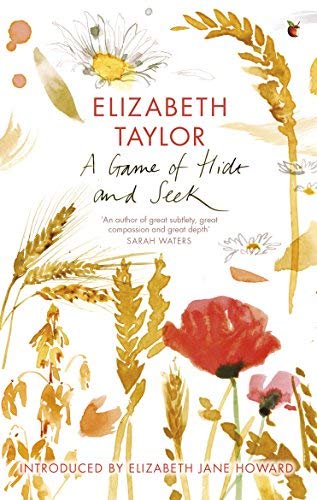
A Game of Hide and Seek by Elizabeth Taylor

Elizabeth Taylor is the next author to be featured in Jane’s Birthday Book of Underappreciated Lady Authors, a project which has been running throughout 2018 and which has already introduced me to some wonderful new books and authors. Elizabeth Taylor is an author I only became aware of after I started blogging and following book blogs; before that, if you had mentioned her name to me, I would probably have thought you were talking about the actress of the same name. Over the last few years, though, I have seen other bloggers reading her books and have been meaning to try one myself, so I decided to put A Game of Hide and Seek on both my Classics Club list and my 20 Books of Summer list to ensure that I got to it sooner rather than later.

Published in 1951, this is a beautifully written novel about love and loss. It begins in the summer – a long, hot summer between the two world wars. Eighteen-year-old Vesey is staying with his Aunt Caroline and Uncle Hugo and has become reacquainted with his childhood friend, Harriet, a girl of the same age. Harriet’s mother and Vesey’s Aunt Caroline are good friends, having once been suffragettes together, so Harriet and Vesey have known each other all their lives. As they spend more and more time together that summer, going for walks and playing hide and seek with Vesey’s young cousins, Harriet falls passionately in love.

When the summer comes to an end, Vesey goes off to university and Harriet is left behind. Over time, their lives drift apart and Harriet gets a job in a shop selling ladies’ gowns until, following the death of her mother, she agrees to marry Charles Jephcott. As a thirty-five-year-old solicitor, Charles provides Harriet with a nice home and a comfortable lifestyle; she could have been happy, except for the fact that she doesn’t love him. And then, fifteen years later, Vesey walks back into her life, reawakening old passions and leaving her more confused than ever.

A Game of Hide and Seek is one of those books which seems quite simple on the surface – there’s not much more to the plot than I’ve already described above – but which is much more complex than it sounds, because it is written with so much insight and wisdom and depth of emotion. It’s such a poignant story; there’s a sense that Harriet’s whole life has been a compromise and that her regret at things not turning out the way she hoped has made it impossible for her to move on. Here her friend Kitty sums up what she thinks is the explanation for Harriet’s enduring love for Vesey:

‘Our feelings about people change as we grow up: but if we are left with an idea instead of a person, perhaps that never changes. After every mistake Charles made, I expect you thought: “Vesey wouldn’t have done that.” But an idea can’t ever make mistakes. He led a perfect life in your brain.’

I liked Harriet from the beginning. I sympathised with the position she was in – as the daughter of a former suffragette, being expected to take advantage of the opportunities and freedoms for which her mother’s generation had fought, yet lacking the talent or ambition to live up to expectations. I found the appeal of Vesey harder to understand, but I did warm to him eventually; there was something very sad about his reappearance later in the book, lonely, dejected and still in love with a woman he can’t have.

There are little touches of humour too, mainly provided by the other sales girls who work in the shop with Harriet and, later, the Jephcotts’ servants, the Dutch maid Elke and the cleaning lady Mrs Curzon. Other memorable characters include Julia, Charles’ mother, a former actress who dislikes Harriet and would love to see her marriage to Charles break down, and fifteen-year-old schoolgirl Betsy, who is infatuated with one of her teachers. But this really is Harriet’s story and Vesey’s – and throughout the novel, Taylor keeps the reader wondering whether there will be a second chance for them and, if so, whether they will take it. The ending, when it comes, is ambiguous and left me with a lot to think about as there are probably a few different ways it could be interpreted.

I’m sure I will be reading more books by Elizabeth Taylor. If you have read any of them, which one do you think I should read next?

This is book 2/20 from my 20 Books of Summer list.

This is also book 5/50 from my second Classics Club list.

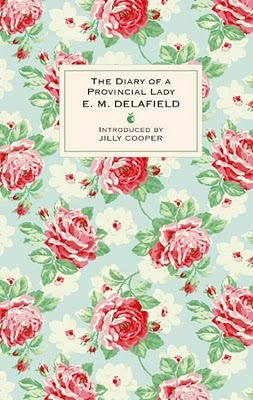
Diary of a Provincial Lady by E M Delafield

Today would have been E M Delafield’s birthday – and she is the next author to be featured in Jane at Beyond Eden Rock’s Birthday Book of Underappreciated Lady Authors. I wasn’t planning to join in with this one but, during last weekend’s Mini Persephone Readathon, having finished Monica Dickens’ The Winds of Heaven, I wanted something else to read and remembered that Diary of a Provincial Lady is also published by Persephone. My copy is not the dove-grey Persephone edition, but I was still pleased to have found a book that would count for both the Readathon and today’s celebrations!

Diary of a Provincial Lady, first published in 1930, is exactly what you would expect from the title: a novel written in the form of the diary of a ‘Provincial Lady’. The Lady, whose name we never learn, lives with her husband Robert in a village in the south of England. Their young son, Robin, is away at school much of the time, but there is also a daughter, Vicky, who is educated at home by Mademoiselle, her French governess. Several more servants, including a temperamental cook and a series of dissatisfied parlourmaids, complete the household.

The Provincial Lady’s days are always busy and varied. As well as being responsible for managing the servants, there are tea parties and garden fetes to attend, dinners to host and visitors to entertain – including the formidable and snobbish Lady Boxe, and Our Vicar’s Wife who, once she arrives, often forgets to leave again! The Provincial Lady records all of these things in her diary over a period of about a year, writing in short, concise sentences interspersed with notes, queries and memos to herself.

I have been putting off reading Diary of a Provincial Lady for a long time, because I wasn’t convinced that it sounded like my sort of book, but I was actually very pleasantly surprised. One of the things that surprised me was how often I found I was able to relate to the Provincial Lady and her problems. In fact, I think a lot of the situations she describes are things that most of us would probably identify with…saying something stupid and then wondering why on earth we said it; pretending we understand what somebody is talking about and then being caught out later in the conversation; agreeing to do something and immediately wishing we hadn’t!

I couldn’t relate to everything, of course. The Lady’s lifestyle is entirely different from my own – I don’t have servants to worry about, for example, and if I found myself in financial trouble my solution wouldn’t be to buy myself some expensive new dresses then go off to the South of France for a holiday. I can appreciate, though, that she belonged to a certain time and a certain class and that her position in society meant that she was expected to behave in a particular way.

I was also surprised by how funny the book was! A sense of humour is often a personal, individual thing and sometimes when someone else says that a book is hilarious I’m disappointed when I don’t find it very funny at all (and I’m sure this probably happens the other way around too). But the Provincial Lady’s observations are so witty and the things that happen to her are so amusing I couldn’t help but laugh.

I am aware that there are more books in the Provincial Lady series. A question to those who have read them – are they as good as this one or is there another E M Delafield book you think I should read instead?

The Winds of Heaven by Monica Dickens

When I saw that Jessie of Dwell in Possibility was hosting a Mini Persephone Readathon this weekend, I knew I wanted to take part and I knew exactly what I would be reading: The Winds of Heaven, a book published by Persephone which I had originally been planning to read for Jane’s Monica Dickens Day last month but didn’t have time. I wasn’t sure what to expect from Monica Dickens as I’ve never read any of her books before, but I loved this one and will now be looking for more.

The Winds of Heaven (1955) follows the story of Louise Bickford, whose husband, the controlling and oppressive Dudley, dies a year or two before the novel opens. Left alone with no money to support herself, Louise cannot afford anywhere to live, so is forced to rely on the hospitality of her daughters. Although Louise has shown her three daughters nothing but love and affection, they each make it very clear that they don’t really want her staying with them and see her as a burden to be moved on to the next sister as quickly as possible.

Louise is a lovely person – generous, selfless and sensitive to the feelings of others; I had a lot of sympathy for her and for the situation in which she finds herself. The logical solution would be to get a job, but a combination of factors – her age (approaching sixty), her class, her lack of experience at any type of work and the disapproval of her daughters – mean that this is never considered as a realistic option for Louise. All she can do is continue to move from one household to the next, trying to make herself useful but knowing that she is unwanted and unappreciated.

The three daughters seem to have inherited none of their mother’s good qualities. They are three very different people, but in their different ways they are all as unpleasant and selfish as each other. Miriam is a snob, obsessed with appearances and her place in the community. Her marriage is not a particularly happy one, but as Arthur is rich enough to pay for holidays abroad and ponies for the children, she’s not complaining too much! Eva, the middle sister, is an aspiring actress who lives in London and is too preoccupied with her career and her affair with a married man to give any thought to her mother’s problems. Anne, the youngest, is a farmer’s wife but does very little to help out on the farm – she is a lazy, sullen, resentful woman who thinks only of herself and her own comfort.

For a novel with so many unlikeable characters, I found this a surprisingly enjoyable and entertaining read. Louise’s story is obviously a very sad one at times, but Monica Dickens writes with enough humour and lightness that it never becomes completely depressing. And although her relationships with Miriam, Eva and Anne are difficult, Louise does have two special people in her life who make things much more bearable. One is her young granddaughter Ellen, with whom she forms a close bond. Ellen is Miriam’s eldest daughter and, like Louise, she often feels like an outsider in the family. The other is Gordon Disher, a man she meets while sheltering from the rain in a London tea shop.

Mr Disher is the most unlikely of romantic heroes – he is overweight, sells beds in a department store and writes cheap paperback thrillers with titles like The Girl in the Bloodstained Bikini. He is also a lovely, kind, gentle man who sees that Louise is unhappy and does all he can to make things better for her. Their meetings are few and far between – Louise is sure she’s too old for romance and she doesn’t spend a lot of time in London anyway – but I found their relationship quite moving and always looked forward to the moments when they were together.

Towards the end of the book, events take a more dramatic turn and if I have a criticism it would be that I’m not sure whether this was really necessary. The final sentence, though, was perfect! I wish Monica Dickens had written more books about these characters, but I enjoyed this one enough to know that I will be investigating the rest of her novels anyway!

The Winds of Heaven endpapers