Golden Age by Jane Smiley

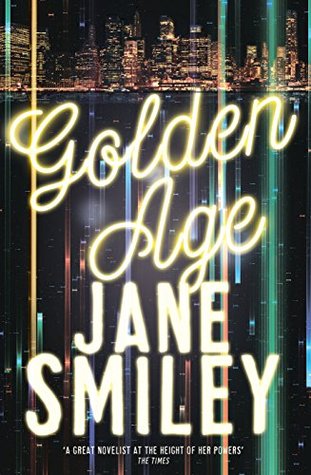
This is the final book in Jane Smiley’s Last Hundred Years trilogy which follows the lives of one American family, the Langdons, throughout the twentieth century and beyond. Although I did enjoy the trilogy as a whole, I’m also very pleased to have reached the end of it – the three books are so long there were times when I felt I’d been reading them for a hundred years!

Golden Age is written in the same format as the first two volumes, with one chapter devoted to each year. Beginning in 1987 this time, we are taken right through to 2019. As the book was published in 2015, this means that the final few chapters are set in Jane Smiley’s future – not far enough into the future to feel like science fiction, but things definitely become slightly dystopian as the rate of climate change rapidly increases to an alarming level, creating dry, dusty landscapes and water shortages. She doesn’t correctly predict Donald Trump’s presidency, but then, I don’t think there are many people who would have seen that coming.

I started reading Golden Age shortly after finishing the previous novel, Early Warning, which was a good idea as the Langdon family tree is now enormous with four or five generations all living at the same time. Some of the characters have been with us from the beginning – Henry, Claire and Andy are still around and I enjoyed catching up with them again – but I found it difficult to keep track of the younger characters (even with the family tree to refer to) and even more difficult to form any kind of connection with them. There were just too many new people to get to know and not enough time devoted to any of them.

For the same reason, it would be impossible for me to mention everything that happens in the book here, but a few storylines that stood out were: the continuing rivalry between twins Richie and Michael as one becomes a politician and the other begins to speculate on Wall Street; Joe’s son, Guthrie, leaving the Langdon farm in Iowa to go and fight in Iraq; Andy’s amazing strength in the face of betrayal and her willingness to embrace new technology in her old age; and Henry, who thought he was destined to grow old alone, finding late in life that he is wanted and needed after all.

I don’t regret reading the whole of this trilogy as I did enjoy getting to know at least some of the family members and learning some American history along the way (even if a lot of the politics in this one did go over my head), but I also thought the three books became progressively less engaging and less enjoyable as the geographical scope grew wider and the distance between reader and characters increased. If you think you might be interested, I would strongly recommend starting at the beginning with Some Luck and deciding whether you like it enough to want to continue.

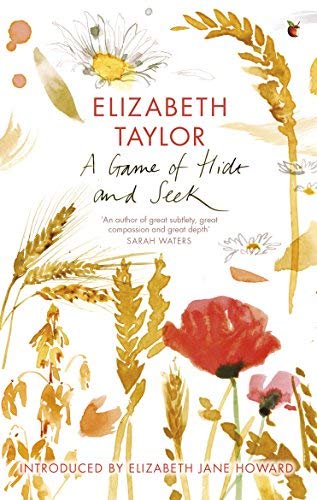
A Game of Hide and Seek by Elizabeth Taylor

Elizabeth Taylor is the next author to be featured in Jane’s Birthday Book of Underappreciated Lady Authors, a project which has been running throughout 2018 and which has already introduced me to some wonderful new books and authors. Elizabeth Taylor is an author I only became aware of after I started blogging and following book blogs; before that, if you had mentioned her name to me, I would probably have thought you were talking about the actress of the same name. Over the last few years, though, I have seen other bloggers reading her books and have been meaning to try one myself, so I decided to put A Game of Hide and Seek on both my Classics Club list and my 20 Books of Summer list to ensure that I got to it sooner rather than later.

Published in 1951, this is a beautifully written novel about love and loss. It begins in the summer – a long, hot summer between the two world wars. Eighteen-year-old Vesey is staying with his Aunt Caroline and Uncle Hugo and has become reacquainted with his childhood friend, Harriet, a girl of the same age. Harriet’s mother and Vesey’s Aunt Caroline are good friends, having once been suffragettes together, so Harriet and Vesey have known each other all their lives. As they spend more and more time together that summer, going for walks and playing hide and seek with Vesey’s young cousins, Harriet falls passionately in love.

When the summer comes to an end, Vesey goes off to university and Harriet is left behind. Over time, their lives drift apart and Harriet gets a job in a shop selling ladies’ gowns until, following the death of her mother, she agrees to marry Charles Jephcott. As a thirty-five-year-old solicitor, Charles provides Harriet with a nice home and a comfortable lifestyle; she could have been happy, except for the fact that she doesn’t love him. And then, fifteen years later, Vesey walks back into her life, reawakening old passions and leaving her more confused than ever.

A Game of Hide and Seek is one of those books which seems quite simple on the surface – there’s not much more to the plot than I’ve already described above – but which is much more complex than it sounds, because it is written with so much insight and wisdom and depth of emotion. It’s such a poignant story; there’s a sense that Harriet’s whole life has been a compromise and that her regret at things not turning out the way she hoped has made it impossible for her to move on. Here her friend Kitty sums up what she thinks is the explanation for Harriet’s enduring love for Vesey:

‘Our feelings about people change as we grow up: but if we are left with an idea instead of a person, perhaps that never changes. After every mistake Charles made, I expect you thought: “Vesey wouldn’t have done that.” But an idea can’t ever make mistakes. He led a perfect life in your brain.’

I liked Harriet from the beginning. I sympathised with the position she was in – as the daughter of a former suffragette, being expected to take advantage of the opportunities and freedoms for which her mother’s generation had fought, yet lacking the talent or ambition to live up to expectations. I found the appeal of Vesey harder to understand, but I did warm to him eventually; there was something very sad about his reappearance later in the book, lonely, dejected and still in love with a woman he can’t have.

There are little touches of humour too, mainly provided by the other sales girls who work in the shop with Harriet and, later, the Jephcotts’ servants, the Dutch maid Elke and the cleaning lady Mrs Curzon. Other memorable characters include Julia, Charles’ mother, a former actress who dislikes Harriet and would love to see her marriage to Charles break down, and fifteen-year-old schoolgirl Betsy, who is infatuated with one of her teachers. But this really is Harriet’s story and Vesey’s – and throughout the novel, Taylor keeps the reader wondering whether there will be a second chance for them and, if so, whether they will take it. The ending, when it comes, is ambiguous and left me with a lot to think about as there are probably a few different ways it could be interpreted.

I’m sure I will be reading more books by Elizabeth Taylor. If you have read any of them, which one do you think I should read next?

This is book 2/20 from my 20 Books of Summer list.

This is also book 5/50 from my second Classics Club list.

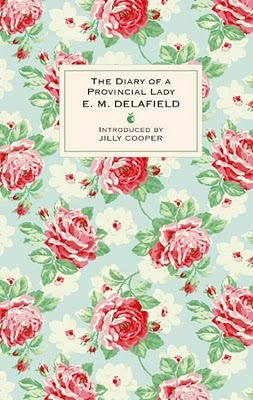
Diary of a Provincial Lady by E M Delafield

Today would have been E M Delafield’s birthday – and she is the next author to be featured in Jane at Beyond Eden Rock’s Birthday Book of Underappreciated Lady Authors. I wasn’t planning to join in with this one but, during last weekend’s Mini Persephone Readathon, having finished Monica Dickens’ The Winds of Heaven, I wanted something else to read and remembered that Diary of a Provincial Lady is also published by Persephone. My copy is not the dove-grey Persephone edition, but I was still pleased to have found a book that would count for both the Readathon and today’s celebrations!

Diary of a Provincial Lady, first published in 1930, is exactly what you would expect from the title: a novel written in the form of the diary of a ‘Provincial Lady’. The Lady, whose name we never learn, lives with her husband Robert in a village in the south of England. Their young son, Robin, is away at school much of the time, but there is also a daughter, Vicky, who is educated at home by Mademoiselle, her French governess. Several more servants, including a temperamental cook and a series of dissatisfied parlourmaids, complete the household.

The Provincial Lady’s days are always busy and varied. As well as being responsible for managing the servants, there are tea parties and garden fetes to attend, dinners to host and visitors to entertain – including the formidable and snobbish Lady Boxe, and Our Vicar’s Wife who, once she arrives, often forgets to leave again! The Provincial Lady records all of these things in her diary over a period of about a year, writing in short, concise sentences interspersed with notes, queries and memos to herself.

I have been putting off reading Diary of a Provincial Lady for a long time, because I wasn’t convinced that it sounded like my sort of book, but I was actually very pleasantly surprised. One of the things that surprised me was how often I found I was able to relate to the Provincial Lady and her problems. In fact, I think a lot of the situations she describes are things that most of us would probably identify with…saying something stupid and then wondering why on earth we said it; pretending we understand what somebody is talking about and then being caught out later in the conversation; agreeing to do something and immediately wishing we hadn’t!

I couldn’t relate to everything, of course. The Lady’s lifestyle is entirely different from my own – I don’t have servants to worry about, for example, and if I found myself in financial trouble my solution wouldn’t be to buy myself some expensive new dresses then go off to the South of France for a holiday. I can appreciate, though, that she belonged to a certain time and a certain class and that her position in society meant that she was expected to behave in a particular way.

I was also surprised by how funny the book was! A sense of humour is often a personal, individual thing and sometimes when someone else says that a book is hilarious I’m disappointed when I don’t find it very funny at all (and I’m sure this probably happens the other way around too). But the Provincial Lady’s observations are so witty and the things that happen to her are so amusing I couldn’t help but laugh.

I am aware that there are more books in the Provincial Lady series. A question to those who have read them – are they as good as this one or is there another E M Delafield book you think I should read instead?

The Winds of Heaven by Monica Dickens

When I saw that Jessie of Dwell in Possibility was hosting a Mini Persephone Readathon this weekend, I knew I wanted to take part and I knew exactly what I would be reading: The Winds of Heaven, a book published by Persephone which I had originally been planning to read for Jane’s Monica Dickens Day last month but didn’t have time. I wasn’t sure what to expect from Monica Dickens as I’ve never read any of her books before, but I loved this one and will now be looking for more.

The Winds of Heaven (1955) follows the story of Louise Bickford, whose husband, the controlling and oppressive Dudley, dies a year or two before the novel opens. Left alone with no money to support herself, Louise cannot afford anywhere to live, so is forced to rely on the hospitality of her daughters. Although Louise has shown her three daughters nothing but love and affection, they each make it very clear that they don’t really want her staying with them and see her as a burden to be moved on to the next sister as quickly as possible.

Louise is a lovely person – generous, selfless and sensitive to the feelings of others; I had a lot of sympathy for her and for the situation in which she finds herself. The logical solution would be to get a job, but a combination of factors – her age (approaching sixty), her class, her lack of experience at any type of work and the disapproval of her daughters – mean that this is never considered as a realistic option for Louise. All she can do is continue to move from one household to the next, trying to make herself useful but knowing that she is unwanted and unappreciated.

The three daughters seem to have inherited none of their mother’s good qualities. They are three very different people, but in their different ways they are all as unpleasant and selfish as each other. Miriam is a snob, obsessed with appearances and her place in the community. Her marriage is not a particularly happy one, but as Arthur is rich enough to pay for holidays abroad and ponies for the children, she’s not complaining too much! Eva, the middle sister, is an aspiring actress who lives in London and is too preoccupied with her career and her affair with a married man to give any thought to her mother’s problems. Anne, the youngest, is a farmer’s wife but does very little to help out on the farm – she is a lazy, sullen, resentful woman who thinks only of herself and her own comfort.

For a novel with so many unlikeable characters, I found this a surprisingly enjoyable and entertaining read. Louise’s story is obviously a very sad one at times, but Monica Dickens writes with enough humour and lightness that it never becomes completely depressing. And although her relationships with Miriam, Eva and Anne are difficult, Louise does have two special people in her life who make things much more bearable. One is her young granddaughter Ellen, with whom she forms a close bond. Ellen is Miriam’s eldest daughter and, like Louise, she often feels like an outsider in the family. The other is Gordon Disher, a man she meets while sheltering from the rain in a London tea shop.

Mr Disher is the most unlikely of romantic heroes – he is overweight, sells beds in a department store and writes cheap paperback thrillers with titles like The Girl in the Bloodstained Bikini. He is also a lovely, kind, gentle man who sees that Louise is unhappy and does all he can to make things better for her. Their meetings are few and far between – Louise is sure she’s too old for romance and she doesn’t spend a lot of time in London anyway – but I found their relationship quite moving and always looked forward to the moments when they were together.

Towards the end of the book, events take a more dramatic turn and if I have a criticism it would be that I’m not sure whether this was really necessary. The final sentence, though, was perfect! I wish Monica Dickens had written more books about these characters, but I enjoyed this one enough to know that I will be investigating the rest of her novels anyway!

The Winds of Heaven endpapers

The Feast by Margaret Kennedy

It would have been Margaret Kennedy’s birthday today and she is the next author to be featured in Jane’s Birthday Book of Underappreciated Lady Authors. Having only read three Margaret Kennedy novels – The Constant Nymph, Lucy Carmichael and Troy Chimneys – I still have a lot of her books to choose from, but I decided on The Feast for this year’s Margaret Kennedy Day as I’ve seen several people name it as a favourite. Now that I’ve read it myself I can understand why!

The Feast was published in 1950 and is set three years earlier, in the summer of 1947. The novel follows a week in the lives of a group of guests who are staying at Pendizack Hotel on the coast of Cornwall. The week will end in tragedy when part of the cliff collapses on the hotel, killing everyone inside. This is not a spoiler because the book opens with a prologue in which we see the Reverend Bott attempting to write a sermon in memory of the dead. We also know that there will be some survivors – but the identities of those who will live and those who will die won’t be revealed until the end of the book.

The hotel is owned by the Siddals, although it’s Mrs Siddal who does all the work while her lazy husband does nothing at all and their three sons, now adults, make their own plans for the future. The housekeeper, Mrs Ellis, is a bitter, resentful woman who spends most of her time gossiping about other people, so the Siddals are relying more and more on the maid, Nancibel, a friendly, kind-hearted local girl.

The guests are a varied and not particularly pleasant group of people. They include Sir Henry Gifford, his selfish wife and their four children (three of whom are adopted); Mrs Cove, a cold and heartless woman who has very little affection for her three neglected daughters; the Paleys, a couple whose marriage has been strained since the loss of their child several years earlier; bad-tempered, overbearing Canon Wraxton and his long-suffering daughter Evangeline; Anna Lechene, an unscrupulous, irresponsible writer who is working on a new book about the Brontës, and her chauffeur, a handsome young man called Bruce who tells lies to make himself sound more interesting.

I was aware before I started the book that Margaret Kennedy had based the personalities of some of her characters on the Seven Deadly Sins and this added an extra layer of interest as I matched up different characters with different sins as I read. There are some obvious villains in the novel – Mrs Cove, Lady Gifford and Canon Wraxton are particularly nasty – but others have a mixture of good and bad qualities. I knew which characters I wanted to survive and which I didn’t, but life is not always fair and people don’t always get what they deserve, so there was still an element of suspense as the story moved towards its tragic conclusion.

I loved following the lives of the Siddals, their guests and their servants. Bearing in mind that the whole story takes place over the course of just seven days, there’s an impressive amount of character development with people making life-changing decisions, searching for happiness and taking control of their own futures. With over twenty characters all playing important roles in the novel, some authors would have struggled to make each man, woman and child different and memorable, but Margaret Kennedy succeeds and the result is a really enjoyable and absorbing read. It’s probably my favourite of her books so far – although I did love Troy Chimneys as well!

Quartet in Autumn by Barbara Pym #1977Club

This is my second choice for this week’s 1977 Club (hosted by Simon and Karen) and the third book I’ve read by Barbara Pym. Having so far read only Excellent Women and Less Than Angels, I was surprised by how different Quartet in Autumn is. It’s a much darker, sadder, more poignant novel and, although I did like it, I found it a little bit depressing.

The ‘quartet’ are two women and two men – Letty, Marcia, Edwin and Norman – who work together in the same office in 1970s London. They are four very different people with different personalities, but they have two things in common: they are all in their sixties and they all live alone. Although Pym never specifies exactly what their jobs involve, it is implied that the four of them have been sharing an office for several years and have an understanding of each other’s personal circumstances and living arrangements. Despite this, and despite their loneliness, they never do anything together outside of working hours – they eat lunch separately and then go their separate ways again at the end of the day.

We learn very little about Norman, except that people consider him an ‘odd little man’ and that his social life consists solely of dentist appointments and occasional visits to see his brother-in-law, whom he dislikes. Edwin, a widower, is sometimes invited to stay with his married daughter and grandchildren, but otherwise tries to keep himself busy by taking part in as many church activities as possible. The two men seem to play slightly smaller roles in the novel, at least until halfway through when the women retire (not to be replaced) and the quartet is reduced to a duo.

Letty has always planned to move to the countryside with her friend Marjorie after her retirement, but when the unthinkable happens and Marjorie gets engaged, she is left facing a future in an old people’s home instead. But it’s Marcia who is the most tragic character – Marcia who has had surgery for breast cancer and looks forward to her trips to the hospital as ‘holiday treats’, who has developed an obsession with hoarding empty milk bottles in the garden and who attracts the unwelcome attention of a concerned social worker.

A book about four lonely people doing meaningless, unappreciated jobs and looking for ways to fill boring, empty lives does not make the most uplifting of reads, but Pym still manages to sprinkle some humour into the story and to leave us with the sense that there is some hope for our characters after all. Letty, at least, seems to want things to change and to be willing to take the first steps towards bringing about those changes.

Despite the sad, melancholic feel of the book, I think it is my favourite so far by Barbara Pym. Her observations are both witty and sensitive and I found myself really caring about Letty, Norman, Marcia and Edwin. Another good choice for 1977 Club and now I’m looking forward to reading Jane and Prudence, the other Pym novel I have on my shelf.

Early Warning by Jane Smiley

This is the second in Jane Smiley’s Last Hundred Years trilogy which follows the lives of one American family across a period of a century. The first book, Some Luck, took us from 1920 to the end of 1952, and this one, Early Warning, covers 1953 to 1986.

It had been almost two years since I read Some Luck, so I was worried that I would struggle to remember who the characters were and how they were related to each other. On beginning Early Warning, then, I was relieved to see that Jane Smiley addresses this problem by beginning the novel with a family gathering – the funeral of Walter Langdon, the man who, with his wife Rosanna, had been at the heart of the previous novel. The funeral is attended by all of his adult children – Frank, Joe, Lillian, Henry and Claire – some of whom are now married and have children of their own. As the family sit around a table reminiscing about the past, this gives the reader a chance to get reacquainted with the characters.

So far so good, but once the different branches of the family depart and go back to their own homes, things quickly become much more confusing! In the previous book, the action revolved around the Langdon farm in Iowa, but now that the children have grown up, some of them have moved away and there are now Langdons scattered all over America, in different towns and different states. As the years and decades go by, moving from the 1950s to the 60s, 70s and finally the 80s, the grandchildren grow up too and build lives of their own, bringing even more characters into the story. I was constantly referring to the family tree at the beginning of the book and can’t imagine how I would have coped if I’d been reading it as an ebook!

The novel follows the same structure as the first one, with one chapter devoted to each year. As I mentioned in my Some Luck review, this means that, although it keeps the story moving forward, we are also left with some big gaps. When we leave the characters behind at the end of one chapter, we leap straight into the middle of the following year with the next chapter and haven’t ‘seen’ everything that happened in the meantime. It’s an unusual way to structure a novel and while it’s successful in the sense that it makes the trilogy feel different and memorable, it’s too restrictive and I’m glad not all books are written like this!

There is really very little more that I can say about Early Warning. There are some dramas, of course – births, deaths, marriages, divorces, affairs, house moves and changes of career – but there is no real plot, any more than anybody’s life ‘has a plot’. With so many characters, I couldn’t keep track of everything that was happening, but some of the things that stood out for me in this book were the exploration of Frank’s wife Andy’s mental state and the therapy she undergoes, the rivalry between their twin sons, Michael and Richie, and the pressure Lillian’s husband Arthur find himself under as a result of his job with the CIA. I was also particularly intrigued by the introduction of a new character, Charlie, whom we first meet as a small child and who appears to be unconnected to anyone else in the book. Smiley writes very convincingly from a child’s perspective and I really enjoyed reading these sections and guessing how Charlie would eventually fit into the story.

Some of the major events of the period are featured too, including the Vietnam War and the Cold War, and whereas in Some Luck the family on their Iowa farm were largely sheltered from the outside world, this time, because the geographical scale of the story has broadened, there are family members affected in some way by almost all of the world events touched on in the novel.

I have now started the third book, Golden Age, but with yet another generation of characters to get to know, I’m anticipating an even more confusing read than this one!