The Shadow Land by Elizabeth Kostova

Years ago now, certainly before I started blogging, I read The Historian, Elizabeth Kostova’s novel based on the legend of Dracula. It had sounded like the sort of book I would enjoy, but I remember being disappointed, although I can’t recall the reasons why. I didn’t read her next novel, The Swan Thieves, but when I heard about this latest one, The Shadow Land, I decided it was time to give Kostova another try. That was a good decision, because I found this to be a moving, powerful and beautifully written novel and I liked it much more than The Historian.

The Shadow Land is set in Bulgaria, beginning in 2008 when a young American woman, Alexandra Boyd, arrives in the country’s capital city of Sofia, where she will be starting a new job as a teacher at the Central English Institute. Discovering that she has arrived at the wrong hotel, she stands outside to wait for a taxi and here she falls into conversation with a family consisting of an elderly couple and another younger man who are also leaving the hotel. It’s not until Alexandra is sitting in her taxi, on her way to her destination, that she discovers she has picked up a bag belonging to the elderly people. Looking inside, she is horrified to find that she is now in possession of an urn engraved with the name Stoyan Lazarov and containing somebody’s ashes.

Instructing her taxi driver, Bobby, to take her to the nearest police station, Alexandra hopes this will be the end of the matter, but when the police prove to be less helpful than she’d expected, she decides to find the family and return the urn to them herself. She knows what it’s like to grieve for a loved one – her brother Jack disappeared on a hike in the Blue Ridge Mountains several years earlier – and she wants to make her apologies in person. However, the family of Stoyan Lazarov appear to have disappeared almost without trace…and it seems that somebody else is also searching for the urn.

With Bobby’s help, Alexandra travels around Bulgaria from town to town, trying to pick up the trail of Stoyan’s family and in each place she visits she learns a little bit more about the man whose ashes she is carrying. I have to admit, I found this quite unconvincing as I’m sure most of us would just have handed the urn in to the hotel reception or insisted on leaving it with the police – and even if we had decided to track the people down ourselves, it’s unlikely that a taxi driver we’d only just met would agree to come with us! The implausibility of this central plot point, however, didn’t really bother me because I was already enjoying the story so much.

Having the action moving from one location to another also gives Kostova an opportunity to describe the feel and appearance of various Bulgarian towns and villages and to capture the beauty of the countryside. Because we’re seeing all of this through Alexandra’s eyes, we can appreciate what it’s like to be exploring a new country for the first time, unable to speak the language and with no knowledge of local customs and traditions. As for Bobby, I loved him and, unlikely as it might have seemed, I was glad that he decided to abandon his usual routine and join Alexandra on her mission.

The Shadow Land really is a fascinating novel. It begins with a simple idea – a person accidentally taking something which doesn’t belong to them and then trying to return it – and slowly expands into an examination of Bulgaria’s history, of war, communism and political unrest, and of one man’s courage in the face of unimaginable horrors. I wish I could go into more detail, but I would rather let you read about Stoyan Lazarov’s experiences for yourself. It’s a very dark novel in places, particularly later in the book as Stoyan’s story begins to unfold, but it’s an important story and, despite the darkness, I think it’s one that needs to be told.

Thanks to the publisher for providing a copy of this book for review via NetGalley.
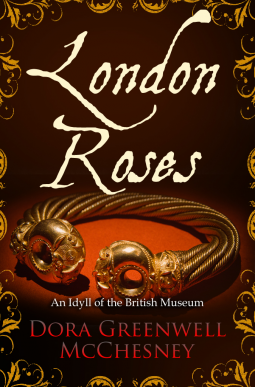
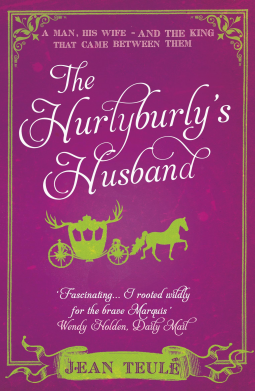
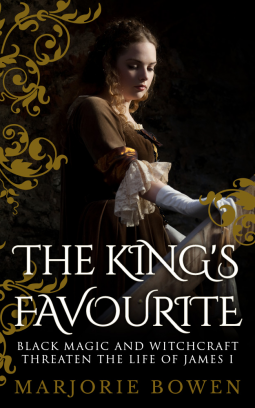
A trio of books: London Roses; The Hurlyburly’s Husband; The King’s Favourite

I’ve been struggling to keep up to date with my reviews recently – I seem to go into each new month with at least four or five books still to write about from the month before – so I thought I would try putting together the occasional multi-book post with slightly shorter reviews than normal.

London Roses by Dora Greenwell McChesney, first published in 1903, follows the stories of a group of people who meet in the Manuscript Room at the British Museum. Rhoda Comstock is a young American woman who has come to London to stay with her English cousin, Una Thorpe, and the two strike up a friendship one day with journalist Stephen Fulford and his brother Thomas, getting together to discuss their research and to engage in lighthearted debate about the differences between life in Britain and America. When Stephen makes the sudden decision to go to South Africa to report on the Boer War, he leaves behind a scandal which puts Thomas in a difficult position and poses a threat not only to the bond between the two brothers but also to their newly formed relationships with Rhoda and Una.

London Roses is packed with interesting ideas and themes – loyalty and friendship; the importance of trust; adjusting to life in a different country – although none of these things are explored in as much depth as they could have been. The characters also had the potential to be a lot more complex and well-developed than they actually were. None of the main four ever came fully to life and I was much more intrigued by the character of Anthony Pettigrew, an old man Rhoda nicknames the Moth, who has spent thirty years coming to the British Museum to research books that he’s never written.

Far too much of the novel is spent discussing the English Civil War, which is apparently a passion of several of the characters (and also of the author – as I know, having read her historical novels Rupert, by the Grace of God and Cornet Strong of Ireton’s Horse), but which felt a bit strange as it had very little to do with the rest of the plot. On a more positive note, there are some nice descriptions of London and the Museum, but overall I was disappointed by this book and was thankful that it was such a short one!

The Hurlyburly’s Husband is an English translation by Alison Anderson of Jean Teulé’s 2008 French novel. Set in 17th century France, it tells the story of the often forgotten husband of Madame de Montespan (mistress of the Sun King, Louis XIV). Louis-Henri, Marquis de Montespan, marries Athénaïs, as she becomes known, after her fiancé flees following a duel. He loves his new wife and believes that she loves him, but it’s not long before Athénaïs goes to court as a lady-in-waiting and takes the place of Louise de la Valliere in the king’s affections. Unlike many cuckolded husbands of the period, Montespan is not interested in using his wife’s position to gain money and titles at court; instead, when it becomes obvious that Athénaïs is lost to him, he chooses to defy the king and take revenge in any small way he can.

A lot has been written about Madame de Montespan, her relationship with the king and her involvement in the Affair of the Poisons, but her husband is usually ignored. It was good to have the chance to read his side of the story and to see how he may have felt about all of this. As Athénaïs is absent from her husband’s life for most of the novel, the focus is always on Montespan himself: his attempts at winning glory on the battlefield, his relationships with his children, and his acts of defiance against the king (adding horns to his coat of arms, for example).

This is an entertaining little novel, as lively, colourful and scandalous as the French court it describes. There are even some illustrations, which are always a nice addition to any book. And in case you’re wondering, the hurlyburly of the title refers to the hairstyle popular in the 17th century known as the hurluberlu.

The final book I want to talk about here is The King’s Favourite by Marjorie Bowen (originally published in 1938 under the pseudonym George R Preedy). The King of the title is King James I of England and VI of Scotland – and the Favourite is Robin Carr, a young man who catches the King’s eye when he falls and breaks his leg in the tilt yard. Henry Howard, Earl of Northampton, sees his chance to gain influence at court by pushing his pretty, seventeen-year-old great-niece Frances into an affair with Robin. But Howard is not the only one who is plotting and scheming; Robin’s friend, Tom Overbury, is also keen to encourage the romance between Robin and Frances in the hope of gaining more power for himself.

Nobody expected the two to actually fall in love, but that is what happens. With his plans thrown into disarray, Overbury finds himself caught in the middle of another plot – but this one is directed at himself. The King’s Favourite is based on real events from history, but I was unfamiliar with the details of this particular story. My lack of knowledge meant I had no idea what was going to happen and could enjoy this as a suspenseful true crime novel before looking up the facts after I’d finished and comparing them with Marjorie Bowen’s version.

While the plot (after a slow start) is an exciting, dramatic one, the characters are not particularly strong and not at all sympathetic either! I can’t say that I liked any of them – although I was interested to see that the astrologer and physician Simon Forman plays a prominent part in the story. I remember being intrigued by his appearances in Sally O’Reilly’s Dark Aemilia, so it was good to learn more about him here.

I see that there have been several other novels written over the years that also deal with the Overbury case, including one by Rafael Sabatini (The Minion) which I’m now very interested in reading. The TBR continues to grow!

The Heart’s Invisible Furies by John Boyne

One day in 1945, Catherine Goggin, sixteen and unmarried, is banished from her small village in West Cork, Ireland, for committing the sin of becoming pregnant. Shamed by the priest in front of an entire congregation and cast out by her family, Catherine makes her way to Dublin in the hope of starting a new life for herself. When her baby boy, Cyril, is born several months later, she makes the decision to put him up for adoption – and from this point, Catherine steps into the background of our story. Our attention switches now to Cyril, growing up in the home of his adoptive parents, Charles and Maude Avery.

Charles is a rich but disreputable businessman with a weakness for gambling and womanising, while Maude is a temperamental, chain-smoking novelist who hates the thought of anyone actually buying one of her books. Unsurprisingly, they do not make good parents and never let Cyril forget that he is “not a real Avery”. The one bright spot in Cyril’s life is his friendship with Julian Woodbead, the son of Charles Avery’s lawyer. Julian is popular, sophisticated and daring; everything Cyril wants to be. As the boys grow older, however, and enter their teenage years, Cyril becomes aware that what he feels for Julian is not just friendship but love.

Narrated by Cyril himself, the story is divided into sections moving forward seven years at a time, taking us from the 1940s right through to 2015 and around the world from Dublin to Amsterdam to New York. Along the way we meet a range of characters who, while they may not be very realistic, are so vividly drawn they almost jump out of the page; I particularly loved the hilarious Mary-Margaret Muffet, Cyril’s first girlfriend, who has “very high standards” and who proudly announces to everyone she meets that she knows all about the world because she works on the “foreign exchange desk at the Bank of Ireland, College Green”. We also witness, through Cyril’s eyes, some of the most significant historical events to occur in his lifetime, including the bombing of Nelson’s Pillar in Dublin, the impact of AIDS in the 1980s, the 9/11 attacks and Ireland’s referendum on gay marriage.

The main focus of Cyril’s story, however, is on his sexuality and how he comes to terms with it. As a young man growing up in Catholic Ireland, he quickly discovers that it is not at all easy to be homosexual in a society where people don’t even want to acknowledge that such a thing exists; his attempt to confess to a priest has shocking consequences! And so, for a long time, Cyril tries to deny his feelings even to himself (hence Mary-Margaret and one or two other women). Eventually he can suppress his love for Julian no longer…but things don’t go exactly according to plan.

Actually, things never do seem to go according to plan for Cyril and it would be difficult not to feel some sympathy! Sometimes it’s his own fault, as he does make a lot of mistakes and bad decisions, but he is also a victim of prejudice, intolerance and lack of understanding. With the novel jumping forward in seven-year chunks, we see not only how Cyril’s personal circumstances have changed in the intervening time, but also how attitudes towards homosexuality have changed – subtly at first, but quite dramatically by 2015. I couldn’t help feeling, though, that sometimes the messages Boyne was trying to get across came at the expense of the story.

Having read and enjoyed several of John Boyne’s novels over the last few years, I was really looking forward to reading The Heart’s Invisible Furies and although A History of Loneliness is still my favourite, I did find a lot to like about this one – his longest and most ambitious book yet. I should probably warn you that the humour is often very dark and sometimes not in very good taste, which won’t be for everyone, and that as Cyril’s sexuality forms such an important part of the story, it’s also quite explicit at times. I wasn’t sure whether it was going to be my sort of book or not at first, but after an uncertain start I found myself being drawn into Cyril’s story and then there was no question of not finishing it!

Following Cyril Avery’s life from birth to old age was a memorable experience! He’s a wonderful character…so complex and so human. Although the plot is built around a series of highly unlikely coincidences, I didn’t mind too much as it meant everything fell into place at the end. Not all of the characters get a happy ending, but some of them do and I was left with the hope that the younger generations of Cyril’s family would find certain aspects of their lives easier to deal with than poor Cyril did!

Margery Sharp Day: The Flowering Thorn

margery-2017My first introduction to Margery Sharp’s work came this time last year when I read The Nutmeg Tree for the Margery Sharp Day hosted by Jane at Beyond Eden Rock.  I enjoyed it and went on to read Cluny Brown a few months later.  Now Jane is hosting another celebration for Margery’s birthday (which is today – 25th January) and this seemed the perfect opportunity to read another of her books.  There were plenty to choose from – it’s much easier to find Margery Sharp books now than it was a year ago, thanks to Open Road Media reissuing them in digital form – and I settled on her 1933 novel The Flowering Thorn, one which sounded particularly appealing to me.  
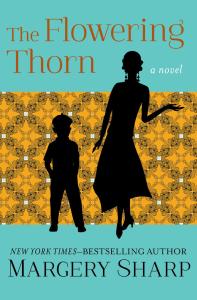
the-flowering-thornThe Flowering Thorn introduces us to Lesley Frewen, a twenty-eight-year-old socialite living in London.  Lesley’s days and nights are a whirl of bridge parties, lunch engagements, shopping trips, hair appointments and visits to matinees and art exhibitions.  Despite all of this, there’s still something missing from her life: love.  Having discovered that the one man she really wants appears to be the one man she can’t have, Lesley is still in low spirits when she joins her aunt for afternoon tea the next day.  This could explain why, when her aunt introduces her to Patrick, the orphaned child of a servant who has recently died, Lesley finds herself volunteering to adopt the boy.
Lesley has no experience of young children and can’t imagine what possessed her to make such an offer, but she knows that now the decision has been made, there’s no turning back.  Children aren’t allowed in her luxury flat, however, so the first thing to do is to look for a new home for herself and Patrick – but finding somewhere in London which is both affordable and suitable for a four-year-old boy proves to be more difficult than she’d expected.  Eventually, a solution presents itself: she and Patrick will go and live in a cottage in the Buckinghamshire countryside.  It will be cheaper, her friends will still be able to visit – and besides, it will only be for a few years, until Patrick is old enough to go away to school…

I have enjoyed all three of the Margery Sharp novels I have read so far, but I think this might be my favourite.  I wasn’t sure about the book at first; I found Lesley’s lifestyle quite tedious to read about and Lesley herself (as she was at the beginning of the book) shallow and irresponsible.  A few chapters in, though, when Lesley takes Patrick to live in the country, I immediately warmed to both the character and the novel.  It was similar to the experience I had with Julia in The Nutmeg Tree.  As the story progressed, I watched Lesley slowly adapt to life in the country and found that as she formed new friendships, rearranged her priorities and adjusted her outlook on the world, she became a much nicer person, an opinion shared by her elderly uncle when he meets her again after an absence of several years.

I was surprised by the lack of romance in the novel.  Although Lesley does have one or two love interests, things tend to be one-sided and it’s not until the very end of the book that there’s a hint of an actual romance for her.  I found this quite refreshing as it meant the focus was on other things, such as Lesley’s growth as a person and the development of her relationship with Patrick – and this was a surprise too as there’s nothing sentimental or affectionate in this relationship; Lesley doesn’t even seem to particularly like Patrick, and yet it’s obvious that she does understand and care about him in her own way.

The Flowering Thorn is a lovely story and was a good choice for this year’s Margery Sharp Day!

Behind the Scenes at the Museum by Kate Atkinson

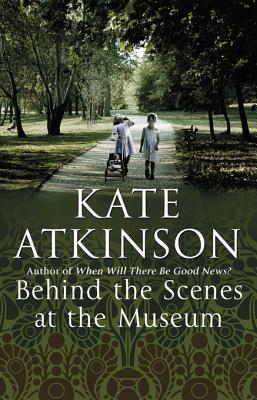
behind-the-scenes-at-the-museum This was Kate Atkinson’s first novel, published in 1995, and yet it’s one of the last of her books that I’ve read. Having read and loved her two most recent books, Life After Life and A God in Ruins, as well as Human Croquet and three of the Jackson Brodie mysteries, I was curious to see what her earliest work was like – but I can honestly say this doesn’t feel like a first novel. It’s ambitious, accomplished, and covers some of the themes and ideas she would return to again in later books.

Behind the Scenes at the Museum is narrated by Ruby Lennox; we first meet her in 1951 while she’s still in the womb, before following her through birth, childhood and into adulthood. Along the way we get to know Ruby’s parents – the irresponsible, lying, cheating George and the long-suffering Bunty – and her two older sisters, naughty Gillian and quiet Patricia. They’re not a particularly happy family but, at least at first, they are leading a fairly normal life in their rooms above the pet shop they own in York. When she is four years old, Ruby is sent away to stay with her Aunt Babs for a while; she’s not sure why, and it’s after this that everything seems to start going wrong.

Each chapter narrated by Ruby is followed by another chapter (which Atkinson calls Footnotes but are usually as long, if not longer than, the actual chapters) telling the story of the previous generations of Ruby’s family. These Footnotes are not necessarily given in chronological order, so in one we might read about Ruby’s great-grandmother, Alice, before jumping forward in time to meet Bunty as a child, and then back again for an episode from Bunty’s mother’s teenage years. If this all sounds very complicated, that’s because it is! I would highly recommend drawing a quick family tree to refer to as you read; that’s what I did and I would have struggled without it.

The quotes on the back cover of the book describe it as ‘hilarious’ and ‘outrageously funny’. I don’t think I would go that far, but Kate Atkinson does have a great sense of humour and there are certainly some very funny scenes in this book (I particularly enjoyed the family holiday in Scotland). However, I also found this quite a sad book and there were a few moments, especially near the end, which brought tears to my eyes. Ruby and her family have to endure lots of disasters and tragedies over the years – deaths, illnesses, fires, betrayals – and so do members of the earlier generations. Sometimes we know in advance what is going to happen – Ruby tells us very early in the book how a certain character is going to die – but in other cases we are taken by surprise.

All of this made me think about the importance of perspective in the novel. Ruby is a young child throughout most of this book and her lack of understanding and awareness make her an unreliable narrator at times. Had the story been written from Bunty’s perspective, for example, or Patricia’s, we would have been given a completely different impression of most of the people and incidents we only have the chance to see through Ruby’s eyes. Some revelations in the final chapters, not just about Ruby but about other characters too, had me flicking back through the book to see if there had been clues that I’d missed – and although there were a few, I think it was simply that I had placed too much trust in Ruby as a narrator instead of reading between the lines and thinking for myself.

Behind the Scenes at the Museum is an excellent novel and as with so many of the other Kate Atkinson books I’ve read, I didn’t want to put it down. I only have a few more left to read now – Emotionally Weird, Not the End of the World and Started Early, Took My Dog – and am looking forward to all three.

The Travels of Daniel Ascher by Déborah Lévy-Bertherat

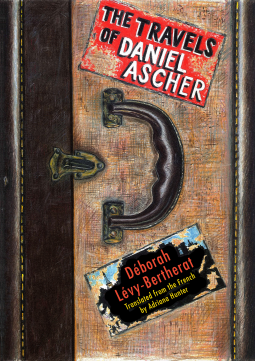
The Travels of Daniel Ascher When I read The People in the Photo a few weeks ago for Women in Translation Month (#WITMonth on Twitter), I didn’t expect to have time to read another book for the same event, but I’ve had this one on my Kindle for a while and have managed to squeeze it in before the end of the month. The Travels of Daniel Ascher was originally published in French in 2013; I read an English translation by Adriana Hunter.

At the beginning of the novel, twenty-year-old Hélène Roche has just moved to Paris to begin studying archaeology at university. Her great-uncle, Daniel Ascher, also lives in Paris and has offered to let her rent one of the upstairs rooms in his house, but when Hélène arrives she finds that he is out of the country, on a trip to Tierra del Fuego. This is nothing surprising – for as long as Hélène can remember, Daniel has been off on his travels, visiting one exotic location or another – and actually, his absence doesn’t bother her too much as she has always found her eccentric great-uncle slightly embarrassing.

As Hélène gets to know her fellow students, she discovers that most of them are fans of The Black Insignia, a series of novels in which the hero travels the world, having exciting adventures in locations as varied as the Amazon, Machu Picchu and Pompeii. Hélène alone has never read a Black Insignia book, partly because she thinks the stories sound childish and uninteresting and partly because the author of the series is her great-uncle Daniel, writing under the name HR Sanders. Her new friend Guillaume, however, is so enthusiastic about the books that Hélène is persuaded to look at them again – and in the process she makes some surprising discoveries about the life of Daniel Ascher.

The Travels of Daniel Ascher is a very short book (I easily read it in one evening) and I think it’s probably aimed at young adults, although that’s not to say it has nothing to offer an adult reader too. When the truth about Daniel Ascher’s childhood begins to emerge (I’m trying not to spoil anything here) it’s a story which has been written about many times before, but the way in which Déborah Lévy-Bertherat chooses to approach that story feels fresh and different.

I thought the book was generally well written, although as with all translated novels, unless you’re able to read the original, it’s difficult to know whether anything has been lost in translation. I do have a criticism, though, and that relates to the dialogue, which is written without quotation marks and presented as one continuous paragraph, with what one character says separated from the next by a comma. I’m really not sure why so many contemporary authors think this sort of thing is a good idea – I find anything other than conventional dialogue very distracting and unnecessary. In this particular novel, I suppose it helped to create a dreamlike atmosphere, but at the same time it made it difficult to connect with the characters and took away some of the emotional impact of the story.

WITMonth 2016 The Travels of Daniel Ascher wasn’t a perfect book, then (at least not for me), but it was an interesting and unusual one and I don’t feel that I wasted my time reading it.

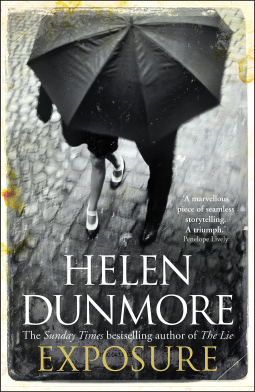
Exposure by Helen Dunmore

Exposure What a great book! I have to admit, I wasn’t sure about reading it; I thought Helen Dunmore’s previous novel, The Lie, was disappointing, and the descriptions of this one as a Cold War spy novel didn’t sound very appealing to me. I wanted to give Dunmore another chance, though, so I decided it would be worth giving Exposure a try.

The first thing I need to say is that although Exposure certainly is a Cold War spy novel of sorts, it’s also a compelling story of love and betrayal, secrets and lies, as seen through the eyes of a wonderful cast of strong and complex characters. One of them, Simon Callington, is a quiet, unambitious young man who works for the Admiralty in London and who looks forward to coming home to his wife and children at the end of each day. The last thing he wants is to be involved in any controversy, but that is exactly what happens one night in November 1960 when he receives a call for help from his friend and colleague, Giles Holloway.

As a student, Simon had been drawn to Giles because he was older and more sophisticated; now, however, Giles is a rather sad and lonely man with a drink problem, and when he falls down the stairs and ends up in hospital with a broken leg, Simon is the only person he feels he can trust. Just before he fell, Giles was working on a secret file – a file he should never have brought home from work – and he needs Simon to retrieve it from his desk and return it to the office before anyone notices it was missing. Simon agrees, but unknown to him, Giles’s home is being watched.

The decisions Simon makes on that fateful night and in the days which follow will have serious consequences for both Simon himself and for his family – his wife, Lily, and their three children, Paul, Sally and Bridget. It’s Lily, in my opinion, who is the real star of this novel. Having fled to England with her mother as Jewish refugees in the 1930s, she has spent her whole adult life trying to hide her German origins and now, with Simon in trouble, it’s more important than ever that her past is kept a secret. Lily is put under a huge amount of pressure, yet remains strong, resourceful and determined to do whatever it takes to protect her husband and children.

Simon also has a secret which he has been concealing even from Lily and if it is revealed his situation will become even more precarious than it already is. With all three of our main characters – Giles, Simon and Lily – at risk of exposure, the tension and the atmosphere of darkness and danger build and build throughout the story. The writing and structure of the novel are both excellent, dipping into the past where necessary to explore a character’s background, helping us to understand the person they are in the present. Dunmore also includes just enough period detail to set the story firmly in the early 1960s without going into an excessive amount of description.

Some elements of the novel made me think of the plot of E. Nesbit’s The Railway Children (and I’m sure we’re supposed to make the connection) but Exposure is also an exciting and original novel in its own right. I loved it and am so pleased I didn’t let The Lie put me off reading more of Helen Dunmore’s books!