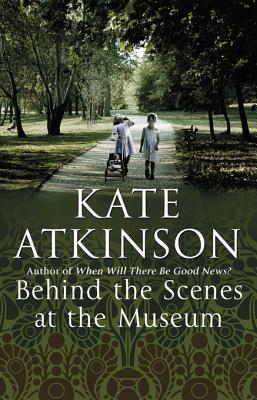
Behind the Scenes at the Museum by Kate Atkinson

behind-the-scenes-at-the-museum This was Kate Atkinson’s first novel, published in 1995, and yet it’s one of the last of her books that I’ve read. Having read and loved her two most recent books, Life After Life and A God in Ruins, as well as Human Croquet and three of the Jackson Brodie mysteries, I was curious to see what her earliest work was like – but I can honestly say this doesn’t feel like a first novel. It’s ambitious, accomplished, and covers some of the themes and ideas she would return to again in later books.

Behind the Scenes at the Museum is narrated by Ruby Lennox; we first meet her in 1951 while she’s still in the womb, before following her through birth, childhood and into adulthood. Along the way we get to know Ruby’s parents – the irresponsible, lying, cheating George and the long-suffering Bunty – and her two older sisters, naughty Gillian and quiet Patricia. They’re not a particularly happy family but, at least at first, they are leading a fairly normal life in their rooms above the pet shop they own in York. When she is four years old, Ruby is sent away to stay with her Aunt Babs for a while; she’s not sure why, and it’s after this that everything seems to start going wrong.

Each chapter narrated by Ruby is followed by another chapter (which Atkinson calls Footnotes but are usually as long, if not longer than, the actual chapters) telling the story of the previous generations of Ruby’s family. These Footnotes are not necessarily given in chronological order, so in one we might read about Ruby’s great-grandmother, Alice, before jumping forward in time to meet Bunty as a child, and then back again for an episode from Bunty’s mother’s teenage years. If this all sounds very complicated, that’s because it is! I would highly recommend drawing a quick family tree to refer to as you read; that’s what I did and I would have struggled without it.

The quotes on the back cover of the book describe it as ‘hilarious’ and ‘outrageously funny’. I don’t think I would go that far, but Kate Atkinson does have a great sense of humour and there are certainly some very funny scenes in this book (I particularly enjoyed the family holiday in Scotland). However, I also found this quite a sad book and there were a few moments, especially near the end, which brought tears to my eyes. Ruby and her family have to endure lots of disasters and tragedies over the years – deaths, illnesses, fires, betrayals – and so do members of the earlier generations. Sometimes we know in advance what is going to happen – Ruby tells us very early in the book how a certain character is going to die – but in other cases we are taken by surprise.

All of this made me think about the importance of perspective in the novel. Ruby is a young child throughout most of this book and her lack of understanding and awareness make her an unreliable narrator at times. Had the story been written from Bunty’s perspective, for example, or Patricia’s, we would have been given a completely different impression of most of the people and incidents we only have the chance to see through Ruby’s eyes. Some revelations in the final chapters, not just about Ruby but about other characters too, had me flicking back through the book to see if there had been clues that I’d missed – and although there were a few, I think it was simply that I had placed too much trust in Ruby as a narrator instead of reading between the lines and thinking for myself.

Behind the Scenes at the Museum is an excellent novel and as with so many of the other Kate Atkinson books I’ve read, I didn’t want to put it down. I only have a few more left to read now – Emotionally Weird, Not the End of the World and Started Early, Took My Dog – and am looking forward to all three.

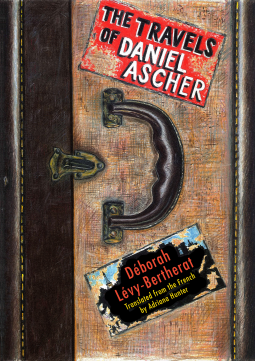
The Travels of Daniel Ascher by Déborah Lévy-Bertherat

The Travels of Daniel Ascher When I read The People in the Photo a few weeks ago for Women in Translation Month (#WITMonth on Twitter), I didn’t expect to have time to read another book for the same event, but I’ve had this one on my Kindle for a while and have managed to squeeze it in before the end of the month. The Travels of Daniel Ascher was originally published in French in 2013; I read an English translation by Adriana Hunter.

At the beginning of the novel, twenty-year-old Hélène Roche has just moved to Paris to begin studying archaeology at university. Her great-uncle, Daniel Ascher, also lives in Paris and has offered to let her rent one of the upstairs rooms in his house, but when Hélène arrives she finds that he is out of the country, on a trip to Tierra del Fuego. This is nothing surprising – for as long as Hélène can remember, Daniel has been off on his travels, visiting one exotic location or another – and actually, his absence doesn’t bother her too much as she has always found her eccentric great-uncle slightly embarrassing.

As Hélène gets to know her fellow students, she discovers that most of them are fans of The Black Insignia, a series of novels in which the hero travels the world, having exciting adventures in locations as varied as the Amazon, Machu Picchu and Pompeii. Hélène alone has never read a Black Insignia book, partly because she thinks the stories sound childish and uninteresting and partly because the author of the series is her great-uncle Daniel, writing under the name HR Sanders. Her new friend Guillaume, however, is so enthusiastic about the books that Hélène is persuaded to look at them again – and in the process she makes some surprising discoveries about the life of Daniel Ascher.

The Travels of Daniel Ascher is a very short book (I easily read it in one evening) and I think it’s probably aimed at young adults, although that’s not to say it has nothing to offer an adult reader too. When the truth about Daniel Ascher’s childhood begins to emerge (I’m trying not to spoil anything here) it’s a story which has been written about many times before, but the way in which Déborah Lévy-Bertherat chooses to approach that story feels fresh and different.

I thought the book was generally well written, although as with all translated novels, unless you’re able to read the original, it’s difficult to know whether anything has been lost in translation. I do have a criticism, though, and that relates to the dialogue, which is written without quotation marks and presented as one continuous paragraph, with what one character says separated from the next by a comma. I’m really not sure why so many contemporary authors think this sort of thing is a good idea – I find anything other than conventional dialogue very distracting and unnecessary. In this particular novel, I suppose it helped to create a dreamlike atmosphere, but at the same time it made it difficult to connect with the characters and took away some of the emotional impact of the story.

WITMonth 2016 The Travels of Daniel Ascher wasn’t a perfect book, then (at least not for me), but it was an interesting and unusual one and I don’t feel that I wasted my time reading it.

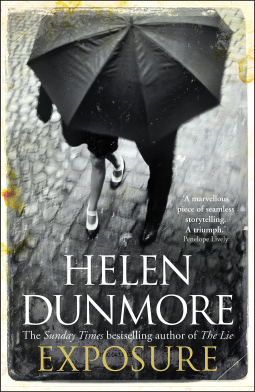
Exposure by Helen Dunmore

Exposure What a great book! I have to admit, I wasn’t sure about reading it; I thought Helen Dunmore’s previous novel, The Lie, was disappointing, and the descriptions of this one as a Cold War spy novel didn’t sound very appealing to me. I wanted to give Dunmore another chance, though, so I decided it would be worth giving Exposure a try.

The first thing I need to say is that although Exposure certainly is a Cold War spy novel of sorts, it’s also a compelling story of love and betrayal, secrets and lies, as seen through the eyes of a wonderful cast of strong and complex characters. One of them, Simon Callington, is a quiet, unambitious young man who works for the Admiralty in London and who looks forward to coming home to his wife and children at the end of each day. The last thing he wants is to be involved in any controversy, but that is exactly what happens one night in November 1960 when he receives a call for help from his friend and colleague, Giles Holloway.

As a student, Simon had been drawn to Giles because he was older and more sophisticated; now, however, Giles is a rather sad and lonely man with a drink problem, and when he falls down the stairs and ends up in hospital with a broken leg, Simon is the only person he feels he can trust. Just before he fell, Giles was working on a secret file – a file he should never have brought home from work – and he needs Simon to retrieve it from his desk and return it to the office before anyone notices it was missing. Simon agrees, but unknown to him, Giles’s home is being watched.

The decisions Simon makes on that fateful night and in the days which follow will have serious consequences for both Simon himself and for his family – his wife, Lily, and their three children, Paul, Sally and Bridget. It’s Lily, in my opinion, who is the real star of this novel. Having fled to England with her mother as Jewish refugees in the 1930s, she has spent her whole adult life trying to hide her German origins and now, with Simon in trouble, it’s more important than ever that her past is kept a secret. Lily is put under a huge amount of pressure, yet remains strong, resourceful and determined to do whatever it takes to protect her husband and children.

Simon also has a secret which he has been concealing even from Lily and if it is revealed his situation will become even more precarious than it already is. With all three of our main characters – Giles, Simon and Lily – at risk of exposure, the tension and the atmosphere of darkness and danger build and build throughout the story. The writing and structure of the novel are both excellent, dipping into the past where necessary to explore a character’s background, helping us to understand the person they are in the present. Dunmore also includes just enough period detail to set the story firmly in the early 1960s without going into an excessive amount of description.

Some elements of the novel made me think of the plot of E. Nesbit’s The Railway Children (and I’m sure we’re supposed to make the connection) but Exposure is also an exciting and original novel in its own right. I loved it and am so pleased I didn’t let The Lie put me off reading more of Helen Dunmore’s books!

The Olive Tree by Lucinda Riley

The Olive Tree I wasn’t sure, when I first heard about The Olive Tree, whether I really wanted to read it or not. I’ve enjoyed most of Lucinda Riley’s previous novels but part of the appeal is the way she intertwines past and present, linking the lives of modern day characters with ones who lived in times gone by. The Olive Tree is not like that; it has a contemporary setting, with the action taking place mostly in 2006 with a few chapters bringing us right up to date in 2016. I thought I would miss the historical element, but actually, once I started reading, I found I didn’t mind that it was a different sort of book and I ended up enjoying it anyway (although not quite as much as the historical ones).

The Olive Tree is the story of a family holiday in Cyprus. The setting couldn’t be more idyllic – a house called Pandora, with its own pool, a sunny terrace and a beautiful view – but the holiday itself is the holiday from hell. As its Greek name suggests, Pandora holds a lot of secrets and some of them are about to be revealed.

Pandora belongs to Helena Cooke, the novel’s main female character, who is returning to the house for the first time in years, having recently inherited it from her godfather. Almost as soon as she arrives, however, she wonders whether coming back was a mistake: Alexis, with whom she had a teenage romance in Cyprus more than twenty years earlier, is still living nearby and still seems to have feelings for Helena. Her husband, William, is not going to be pleased!

Someone else whose life has been thrown into turmoil by the presence of Alexis is Helena’s eldest son, thirteen-year-old Alex. Alex has never known the identity of his biological father…could it be Alexis? As Alex retreats to the privacy of his tiny bedroom to write in his diary and pour out his hopes and fears, another troubled family arrives to stay at Pandora. They are the Chandlers: William’s alcoholic best friend, Sacha; his long-suffering wife, Jules, and their two children, one of whom is Alex’s worst enemy. With the additions of Chloe, William’s teenage daughter from a previous marriage, and Helena’s friend Sadie, who is getting over a break-up with her latest boyfriend, it’s going to be a difficult summer!

At nearly 600 pages, this was a surprisingly quick read, which is something I’ve found with most of Lucinda Riley’s novels; she knows how to tell a good story and how to hold the reader’s attention from one chapter to the next. I don’t think the book needed to be quite so long (the Sadie storyline, for example, added very little to the overall plot) but otherwise I did enjoy spending time getting to know the Cooke and Chandler families. There were some twists in the story towards the end and although I’d had my suspicions, I was still surprised by some of the revelations.

Interspersed throughout the novel are passages from Alex’s diary and I particularly liked reading these sections. I found Alex an intriguing character; having been assessed as a gifted child with an exceptionally high IQ, sometimes he seems much older than thirteen, but in other ways – such as his attachment to his toy rabbit, Bee – he feels very young and insecure. I think if the whole novel had been narrated by Alex it might have been too much, but I always looked forward to returning to his diary entries – they were written with such a unique combination of humour, wisdom and vulnerability.

This isn’t my favourite Lucinda Riley novel but with its sunny, summery setting it was a perfect August read. I’m now looking forward to reading The Shadow Sister, the next book in her Seven Sisters series, which is coming out later this year.

Thanks to the publisher for providing a copy of The Olive Tree for review.

Poor Caroline by Winifred Holtby

Poor Caroline Poor Caroline, published in 1931, is the third book I’ve read by Winifred Holtby. I read both South Riding and The Land of Green Ginger in 2011 and enjoyed both (particularly the wonderful South Riding) so I don’t know why I’ve waited five years to try another of her novels! I enjoyed this one too, although the setting and subject of the book make it very different from the other two I’ve read.

The Caroline of the title is Caroline Denton-Smyth, an elderly spinster who has founded the Christian Cinema Company with the aim of reforming the British film industry. With feathers in her hat and beads around her neck, peering at the world through a pair of lorgnettes, Caroline is a figure of fun – someone to be pitied and certainly not taken too seriously. Caroline herself, however, takes the Christian Cinema Company very seriously indeed and is determined to make it a success. And so, despite having no money herself, she sets out to encourage others to invest in the company and to put together a board of directors.

This is not a novel with a lot of plot; the enjoyment is in getting to know the various people who become involved with Caroline’s business venture in one way or another. First there’s Basil St Denis, an idle, pleasure-seeking young man whose lover, Gloria, persuades him to leave his life of leisure in Monte Carlo to become chairman of the company. Then there’s Joseph Isenbaum, who hopes that joining the board will increase his standing in society and help to secure a place at Eton for his son. Hugh Macafee is an obsessive Scottish scientist who has invented the Tona Perfecta, a new film technique which he is desperate to put to use, while the American scenario writer Clifton Johnson is a greedy, unscrupulous man who, like the others, is interested only in what he can get out of the company.

Not a very pleasant collection of people so far, but there were two more whom I found slightly more likeable: Caroline’s much younger cousin, Eleanor de la Roux, newly arrived in London from South Africa with an independent fortune to invest, and Roger Mortimer, the young priest who falls in love with Eleanor and who is also the object of Caroline’s own affections – leaving her open to even more ridicule, as she is old enough to be Father Mortimer’s grandmother.

Poor Caroline vmc Each of the characters I’ve mentioned is given a chapter of his or her own, so that we have the chance to see things from several different points of view and add to what we know of Caroline, of the other characters and of the Christian Cinema Company. Although the opinions of Caroline differ from character to character – some view her with scorn, some with pity and some with frustration – each chapter ends with the same words: poor Caroline!

Caroline is an unusual heroine; being almost seventy-two at the time of our story, she devotes herself to her cause with an impressive amount of energy and enthusiasm, yet this devotion makes her unrealistic about what she is likely to actually achieve and blind to the things which are more important in life. She is not always a nice person and, as her family like to point out, she has spent a lifetime borrowing money from people knowing that she will never be able to give it back. Despite all this, I had a lot of sympathy for Caroline and couldn’t help admiring her as well as feeling sorry for her. Even though it seemed obvious that the Christian Cinema Company was doomed to failure, for poor Caroline’s sake I wanted it to succeed.

Reading Poor Caroline has reminded me of how much I like Winifred Holtby’s writing. I’m glad I still have a few more of her novels to look forward to – if you’ve read any of them please let me know what you thought!

The People in the Photo by Hélène Gestern

The People in the Photo August is Women in Translation Month and although I hadn’t made any formal plans to take part, I found myself reading a translated novel by a woman this month anyway – one I’d been interested in reading for a while. Hélène Gestern’s The People in the Photo was originally published in French in 2011; this Gallic Books edition is an English translation by Emily Boyce and Ros Schwartz.

Hélène Hivert lives in Paris, where she works as an archivist. She has never known her mother, who died when Hélène was very young, and for some reason her father and stepmother have never wanted to talk about her. When Hélène finds a photograph of Nathalie, her mother, taken at a tennis tournament in Interlaken in 1971, she’s intrigued. There are two men in the photograph whom she can’t identify, so she places a newpaper advertisement asking if anyone can provide more details.

Stéphane Crusten, a Swiss biologist living in England, responds. One of the men in the photo is his father, Pierre, who is now dead, and he recognises the other as a close friend of his father’s. What Stéphane doesn’t know is why Hélène’s mother is in the picture with them. Corresponding at first through letters and emails and later by telephone and in person, the two begin to piece together the fragments of information they have in an attempt to discover the connection between their parents. Gradually, as they delve into their family histories and more old photographs come to light, the true story of Nathalie and Pierre is revealed.

The People in the Photo is a beautiful, moving novel. The story is told in epistolary form, through the letters and emails Hélène and Stéphane send to each other, and it was nice to watch two people being drawn together in this way, forming a bond in writing before they had even had the chance to meet. The photos they discover are not included in the book, but they are described in such careful detail that I could picture them quite clearly in my mind, and I liked that aspect of the novel too.

However, this was not a perfect book; it did have a few flaws which stopped me from loving it as much as I’d hoped to. First, I thought it was very predictable – maybe not for Hélène and Stéphane, who were genuinely shocked by each revelation, but definitely predictable for the reader. This in itself wouldn’t have been a big problem, but I also found the plot very contrived and too reliant on coincidences, on photographs which turned up just when another clue was needed and on circumstances which conveniently prevented secrets from being revealed until after the next letter was received.

In the end, though, none of this mattered too much. It’s still a lovely, emotional story and once I started reading it I didn’t want to stop until I reached the final page and had learned all the secrets of the people in the photo.

Cluny Brown by Margery Sharp

Cluny Brown After reading The Nutmeg Tree a few months ago, I was desperate to read more books by Margery Sharp, so the news that several of her novels were being reissued by Open Road Media came just at the right time for me. I have been lucky enough to receive a copy of Cluny Brown for review via NetGalley, but official release day is Tuesday 12th April so not long to wait!

What I remember most from The Nutmeg Tree is its heroine, the wonderful Julia Packett. Cluny Brown is another memorable character – an intelligent, free-spirited young woman who refuses to ‘know her place’. To the dismay of Uncle Arn, who has brought up the orphaned Cluny, she’s the sort of girl who goes for tea at the Ritz on her own just to see what it’s like and who spends a whole day in bed eating oranges because she’s read in a magazine that it provides revitalisation. Uncle Arn is a plumber, a hard-working man leading a conventional life, and he’s unsure of the best way to deal with Cluny.

It is eventually decided that what Cluny needs is a job – and so she finds herself taking up a position as parlourmaid at Friars Carmel, a country house in Devon which is home to Sir Henry and Lady Carmel and their son, Andrew. With her ‘height, plainness and perfectly blank expression’, Cluny makes a perfect Tall Parlourmaid and soon settles into her new life, taking the neighbour’s dog for walks on her day off and forming a friendship with Mr Wilson, the local pharmacist.

But Cluny is not the only new arrival at Friars Carmel. The Polish academic Adam Belinski has been invited to Devon by Andrew, who is afraid for his friend’s safety. It’s 1938 and with the situation in Europe growing increasingly unsettled, Belinski (who becomes known to the family as The Professor) needs refuge from the Nazis. Andrew himself is still a bachelor but contemplating marriage with the beautiful Betty Cream….and it’s not long before Betty also decides to visit. Life at Friars Carmel is about to become much more complicated!

I loved Cluny Brown as a character. Like Julia in The Nutmeg Tree, she’s a real individual and doesn’t conform to the expectations of others, but at the same time she’s friendly, warm-hearted and always has the best of intentions. Her story is played out during a time of social change and unrest with Britain on the brink of war – and as the novel itself was published in 1944, this adds an interesting angle.

The conclusion to Cluny’s story surprised me, all the more so because what eventually happened was what I had initially expected to happen before Margery Sharp began to lead things in a different direction. I was quite happy with the ending, but I’m not sure whether Cluny would be happy with it once a few years had gone by; it would have been nice if Sharp had written a sequel, both for the pleasure of meeting this set of characters again and also so we could see whether everything did work out for Cluny.

I think I enjoyed The Nutmeg Tree slightly more than this one, but I have been impressed by both of the Margery Sharp books I’ve read so far and am looking forward to reading more of them. I just need to decide which to read next, now that so many tempting titles are being made available to us again.