A History of Loneliness by John Boyne

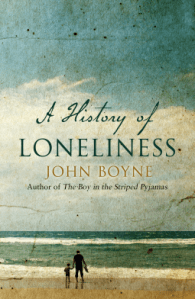
A History of Loneliness The first John Boyne book I read was This House is Haunted, a Victorian-style ghost story. The second was Crippen, a fictional account of the life of the murderer Dr Hawley Harvey Crippen. His latest novel, A History of Loneliness, deals with a subject no less dark and disturbing: the child abuse scandal within the Catholic Church in Ireland.

If you have heard about this scandal on the news or read about it in the newspapers, you have probably asked yourself the following questions. How did these paedophiles get away without being caught for so long? Their friends and colleagues must have known what was going on, so why didn’t they say anything? And why did the victims not come forward earlier? John Boyne attempts to answer these questions and more through the story of Odran Yates, a Catholic priest from Dublin who is ordained in the 1970s and lives through some of the darkest days in the church’s recent history.

Having lost his father and little brother under tragic circumstances during a family beach holiday, the young Odran doesn’t argue when his mother tells him he has a vocation for the priesthood and must dedicate his life to God. After seven years of training, Odran begins working at Terenure College where he finds that teaching English and tidying books in the school library suits him better than carrying out the duties of a traditional parish priest. Hiding away in his library for thirty years, Odran is able to ignore what is happening elsewhere in the church…but is he really as oblivious as he claims to be?

A History of Loneliness is a very insightful and thought-provoking novel and my favourite John Boyne book so far. This is obviously never going to be an easy or comfortable subject to write a book about, but he handles it with sensitivity and understanding. By telling the story from Odran’s perspective this means the focus is not just on the issue of child abuse itself, but also on the dangers of burying our heads in the sand and choosing not to confront things that we find difficult or unpleasant.

There are several different ways in which Odran’s character could be interpreted. I saw him as a weak, naïve but basically well-meaning person who made some terrible mistakes and serious errors of judgment. It’s difficult for anyone to know how they would react under similar circumstances, but I’m sure we would all like to think that we would do what is right and not just take the easy way out. Odran doesn’t always do the right thing and he does sometimes take the easy option, but does that make him as guilty as the people who have actually committed the crimes? It’s left to the reader to decide how much blame should be attributed to Odran and those like him and whether there can ever be any excuse for turning a blind eye and doing nothing.

The novel has an interesting structure as the chapters don’t follow each other chronologically (a chapter set in 2006 is followed by one set in 1964 and then 1980). This was confusing at times but very effective because it meant we were filling in one piece of the story at a time, like a jigsaw puzzle. John Boyne is a wonderful storyteller and as well as exploring the serious, sensitive issues I’ve already described, he also creates an absorbing personal story for Odran and his family which unfolds slowly as we jump back and forth in time.

With the story spanning more than five decades, we are shown how public perception of the Catholic Church has changed over the years. In the 1970s and 1980s, Odran is treated with respect and admiration everywhere he goes; people trust him and look to him for help and advice, never questioning his integrity. By the time we reach the present day, attitudes are completely different. A man spits in Odran’s face just because the clothes he is wearing identify him as a priest, while an attempt to help a lost child in a department store ends in disaster. It’s sad because, of course, not everyone within the church was involved in these sexual scandals and yet they have all suffered through the actions (or non-actions) of others.

A History of Loneliness could easily have been a very depressing book, but thankfully Boyne does add some humour to the story – even if he does seem to rely on Irish stereotypes and clichés at times (if you’ve ever watched the comedy Father Ted you’ll know the sort of humour I mean). If I haven’t already made it clear, I loved this book and am so glad I still have so many of John Boyne’s earlier novels left to explore!

I received a copy of this book for review via NetGalley.
The Sunrise by Victoria Hislop

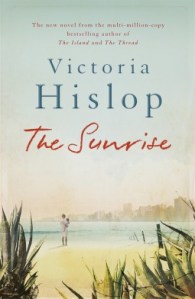
The Sunrise This is Victoria Hislop’s fourth novel but the first one I’ve read. She has previously written about the Greek leper colony on the island of Spinalonga (The Island), the Spanish Civil War (The Return), and the history of the Greek city of Thessaloniki (The Thread), all of which sound interesting to me as I know nothing about any of those subjects! Like the three books I’ve just mentioned, in The Sunrise, Hislop takes a time and place that many people, including myself, will be unfamiliar with and weaves a story around it.

In the summer of 1972, the city of Famagusta in Cyprus is a thriving holiday resort, one of the most popular tourist destinations in the Mediterranean. The beach is lined with luxury hotels, the most luxurious and expensive of them all being The Sunrise, which has just opened its doors for the first time. For the hotel’s owner, Savvas Papacosta, these are exciting times; his dream of becoming the most successful hotelier in Famagusta is moving one step closer to reality.

Within two years, everything changes. Unknown to the tourists as they enjoy the sun, sea and sand, a Greek military coup has led to Turkey invading the northern part of the island to protect the Turkish Cypriots. When the army approaches Famagusta, frightened guests evacuate the hotels and people flee their homes, among them Savvas and his glamorous wife, Aphroditi. But as Turkish soldiers surround the abandoned city, two families remain hidden inside their apartments. One family, the Georgious, are Greek Cypriots, and the other, the Özkans, are Turkish Cypriots. We follow the stories of both of these families, as well as the Papacostas, and see how each character copes with what has happened to their city.

I did enjoy The Sunrise but I thought it felt a bit uneven; not much happened in the first half of the book and a lot of time was spent introducing the characters, setting the scene and describing the interior of the new hotel. With hindsight, I can see that maybe this was necessary, so that we could appreciate the extent to which the lives of these characters were disrupted and destroyed by the coming conflict, but I still found myself getting impatient and wanting to get into the story! I loved the second half of the novel, though. The descriptions of the abandoned city – houses with beds still unmade and food still on the tables, waiting in vain for their owners to return – are extremely vivid and there are images from the book that have stayed in my mind several days after finishing it.

I didn’t particularly like any of the characters in the story but I thought they were an interesting selection of people and I could certainly sympathise with the situations in which they found themselves. While there are one or two characters in the novel who are motivated by greed and self-interest, it was good to see people of different backgrounds and political beliefs working together, overcoming their differences and discovering that their ‘enemies’ are human beings just like themselves.

Towards the end of the book there are too many coincidences and things are wrapped up too neatly for my liking, but overall I found The Sunrise a fascinating read. I have never been to Cyprus and as I said at the start of this post, I know very little about its history (apart from the 15th century civil war, which I read about in Dorothy Dunnett’s Race of Scorpions) so I’m pleased to have had an opportunity to learn about Famagusta’s tragic past. What makes the story even more poignant is that the district of Varosha, where The Sunrise is set, remains a ghost town even today, untouched and uninhabited for four decades.

Thanks to Bookbridgr for my copy of The Sunrise.

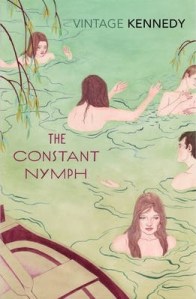
The Constant Nymph by Margaret Kennedy

The Constant Nymph This week Jane of Fleur in her World has been hosting a Margaret Kennedy Reading Week. Margaret Kennedy is a new author for me so I could have chosen to read any of her books (they all sound intriguing in different ways), but I decided to go with The Constant Nymph, as I’d received a copy from NetGalley a while ago. The Constant Nymph was published in 1924 and is probably Margaret Kennedy’s best-known book.

At the beginning of the novel, Lewis Dodd, a talented young composer is on his way to the Tyrol to visit his friend and fellow musician, Albert Sanger, who lives in a chalet in the Alps with his large family. Sanger has seven children – with three different mothers – and they are known collectively as ‘Sanger’s circus’. Lewis has been a frequent visitor to the chalet for years and the children consider him almost part of the family, but for fourteen-year-old Teresa (Tessa) he’s something more than that: he is the man she has loved for as long as she can remember. Lewis loves Tessa too, but as he is more than twice her age, they don’t tell each other how they feel.

When Albert Sanger dies unexpectedly, Sanger’s circus is broken up; the two eldest children, Caryl and Kate, decide to start new lives elsewhere, while Sanger’s current mistress, Linda, moves out of the family home with her young daughter, Susan. Tessa’s sixteen-year-old sister, the wild and free-spirited Antonia, marries her lover Jacob Birnbaum, so that only Tessa and her two younger siblings, Paulina and Sebastian, remain. Their relatives in England come to the rescue, with the children’s cousin, Florence Churchill, setting off for the Alps to see what she can do to help.

Florence is a well-educated, beautiful and refined young woman of twenty-eight and is shocked by the Sangers’ unconventional, bohemian lifestyle. She immediately makes plans to bring Tessa, Paulina and Sebastian to England and send them to school. Before she leaves Austria, however, she finds herself falling in love with Lewis Dodd who is still at the chalet. Despite his feelings for Tessa, Lewis is also drawn to Florence and the two are soon married.

It may seem that I’ve given away a lot of the plot here, but all of this actually takes place in the first half of the book. The remainder of the novel describes the marriage between Lewis and Florence, which as you might expect, is not a very successful one as Lewis really wants to be with Tessa – who is still in love with him. The viewpoint shifts from character to character so that we can understand the emotions and motives of all three (I never managed to warm to Lewis at all, but loved Tessa and had some sympathy for Florence). As the story starts to move towards the final chapters it’s obvious that things aren’t going to end happily for all of them – and maybe not for any of them. The ending, when it does come, is unexpected and not very satisfying. I felt that the characters deserved a better conclusion to their story.

I was also a bit disappointed that so many of Tessa’s other family members and friends disappeared in the middle of the book; Kennedy had gone to so much trouble to introduce us to Caryl and Kate, Linda and Susan, the Russian Trigorin and others, it seemed a shame not to develop any of their stories any further (though I’m aware that there’s a sequel, The Fool of the Family, where we might meet some of them again).

I did enjoy The Constant Nymph, though! The book hasn’t aged very well in some respects (the portrayal of Antonia’s Jewish husband, for example) but then, I read a lot of older books and can accept that sometimes they do feel dated. I loved the setting, the characterisation and the elegant, engaging writing style and am looking forward to reading more of Margaret Kennedy’s books. Thanks to Jane for hosting the reading week and introducing me to an author I might never have thought about trying!

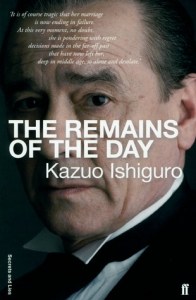
The Remains of the Day by Kazuo Ishiguro

The Remains of the Day The Remains of the Day tells the story of Stevens, an elderly butler who worked for many years in the service of Lord Darlington of Darlington Hall. After his master’s death, Stevens has continued to serve the house’s new American owner, Mr Farraday. Given a week’s holiday – and the use of Mr Farraday’s car – Stevens decides to take a drive through the English countryside to visit Miss Kenton, Darlington Hall’s former housekeeper. During the journey, he reminisces about the past, about his relationship with Miss Kenton, and about what makes a butler ‘great’.

I loved this book; it’s definitely one of my favourites of the year. It’s a gentle, slow-paced novel but completely compelling and, despite the lack of drama, I found it difficult to put down. I’m aware that my description above probably doesn’t make the story sound very interesting but I can promise you that it really is! Stevens’ trip through the South West of England (which takes place in 1956) and his memories of the past (the 1920s and 1930s) give the author a chance to explore lots of different topics from the daily duties of a butler and the running of an English country house to the political situation in Europe between the two world wars. Most of all, though, this is a story about loss and regret, misplaced loyalties and missed opportunities.

One of the things I found most impressive about this book was the authenticity of Stevens’ narrative voice. Ishiguro gets it completely right; the language is formal, emotionally restrained and perfectly suited to what we learn of Stevens’ personality. I could almost have believed that I really was reading the memoirs of an elderly British butler! The edition that I read (a library book) was from Faber and Faber’s ‘Secrets and Lies’ series of modern classics, which immediately made me wonder what secrets Stevens was keeping from us and what lies were being told. However, it’s not as simple as that. Unlike some unreliable narrators, Stevens is not intentionally trying to mislead the reader; he is actually lying to himself. He knows, for example, that Lord Darlington’s views are not always entirely right, but he wouldn’t dream of questioning them and manages to convince himself that there’s nothing to worry about.

Stevens spends a lot of time thinking about the qualities that make a great butler and he decides that the most important of these qualities is ‘dignity’. Sadly, Stevens has devoted so much of his life to maintaining his dignity that he has missed out on things like love and friendship and has denied himself the right to form opinions of his own. He never allows himself to experience pleasure or enjoyment and never displays any emotion, even when faced with personal tragedy. His story is such a sad one, though not without any humour – the book is quite funny in places, especially when Stevens describes his unsuccessful attempts at ‘bantering’. The ending is perfect too; the book’s final chapter is poignant and moving but does leave both the reader and Stevens with some hope and optimism.

The only other book I’ve read by Kazuo Ishiguro is Never Let Me Go, which I enjoyed but didn’t love as much as this one, although it’s difficult to compare the two as they’re so completely different. Now I’m wondering which of his books I should read next.

The Italian Girl by Lucinda Riley

The Italian Girl Rosanna Menici is only eleven years old when she first meets Roberto Rossini, the son of her parents’ best friends. Roberto is an opera singer at La Scala in Milan, a career which to Rosanna seems impossibly glamorous and out of reach. At a family party, Roberto hears her voice and recommends that she have singing lessons, but Rosanna tries not to get her hopes up. Her parents run a restaurant in the Piedigrotta district of Naples and although it is a successful business, they are not rich people and singing lessons are expensive. But when Rosanna’s brother, Luca, comes to the rescue and helps to pay for the lessons, it seems that her dream of becoming an opera star and marrying Roberto could eventually become a reality.

The Italian Girl is a lovely, romantic story spanning three decades and taking us from the streets of Naples and churches of Milan to a peaceful English village and some of the world’s greatest opera houses. It’s not a new novel – it was originally published as Aria in 1996 under the name Lucinda Edmonds – but has been revised and updated so that you wouldn’t guess it had been written so much earlier than the more recent Lucinda Riley books.

One way in which this book is different to the other novels by Lucinda Riley that I’ve read (The Girl on the Cliff, The Light Behind the Window and The Midnight Rose) is that the others have dual narratives, jumping between past and present, but this one, apart from a few letters written by an older Rosanna, follows one linear timeline. I like both types of book, but I do prefer to stay in one time period so I was happy with that aspect of The Italian Girl. Although this book isn’t really what you could call ‘historical’, being set in the fairly recent past, I think I would still have liked more period detail as the 1960s chapters didn’t feel any different from the 1970s or 1980s. On the other hand, this is a story driven more by the characters and their relationships rather than by the setting.

I initially found the young Rosanna a very endearing character. Things did seem to fall into place for her too easily, but I didn’t mind because I liked her and wanted her to succeed. Later in the book, though, I began to find her frustrating. I disagreed with a lot of her decisions, but I was hopeful that she would do the right thing in the end. As for Roberto, I had thought at first that he was going to be the sort of romantic hero I could fall in love with along with Rosanna…suffice it to say that this certainly didn’t happen, but I won’t spoil the story by explaining why not!

While the relationship between Rosanna and Roberto forms the main plot, there’s also a secondary romance between Luca and Rosanna’s friend, Abi. I liked both of these characters and found their story as interesting to follow as Rosanna’s and Roberto’s. I also enjoyed learning about the lifestyle of a professional opera singer and the amount of hard work and training it takes to reach the top. I’m not an opera fan and probably never will be, but this book made me want to listen to some of the arias Rosanna sings in the story.

The Italian Girl is a long book – almost 600 pages, which makes it quite a thick paperback – but after a slow start I was swept away by the story and it didn’t feel as long as it looked. It was the perfect book to read sitting outside in the summer sunshine we’ve had here this week!

I received a copy of The Italian Girl for review.

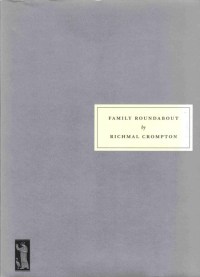
Family Roundabout by Richmal Crompton

Family Roundabout Like many people, I read some of Richmal Crompton’s Just William books as a child but have never investigated any of her adult fiction. I don’t think I was even aware that she had written books for adults until just a few years ago when I discovered Persephone Books. This is the first Persephone I’ve read for a while and it has reminded me of all the reasons why I love reading the books they publish.

Family Roundabout is set in a small town in England in the 1920s and 30s and tells the story of two families, the Fowlers and the Willoughbys, each consisting of a widowed mother with five adult children. The families are initially drawn together when Helen Fowler marries Max Willoughby, and as the years go by their lives become more and more entwined as various other family members form friendships, fall in love or become rivals. Some of these family members include Anice Fowler, quieter and less confident than Helen, whose envy of her sister could destroy her chance of happiness; Oliver Willoughby, reluctant to go into the family business but lacking the courage and the spirit to do something different; Cynthia Willoughby and Judy Fowler, whose friendship becomes strained after they have the opportunity to meet their favourite author, Arnold Palmer; and Peter Fowler, unhappily married to the spiteful, manipulative Belle.

Each of these characters has his or her own storyline and there are other Fowler and Willoughby children too – and later, grandchildren – so as you can imagine, there’s a lot happening in this novel. At the centre of the story, though, are the two people around whom all the others revolve: Mrs Fowler and Mrs Willoughby.

Mrs Fowler was once Millicent, a strong, independent person with opinions of her own, but after her marriage she became Milly, obliging, submissive and gentle. Millicent hasn’t disappeared entirely, but Milly is now the dominant side of her personality. She is always there for her children when they need her, but takes quite a passive approach to parenting, rarely interfering and allowing them to choose their own path in life. Mrs Willoughby, on the other hand, is practical, efficient and likes to control every aspect of her childrens’ lives. Even after they marry and leave home, she continues to make decisions for them and tell them what to do. The author never judges these two different styles of mothering and it is left to the reader to decide which, if either, is the most successful parent.

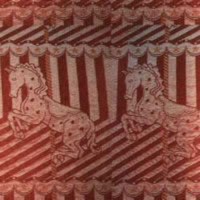
Family Roundabout endpapers

Family Roundabout endpapers

Family Roundabout is a very character-driven novel and fortunately almost every character in the story is well drawn and interesting. There were some that I didn’t like (Belle has to be one of the most horrible, vile people I’ve come across in fiction for quite a long time) but I enjoyed following all of their stories through to the end of the book. I loved the portrayal of the self-absorbed author, Arnold Palmer, and I thought the child characters were very well written too, which is maybe not surprising from a writer who wrote so many successful children’s books!

There’s a lot of unhappiness in this novel, a lot of bitterness and jealousy, but there are also some funny scenes and some amusing bits of dialogue, which means it doesn’t become too dark. I’m not sure I would rank this among my very favourite Persephones but I did really like it. It’s a shame more of Richmal Crompton’s adult novels aren’t still in print, as I would definitely be interested in reading them having enjoyed this one so much.

The Orchard of Lost Souls by Nadifa Mohamed

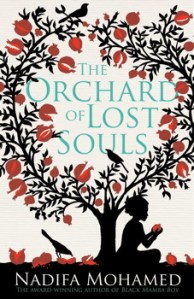
The Orchard of Lost Souls In 2013, Nadifa Mohamed was named one of Granta’s “Best Young British Novelists”. This is her second novel, set in Somalia in the 1980s as rebel forces clash with the military dictatorship and the country heads towards civil war. The events of this turbulent period are seen through the eyes of three female characters:

* Deqo, a nine-year-old orphan who grew up in a refugee camp and has now found herself homeless and alone in the city of Hargeisa.
* Kawsar, a widow mourning the death of her daughter, who becomes confined to her bed after a violent beating at the police station.
* Filsan, a soldier sent to Hargeisa from the capital city of Mogadishu and feeling homesick for the life she has left behind.

During a military parade at a stadium in Hargeisa, the paths of these three women briefly cross before they are separated again and go on to have very different experiences of this troubled time in Somalia’s history.

I don’t think I’ve ever read a book set in Somalia before and I knew nothing about the causes of the civil war or the situation in Hargeisa, so reading The Orchard of Lost Souls meant I had an opportunity to learn something new. Telling the story from three different perspectives allows the author to explore different aspects of the war; through Deqo and Kawsar we see what it was like for people living in and around Hargeisa, trying to survive from one day to the next, while Filsan’s story gives us some insights into the military regime. As you can probably guess, many of the things the women experience are traumatic and brutal, though I won’t go into any details here.

As well as being educational, this is also a compelling story (or stories, as there are really three of them in this one novel) and I was interested in all three characters, although I thought Filsan was much more difficult to like than either Deqo or Kawsar. However, I did have some problems with the structure of the novel, especially at the beginning. For the first fifty pages of the book, the viewpoint switches rapidly between each of the three women which I found very overwhelming and confusing. I was relieved to discover that this didn’t continue all the way through the book! The opening section was followed by three longer sections concentrating on one character at a time, so I was able to get to know each of them separately before they eventually meet again near the end of the novel.

I can see why Nadifa Mohamed has won awards for her writing because she clearly has a lot of talent and her descriptions of Somalia are beautiful. I’ll leave you with one of my favourite passages, where Filsan remembers the streets of Mogadishu:

In the centre of the city where the alleys narrow at points to the width of a man’s shoulder blades, you can walk as if in a dream, never certain of what might appear after the next bend: a bare-chested man with a silver swordfish slung over his thin black back, a shoal of children reciting Quran from their wooden slates, a girl milking a white, lyre-horned cow. The place has enchantment, mystery, it moves backward and forward in time with every turn of the feet; it is fitting that it lies beside an ocean over which its soul can breathe, rather than being hemmed in by mountains like a jinn in a bottle.