The Children of Dynmouth by William Trevor

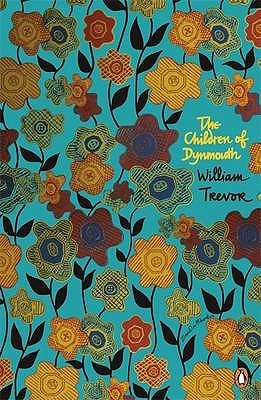
The Children of Dynmouth I always believe in giving an author a second chance, so after a failed attempt at reading William Trevor’s Love and Summer a few years ago, I have still been interested in trying more of his work. As March is Reading Ireland Month (hosted by Cathy and Niall) and Trevor is an Irish author, this seemed a good time to give another of his books a try.

Published in 1976, The Children of Dynmouth is set in a typical English seaside town full of ordinary people leading ordinary lives – at least on the surface. Fifteen-year-old Timothy Gedge, who wanders the streets of Dynmouth watching and listening, knows what is really going on behind closed doors and inside people’s heads…and he’s not afraid to use that information to his own advantage. As family scandals, hidden passions and secret affairs are brought to light, the adults and children of Dynmouth begin to wonder what Timothy’s motives really are.

Timothy Gedge is a sinister creation, at the heart of all the tension in Dynmouth, although it’s never quite clear whether or not he is fully aware of the trouble he is causing and the inappropriateness of his actions. The first real indication that something is badly wrong comes when we learn that he is planning to enter the annual Spot the Talent contest with a gruesome ‘comedy act’ which no decent person could possibly find funny. When several obstacles are placed in the way of his act – the lack of a curtain for the stage, for example, and the need for a man’s suit and a wedding dress – Timothy goes to great lengths to get what he wants, regardless of who gets hurt in the process.

With no father in his life and a mother who neglects him, Timothy has been left to fend for himself and has grown up to be a lonely, awkward teenager facing the usual fate of Dynmouth’s young men: a lifetime spent working in the town’s sandpaper factory. The people of Dynmouth can’t get away from him as he tries to connect with them in any way he can; he is everywhere they turn, listening to private conversations, staring through windows, inviting himself into their homes, asking questions, hiding in the shadows and lurking in the background at funerals. Nobody likes him and nobody wants him there, but as a representation of all that is wrong with society, he can be seen as everybody’s responsibility and everybody’s problem.

Timothy is an unsettling character – and this is an unsettling novel. It’s a short book at under 200 pages, but long enough for the author to build up a complete portrait of life in a small community in 1970s England, to introduce us to the people who live there, and to add undercurrents of danger and foreboding, so that by the end of the novel we go away with a very different impression of Dynmouth than we had at the beginning.

The Children of Dynmouth is a disturbing but thought-provoking book and one which left me with a lot to think about after I turned the final page. I would like to read more by William Trevor, so your recommendations are welcome. I’m prepared to try Love and Summer again too, as I think I was probably just in the wrong mood for it the first time.

The Madwoman Upstairs by Catherine Lowell

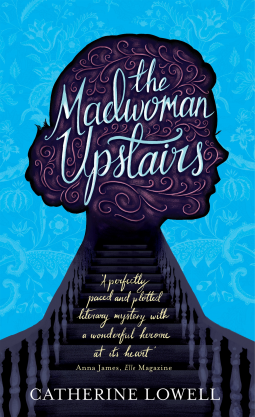
The Madwoman Upstairs As someone who loves the work of the Brontë sisters, I was both intrigued by and wary of a book described as “A witty modern love story which draws from the enduring classics of Jane Eyre and Wuthering Heights”. Modern novels inspired by classics can sometimes be very good, but they can also be very bad, so I was interested to see what this one would be like. I’m pleased to report that I enjoyed it, but with one or two reservations.

Our narrator, a young American woman called Samantha Whipple, is (supposedly – this is fiction) the last living descendant of the Brontë family. The novel opens several years after the death of Samantha’s father, the eccentric author Tristan Whipple, from whom she is believed to have inherited a vast Brontë estate which includes previously unseen drawings and manuscripts. Samantha knows this is untrue; her inheritance consists of something known only as The Warnings of Experience – what exactly this may be, she has no idea.

Arriving at Oxford University to study English Literature, Samantha is told that there’s a shortage of accommodation and is given a room on the fifth floor of a windowless tower decorated with an eerie painting she calls The Governess. Things become eerier still when her father’s old copies of the Brontës’ novels start to mysteriously appear in her room – novels which she believed to have been destroyed in the fire that killed her father. It seems that Tristan Whipple, from beyond the grave, is sending Samantha on a literary treasure hunt – and with the reluctant help of her tutor, James Timothy Orville III, she begins to follow the clues.

There’s so much in The Madwoman Upstairs for a Brontë fan – or a fan of literature in general – to enjoy. Samantha and Orville, who have very different views about reading, have lots of fascinating discussions, asking questions to which there is no right or wrong answer, such as whether the intentions of the author or the reader’s own interpretation is more important. In particular, they talk about the Brontës and their novels, exploring the themes and symbolism and how the sisters drew on their own lives and experiences for inspiration. I liked the fact that Anne, who is usually given less attention than Charlotte and Emily, was the most prominent of the sisters in this book, and Catherine Lowell has some theories about her which I had never come across before. This was all very interesting and I liked this aspect of the book much more than the mystery element – or the romance, which was quite predictable.

My main problem with this book was the character of Samantha herself. Homeschooled by her father and with no friends her own age, she’s awkward, outspoken and lacking in important social skills. I didn’t dislike her; some of the things she says are quite funny, and I particularly liked her response when asked if there are any leading men in her life (“several, but they’re all fictional”). However, I couldn’t understand why someone who appeared to have no passion for literature and claimed not to like any authors had chosen to study English Literature and how she could possibly have been offered a place at one of the world’s top universities. I thought her conversation with Orville at their first tutorial session was unrealistic – I couldn’t imagine speaking to a tutor like that!

Of course, the whole portrayal of university life in this book is unrealistic. Apart from her one-to-one meetings with Orville, Samantha seems to receive no other form of tuition and doesn’t have any interaction at all with any of the other students. And would Oxford really house a new student alone in an ancient tower which is part of a weekly tour? [Edited to add: maybe some of this is more normal than I’d thought]. Luckily, I was able to overlook the more implausible parts of the plot and concentrate on enjoying the literary analysis and Brontë references. If you can do that too, I think you’ll find this an entertaining read with some fascinating insights into the lives and work of Anne, Emily and Charlotte.

I received a copy of this book for review via NetGalley.

Human Croquet by Kate Atkinson

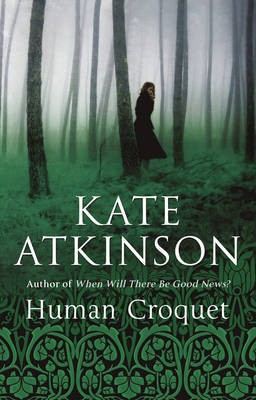
Having read Kate Atkinson’s two most recent books, Life After Life and A God in Ruins, as well as some of her Jackson Brodie mysteries, I’ve been curious about her earlier novels and was pleased to see this one from 1997 on the library shelf. I knew nothing about this novel before I started to read it and I think that was a good thing because this is a story packed with surprises, plot twists and weird and wonderful occurrences. I have done my best here to give you an idea of what the book is about without giving too much away.

Human Croquet Human Croquet is narrated by sixteen-year-old Isobel Fairfax who lives with her family in a house called Arden in a small town somewhere in the north of England. Isobel’s family consists of her brother, Charles, their Aunt Vinny, and their father Gordon, who has recently returned after a long absence, bringing with him a new wife, Debbie. Gordon’s first wife, Eliza – mother of Isobel and Charles – disappeared years ago, although her presence at Arden can still be felt in small and unexpected ways. Throughout the novel we move between the Present (Isobel’s life in the 1960s) and the Past (in which we learn more about the early days of Gordon’s marriage to Eliza and the events leading up to her disappearance).

Now, this might all sound quite straightforward so far, but I’ve promised some surprises, plot twists and weird and wonderful occurrences – and yes, there are plenty of those! One of the first indications we get that something is not right in Isobel’s world comes when she finds herself suddenly slipping through time, briefly emerging in another period before just as suddenly returning to her own time. Charles, who is obsessed with the paranormal, is envious, telling her she must have experienced a time warp. But this is only the beginning of a series of increasingly bizarre things which happen to Isobel and her family. Things also become darker and darker as Isobel tries to make sense of what is going on and the truth about Eliza is slowly revealed.

Human Croquet is a wonderfully creative and imaginative story in which Atkinson plays with time and with our perceptions of what is real and what is unreal. The novel is rich in literary references and allusions; the name of Isobel’s home, Arden, brings to mind the Forest of Arden in Shakespeare’s As You Like It, and both the Shakespearean theme and the forest/tree symbolism continue throughout the book. Even the title, Human Croquet, has a meaning which only really becomes clear right at the end of the novel and which made me think again about Isobel’s role in the story.

My favourite thing, though, about this – and all of Atkinson’s books – is the characterisation. Isobel’s narrative voice is very strong and distinctive, sometimes funny, sometimes sad, and peppered with witty observations, self-deprecating humour and clever wordplay. Through Isobel’s eyes the rest of the Fairfax family, as well as their friends and neighbours, come to life in vivid detail. Among the most memorable are the people next door, timid Mrs Baxter and her daughter Audrey, both of whom live in fear of the sinister ‘Daddy’. The Fairfaxes are not the only troubled family in Human Croquet; this is definitely not a happy story, so I was pleased to find that there are some lighter moments to alleviate the darkness.

I haven’t read anything by Kate Atkinson yet that hasn’t impressed me; I’m looking forward to reading the rest of her earlier books, as well as Started Early, Took My Dog, the only Jackson Brodie novel I haven’t read yet. What is your favourite Kate Atkinson book?

Margery Sharp Day: The Nutmeg Tree

One of the things I love about book blogging is being introduced to authors I would otherwise never have thought about reading. Margery Sharp is one of those authors. Jane at Beyond Eden Rock hosted a celebration of Margery’s work on her birthday (25th January) last year but I wasn’t able to take part, so I was pleased to see that she was doing it again this year. Not knowing much about any of her books, I picked her 1937 novel The Nutmeg Tree, which I hoped would be a good place to start.

And it was a good place to start! I found it a light, entertaining and witty story with a main character I loved. Her name is Julia (“by marriage Mrs. Packett, by courtesy Mrs. Macdermot”) and as the novel opens, she is in the bath singing the Marseillaise while men from the Bayswater Hire Furniture Company are removing her furniture. The reason for this is that she needs money for a journey to France to visit her daughter, Susan. Susan was the product of Julia’s brief marriage to a soldier who was killed in action, and being young and keen to pursue a career as an actress, Julia had left her daughter to be raised by her in-laws. Now, after nearly twenty years, Susan has sent a letter to her mother, begging her to come to visit the family in France. She wants to get married, she says, “and Grandmother objects”.

Reunited with her daughter after such a long absence, Julia finds that Susan is very different from herself: sensible, reliable and with strong principles. However, when she meets Bryan, the man Susan intends to marry, Julia immediately knows he is one of “her sort”. She is sure he won’t make Susan happy, so she has a decision to make. Should she support the marriage or oppose it? To make things worse, Bryan also recognises Julia as a kindred spirit. Will he expose her true character to her in-laws, to whom she has been trying to pass herself off as a respectable lady?

I wasn’t sure at first whether Julia would be a character I was going to like, but I did warm to her very quickly and enjoyed reading about her exploits as she stumbled from one disaster to another. She has such a mixture of qualities, some good and some bad: she can be irresponsible and often acts without thinking, but she’s also warm, friendly and fun-loving. She may have made mistakes in the past (and continues to make them in the present) but her heart is in the right place and she tries so hard to be ‘good’ that it’s easy to forgive her. I ended up loving Julia, though I couldn’t help but wonder what readers in 1937 would have thought of her!

Julia is the star of the story, but some of the other characters are wonderful too, particularly Susan’s grandmother who is convinced that Julia is going to open a cake-shop (and even starts collecting recipes on her behalf), and Sir William, Susan’s guardian, who is also visiting the family and with whom Julia finds herself falling in love. I desperately wanted Julia and Sir William to get the happy ending they deserved, though I’m not going to tell you whether that happens or not, of course! I did think the ending seemed quite abrupt, which I found slightly disappointing at first, but on reflection it was probably the best way the story could have ended.

I’m so pleased that my first experience of Margery Sharp’s work has been a good one and I’m sure I’ll be reading more of her books in the future.

Amberwell by D. E. Stevenson

The property was situated in a fold of the hills and sloped gently down to the sea. It consisted of meadows and a little wood and some moorland; there was a well, built of glowing yellow stone, which was fed by a spring and was always full of ice-cold water. The water itself was as clear as crystal but the reflection of the stone gave it the appearance of amber…it was this well which gave the property its name, Amberwell.

Amberwell

A few years ago I read one of D. E. Stevenson’s most popular novels, Miss Buncle’s Book. I found it a lovely, charming read, but as I said in my review at the time, I thought it ‘lacked that special spark’. I hadn’t really thought about reading any more of her books until I noticed that some of them were being reissued by Endeavour Press. I liked the sound of Amberwell and decided to give Stevenson another chance to impress me.

Amberwell is the name of a house and estate in the south west of Scotland, home to Mr and Mrs Ayrton and their five children: Roger, Tom, Connie, Nell and Anne. The Ayrtons show little interest in getting to know the children; the two boys are sent away to school as soon as possible, their future careers mapped out for them by their father regardless of their own wishes. Education for the girls is not considered important – they remain in the nursery at Amberwell to be raised by Nannie and taught at home by Miss Clarke, who comes in daily.

As the years go by and World War II approaches, the Ayrton children begin to follow their own paths in life. Roger and Tom go off to war while Connie and Anne (under very different circumstances) both leave home, with only the middle sister, Nell, left behind to care for Amberwell. Amberwell itself remains at the centre of the story and even as the Ayrtons move away or move on, it continues to hold a special place in each of their hearts.

I loved Amberwell. I found it very different from Miss Buncle’s Book (a more serious, poignant story rather than a humorous one) but much more to my taste. I was particularly interested in the portrayal of the effects of war on a wealthy family living in a quiet, rural area who at first are shielded from what is going on elsewhere but eventually find that their own way of life is changing too. I could understand Roger’s anger during a conversation with his parents in which he discovers that they are more concerned about losing their servants than they are about Roger himself, who is risking his life for his country.

This is not just a book about war, of course. It’s also a book about Scottish society before and during the war and what it was like to be a young woman growing up in that time and place. And it’s a book about the relationships between brothers and sisters and between parents and children – and the damage which can be caused by a lack of understanding, attention and affection.

The beautiful Connie is the conventional one who does what is expected of her and as such she is the least interesting of the Ayrtons to read about as well as being the hardest to warm to, but I cared very much about the fates of the other four siblings. Anne’s life takes a dramatic turn following a visit to her Aunt Beatrice and we have to wait until the end of the novel to hear the full story of her adventures, while Tom and Roger are both easy to like and their love for Amberwell and their sisters shines through strongly. But this is really Nell’s story – Nell’s and Amberwell’s – and Nell is a wonderful person, offering help and support to those who need it and ensuring that her brothers and sisters have a home to come back to when the war is over.

After finishing this book I was pleased to find that there is a sequel, Summerhills, which I will be reading as soon as I have the opportunity. I would love to know what happens to the characters I’ve become so fond of, particularly Nell, my favourite. I also have a copy of another Stevenson novel, Vittoria Cottage, which I’m looking forward to now that I’ve enjoyed this one so much.

I received a copy of this book for review from Endeavour Press via NetGalley.

A God in Ruins by Kate Atkinson

A God in Ruins It’s been nearly three years since I read my first Kate Atkinson novel, Life After Life, in which Ursula Todd lives her life over and over again, each new life giving her a chance to alter decisions and mistakes made in the one before. Since then I’ve been catching up with Atkinson’s Jackson Brodie mystery series (I only have one of those left to read) but last week I decided it was time to pick up her latest novel, A God in Ruins, and reacquaint myself with the Todd family.

A God in Ruins is not exactly a sequel to Life After Life – it can be better described as a ‘companion novel’ – and both do stand alone. There are some similarities between the two novels, but there’s also a big difference. While Life After Life follows several different versions of the same person’s life, A God in Ruins concentrates on someone who lives just one life: his name is Teddy Todd and he is Ursula’s younger brother.

Teddy’s story is told in non-chronological order, so that a chapter about his childhood is followed by one set towards the end of his life and then another describing his time as a World War II bomber pilot (there are several wartime chapters interspersed throughout the novel). We also get to know Teddy’s wife, Nancy (who was literally the ‘girl next door’), their daughter, Viola, and grandchildren, Sunny and Bertie. The stories of each of these people unfold gradually, chapter by chapter, and the non-linear timeline means that we are sometimes given hints of something that has happened in the past or will happen in the future but have to wait until later in the book for a revelation. Flashbacks and ‘flashforwards’ often happen in the middle of a paragraph or even a sentence, which I found intriguing rather than confusing.

I enjoyed A God in Ruins but didn’t love it as much as I loved Life After Life, maybe because it felt less innovative without the device of one person living many different lives. Still, many of the same themes are here: life and death, fate and the ways in which our actions in the present can have big consequences in the future, and, of course, the effects of war. I mentioned that there are several chapters on Teddy’s experiences piloting a Halifax bomber during the war. I didn’t initially find these sections very engaging (in the words of Nancy, Teddy’s wife, “Let’s talk about something more interesting than the mechanics of bombing”), but eventually I was drawn in and started to enjoy those chapters as much as the others.

My favourite thing about Kate Atkinson’s writing is the way she creates characters who feel so real and believable – even if some of them are not easy to like, they are still interesting and fully developed. Viola, for example, is a cold and bitter person, unable to offer her children any love and affection, and as her father grows older, resenting every minute of the time she has to spend caring for him. At first it seems that there is no reason for Viola’s selfish behaviour, but later in the novel we learn of something that happened in her childhood that could provide an explanation.

I also liked all the little literary references Atkinson slipped into the story. I was particularly pleased to see that Teddy was an Anthony Trollope reader! As for the ending of the book, I think it’s probably best if I say nothing at all – other than that it’s one of those endings people will either love or hate. Personally, I thought it was perfect; it changed the way I felt about the entire book and left me with a lot to think about, which is what all good novels should do.

The Old Man’s Birthday by Richmal Crompton

The Old Mans Birthday Richmal Crompton is best known for her Just William stories for children, but she has also written a large number of books for adults. I read one of them – Family Roundabout – last year and enjoyed it, so I was pleased to see that Bello have been republishing several more of her adult novels, including this one, The Old Man’s Birthday.

Matthew Royston, the old man of the title, is preparing to celebrate his ninety-fifth birthday with a family party to which he has invited all of his children, grandchildren and great-grandchildren. Nobody has been left out – not even Matthew’s grandson, Stephen, who has become estranged from the rest of the family because he is living with a woman who is not his wife. Not a problem in modern society, of course, but scandalous in the 1930s! Matthew is determined that Stephen’s partner, Beatrice, will be made to feel welcome, so in the hours leading up to the party he takes her from house to house to introduce her to the Roystons.

The whole novel takes place over the course of that one day, beginning with Matthew waking up on the morning he turns ninety-five and finishing with his birthday meal. In between, we meet each member of the Royston family – and as Matthew has five children and some of those have children and grandchildren of their own, there are a lot of characters to get to know! My advice to anyone planning to read this book is to draw a family tree as each person is introduced; it didn’t occur to me to do that until I was halfway through the novel, but it definitely would have made things much easier.

This is not a book with a lot of plot, but I hadn’t expected that it would be. The strength of the novel is in the characterisation; Crompton gives so much depth to every family member that on reaching the end of the book I was disappointed that I had to leave them all behind. I would like to tell you about all of them, but as I don’t want to spoil too much of the story for future readers I’ll just highlight two or three that I found particularly memorable. First there’s Enid, Matthew’s unmarried granddaughter, who runs the village hockey team. She’s probably not a person I would like in real life (despite the hero worship she inspires among the younger women at the hockey club) but she’s one of the strongest characters in the novel and I eventually found that behind her loud, overbearing exterior lies a shy and insecure woman whom she doesn’t want anyone to see.

Secondly, there’s Matthew’s son Richard, an elderly bachelor who has spent years running away from responsibilities and burying himself in his books. An unexpected friendship formed with one of his nieces on the day of the old man’s party could change Richard’s life for the better. And finally, there’s Pippa, one of Matthew’s great-granddaughters. Sixteen-year-old Pippa has always felt like a poor relation compared to her cousins, Pen and Daphne, so when she is given the opportunity to fulfil an ambition she’s determined to make the family proud of her. These three characters – and all of the others – are well-drawn and convincing, and considering that the novel only covers one day in their lives, we also see a surprising amount of character development.

I loved The Old Man’s Birthday, if I haven’t already made that clear! One slight criticism would be that I found the ending very easy to predict – but having said that, it was the perfect way to end the story, so I didn’t mind the predictability too much. I enjoyed celebrating Matthew’s special day with the Royston family and now I’m looking forward to reading more of Richmal Crompton’s books.

I received a copy of this book for review via NetGalley.