Americanah by Chimamanda Ngozi Adichie

Americanah Americanah is the story of Ifemelu and Obinze, two Nigerian people who have very different experiences of immigration. Ifemelu leaves Nigeria as a young woman to complete her studies in America. Thirteen years later she is still there, having established a successful career for herself as a blogger, but she has now made the decision to go home. Before she returns to Lagos, Ifemelu goes to an African hair salon in Trenton, New Jersey, to have her hair braided – a process which takes six hours, giving her time to reflect on all the things she has learned and observed during her years in America.

Obinze, who was Ifemelu’s boyfriend before she left Nigeria, also has dreams of going to America but is unable to obtain a visa and ends up working in London as an illegal immigrant. Obinze and Ifemelu are eventually reunited in Lagos, but will their love have survived so many years of separation?

As promised on the book cover, there is a love story to be found in Americanah, but this is not the main focus of the novel. The focus is on Ifemelu and her life in America, with several chapters following Obinze and his experiences in England. On arriving in the country that will be her home for the next thirteen years, Ifemelu faces a lot of challenges and difficulties, ranging from finding a job to learning how to cook hot dogs! She has many encounters with examples of racism (sometimes very subtle and sometimes much more obvious) and at the other end of the scale, people who are trying too hard to avoid talking about race because they’re afraid that they might cause offence. All of this gives Ifemelu plenty of material for her blog, which she calls Raceteenth, or Various Observations About American Blacks (Those Formerly Known as Negroes) by a Non-­American Black.

Some excerpts from Ifemelu’s blog posts are included in the book and are fascinating to read, particularly when she writes about the differences between being a black American and a non-American black person. Something I found interesting was Ifemelu’s comment that “I came from a country where race was not an issue; I did not think of myself as black and I only became black when I came to America.” This is in contrast to her cousin, Dike, who leaves Nigeria with his mother as a very young child and so has a very different perspective on life.

While I didn’t love Americanah quite as much as I’d hoped to, it was full of insightful observations and it’s a book that I would recommend to everyone, whatever your race, nationality or skin colour. As a white person, I confess that many of the aspects of race discussed in the novel are things that have never even occurred to me. So, as a commentary on race and immigration, I thought this book was excellent – the best I’ve read on these subjects. The various devices Adichie uses (blog posts, discussions at dinner parties, the conversations of the women working in the hair salon) give her an opportunity to explore important issues in an interesting and often witty way rather than just lecturing the reader.

Purely as a novel, though, I thought Americanah was less successful. It felt a lot longer than it really needed to be, considering the plot is not a particularly complex one, and while I was interested in following Ifemelu’s and Obinze’s separate storylines, I found I didn’t really care whether they got back together at the end of the book or not. I think for me personally this is a book I enjoyed on an intellectual level rather than an emotional one, which is not necessarily a negative thing, but probably the reason why, of the two books I’ve now read by Adichie, I prefer Half of a Yellow Sun to this one.
The Burgess Boys by Elizabeth Strout

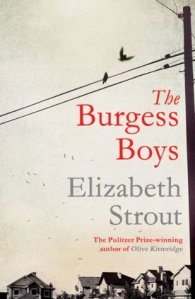
The Burgess Boys Although the title of this novel is The Burgess Boys, there are actually three Burgess siblings – Jim, Bob and their sister Susan. Jim and Bob live in New York, while Susan is the only one to have remained in Shirley Falls, Maine – the town where they grew up. Jim is an ambitious and successful lawyer, whose defence of the singer Wally Packer has made him a household name. His younger brother, Bob, also has a career in the law but has never matched Jim’s achievements; he has spent his whole life blaming himself for an accident which killed his father, and as a result he doesn’t have a lot of confidence. Susan, Bob’s twin, is a single mother living in Shirley Falls with her troubled teenage son, Zach.

Shirley Falls, predominantly a white community, has recently become home to large numbers of Somali immigrants. Racial tensions in the town are already high and when Zach throws a frozen pig’s head through the door of a mosque during Ramadan, it causes a national scandal. Jim and Bob return to the town of their childhood to support their sister and find out why their nephew has done something so terrible, but in the process they make some surprising discoveries about themselves and about each other.

I received a review copy of this book from the publisher last year but didn’t read it as it didn’t sound very appealing to me and as I hadn’t requested it I didn’t feel under any obligation to read it if I didn’t want to. I do remember reading some positive reviews of it, though, and when I noticed it was named on the shortlist for the Baileys Women’s Prize for Fiction I decided to give it a try. Now that I’ve read it I think my initial reaction was correct because it really wasn’t my type of book at all; I was interested enough to keep reading right to the end and I appreciated the quality of Elizabeth Strout’s writing, but this was a book that I could admire without particularly enjoying.

I found this quite a subdued and depressing novel. All of the characters, even the secondary ones, seem to be such unhappy people, dissatisfied with their lives, their marriages and their jobs. With the possible exception of the good-natured Bob Burgess and one of the Somali characters, Abdikarim Ahmed, I didn’t like any of them. I thought Susan was cold and bitter, Jim was over-confident and insensitive, and Helen (Jim’s wife) was shallow and self-absorbed. There’s certainly a lot of character development and by the end of the book it’s obvious that there is more to each person than originally meets the eye – but they are simply not people that I had much interest in getting to know.

I do think it was a good idea to write part of the novel from the perspective of the Somali immigrants. I was struck by the way so many of the non-Muslim people in Shirley Falls, while not necessarily racist, seem to have almost no knowledge of Islamic culture or the customs of the Somali people who are living among them (they incorrectly refer to them as Somalians, for example, and in some cases have never heard of Ramadan and don’t know why a pig’s head might be offensive to a Muslim). However, I never felt I completely understood Zach and why he did what he did, although the author does her best to make us feel sympathetic towards him by portraying him as a shy, awkward teenager who (slightly unbelievably) was unaware of the implications of his actions.

The Burgess Boys is a thought-provoking read and a good portrayal of a dysfunctional family, but I found the story disappointingly flat and boring, lacking any sort of drama or interesting plot developments. However, despite not enjoying this book very much I haven’t ruled out trying one of Elizabeth Strout’s other books at some point, particularly Olive Kitteridge which sounds much better than this one.

Ghostwritten by Isabel Wolff

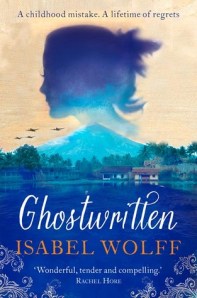
Ghostwritten As a ghostwriter, Jenni’s job involves writing books for people who are unable or unwilling to do the writing themselves. Many of her projects include celebrity biographies and self-help guides, but some of her clients are ordinary people with extraordinary tales to tell. At a friend’s wedding she is introduced to a man who tells her about his mother, Klara, a Dutch woman who survived the Japanese internment camps in Java during World War II. Klara has said very little to her family about her wartime experiences, but as she approaches her eightieth birthday she has decided that the time has come for her story to be told. Intrigued, Jenni agrees to visit Klara at her home in Cornwall and help to put her memories down on paper.

The only problem with this new project is that the little Cornish town of Polvarth where Klara lives is a place that holds traumatic memories for Jenni, but although she is not very happy about returning to Polvarth, the temptation of hearing Klara’s story is impossible to resist. After meeting Klara and listening to her talk about her childhood, her family’s rubber plantation in Java, and the unimaginable horrors of the internment camps, Jenni is both moved and inspired. She has been going through a difficult time with her boyfriend, Rick (he wants children and she doesn’t), and she is still haunted by her own tragic past – but being with Klara gives her the strength to start facing up to her problems.

I enjoyed Ghostwritten and while I was initially drawn to it because of the Java storyline, I thought the balance of the contemporary and the historical was just right. I did prefer Klara’s storyline to Jenni’s, but ghostwriting sounds like an interesting career and I loved reading about Jenni’s work. I was also curious to find out more about the secret Jenni had spent her whole life trying to hide and her connection with a little girl called Evie who visited Polvarth years earlier in 1987.

Klara’s story, though, was fascinating, especially as I knew very little about Japanese internment camps and what conditions were like for people in Java during the war. As you would expect, some of Klara’s tales of the suffering she and the other prisoners experienced are quite upsetting to read. There are descriptions of what it was like being packed onto an overcrowded train for twenty-eight hours to be transported from one camp to another, living crammed into a house with up to one hundred other women and children, being made to stand outside in the relentless heat of the sun for hours with no shelter and nothing to drink, and worst of all finding yourself separated from a parent, a spouse or a child with no idea where they are and whether they are alive or dead.

I’ve never read anything by Isabel Wolff before, but looking at her previous work it seems that this book is a bit different from her others. I was so impressed by it. It’s not just a book about ghostwriting or Japanese internment camps, but also a book about friendship and love, about learning to forgive and to move on with life.

Ghostwritten will be published in the UK on 27th March 2014 and I hope it will be available elsewhere very soon.

Little Man, What Now? by Hans Fallada

Little Man What Now I know it’s only the middle of January and it’s ridiculously early to start talking about books of the year but I’ll be very surprised if this one is not on my list in December! I loved every minute of this funny and charming yet dark and poignant German novel from 1932.

Johannes Pinneberg (Sonny) and Emma Morschel (Lammchen) are a young German couple in their early twenties. After discovering that Lammchen is pregnant they get married and move into their first rented home together in the town of Ducherow. As they await the birth of their child (who they think of as The Shrimp), Sonny and Lammchen struggle to get by in the harsh economic conditions of 1930s Germany.

When Sonny loses his job (because his employer has discovered that he is married and no longer free to marry his daughter), he and Lammchen are forced to move to Berlin in search of work and cheaper accommodation. The trouble is, in times of high unemployment and widespread poverty, jobs are not easy to find and rents are high (and the situation isn’t helped by Sonny’s impulsive decision to surprise Lammchen with the expensive dressing-table she’d set her heart on, or Lammchen, suffering from cravings, eating all the salmon on her way home with the shopping). But while others around them lie, cheat and think only of themselves, the honest, hard-working Pinnebergs are determined to survive and to create a happy, safe environment for their new baby.

It was such a relief to find that I loved this book, as I’ve had mixed experiences with Hans Fallada’s novels in the past. Alone in Berlin, which I read in 2011, remains one of my favourite books that I’ve read since I started blogging, but the next one I picked up, A Small Circus, was a huge disappointment and put me off wanting to try any more of his books. I was hesitant to start reading Little Man, What Now? but I’m so glad I did because the problems I had with A Small Circus – the translation, the unlikeable characters, the unfamiliar politics and the fact that most of the novel was written in the form of dialogue – were not problems at all with this book. I was happy with the translation (though I wish I was able to read it in its original German), the Pinnebergs were both lovely, the politics stayed in the background and there was a good mixture of dialogue, action and description.

The book was originally published in 1932 in German as Kleiner Mann, was nun? and a successful film version followed. It’s easy to see why it was so popular, as according to the Afterword, 42% of German workers were unemployed in 1932 (compared with 22% in Britain) and many people would have been able to identify with Lammchen and Sonny. The book still feels relevant today, with many countries around the world suffering high unemployment in recent years. In 1930s Germany, the resulting poverty opened the way for the National Socialist and Communist parties. Yet the novel is far less political and far more domestic than I thought it would be at first.

As Sonny moves from job to job he meets people from a range of different backgrounds and religious or political beliefs, but he doesn’t side with or against any of them; his biggest concerns are for his wife and unborn child. This is not a story that deals with the bigger issues of the time, but about the immediate day to day struggles that ordinary people faced. Sonny is the ‘little man’ of the title, aware that he is only one of millions in the same position, but what sustains him throughout his ordeals is his love for Lammchen and his knowledge that however hard things may be he is still lucky in so many ways.

I liked both of the Pinnebergs from the beginning. I couldn’t help thinking how rare it is that we actually get to read a book about the daily lives of a couple who are happily married, rather than a book that deals with the breakdown of a marriage or one that ends with the wedding rather than beginning with it, as this one does. Sonny and Lammchen are a husband and wife who really love each other, who discuss things together and make decisions as equals. Their story feels completely realistic and the problems they face are the same problems that many young married couples will face: managing their money, finding somewhere to live, worrying about their jobs and preparing for the arrival of their first child. There’s an innocence about Lammchen and Sonny that makes them completely endearing and I think it would be almost impossible to read this book and not fall in love with them both!

While this book is available for Kindle, it seems that paperback and hardback copies of this particular Fallada title are harder to find. If you do have the opportunity to read it I hope you’ll enjoy this glimpse of 1930s German life as much as I did.

Coming Up for Air by George Orwell

Coming Up for Air I think I need to start this post with an apology to George Orwell because like many people, I read Animal Farm and Nineteen Eighty-Four as a teenager and assumed I’d read everything by Orwell that was worth reading. I was obviously wrong because Coming Up for Air is a great book, though very different from his two most famous novels. In a way, though, I’m glad I’ve waited until now to read it because I’m not sure I would have appreciated it as much when I was younger.

Coming Up for Air was published in 1939 and tells the story of George Bowling, a forty-five-year-old insurance salesman who is bored with his dreary, middle-class existence. Married with two children, George’s biggest worries are his mortgage, his weight and the risk of losing his job, but with Europe on the brink of war he knows that the monotony of his life could be about to change. On the day that he receives a new set of false teeth, George takes a trip into London where he sees a poster that triggers memories of his childhood and Lower Binfield, the small, peaceful town where he grew up. George is tempted to return to Lower Binfield for the first time in years, but if he goes back now, what will he find?

Based on the other two books I’ve read, this is not really the type of book I would have expected from George Orwell. However, there are some similarities with Nineteen Eighty-Four in Orwell’s surprisingly accurate predictions of the future. Reading this book gave me an eerie feeling, knowing that it was being written just before the beginning of the Second World War, when the author could have had no real knowledge of what was to come, yet anticipating the changes that would soon be upon the nation.

“I can feel it happening. I can see the war that’s coming and I can see the after-war, the food-queues and the secret police and the loudspeakers telling you what to think. And I’m not even exceptional in this. There are millions of others like me.”

My favourite part of the book was the long section in the middle where George looks back on his childhood in Lower Binfield at the turn of the century. This whole section is a lovely nostalgic portrait of an England that is now gone forever…that had already gone by 1939, destroyed by the First World War.

“1913! My God! 1913! The stillness, the green water, the rushing of the weir! It’ll never come again. I don’t mean that 1913 will never come again. I mean the feeling inside you, the feeling of not being in a hurry and not being frightened, the feeling you’ve either had and don’t need to be told about, or haven’t had and won’t ever have the chance to learn.”

The novel doesn’t have a lot of plot, but that wasn’t a problem; I didn’t find it slow at all. There’s not much dialogue either, as we spend the whole book inside George’s head with his thoughts and memories. Despite this, I found the book completely engrossing. The only time I got bored was with George’s long and enthusiastic description of fishing, his favourite hobby until the age of fifteen. But even this was steeped in nostalgia:

“The very idea of sitting all day under a willow tree beside a quiet pool — and being able to find a quiet pool to sit beside — belongs to the time before the war, before the radio, before aeroplanes, before Hitler.”

George’s actions and opinions are not always very admirable and his views on the women in his life leave a lot to be desired, but despite his flaws, I couldn’t actually dislike him. He’s so ordinary; not a hero, but a real human being with good points and bad points. He has a wryly funny, self-deprecating narrative style which saves the book from becoming too depressing, though overall I found this a sad and poignant story rather than a humorous one. I don’t know much about Orwell’s own life, but I’m sure this book must have been autobiographical to some extent.

I loved Coming Up for Air and will certainly consider trying another of Orwell’s books.

Sleeping Patterns by J.R. Crook

Sleeping Patterns I was lucky enough to win a copy of this book in a giveaway hosted by Charlie of The Worm Hole earlier this year. It’s probably not a book I would have chosen for myself but Charlie’s review (and others) made it sound very intriguing.

To begin with, the book is dedicated to the memory of the author, J.R. Crook, who we are told in the introduction (written by his friend, a fictional character called Annelie Strandli) is dead*. Before he died, Annelie says, he sent her fifteen envelopes each containing one piece of an untitled story and she has put them together to form a book. Annelie received these fifteen story fragments out of order and has presented them in that same order in the book so that Chapter 5 appears first, followed by Chapter 1, then 11.

Annelie herself is a main character in the story. A Finnish student living in London, the story tells of her relationship with Berry Walker, an aspiring writer. Annelie, Berry and Jamie (J.R.) Crook all live in the same student accommodation. Intrigued by the mysterious Berry, who is an insomniac, Annelie begins sneaking into his room and reading his writings, which he keeps in his desk drawer. Hoping for some insights into Berry’s character, Annelie becomes absorbed in the story he is writing – the story of Boy One, who has the habit of falling asleep at the most inappropriate times and entering the world of dreams.

There are so many clever ideas to be found in this book and it has such an unusual, innovative structure! I was impressed by its originality, though a bit disappointed that the actual plot wasn’t more compelling. Due to the fragmented nature of the story, possibly reflecting Berry’s disturbed sleeping patterns and Boy One’s dreams, I found it difficult to follow what was really happening (a story-within-a-story-within-a-story doesn’t even begin to describe it!) However, if you see the book as a sort of puzzle or jigsaw to be solved, then it definitely works in that respect.

When presented with chapters numbered incorrectly, the natural reaction is to want to read them in the correct numerical order, starting with Chapter 1. I managed to resist the temptation and just read the book straight through from cover to cover the way it was presented, but I did wonder whether the story would have made more sense if read in the right order or whether that would have just left me more confused. After spending most of the book feeling lost I was pleased to find that things did start to become clearer towards the end! At just over 100 pages, it would have been short enough to read again if I had wanted to and I’m sure a lot of things would have been clarified on a second read.

This book won the Luke Bitmead Bursary for previously unpublished authors and, having now read it, I can see why, because I can honestly say I’ve never read a book quite like Sleeping Patterns before. My personal preference is for more traditional novels – stories with a beginning, middle and end – but I’m always happy to try something a bit different. And this was certainly different!

* Don’t worry – J.R. Crook is not really dead. He even signed my copy of the book!

The Sea Change by Joanna Rossiter

The Sea Change The Sea Change is a novel about many things: love and grief, friendship and betrayal, the devastation caused by war and natural disasters, but perhaps most importantly, the relationships between mothers and daughters.

Violet Fielding lives with her parents and her sister, Freda, in a small Wiltshire village called Imber. In the middle of the Second World War the residents of Imber are forced to evacuate, leaving the village to be requisitioned by army troops and used for military training exercises. As Violet tries to settle into a new life in a new home, she is unable to forget Imber, her childhood friends and Pete, the boy she fell in love with.

Many years later in 1971, Violet’s daughter, Alice, is travelling to India with her boyfriend, James. Alice was not on good terms with Violet when they parted; her mother disapproves of James and isn’t very happy about Alice going so far away. When they reach India, Alice and James get married, but the day after their wedding the coast of India is hit by a tsunami and Alice is separated from her new husband, who had gone out to get breakfast. As she begins to search for him – an almost impossible task, given the scale of the disaster and the number of people who are missing – Alice reflects on her life with James and thinks about what went wrong in her relationship with her mother.

The Sea Change is one of those dual time period novels I’ve complained about so much in the past, but I thought the structure worked quite well in this case. Although the two stories are set in different times and places, I could see parallels between them – in both there is a sense of loss and grief for things and people that are gone forever. I never managed to become as interested in Alice’s story as I was in Violet’s, but I did love the way the two storylines began to merge together towards the end.

I’ve read a lot of books about the war but none that have dealt with this particular aspect: the idea of an entire village that has been abandoned and the effects of this on the people who once lived there. It was so sad to read about a whole community being broken up and forced into a different way of life. The fact that Imber is a real place, still uninhabited today, makes the story even more moving. Alice’s story was also something new for me; I’ve seen images on the news, of course, showing the destruction a tidal wave can cause, but it’s not something I’ve ever read about in fiction.

There are some books that grab me from the first page and don’t let go until the end; other books are gentler and draw me in more slowly. This was one of the second type but that doesn’t mean I liked it any less. The Sea Change is a beautifully written book, filled with emotion and poignancy and a real understanding of complex relationships. There are some beautiful descriptions too, of both England and India. I would never have guessed this was Joanna Rossiter’s first novel as it feels like the work of a much more experienced author! I’m looking forward to seeing what she writes next.

Thanks to Penguin for providing a review copy of this book.