Three nurses, a ghost and a computer genius

The Nightingale Girls by Donna Douglas / For One More Tomorrow by Elizabeth Bailey / Goodbye for Now by Laurie Frankel

Happy New Year! With a backlog of books read near the end of 2012 still to write about, I am starting 2013 with reviews of not just one book but three. Apologies in advance for the length of this post…I thought these were going to be mini-reviews but they turned out to be longer than I expected!
The Nightingale Girls The Nightingale Girls by Donna Douglas

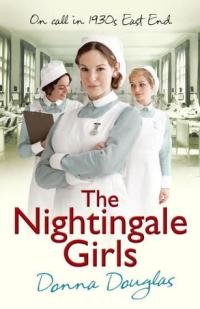
The Nightingale Girls is set in the 1930s and follows the stories of three student nurses at one of London’s top teaching hospitals, the Nightingale.

Life is not easy for Dora Doyle, who comes from a poor, working class family from the East End of London. Dora sometimes feels out of place among the other, richer girls at the Nightingale and is struggling to find money to buy the books she needs, but she is determined to succeed, partly because she’s passionate about nursing but also because she’s desperate to get away from her abusive stepfather. The aristocratic Lady Amelia Benedict, known as Millie, is from a very different social background to Dora, with whom she shares a room. Millie wants to build a life for herself away from her luxurious home and glamorous friends, but as she is constantly finding herself in trouble and has already failed her preliminary training exams once, it’s going to be difficult to prove that she’s serious about her nursing. The third girl we meet is Helen Tremayne, a second year student. Her domineering mother is on the hospital’s board of trustees and her brother is a doctor, so expectations are high. Helen works hard, but has trouble making friends, especially as the other girls don’t trust her because of her mother.

At first it seems that Dora, Helen and Millie have nothing in common but as they get to know each other during their long, hard days at the Nightingale, a bond begins to form between the three of them. I didn’t feel I got to know Helen as well as the other two but I loved both Dora and Millie. Dora was completely inspirational and a perfect example of someone managing to fulfil her dreams through sheer determination and hard work. And the rebellious but warm-hearted Millie was so endearing. Through her story we see that money and possessions are not everything and that true happiness can come through doing something that we love. There are some great secondary characters too, including the spiteful and snobby but bitterly unhappy Lucy Lane, and the Doyles’ neighbour, Nick, who is desperately trying to make enough money to take his little brother to America. Dora’s grandmother, Nanna Winnie, was another favourite.

It was so interesting to see what was involved in being a trainee nurse in the 1930s. The book shows us the hardships of nursing, but there are also lots of moments of fun and humour, including one hilarious scene involving false teeth. As a historical novel, the setting of 1930s London is wonderful, whether we’re reading about the streets in the East End where the Doyle family live or an afternoon eating cakes and drinking tea at Lyons’ Corner House! The Nightingale Girls is the first in a series of novels about the Nightingale Hospital and I will look forward to reading the others.

Thanks to Random House for sending me a review copy of The Nightingale Girls
For One More Tomorrow For One More Tomorrow by Elizabeth Bailey

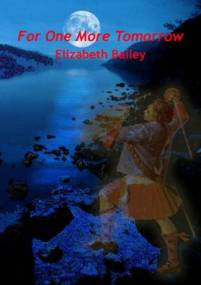
For One More Tomorrow, currently available as an ebook, tells the story of Sadie Grey, who is directing a production of Shakespeare’s play, Macbeth. Growing frustrated and disillusioned with some of the actors in the play and their inability to inject real passion into their roles, Sadie is stunned when she meets the ghost of Macbeth himself. Soon Mac, as Sadie calls him, seems to be invading her thoughts and taking over her life, and as her relationship with the ghost develops there are some surprises in store for both Sadie and the reader!

At first Sadie wonders whether Macbeth’s ghost has been produced from her own imagination – he looks and sounds exactly as she had pictured him in her mind, even wearing tartan like the characters in Sadie’s play despite the fact that she knows the real Macbeth would not have done so. And yet it seems that Mac does have an existence of his own outside of her imagination, and some sections of the story are seen from his point of view, as he roams the streets alone or watches rehearsals from the shadows at the side of the stage. Through his own thoughts and his conversations with Sadie, we see that he is not very pleased at the way the story of his life has been distorted by Shakespeare; he’s angry and hurt that his reputation has been damaged and history has been altered in the name of entertainment.

I haven’t read all of Shakespeare’s plays but I have read Macbeth more than once and it’s probably the play I’m most familiar with. I could sympathise with Sadie, who clearly has a real understanding and love of the play; she knows how she wants the actors and actresses to play their roles and it annoys her when they do not portray their characters as she wants to see them portrayed…especially Curtis, the man who is playing Macbeth. I did enjoy the parts of the book that deal with the rehearsals for the play and the problems Sadie encounters as director, but my favourite scenes were those in which Sadie is interacting with the ghost. For One More Tomorrow was an unusual and imaginative story and I’m sure the next time I read Macbeth I’ll remember Mac and how he felt about Shakespeare’s words.

Thanks to the author for sending me a review copy of this book
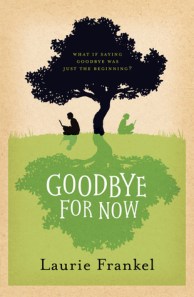
Goodbye for Now Goodbye for Now by Laurie Frankel

Sam Elling is a computer software engineer who works for an online dating company based in Seattle. Sam has created a new computer algorithm to help people find their perfect partner, but it proves to be too successful as people are meeting their soulmates too quickly and don’t need to use the dating agency anymore. As a result he loses his job but it’s not long before he comes up with another invention.

When Sam’s girlfriend Meredith loses her beloved grandmother, Livvie, she tells him she wishes she could speak to Livvie one more time. Wanting to help in any way he can, Sam creates a computer program based on the online presence Livvie has left behind, including emails, texts and videos. Meredith is shocked but overjoyed to discover that she can now continue to chat to Livvie and exchange emails just as she used to when her grandmother was alive. Soon Sam and Meredith decide to give other bereaved people the same opportunity to communicate with loved ones who are no longer with them, but they are not prepared for the number of moral issues they will have to face.

Different people have different ways of dealing with grief and what works for one person will not necessarily work for everyone. I can’t imagine ever wanting to use this type of technology myself and I tend to agree with the characters in the story who found the whole idea creepy and disturbing. However, I still thought it was fascinating to read about. There’s nothing paranormal involved and the software Sam invents sounds completely believable from a scientific point of view.

With death and grief forming such a big part of this book I had expected something very sad and emotional, but the story was actually not as moving as I had thought it might be. That could be because the main characters – Sam, Meredith, her cousin Dashiell and their clients – are all so ‘nice’ that I had difficulty believing in them as real people and didn’t manage to fully connect with them. What I did love about this novel was the number of thought-provoking questions it raises by showing us how the world reacts to Sam’s controversial new technology and telling the stories of the people who decide to use it.

Is chatting to a computer generated image of a friend or relative who has died really a good idea or is it better to let the grieving process take its natural course? Can social media actually be isolating rather than social? Are there things that our loved ones may have said or done online that we would be better off not knowing about? What about privacy? Nobody seemed to have any problems with allowing Sam to access their family member’s emails, blog, internet browsing history or Facebook and Twitter accounts, but I know I wouldn’t feel comfortable with that. Goodbye for Now may not have been a perfect novel but has left me musing on all of these questions and more.

Thanks to Headline for the review copy of Goodbye for Now
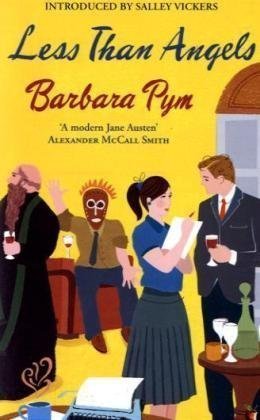
The Beacon by Susan Hill

The Beacon Until I read The Beacon last weekend, the only Susan Hill book I had read was one of her ghost stories, The Small Hand, which, for me, was probably not the best introduction to her work. I loved the atmosphere she created but I didn’t find it very original and was disappointed by it. The Beacon is a very different type of book. It’s not a ghost story – I would describe it as a family drama – but it’s still very dark and haunting and I enjoyed it much more than The Small Hand, so I wish I had started with this one instead.

The Beacon is the name of the Prime family’s farmhouse, located somewhere in the north of England. A dark, lonely path leads from the village up to The Beacon, high on a hill, and in stormy weather the house is battered by howling winds. May Prime, now fifty years old, has lived here for her entire life, apart from one year when she went away to university in London. May has never married and since her father’s death has been caring for her elderly mother, Bertha. When Bertha dies too, May is left alone to reflect on her own life and the lives of her brother, Colin, and sister, Berenice. There’s another brother too – his name is Frank – but May has not seen him for many years, since he betrayed his family and destroyed their childhood memories. Now that both of their parents are dead, will May and her siblings ever be able to forgive Frank for what he has done?

The Beacon is a short novella and can easily be read in an hour or two, but despite only being 160 pages long it’s a very powerful story. At first it appears to be just a simple tale of a farmer’s daughter, her family and friends and her experiences of university, but it soon becomes infused with a sense of mystery and suspense. From the beginning May gives us hints that her brother Frank has done something terrible – so bad that May and her other siblings don’t even want to tell him about their mother’s death – but we have to wait until halfway through the story before we find out exactly what it was that alienated him from the rest of the family. I wish I could tell you what he did, but the revelation is the pivotal point of the story and may not be as effective if you know what it is in advance!

As with The Small Hand, my favourite thing about this book was the atmosphere. It’s so bleak and unsettling, and there’s a real feeling of isolation, claustrophobia and loneliness. I thought the portrayal of May’s mental state and the terrors she experienced while trying to start a new life in London was particularly well done, as were her earlier memories of the joy she felt as a child learning to read and write. There’s less focus on the lives of Colin and Berenice, but Frank comes to the forefront of the story in the second half of the book and we learn more about his character and what may have caused him to behave the way he did.

Although The Beacon is one of those books where ‘nothing really happens’, I still found it surprisingly gripping. The ending is very ambiguous and made me question everything I had just read and wonder what was true and what wasn’t. It could be interpreted in several different ways and I was left with plenty to think about even after finishing the final sentence.

Miss Buncle’s Book by D.E. Stevenson

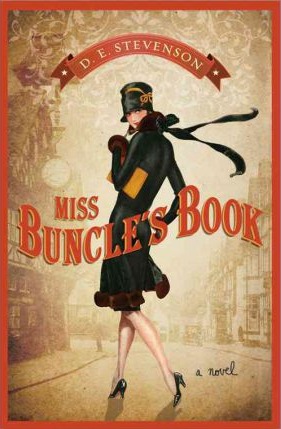
When Barbara Buncle finds herself short of money she dismisses the idea of keeping hens and decides to write a book instead. Not having much imagination she finds she can only write about people and places that she knows. Drawing her inspiration from her friends and neighbours in the village of Silverstream, she writes her first novel and has it published under the pseudonym of John Smith. When Disturber of the Peace turns out to be much more successful than Miss Buncle could ever have dreamed, it’s inevitable that the residents of Silverstream will eventually read it and recognise themselves within its pages. But how will they feel about the way they are represented in the book and what will happen if they discover who John Smith really is?

Delightful, charming, warm, cosy – those are the type of words I would use to describe Miss Buncle’s Book. Written in the 1930s, D.E. Stevenson captures perfectly the atmosphere of life in a small English village at that time – a place where everybody knows everybody else, where freshly baked breakfast rolls are delivered to the villagers every morning, where people meet for tea parties or musical evenings and gossip with the neighbours over the garden fence. The book is filled with a variety of interesting characters, all with their own quirks and eccentricities. Some of the most memorable include the formidable Mrs Featherstone Hogg, who is enraged by the unflattering way she is depicted in Miss Buncle’s book and leads the campaign against John Smith; Mr Hathaway the vicar and the scheming Vivian Greensleeves who has her eyes on his money; and the retired and lonely Colonel Weatherhead who faces a yearly battle with the Bishop.

Most of the inhabitants of Silverstream make an appearance in Disturber of the Peace and although Barbara Buncle takes the precaution of changing their names (Weatherhead becomes Waterfoot, for example, Miss King and Miss Pretty are renamed Miss Earle and Miss Darling, and Mr Fortnum becomes Mr Mason), she describes their personalities so accurately it’s not surprising that they were able to work out who the book was about! It was fun to see how they each reacted to discovering themselves in Miss Buncle’s story and having all their flaws exposed to the world.

I sent a copy of Miss Buncle’s Book to another blogger as a Secret Santa gift a couple of years ago because I thought it sounded wonderful, and when I saw that it was available through Netgalley I couldn’t wait to finally read it for myself. But although I did like it, I didn’t love it as much as I had hoped I would and as much as most other readers seem to have done. It was an enjoyable, relaxing read with lots of gentle humour and old-fashioned charm, but it lacked that special spark that would have lifted it from being a very good book to a great one. For me, this is a book that sounded better than it actually was, though I would still recommend it as a great way to escape from the stress of life for a while!

I received a review copy from Sourcebooks via Netgalley

Wonder Girls by Catherine Jones

“It’s always the boys who get the heroes, as though girls can’t do brave things too,” says one of the characters in Catherine Jones’ Wonder Girls, a moving and inspirational novel which succeeds in showing that girls can be just as heroic as boys.

In 1928 when Ida Gaze, a sixteen-year-old schoolgirl, announces that she’s going to become the first person ever to swim the Bristol Channel between Wales and England, nobody takes her seriously. Nobody, that is, except her best friend, Freda Voyle. Inspired by the American aviator Amelia Earhart who had recently landed on the coast of Wales after becoming the first woman to fly across the Atlantic, Ida is determined to prove that she can do what no man has ever been able to do.

Years later, Freda’s partner, Cecily, finds an old black and white photograph of Ida amongst Freda’s things. Encouraged by Sarah, a younger woman who has befriended her, Cecily begins to investigate and learns more about the girl in the picture. Throughout the novel we move backwards and forwards in time as Cecily’s story, taking place in 2009, becomes linked with the story of Ida and Freda all those decades earlier.

All of the women we meet in this book are interesting, complex people. They all have a lot of strength and courage, but also some weaknesses that make them more human and more believable as characters. I loved Cecily (I think it would be difficult not to), was alternately impressed and frustrated by Ida, but the character who I found most memorable and who has stayed in my mind a couple of weeks after finishing the book is Freda. I didn’t like Freda at first as I thought she seemed hard and obnoxious, but I quickly discovered that underneath she was a very sensitive, loving person and I felt so sorry for her as she and Ida grew older and started to want different things out of life.

The novel explores other relationships too – some are good and some are bad, some are romantic and some are not. One of my favourites was the friendship that develops between Cecily, in her eighties, and the thirty-four-year-old Sarah. It was so nice to read about two women of different generations and different backgrounds becoming such good friends and being able to give each other the support and advice each of them needed.

I was surprised by how much I enjoyed Wonder Girls. I received a review copy from the publisher, Simon & Schuster, and I’m glad I did because it’s probably not a book I would have chosen for myself. Wonder Girls has its sad, poignant moments, but in the end it’s an uplifting and inspiring novel, as well as a fascinating one. At the back of the book the author has included some information on some ‘real life wonder girls’. Reading these true stories along with the stories of Ida and Freda, Cecily and Sarah, couldn’t fail to make you feel proud of all the things women have achieved.

The Map of Lost Memories by Kim Fay

As a woman in 1925, Irene Blum feels that her work does not get the recognition it deserves. When she misses out on the position of curator at Seattle’s Brooke Museum, she dreams of making an important historical discovery, one that she can build her own museum around. Since her childhood she has been fascinated by Cambodia and its ancient Khmer civilisation, so when she learns of the possible existence of ten copper scrolls recording the history of the Khmer people she sets off on an expedition to Cambodia to search for them.

Irene begins her journey in Shanghai where she hopes to enlist the help of Simone Merlin, a revolutionary activist and Cambodian scholar who shares Irene’s interest in the Khmer. Despite the disapproval of her abusive husband Simone agrees to join her. At first Irene is pleased to have Simone’s support, but soon begins to wonder whether she might have reasons of her own for wanting to find the lost scrolls.

The novel is divided into three sections. The first is set in Shanghai, China, the second in Saigon, Vietnam and in the third Irene, Simone and their companions finally arrive at their destination, the Cambodian jungle. None of these are places that I know very much about (Cambodia was a completely new setting for me and the other two I only have a very limited knowledge of) and I loved all the descriptions of the three locations. It’s always interesting to read about cultures that are entirely different to your own and by the time I’d finished the book I felt I’d learned a little bit about what life might have been like in China, Vietnam and Cambodia in the 1920s, as well as learning some facts about the Khmer civilisation.

The Map of Lost Memories is not a fast-paced thriller filled with non-stop action and adventure, although it might sound like one from the synopsis. Instead, the story develops quite slowly (a bit too slowly for me, to be honest, especially throughout the first half of the novel) and although Irene and Simone do have some adventures and things get more exciting later in the book, there’s also a lot of focus on the personal lives of the two women, their relationships and their motives for searching for the legendary scrolls.

It was good to read a book set in the 1920s with strong female protagonists at a time when women didn’t have the same career opportunities they have today. However, although I sympathised with Irene’s frustration at her achievements constantly being overlooked or ignored and I admired her dedication and determination, I was never able to warm to her as a character. Unfortunately I didn’t feel much connection to any of the other characters either, which meant that even when they were heading into danger I found I didn’t really care what happened to them. The plot and the setting almost made up for my lack of interest in the characters so I did still enjoy the book, but not as much as I might otherwise have done. This was a promising debut novel, though – it was obvious that the author must have a real passion for Cambodia and Khmer history and that she knows the subject well.

The Hunger Trace by Edward Hogan

The Hunger Trace is set in a small English village where three very different people are all trying to cope with the death of wildlife park owner David Bryant. There’s David’s wife, Maggie; his son from a previous marriage, Christopher; and their neighbour, Louisa. Throughout the pages of this novel we see how each character comes to terms with losing David and how they gradually learn to get along with each other.

Although there are some moments of drama when a fourth character, Adam, is introduced and when Derbyshire is hit by the worst floods in years, The Hunger Trace is definitely more of a character-driven novel but despite it being quite slow paced I was never bored. All of the main characters are interesting, three-dimensional people each with his or her own set of problems and secrets.

As David’s widow, Maggie is left to run his business which has been having financial difficulties, to take responsibility for the welfare of his animals, and to look after her stepson Christopher. Feeling lonely and isolated, she tries to befriend Louisa, a falconer who lives alone with her birds of prey. However, Louisa has never liked Maggie, who she sees as just one of a long series of women who have passed in and out of David’s life over the years. Louisa herself was connected to David by a terrible secret the two had shared since they were teenagers and now that he’s gone she has little interest in anything apart from her hawks.

Christopher, although it wasn’t actually stated in the book, seems to have a form of autism or something similar which he is taking medication for. He sometimes has trouble relating to other people (including his stepmother) and is often misunderstood; he’s also obsessed with Robin Hood and spends most of his time at college trying to prove that his hero was a real historical figure! Christopher has a habit of saying ‘erm’ before almost every word, which did get a bit irritating to read, but it’s this kind of attention to detail that made all of Edward Hogan’s characters feel so realistic and believable. I initially found Maggie the easiest to like of the three, but eventually I began to warm to the others, particularly Louisa, who I thought was a wonderful character and so much more complex than just the unfriendly, hostile woman she appeared to be at the beginning of the book.

If you’re wondering what the title of the book means, it’s a term relating to falconry and its significance is explained during the course of the story. I loved the whole falconry aspect of the book, which is surprising as it’s not something I would have expected to find so fascinating to read about. This was quite an unusual novel and maybe not one that I would normally have chosen to read, but I’m glad I did as I was very impressed by The Hunger Trace and by the quality of Edward Hogan’s writing!

Thanks to Simon & Schuster for providing a review copy of this book

The Land of Decoration by Grace McCleen

The Land of Decoration is narrated by ten-year-old Judith McPherson. Judith’s mother is dead and she lives with her father, who is very religious. The religion to which they both belong is not named but they appear to be Jehovah’s Witnesses or something very similar. They read the Bible together, attend weekly meetings, knock on doors to spread their message and believe that the end of the world is coming soon.

Judith is lonely, friendless and has convinced herself that her father doesn’t love her. She spends most of her time playing in her bedroom, where she has created a ‘Land of Decoration’ from scraps of paper, pipe cleaners, felt, boxes, buttons and any other bits and pieces she can find. One day Judith adds some snow to the Land of Decoration– and when it suddenly starts snowing in the real world too she believes she’s performed a miracle. And when Judith begins to hear the voice of God, she decides to use her new powers to deal with the school bullies and some of the other problems in her life.

The Land of Decoration was not quite what I was expecting and if I had known more about it, it probably wouldn’t have been a book I would have chosen to read. It quickly became obvious that it was going to be a much darker story than I had thought it would be.

I did like Judith – she’s bright and intelligent but also quite innocent and naïve (although there were times when her voice seemed too ‘old’ and I thought she stopped feeling like a believable ten-year-old). The bullying scenes felt sadly realistic and so did her father’s experiences (he is breaking a strike at the factory where he works and he’s also starting to have some doubts about his religion).

I really cared about both Judith and her father and I actually thought the story of their relationship, his problems at work and her problems at school would have been strong enough on its own to form quite a compelling novel. I was less interested in the parts of the book that dealt with the miracles and the conversations with God, and I admit I found some of it very confusing. A lot of my questions were left unanswered at the end and I’m not sure I really understood everything that had happened.

The Land of Decoration is a very imaginative and original book, but not one that I personally enjoyed very much. I’m sure it’s going to be a success though, and it will be interesting to see what Grace McCleen writes next.