Mr Mac and Me – a Shiny New Books review

Just a quick post today to point you in the direction of the new Christmas ‘Inbetweeny’ issue of Shiny New Books which is packed with reviews, features and a Christmas quiz.

SNB

I was pleased to provide a review of Esther Freud’s latest novel, Mr Mac and Me. This is what the book is about:

Mr Mac and Me In Mr Mac and Me, Esther Freud paints a beautiful portrait of a small rural community and the ways in which it is affected by war. Our narrator is young Thomas Maggs, a quiet and observant thirteen-year-old boy who has grown up in the Blue Anchor Inn on the Suffolk coast. Life is difficult for Thomas and often very lonely; his father is an alcoholic, his mother is still grieving for the six babies she has lost, and his two sisters are growing up and have lives of their own now. Thomas wishes he could go to sea, but knows that his twisted foot will prevent him from pursuing that particular dream.

In 1914, two newcomers – a man and a woman – arrive in the village and begin to paint the flowers and the scenery. The man is the Scottish artist and architect Charles Rennie Mackintosh and the woman is his artist wife, Margaret MacDonald. With Margaret frequently returning to Glasgow, Mackintosh spends his time walking in the countryside, sketching, taking notes and looking out to sea. Recognising another lonely soul, Thomas befriends ‘Mr Mac’, joining him on his walks and watching him as he paints.

With the outbreak of war, however, the villagers become suspicious of Mr Mac and soon even Thomas begins to wonder why his new friend is receiving letters from Germany addressed to Herr Mackintosh. Has Mac really come to Suffolk just to admire the scenery or is he up to something more sinister?

You can read the rest of my review here and don’t forget to explore the rest of the new issue!

Zemindar by Valerie Fitzgerald

Zemindar What a great book! A wonderful setting, a beautiful romance, characters I really cared about, an exciting story and lots of fascinating historical detail…definitely one of my favourite books of the year. I could see the influence of other books that I love – The Far Pavilions, Gone with the Wind and Jane Eyre – so it’s maybe not surprising that I loved this one too!

Zemindar is set in India before and during the Sepoy Mutiny of 1857. Laura Hewitt, a single woman of twenty-four, is accompanying her newly married cousin Emily and her husband Charles Flood on a trip to India as Emily, at eighteen, is considered too young to travel without another female in the party. Laura is happy to accept the position of paid companion – her parents are both dead and she has no money of her own – but she is also aware that it may not be a good idea to be in such close proximity to Charles, whom she had been in love with herself before he turned his attentions to the younger, prettier Emily.

After a brief stay in Calcutta, Laura and the Floods travel to Lucknow where Charles is planning to make the acquaintance of his half-brother Oliver Erskine who lives a few days’ journey away on the estate of Hassanganj. Charles and Oliver have never met but knowing that his brother is unmarried and seems likely to remain that way, Charles hopes to convince Oliver to make him his heir. On arriving at Hassanganj, however, it quickly becomes obvious that this will not be an easy task. As a zemindar (hereditary landowner), Oliver has been used to leading an unconventional lifestyle on his huge and isolated estate and is not the sort of man who can be made to do anything he doesn’t want to do!

Laura and Emily are both fascinated by Oliver Erskine, though while he shows nothing but kindness to Emily, Laura finds him arrogant and annoying. But when mutiny breaks out among the Indian sepoys in the army and Hassanganj comes under attack, she begins to see a different side to Oliver. Taking refuge in the Residency in Lucknow where the British army is preparing to withstand a siege, Laura must decide how she really feels about Oliver and whether she can see a future for herself in India. First, though, she needs to stay alive…

There are so many things I loved about this book it’s difficult to know what to focus on first, but I think I should start by praising Valerie Fitzgerald’s beautiful writing. Zemindar was published in 1981, but I almost felt I was reading something written by Jane Austen or Charlotte Brontë. Laura’s story is told in the first person and her narrative voice sounds exactly as the voice of a 19th century woman should sound. The descriptions of India – the landscape, the culture, the contrast between life in the British colonial communities and the mofussil (the rural areas) – are stunning too.

The story takes place during a turbulent time in the history of British India, but don’t expect this to be a fast-paced novel – some parts are very slow allowing time for character development and fleshing out of the historical background. No previous knowledge is needed as we have the opportunity to learn along with Laura as the events leading up to the Indian Rebellion unfold. Later in the book, when the British begin to crowd into the poorly-fortified Residency for safety there are some quite graphic descriptions of the brutality and atrocities committed by both sides as Lucknow finds itself under siege and tales of even greater horrors suffered by those in Cawnpore reach Laura’s ears. Obviously we are seeing things from a British perspective but there’s some sympathy for the Indian point of view as well; having spent most of his life at Hassanganj, Oliver understands India and its people in a way that most of the other characters don’t and he tries to pass this understanding on to Laura.

The relationship between Laura and Oliver is a lovely and poignant one which takes its time to develop and is not without its difficulties and misunderstandings. At times it reminded me of the romance in Gone with the Wind, though while Oliver is similar in some ways to Rhett Butler, the quiet, sensible Laura is more like Jane Eyre than Scarlett O’Hara. Because I liked Laura and Oliver so much I was completely absorbed in their story and hoping for a happy ending for them both – it was not at all obvious whether they were going to get one so I was kept in suspense right to the end!

I hoped I’ve made it clear, though, that this book is not a fluffy romance or a silly bodice ripper. The romance is only one element of the story and is sometimes pushed into the background while we concentrate on the history, the battles and the sieges. My only disappointment on reaching the end of the book was discovering that Zemindar was Valerie Fitzgerald’s only novel. I know M.M. Kaye’s Shadow of the Moon is set during the same period so I’m hoping to read that one soon and see how it compares.

The Lie by Helen Dunmore

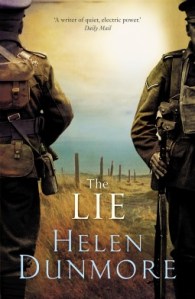
The Lie With 2014 being the centenary of the First World War, I had intended to read lots of war-related books this year. For some reason, though, that hasn’t happened; this is only the second or third I’ve read. Actually, I did start to read The Lie in January but wasn’t in the right mood for it and decided to leave it and try again later. That was obviously the correct decision because this time I was drawn into the story from the beginning.

The Lie is set in Cornwall in 1920 and tells the story of Daniel, a young man who has just returned from the war to the village where he grew up. Things have changed during his absence and both of his parents are now dead. Homeless and alone, Daniel is grateful for an offer of food and shelter from Mary Pascoe, a reclusive elderly woman who had known his mother. As Daniel works on Mary’s land in return for the help she is giving him, he has plenty of time to think and reminisce.

Some of his memories are of his childhood, growing up with Frederick and Felicia, the children from the big house where his mother worked as a cleaner. Others are more recent memories – terrible, haunting memories of the war, where he witnessed Frederick’s death in the trenches. Struggling to come to terms with what has happened to his friend, Daniel is reunited with Frederick’s sister, Felicia, now a young war widow with a little girl of her own. Felicia is also grieving, having lost both her husband and her brother, and she and Daniel are able to offer each other some comfort. But when Mary Pascoe asks Daniel to do something for her, a lie is told which could threaten his chance of future happiness.

This is a quiet, slow-paced novel and requires some patience from the reader, but Daniel is an interesting character who is worth getting to know. While the story jumps backwards and forwards in time, covering three different periods in Daniel’s life, the transitions from one to the other feel smooth and natural and each strand of the story explores several different aspects of the Great War. First there are the childhood sections which depict the class divide that existed in pre-war Britain: the intelligent, literary Daniel has to leave school at eleven to start working, while the less academic Frederick is sent to private school. The scenes that are actually set during the war describe all the horrors of life in the trenches, and finally, the parts of the story set in 1920 show us how the war has changed Daniel, his community and the wider world forever.

Daniel is our narrator but Frederick is a constant presence in the book and in Daniel’s mind. The relationship between the two men forms a big part of the story and the circumstances of Frederick’s death (leading to another lie being told) haunt Daniel to the point where he imagines he sees his old friend standing by his bed covered in the mud of the trenches. But I particularly liked the portrayal of Frederick’s sister, Felicia, and can only imagine how difficult life must have been for a young woman, widowed and alone with a baby to raise amid the aftermath of war.

Although I did find a lot to like about The Lie, it didn’t quite have the emotional impact on me that I would have expected from a novel dealing with such a tragic subject and for that reason I can’t say that I loved this book. It’s the first Helen Dunmore book I’ve read, though, and I’m hoping I might enjoy one of her others more than this one.

The King’s Sister by Anne O’Brien

The Kings Sister The King’s Sister is a light but enjoyable historical novel set in the 14th century and telling the story of Elizabeth of Lancaster. As the daughter of John of Gaunt, uncle to the young King Richard II, Elizabeth does not have the freedom to marry as she chooses. At seventeen, an age when she is hoping for romantic love, she is forced into marriage with the eight-year-old Earl of Pembroke who is more interested in parrots and dogs than in his new wife.

As she waits impatiently for her husband to grow up, Elizabeth meets the King’s half-brother, John Holland. Holland is charming and charismatic, a man where Pembroke is a boy, and despite the warnings of her friends and family, Elizabeth soon finds herself breaking her marriage vows. An annulment follows and Elizabeth weds again, this time to the man she loves. But when King Richard is deposed and replaced on the throne by Elizabeth’s own brother, now Henry IV, she finds herself in an impossible position. With her husband still loyal to his half-brother, the former king, Elizabeth must decide where her own loyalties lie: with John Holland or with Henry?

I’ve read other novels set in this time period but I’ve never read one that focuses on Elizabeth of Lancaster as a main character. The King’s Sister is narrated by Elizabeth herself so we are able to get very close to her, accompanying her through all the ups and downs of her life, sharing her agony as she is forced to make a decision nobody should ever have to make. She is portrayed as a headstrong, defiant young woman used to getting her own way, who gives little thought to the consequences of her actions. While I understood Elizabeth’s disappointment with her first marriage, I did feel sorry for the little Earl of Pembroke who couldn’t help being young, after all – and I often felt frustrated with her for refusing to heed anyone’s advice and ignoring the warnings she was given against John Holland. However, Elizabeth is aware that she has flaws and that she can be selfish, and she does develop as a person over the course of the novel, which made it possible for me to have some sympathy for her.

Although I didn’t like Elizabeth very much (or John Holland either – I agreed with the general opinion of Elizabeth’s friends that he was untrustworthy and self-centred) there were some great secondary characters. I particularly liked Joan of Kent, mother of both John Holland and Richard II, and Katherine Swynford, the Duke of Lancaster’s wife. These are both women I have read about before, Joan in A Triple Knot by Emma Campion and Katherine in the wonderful Katherine by Anya Seton, and Anne O’Brien draws parallels between their stories and Elizabeth’s. All three are women who had to fight to be with the man they loved, despite the disapproval of everyone around them.

Like the other Anne O’Brien book I’ve read (The Forbidden Queen), this is a novel which concentrates on love and romance, feelings and emotions rather than on politics or battles. However, the author still manages to make the 14th century come alive with descriptions of jousts and tournaments, balls and court gatherings. We are given just enough information on the historical background, the political situation and the ever-changing alliances at court that I came away from this novel with a better understanding of the time period and a feeling that I’d learned something new. With over 500 pages The King’s Sister is a long book and really felt like a long book – even while I was absorbed in the story – but I did enjoy it and look forward to exploring O’Brien’s earlier novels which I haven’t read yet.

Vlad: The Last Confession by C.C. Humphreys

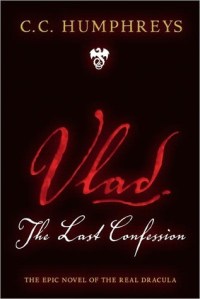
Vlad the Last Confession I discovered C.C Humphreys in July when I read Plague, a novel about, unsurprisingly, the plague. Looking at the other books he had written, I came across one called Vlad: The Last Confession and thought it might be a good choice for this year’s R.I.P. challenge. Despite my best intentions I didn’t manage to start it in time for R.I.P. but decided to read it anyway.

Vlad, of course, is Vlad Dracula (also known as Vlad Tepes or Vlad the Impaler due to the particularly brutal method of punishment he used to torture his victims) but apart from the name, there are very few similarities with Bram Stoker’s famous vampire. I think it’s important to know, before you decide whether to read Vlad: The Last Confession, that this is not a vampire novel and not a retelling of Dracula. It’s a fascinating and thoroughly researched novel about a fifteenth century Prince of Wallachia (a region of Romania) who devoted most of his life to trying to secure his throne against rival claimants and fighting off the threat of the Ottoman Empire.

Born in 1431 in Transylvania, Vlad is the son of Vlad II, voivode of Wallachia and a member of the Order of the Dragon, hence the name Dracula (son of Dracul, the dragon). Vlad’s hatred of the Ottoman Turks begins at an early age when he and his younger brother, Radu, are held hostage in Edirne for several years. During their time in captivity they are educated in the Turkish language, religion and culture, but while Radu eventually converts to Islam and joins the household of the Sultan Mehmet II, Vlad remains resentful and defiant. Following the murder of his father, he returns to Wallachia to reclaim the throne.

Vlad’s story is told through the recollections of the three people who knew him best: his closest friend, his mistress and his confessor. These three are brought together after Vlad’s death and give evidence to help a jury – and the reader – to make up their minds about Vlad. So who was he, really? A brave leader who fought for what he believed in or a cruel, sadistic tyrant? I think the answer was probably both.

Vlad the Impaler

Vlad the Impaler

One of the things I liked about this novel was the fact that C.C. Humphreys’ depiction of Vlad is fair and unbiased; he doesn’t try to make excuses for his behaviour but at the same time he helps us to understand how and why Vlad came to commit some of the appalling acts he is known for. For example, during Vlad’s time as a Turkish hostage he is taken to a torture chamber and forced to learn some horrific medieval torture techniques. Although he resists at first, he soon adapts and tells himself that “we torture others so they cannot torture us”. While this certainly doesn’t justify any of his later actions, at least we can see some of the early experiences and influences that shaped the man he would become.

I’ve mentioned the torture scenes; I should warn you that there are also a lot of impaling scenes (and they are described in graphic detail) but I think this was necessary to illustrate the darker side of Vlad’s character in a way that makes a real impact. There are a lot of battle scenes too – and fights, jousts and descriptions of falconry. This is quite an action-packed novel, but Humphreys also explores Vlad’s relationships with his childhood friend, Ion Tremblac and his lover, Ilona Ferenc, as well as with enemies such as Mehmet. I have to admit, I would much rather have had more time spent on the personal storylines and less on the fighting and brutality, which I thought started to become very repetitive.

I found some of the history difficult to follow because of my complete lack of knowledge of what was happening in Eastern Europe during this period, but by the time I finished the book I felt I’d learned a lot. And even though my interest started to wane towards the end, I was glad I’d persevered. Vlad III is apparently considered to be a national hero in Romania and although a lot of the shocking things described in Humphreys’ novel are based on fact – he lists them in his author’s note at the end – I was left wondering whether Vlad may in some ways have been unfairly treated by history. As one of the characters in the novel remarks, “What the world knows is the story his conquerors told. And since they controlled so many printing presses, it was their stories that were widely spread”.

The Sea Garden by Deborah Lawrenson

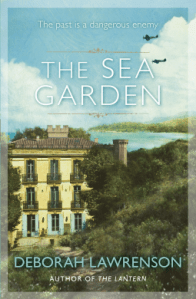
The Sea Garden I remember hearing a lot about Deborah Lawrenson’s The Lantern a few years ago but never found time to read it, so I was pleased to have the opportunity to read her latest book, The Sea Garden. This book consists of not just one story, but three, each taking up approximately one third of the book and introducing us to three very different women. The stories are loosely connected but each has a different setting and a different feel.

The first of the three stories (you could probably call them novellas) is also titled The Sea Garden. It’s 2013 and Ellie Brooke, a landscape garden designer, is visiting Porquerolles, a small island off the coast of France where she has agreed to restore a memorial garden for a client, Laurent de Fayols. However, she is unprepared for both the hostile welcome she receives from Laurent’s elderly mother and for the supernatural experiences that happen to her while on the island. Ellie’s story then comes to an abrupt end and another begins…

The Lavender Field takes us back to Nazi-occupied France in 1944 and a small community of people working for the French Resistance. Marthe Lincel, a young blind woman, is an apprentice at the Distillerie Musset in Provence. Her work involves creating fragrances and perfumed soaps, but as the war progresses she turns her skills to helping Allied soldiers. There are the beginnings of a dramatic and romantic wartime story here, but again we come to the end too soon…

The third and final story is A Shadow Life, the story of Iris Nightingale, who is working for British Intelligence in 1943, gathering information and recruiting spies to be sent into occupied France. Iris grows close to one of the agents, Xavier Descours, but his work is secretive and dangerous and this is not a good time to be falling in love. As the book draws near to its conclusion, we finally begin to see some connections between Ellie, Marthe and Iris and the men in their lives.

This is a beautifully written book, set in a time period I love to read about (World War II). There are some lovely descriptions of Provence with its lavender fields and also of the island of Porquerolles, a place I previously knew nothing about. The Porquerolles story has some ghostly/supernatural elements and I was impressed with the way the author creates such an eerie atmosphere in what should be a peaceful, idyllic setting. I also enjoyed learning about the work Iris carries out for the SOE (Special Operations Executive); it was fascinating to see the level of secrecy that was required when going undercover in France!

My problem with this book was the structure. Keeping the three stories separate just didn’t work for me as well as a more traditional multiple time period novel would have done. While there were definitely some links between the three, most of these didn’t become obvious until very near the end of the book. When things did start to come together the result was fascinating, but it happened too late and I’m sure I would have been happier if the three stories had been woven together from the beginning to form one cohesive novel.

Marthe’s section in particular felt very disconnected from the other two – yes, there was some character overlap, but I’m not convinced that such a large chunk of the book needed to be devoted to Marthe’s story. The third story – the one with Iris and the secret agents – was the one I found most compelling, possibly because it’s the only one that felt like a complete story and brought in elements from the other two. At the end, though, there were still some questions left unanswered and if I had enjoyed the book more, I would have taken the time to go back and search the earlier sections to see if there were any clues I had missed.

I received a copy of The Sea Garden for review via NetGalley

The Brethren by Robert Merle

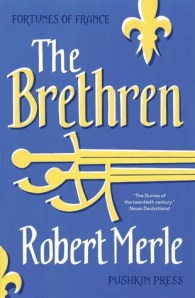
The Brethren How could I resist a book that has been compared to both Alexandre Dumas and Dorothy Dunnett’s Lymond Chronicles? The Brethren is the first in Robert Merle’s thirteen-volume series, Fortunes of France, and sounded exactly like the sort of book I usually love! I was surprised to find that, despite being hugely successful in France when it was originally published between 1977 and 2003, the series is only now being made available in an English translation for the first time by Pushkin Press.

This first instalment introduces us to the de Siorac family and is set in the 16th century during the French Wars of Religion, a period of conflict between the Catholics and the Huguenots (Protestants). Our narrator is Pierre, the young son of Jean de Siorac, a former soldier who retires to the castle of Mespech in the Périgord region of France and establishes a small Huguenot community there with the help of his friend, Jean de Sauveterre. The two Jeans are such close friends that they formally adopt each other as brothers, becoming the ‘brethren’ of the title, but while they are united in their religious beliefs, they have very different personalities!

The adventures that follow are remembered by an older Pierre, looking back on his life. He tells us of the time the château of Mespech was attacked by a band of gypsies and of an attempt to rescue the family’s former maid from a plague-stricken town, as well as the more mundane tasks of haymaking and harvesting. We also get to know the other members of the household, from Pierre’s Catholic mother (whose refusal to convert is a source of discord within the family) and his wet-nurse’s mischievous daughter, Little Helix, to the superstitious cook, La Maligou, and the three veteran soldiers who have been with the two Jeans since their earliest military campaigns. Most of all, though, we follow the religious struggles taking place between Catholic and Huguenot, both within the walls of Mespech and throughout the whole of France.

I found The Brethren an enjoyable book, although it was not exactly what I had expected. It lacked the humour and flair of Dumas’ novels and the characters didn’t come to life the way Dunnett’s do, but I did still find plenty of things to love. The portrait of 16th century France is vivid and fascinating and I learned a lot about the religious wars, which I’ve never read about in so much detail before.

After finishing the book I was interested to discover that Robert Merle had written the originals using a form of 16th century French. The English edition, you may be relieved to hear, is not written in anything resembling 16th century English, but it does not really seem like an entirely modern translation either. This wasn’t a problem for me, as I do like books to have an old-fashioned feel, especially when I’m reading historical fiction. However, the writing does become quite dry in places and there’s not as much action as I would have hoped for, with a lot of time spent on discussions of religious treaties and detailed descriptions of battle strategies.

As Pierre is a young child throughout most of this novel and still only fifteen, I think, at the end, many of the things he tells us about are things he has not actually witnessed or taken part in personally. Instead, he gives us second-hand accounts of his father’s adventures, often drawing on Jean de Siorac’s journal, the Book of Reason. This has the effect of creating a distance between Pierre and the reader so that I found his narration slightly detached at times. But although Pierre didn’t pull me into the story as quickly as I would have liked, I did eventually become completely absorbed in the lives of the de Siorac family. I’m already looking forward to the second book and I hope Pushkin Press will continue to publish the rest of the series.

I received a copy of this book from the publisher for review.