The Devil in the Marshalsea by Antonia Hodgson

The Devil in the Marshalsea This is a murder mystery with a difference, being set almost entirely within the confines of an eighteenth century debtors’ prison. Our narrator, Tom Hawkins, is a young man who has rebelled against his clergyman father’s plans for his future and is enjoying himself in London, spending all his money on drinking and gambling. After a big win at the card tables one night, Tom is attacked on his way home and his winnings are stolen, leaving him unable to pay his debts. Taken to the notorious Marshalsea Prison, he is horrified to discover that the last occupant of his cell, Captain Roberts, was murdered. The killer has never been caught, but Tom’s new roommate, the charismatic and mysterious Samuel Fleet, is the man most people believe to be the murderer.

The Marshalea is privately run for profit, so it’s not surprising that the prison governors want the killer identified as quickly as possible to avoid any further scandal. Told that his only chance of being released depends on whether or not he can solve the mystery of Roberts’ death, Tom agrees to investigate. Unsure who can be trusted and beginning to wonder whether such things as truth and justice even exist in a place as corrupt as the Marshalsea, Tom eventually uncovers a web of betrayal and deception on a scale he could never have imagined.

Other authors have written about the Marshalsea, most famously Charles Dickens in Little Dorrit, but Dickens’ Marshalsea was a newer building on a site further down the road; set in 1727, Antonia Hodgson’s novel refers to the original prison. Not knowing anything at all about the Marshalsea, this was quite an eye-opening book for me. I was aware that prisoners were often able to offer bribes in return for better living conditions and privileges, but I hadn’t realised there was such a great disparity between the fate of those who could afford to pay and those who couldn’t.

The prison was divided into two sections. The prisoners who had some money to spend or who had influential friends, lived on the Master’s Side, which was almost like a complete town in itself, with coffee houses, bars, restaurants and even a barber. They had the freedom to move around and in some cases were even given permission to go out into London during the day. For the poor people on the Common Side, things were much worse. Crammed into tiny cells and suffering from starvation, disease and overcrowding, they died at a rate of up to twelve a day. Tom Hawkins, whose best friend happens to work for Sir Philip Meadows, Knight Marshal of the Marshalsea, is lucky enough to find himself on the Master’s Side but with the knowledge that if his luck should run out, he could find himself thrown into the Common Side to meet his death with the others.

This is not a book for the faint-hearted as there are some horrible descriptions of sickness, torture and brutality, not to mention the dirty, squalid conditions the unfortunate inmates of the Common Side were forced to endure. Knowing that this was an experience many people really did have to go through makes it even more horrific. Despite this, I found The Devil in the Marshalsea very entertaining and fun to read. The book is filled with larger than life characters and I was surprised to find, when I read the notes at the end of the book, that many of these people really existed and were mentioned in the diary of John Grano, a debtor who spent a year in the prison from 1728-1729.

As a mystery novel, The Devil in the Marshalsea kept me guessing right until the end. I did not work out who the murderer was and even after the truth was revealed there were still more plot twists and revelations to come. As a work of historical fiction it’s equally impressive; I loved the portrayal of eighteenth century London both inside and outside the Marshalsea. I was so pleased to find that there’s going to be a sequel to this book and I’m already looking forward to meeting Tom Hawkins again!

I received a copy of this book from the publisher for review
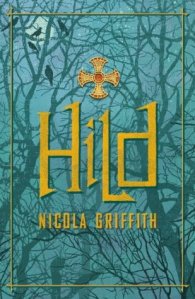
Hild by Nicola Griffith

Hild “That night she dreamt Fursey was talking to Hereswith. It’s what women do: weave the web, pull the strings, herd into the corner. It’s their only power. Then she was inside Hereswith, and Fursey was talking to her. Unless they’re seers. Your mother has built you a place where you can speak your word openly.

Hild is one of the most beautifully written books I’ve read for a long time. Set in 7th century Britain – an island divided by warring kings, where the old pagan religions are under threat from the advance of Christianity – it’s the story of the girl who would later become St Hilda of Whitby.

Hild is the daughter of Hereric of Deira and his wife, Breguswith. She is only three years old when her father is poisoned while in exile in the lands of the Brittonic king, Ceredig, and she, her mother and sister join the court of Hereric’s brother, King Edwin of Northumbria. As the two girls grow older, Hild’s sister Hereswith becomes Edwin’s ‘peaceweaver’ – a female relative who can be married off to secure alliances with other rulers – but Hild’s wyrd (fate) will be something very different.

Ever since Hild was born, her mother, Breguswith, has talked of a dream she’d had during her pregnancy…a dream in which Hild was said to be “the light of the world”. In this novel – the first of a planned trilogy – we see how Hild becomes Edwin’s seer, foretelling his future and giving him the advice he needs to protect and expand his kingdom. Many of Hild’s predictions are based on her observations of the behaviour of animals or changes in the weather and on her shrewd understanding of human ambitions and motivations, but as her reputation as a prophet grows, so does her value to the king.

Reading Hild, for me, was like entering a different world. From the very beginning I was confronted with strange place names – Caer Loid, Elmet, Deira – and unfamiliar words – gesith, wealh, seax, haegtes. Yet I was not reading a book set in a fantasy land, but in my own country. At first I felt lost (and very aware of how ignorant I am of this whole period of history) but eventually I began to slowly make sense of Hild’s world and become absorbed in her story. Nicola Griffith’s writing is beautiful and lyrical; the Anglo-Saxon people lived an almost semi-nomadic lifestyle and there are some gorgeous, poetic descriptions of nature and scenery as Hild, with the rest of Edwin’s court, moves from one part of the kingdom to another.

Hild is not an easy read that you can breeze through with your mind on something else; it does require some effort from the reader, but I definitely think it’s worth making that effort. The only thing that prevented me from truly loving this book is the fact that I found Hild herself difficult to fully engage with on an emotional level until almost the end. Apart from that, I thought Hild was a hugely impressive novel; it reminded me in many ways of Dorothy Dunnett’s King Hereafter, which is high praise from me! I’m looking forward to reading the next part of Hild’s story whenever the second book in the trilogy becomes available.

As a side note, I read an ebook version of Hild but the problem with this was that I couldn’t easily keep turning back to the map, family tree and glossary – and believe me, this is the type of book where you really need to be able to do that! I was delighted, then, to discover that on Nicola Griffith’s blog she provides all of these extras for readers of the ebook to download and use for reference. Very useful, even though by the time I made this discovery I was halfway through the book and had already worked a lot of things out for myself anyway!

Thanks to the publisher for providing a copy of Hild via NetGalley

Shadow of Night by Deborah Harkness

Shadow of Night This is the second book in the All Souls Trilogy by Deborah Harkness. I read the first, A Discovery of Witches, earlier this year and the third, The Book of Life, has just been published, which is what made me decide to pick up the middle book last week.

Shadow of Night follows witch Diana Bishop and vampire Matthew Clairmont as they travel back in time to the year 1590 with two goals in mind. The first is to hunt down Ashmole 782, an elusive manuscript which they hope will provide important information on the origins of their species – witches, vampires and daemons (known collectively as ‘creatures’). The second is to find another witch who can help Diana to understand and control her magical powers. Another benefit of leaving the present day behind is that Matthew and Diana will be able to escape the clutches of the other witches, vampires and daemons who have also been trying to get their hands on Ashmole 782.

Arriving in Elizabethan England, Diana discovers that Matthew is one of a group of writers, artists and scientists known as the School of Night, whose other members include Sir Walter Raleigh and Christopher (Kit) Marlowe. Reunited with his old friends again, Matthew also resumes one of his other occupations – spying for Elizabeth I. Meanwhile, Diana’s mission to find a witch willing to train her in the use of magic proves more difficult than expected in a time when public fear and suspicion of witches is increasing. Discovering that life in the past is no less complicated than it was in the present, Diana’s and Matthew’s adventures take them first into the heart of Elizabethan London, then to Matthew’s family estate at Sept-Tours in France and to the court of Rudolf II in Prague.

This book should have been perfect for me as I usually enjoy both historical fiction and time travel, but I think I actually preferred A Discovery of Witches. There were some parts of this book that I loved, but for such a long novel (nearly 600 pages) I found the pace very slow and uneven. It seemed that most of the book’s major developments all took place in the final 50-100 pages.

There are a lot of characters to keep track of in Shadow of Night and the character list at the back of the book was very useful. Diana and Matthew meet a huge number of real historical figures as they travel between London, Sept-Tours and Prague, but while some of these were very intriguing, such as the Rabbi Judah Loew who created the Golem of Prague, many of them had little or no relevance to the story. I couldn’t help thinking that they had been included just for the sake of it; I would rather have had fewer characters so that we could spend more time getting to know each one. I also really disliked the portrayal of Kit Marlowe in the book. I’m sure the real Marlowe would have been a fascinating character to write about in his own right; making him a daemon (a very spiteful, petulant daemon) added nothing to the story.

Matthew began to stretch my belief to its limits. Not only does he belong to the School of Night, he is also a member of at least one other secret organisation and an order of chivalry, a spy for Elizabeth I and a close personal friend of numerous famous historical figures from all over Europe. You may think that as I’m happy to accept that he’s a vampire I should be able to accept the rest of it too, but it all felt too convenient and just not believable in the context of the story. I do like Diana, partly because as she’s the narrator the reader naturally feels closer to her, but I would still like to see her take the lead more often when it comes to decision-making.

The time travel aspect of the book didn’t quite make sense to me either – it seemed that as Matthew was returning to an earlier period in his own life, he simply replaced his previous self for a while, but I’m not sure what was supposed to have happened to the 16th century Matthew in the meantime or what would happen when he came back. Time travel is always confusing, though, so I tried not to think about it too much! I did like the way each section of the book ended with a chapter set in the present day, showing how Matthew and Diana’s actions in the past affect the future. This also gave us a chance to briefly catch up with characters from the previous book such as Diana’s aunts, Sarah and Emily, and Matthew’s mother, Ysabeau.

Although I didn’t find this book as enjoyable as A Discovery of Witches, I think it maybe suffered from being the middle book in a trilogy. I will still be reading The Book of Life and hoping I don’t have any of the problems I had with this one!

Thanks to Headline for providing a copy of this book for review.

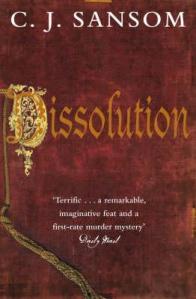
Dissolution by C J Sansom

Dissolution Reading C J Sansom’s alternate history novel Dominion a few months ago reminded me that I still hadn’t read any of his Shardlake books, despite meaning to for years. I noticed last week that my library had the whole series available as ebooks, so it seemed as good a time as any to get started with the first one, Dissolution.

Dissolution is set in the winter of 1537, just after the death of Henry VIII’s third wife, Jane Seymour. Having broken away from the Catholic church and declared himself Supreme Head of the Church of England, the King, with the help of Thomas Cromwell, has begun the process of dissolution of the country’s monasteries. After the closure of some of the smaller religious houses in the north led to rebellion, Cromwell is now taking a different approach and is sending commissioners to the larger monasteries to offer pensions to the monks in the hope that they will voluntarily surrender – or if not, to search for signs of fraud, corruption or other legal reasons to close them down.

At the monastery of Scarnsea, on the coast of Sussex, disaster strikes when one of Cromwell’s commissioners, Robin Singleton, is found brutally murdered in the monastery kitchen. Cromwell sends another of his men, the lawyer Matthew Shardlake, to investigate the mystery of Singleton’s death and discover what has been happening at the monastery. Accompanied by his assistant Mark Poer, Shardlake sets out for Scarnsea but what he learns when he arrives there convinces him that the commissioner had been about to make an important discovery before he was killed.

As a murder mystery, there’s everything here that you would expect: the detective and his sidekick, the isolated house (monastery in this case) cut off from the rest of the world, the small group of suspects each with their own secrets and motives, and the usual string of clues and red herrings. But what made this book stand out for me among other historical mysteries was the fascinating setting and detailed portrayal of monastic life. There are some obvious similarities with Umberto Eco’s The Name of the Rose, although this is an easier read – and set in a completely different time period, of course.

I have read other novels that focus on the dissolution of the monasteries (books such as The Crown by Nancy Bilyeau, for example) but usually from the point of view of the monks and nuns whose way of life has been destroyed. This book is narrated by Shardlake himself and it’s interesting to see dissolution from his perspective, as a dedicated reformer. Shardlake gradually becomes disillusioned with Henry and Cromwell, but for a long time he tries to justify what they are doing and it is only towards the end of the book that he allows himself to have doubts. Something I haven’t mentioned yet is that Shardlake is a hunchback and has spent his life trying to overcome prejudice and rejection. The fact that he has had to deal with a disability in a time much more unenlightened than our own adds another dimension to his personality.

Having taken so long to get round to reading this book, I’m pleased that I did enjoy it! I correctly named the murderer quite early in the story, but while I would like to pretend that I had cleverly managed to solve the mystery I have to admit it was really just a guess. This didn’t spoil the rest of the story at all, though – I had to wait until almost the end of the book to find out if I was right and even after Singleton’s killer was eventually revealed, there were still one or two other developments that took me by surprise! I will definitely be continuing the series with the second book, Dark Fire – but probably not immediately.

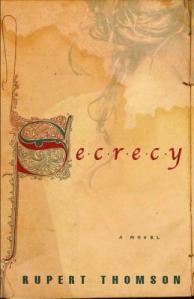
Secrecy by Rupert Thomson

Secrecy Secrecy is set in 17th century Florence and tells the story of Gaetano Zumbo, a sculptor famous for creating gruesome wax models depicting the human body in various stages of decay. Zumbo (or Zummo, as he is usually referred to in the novel) arrives in Florence in 1691, having fled from his home in Sicily for reasons which are revealed later in the book. The Grand Duke of Tuscany, Cosimo III de’ Medici, is an admirer of Zummo’s work and commissions a very special sculpture from him – one which must be kept a secret between the two men.

After settling into his new home, the House of Shells, and getting to know his landlady, her young daughter, and another lodger, a French acrobat, Zummo concentrates on creating the Grand Duke’s special wax model. But when he falls in love with the apothecary’s niece, Faustina, and makes an enemy of Stufa, a monk and advisor to the Grand Duke’s mother, Zummo’s life suddenly becomes a lot more complicated.

Gaetano Zumbo was a real person, although I didn’t know anything about him or his work before reading this book. If you’re curious and not too squeamish, you can find plenty of images online showing his various plague scenes, dismembered bodies and rotting corpses. Apparently some examples of his work are displayed in Florence’s Museum of Zoology and Natural History, but I have to admit I don’t have any desire to go and look at them as they sound a bit too grotesque for my liking!

There’s no doubt, though, that Zumbo is an unusual and intriguing subject for historical fiction. The setting is fascinating too. I don’t think I’ve ever read about this particular period of Italian history before and I enjoyed reading about Florence under the rule of Cosimo III – portrayed here as a corrupt and dangerous place. The novel has a dark, unsettling atmosphere and the theme of secrecy is woven into the complex plot in several different ways.

But the interesting protagonist and atmospheric setting were not quite enough to make me love Secrecy. I found the characters, even Zummo himself, difficult to fully connect with and never really managed to engage with any of them on an emotional level. I also thought the narrative style was slightly confusing as it was sometimes not immediately obvious when Zummo was dreaming or remembering something that had happened in his past.

Still, if you enjoy historical fiction set in Italy and are in the mood for something a little bit different, this book could be just what you’re looking for.

I received a copy of this book via NetGalley for review.

Plague by C.C. Humphreys

Plague I’ve always been fascinated by the Great Plague of 1665. I know that probably makes me sound morbid, but it’s true – with my interest in the history of medicine, I love reading about the theories suggested by 17th century people to explain what was happening to them, the weird and wonderful ‘cures’ they came up with and the impact of the epidemic on English society. So when I saw a novel called Plague in my library’s ebook catalogue, I was immediately intrigued, especially as it’s by C.C. Humphreys, an author I’ve been wanting to try since I saw Audra’s review of one of his other books, Jack Absolute.

Plague, I quickly discovered, is not simply a novel about the plague (although it’s always there in the background affecting the lives of all our characters in one way or another) but it’s also an action-packed historical mystery set in Restoration London.

In 1665, England is still recovering from the aftermath of the recent Civil War which had resulted in the execution of King Charles I. Although his son, Charles II, has now been restored to the throne, lots of former royalists are still struggling after losing everything in the war. One of these is Captain William Coke, who has had to resort to highway robbery to survive.

One night, Coke is surprised to find that his shouts of “stand and deliver” have no effect on the approaching carriage. The reason: the driver and the passengers have all already been brutally murdered. Coke takes an expensive necklace from the neck of one of the bodies before running away, but leaves one of his pistols behind in his hurry to escape. This is found by the thief-taker, Pitman, who becomes determined to capture Coke and receive the reward for bringing him to justice. We, the readers, know that Coke is innocent – but who is the real killer?

Two women also become embroiled in the mystery. One of them, Lucy Absolute, is the sister of a wartime comrade of Captain Coke’s. She is now an actress at a London theatre – and the mistress of the notorious Earl of Rochester. The other woman is Lucy’s friend, Sarah Chalker, another actress. When Sarah’s husband goes missing, the unlikely pairing of Coke and Pitman must work together to investigate his disappearance…and meanwhile, plague is continuing to spread through London. As the novel’s subtitle tells us, ‘murder has a new friend’.

Although the story deals with serious subjects such as murder, illness, robbery and treachery, and can be quite graphic at times, Plague is an entertaining novel that I found fun to read. Humphreys’ writing style is clear and engaging and I knew from the first page that this was a book I was going to enjoy. It’s always a relief when that happens! It’s a very atmospheric novel too, taking us from the dark, dirty cells of Newgate Prison and the squalid, claustrophobic homes of the plague victims to the splendour of the royal court and the drama of the theatrical world. Each location is brought to life vividly and realistically and the author doesn’t shy away from describing some of the less pleasant sights, sounds and smells of the period!

We meet lots of interesting characters in Plague, including some real historical figures such as Charles II and the fascinating Earl of Rochester. But my favourite was Captain Coke. He’s a complex, flawed character and I liked him from the beginning, even though we first see him as a highwayman and a thief. I enjoyed watching his relationship with Pitman develop from hunter and prey to unlikely partners. One aspect of the book I was less happy with, though, was the inclusion of a conspiracy plot involving a religious sect called the Fifth Monarchists. I think this sort of thing is overused in historical crime and I’m starting to get a bit bored with it. Other than that, I really enjoyed this book. The ending sets things up nicely for a sequel; I don’t know if there will be one, but I would like to have the chance to meet some of these characters again.

Written in My Own Heart’s Blood by Diana Gabaldon

Written in my Own Heart's Blood Diana Gabaldon seems to polarise readers like no other author. It’s rare to find anyone who has read one of her novels and didn’t feel strongly about it one way or the other! I do completely understand the reasons why people would dislike her writing, but I admit that I’ve always loved her Outlander series, at least until the last couple of books. I think I was about eighteen when I read Gabaldon’s first novel – Cross Stitch as it was called here in the UK, and I immediately went on to read the next three books (there were only four in the series then). Since then I’ve read each new book as it was published. The seventh volume, An Echo in the Bone (which happens to be the very first book I reviewed on this blog in 2009), left me feeling a bit disappointed, but sadly this new one has disappointed me even more, especially after a five year wait.

In some respects I think Gabaldon has improved as a writer over the course of the series, but the later books just don’t compare to the earlier ones in any of the other ways that matter to me – in plot, structure, characterisation or emotional impact. I’m not sure whether it’s just that my tastes have changed over the years, but I think the shift in narrative structure from being mainly narrated by one character in the first person to being told from multiple perspectives might also have something to do with it. And then there’s the fact that while the earlier novels are set mostly in Scotland during the 1745 Jacobite Rising and its aftermath, the later ones are set during the American Revolution, a period I’m not as interested in. Whatever the reason, these books are starting to lose their appeal for me. I’ll still be following the series to its end, though – I’ve invested far too much time in it to stop now!

Anyway, on with my thoughts on Written in My Own Heart’s Blood. This review is as spoiler-free as I could make it but as it refers to the eighth book in a series you may prefer not to read any further until you’ve caught up with the first seven books. At this point I should say that if you’re not already familiar with this series, then you really need to start at the beginning or you’ll get hopelessly confused!

If you remember, the previous book, An Echo in the Bone, ended on more than one cliffhanger and thankfully Written in My Own Heart’s Blood picks up immediately where Echo left off. There are two main threads to the novel. First, we follow Jamie, Claire and their assorted friends and family members who are all now based in Philadelphia. The year is 1778 and we are in the middle of the Revolution, with all the dangers and complications that brings. In the novel’s other strand, we return to Lallybroch in Scotland to catch up with Brianna and Roger who are having some exciting adventures of their own.

I really wanted to love this book but unfortunately I experienced a lot of the same problems with this one that I had with Echo. Both books seem to be dominated by characters and storylines from Gabaldon’s spin-off Lord John series – and I gave up on that series after two books. Ideally, I would have preferred the Lord John characters to stay in the Lord John books and the main Outlander series to concentrate on Jamie, Claire and the other characters we already know and love, such as Fergus and Marsali and their children or Ian Murray and Jenny. It seemed strange to me, for example, that we see so little in this book of Jenny interacting with Ian, the son she hasn’t seen for years, yet so much time is devoted to a search for Lord John’s nephew, Ben, a character who I can’t even remember being mentioned in previous books.

I don’t want to sound completely negative, because the good parts of Written in My Own Heart’s Blood are very good, but overall I thought the book lacked focus and because there are so many different storylines all running parallel with each other, it was inevitable that I would struggle to care about them all, particularly the ones dealing with characters I don’t really like. Many of the things that happen in the book feel superfluous and seem to have no real purpose other than to make a very long book even longer: a storyline involving two young girls William takes under his protection, an operation Claire performs on a slave with an unpleasant medical condition, and the death of a character which I found totally unnecessary.

The military aspect of the book was another problem for me, but I’ll admit that my lack of knowledge of this period of American history is probably to blame. I couldn’t keep track of the various Generals and Colonels and which side they were on, and whenever Claire met a presumably famous historical figure of the period I didn’t feel the excitement I was obviously intended to feel. My fault, though, not the author’s.

On the other hand, I thought Roger and Brianna’s parts of the book were fantastic! It was great to meet characters I’d never expected to meet again. These sections were much more compelling than the rest of the book, something I never thought I would say! While I’ve always liked Roger I could never quite warm to Bree and have often been impatient with the amount of time devoted to them in some of the previous books – but not this time. I was disappointed that only two out of the novel’s nine parts follow Roger and Bree and their children…I didn’t want their story to come to an end.

So, I’ve been left with very mixed feelings about this book and am sorry I’ve had to post a less than glowing review of a book by an author I used to consider one of my favourites. I did love the final few pages, though, because what I had been desperately hoping would happen did happen! If I didn’t already know that there’s going to be a book nine I think I would have been happy for this to have been the end of the series, even though there are still some storylines left unresolved. Based on past experience, I suspect we’ll have to wait four or five years to read the ninth, and probably final, book. I’m sure I’ll be reading it, despite my problems with this one, and am hoping for a satisfying conclusion to the series.