Bellman & Black by Diane Setterfield

Bellman and Black William Bellman is ten years old when he hits a rook with his catapult and kills it. He and his friends had expected the bird to fly away before the stone hit it and are surprised to see it die. Just a small incident and William quickly moves on with his life, but as he grows older it seems that this brief moment of cruelty was much more significant than it seemed at the time.

William joins the family mill and through hard work and dedication he begins to rise in the world. As a rich, successful businessman with a wife and children he loves, life is perfect – but not for long. Soon, a series of tragic deaths start to destroy William’s happiness and he finds himself entering into partnership with a mysterious stranger dressed in black…

I found plenty of things to like about Bellman & Black but compared to Diane Setterfield’s first book, The Thirteenth Tale, it was disappointing. Although I didn’t love The Thirteenth Tale the way a lot of other readers did and consequently my expectations for this one weren’t too high, I definitely found her first book much more enjoyable than the second. Bellman & Black is packed with great, original ideas but I don’t think she was quite as successful at bringing all of these ideas together to form a satisfying story as she was with The Thirteenth Tale.

I think part of my problem with this book may have been that I just didn’t like William and felt somehow detached from him, so that even when he was going through times of tragedy and disaster I didn’t really care. And being able to care about William would have been a big advantage in a book where William was the only character who felt fully developed. Other characters come and go without the reader having a chance to get to know them properly; I thought William’s daughter, Dora, had potential but her character was never fleshed out enough for me to be able to warm to her.

Anyway, let’s move on to the things that I loved in Bellman & Black. Diane Setterfield has chosen to write about some fascinating aspects of Victorian culture and society! The first half of the book revolves around the running of a mill and we have the chance to learn about all the different areas of the textile industry, from the processes of producing and dyeing cloth to the benefits Bellman introduces to improve the welfare of his workers. In the second half of the book we explore the mourning business and the emporium William establishes in London as part of his deal with Mr Black (I kept being reminded here of Zola’s The Ladies’ Paradise).

Interspersed with William’s story are some shorter passages which discuss rooks and ravens – their appearance and behaviour, their roles in history and mythology, and every other aspect of rooks and ravens that you could possibly imagine. I’m not sure if these sections really added anything to the plot, but I liked the concept and enjoyed reading them.

Bellman & Black is described as a ghost story, though despite the Gothic touches and the foreboding atmosphere, I don’t really think I would agree with that description. William Bellman is certainly haunted, but it’s more of a psychological haunting than a physical one, so if you’re looking for a traditional ghost story you won’t find one here. This is the sort of book that will make you think and look below the surface for hidden meanings – and when you reach the final page you’ll be left to draw your own conclusions from what you’ve read.

I received a copy of this book for review via Netgalley.
Colossus: The Four Emperors by David Blixt

Colossus - The Four Emperors This historical fiction novel by David Blixt is set in Rome in the 1st century AD and follows the story of one ambitious but honourable man, Titus Flavius Sabinus, and his family. This is actually the second in the Colossus series and I haven’t read the first, but fortunately it doesn’t seem to be essential to read them in order. Rather than being a conventional sequel to the first book, Stone and Steel, this one adds another layer to the same story, choosing to focus on some different characters and events.

The Four Emperors begins near the end of Nero’s reign. An unpredictable and eccentric emperor, Nero is capable of acts of great cruelty, and Rome under his rule is a dangerous place to live. When Nero commits suicide to avoid assassination, a power struggle begins with four different claimants becoming emperor in the space of a year. We see the events of this turbulent period from the perspective of Sabinus and the other members of his family, including his elderly father, his two sons, Tertius and Clemens, and a cousin, Domitian. Domitian’s father, Vespasian, has been sent to Judea to put down a Jewish rebellion there, and Sabinus hopes this will be a chance for the family to rise in the world – but when he visits the Oracle of Delphi, he learns that he may be fated to be forgotten by history…

Ancient Rome is not one of my favourite periods for historical fiction, but having enjoyed another of David Blixt’s books (The Master of Verona, set in 14th century Italy) I was happy to try this one. Because I don’t read about the Romans very often, I was fascinated by Blixt’s portrayal of their daily lives, their beliefs and customs. I thought his descriptions of the Oracle’s prophecies and the wildness of the Saturnalia celebrations were particularly vivid. The book also explores the politics of the period, the military campaigns, and how Jews and Christians were treated by the Romans.

Another storyline I found interesting involved a young Greek shepherd boy called Spiros, who was forced to marry Nero because his face reminded Nero of his dead wife Poppaea Sabina’s. This and many other incidents showed how dangerous and uncertain life could be during this period and how everyone had to obey the Emperor’s every whim, however cruel or outlandish. Life under the other rulers who succeeded Nero during the Year of the Four Emperors was no less precarious and unpredictable. Of all the time periods in history, this is not one that I would like to have lived in!

At first I thought it would be hard to remember who all the characters were, as so many of them had very similar names thanks to the complicated Roman naming system, but it was actually a lot easier to understand than I thought it would be. Sometimes when I read fiction set in Ancient Rome I find it difficult to connect with and relate to the characters. I’m not sure why it should really be any different from reading about the Tudor or medieval periods but for some reason, for me, it is. I didn’t have that problem with The Four Emperors; every character came alive on the page. I’ve only really mentioned the men so far, but there were some interesting female characters too, including Vespasian’s mistress, Caenis, and two slaves, Abigail and Perel.

My only problem with this book was that, after such a great start, in the second half of the novel there are some long battle sequences which, although they were well written, I didn’t really enjoy reading. I just don’t find battle scenes very interesting and my attention often starts to wander so much that I struggle to follow what’s happening. That was the case again here and it meant that I didn’t love the book quite as much as I had expected to at the beginning, but this is just due to my personal taste and not the author’s fault. Apart from this, I did enjoy The Four Emperors and although I didn’t feel at any disadvantage as a result of starting with the second book in the series, I would now like to go back and read the first one, Stone and Steel, which is told from a Judean perspective.

The Four Emperors tour

I read The Four Emperors as part of the Historical Fiction Virtual Book Tour. There’s only one more stop on the tour, but if you’d like to read more about the book and the author you can find a list of previous reviews, guest posts and interviews here.

Mrs Poe by Lynn Cullen

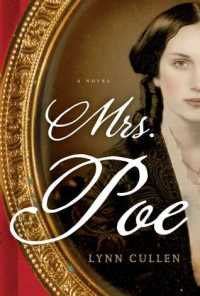
Mrs Poe About ten years ago I was given a copy of Edgar Allan Poe’s complete works for Christmas and spent the next few months slowly working through his stories and poems. I was already familiar with the more famous ones, but I hadn’t realised what a diverse writer he actually was and I enjoyed discovering the rest of his work, from the wonderful creepiness of Ligeia and the mystery of The Gold Bug to the satire of The Angel of the Odd and the eerie beauty of Silence: A Fable. By all accounts Poe’s private life was almost as interesting as his fiction, so I was naturally drawn to this new novel by Lynn Cullen with the title Mrs Poe.

I had assumed that the Mrs Poe of the title was Poe’s cousin Virginia Clemm who became his wife at the age of thirteen, but while Virginia does play a big part in the story, the title also refers to another woman – the poet Frances Sargent Osgood, with whom Poe may have had an affair. As the story begins in 1845, Frances is separated from her husband, the portrait painter Samuel Stillman Osgood, and is struggling to earn enough money through her writing to support herself and her young children. Her editor suggests that perhaps the type of poems and stories she writes (children’s stories like Puss in Boots and poetry about love and flowers) are not what people want to read and she should try something darker, becoming “a sort of Mrs Poe”.

However, Frances’ work has already brought her to the attention of Poe himself and when the two are introduced, a friendship begins to form. After this, Cullen’s novel starts to deviate away from the known facts. Poe and Osgood certainly had a relationship of some sort and exchanged romantic poems but it is not known whether they were any more than just platonic friends. In Mrs Poe there’s no doubt that Frances is in love with Edgar, so when she is befriended by his young wife Virginia, who is suffering from tuberculosis, Frances doesn’t know what to think – especially when she starts to experience a series of accidents and misfortunes whenever she’s with Virginia. Does Virginia really want to be her friend or does she have a more sinister reason for wanting to spend so much time with Frances?

The story of the two Mrs Poes is set within the world of nineteenth century American literature, which means there are lots of descriptions of meetings with publishers, salons attended by authors and literary critics, and even some brief mentions and appearances from Louisa May Alcott, Herman Melville, Walt Whitman, Ralph Waldo Emerson and other writers and poets. This does help to give us a feel for what life was like in the literary world of 1800s New York, but when P.T. Barnum, Samuel Morse and other historical characters began to appear as well, I thought it started to feel too overwhelming.

I have tried two of Lynn Cullen’s books now – this one and The Creation of Eve, the story of female Renaissance artist Sofonisba Anguissola – and while they are both entertaining enough, I’m not sure she is really an author for me. I love the fact that she chooses such interesting subjects for her novels, but neither of the two I’ve read have the depth I look for in historical fiction. This one had the potential to be a great story but the focus on gossip, scandal and the social lives of the characters started to bore me. I think with a title like Mrs Poe I had also expected something more gothic and mysterious and was a bit disappointed that it wasn’t – although the story did become a lot more compelling halfway through when Frances began to feel threatened by Virginia.

This book wasn’t a great success for me, but I would still recommend it to other readers who are interested in the lives of Edgar Allan Poe and Frances Osgood.

I received a copy of this book for review via Netgalley

Twenty Years After by Alexandre Dumas

Twenty Years After At last! I’ve been meaning to read the sequel to The Three Musketeers for about five years now and I regret not having read it earlier as I loved it every bit as much as I expected to. I’ve done my best to avoid any big spoilers here but if you haven’t read The Three Musketeers yet you might prefer not to read the rest of this post until you have.

Twenty Years After, as you might have guessed, is set twenty years after The Three Musketeers. The political situation in France has changed during this time period: Cardinal Richelieu is dead and has been succeeded by the Italian Cardinal Mazarin, who is in league with the widowed Anne of Austria, mother of the young King Louis XIV of France. The French people are divided between Mazarin’s supporters and his opponents, the Frondeurs, who are unhappy with the way the country is being run. As Twenty Years After begins, France is close to civil war and when Mazarin meets our old friend d’Artagnan and hears of the brave exploits he has performed in the past, he asks him for help, along with his companions, the three musketeers – Athos, Porthos and Aramis.

D’Artagnan and his three friends have drifted apart over the years but he sets out to find them and invite them to join him in the Cardinal’s service. But while Porthos (hoping that Mazarin will reward him with a barony) is happy to go along with d’Artagnan, the other two have already taken the opposite side in the conflict. The story that follows is the story of how the friendship between d’Artagnan, Athos, Porthos and Aramis is tested by their differing political views and loyalties. Their work takes them to England, where King Charles I is facing capture and execution, and again they find themselves in opposition – but ultimately their loyalty is still to each other, especially when faced with a new enemy in the form of Mordaunt, the son of Milady, the previous book’s villain.

I found Twenty Years After a much more complex book than The Three Musketeers; I’m completely unfamiliar with this period of French history and even after finishing the book I’m not sure I really understood all of the historical background or exactly which of the various princes and dukes was on which side of the conflict. It’s a more mature book too – the characters are twenty years older and have different motivations and priorities, which allows Dumas to explore some different ideas and themes. But there’s still plenty of swashbuckling adventure and I definitely thought this book was just as much fun to read as the first one. As in The Three Musketeers there are some great and memorable scenes and set pieces – the scene on the scaffold during the execution of Charles I is one of the best – and I also loved the sequence of chapters describing the imprisonment of the Duc de Beaufort and his attempts to escape (which involved a trained dog, lobsters, some tennis balls and a giant pie).

The novel begins with an introduction to Cardinal Mazarin, but we don’t have to wait too long until we meet d’Artagnan again, still a lieutenant in the musketeers and dreaming of a captaincy. The other three musketeers and their servants are then reintroduced gradually one by one: first d’Artagnan’s old valet, Planchet, then Aramis with Bazin, Porthos and Mousqueton, Athos and finally Grimaud. I was a bit disappointed, though, that I had read more than 200 pages before all four of our heroes were reunited and together again in the same scene. And that was really the only problem I had with this book – the fact that throughout most of the story the four are divided into two pairs working towards different goals, with Porthos and d’Artagnan on one side and Athos and Aramis on the other.

The basic personality traits of the musketeers are the same, but they have also changed in many ways since the previous book, which is what you would expect after a gap of twenty years. D’Artagnan has matured from the naïve, passionate, brave young man we met in The Three Musketeers into a clever, cunning, quick-thinking man of forty who is now the natural leader of the group. Aramis has fulfilled his ambition of entering the church but isn’t fully committed, still being too interested in women and fighting. As d’Artagnan tells him, “when you were a musketeer you were forever becoming the abbé, and now you are an abbé you appear to me to have a strong leaning to the musketeers.”

Athos was my favourite character in The Three Musketeers but in this book he has become so honourable and saintly that I found him very frustrating at times. I still liked him but I much preferred the younger Athos of the wine cellar and the Bastion Saint-Gervais! In contrast, Porthos, who was never the brightest of the four, seems to have become even less intelligent. I’m sure he wasn’t quite as stupid in the first book! It does result in some great comedy moments though, and I do admire Dumas for making changes rather than leaving his characters static and undeveloped. It was also good to see that the musketeers’ four servants are given more personality in this book, particularly Grimaud and Mousqueton who even have some separate adventures of their own.

As I expected, Twenty Years After has definitely been one of my most enjoyable reads of the year! The Vicomte de Bragelonne awaits…

This House is Haunted by John Boyne

A lonely mansion, a young governess, two young children in white nightgowns, servants who seem to vanish into thin air, villagers who refuse to answer any questions, gusts of wind that blow up out of nowhere and disappear as suddenly as they came…

“You are not there, Father,” I cried. “I wake up at Gaudlin Hall, I spend most of my day there, I sleep there at night. And throughout it all there is but one thought running through my mind.”

“And that is?”

“This house is haunted.”

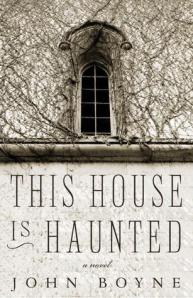
This House is Haunted This House is Haunted is a wonderful Victorian-style ghost story and a perfect October read.

It begins in London with a public reading by Charles Dickens, attended by young schoolteacher Eliza Caine and her invalid father, a big admirer of Dickens. As they walk home in the cold after the reading, her father’s health worsens and he dies shortly after, leaving Eliza blaming Dickens for his death. Alone in the world, Eliza decides to answer an advertisement in the newspaper and finds herself being offered the position of governess at Gaudlin Hall in Norfolk.

Arriving at the train station, she experiences what will be the first in a series of unexplained and increasingly sinister incidents when she feels a pair of ghostly hands try to push her under a moving train. Eliza survives this attack and continues to her destination where she meets her two young charges, twelve-year-old Isabella and eight-year-old Eustace Westerley, but it soon becomes obvious that something is wrong. Isabella and Eustace appear to be alone in the house and won’t tell Eliza where their parents are or when she will be able to speak to them. As she slowly pieces together the truth about Gaudlin Hall and learns the fates of the previous governesses, Eliza begins to fear for her own life.

I loved this book. It reminded me of The Séance by John Harwood, though there were shades of lots of other novels too, from Jane Eyre to The Turn of the Screw. Dickens is another big influence; as well as the author himself appearing in the book’s opening scenes, the characters also have suitably Dickensian names, such as Mr Raisin the lawyer, who has a clerk called Mr Cratchett. I really liked the narrator, Eliza, and it was a pleasure to spend 300 pages in her company. The author has obviously made an effort to create an authentic Victorian narrative voice and it worked well, though I did notice a few inaccuracies and words that felt too modern.

Although this is a very atmospheric book, I didn’t find it a very scary one – it’s too predictable and the ghostly manifestations are a bit too ridiculous (the tone of the novel seemed to be somewhere between serious ghost story and parody). But this didn’t make the book any less enjoyable, entertaining and fun to read and once I got past the first few chapters I didn’t want to put it down.

I highly recommend This House is Haunted if you’re looking for something ghostly and Victorian to read as we approach Halloween – I enjoyed this much more than The Woman in Black!

I received a copy of this book for review via Netgalley.

Wars of the Roses: Stormbird by Conn Iggulden

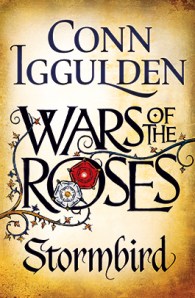
Stormbird Despite my love of historical fiction, there is one very popular and successful historical fiction author I’ve been avoiding and that is Conn Iggulden. The reason I had been wary of trying one of his books is that they seemed to be marketed towards readers who enjoy books filled with non-stop action and battle scenes rather than the type of historical fiction I prefer, but when I had the opportunity to read Stormbird, the first in Iggulden’s new Wars of the Roses series, I decided to give him a chance and see what I had been missing out on.

Stormbird is set during the reign of Henry VI at the beginning of the series of fifteenth century conflicts which became known as the Wars of the Roses. Unlike his father – Henry V, the hero of Agincourt – Henry VI is a quiet, gentle man unable to give England the strong leadership it needs. He relies on men such as his spymaster, Derry Brewer (a fictional character), and William de la Pole, the Duke of Suffolk, to help him rule the country. In an attempt to keep peace with France, Suffolk negotiates a marriage between Henry and Margaret of Anjou, the French king’s niece, but as part of the deal the English must surrender some of their territories in France. Not surprisingly, this decision is very unpopular with the English public – and with another claimant to the throne, Richard, Duke of York, as one of his opponents, Henry’s crown could be under threat…

The Wars of the Roses is a time period I particularly enjoy reading about and am starting to have quite a good knowledge of, but my reading usually tends to focus on the later part of the period – the reigns of Edward IV and Richard III – so I liked the fact that this book, being the first in a series, concentrates on the earlier years and some of the people and events that I’m less familiar with (I enjoyed the sections of the book that followed Margaret of Anjou’s story, for example, though unfortunately we saw less and less of her as the book progressed). It’s really not necessary to know anything about the Wars of the Roses before starting this novel, though, and there are plenty of maps, family trees and character lists at the front of the book if you need some help.

My interest in the time period, however, was not enough for me to feel fully engaged with this novel and towards the end I was tempted to start skimming through the final chapters. As I suspected, this is a book aimed more at readers who prefer a very plot-driven novel with lots of fighting and descriptions of weapons and military tactics. It’s not badly written and I can definitely understand the appeal, but I was disappointed by the lack of period feel and strong, well-developed characters. In a book with such a lot of characters it’s important for each of them to be unique and memorable, but sadly there were only one or two here who really came to life for me and even with those few I found it difficult to form any kind of emotional connection. This was disappointing as there are so many fascinating historical figures associated with this period and I had been curious to see how Iggulden would portray them.

I didn’t like this book enough to want to continue with the next one in the series, but I’m sure it will be an enjoyable read for Iggulden’s fans and for readers whose tastes in historical fiction are not the same as mine. It did remind me, if I needed reminding, of how much I love reading about the Wars of the Roses and what an intriguing, turbulent period of history it was.

I received a copy of this book for review via Netgalley

Dragonwyck by Anya Seton

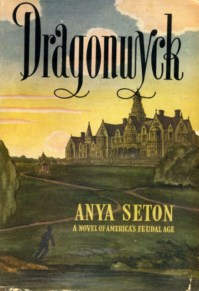
Dragonwyck - Anya Seton Sorry for neglecting my blog recently…I’ve had a busy two weeks at work and haven’t had much time or enthusiasm for blogging. Luckily I have a week off now and will be able to catch up on telling you about all the books I’ve been reading, beginning with this one, Dragonwyck, which I read for the R.I.P challenge.

I had been looking forward to reading this book for a long time, having been a fan of Anya Seton’s for years and also being a lover of both historical fiction and gothic novels. Dragonwyck is a combination of both – it includes some typical gothic elements (mysterious deaths, a mansion with haunted rooms and an old servant who tells tales of ghosts and curses) but it also has a fascinating and thoroughly researched historical background.

One day in 1844 Abigail Wells, wife of a Connecticut farmer, receives a letter from her rich cousin, Nicholas Van Ryn, offering to take one of her daughters into his home as a governess for his own young daughter, Katrine. Eighteen-year-old Miranda is the one who is chosen and she is thrilled to be given this opportunity to improve her situation in life. Nicholas is the Patroon (landowner) of a large estate called Dragonwyck in Hudson, New York, and after growing up on her parents’ farm the naïve and romantic Miranda is immediately captivated by the handsome Nicholas, his luxurious home and his aristocratic lifestyle.

Soon she becomes aware that she is falling in love with Nicholas and is sure he feels the same way – the only problem is, Nicholas is married. When tragedy strikes at Dragonwyck, Miranda’s life is transformed again, but this time she begins to uncover some of the house’s dark secrets and to learn the truth about her mysterious cousin Nicholas. As Anya Seton explains in her author’s note introducing the story: “All Gothic magnificence and eerie manifestations were not at that time inevitably confined to English castles or Southern plantations…”

As a gothic novel I didn’t find Dragonwyck particularly creepy – although it’s certainly a very dark book, with an oppressive, unsettling atmosphere. But the real attraction of this book for me was its wonderful historical setting that gave me some fascinating insights into areas of American history I hadn’t read about before. We learn about the Patroon system, for example, which began when landholders in the Dutch colony of New Netherland were given power over large areas of land, similar to the feudal system in medieval Europe. This led to an uprising of the tenants known as the Anti-Rent War and this forms a large part of Dragonwyck’s historical backdrop. We also learn about the Astor Place Riot during William Charles Macready’s performance in Macbeth and about the steamboat captains who would race each other on the Hudson River with total disregard for the safety of their passengers, sometimes with fatal consequences.

There are also a few brief appearances by real historical figures, most notably Edgar Allan Poe, but these felt as if they had been woven naturally into the story rather than name-dropping for the sake of it (in fact, the Poe episode does have a significance to the plot which only gradually becomes apparent later in the story). The main focus though, is on the three main fictional characters – Miranda, Nicholas and the doctor, Jeff Turner – and you’ll notice I haven’t said much about any of those three, because to attempt to explain why I liked or disliked each character would risk giving away too much of the story.

I did enjoy Dragonwyck but not as much as some of Anya Seton’s other novels (and I don’t think it really comes close to the brilliance of Jane Eyre or Rebecca, two books that it has been compared with). I do love reading ‘older’ historical fiction novels like this one though, as they seem to somehow have a completely different feel from modern ones. This book was published in 1944 and there’s a film too from 1946 with Gene Tierney and Vincent Price. I haven’t seen it, so I’d be interested to know what it’s like and how faithful it is to the book.

As well as this book, I have now read Katherine (one of my favourite historical fiction novels), Green Darkness, The Winthrop Woman, Avalon and Devil Water. If there are any of her others that you think I should look out for, please let me know which ones!