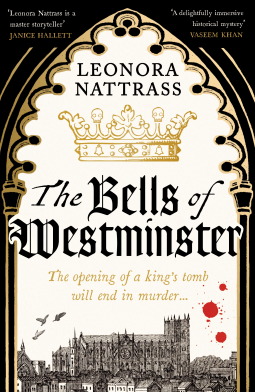
The Bells of Westminster by Leonora Nattrass

I’ve enjoyed all three books in Leonora Nattrass’ Laurence Jago series (Black Drop, Blue Water and Scarlet Town) and was hoping for a fourth, but it seems she’s moved on to other things, at least temporarily. Like the Jago books, The Bells of Westminster is set in the 18th century but is a completely separate story with a new set of characters to get to know.

It’s 1774 and King George III has just given his permission for the Society of Antiquaries to open the tomb of Edward I, who rests in Westminster Abbey. The Society wants to discover whether Edward’s body was embalmed, according to his wishes, and whether he was buried with any valuable artifacts. However, the opening of the tomb sets in motion a series of bizarre events: first, a ghostly figure is seen wearing the dead king’s crown, then one of the Antiquaries is found dead and Edward’s body is stolen. Mr Bell, the Dean of Westminster, is given the job of investigating, but his daughter Susan knows he’s not capable of solving the mystery and it will be up to her to solve it for him.

The novel is narrated by Susan Bell who, at twenty-three, is already considered a spinster. Her father would like her to marry her cousin Lindley, an aspiring scientist who is staying with them at the Deanery, but Susan isn’t sure what she thinks of him – and anyway, she’s quite happy with the company of her talking parrot, Cuthbert. Susan’s narration takes the form of diary entries, through which we see the mystery unfold as well as gaining some insights into life within the confines of Westminster Abbey.

I’ll be honest and say that at first I didn’t think I was going to enjoy this book. I had trouble connecting with Susan’s narrative style, peppered with notes and asides, which seemed to be trying very hard to be clever and witty. It also took a long time for the story to really get started, but once the murder happened about a quarter of the way into the book, I became drawn in. Susan’s narration also grew on me after a while and I found I liked her much more than I thought I would at the beginning.

Nattrass explains in her author’s note which parts of the book are based on fact and which are invented. The opening of Edward I’s tomb in 1774 really happened, for example – although the body wasn’t stolen and a ghost didn’t really appear! The characters are also a mixture of real people and fictional ones (Susan Bell is one of the latter). One thing that’s completely real, of course, is the setting: with the whole book being set within Westminster Abbey and its grounds, there are lots of detailed descriptions of the chapels, arches and galleries as well as the various tombs and shrines.

The eighteenth century was also a time of major scientific developments and Nattrass is able to explore some of these through Lindley’s interest in science. In particular, we see how a knowledge of science can work along with – and sometimes in conflict with – superstitions, religion or fear of the supernatural. This is a fascinating novel, then, and although I would still have preferred another Laurence Jago book, I did enjoy this one once I got past the slow, uncertain start!

Thanks to Viper for providing a copy of this book for review via NetGalley.

Book 47/50 for the Historical Fiction Reading Challenge 2024
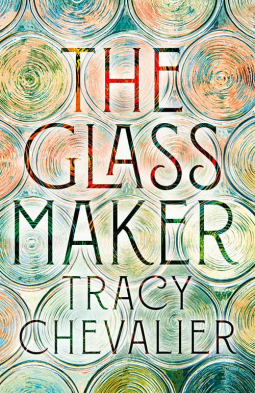
The Glassmaker by Tracy Chevalier

Having enjoyed some of Tracy Chevalier’s previous books I was particularly looking forward to this one because of the setting. It takes place on Murano, an island in the Venetian Lagoon which for centuries has been associated with glass making. It begins in the 15th century but doesn’t remain in that time period because, Chevalier tells us, time works differently there – more on that later!

1486 is when we first meet Orsola Rosso, the eldest daughter of a Murano glassmaking family. Working with glass is considered a man’s job, but Orsola feels that glassmaking is in her blood and longs to have the same opportunities as her brothers. When her father is killed in an accident in the workshop and the family begin to struggle both financially and creatively, Orsola comes up with a plan to earn some extra money by making glass beads. Despite bead making being looked down on by men as not ‘real’ glassmaking, it’s difficult, intricate work and takes Orsola a lot of time and effort to master, but eventually she learns the necessary skills and is helping to keep the family business afloat.

In 1574, the Rosso family experience more hardships when plague makes its way across the water from Venice to Murano – but this is where time begins to move strangely. Although many decades have gone by, the characters have barely aged at all and the story just continues within this new setting as if nothing unusual has happened. We jump forward in time several more times throughout the book until we are brought right up to date with the Covid pandemic – and still Orsola and the other central characters remain unaware that they should have been dead for hundreds of years! I don’t think I’ve read another novel that handles time in this exact way; Virginia Woolf’s Orlando has a similar concept, but it only involves one or two characters rather than the entire cast, and she plays with gender as well as age. John Boyne’s The Thief of Time also has a protagonist who doesn’t age, but he is at least aware that something odd is going on. What Chevalier does here is different and I think readers will either dislike it or just accept and enjoy it.

The device Chevalier uses to tell the story has two advantages. The first is that it allows her to give an overview of the history of Venice and Murano from the 1400s to the modern day and explore the ways in which things have changed over the centuries (plagues, two world wars, increasing tourism, competition affecting Venice’s position as a centre of trade). The second is that she can focus on developing one set of characters – including Orsola and her brothers and sisters, her lover Antonio, the German merchant Klingenberg and the African gondolier Domenego – instead of introducing new generations. Still, I think I would have been just as happy if the book had been set entirely in one of the earlier time periods, as they were the ones that interested me most.

A lot of Chevalier’s novels tend to deal with specific crafts or vocations: embroidery and bell ringing in A Single Thread; fossil collecting in Remarkable Creatures; or growing apple trees in At the Edge of the Orchard. Obviously in this book it’s the making of glass and beads and we learn a lot about the skills required, the methods used and the personal touches each individual glassmaker brings to their work. I’m fortunate enough to have visited both Venice and Murano and seen a glass blowing demonstration so I could easily picture some of the things and places Chevalier describes, but even if you haven’t she does an excellent job of bringing them to life. This is a fascinating book and I did enjoy it, even if I wasn’t completely convinced by the time travel element!

Thanks to The Borough Press for providing a copy of this book for review via NetGalley.

Book 46/50 for the Historical Fiction Reading Challenge 2024
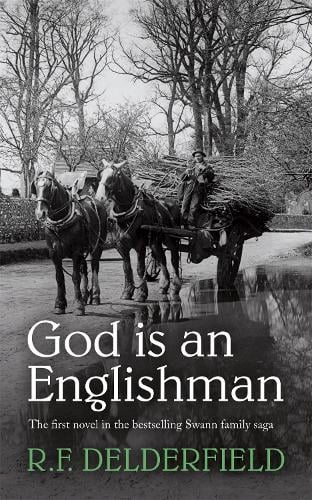
God is an Englishman by RF Delderfield – #1970Club

My final book for this week’s 1970 Club hosted by Simon and Karen is one I was almost certain I would love – and I did! I’ve read several of RF Delderfield’s other books and particularly enjoyed his A Horseman Riding By trilogy, set in rural England during the first half of the 20th century. God is an Englishman, published in 1970, is the first in another trilogy, known as the Swann Saga, which promises to be equally enjoyable.

The novel begins with soldier Adam Swann fighting in India during the Sepoy Mutiny of 1857. In the chaos of the battlefield, Adam stumbles upon a valuable ruby necklace in a broken casket. With no way of finding its rightful owner and reluctant to hand it over to the East India Company, he decides to use it to start a new life for himself. Disillusioned by his experiences with the Mutiny and previously the Crimean War, Adam has been considering resigning from the army anyway and the money from the sale of the necklace will enable him to launch a new business venture.

On his return to England, Adam contemplates investing in railways but a better plan soon begins to emerge. What about the areas of the country that can’t be reached by train? He rides out into the countryside to investigate the possibility of a horse-drawn delivery service and after passing through Seddon Moss, a mill town near Manchester, he has his first encounter with the mill owner’s daughter, Henrietta Rawlinson, who is running away to avoid marriage to a man she doesn’t love. The rest of the novel follows the formation and expansion of Adam’s new business, Swann-on-Wheels, and his relationship with Henrietta as they marry and start a home and family.

At almost 700 pages in the edition I read, this book was quite a commitment, especially as I needed to finish it in time to review this week and should probably have started it earlier. However, once I became absorbed in the story, the pages went by a lot more quickly than I’d expected and I was sorry to reach the end.

While the Horseman Riding By books were set in the countryside with a focus on farming and rural life, this one is set in the very different world of trade, business and industry. It’s fascinating to see how Adam starts with nothing except some jewels and some good ideas and slowly builds up Swann-on-Wheels into a successful haulage company with depots all over the country. Adam gives each region a name (the Border Triangle, the Mountain Square, the Western Wedge…) and each one presents its own unique set of challenges and opportunities depending on the terrain, the existing infrastructure and the industries already operating in that area. He also puts a manager in charge of each area and although some of them are not much more than names on the page, others are brought to life and have adventures of their own.

The broad geographical setting and large number of characters allows Delderfield to address many specific topics and social issues relevant to life in Victorian Britain. Through Henrietta’s father, the miller Sam Rawlinson, we see first the dissatisfaction of the mill workers with their pay and working conditions and later the impact of the reduction in the supply of raw cotton due to the American Civil War. The fate of homeless children and the dangers facing young boys used as chimney sweeps are also explored – and if all of this makes you think of Charles Dickens, there’s a cameo appearance from the man himself as he and several of the Swann family become involved in the Staplehurst rail accident of 1865.

At the heart of the novel, though, is the relationship between Adam and Henrietta and how it develops as both characters grow and change and make discoveries about themselves and each other. Henrietta, being a lot younger than Adam, is immature, innocent and frivolous at the start of the novel and there’s a sense that although Adam loves her he doesn’t fully understand or respect her. It’s only after the introduction of another woman, Edith Wadsworth, into both their lives, that Henrietta begins to take control of her future and Adam comes to see her as more of an equal. Ironically, Edith, the daughter of one of Swann-on-Wheels’ area managers, is in love with Adam herself, but I won’t tell you what happens there or whether she acts on her feelings!

I think some readers will probably enjoy this book more for the Swann family storylines and others for the insights into the building of a business empire. I found both interesting and felt that Delderfield got the balance between the two just about right. I will be continuing with the second book, Theirs Was the Kingdom!

Book 45/50 for the Historical Fiction Reading Challenge 2024
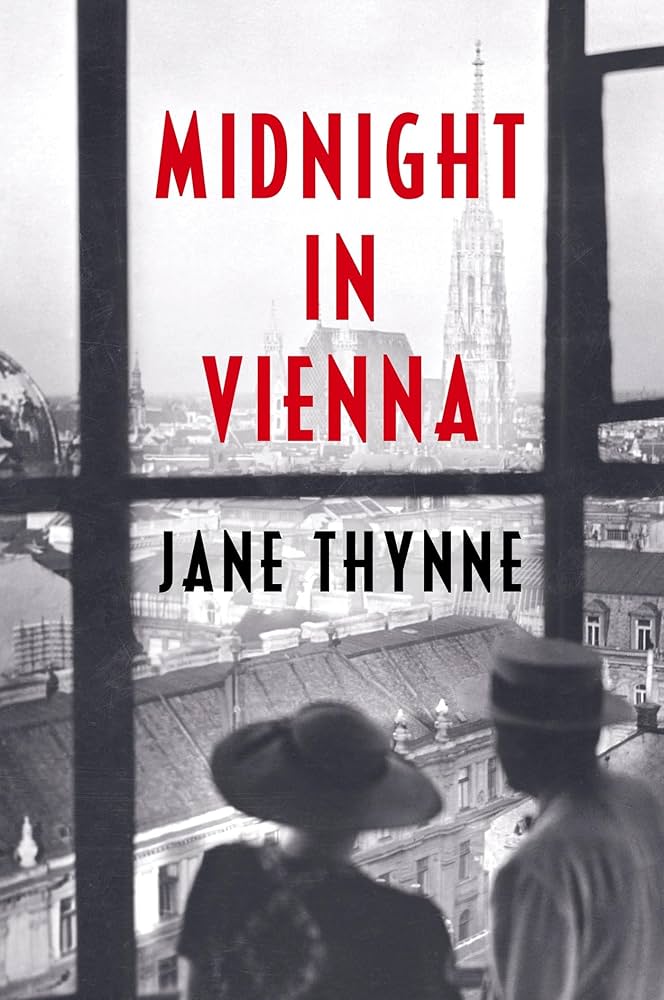
Midnight in Vienna by Jane Thynne

It’s 1938 and Stella Fry has just returned to London from Austria, where she has been working as a private tutor for a Jewish family in Vienna. With the worsening political situation in Europe, the family decided to leave for the safety of New York, and Stella has found herself back home with no job. Famous mystery writer Hubert Newman is advertising for someone to type up his new manuscript and Stella applies for the position. After meeting with Newman and being offered the job, she is shocked when she learns the next day that he has been found dead. Another shock follows twenty-four hours later when she receives the manuscript of his new book, Masquerade, and finds that he has dedicated it To Stella, spotter of mistakes.

Harry Fox is a former Special Branch detective who left the police force under a shadow, but is still carrying out unofficial intelligence work, spying on suspected communists. He has reason to believe that Hubert Newman’s death was not a natural one and when his path crosses with Stella’s and he discovers that she had lunch with the author the day before he died, the two team up to investigate.

I really enjoyed Midnight in Vienna; the only negative thing I can say about it is that Stella was a bit too trusting of strangers and too quick to put herself in dangerous situations without thinking of the consequences. The biggest example comes very early in the novel when, having only just met Harry Fox, she agrees to travel back to Vienna alone on the trail of someone possibly implicated in Hubert’s murder – at a time when everyone else is trying to get out of Austria. However, I can forgive this because the Vienna sections of the book are so well done, perfectly illustrating the mood in Austria during that period which followed the annexation by Nazi Germany.

With Hubert Newman being an author, there’s also a literary element to the novel. Newman (a fictional character, by the way) is a member of the Detection Club, a real-life society of prominent British mystery writers, and Harry Fox’s investigations lead to a meeting with one of the founding members, Dorothy L. Sayers. She only makes a brief cameo appearance but I thought the way Thynne portrayed her character was very convincing. As well as the literary world, we also get a glimpse of the theatrical world of the 1930s through Stella’s actress friend, Evelyn, so there’s a lot going on outside of the central mystery.

This is the first of Jane Thynne’s novels I’ve read. It seems that most of her previous books are similar wartime/espionage thrillers and having enjoyed this one so much I’m sure I’ll be reading more of them. I’m also wondering whether there will be a sequel to this book as I think there’s plenty of scope for some of these characters to return for a second adventure.

Thanks to Quercus for providing a copy of this book for review via NetGalley.

Book 44/50 for the Historical Fiction Reading Challenge 2024

Mary I: Queen of Sorrows by Alison Weir

This is the third novel in Alison Weir’s Tudor Rose trilogy, following Elizabeth of York: The Last White Rose and Henry VIII: The Heart and the Crown. You definitely don’t need to have read the previous two books before starting this one, although if you’re not very familiar with Tudor history it would probably be helpful to read them in order.

The novel begins in 1525, introducing us to nine-year-old Mary who has recently become betrothed to Charles V, Holy Roman Emperor and King of Spain. As the daughter of Henry VIII and his Spanish wife, Katherine of Aragon, a marriage between Mary and Charles would cement England’s alliance with Spain. Mary’s future looks bright, but things don’t go as planned and it’s not long before her whole life is thrown into turmoil. First, Charles decides he doesn’t want to wait for Mary to grow up and takes another bride, one who is richer and old enough to give him children. Then, Mary’s father becomes obsessed with the idea of marrying Anne Boleyn and casts Mary’s mother aside.

It would be difficult not to sympathise with the young Mary as she is put under pressure to betray her mother and denounce her Catholic faith, gains and loses one stepmother after another and, with the arrival of a younger half-sister and half-brother, becomes uncertain of her place in the succession. However, I did find these early sections of the book quite repetitive as having read all of Weir’s Six Tudor Queens series, as well as her novel on Henry VIII, I felt that there wasn’t much here that was new to me. The second half of the book interested me more as it moved on to Mary’s own reign as Queen, her marriage to Philip of Spain and her ‘phantom pregnancies’, and, of course, the persecution of Protestants that famously gained her the nickname ‘Bloody Mary’.

On finishing the book and reading the author’s note at the end, I was interested to find that Alison Weir herself felt that she and Mary shared some childhood experiences, such as the separation of their parents and dislike of the new woman in their father’s life; this probably explains why the chapters dealing with Mary’s early years are written with such sympathy and understanding. Later in the novel, however, Mary becomes a much more difficult character to like as she ignores advice and public opinion, makes some poor decisions, and those who don’t share her Catholic faith burn at the stake. Weir states that she found it hard to make the adult Mary sympathetic when the historical evidence tells us otherwise.

As I wouldn’t want anyone to accidentally buy the same book twice, be aware that the US title of this book is The Passionate Tudor: A Novel of Queen Mary I. Alison Weir’s next novel, coming in 2025, stays in the Tudor period and is about the rise and fall of Cardinal Wolsey. I’ve never read a book written from Wolsey’s perspective before, so that should be interesting.

Thanks to Headline for providing a copy of this book for review via NetGalley.

Book 43/50 for the Historical Fiction Reading Challenge 2024
Precipice by Robert Harris

Robert Harris became a must-read author for me after reading and loving An Officer and a Spy, the Cicero trilogy and Conclave, but some of his more recent books have left me feeling slightly disappointed. His new one, Precipice, sounded promising, but would it be a return to form?

The novel opens in London in the summer of 1914 and introduces us to Venetia Stanley, a twenty-six-year-old woman from a wealthy, aristocratic family. Venetia is growing bored with the aimlessness of her days and the spoiled, shallow group of friends, known as the Coterie, that she has fallen in with, so when Herbert Henry Asquith begins an affair with her she sees it as a welcome escape. Not only is Asquith more than twice her age, he is also the Prime Minister and Venetia finds it flattering that he seems to value her opinion on politics and includes her in discussions on important matters of state.

Asquith is currently preoccupied with the situation in Ireland where the Nationalists are campaigning for Home Rule, but soon he has an even bigger problem to deal with as tensions begin to escalate in Europe and it looks increasingly possible that Britain could be pulled into a war. At this crucial moment in British history, it seems that the security of the nation is being put at risk – several confidential documents giving details of the government’s military and diplomatic plans have been found by members of the public and handed to the police. Only a small number of high-ranking government ministers have access to this information so, unlikely as it seems, one of them must be responsible for the leaks. Detective Sergeant Paul Deemer is given the task of investigating and it’s not long before he makes a shocking discovery.

Although I’ve read many novels set during WWI, they’ve usually dealt with ordinary people rather than politicians and certainly haven’t been written from the perspective of the Prime Minister. I knew nothing about H.H. Asquith’s private life, what he was like as a person or how he was viewed by his friends, colleagues and the public, so I learned a lot from this book. Harris draws on Asquith’s published letters to Venetia Stanley as one of his main sources and quotes from them extensively throughout the novel (Venetia’s letters to Asquith were apparently destroyed, so Harris uses his imagination to recreate them).

The impression I got of Asquith from this book, as a politician, was of a generally well-meaning man who was competent enough as a peacetime Prime Minister (apart from where the challenge of Ireland was concerned) but definitely not the right person to lead the country through a war. His overly cautious approach in the early stages was very frustrating to watch; it’s likely that the outbreak of war was inevitable and nothing he could have done would have averted it, but he didn’t seem to grasp the seriousness of the situation at all and refused to commit Britain one way or the other when he was being pressed from all sides to take decisive action. Even when war did break out, it seemed to be of less importance to him than his relationship with Venetia and again it was frustrating to see him sitting composing letters to her during cabinet meetings and plotting ways to escape from political duties to go and visit her. Although the general public weren’t supposed to know about the affair, it was an open secret amongst their family members and I couldn’t help feeling sorry for Margot, Asquith’s wife.

The thriller element of the novel is weaker and although I was never bored, the book never quite became unputdownable either. There’s no real mystery surrounding the security breaches because both we and Paul Deemer know from very early on who is responsible, but it’s still interesting to see how Deemer approaches the situation and there’s an entertaining section where he goes undercover in Wales in search of more information. There’s also a small twist towards the end of the book, which I hadn’t really seen coming, although it had started to occur to me that something wasn’t quite right!

Precipice is definitely more historical fiction than thriller, which may or may not appeal depending on your personal taste. Although it hasn’t become one of my absolute favourites by Robert Harris, I really enjoyed it for the fascinating insights into Asquith and his government.

Thanks to Hutchinson Heinemann for providing a copy of this book for review via NetGalley.

Book 42/50 for the Historical Fiction Reading Challenge 2024
The King’s Messenger by Susanna Kearsley

The role of Royal Messenger is one that still exists, but has changed and diminished over time due to modern technology and the declining power of the monarchy. In the 17th century, when Susanna Kearsley’s new novel is set, the job involved acting as a courier to convey messages or important documents around the country, as well as carrying out other diplomatic missions on behalf of the monarch, in this case King James VI and I.

The King’s Messenger opens in London in 1613, ten years after James united Scotland and England under one crown. His eldest son and heir, Henry, Prince of Wales, has died unexpectedly and rumours of poisoning have started to spread. Determined to find out who is responsible, the King summons one of his Messengers, Andrew Logan, and sends him north to Scotland with orders to arrest Sir David Moray, who had been a companion to the young prince. James believes that capturing Sir David is the key to finding out what really happened to his son and he hopes to make him confess to his involvement.

A neighbour of Logan’s, Laurence Westaway, is commissioned to travel with Logan as a scrivener, or scribe, tasked with writing down any information Moray gives them that can be used as evidence. Because Westaway is in poor health, his daughter Phoebe insists on accompanying them to Scotland and back. Unfortunately, Phoebe has always hated Andrew Logan and her loathing for him has intensified since he became embroiled in a confrontation with her lover, the courtier Valentine Fox. It’s going to be an interesting journey!

The novel is written from four different perspectives. Andrew Logan and Phoebe Westaway are two of them and it’s interesting to see how they view each other and how their feelings change as the journey progresses. Sir David provides a third perspective, offering an outsider’s view of the other members of the party, as well as giving us some flashbacks to his time in Prince Henry’s service. Finally, there are a few chapters focusing on Queen Anna, the Danish wife of King James, who also wants to know more about her son’s death. I felt that the Anna sections weren’t really needed and added very little to the novel, but the other shifting perspectives worked very well, changing from one to another at appropriate times to move the story forward.

A large portion of the book is set on the road, as Andrew, Sir David and the Westaways make their way back to London from Scotland. I found the route they take interesting because it’s not very direct, but of course there are no modern roads or infrastructure in the 17th century and they also need to find towns and castles where they can shelter for the night along the way. Andrew’s scarlet livery, which identifies him as a King’s Messenger, can be either a blessing or a danger, depending on the political allegiances of the people they meet. Something else which could put him in danger, considering the witch hunts sweeping across the country during that period, is his ability to glimpse the future. Susanna Kearsley’s novels often contain elements of the supernatural and I liked the way they were handled in this book; Andrew’s second sight doesn’t form a big part of the story but does lead to a wonderfully eerie scene as the party are crossing the Tarras Moss in the land of the Border Reivers.

Susanna Kearsley’s author’s note is almost as interesting as the book itself! I was impressed by the level of research she carried out, including touring the Scottish Borders and north of England to trace the route her fictional characters would take. She also describes the history of the Royal Messengers which led to the creation of her fictional hero Andrew Logan and explains which of the other people in the book were historical figures who really existed. Sir David Moray is one of these, although usually referred to as Murray (she has a reason for using the Moray spelling). Whether real or fictional, all of the characters in the novel come to life; I loved both Andrew and Sir David and although it took me longer to warm to Phoebe, she did win me over in the end!

I loved this book; it’s probably my favourite by Susanna Kearsley so far. It’s also coincidentally the second book I’ve read in the space of two months about Anne/Anna of Denmark (the other was The King’s Witches by Kate Foster).

Thanks to Simon & Schuster UK for providing a copy of this book for review via NetGalley.

Book 41/50 for the Historical Fiction Reading Challenge 2024