Innocent Traitor by Alison Weir

Alison Weir is best known for her non-fiction books but Innocent Traitor is her debut historical fiction novel from 2007 in which she tells the tragic story of Lady Jane Grey, the ‘Nine Day Queen’.

Jane was a great-niece of King Henry VIII. Her ambitious parents never bothered to hide their disappointment that she wasn’t the son they had hoped for – however, they immediately began plotting and scheming, first to marry Jane to Henry’s son, the young King Edward VI, and when this plan failed, to have the order of succession changed so that Jane would become heir to the throne in her own right. As Jane’s story unfolds, we are shown how terrible it must have been to be a girl born into the royal family in the 16th century and used as an innocent pawn in her parents’ selfish plans.

Much of the story is told from Jane’s point of view, but there are also sections narrated by her mother, Lady Frances Brandon, her nurse, Mrs Ellen, and several others, including Mary I, who is shown to have more compassion and humanity than she is usually given credit for – until, of course, she makes the final decision that will seal Jane’s fate. The use of multiple narrators to tell the various parts of the story worked very well. One minor criticism is that the early sections which are supposed to be narrated by a four-year-old Jane are not convincing at all, but I was able to overlook this. The book does focus more on the female perspective, but there are also one or two male narrators, the Duke of Northumberland (Jane’s father-in-law, John Dudley) being one of them.

I have no idea what Jane was supposed to be like in reality but Alison Weir has created a very engaging and sympathetic character. The sad thing is that under different circumstances Jane might actually have made a very good queen. She was intelligent and well-educated, courageous and dignified. Unfortunately when she came to the throne she was only fifteen, not old enough or strong enough to be able to deal with the unscrupulous, manipulative people around her. I found the portrayal of Jane’s husband, Guilford Dudley, interesting too. He’s shown as a cruel, unpleasant person who treats his wife badly, but like Jane he was also a pawn in his father’s ruthless plans and had no more control over his own destiny than Jane had over hers.

“If you don’t cry at the end you have a heart of stone” it says on the front cover of the book. Well, I’m pleased to report that I don’t have a heart of stone – the final pages of this novel are unbearably sad and yes, I did cry. I knew from the beginning how her story would end, but that didn’t make it any easier to read when it came. Despite already knowing what the outcome of the story would be, I couldn’t help wishing things would turn out differently for poor Jane. I’m not a big fan of the Tudor period as a subject for historical fiction, but I had never read a book about Lady Jane Grey before and am glad that I’ve now had the opportunity to learn more about this important but too often forgotten historical figure.
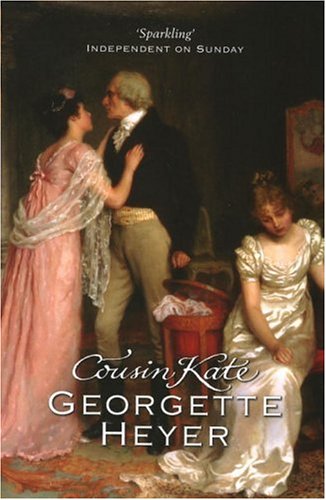
Cousin Kate by Georgette Heyer

I enjoyed my first forays into Georgette Heyer’s historical fiction novels last year and decided it was time to try some more. Cousin Kate, published in 1968, is one of her later novels and one that appears to really divide opinion – possibly because it’s not what people tend to expect from Heyer. Although there’s still some humour and some romance, it’s a lot darker than the other Heyer novels I’ve read. It also has a gothic feel and I couldn’t help being reminded of Jane Austen’s Northanger Abbey.

Our heroine, Kate Malvern, is a young woman who has been left orphaned and penniless following the deaths of both her parents and who has been working as a governess to support herself. At the beginning of Cousin Kate, she has lost her position and has returned to the London home of her former nurse, Sarah Nidd. Worried about Kate’s future, Sarah writes to Kate’s Aunt Minerva, who invites her to stay at the family mansion, Staplewood.

On her arrival at Staplewood, Kate remarks that the big house is not very homelike. Aunt Minerva, Lady Broome, is a manipulative woman, obsessed with the family lineage; her husband, the elderly Sir Timothy Broome, lives in a separate part of the house; and then there’s Kate’s handsome young cousin Torquil, who can be charming one minute, violent and aggressive the next. As Kate begins to learn exactly why Minerva was so keen to welcome her into the family, the only person she can turn to for help is Sir Timothy’s nephew, Philip.

The gothic elements of the book come in the form of the descriptions of the house and its grounds, locked doors and strange sounds in the night, the ruthless scheming of Aunt Minerva, family secrets – and Torquil, who is considered ‘mad’ and spends much of his time isolated in a distant wing of the mansion where he is attended by his doctor and faithful servant. It’s always sad to read how people with mental illness were treated in the past, in a time when it wasn’t properly understood, and I could sympathise with Torquil’s situation.

I also really liked both Kate and Philip and enjoyed watching their relationship develop. Kate has a kind heart and an ability to always see the best in people, but she is also a strong, courageous woman who values her independence. Philip is a pleasant, sensible person and felt to me like a realistic character, if not a particularly interesting or memorable one. I thought he and Kate made a believable couple.

I love Heyer’s use of language in the dialogue between her characters and I thought there was just the right amount of slang in this book to set the story in its period without becoming too difficult to understand. In fact, the only character who used an excessive amount of Regency-period slang was Sarah’s father-in-law, Mr Nidd, and this really suited his personality, making him an amusing, vibrant character who seemed to leap out of the pages!

Although, as I’ve said, this was quite a dark Heyer novel which deals with some serious themes, I still thought it was an entertaining read. I can see that it might not be to everyone’s taste but I loved it.

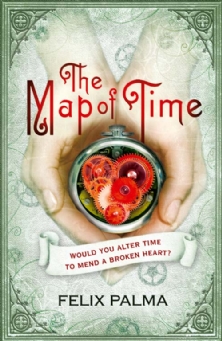
The Map of Time by Felix Palma

The Map of Time, translated from the original Spanish, is an interesting mixture of historical fiction, science fiction and romance. The book appealed to me as soon as I read the synopsis and saw that it was set in Victorian London, involved time travel and featured several real historical figures including Jack the Ripper, Joseph Merrick (The Elephant Man) and the authors H.G. Wells, Henry James and Bram Stoker. It sounded fascinating and it was, though there were a few aspects of the book that didn’t work for me at all. I thought it was too long and ambitious and tried to do too much.

The starting point for the story is 1896, shortly after the publication of H.G. Wells’ novel, The Time Machine, which captured the imaginations of his readers and convinced them that time travel could become a reality. One of the people hoping to travel through time is Andrew Harrington whose lover, Marie Kelly, was killed by Jack the Ripper eight years ago. Andrew believes that if he could go back to the night of the murder it might be possible to save Marie’s life – so he decides to approach Wells and ask his advice.

Wells also becomes involved in the life of Claire Haggerty, a young woman who has trouble conforming to Victorian society and longs to escape to the year 2000 where the ‘brave Captain Derek Shackleton’ is thought to have saved the world from destruction by evil automatons. But is it really possible for Andrew and Claire to travel through time or is time travel something that only exists in fiction?

I’ve read a lot of novels that involve time travel as a part of the plot, and while all of them obviously require the reader to suspend disbelief, some of them manage to make it seem more plausible than others. There are a number of theories put forward in The Map of Time and it all started to become very confusing, but for anyone with an interest in the intricacies of time travel, parallel worlds, paradoxes (is it possible to meet a future version of yourself, for example?) and the effects our actions have on history, you should find it interesting.

The biggest problem I had with this book was that the pacing and structure of the story didn’t feel quite right to me. The book is divided into three very distinct sections: the first deals with the Andrew Harrington story, the second follows Claire Haggerty and the third concentrates on H.G. Wells himself. This had the effect of making the book feel almost like three separate books in one and it took me a while at the start of each section to get used to the new characters and completely different direction of the plot. Then there’s the omniscient narrator who intrudes into the story at times in a mock-Victorian style. This can work well in original Victorian classics, but here I thought it felt forced and unnatural and it ended up annoying me.

I realise I’m making it sound as if I didn’t enjoy this book at all, but that’s not true. There were parts that I found fascinating and times when I couldn’t put the book down. I thought the quality of the writing was good overall and I probably wouldn’t have guessed it was a translation. But for a book which sounded so exciting and original, it didn’t quite live up to my expectations.

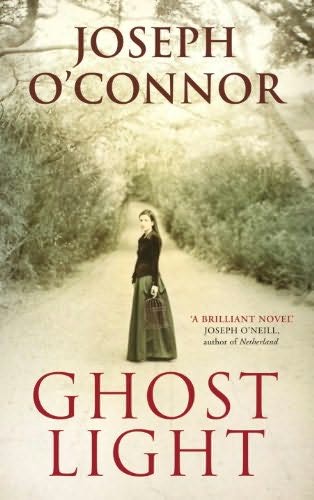
Ghost Light by Joseph O’Connor

Ghost Light tells the story of Molly Allgood, a real-life Irish actress who performed under the stage name Maire O’Neill and was engaged to the playwright John Millington Synge at the time of his death from cancer in 1909. Molly was fourteen years younger than Synge, she was a Catholic whereas he was a Protestant, and she came from a much poorer background. It seemed that almost everyone disapproved of their relationship including their parents, families and friends.

We first meet Molly in 1952, many years after Synge’s death. She’s living in poverty in London, dependent on alcohol, alone and desperate. We follow her over the course of a day as she prepares to take part in a play which is being broadcast on BBC radio and this story is interspersed with Molly’s memories of Synge and flashbacks to the early twentieth century.

As you’ve probably guessed, Ghost Light is not a happy book at all. Molly’s story is very sad, moving and poignant. The novel is written mostly in the second person, as well as following a stream of consciousness style, which made the book a bit harder to read than it needed to be, but Joseph O’Connor’s writing is undeniably beautiful and I did get used to the second person perspective after a while. There was also a chapter written in the style of a scene from one of Synge’s plays which I thought was a nice addition.

O’Connor states in his author’s note that although Molly and Synge were real people, this is a fictional story and most of the events described in the novel never actually happened. However, even if O’Connor’s Molly and Synge don’t bear much resemblance to their real-life models, they both felt completely realistic to me. Although I didn’t find Molly very likeable, I did love her narrative voice, which was bitter one minute and amusing the next, and this helped me warm to her character.

I won this book in last October’s Readathon and would like to thank Jessica of Park Benches and Bookends for providing a copy. I wish I’d had a chance to read it sooner, but my timing was actually perfect because I was in Dublin for a few days just last week and discovered some displays on Synge and Molly Allgood in the Dublin Writers Museum which I probably wouldn’t have appreciated if I hadn’t read Ghost Light!

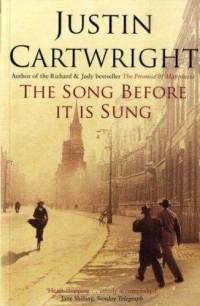
The Song Before it is Sung by Justin Cartwright

This is the first book I’ve read by Justin Cartwright. I was looking forward to reading it because, with my interest in World War II fiction, it sounded so interesting and also had so many glowing reviews. Unfortunately it didn’t live up to my expectations at all and I thought it was one of the most disappointing books I’ve read this year.

The Song Before it is Sung is based on the true story of the friendship between the British philosopher Isaiah Berlin and the German diplomat Adam von Trott zu Solz, who was involved in Claus von Stauffenberg’s failed attempt to assassinate Hitler in July 1944. Cartwright has changed their names to Elya Mendel and Axel von Gottberg.

Mendel and von Gottberg first get to know each other as students at Oxford in 1933. Their friendship is put to the test when Axel writes a letter to the Manchester Guardian denying claims that Jews are being badly treated in Germany. Elya, who is Jewish himself, is offended and confused by this. Their relationship is strained from this point – until von Gottberg is arrested and sentenced to death for his part in the Stauffenberg plot.

I enjoyed Axel and Elya’s story, but like many of the historical fiction novels I’ve read recently, the historical storyline is framed by a contemporary one and in this case, it just didn’t seem necessary. The present day protagonist is Conrad Senior, who met Elya Mendel many years later during his own time at Oxford. When Elya dies he leaves all his private correspondence to Conrad with the desire that he will use them to tell the story of his friendship with von Gottberg.

For me, this book would have worked better as a piece of straightforward historical fiction. The chapters about von Gottberg and Mendel were interesting and compelling, but every time I started to become immersed in their story, we were abruptly pulled back to the modern day and Conrad’s marriage problems which didn’t interest me at all. The one part of Conrad’s story that did interest me involved a piece of film showing footage of the trial at which von Gottberg was sentenced to death for his part in the conspiracy. Conrad believes that film of the actual executions still exists and decides to track it down.

Axel von Gottberg is an interesting character, but sadly Cartwright didn’t manage to bring any of the others to life for me. I couldn’t help but feel that reading this book was a lot of effort for very little reward. It wasn’t quite what I was expecting and to be honest, I probably wouldn’t have finished reading it if it wasn’t for the fact that it was the only book I had at work with me for a couple of days. Don’t let me put you off reading this book though, because I can see that a lot of people would love Cartwright’s quiet, contemplative writing style.

Have you read any of Justin Cartwright’s other novels? Maybe you can convince me that I need to give him another chance!

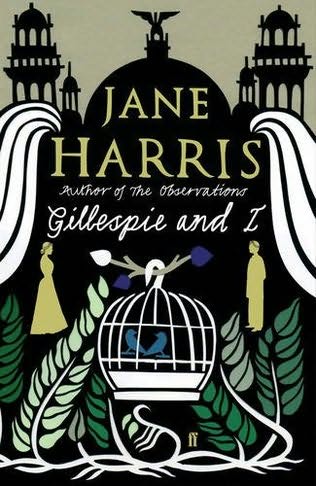
Gillespie and I by Jane Harris

I was lucky enough to win a copy of Gillespie and I through LibraryThing Early Reviewers but even if I had paid the full price for this book I would have considered it money well spent. I thought it was brilliant. It seems I’m one of the few people not to have read the first book by Jane Harris, The Observations, and I’m not sure how I managed to miss that one as it sounds like something I would love. I’ll certainly go back and read it now that Jane Harris has been brought to my attention.

But this post is about Gillespie and I. Or, I should say, Gillespie and Harriet Baxter. We first meet Harriet in 1933 as an elderly woman looking back on her life and promising to share with us her recollections of Ned Gillespie, a talented artist who was never able to fulfil his true potential. Harriet then proceeds to tell us the story of her acquaintance with the Gillespie family, whom she met in the 1880s during a trip to Scotland to visit the International Exhibition in Glasgow. She quickly becomes a friend of Ned, his wife Annie, and the other members of the family – but then disaster strikes and the lives of Harriet and the Gillespies are thrown into turmoil.

After a leisurely start, the story soon picked up pace and became very gripping. But as well as the compelling plot there were many other things that made this book such an enjoyable read. I connected immediately with Harriet’s sharp, witty and observant narrative voice. The other characters were vibrantly drawn, though the only one who never really came to life for me was Ned himself, which was the only disappointment in an otherwise excellent book. I also loved the setting. I’ve read many, many books set in Victorian London and it made a refreshing change to read one set in Victorian Glasgow instead.

Halfway through the story something happened that made me start to question everything I’d read up to that point – and even after I’d finished the book I still had questions. I was very impressed by how cleverly Jane Harris managed to control what I believed and didn’t believe at various points in the novel. I can’t really explain what I mean without spoiling the story but suffice to say there are some stunning plot twists that leave you wondering whether things are really as they seem – and this doesn’t happen just once, but several times throughout the second half of the book. At times it even felt like a Victorian sensation novel to me, which probably explains why I enjoyed it so much! Gillespie and I has been one of my favourite reads so far this year.

The Report by Jessica Francis Kane

3 March 1943, London: The air raid sirens sound in Bethnal Green and the residents begin making their way to the tube station which is being used as a public air raid shelter. As the crowds begin to descend the steps into the station there’s an accident, the entrance becomes obstructed and 173 people are crushed to death.

This tragic true story is the subject of Jessica Francis Kane’s new novel, The Report. Although hundreds of people were affected by what happened, Kane’s story concentrates on just a few of them: eight-year-old Tilly and her mother Ada, two survivors of the crush; Bertram Lodge, a young clerk who was heading towards the shelter as the crowd began to push forward; James Low, the chief warden of the shelter, who is stricken with grief and self-blame; and the Rev McNeely from St. John’s church in Bethnal Green who attempts to give hope and comfort following the disaster. Spending time with each of these characters before, during and after the incident gives the story a very personal touch and allows us to see things from several different perspectives.

Thirty years later a young filmmaker, Paul Barber, decides to make a new documentary about Bethnal Green and pays a visit to Laurence Dunne in search of answers. Dunne is the magistrate who was commissioned by the Home Secretary to write a report on the tragedy – which he did within three weeks, having interviewed a large number of witnesses, survivors, medical staff and other officials. When Dunne agrees to cooperate with the documentary, some new details about the disaster and Paul’s own past are brought to light.

This was the worst civilian disaster of World War II and yet I think it’s safe to say that even today it’s not something that many people have heard about. I was vaguely aware of it, but only because it was briefly alluded to in another book I read. I had never read about it in any depth and had no idea what caused the disaster or what happened afterwards. Something that becomes clear as you read the book and learn the details of Dunne’s inquiry is that no one person was to blame for what happened – and yet almost everyone involved blamed either themselves or someone else to some degree. What Dunne wanted to avoid was making one person or group of people into a scapegoat and he had to make some important decisions as to what he would and would not include in his report.

An interesting blend of fact and fiction, The Report manages to be both informative and moving, without ever becoming too sentimental. The theory that Kane puts forward at the end of the novel may or may not be close to the truth, but either way I’m glad to have had the opportunity to learn more about such an important historical incident.