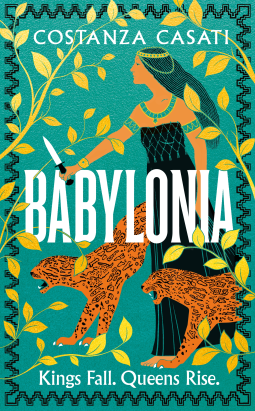
Babylonia by Costanza Casati

‘Not all of us are made for the dust. Those who are destined to rise will rise one way or another.’

Babylonia was something slightly different for me. Although I read a lot of historical fiction, I’m not often drawn to ancient history and I think this could possibly be the first novel I’ve read set at the time of the Assyrian Empire. I enjoyed Costanza Casati’s previous book, Clytemnestra, though, so I decided to give this one a try.

Babylonia is set in the 9th Century BC and tells the story of the legendary Semiramis, thought to be based on the historical Assyrian queen, Sammuramat. I had heard of Semiramis before beginning the book, but knew almost nothing about her or the legends surrounding her.

Semiramis, at least in this version of the story, is the daughter of Derceto, who kills her lover after he denies being the father of her child and then drowns herself. The orphaned Semiramis is taken in by a shepherd, Simmas, who raises her along with his own son. However, Simmas is not a loving father and treats Semiramis so badly that as she grows into a woman she begins to plan her escape from the village. She finally gets her chance to move on and start a new life when she marries Onnes, the new governor of Eber-Nari. Onnes is the illegitimate half-brother of King Ninus and through marriage to him, Semiramis becomes close to the royal household. Still not content with how far she has come, Semiramis sets her sights on the throne, but when it comes to politics she may have met her match in the King’s mother, Nisat.

Much of the focus of the novel is on the relationships between Ninus, Onnes and Semiramis and the different kinds of love and hate each one of them has for the other two. It’s a fascinating triangle to read about with the dynamics shifting and changing throughout the book and the use of multiple perspectives helps us to see that there’s more than one side to the story. These three are not the only interesting characters in the novel – I’ve already mentioned Nisat, but two others who stood out for me were Sasi, the King’s spymaster, and Ribat, a young slave who serves as Semiramis’ eyes and ears in the palace, while dreaming of becoming a scribe.

Because of my lack of knowledge of Semiramis and this period of history in general, I can’t really comment on how this novel compares to other retellings of the same legends. I suppose one of the advantages of writing about a mythical figure is that it does allow the author a lot of freedom in how they choose to approach the story. As for the Assyrian world Casati builds around Semiramis, it feels real, believable and rooted in historical research, from the descriptions of food and clothing to the accounts of battles and political intrigue. Casati writes so beautifully this novel really was a pleasure to read.

If any of you have read any other books about Semiramis/Sammuramat or the Assyrian Empire, I would love to hear your recommendations.

Thanks to Michael Joseph, Penguin Random House for providing a copy of this book for review via NetGalley.

This is book 8/20 of my 20 Books of Summer 2024.

Book 26/50 for the Historical Fiction Reading Challenge 2024

The Puzzle Wood by Rosie Andrews

Rosie Andrews’ debut novel, The Leviathan, left me with mixed, but generally positive, feelings – I loved the setting and atmosphere, but was less interested in the fantasy/horror elements that began to dominate in the second half. I was curious to see whether her new novel, The Puzzle Wood, would be more to my taste.

The novel begins in 1852 with the recently widowed Catherine Symonds applying for the position of governess at Locksley Abbey in Herefordshire. Catherine doesn’t really need the work – her husband was a wealthy man – but she has another reason for her application: her sister, Emily, was the previous governess at Locksley Abbey and has been found dead in the woods nearby, believed to have taken her own life. Catherine is not satisfied with this explanation and in order to investigate her sister’s death, she needs to find a way to insert herself into the household without anyone guessing her connection with Emily.

Once at Locksley Abbey, Catherine meets her new employer, Sir Rowland, and her young charge, his daughter Georgie. The more she learns about the family and their history, the more she becomes convinced that there’s more to her sister’s death than has so far been revealed. Meanwhile, there’s another newcomer – Arthur Sidstone, a doctor who has recently returned to the area after working abroad. Arthur’s grandfather, who is interested in the history of the forests surrounding Locksley, has grown concerned by reports that Sir Rowland is planning to sell off the land for development. Arthur has come to ask him to reconsider, but ends up becoming much more closely involved in the affairs of Locksley Abbey than he had bargained for.

Set in the Black Mountains of Herefordshire close to the England-Wales border, on a remote estate surrounded by ancient woods steeped in folklore, with a plot incorporating family secrets and mysterious deaths, The Puzzle Wood promised to be a great, atmospheric Gothic novel. However, it didn’t have as much atmosphere as I expected and the Puzzle Wood itself played a surprisingly small part in the story. Instead, a lot of time is spent on another storyline revolving around the productivity of the mine on Sir Rowland’s land and the working conditions of the miners employed there, as well as Arthur Sidstone’s backstory and his involvement with the Chartist movement. I found these two threads quite interesting but they didn’t really blend together very well with Catherine’s story. The spooky/supernatural elements grow stronger towards the end, although certainly not as strong as in The Leviathan and I think readers who pick up this book hoping for something similar could be disappointed.

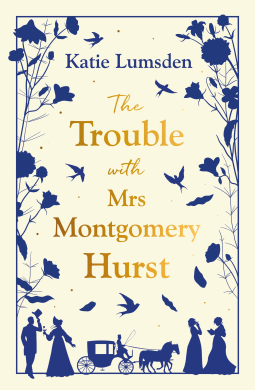
I seem to have read a few other novels recently with similar plots involving young women working as governesses or servants in lonely Victorian mansions – Elizabeth Macneal’s The Burial Plot and Katie Lumsden’s The Secrets of Hartwood Hall are two that come to mind and both were more enjoyable than this one. Maybe if I hadn’t read so many of this kind of book I would have found The Puzzle Wood more captivating as I do like Rosie Andrews’ writing. I’m not sure if I’ll try more of her books, but depending on the setting and subject I could be tempted.

Thanks to Raven Books for providing a copy of this book for review via NetGalley.

Book 25/50 for the Historical Fiction Reading Challenge 2024

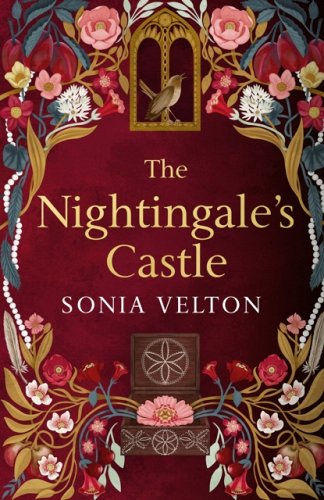
The Nightingale’s Castle by Sonia Velton

Countess Erzsébet Báthory (often anglicised to Elizabeth Bathory) has found her way into vampire folklore as one of the possible inspirations behind Bram Stoker’s Dracula. Known as the Blood Countess for her habit of bathing in the blood of her victims to retain her youthful appearance, she and her servants were accused of murdering hundreds of Hungarian peasant girls, making her one of the most notorious serial killers in history. In her new novel The Nightingale’s Castle, Sonia Velton reimagines Erzsébet’s story and looks at the woman behind the legends.

The novel opens in Hungary in 1610 and introduces us to fifteen-year-old Boróka, who has been raised by an adoptive father in the foothills of the Carpathian Mountains. When members of the Countess’s household arrive at Boróka’s cottage looking for girls to come and work at Čachtice Castle, she is initially reluctant to go, but her father persuades her that it would be dangerous not to accept. And so Boróka soon finds herself in a carriage heading up the hill towards the castle and a new way of life.

Within the walls of Čachtice Castle, there are other girls like Boróka working as seamstresses, cooks and kitchen maids under the watchful eyes of the Countess’s personal staff, whom Boróka finds to be excessively cruel and vindictive. She struggles to settle in, but when she and Erzsébet Báthory eventually cross paths Boróka becomes a favourite of the Countess’s, which gives her some degree of protection. Then come the accusations of murder and torture and Boróka must try to make sense of what has really been going on in the castle and whether or not the allegations could be true.

I had heard of Erzsébet Báthory before starting this novel, but knew very little about her, so it was good to have the opportunity to learn more. Of course, this is fiction and obviously Sonia Velton will have had to use her imagination to flesh out the plot and characters, but I could see from her very detailed author’s note at the end of the book that she has carried out a lot of research and tried to put some theories together that fit the historical facts. This version of Báthory’s character is more sympathetic than the way she is usually portrayed and the servants who are arrested along with her, particularly Dorottya Szentes and Ilona Jó, are the real villains here. I would probably need to read some non-fiction on the subject before I could say whether I agreed with this or not.

Despite Erzsébet Báthory’s association with vampire legends, there are no vampires in Velton’s novel and for the most part this is a straightforward work of historical fiction. However, there’s a subplot involving a magical rosewood box which I thought seemed out of place; I felt that the book either needed more fantasy elements or none at all. Apart from that, I found The Nightingale’s Castle an interesting read and I’m sure other people will appreciate that little touch of magical realism more than I did.

This is Sonia Velton’s third novel. I haven’t read The Image of Her, which seems to be a contemporary thriller set in Dubai, but I enjoyed her first book, Blackberry and Wild Rose, about a community of Huguenot silk weavers in 18th century London. She does pick interesting subjects and settings for her novels, so I’ll look forward to seeing what she writes next.

Thanks to Abacus for providing a copy of this book for review via NetGalley.

Book 23/50 for the Historical Fiction Reading Challenge 2024
The Burial Plot by Elizabeth Macneal

It’s 1839 and Bonnie Fairchild has just killed a man. She didn’t intend to do it, but it has still happened and now she needs to escape from London, quickly, before she is caught. Bonnie is no stranger to crime – since fleeing to London to avoid an arranged marriage, she and her lover Crawford have been making their living through theft and fraud. This is the first time something has gone wrong, but Crawford thinks he has found a solution: Bonnie will apply for the position of lady’s maid at Endellion House, a grand estate outside the city owned by the wealthy Mr Moncrieff. Nobody will ever think to look for her there!

Arriving at Endellion House, Bonnie finds her new employer to be a sad, subdued man who devotes his time to designing mausoleums for his dead wife who drowned several months earlier. Meanwhile, his teenage daughter, Cissie, seems to have retreated into a fantasy world, writing imaginary love letters to herself. Then, just as Bonnie is beginning to make sense of this eccentric, unhappy household, Crawford reappears with another great scheme in mind…

I enjoyed both of Elizabeth Macneal’s previous novels, The Doll Factory and Circus of Wonders, so I was expecting good things from this one and I wasn’t disappointed at all; I think it’s probably my favourite of the three. Although I correctly predicted some of the twists and turns of the plot, there were others I didn’t see coming at all. One of the things that is obvious from the beginning, at least to the reader, is that Crawford is a con man who is using and manipulating Bonnie for his own purposes – and even though Bonnie is at least partly aware of this, she has convinced herself that she’s in love with him and so finds it impossible to free herself of him. The relationship between Bonnie and Crawford is the driving force behind the novel and is what kept me turning the pages, anxious to see what plan Crawford would come up with next and whether Bonnie would ever escape his grip.

The Burial Plot also gives some insights into the Victorian fascination with the rituals of death and mourning. The mourning industry in the 19th century was huge, with large sums of money being spent on clothes, accessories and elaborate funerals. At the beginning of the novel, Crawford has a job managing several private burial grounds in London but these are quickly becoming overcrowded and insanitary, leading to the creation of large, modern cemeteries such as Highgate, further away from central London. When Bonnie arrives at Endellion House, she suggests to Mr Moncrieff that he should build a cemetery like Highgate on his land so that he can bury his wife in style and then make money from selling the other burial plots. This storyline forms an important part of the novel and adds another layer of interest.

I loved this and am already looking forward to Elizabeth Macneal’s next book, whatever and whenever that may be!

Thanks to Picador for providing a copy of this book for review via NetGalley.

Book 22/50 for the Historical Fiction Reading Challenge 2024

This is book 4/20 of my 20 Books of Summer 2024.

The House of Doors by Tan Twan Eng

I loved Tan Twan Eng’s The Garden of Evening Mists but his latest novel, The House of Doors, sounded less appealing and I only decided to read it when I saw it had been longlisted (and then shortlisted) for this year’s Walter Scott Prize. Now that I’ve read it, I have mixed feelings about it; there was a lot to like and admire, but it definitely didn’t captivate me the way The Garden of Evening Mists did.

The House of Doors weaves the fictional story of Lesley and Robert Hamlyn around a real life visit in 1921 by the author William Somerset Maugham to Penang, Malaysia – or Malaya, as it was still known at the time. Lesley has spent her whole life in Malaya, while her husband Robert was born in Britain and moved to Penang as an adult. Maugham, referred to as Willie throughout the novel, is an old friend of Robert’s and has come to stay with them at their home, Cassowary House. Leaving his wife behind in England, he is accompanied by Gerald, his lover and secretary.

At first Lesley is not very happy about having visitors and it takes her a while to warm to Willie, but she eventually finds herself confiding in him and sharing with him stories about her past. She tells him about her involvement with Sun Yat Sen, the Chinese revolutionary who came to Penang to raise funds, and about her friend, Ethel Proudlock, who was charged with the murder of a man. Some of the things Willie hears and experiences during his time with the Hamlyns will later find their way into his fiction.

The book is beautifully written, which I had expected from my previous experience of Tan’s work, and the descriptions of Penang itself are particularly lovely and evocative. I can only think of one or two other novels I’ve read set in Malaysia, but it’s a setting I love and I enjoyed revisiting it through Tan’s descriptive writing. The book deals almost entirely with British characters and we learn a lot about the colonial lifestyles and attitudes of the time, but although Tan Twan Eng himself is a Malaysian author, if you’re hoping for a Malaysian perspective you won’t really find that here. Through the Sun Yat Sen storyline, we are given a little bit of insight into Chinese revolutionary politics, but again we see this from Lesley’s point of view, through her interactions with Sun Yat Sen and his associates.

The plot moves quite slowly, maybe because so much of the story is told in the form of flashbacks. At times I was bored, but one part of the book that I did find gripping was the Ethel Proudlock storyline. It’s based on a real murder case which I knew nothing about before reading this novel, so I had no idea what the outcome was going to be. Maugham used the case as the inspiration for his 1927 play The Letter, which was made into a film starring Bette Davis. There are references to other Maugham stories, novels and plays throughout the book as well, but they meant very little to me because I haven’t read any of his work apart from The Painted Veil. I think if I’d had more familiarity with Maugham’s writing it’s possible that I would have been able to get more out of this book. I had similar experiences with Colm Tóibín’s The Magician and Damon Galgut’s Arctic Summer, novels about Thomas Mann and E.M. Forster respectively (I haven’t read much of their work either and was left with the feeling that I’d missed something).

The House of Doors wasn’t a huge success with me, then, but the setting and the beautiful writing made it worth reading. The Walter Scott Prize winner is due to be announced later this week and of the shortlisted titles I’ve read so far, My Father’s House by Joseph O’Connor is still my favourite with this one second above Kevin Jared Hosein’s Hungry Ghosts. Maybe the winner will be one of the three I still haven’t read!

Book 21/50 for the Historical Fiction Reading Challenge 2024
The Ballad of Jacquotte Delahaye by Briony Cameron

The Ballad of Jacquotte Delahaye is an unusual novel because it’s based on the ‘true story’ of someone who may or may not have actually existed! One of a very small number of 17th century female pirates, Jacquotte Delahaye is not mentioned in any contemporary sources and appears in writing, possibly for the first time, in the 1940s in stories by Léon Treich, a French fiction writer. However, she has become part of pirate folklore and although her existence hasn’t been proved, it hasn’t been disproved either. In this new novel, Briony Cameron has taken the few ‘facts’ about Jacquotte that have found their way into the legends – such as her place of birth and the colour of her hair (red, leading to the nickname Back from the Dead Red) – and imagined a story around them.

At the beginning of the book, twenty-year-old Jacquotte is living in the town of Yáquimo, Santo Domingo, in 1655. As the daughter of a Frenchman exiled to the Caribbean for treason, all Jacquotte knows about her mother is that she was a free black woman who died after giving birth to her younger brother. When her father is implicated in another treasonous plot, Jacquotte’s world falls apart and she is forced to flee the island. Her life of piracy begins when she is captured by the brutal Captain Blackhand and finds herself an indentured servant aboard his ship, but eventually Jacquotte will become a pirate captain in her own right, with her own ship and crew to command.

There’s also a romantic element to the novel, with Jacquotte falling in love with Teresa, wife of the Governor of Yáquimo, but this was one of my least favourite aspects of the book. They seemed to rush into things very quickly, with no time for the reader to see their feelings for each other developing and I felt that the relationship lacked emotional depth. In fact, apart from Jacquotte herself, I thought all of the characters in the book lacked depth – the good characters were very good and the bad ones were very bad, with little in between. I would describe this as much more of a plot-driven book. Although it takes a while to get started, once Jacquotte is at sea there’s lots of action, with sea battles, fight scenes and all the swashbuckling adventure you would expect from a pirate novel.

Sadly, despite the fascinating protagonist, I wasn’t very impressed with this book. I did enjoy the first section, which describes Jacquotte’s life in Yáquimo and the events that lead to her becoming a pirate, but as I read on I felt I was reading the author’s fantasy of how she would have liked 17th century society to have been, rather than how it actually was. I don’t think many people in the 1650s had such progressive ideas on race, gender and sexuality, however nice it is to imagine that they did! If you’re not too bothered about historical accuracy and just want to read an entertaining story, then you’ll probably enjoy The Ballad of Jacquotte Delahaye, but it wasn’t really for me. On a more positive note, I liked the descriptions of the various ports Jacquotte and her crew visit as they sail around Hispaniola, Jamaica and Tortuga, which is the closest I’ll get to visiting the Caribbean this summer!

Thanks to Piatkus for providing a copy of this book for review via NetGalley.

Book 20/50 for the Historical Fiction Reading Challenge 2024

This is book 2/20 of my 20 Books of Summer 2024.

Hungry Ghosts by Kevin Jared Hosein

This is a book I would probably never have chosen to read if it hadn’t been nominated for this year’s Walter Scott Prize, but although I didn’t love it, for reasons I’ll explain below, it’s a book I’m glad I’ve read. For a start, it’s set in Trinidad and I’ve only ever read one other novel set there – Fortune by Amanda Smyth, which was also shortlisted for the same prize a few years ago – and it was good to have the opportunity to learn more about the history and culture of that country.

The story takes place in the 1940s in and around Bell Village in central Trinidad. Thirteen-year-old Krishna Saroop lives with his parents in a sugarcane estate barrack, a ramshackle building with a leaking roof that is home to four other families. On a hill above the village is the Changoor farm where Dalton Changoor and his wife Marlee live in comparative luxury and where Krishna’s father, Hansraj – known as Hans – works on the land. When Dalton disappears without explanation one day, Marlee feels uneasy about being alone and asks Hans to stay on the estate overnight as a night watchman – and Hans agrees, grateful for the extra money she offers him in return. But as the days go by with no sign of Dalton coming home, Hans finds himself becoming increasingly attracted to Marlee and spending less and less time with his own wife and son.

Kevin Jared Hosein uses the disappearance of Dalton Changoor to explore the stories of Hans and Marlee and also Krishna and his mother Shweta, left behind in their squalid home while Hans spends his nights on the farm. Shweta is dreaming of a better life and at first is happy for Hans to take Marlee’s money in the hope that they can use it to buy a house of their own, but she changes her mind as she discovers that her husband is slipping away from her. However, Marlee is only one part of the problem; the relationship between Shweta and Hans has already been strained by the death of their first child, the ‘hungry ghost’ of the title.

If you think this sounds like a bleak novel, that’s because it is. I found it relentlessly miserable. Everyone has had an unhappy childhood, an unhappy marriage or both. We see people being abused, assaulted, blackmailed, murdered…even the animals don’t escape unscathed; there are some very graphic descriptions of the death of Dalton Changoor’s abandoned dogs, so be warned. I don’t usually have a problem reading books that tackle uncomfortable or challenging subjects, but I do like there to be at least a glimmer of hope and optimism and this particular book didn’t seem to have any. I don’t think there was a single character in the book that I actually liked.

Although I struggled to cope with the misery and sadness, obviously other people have enjoyed this book much more than I did and I would agree that it’s beautifully written. Kevin Jared Hosein was born in Trinidad and brings his island to life through his descriptions of the landscape, the birds and animals, the food, clothing and housing. He also captures the language and the speech patterns of the Trinidadian people and through the story of the Saroop family, who are of Indian descent, he explores the differences between the Hindu and Christian communities on the island. I can understand why it was shortlisted for the Walter Scott Prize and the fact that I didn’t like it probably means it’s going to win!

Book 18/50 for the Historical Fiction Reading Challenge 2024