Learned by Heart by Emma Donoghue

Emma Donoghue’s new novel, Learned by Heart, is the story of Anne Lister and Eliza Raine, two real historical figures. Lister, best known for her diaries in which she writes about her lesbian relationships as well as her daily life in West Yorkshire, has been made famous to modern audiences thanks to the recent BBC/HBO drama series, Gentleman Jack. Eliza Raine, her first lover, is believed to be a possible inspiration for Bertha Mason, Mr Rochester’s wife in Charlotte Brontë’s Jane Eyre.

Eliza was born in Madras (now Chennai), the younger daughter of an Indian mother and an English father, who was working there as a surgeon for the East India Company. Following her father’s death, Eliza and her sister were sent to England to live with a Yorkshire family, the Duffins. We join Eliza at her boarding school in York, where she has made several friends but still feels that she doesn’t entirely fit in due to her background and skin colour. When Anne Lister arrives at the school one day in 1805 and is told to share Eliza’s bedroom, Eliza is immediately drawn to the new girl. Lister, as she prefers to be known, is a strong personality – intelligent, rebellious and an ‘outsider’ like Eliza herself. As the two grow closer, their friendship develops into romantic love, but as two fourteen-year-olds in 19th century England they are denied the freedom to be who they really are.

Interspersed with the account of their schooldays are several letters written by Eliza to Lister ten years later. Through these letters, we are aware from the beginning of the novel that Eliza will end up in an asylum, but we don’t know exactly how or why she came to be there. Although we do learn a little bit more as the story progresses, it’s not fully explained until Emma Donoghue’s author’s note at the end of the book. The novel itself concentrates almost entirely on Lister and Eliza’s time at the Manor School in York, something I hadn’t expected when I first started reading, and I do feel that rather than the letters, it would have been more interesting to have had a sequel continuing the story after they leave school and become adults.

After last year’s Haven, an unusual novel about a group of 7th century monks settling on an uninhabited island, Donoghue is on more familiar territory with this one (several of her earlier books have also been set in the 18th and 19th centuries). A huge amount of research has obviously gone into the writing of this book and her portrayal of everyday life in an English girls’ school during the time of the Napoleonic Wars feels vivid and real. However, I don’t think we really needed so many long, detailed descriptions of every game the girls played at school!

Anne Lister is an intriguing character and seeing her only through Eliza Raine’s eyes gives a real sense of the qualities that Eliza finds so attractive. It also means that we don’t fully get to know Lister or to understand her innermost thoughts and feelings, so she is always surrounded by a slight aura of mystery. I didn’t always like her and as she was clearly the dominant force in their relationship, I felt concerned for Eliza as it seemed obvious she was going to get hurt.

As I’ve said, I think I would have been more interested in learning about the adult lives of the characters, but I did still enjoy the book and thought it was a great introduction to the lives of these two fascinating women.

Thanks to Picador for providing a copy of this book for review via NetGalley.

This is book 14/20 of my 20 Books of Summer 2023
This is book 35/50 for the 2023 Historical Fiction Reading Challenge.
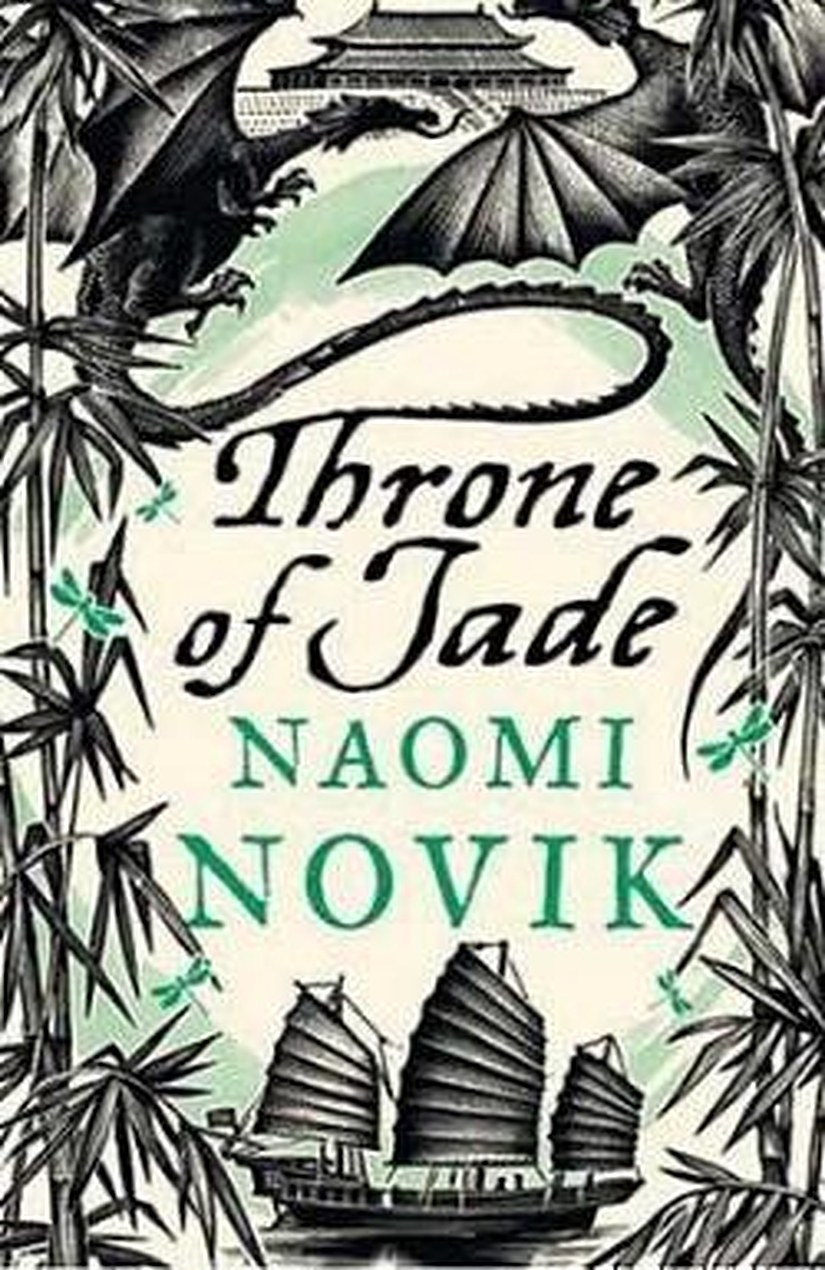
Throne of Jade by Naomi Novik

Throne of Jade is the second book in Naomi Novik’s Temeraire series set during an alternate version of the Napoleonic Wars where domesticated dragons are used for aerial warfare. It’s been a long time since I read the first book, Temeraire – in fact, I was shocked to discover that it’s been eight years! – but I found that I could pick up the story again without too much trouble and will try not to wait so long before starting the third one.

If you’re not a fan of fantasy and are put off by the mention of dragons, I can reassure you that the dragons are the only real fantasy element in these books (at least in the two that I’ve read) and they feel much closer to the seafaring historical novels of Patrick O’Brian than anything else. In Novik’s series, dragons have existed for centuries and by the time of the Napoleonic Wars in the early 19th century they have become an accepted part of the armed forces of many countries around the world. The dragons are intelligent creatures, capable of human speech, and form strong bonds with their human handlers.

In the first novel, we were introduced to Will Laurence, a former Royal Navy Captain who becomes the handler of Temeraire, a dragon who hatches from an egg found on a captured French ship. Having trained together for service in Britain’s Aerial Corps, Laurence and Temeraire develop a close friendship, but when it emerges that Temeraire is one of a rare breed – a Chinese Celestial – it seems that they may have to be separated. Celestials are supposed to be reserved for royalty and the Chinese had intended Temeraire to be a gift for Napoleon. As Throne of Jade opens, a group of envoys have arrived from China to recover their rare dragon. Due to Temeraire’s bond with Laurence, the envoys agree to allow Laurence to accompany them back to China with the dragon and the Navy provides a dragon transport vessel, HMS Allegiance, for the voyage.

In 1805, when the novel is set, it takes many months to sail from Britain to China. This means that most of the story takes place at sea on board the Allegiance, which gives the book a transitional feel with the sense that you’re always waiting for the destination to be reached so that the plot can finally pick up pace. That’s not to say that nothing happens during the journey, because it does – there are encounters with the enemy, storms and sickness, and several possible attempts on Laurence’s life – but I did feel that it was very drawn out and I was pleased when the ship eventually arrived on the shores of China.

As with the first book, the writing style and language are suitable for the setting, with none of that inappropriately modern dialogue that can pull you out of the time period. Although the addition of the dragons and the Aerial Corps obviously means that a large part of the story is fictional, real historical events are still playing out in the background. During the voyage, Laurence and his companions receive news of the French victory at the Battle of Austerlitz and the death of the Prime Minister, William Pitt the Younger.

The long period spent at sea does allow for more character development and for some interesting conversations between Laurence and Temeraire in which Laurence begins to see things from Temeraire’s point of view and to understand how much he has taken for granted regarding the feelings and sensibilities of dragons. He also starts to discover that the Chinese people treat their dragons very differently than the British – and once in China, these differences become more obvious and pronounced. Even if he’s allowed to, will Temeraire want to return to Britain with Laurence after experiencing another way of life? I won’t tell you what happens, although knowing that there are another seven books in the series after this one does take away a lot of the suspense in that respect. Black Powder War is next and I’m looking forward to reading it, hopefully not after another break of eight years!

This is book 13/20 of my 20 Books of Summer 2023

This is book 34/50 for the 2023 Historical Fiction Reading Challenge.

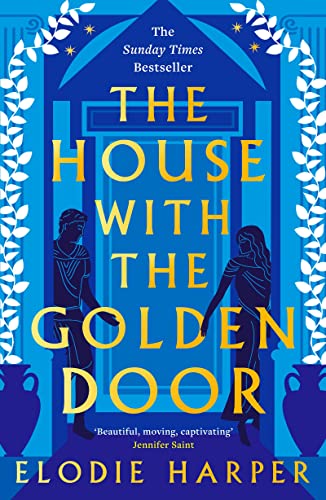
The House with the Golden Door by Elodie Harper

Elodie Harper’s The Wolf Den, about a group of women working in a brothel in ancient Pompeii, was one of my favourite books that I read last year. With the third book in the trilogy on its way, I decided to catch up this summer with the middle novel, The House with the Golden Door. This book picks up the story where The Wolf Den left off, so if you haven’t read the first book yet you may come across spoilers here that you would prefer to avoid.

The House with the Golden Door is again set in Pompeii just a few years before the eruption of Mount Vesuvius. Amara has now escaped enslavement in the notorious Wolf Den and has started a new life as a courtesan under the patronage of the wealthy Rufus. She’s grateful for the opportunities Rufus has given her, but at the same time she misses the friends she’s left behind at the brothel and decides to do whatever it takes to rescue some of them too – a decision that she will begin to regret as it brings her back into the clutches of her old master and pimp, Felix. Life with Rufus also turns out to be not quite what Amara had hoped and she soon discovers that she’s not as ‘free’ as she had imagined.

Like The Wolf Den, this book is completely immersive and although it’s quite long at almost 500 pages, I was never bored. That’s partly because the Pompeii setting is so vivid and believable and partly because I find Amara such an engaging protagonist. In this book, we see her struggling to come to terms with her new status in life and the discovery that her freedom is not all she expected it to be. Despite her powerful new friends, she knows that she owes everything she has to Rufus and if he tires of her she’ll lose everything she has unless she can find another patron to take his place. This means she will always be under the control of one man or another, while not being free to be with the man she truly loves.

If Amara is experiencing conflicting emotions and loyalties, so is her old friend Victoria, who comes to join her in her new household. While grateful to leave her life of slavery at the Wolf Den, Victoria is still drawn to Felix despite everything, which is another source of worry for Amara. However, I enjoyed meeting one of the other Wolf Den women, the Iceni slave Britannica, again and watching her character develop as her grasp of the language improves and she finds her own unique place in Pompeii society. It was good to see that Amara at least has one loyal and protective friend!

Meanwhile, we’re drawing ever closer to the eruption of Vesuvius, of which the characters are still blissfully unaware although the reader has been anticipating it from the beginning. The final book in the trilogy, The Temple of Fortuna, is out in November and I’m looking forward to finding out how Amara’s story ends.

This is book 12/20 of my 20 Books of Summer 2023

This is book 33/50 for the 2023 Historical Fiction Reading Challenge.

Fair Rosaline by Natasha Solomons

Is Rosaline, whom thou didst love so dear,
So soon forsaken? young men’s love then lies
Not truly in their hearts, but in their eyes.

If you’ve read or seen Shakespeare’s Romeo and Juliet, you’ll remember Rosaline as the girl Romeo was infatuated with before meeting and falling in love with Juliet. We never actually meet Rosaline in the text of the play but her role is still important because she is the reason why Romeo attends the Capulet ball where he sees Juliet for the first time. In Natasha Solomons’ new novel, she gives Rosaline a voice of her own and tells the story of her relationship with Romeo Montague.

Rather than a simple retelling of Romeo and Juliet, Fair Rosaline is what the publisher has described as a ‘subversive, powerful untelling’. It wasn’t really what I had been expecting and I was quite surprised by the way Solomons chose to approach this novel.

First of all, as Shakespeare provides us with almost no information on Rosaline’s appearance and personality, Solomons has taken inspiration from some of his other characters with a similar name – Rosalind in As You Like It and Rosaline in Love’s Labour’s Lost – so that the woman we meet at the beginning of Fair Rosaline is a fully formed character. We join her just after the death of her mother, Emelia Capulet, when her father informs her that she is going to be sent to a nunnery. The horrified Rosaline suspects that he just wants to avoid having to pay a dowry if she marries, but he insists that it was actually her mother’s dying wish.

Granted a twelve day reprieve before being sent to join the nuns, Rosaline is determined to make the most of her last days of freedom. When she meets Romeo Montague and falls in love, she begins to hope that there’s still a chance of a happier future – until she makes a shocking discovery about him and breaks off their relationship. However, it seems that Romeo has turned his attentions to her younger, more vulnerable cousin Juliet. Can Rosaline save Juliet or will she be unable to prevent things from ending in tragedy?

I’ve always loved Romeo and Juliet – it contains some of the most beautiful language in all of Shakespeare’s work – and I’ve never questioned its position as one of the greatest tragic love stories of all time. Fair Rosaline, though, looks at the play through a completely different lens. Here, Romeo is not a romantic hero but a villain, a sexual predator who targets young girls and discards them when he loses interest in them. Solomons uses Juliet’s extreme youth (thirteen in the play) and the fact that Romeo’s exact age is not given, to suggest that he is an older man than we usually assume and to give their relationship a much darker tone than in the play. I think how much you’ll enjoy this book will depend on how much you can accept this new version of Romeo. Personally, I prefer characters in retellings to at least bear some resemblance to the originals and this Romeo didn’t, which was a big problem for me.

I’ve loved some of Natasha Solomons’ previous novels, particularly House of Gold and The Novel in the Viola, so I’m sorry I didn’t enjoy this one more. There were plenty of things I liked, such as the portrayal of Tybalt, who is also quite different from Shakespeare’s depiction – he is still the proud, impetuous and hot-tempered character we know, but seeing him through the eyes of his cousin Rosaline makes him much more sympathetic. I also found the setting interesting; as Solomons explains in her author’s note, there’s no evidence that Shakespeare ever visited Italy so she tried to capture the same feel, writing about Italy as though she had never been there and blending 14th century Verona with the Elizabethan England that would have been familiar to Shakespeare. I just wish she could have found a way to create a story for Rosaline and explore the difficulties facing medieval women without completely destroying Romeo’s character in the process.

Have you read any good retellings of Romeo and Juliet? O, Juliet by Robin Maxwell is another that left me slightly disappointed, so I would be interested in any other recommendations.

Thanks to Manilla Press for providing a copy of this book for review via NetGalley.

This is book 10/20 of my 20 Books of Summer 2023

This is book 32/50 for the 2023 Historical Fiction Reading Challenge.
Death Comes as the End by Agatha Christie

This month’s prompt for Read Christie 2023 is a murder method: ‘a fall from height’. I’ve missed the previous two months of the challenge as I’ve been reading other things, but I decided to take part in this one as the suggested title – Death Comes as the End – was one I hadn’t read before and which has always sounded particularly intriguing to me.

First published in 1944, Death Comes as the End is the only historical novel Christie wrote. Unlike her other books, which are all set in the 20th century, this one takes place in Ancient Egypt, a setting that would have been familiar to Christie through her interest in archaeology. I’ve seen it described as the first full-length historical mystery, although I’m not sure if that’s true.

The novel is written mainly from the perspective of Renisenb, a young widow who, following her husband’s death, has returned to her family home by the Nile. Her father Imhotep, a mortuary priest, is away on business in the north, but Renisenb is reacquainted with the other members of the household: her older brothers Yahmose and Sobek and their wives; her younger stepbrother, Ipy; her grandmother, Esa; and several of the family’s servants, including Henet, the housekeeper and Hori, the scribe. There are already some tensions simmering below the surface, but when Imhotep returns with a new concubine, Nofret, things become much worse.

Nofret is a bitter, spiteful woman who seems determined to cause trouble for everyone else. She attempts to manipulate Imhotep into disinheriting his three sons and her plan seems to be working – until Nofret herself is found dead at the bottom of a cliff. As nobody had liked her, there are plenty of suspects, but the situation quickly becomes more complex when more deaths occur. Some of the family believe that Nofret’s spirit is taking her revenge, while others are convinced that a human hand is behind the murders. Renisenb isn’t sure what to think or who to trust, but she knows that if the murderer isn’t caught soon, her own life could be in danger.

I really enjoyed this book, although I felt that the absence of a detective made it difficult for the reader to solve the mystery as there’s no discussion of clues or questioning of witnesses to point us in the right direction. I’m sure you could still correctly identify the murderer if you were paying attention, though; looking back, there are two moments in particular that hint at who the culprit is, but I didn’t pick up on either of them while I was reading. The pool of suspects is considerably narrowed down by the end of the book as well – there’s such a high body count it started to remind me of And Then There Were None. There’s also a romantic element to the novel and although it only forms a small part of the story, I was pleased with the way it was resolved at the end. I would have made that choice myself!

I was surprised to read in Christie’s foreword that “Both places and time are incidental to the story. Any other place at any other time would have served as well.” On the one hand, I can see what she means, because the plot, the characters, and the relationships between the family members are very much what you would expect to find in one of her 20th century country house mysteries. On the other, it seems a strange thing to say because why choose a particular setting if any other would have done just as well? In any case, much as I love her Poirot and Miss Marple novels, I enjoyed being transported back to Thebes in 2000 BC for this one – it was something different and unusual!

This is book 9/20 of my 20 Books of Summer 2023

This is book 30/50 for the 2023 Historical Fiction Reading Challenge.
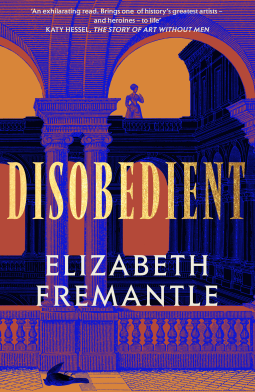
Disobedient by Elizabeth Fremantle

Elizabeth Fremantle is an author I always look forward to reading and I have enjoyed all six of her previous novels, including her two historical thrillers published under the name E.C. Fremantle. This seventh novel takes us to 17th century Italy and tells the story of Artemisia Gentileschi, one of the most important and accomplished female painters of her time.

Artemisia grows up in Rome, the daughter of the painter Orazio Gentileschi. Having lost her mother while still a child, Artemisia is raised by her father, spending time in his workshop learning to draw and paint. Orazio is a talented artist, heavily influenced by the more famous Caravaggio, but it quickly becomes obvious even to him that his daughter’s work is better than his own.

In 1611, the painter Agostino Tassi enters Artemisia’s life, first as her tutor and then as her intended husband. However, Tassi’s arrival leads to a terrible experience for Artemisia – something I won’t go into here because I think any reader who has come to this book with little or no knowledge of Artemisia’s life will probably prefer to discover her story for themselves. The second half of the book becomes quite dramatic as the repercussions of this incident become clear, so if you don’t already know all the details in advance, which I didn’t, it’s interesting just to watch it all unfold.

Artemisia is a great subject for historical fiction, being a strong, ambitious, determined woman whose work has left a lasting impact. Although we can’t know her true thoughts and feelings, Fremantle does a good job of getting inside Artemisia’s head and showing us what may have provided the inspiration for some of her paintings, such as Susanna and the Elders and Judith Slaying Holofernes. You’ll probably find yourself wanting to look up the paintings online as you read. As well as Artemisia, there are other characters in the novel who are equally well drawn; I’ve already mentioned Tassi and Artemisia’s father Orazio, but there’s also Zita, who becomes a model and chaperone for Artemisia, and Piero, Orazio’s assistant.

Disobedient covers only the earlier part of Artemisia’s life and the novel ends with a lot of her story still untold, but after reading Fremantle’s author’s note where she explains her personal reasons for wanting to write this book, I can see why she chose this period to focus on and I appreciate the courage it has taken for her to do so. I don’t think it’s my favourite of her novels, simply because some of the other settings and historical figures she has written about have interested me more, but I still enjoyed this book and am pleased to have had the opportunity to add to my knowledge of this fascinating artist.

Thanks to Penguin Random House/Michael Joseph for providing a copy of this book for review via NetGalley.

This is book 8/20 of my 20 Books of Summer 2023

This is book 29/50 for the 2023 Historical Fiction Reading Challenge.

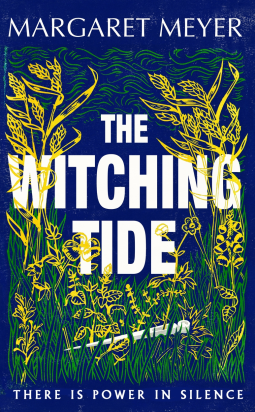
The Witching Tide by Margaret Meyer

I’ve read several novels about English witch trials in the 16th and 17th centuries, most recently The Bewitching by Jill Dawson, and I wondered whether this one – The Witching Tide, Margaret Meyer’s debut novel – would have anything new to offer. I’m pleased to say that although there are some obvious similarities with the other books I’ve read, this book also explores some different elements and ideas so was definitely worth reading.

The novel is set in 1645 in the small coastal village of Cleftwater, East Anglia. Martha Hallybread is a servant in the household of Kit Crozier, whom she nursed as a child. Martha has never married herself, choosing instead to devote her life to Kit and his family, as well as serving as the village midwife and healer. When the witchfinder Master Makepeace arrives in Cleftwater, Martha fears that she could become a target, particularly if anyone discovers her secret ‘poppet’, a wax doll inherited from her mother. However, a twist comes very early in the novel when Martha avoids being rounded up with the other suspected witches – and finds herself one of several women enlisted by the witchfinder as assistants.

Most books focus on the misogyny behind the witch hunts, but The Witching Tide reminds us that there were also women involved in condemning their fellow women. Some of them may have really believed they were cleansing their towns and villages of witchcraft, others probably just thought it was the best way to avoid falling under suspicion themselves; in Martha’s case, she hopes that her position will allow her to bring some comfort to the women awaiting trial and find a way to prove they are innocent.

Another thing that makes Martha an unusual protagonist is the fact that she is mute – and yet this is the aspect of the book I found least successful. Margaret Meyer has said that Martha’s lack of speech is intended to represent the way in which the ‘witches’ were silenced, denied a voice and prevented from defending themselves against their accusers, but although this is a clever idea, I felt that Martha made herself understood too easily, expressing complex ideas and sentences through gestures so that even strangers seemed to know what she meant. I could see what the author was trying to do, but I wasn’t completely convinced.

Martha’s story is fictional, but inspired by the real life East Anglian witch hunts of 1645-47 and the imaginary Cleftwater is loosely based on Aldeburgh, Suffolk, the location of one of the hunts. Knowing that real people experienced the things Martha and her friends went through makes the book even more meaningful.

Thanks to Orion Publishing Group/Phoenix for providing a copy of this book for review via NetGalley.

This is book 7/20 of my 20 Books of Summer 2023

This is book 28/50 for the 2023 Historical Fiction Reading Challenge.