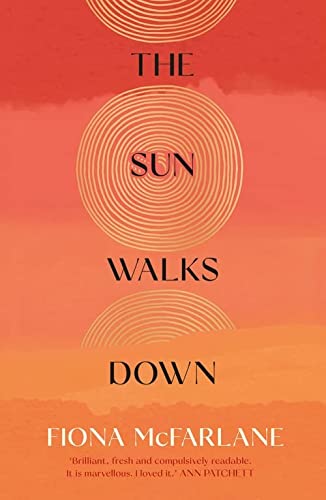
The Sun Walks Down by Fiona McFarlane

The Sun Walks Down by Australian author Fiona McFarlane is not a book I had considered reading until it appeared on this year’s shortlist for the Walter Scott Prize for Historical Fiction. Attempting to read all the shortlisted books for the prize is one of my ongoing personal projects and this is the third I’ve read so far from this year’s list (the others are Act of Oblivion and These Days).

The novel is set in South Australia and takes place over a period of seven days in September 1883. On the first day, a dust storm sweeps through the small town of Fairly in the Flinders Ranges and after it has passed, six-year-old Denny Wallace is found to have gone missing. As the whole community becomes caught up in the search for him, McFarlane introduces us to each resident of the town in turn, exploring their lives and the ways in which they are touched by Denny’s disappearance.

As well as Denny’s parents and siblings, we also meet a Pashtun cameleer, a Ramindjeri tracker, a Swedish painter and his English wife, a pair of newlyweds and an assortment of farmworkers and housemaids. Each has their own story to be told and some are given their own chapter, written in the form of a dream, a confession, a prayer or a set of notes. In this way, McFarlane looks at various aspects of life in colonial Australia and the relationships between the Indigenous people and the European newcomers. Although I did find this interesting (I’ve read shamefully little about 19th century Australia) I felt that there were too many characters in the book and the viewpoint changed from one to another too quickly, preventing me from forming a strong connection with any of them. I would also have preferred a tighter focus on the search for Denny as this seemed to get pushed aside for long periods.

I did love the beautiful descriptions of the Flinders Ranges and the way McFarlane uses colours to bring to life images of the sun, sky and clouds. 1883 was the year when Krakatoa erupted and caused a ‘volcanic winter’ with unusually vivid sunsets:

The sky burns and leaps, it gilds and candles – every drenched inch of it, until the sun falls below the ranges. Then the sky darkens. The red returns, stealthy now, with green above and lilac higher still. It deepens into purple. Here’s the strange new cloud, hovering in its own grey light. Then night comes in, black and blue and grey and white, and the moon in its green bag swings heavy over the red nation of the ranges.

I think I would describe The Sun Walks Down as a book that I admired rather than one that I particularly enjoyed. I can see why other people have given it glowing reviews and why it’s being nominated for awards, but it just wasn’t for me. That probably means it will win the Walter Scott Prize this year – not long until we find out!
This is book 20/50 read for the 2023 Historical Fiction Reading Challenge.
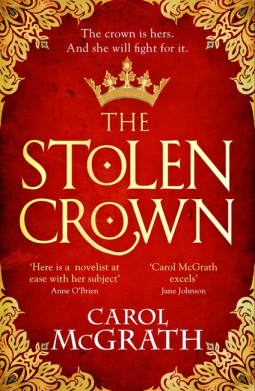
The Stolen Crown by Carol McGrath

When Henry I of England dies in 1135 leaving no legitimate male children, he names his daughter, Maud, as heir to the throne. Through her marriage to the late Holy Roman Emperor, the Empress Maud, as she still calls herself, is used to wielding power, yet she is unable to gain the support of the nobility and clergy of England and the throne is taken instead by her cousin, Stephen of Blois. Maud, however, refuses to give up her claim and so a battle begins between the cousins that will become known as ‘the Anarchy’ – a period of civil war lasting for almost two decades.

Carol McGrath’s new novel, The Stolen Crown, tells Maud’s story, exploring her marriage to Geoffrey of Anjou, the years of conflict with Stephen and her relationships with her half-brother Robert of Gloucester and with Brien FitzCount, her most loyal supporter. Although Maud (sometimes known as Matilda) was never actually crowned Queen of England and was referred to instead as ‘Lady of the English’, she left an important legacy as the eldest of her three sons with Geoffrey would go on to become Henry II, the first of the great House of Plantagenet.

The novel is written largely from Maud’s own perspective and she is portrayed as a strong, courageous and determined woman, but also one who makes mistakes, ignores advice and acts impulsively at times – in other words, a believable human being who comes to life on the page. We follow Maud throughout her adult life, beginning with her marriage to Geoffrey, a husband she didn’t choose and didn’t want, but with whom she eventually settles down to start a family in Anjou. When Stephen seizes the throne, Maud leaves her husband and children behind to travel to England and fight for what she believes is rightfully hers. Some sections of the book are also written from the point of view of Maud’s illegitimate half-brother Robert, which was a good decision as it allows us to see Maud through the eyes of someone else close to her, as well as filling in the gaps when Maud is not directly involved in the action. I’ve always liked Robert when I’ve come across him in historical fiction and it’s interesting to think of the sort of king he would have made had he been a legitimate heir.

I knew from the other Carol McGrath books I’ve read (The Silken Rose, The Damask Rose and The Stone Rose, a trilogy of novels about three queens who were labelled ‘she-wolves’) that she also likes to include fictional characters in her stories. In this book, we meet Alice, a young woman from a family of entertainers – musicians, jugglers and puppeteers. Alice has a storyline of her own, including a romance with a young knight, Sir Jacques, but she also fits seamlessly into Maud’s story, spying and carrying messages between the Empress and Brien FitzCount. Although I found Maud much more interesting to read about, Alice’s inclusion in the book gives us an insight into medieval life away from the royal courts.

The Anarchy is a fascinating part of English history, often overshadowed by later conflicts such as the Civil War and the Wars of the Roses, so I’m pleased that McGrath has chosen to give some attention to this period and to Maud. I’m looking forward to seeing who and what she writes about next.

Thanks to Headline for providing a copy of this book for review via NetGalley.

This is book 19/50 read for the 2023 Historical Fiction Reading Challenge.
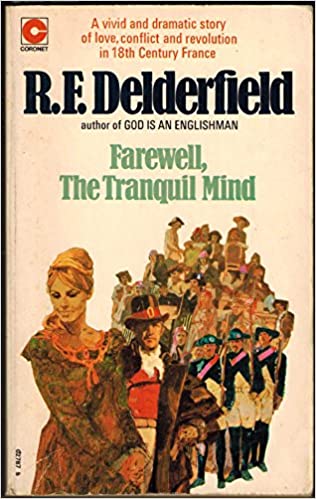
Farewell, the Tranquil Mind by RF Delderfield

Farewell the tranquil mind! Farewell content!
Farewell the plumed troops and the big wars
That make ambition virtue! O, farewell!

These lines from Othello inspired the title of Ronald Frederick Delderfield’s 1950 novel about a period of history that was anything but tranquil – the French Revolution. Having loved Delderfield’s A Horseman Riding By trilogy (which begins with Long Summer Day), I’ve been keen to read more of his books. This one wouldn’t necessarily have been my first choice – it’s currently out of print and with very few reviews online – but I came across a copy in a charity shop and thought I would give it a try.

Farewell, the Tranquil Mind is narrated by David Treloar, a young man from a family of Devon smugglers. From an early age, David has been different from the other male Treloars; while his brothers work with their father, bringing in shipments of contraband cargo, David stays at home and helps his mother run the family farm, Westdown. He is also the only one who has learned to read and write, having been taken under the wing of the agent, Saxeby, who introduces him to French politics through Thomas Paine’s Rights of Man. However, when a smuggling operation goes wrong and an exciseman is shot dead, the blame falls on David and he is forced to flee England.

Arriving in France in the middle of the Revolution, he is befriended by André Lamotte, the nephew of a Parisian wigmaker and perfumier known as Papa Rouzet. It is through his friendship with André and the Rouzet family that David becomes involved with various revolutionary groups including the Brissotins and the Cordeliers – and falls in love with Charlotte, Rouzet’s niece. With the situation in France becoming increasingly dangerous, David and Charlotte consider escaping to England – but not only is David still wanted for the murder of Exciseman Vetch, the English also now suspect him of being a French spy.

I found this book interesting, but certainly not as enjoyable as the Horseman Riding By trilogy, and I can see why it hasn’t been reissued like most of his other novels. The blurb made it sound quite exciting – and it is, in places, but in between there’s lots of exposition and political detail and this slows the plot down, making it less entertaining than I’d expected. Despite having read other books set during the French Revolution, I had to concentrate to keep track of all the different groups and who was on which side. It wasn’t just a case of royalists versus republicans; within the republican movement there were many separate factions – as well as the two I’ve mentioned above, there were Jacobins, Girondins, Montagnards, Dantonists and several others, each with their own ideas on the goals of the Revolution and how the country should be run.

I liked David, but I felt that Charlotte’s role in the book was too small and understated for me to get a clear sense of who she was or what she was like and this meant that I didn’t feel fully invested in the romance element of the book. It’s disappointing when I think of how well defined even the minor characters were in the other books of Delderfield’s I’ve read. This novel was written very early in his career, though, which maybe explains why it doesn’t feel as accomplished. It’s worth hunting down and reading if you’re particularly interested in learning more about the political side of the French Revolution, but otherwise probably not the best place to start with Delderfield! I’m still looking forward to reading more of his books and would welcome any suggestions as to which one I should read next.

This is book 18/50 read for the 2023 Historical Fiction Reading Challenge.
Music in the Dark by Sally Magnusson

This is the third novel by Scottish author Sally Magnusson and although I had a few problems with her first two – The Sealwoman’s Gift, the story of an Icelandic woman sold into slavery in Algeria, and The Ninth Child, about the construction of the Loch Katrine Waterworks – I still wanted to read this one because it sounded so interesting.

It begins in 1884 in a tenement in Rutherglen, a town near Glasgow, where the widowed Jamesina Bain is taking in a new lodger. The lodger is a man, newly arrived from America, where he has lived for many years. At first he has no idea who the Widow Bain is, but as he and Jamesina spend more time together, they discover that they have a shared past – they both lived through the forced eviction of Greenyards in Strathcarron.

The eviction was part of the Highland Clearances, the period when landowners in Scotland removed tenants from their estates so the land could be used for more profitable purposes – which, in the case of Greenyards, meant sheep farming. The clearances of Greenyards in 1854 and nearby Glencalvie a few years earlier, were particularly shocking, for reasons I won’t go into here as the novel will probably have more impact if you don’t already know what happened.

Sally Magnusson doesn’t delve too deeply into the politics surrounding the clearances or the reasons behind them – although Jamesina and her friends believe it was due to the Celtic people being considered inferior – and she acknowledges in her author’s note that it’s a very complex subject. Instead, she concentrates on exploring the long-term effects of the clearances, physically, emotionally and mentally, on the evicted people.

The novel is written from the perspectives of both Jamesina and her lodger, moving between the two as well as jumping backwards and forwards in time between 1884 and 1854. This structure is ultimately quite rewarding as things do eventually fall into place and we come to understand what happened during the Greenyards eviction and the sequence of events that sent Jamesina to Rutherglen and her lodger to America. However, it also means that the first half of the novel is slightly confusing and lacks focus, something that isn’t helped by the style in which Jamesina’s sections are written – often descending into a jumble of thoughts, word association and stream of consciousness. There was a reason for that style, which I understood later on, but it didn’t make this an easy book for me to get into.

I found this book very evocative of time and place, whether I was reading about Jamesina’s childhood in Greenyards or her life in the Rutherglen tenement, taking in laundry to earn a living and sleeping in the ‘kitchen bed’ to keep the bedroom available for lodgers. Magnusson also incorporates lots of other interesting issues, such as the healing power of music, the devastating impact of dementia and the joys of education. I found it very sad that the adult Jamesina, who had been such a bright child and was being taught Latin by the local minister, questions the point in being educated if you’re only going to be leading a life of drudgery.

I have deliberately not provided the name of Jamesina’s lodger, as we don’t immediately know who he is or how he fits into her life and I thought I would leave you to make that discovery for yourself. This is a fascinating novel in many ways and I did enjoy it once I got past the halfway point, which is why I don’t like abandoning books too early!

Thanks to John Murray Press for providing a copy of this book for review via NetGalley.

This is book 17/50 read for the 2023 Historical Fiction Reading Challenge.
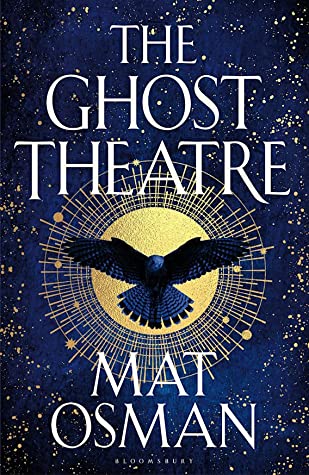
The Ghost Theatre by Mat Osman

The Ghost Theatre, Mat Osman’s second novel, is the story of two young people who meet on the rooftops of Elizabethan London. One of them is Shay, a teenage girl who dresses as a boy and belongs to a community of bird-worshippers. As the novel opens, Shay has released some caged birds from captivity in a shop and is being chased by the angry owner; with the instincts of a bird herself, she flees upwards to the roof and here she has her first encounter with Nonesuch. Taking his name from Henry VIII’s grand palace, Nonesuch claims to be the abducted son of a great lord, forced into performing at the Blackfriars Theatre, dressing as a woman to play leading female roles such as Cleopatra.

As Shay begins to fall in love with Nonesuch, she helps him to create the Ghost Theatre, a troupe of young actors who stage special plays in secret locations all over London. But it is another talent of Shay’s – her ability to tell fortunes – that brings her to the attention of Queen Elizabeth I and leads her into danger.

Mat Osman is the brother of the author and TV presenter Richard Osman and also the bassist in the British rock band Suede. I haven’t read his first novel, The Ruins, and had no idea what to expect from this one, but I can tell you it’s a very unusual book – not purely historical fiction but not quite fantasy either. It’s set in a city we can recognise as the London of the late Elizabethan period – there are outbreaks of plague, attempted rebellions, references to popular Elizabethan sports such as cock-fighting and bear-baiting – but there are also some imagined elements. As far as I know there was no community of Aviscultans living in Birdland and predicting the murmurations of starlings!

I have to be honest and say that this book wasn’t really for me. Perhaps because of the blend of alternate history with real history, it didn’t have the strong period feel I prefer – the dialogue was too modern, for example. I also found it quite difficult to focus on the plot; the imagery and descriptions were lovely but slightly distracting and sometimes I read several pages without really absorbing any of the words. If I had to compare this book to anything, it would be Megan Campisi’s The Sin Eater, another novel set in an alternate Elizabethan world and which I had some similar problems with. Incidentally, there is a sin eater in Osman’s novel too, although only mentioned in passing!

It would seem that Osman’s own love of music has influenced this story, with a lot of emphasis placed on the power of song, performing on stage and entertaining an audience. The novel as a whole is imaginative, creative, dreamlike and completely original. I wish I had been able to enjoy it more, but the right reader will love it.

Thanks to Bloomsbury Publishing for providing a copy of this book for review via NetGalley.

This is book 16/50 read for the 2023 Historical Fiction Reading Challenge.
Homecoming by Kate Morton

‘People who grow up in old houses come to understand that buildings have characters. That they have memories and secrets to tell. One must merely learn to listen, and then to comprehend, as with any language.’

The Christmas Eve of 1959 is a hot summer’s day in South Australia. Isabel Turner takes her four children out into the grounds of their Adelaide Hills home for a picnic – and this is where they are found later that day by a man delivering groceries. At first he thinks they are asleep in the sun but, sensing an unnatural stillness, he comes closer and makes the shocking discovery that the Turners are all dead. The local police are convinced that Isabel, who is believed to have been depressed, must have poisoned herself and the children, but the case is never fully solved and becomes the subject of a true crime book, As If They Were Asleep, written by American journalist Daniel Miller.

Almost sixty years later, in 2018, Jess Turner-Bridges is living in London when she receives a call from a hospital in Sydney informing her that her beloved grandmother, Nora, has had a fall and is in a serious condition. Jess hasn’t been back to Australia for years, but her grandmother is the person who raised her when her own mother was unable to, so she leaves for Sydney immediately to be by Nora’s side. Alone in Nora’s house, Jess discovers Daniel Miller’s book in her grandmother’s bedroom and is drawn into the story of the Turner Family Tragedy. Having been unaware until now of her own connection with this tragic incident, Jess is shocked by what she reads, but now that Nora is dying it seems that her chance to find out the truth could be slipping away.

Homecoming, like the other books I’ve read by Australian author Kate Morton, is deeply layered, containing stories within stories, multiple viewpoints and alternating timelines. It’s a long novel and I felt there were things that could probably have been left out without affecting the story too much – Jess’s life in London at the beginning and the backgrounds of some of the minor characters, for example – but otherwise I was completely gripped and read it much more quickly than I would usually read such a long book.

I loved the descriptions of rural Australia and the portrayal of 1950s Tambilla, the small town where the story takes place. As the title suggests, the theme of ‘homecoming’ plays an important part in the story: what it’s like to come home after a long absence and the idea of ‘home’ being not just the opposite of ‘away’ but also of ‘loneliness’. And for forty-year-old Jess, despite living in London for most of her adult life, Australia is still the place where she feels most at home.

The mystery at the heart of the novel – the deaths of Isabel Turner and her children – is not resolved until the end of the book and although the clues were all there, I didn’t pick up on them so didn’t work out what happened. However, there’s another family secret which has big implications for Jess and I found that one very easy to guess, which took away some of the fun. Maybe I’ve just read too many books like this one, but I thought it was very obvious! I did very much enjoy reading Daniel Miller’s As If They Were Asleep (not a real book, of course) which is reproduced in full, a few chapters here and there. It sheds some light on both mysteries, as well as allowing us to see the Turners and their friends and neighbours from a different perspective.

I do wonder whether this book might have worked just as well as a straightforward crime novel set in the 1950s, without the additional family secrets and the Jess and Nora storylines, but I know that’s not what Kate Morton does and probably not what her readers would expect from her! Anyway, apart from guessing the twist too soon, I did love this book and still have one or two of her earlier ones to look forward to.

Thanks to Pan Macmillan for providing a copy of this book for review via NetGalley.

This is book 15/50 read for the 2023 Historical Fiction Reading Challenge.

Prize Women by Caroline Lea

Caroline Lea chooses such interesting subjects and settings for her novels. The first one I read, The Glass Woman, was a Gothic novel set in 17th century Iceland, and the second, The Metal Heart, explored the building of a chapel in the Orkney Islands by Italian prisoners of war. In her latest novel, Prize Women, she takes us to Canada in the early 20th century and introduces us to two women who are taking part in a very unusual contest: the Great Stork Derby.

When Canadian millionaire Charles Vance Millar dies in 1926, he leaves behind a very controversial will. He bequeaths shares in a brewery to a group of teetotal ministers, a house in Jamaica to three men who hate each other, jockey club stocks to anti-horse racing campaigners – and in the strangest bequest of all, he leaves a large sum of money to the Toronto woman who gives birth to the most children in a ten year period.

Lily di Marco is trapped in an unhappy marriage so when her town is hit by an earthquake, she sees a chance to escape and flees to Toronto with her young son. Arriving in the city tired and homeless, Lily meets Mae Thebault, the wife of a wealthy factory owner, who agrees to let Lily stay with them in return for helping to take care of the Thebaults’ five children. Despite their differences in background and social status, Lily and Mae quickly become close friends – but then comes the Wall Street Crash and the start of the Great Depression.

By this point Lily already has several babies who will count towards the Great Stork Derby and decides to enter the contest in the hope of winning the money and improving the lives of herself and her children. But the Thebaults’ financial situation has also changed and Mae finds herself in desperate need of money too. Soon the former best friends are competing against each other, but with the outcome due to be decided by a jury, which of the women – if either – will be declared the winner?

Lily’s story is very moving and often heartbreaking. It’s so sad to see the way she is treated by her violent, alcoholic husband, the racism and discrimination she faces due to her Italian background, the squalid, impoverished surroundings she lives in and the impact all of this has on the health and wellbeing of her children. I was in tears several times, so be prepared – this is not exactly a cheerful, uplifting read! Mae also has obstacles to overcome and suffers some personal traumas, but her story didn’t affect me the way Lily’s did and the way she behaved during the later stages of the contest annoyed me, even while I understood her reasons. Maybe because the two women end up in direct competition with each other, it makes it difficult to side with both of them at the same time.

The Great Stork Derby itself – something that really happened, by the way – is a cruel and irresponsible concept in many ways, but even more cruel were the modifications made to the will by the courts, stating that children who were stillborn or born outside of wedlock wouldn’t count. Also, there was no consideration given to the effect on women’s bodies of so many pregnancies in a short space of time, or how poor families would afford to feed so many children if they didn’t win the prize money. Naturally, the contest received a lot of media attention at the time and also caused a lot of debate around contraception and women’s rights.

I enjoyed this book, despite the sadness, and I enjoyed getting to know Lily and Mae. However, there was one aspect of their storyline that I found unconvincing and slightly contrived; it wasn’t enough to spoil the book for me, but it was the only thing I didn’t like in this otherwise excellent novel.

Thanks to Michael Joseph for providing a copy of this book for review via NetGalley.

This is book 14/50 read for the 2023 Historical Fiction Reading Challenge.