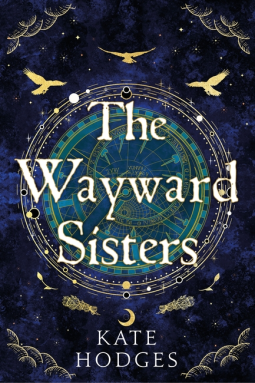
Homecoming by Kate Morton

‘People who grow up in old houses come to understand that buildings have characters. That they have memories and secrets to tell. One must merely learn to listen, and then to comprehend, as with any language.’

The Christmas Eve of 1959 is a hot summer’s day in South Australia. Isabel Turner takes her four children out into the grounds of their Adelaide Hills home for a picnic – and this is where they are found later that day by a man delivering groceries. At first he thinks they are asleep in the sun but, sensing an unnatural stillness, he comes closer and makes the shocking discovery that the Turners are all dead. The local police are convinced that Isabel, who is believed to have been depressed, must have poisoned herself and the children, but the case is never fully solved and becomes the subject of a true crime book, As If They Were Asleep, written by American journalist Daniel Miller.

Almost sixty years later, in 2018, Jess Turner-Bridges is living in London when she receives a call from a hospital in Sydney informing her that her beloved grandmother, Nora, has had a fall and is in a serious condition. Jess hasn’t been back to Australia for years, but her grandmother is the person who raised her when her own mother was unable to, so she leaves for Sydney immediately to be by Nora’s side. Alone in Nora’s house, Jess discovers Daniel Miller’s book in her grandmother’s bedroom and is drawn into the story of the Turner Family Tragedy. Having been unaware until now of her own connection with this tragic incident, Jess is shocked by what she reads, but now that Nora is dying it seems that her chance to find out the truth could be slipping away.

Homecoming, like the other books I’ve read by Australian author Kate Morton, is deeply layered, containing stories within stories, multiple viewpoints and alternating timelines. It’s a long novel and I felt there were things that could probably have been left out without affecting the story too much – Jess’s life in London at the beginning and the backgrounds of some of the minor characters, for example – but otherwise I was completely gripped and read it much more quickly than I would usually read such a long book.

I loved the descriptions of rural Australia and the portrayal of 1950s Tambilla, the small town where the story takes place. As the title suggests, the theme of ‘homecoming’ plays an important part in the story: what it’s like to come home after a long absence and the idea of ‘home’ being not just the opposite of ‘away’ but also of ‘loneliness’. And for forty-year-old Jess, despite living in London for most of her adult life, Australia is still the place where she feels most at home.

The mystery at the heart of the novel – the deaths of Isabel Turner and her children – is not resolved until the end of the book and although the clues were all there, I didn’t pick up on them so didn’t work out what happened. However, there’s another family secret which has big implications for Jess and I found that one very easy to guess, which took away some of the fun. Maybe I’ve just read too many books like this one, but I thought it was very obvious! I did very much enjoy reading Daniel Miller’s As If They Were Asleep (not a real book, of course) which is reproduced in full, a few chapters here and there. It sheds some light on both mysteries, as well as allowing us to see the Turners and their friends and neighbours from a different perspective.

I do wonder whether this book might have worked just as well as a straightforward crime novel set in the 1950s, without the additional family secrets and the Jess and Nora storylines, but I know that’s not what Kate Morton does and probably not what her readers would expect from her! Anyway, apart from guessing the twist too soon, I did love this book and still have one or two of her earlier ones to look forward to.

Thanks to Pan Macmillan for providing a copy of this book for review via NetGalley.
This is book 15/50 read for the 2023 Historical Fiction Reading Challenge.
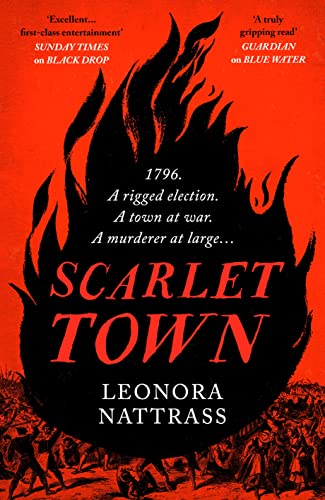
Prize Women by Caroline Lea

Caroline Lea chooses such interesting subjects and settings for her novels. The first one I read, The Glass Woman, was a Gothic novel set in 17th century Iceland, and the second, The Metal Heart, explored the building of a chapel in the Orkney Islands by Italian prisoners of war. In her latest novel, Prize Women, she takes us to Canada in the early 20th century and introduces us to two women who are taking part in a very unusual contest: the Great Stork Derby.

When Canadian millionaire Charles Vance Millar dies in 1926, he leaves behind a very controversial will. He bequeaths shares in a brewery to a group of teetotal ministers, a house in Jamaica to three men who hate each other, jockey club stocks to anti-horse racing campaigners – and in the strangest bequest of all, he leaves a large sum of money to the Toronto woman who gives birth to the most children in a ten year period.

Lily di Marco is trapped in an unhappy marriage so when her town is hit by an earthquake, she sees a chance to escape and flees to Toronto with her young son. Arriving in the city tired and homeless, Lily meets Mae Thebault, the wife of a wealthy factory owner, who agrees to let Lily stay with them in return for helping to take care of the Thebaults’ five children. Despite their differences in background and social status, Lily and Mae quickly become close friends – but then comes the Wall Street Crash and the start of the Great Depression.

By this point Lily already has several babies who will count towards the Great Stork Derby and decides to enter the contest in the hope of winning the money and improving the lives of herself and her children. But the Thebaults’ financial situation has also changed and Mae finds herself in desperate need of money too. Soon the former best friends are competing against each other, but with the outcome due to be decided by a jury, which of the women – if either – will be declared the winner?

Lily’s story is very moving and often heartbreaking. It’s so sad to see the way she is treated by her violent, alcoholic husband, the racism and discrimination she faces due to her Italian background, the squalid, impoverished surroundings she lives in and the impact all of this has on the health and wellbeing of her children. I was in tears several times, so be prepared – this is not exactly a cheerful, uplifting read! Mae also has obstacles to overcome and suffers some personal traumas, but her story didn’t affect me the way Lily’s did and the way she behaved during the later stages of the contest annoyed me, even while I understood her reasons. Maybe because the two women end up in direct competition with each other, it makes it difficult to side with both of them at the same time.

The Great Stork Derby itself – something that really happened, by the way – is a cruel and irresponsible concept in many ways, but even more cruel were the modifications made to the will by the courts, stating that children who were stillborn or born outside of wedlock wouldn’t count. Also, there was no consideration given to the effect on women’s bodies of so many pregnancies in a short space of time, or how poor families would afford to feed so many children if they didn’t win the prize money. Naturally, the contest received a lot of media attention at the time and also caused a lot of debate around contraception and women’s rights.

I enjoyed this book, despite the sadness, and I enjoyed getting to know Lily and Mae. However, there was one aspect of their storyline that I found unconvincing and slightly contrived; it wasn’t enough to spoil the book for me, but it was the only thing I didn’t like in this otherwise excellent novel.

Thanks to Michael Joseph for providing a copy of this book for review via NetGalley.

This is book 14/50 read for the 2023 Historical Fiction Reading Challenge.
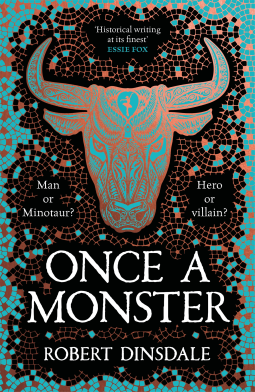
Rivers of Treason by KJ Maitland

This is the third book in KJ Maitland’s 17th century mystery series and continues Daniel Pursglove’s search for the mysterious Spero Pettingar. If you haven’t read the first two (The Drowned City and Traitor in the Ice) I strongly recommend that you do so before starting this book. Even though I’ve read both of them, the plot is so complex I found it difficult to keep track of what was happening at times, so I think coming straight to this book could be quite confusing.

The series is set in the aftermath of the Gunpowder Plot of 1605, a failed attempt by Catholic conspirators to blow up the Houses of Parliament and assassinate the King (James I of England and VI of Scotland). In the first book, Daniel Pursglove was released from Newgate Prison by the King’s advisor, FitzAlan, on the condition that he would hunt down and identify one of the escaped conspirators, a man known only as Spero Pettingar. As Rivers of Treason opens, Daniel has still not caught Spero but the mystery surrounding his whereabouts continues to deepen.

It’s now 1607 and the Great Frost that has held England in its grip during the winter is beginning to thaw. Without FitzAlan’s permission, Daniel has headed north to his childhood home in Yorkshire, not on the King’s business this time, but hoping to find answers about his own past. When an old woman is found murdered, however, Daniel finds himself under suspicion and is forced to flee across the country, pursued by a sinister man with a distinctive black and white beard. Has Daniel stumbled upon the trail of Spero Pettingar at last or has he become caught up in another, even bigger conspiracy?

I enjoyed this book, despite feeling that there was too much going on, a criticism I’ve had of the first two books in the series as well. I would have preferred a tighter focus on the central mystery, which often seems to get lost under the numerous subplots Maitland throws into the story. Having said that, some of the subplots were quite fascinating, such as one involving a London apothecary commissioned by the King to make an antidote to poison. After narrowly avoiding death in the Gunpowder Plot, it’s understandable that James has developed a paranoia about further attempts on his life! During Daniel’s time in Yorkshire, meanwhile, we learn a little bit more about our protagonist’s past and although I still don’t feel that we know him very well, it was good to have some questions answered.

I also love the atmosphere Maitland creates in this series, making it easy to feel immersed in the early 17th century, particularly where she describes the lives of the ordinary people Daniel meets on his travels but also in her descriptions of the Jacobean court. In this book, we follow the preparations for an elaborate masque (play or entertainment) written by the playwright Ben Jonson, with the set and costumes designed by the architect Inigo Jones. Jonson and Jones really did collaborate on many court masques, but this is the first time I’ve read about their work together, so I found that aspect of the story interesting.

Rivers of Treason finishes on something of a cliffhanger, leaving us wondering what Daniel is going to do next. I hope we won’t have to wait too long for the next book so that we can find out!

Thanks to Headline Review for providing a copy of this book for review via NetGalley.

This is book 13/50 read for the 2023 Historical Fiction Reading Challenge.

The Spanish Bride by Georgette Heyer – #1940Club

My final read for this week’s 1940 Club, hosted by Simon and Karen, is by an author you can nearly always count on to have had at least one book published in the relevant year! Two Georgette Heyer novels appeared in 1940 – The Corinthian, which I read a few years ago and loved – and this one, The Spanish Bride. I did try to read The Spanish Bride once before and couldn’t get into it, but I thought this would be a good opportunity to attempt it again.

The first thing to say is that this is not a typical Heyer novel at all, which I think is partly why I struggled with it the first time; being very new to Heyer then and enchanted by her witty dialogue, entertaining plots and portrayal of fashionable Regency society, I had expected more of the same and been disappointed to find that this book was so different. This time I was prepared and managed to finish it, but it certainly hasn’t become a favourite.

The Spanish Bride is set during the Peninsular War, the conflict fought on the Iberian Peninsula by the British, Spanish and Portuguese armies against the French, forming part of the Napoleonic Wars. The novel begins with the siege of Badajoz which ended in a French surrender in April 1812. With the victorious troops on the rampage, drinking, looting and raping, fourteen-year-old orphan Juana and her sister seek refuge outside the city at the camp of the 95th Rifles. It is here that Juana meets Brigade-Major Harry Smith, who falls in love with her instantly, and the two are married within days.

Refusing to be parted from her new husband, Juana remains with Harry for the rest of the campaign, riding with him from camp to camp, from battlefield to battlefield. She finds life in the Duke of Wellington’s army challenging – the terrain can be difficult, particularly under the blazing summer sun or in the depths of a freezing winter – but she’s determined not to complain and in the process she wins the hearts of not just Harry but the rest of the regiment as well.

Harry Smith and Juana María de los Dolores de León Smith were both real historical figures. Harry’s life and career is well documented, including in his own autobiography published posthumously in 1901, while Juana is commemorated in the name of Ladysmith, the city in South Africa where Harry later served as the governor of Cape Colony. However, this book doesn’t cover any of that period, concentrating mainly on the Peninsular campaign (with a brief interlude in England where Juana is sent while Harry takes part in the War of 1812 in America) and ending at Waterloo in 1815. In her Author’s Note, Heyer describes her research for the novel, which involved reading the diaries and writings of various members of the Light Division, as well as officers of other regiments and even the Duke of Wellington himself.

The age difference between the two main characters could be a problem for some readers – Harry is twenty-five when he marries Juana, who is eleven years younger – but that’s how old they were in real life and it must have been considered acceptable in nineteenth century Spain even if not today. The ‘romance’ aspect of the book is quite understated compared to the military aspect (and as they get together so early in the story, it’s more of a portrait of an unconventional marriage than a traditional romance in any case). Juana does feel very young and often immature, but at other times she displays wisdom, compassion and courage beyond her years and it’s easy to see why she was so well liked and respected.

No, Harry thought, remembering long marches under molten skies, bivouacs in streaming woods, the fording of swirling rivers, mattresses spread in filthy, flea-ridden hovels, the washing of gangrenous wounds which would have made an English miss swoon with horror: she was not like the girls at home.

This book is as well written as you would expect from Heyer and, as I’ve said, amazingly well researched; my problem with it is entirely down to personal taste and no reflection on the quality of the book itself. I’m just not very interested in military history and while I can cope with a few battle scenes and some brief discussion of tactics and strategies, there was so much of that in this book that I struggled to stay interested at times. But books like this one and An Infamous Army show that Heyer was a much more versatile author than she is often given credit for and I think anyone who has avoided her because they don’t like romantic fiction would be surprised if they tried one of these. And don’t forget she also wrote several mystery novels – although I haven’t read all of them, the three I have read were very enjoyable.

This is book 12/50 read for the 2023 Historical Fiction Reading Challenge.
The Secrets of Hartwood Hall by Katie Lumsden

It’s 1852 and the recently widowed Margaret Lennox has just arrived at Hartwood Hall to take up a new position as governess to ten-year-old Louis Eversham. Margaret worked as a governess before her marriage, so has plenty of experience, but she quickly discovers that the Evershams are not quite like any other family she has worked for. Mrs Eversham is secretive and overprotective, isolating herself and Louis from their neighbours, and in the village rumours are spreading that Hartwood Hall is haunted. Although this makes Margaret feel uneasy – and the hostility she faces from one of the maids, Susan, doesn’t help – she does her best to settle into her new job, while also trying to conceal the truth about her own past.

The Secrets of Hartwood Hall is Katie Lumsden’s debut novel and is obviously heavily influenced by the work of the Brontës, particularly Jane Eyre, The Tenant of Wildfell Hall and Agnes Grey. One character turns out to be an author not dissimilar to Charlotte, Emily and Anne, while others are seen reading Brontë novels – and of course, there are elements of the plot and setting that feel very familiar as well. The descriptions of the locked east wing of Hartwood Hall, off-limits to Margaret, with its strange noises and flickering lights made me think of Jane Eyre’s ‘madwoman in the attic’ and had me wondering what exactly was going on in there! Of course, this is a book written in the 21st century, not the 19th, and I could never quite forget that; some parts of this story could never have been written by the Brontës – or would have had to be alluded to much more vaguely.

This is not the only recently published book to be inspired by classic Gothic novels and at first I thought it was going to be very similar to Stacey Halls’ Mrs England, Marianne Ratcliffe’s The Secret of Matterdale Hall or Beth Underdown’s The Key in the Lock, to name a few. However, although I think readers of those books would enjoy this one too, it’s still different enough to be a satisfying story in its own right. I didn’t guess the solutions of all the mysteries hinted at in the book – although I was convinced at one point that I’d worked it all out, some of the revelations still took me by surprise!

There’s a romantic thread to the novel too, as Margaret begins to form a relationship with a male member of the Hartwood Hall staff. However, I found this the least successful aspect of the story. I sensed very little chemistry between the two of them, neither was honest with the other and I felt that Margaret treated him unfairly. For this reason, the later stages of the novel didn’t have the emotional impact they probably should have done. I did enjoy watching Margaret’s relationship with the Evershams develop, as she gained the trust and respect of Louis and Mrs Eversham – and I was angry on Margaret’s behalf about the treatment she received from the scheming Susan! Although I didn’t always agree with Margaret’s decisions, I found her quite an engaging heroine and narrator.

This was an entertaining novel and while not every part of it worked for me, I would be happy to read more books by Katie Lumsden, particularly if they fall into this same subgenre.

Thanks to Michael Joseph for providing a copy of this book for review via NetGalley.

This is book 11/50 read for the 2023 Historical Fiction Reading Challenge.
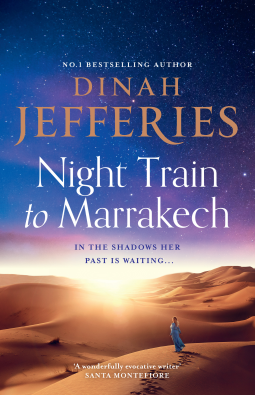
These Days by Lucy Caldwell – #ReadingIrelandMonth23

I hadn’t really considered reading These Days until I saw it had been longlisted for this year’s Walter Scott Prize and as Lucy Caldwell is an author from Belfast I thought it would be a good choice for Reading Ireland Month.

I have previously read very little about the fate of Northern Ireland during World War II – Sebastian Barry’s The Secret Scripture contains a very vivid description of the bombing of Belfast, but otherwise it has barely featured at all in any of my reading. In These Days, Lucy Caldwell gives this topic the attention it deserves, focusing on a series of attacks on Belfast that took place in April and May 1941 – the Dockside Raid, the Easter Raid and the Fire Raids. More than a thousand people were killed in these attacks and the Easter Raid alone caused the greatest loss of life in any night raid outside of London during the war.

This short but tragic period in Belfast’s history is explored through the stories of two sisters, Audrey and Emma Bell, the daughters of Dr Philip Bell and his wife, Florence. I have to confess, when I first started reading this book and saw that not only was it written in the present tense, the author had also chosen to omit speech marks, my heart sank. Not including speech marks seems to be an increasingly popular trend in fiction and maybe some readers like it, but it never works for me. I just find it distracting and annoying. However, I stuck with the book and settled into the story after a while.

Audrey is twenty-one and works as a junior clerk at the tax office. She is engaged to Richard, a doctor like her father, but is beginning to have doubts about the marriage. Becoming Richard’s wife will mean she’s expected to give up her job and conform to society’s expectations, and after witnessing the independence and freedom enjoyed by her unmarried friend, Miss Bates, Audrey is trying to decide what she really wants from life.

Emma is just eighteen and volunteers at a First Aid post, where she has met and fallen in love with Sylvia, a woman ten years older than herself. Emma has always been ‘awkward’ but when she’s with Sylvia she feels that she’s found her place in the world at last. Unfortunately, though, this is the 1940s so their relationship will have to remain a secret.

The Bell sisters, along with their mother Florence, are the main focus of the novel and although the writing style meant it took longer for me to connect with them than I would have liked, I did warm to all three of them and found each of their stories very moving as the bombings began and their lives were thrown into turmoil. We also get to know several other characters, from a range of backgrounds, who cross paths with the Bells at various points in the novel. I particularly loved six-year-old Maisie Gallagher, who becomes separated from her mother during a raid and has the good fortune to be discovered by Audrey.

The attacks were devastating for the people of Belfast, with so much destruction and loss of life, and as you can imagine the book is quite harrowing in places. How could it not be, particularly with images of Ukraine fresh in our minds? But it’s also a book I’m pleased to have read, especially as it has taught me so much about an aspect of the war I had known so little about.

This is book 10/50 read for the 2023 Historical Fiction Reading Challenge.

The Lodger by Helen Scarlett

It’s 1919 and Grace Armstrong, like many other young women, is mourning the loss of her fiancé and brother in the Great War. She has done her best to move on – having served as a VAD nurse during the war, she is now pursuing a career as a journalist with the London periodical Nursing World – but she is still haunted by the thought that her fiancé Robert, reported missing in action at the Somme, could still be alive. Meanwhile her mother, struggling to cope with the death of Grace’s brother Edward, is under sedation in a nursing home. It’s a difficult time for the Armstrong family – and is about to get worse when their lodger, Elizabeth Smith, is found drowned in the River Thames.

Elizabeth had lodged with the family for eight years and she and Grace had become good friends. Unable to accept the verdict from the police that Elizabeth had committed suicide, Grace is determined to find out what really happened. The only person who is prepared to help her is Tom Monaghan, who fought with Edward in France, but as they begin to investigate Elizabeth’s death, they make some shocking discoveries about Grace’s friend.

This is Helen Scarlett’s second novel; I haven’t read her first, The Deception of Harriet Fleet, but both are standalones so that didn’t matter at all. I will probably look for that earlier book now, as I did enjoy this one. It’s a slow-paced novel, but I still found it quite gripping, mainly because of the vivid portrayal of a world emerging from war, with people attempting to move forward while still struggling with the trauma of the recent past. Nobody in the novel has come out of the war unscathed; we meet men left damaged both physically and mentally by the horrors of the trenches, families grieving for the deaths of loved ones – and perhaps worst of all, people like Grace who are unable to grieve properly without knowing whether their loved one is dead or alive. Grace sees Robert everywhere – in the street, on the bus, in her dreams – and feels that she’ll never be able to rebuild her life until she knows the truth.

I found the mystery element of the book less successful. The story of Elizabeth’s past seemed too far-fetched to be very convincing and as more and more of her secrets were uncovered I felt that the plot was in danger of becoming much too complicated. There’s also a romance for Grace which was predictable but satisfying, although I would have liked to have seen her spend more time with her love interest; that would have helped me to become more invested in their relationship.

Despite the few negative points I’ve mentioned, The Lodger is an atmospheric and moving novel and the image it evokes of a London in the aftermath of war is one that will stay with me.

Thanks to Quercus for providing a copy of this book for review via NetGalley.

This is book 9/50 read for the 2023 Historical Fiction Reading Challenge.