Cup of Gold by John Steinbeck – #1929Club

It’s always interesting, when an author has become famous for books written later in their career, to go back to the very beginning and read their earliest work. Cup of Gold, John Steinbeck’s first novel, was published in 1929 and is my second choice for this week’s 1929 Club hosted by Simon and Karen.

I’ve previously only read two of Steinbeck’s books (East of Eden and The Pearl) and hadn’t even heard of this one until I started to look at options for 1929 Club. I was intrigued because it sounded so completely different from his other books – not the sort of plot or genre I would have associated with Steinbeck at all. It’s also a short novel (just over 200 pages) so I could easily fit it into my busy October reading schedule!

Cup of Gold opens in 17th century Wales where a fifteen-year-old boy, Henry Morgan, lives on a farm with his parents and his grandmother, Gwenliana, who claims to have second sight. Growing up in a remote part of the Welsh countryside, Henry is growing restless to leave home and see more of the world. When Dafydd, an old farmhand who left many years earlier to go to sea, returns to the farm to tell the family of his adventures, Henry becomes determined to do the same. His mother, who still considers him a child, tells him not to be ridiculous, but his father accepts that this is something his son must do and sends him off with his blessing.

Before leaving, Henry consults the wise, white-bearded poet known as Merlin, who lives alone with his red-eared dog in the hills above the Morgans’ valley. Merlin makes the following observation, words Henry will remember for the rest of his life:

“You are a little boy. You want the moon to drink from as a golden cup; and so, it is very likely that you will become a great man – if only you remain a little child. All the world’s great have been little boys who wanted the moon; running and climbing, they sometimes caught a firefly. But if one grow to a man’s mind, that mind must see that it cannot have the moon and would not want it if it could – and so, it catches no fireflies.”

Arriving in Cardiff – the first time he has seen a large town – Henry secures passage on a ship to Barbados, where he finds himself indentured to a plantation owner. This is not what Henry had been hoping for, but he knows it will only be for a few years and then he’ll be free again to achieve his dream of becoming a buccaneer and making his fortune.
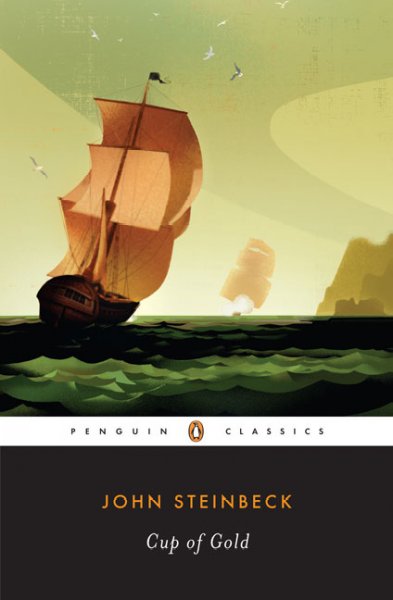
If the name Henry Morgan is familiar to you, then you’ve probably already guessed that this is the story of the notorious pirate of the Caribbean, a real historical figure (and the inspiration for Captain Morgan rum). In fact, the full title of the novel is Cup of Gold: A Life of Sir Henry Morgan, Buccaneer, with Occasional Reference to History. ‘Occasional reference’ is not an exaggeration because it seems that very little of Steinbeck’s account has anything to do with historical fact – although, to be fair, there are lots of gaps in our knowledge of Morgan’s early life and career so plenty of scope for an author to use their imagination. It’s unclear whether I should even be referring to Morgan as a pirate; many sources describe him as a privateer, although the only difference I can see is that one is declared ‘legal’ by the government who stands to gain from their raiding and pillaging and the other isn’t.

The ’cup of gold’ of the title, which Merlin compares to reaching for the moon, refers to two things – Panama, which Henry sees as the ultimate prize just waiting to be captured from the Spanish, and a beautiful woman known as La Santa Roja (the Red Saint). Henry’s yearning for both of these is what drives him – and the narrative – forward. Yet I found this book to be neither the swashbuckling adventure novel nor the romance I’ve seen it described as and it’s certainly not as much fun as Georgette Heyer’s Beauvallet or Rafael Sabatini’s Captain Blood. It’s a more serious novel than either of those and never loses sight of its central themes: the quest for happiness and the question of whether we can ever be truly content with what we have or will go on searching for something that’s always out of reach. However, I discovered that I didn’t really care about Henry’s happiness as I found it so difficult to relate to somebody who deliberately set out on a life of piracy and committed so many terrible acts! That was a bit of a problem with so much of the story told from Henry’s perspective.

This is a beautifully written novel, though, and the sections set in Wales – or Cambria, as Steinbeck usually calls it – feel mystical and dreamlike. The inclusion of Merlin in the plot is intriguing: are we supposed to believe that he is really the legendary magician, alive in the 17th century, or is he just an eccentric old man who believes he is Merlin? Either way, Arthurian legend is obviously something that interested Steinbeck and he would later go on to write The Acts of King Arthur and His Noble Knights, which was posthumously published in 1976.
I wouldn’t describe this as a must-read classic, but it’s worth reading if the subject or setting appeal or if you’re interested in experiencing the work of a famous author at the very start of his career.

I’m also counting this as book #57 for the Historical Fiction Reading Challenge 2022.
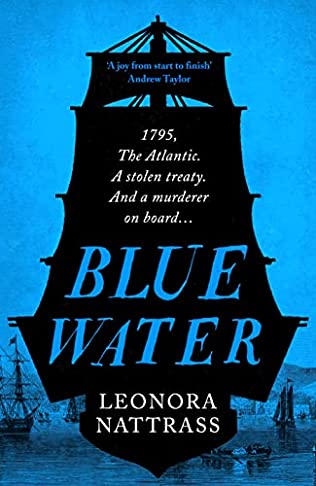
Blue Water by Leonora Nattrass

This is the sequel to Black Drop, Leonora Nattrass’ 2021 debut novel which introduced us to the character of Laurence Jago. Blue Water works well as a standalone historical mystery, but I would recommend reading both books in order if you can.

It’s December 1794 and former government clerk Laurence Jago has just left Britain aboard the packet ship Tankerville. The ship’s destination is Philadelphia, where one of Jago’s fellow passengers, Theodore Jay, will deliver a treaty to President Washington. The Jay Treaty, negotiated by Theodore’s father, the American envoy John Jay, is designed to promote peace between the two nations and prevent America from joining forces with France against Britain. War Office official Mr Jenkinson, also on board the Tankerville, has offered to hide the Treaty in a safe place, but when he is found dead and the papers disappear Jago realises it’s up to him to find them and prevent them from falling into French hands.

Well, I enjoyed Black Drop but this second book is even better! With almost the entire story taking place at sea and therefore with a limited number of characters, the mystery has a ‘locked room’ feel and kept me guessing until the end. Leonora Nattrass very skilfully casts suspicion on first one character then another and it soon appears that almost everyone on the ship has a secret to hide. Although I correctly predicted a few of the plot twists (and was impatiently waiting for Jago to discover them too) the eventual revelation of the fate of the Treaty came as a complete surprise to me. I was also surprised when I read the author’s note at the end and saw that some parts of the plot were based on historical fact, although the details have been added to and embellished using the author’s imagination.

Laurence Jago continues to be an engaging narrator, though not always the most reliable one due to his occasional poor judgement, the secret sympathies we learned about in the previous book and his tendency to succumb to the temptations of ‘black drop’ laudanum. I was pleased to see the return of some other characters from the first book including the journalist William Philpott (whose attempts to compile a dictionary of seafaring superstitions add some humour to the book) and Theodore Jay’s slave and companion Peter Williams, always a calm and wise presence amid the onboard chaos. And of course, there are plenty of colourful new characters amongst the passengers, including two French aristocrats, an American plantation owner and an Irish actress with a dancing bear!

Choosing to set this novel at sea gives it a very different feel from Black Drop. Apart from a few glimpses of Madeira and then Praia, capital of Cape Verde, the whole story unfolds aboard the Tankerville and we are given lots of insights into life during a long sea voyage. The use of nautical terminology never becomes too overwhelming but it all feels authentic and due to the setting, time period, elegant prose and frequent encounters with French warships, I was strongly reminded of Patrick O’Brian’s Aubrey/Maturin series. I was quite sure Leonora Nattrass must have read O’Brian and when I reached the acknowledgements at the end of the book I found that I was right!

If it’s not already clear, I loved this book and hope there’s going to be a third in the series.

Thanks to Viper for providing a copy of this book for review via NetGalley.

Book #5 read for R.I.P. XVII

Book #56 read for the Historical Fiction Reading Challenge 2022.

Recent reads: The Drums of War; Ashes in the Snow; Ithaca

I’m falling behind with my reviews again, so here are my thoughts on three recent reads – all very different books.

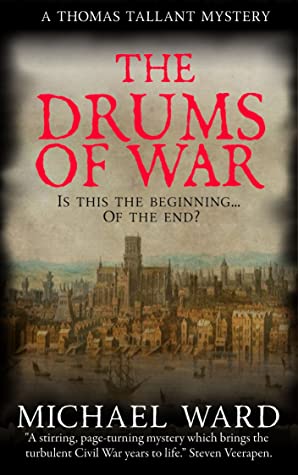
The Drums of War is the third in Michael Ward’s Thomas Tallant mystery series, continuing the story begun in Rags of Time and The Wrecking Storm. It also works as a standalone novel, so don’t worry if you haven’t read the first two in the series.

This third novel opens in London in 1642. With the divisions between King and Parliament becoming greater, England is rapidly heading towards Civil War and spice merchant Thomas Tallant and his friends are being forced to choose sides. Soon Tom finds himself assisting the Puritan leader John Pym in his search for a consignment of stolen gunpowder being smuggled out of London by Royalist forces. Meanwhile, Elizabeth Seymour is carrying out investigations of her own as she sets out on the trail of a mysterious jewel thief. Although Tom and Elizabeth are separated for most of the book and I missed their interactions, I did find both storylines interesting, particularly Elizabeth’s as she suffers a personal trauma and begins to fall back into some of her former bad habits as a result!

As with the first two books in the series, real historical figures appear alongside the fictional ones and as well as John Pym and the commander of the London Trained Bands, Philip Skippon, we also meet the scientist and physician William Harvey and are reacquainted with the intriguing Lucy, Countess of Carlisle. In the second half of the novel, the focus moves away from the mystery-solving for a while to concentrate on the events of the Civil War, particularly the battles of Edgehill and Brentford. This aspect of the story was of less interest to me, but that’s just down to personal taste (I’m not really a fan of battle scenes) and I still found this an enjoyable novel overall.

~

Ashes in the Snow is Oriana Ramunno’s debut crime novel, written in Italian and translated into English by Katherine Gregor. The book is set in Poland during World War II and begins with a young boy, Gioele Errera, finding the body of an SS officer in the snow. The man appears to have choked on an apple, but it soon seems that there is more to his death than that and German criminologist Hugo Fischer is summoned to investigate. Finding the murderer will not be easy, particularly as the dead man’s wife seems reluctant to cooperate, but Gioele agrees to help – if, in return, Hugo will help him to find his family from whom he has become separated.

This is a beautifully written and translated novel but not an easy one to read because, as we quickly discover, Gioele has a twin brother and the two of them have become subjects of the infamous Josef Mengele’s experiments. Of course this sort of thing is not supposed to be pleasant to read about, but I wasn’t really prepared for the level of detail Ramunno goes into in describing this and other parts of Gioele and Hugo’s stories. Hugo is an interesting and likeable character, a man suffering from a degenerative illness who must keep his condition a secret to avoid becoming a target of the Nazi regime himself. He’s an unusual detective and the crime element of the novel works well, but this book wasn’t for me.

~

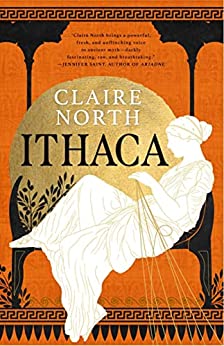
Ithaca by Claire North is the latest of many Greek mythology retellings based on the events surrounding the Trojan War. What makes this one different from the others I’ve read is that it focuses on the story of Penelope as seen through the eyes of the goddess Hera.

It has been seventeen years since Penelope’s husband Odysseus, King of Ithaca, sailed away to war with Troy and although the war is now over, she and her son, Telemachus, are still awaiting his return. Penelope is kept busy running the kingdom with the help of her women, while also trying to defend the island of Ithaca from raiders and fend off the attentions of the crowd of suitors who have descended upon her home in the hope of marrying her if Odysseus never comes back. Meanwhile, Penelope’s cousin Clytemnestra has fled to Ithaca looking for somewhere to hide after murdering her husband, Agamemnon.

Ithaca is quite a long novel and moves at a slow pace; it’s the first in a planned trilogy and Claire North takes her time setting the scene and introducing the characters. I liked the choice of Hera as narrator; she provides a different perspective on a well-known story and I enjoyed her observations of the mortal world and her interactions with other goddesses such as Athena. However, it does mean we are kept at a distance from Penelope herself, which could explain why I found it difficult to form any kind of connection with her – or with any of the other characters. For that reason, I don’t think I’ll be continuing with the second book. Claire North writes beautifully but I needed more than that to sustain my interest and I preferred Margaret Atwood’s The Penelopiad – I didn’t love that one either, but it was a shorter and more memorable read.

The Romantic by William Boyd

Wandering through Africa wasn’t that much different, in a sense, from wandering through London, or Paris, or Boston. You thought the road ahead was obvious and well marked but more often than not the destination you had so clearly in mind would never be reached. Never. Things got in the way. There were diversions, problems, changes of mind, changes of heart…

Cashel Greville Ross, the hero of William Boyd’s new novel The Romantic, is a man who does plenty of wandering and whose path through life changes direction many times. Born in Ireland in 1799, he lives through some of the major events of the 19th century and becomes a soldier, a writer, a farmer and an explorer – though not all at the same time. He is present on the battlefield of Waterloo, befriends Byron and Shelley in Pisa and travels through Africa in search of the source of the Nile.

Cashel is not a real person, of course, although Boyd does his best to convince us that he is. The book is presented as a biography, complete with footnotes, pieced together from a bundle of letters, notes, maps and photographs which apparently fell into Boyd’s hands several years ago. It’s not a new idea, but it’s very cleverly done here and I can almost guarantee that you’ll be googling things to see if they’re true, even while knowing that they can’t possibly be!

The Romantic is a long novel, but I read most of it in one weekend because it was so gripping I couldn’t bear to put it down. Although the story never becomes bogged down with historical or geographical detail, it’s still completely immersive and I loved every minute I spent in Cashel’s world. His life story unfolds in a series of distinct episodes and I found each one equally compelling: his childhood in County Cork and the uncovering of family secrets; a journey across Italy in order to write a book about his travels; a moral dilemma faced in a Sri Lankan village while fighting with the Indian Army…these are just a few of Cashel’s adventures and there are many more which I’ll leave you to discover for yourself.

Cashel himself is a likeable character, but also a flawed one. As the title suggests, he’s hopelessly romantic; as a young man, his own proud and impulsive nature ruins his chance of happiness with the woman he loves and this sets the tone for the rest of the novel and the rest of his life, as he continually moves from country to country, continent to continent, unable to put this missed opportunity behind him and settle down. His naivety makes him vulnerable and he is repeatedly taken advantage of, suffering a series of injustices and at one point ending up in the Marshalsea Prison for debt, but he never seems to learn from his mistakes, falling into the same traps over and over again. It’s frustrating, but it’s also what kept me turning the pages, desperate to see how Cashel would get out of the latest predicament he had found himself in!

This is one of my books of the year without a doubt and I’m sorry that I’ve never read any William Boyd before.

Thanks to Viking for providing a copy of this book for review via NetGalley.

This is book 53 read for the Historical Fiction Reading Challenge 2022.

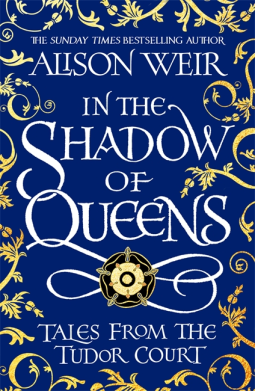
In the Shadow of Queens: Tales from the Tudor Court by Alison Weir

This is a collection of thirteen short stories and novellas written by Alison Weir over the last few years to accompany her Six Tudor Queens series of novels. The stories were released as individual ebooks one by one as they were written, but are now available all together in one volume.

I have read all six of the full-length novels in the Six Tudor Queens series, each one exploring the life of one of the wives of Henry VIII. These short stories fill in the gaps between the novels, providing more insights or looking at things from a different perspective. They are arranged in roughly chronological order, starting before Henry’s marriage to Katherine of Aragon and ending after the death of Katherine Parr. I had already read one of them – The Tower is Full of Ghosts Today, about a Tower of London tour guide with a strange resemblance to Anne Boleyn – but the rest were all new to me.

Several of the stories are written from the perspectives of members of the Tudor dynasty whose voices weren’t heard in the main series. Arthur: Prince of the Roses, about Henry VIII’s ill-fated elder brother Arthur Tudor, The Unhappiest Lady in Christendom, narrated by the future Mary I, and The Princess of Scotland, about Henry’s niece Margaret Douglas, all fall into this category. Others provide more background and depth to the stories of the six wives themselves – for example The Chateau of Briis: A Lesson in Love explores Anne Boleyn’s years at the French court as maid of honour to Queen Claude and her potential link with a tower at Briis-sous-Forges called the Donjon Anne Boleyn.

The stories that were of most interest to me were the ones that follow characters on the periphery of the Tudor court or those who are living ‘in the shadow of queens’, as the title suggests. I particularly enjoyed reading about the court painter Susannah Horenbout, sent to Cleves to investigate the background of a potential bride for the King, and Lady Rochford, wife of George Boleyn, who was instrumental in the downfalls of both Anne Boleyn and Katherine Howard. Naturally, given the time period and subject matter, some of the stories are quite sad, involving executions, imprisonments, betrayals and infant deaths. If you’re of a squeamish disposition, be aware that the final story, In This New Sepulchre, describes in graphic detail the shocking desecration of Katharine Parr’s tomb and corpse.

My favourite story in the collection was probably The Curse of the Hungerfords, which introduces us to Agnes Cotell, the second wife of Sir Edward Hungerford, who becomes involved in a 16th century murder case. Her narrative alternates with that of Anne Bassett, whom many people believed would become one of Henry VIII’s wives, although obviously that never happened. Weir keeps us waiting to see how the lives of these two women are connected and I thought this could easily have been developed into a longer novel, which would have allowed for more depth and detail.

I haven’t discussed all of the thirteen stories here, but I hope I’ve given you a good idea of what the book contains. I would have been disappointed if I’d paid for some of these stories individually in the e-short format, but as a collection I found this a worthwhile read. If you’ve read some or all of the Six Tudor Queens series it works well as a companion volume, but it’s not essential to have read any of those books before reading this one. Alison Weir’s next novel, Henry VIII: The Heart and the Crown, will be published in 2023, but in the meantime I have her latest non-fiction book, Queens of the Age of Chivalry, to read.

Thanks to Headline for providing a copy of this book for review via NetGalley.

This is book 52 read for the Historical Fiction Reading Challenge 2022.
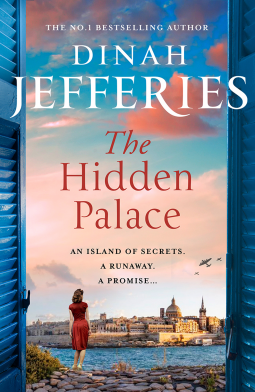
The Hidden Palace by Dinah Jefferies

This is the second book in Dinah Jefferies’ new World War II trilogy which began last year with Daughters of War. Although I think it’s always best to read a series in order if you can, I don’t think it would be a problem if you wanted to start with this book. People and events from the first book are alluded to, but are not essential to understanding the plot of this second novel.

Of the three Baudin sisters we met in Daughters of War, The Hidden Palace only focuses on one of them – the youngest sister, Florence, who has left occupied France for the safety of the English countryside. In England, Florence is reunited with her estranged mother, Claudette, who asks for her help in finding her sister Rosalie – Florence’s aunt – who ran away from home as a teenager and hasn’t been seen or heard from for years. Claudette believes that Rosalie may be in Malta, but with war still raging across Europe, no one is able to go there to look for her.

In an alternating storyline, we go back to the 1920s and follow Rosalie’s adventures when, after an argument with her father, she leaves home and finds work as a dancer in a nightclub in Malta. As the years go by, she builds a new life and identity for herself on the island, which makes Florence’s task much more difficult when, once the war is over, she is able to travel to Malta to begin her search. Accompanied by Jack, the Baudin sisters’ friend who worked for the British Special Operations Executive during the war, Florence is determined to find her aunt – but will her aunt want to be found?

I enjoyed The Hidden Palace overall, although I missed the other two sisters from the first book, Hélène and Élise, who stay behind in France and appear only briefly. Florence was not initially my favourite of the sisters so I wasn’t sure how I would feel about this book focusing mainly on her, but I did warm to her after a while – although I had mixed feelings about the development of her romance with Jack, knowing that he had originally been Hélène’s love interest. I also found the sections of the book set in England slightly lacking in atmosphere; you would hardly think the war was still taking place, as the lives of the characters seem largely unaffected and there’s no sense of any real hardship.

The chapters set in Malta were of much more interest to me, particularly as I have been to Malta and enjoyed revisiting, through Rosalie’s eyes, the vibrant streets of the capital Valletta and the peaceful stillness of Mdina, the ‘Silent City’. Malta was very badly hit during the war, due to its strategic importance as a base in the Mediterranean between Europe and North Africa, and it was the target of thousands of German and Italian air raids, making it one of the most heavily bombed places in the world. This is where Rosalie spends the war years, so as you can imagine, her story is a lot more dramatic than Florence’s in the Devon countryside! However, Rosalie also becomes caught up in a scandal involving human trafficking and I couldn’t see the point in this storyline as it didn’t seem to lead anywhere.

The novel has a satisfactory ending, but not everything is fully resolved, so I’m looking forward to finding out what happens in the final part of the trilogy. The third book, Night Train to Marrakech, is due next year.

Thanks to HarperCollins for providing a copy of this book for review via NetGalley.

This is book 51 read for the Historical Fiction Reading Challenge 2022.

The Bookseller of Inverness by S G MacLean

The Scottish author SG MacLean is best known for her Seeker series and before that, the Alexander Seaton series originally published under the name Shona MacLean. I haven’t read any of those books (although I do own The Redemption of Alexander Seaton), but when I saw that her new novel, The Bookseller of Inverness, was a standalone, it seemed like a good place to start.

Set in Scotland in the aftermath of the 1745 Jacobite Rising, the ‘bookseller’ of the title is Iain MacGillivray, a survivor of the Battle of Culloden. Six years have now passed since he was wounded on the battlefield and although he escaped with his life, his face has been left badly scarred. Still traumatised by the death of his cousin Lachlan, Iain has been living quietly since the failed rising, selling books and running a small public library in Inverness. One day, Iain notices a stranger searching through the shelves, opening and closing books; he won’t tell Iain what he is looking for and only leaves when the shop is shut for the night.

The next morning, Iain opens up the shop again to find the stranger dead on the floor, his throat cut and beside him a sword with a white cockade on the hilt – the symbol of the Jacobites. The murder coincides with the reappearance of Iain’s father Hector, a prominent Jacobite who fled Scotland years earlier but still hasn’t given up hope of seeing a Stuart king on the throne once more. When more murders follow, Iain and Hector begin to search for a missing book containing the names of traitors to the Jacobite cause – a book they believe could hold the key to finding the killer.

Although the search for the book and the murderer drives the plot forward, I didn’t think the mystery was a particularly strong one. I was more interested in the historical detail, the descriptions of everyday life in 18th century Inverness and the insights into the mood, politics and changing loyalties in the years following Culloden. I’ve read about the Jacobites many times before and would prefer authors to explore other periods of Scottish history, but MacLean’s enthusiasm for this subject and setting shine through and her very detailed author’s note shows that a huge amount of research went into the writing of this novel. I’m glad I already had some knowledge of this period, though, as I think I might have found the twists and turns of the story a bit difficult to follow otherwise. MacLean also incorporates some subplots that touch on wider topics such as the slave trade and indentured servitude.

Most of the characters in the book are fictional, although many of them, as I discovered from the author’s note, are based on the lives and experiences of real people. One historical figure who plays an important part in the story without actually appearing in it is Simon Fraser, Lord Lovat – known as the ‘Old Fox’ – who readers of Diana Gabaldon’s Outlander series will remember as Jamie Fraser’s grandfather. Iain MacGillivray himself is an engaging character with an interesting past; I enjoyed getting to know him and reading about the work he and his assistants put into collecting, restoring and selling – or lending – books to the people of Inverness.

I’m pleased to have finally read something by MacLean. The Redemption of Alexander Seaton will be next!

Thanks to Quercus Books for providing a copy of this book for review via NetGalley.

This is book 50/50 read for the Historical Fiction Reading Challenge 2022.