Cashelmara by Susan Howatch (re-read)

After re-reading Susan Howatch’s Penmarric last year, I decided to continue with a re-read of her 1974 novel, Cashelmara. I remembered this one as my least favourite of the three big historical novels I read by Howatch, so I was interested to see whether I still felt the same way about it now.

Cashelmara, like Penmarric (and The Wheel of Fortune, which I will also be re-reading soon), retells Plantagenet history in a more recent setting. Here we see Edward I, Edward II and Edward III of England recreated as Edward de Salis, his son Patrick and grandson Ned, a fictional 19th century family. No knowledge of the historical characters is necessary but it does add another layer of interest if you can spot the parallels.

The novel opens in 1859 with Edward de Salis, a widower with several adult children, visiting cousins in New York and returning to England with a new bride – the much younger Marguerite. Edward is keen to introduce his wife to his daughters, but they prove to be disappointingly hostile to Marguerite, who is only a few years older than they are. It is only Patrick, his son and heir, who makes her feel welcome and wanted, but Marguerite senses a tension between father and son that she doesn’t quite understand.

After Edward’s death, Patrick inherits his father’s lands and title, and as his story unfolds we start to see why his relationship with Edward had been so strained. Marguerite is pleased when he marries her niece, Sarah, but it soon becomes clear that it is not going to be a happy marriage. Patrick’s fortune is quickly lost through gambling and poor financial decisions and the two are forced to move to Cashelmara, the de Salis estate in Ireland. It is here that Sarah gets to know Patrick’s beloved friend Derry Stranahan and discovers that she is destined to always take second place in her husband’s affections…

At this point, if you do know the history on which this book is based, you’ve probably guessed that Sarah represents Isabella, Edward II’s queen, and Derry the king’s favourite, Piers Gaveston. Later in the novel you will also meet characters who correspond to Isabella’s lover Roger Mortimer, to Edward II’s other favourite Hugh Despenser, and to Edward III and his wife, Philippa of Hainault. If you don’t know the history, though, don’t worry because the story of the de Salis family can still be followed and enjoyed even if you’re completely unaware of the similarities with their 14th century counterparts.

The novel is divided into six sections, each one with a different narrator – Edward, Marguerite, Patrick, Sarah, Maxwell Drummond and Ned. I can’t really say that I liked any of the characters (apart from maybe Marguerite), but they are all complex, interesting, multi-faceted human beings each with their own positive and negative qualities. As with Penmarric, the shifting perspectives are very effective, because characters who had seemed unpleasant and unappealing when seen through the eyes of others suddenly become much more sympathetic when they get the opportunity to tell their side of the story. Sarah, in particular, is forced to go through some terrible ordeals during her marriage to Patrick; there are some dark moments in each of the six narratives, but Sarah’s story is surely the darkest and bleakest of them all.

Howatch’s choice of 19th century Ireland as the setting for the novel is perfect as there are plenty of historical events and issues which she can use to move the plot forward while continuing to mirror the Plantagenet storyline. The effects of famine and poverty, the campaign for Home Rule under Charles Stewart Parnell, the civil unrest surrounding the evictions of tenants, and the lives of Irish immigrants in America are all woven into the story. Cashelmara is a fascinating novel on many levels and I enjoyed my re-read, but I did find it very slow in places and for a while in the middle it seemed to go on forever. I never really became so immersed in the story that I couldn’t put it down. I do remember loving The Wheel of Fortune much more and I’m looking forward to reading that one again too, hopefully in the near future.
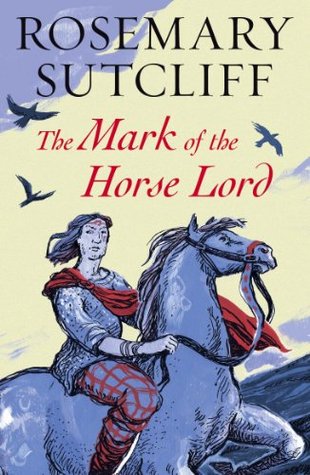

The Mark of the Horse Lord by Rosemary Sutcliff

This is the second book I’ve read for this week’s 1965 Club, hosted by Simon from Stuck in a Book and Karen from Kaggsy’s Bookish Ramblings. Like my first, Over Sea, Under Stone by Susan Cooper, Rosemary Sutcliff’s The Mark of the Horse Lord is described as a book for younger readers, although it doesn’t really feel like one. I have previously read two of Sutcliff’s adult books (The Rider of the White Horse and Blood and Sand) and I found this one just as beautifully written and with just as much to offer an adult reader.

The story is set during the time of the Roman Empire and our hero, the gladiator Phaedrus, is the son of a Greek wine merchant and his slave. The novel opens with Phaedrus, a slave himself, winning the Wooden Foil (and therefore his freedom from slavery) when he is victorious in a fight in the arena of Corstopitum, a town on the great wall built by Hadrian in what is now the north of England. His freedom is short-lived, however, when he is imprisoned after getting into trouble while out celebrating in the town, but this time he is rescued by a group of men who have noticed that he closely resembles their king and are hoping to persuade him to take part in a conspiracy.

Soon Phaedrus is heading north into what we now call Scotland, a land which at this time is home to both the Caledones (Picts) and the Dalriadain (Scots). The plan is for Phaedrus to impersonate Midir of the Dalriadain, who has been usurped by the Caledonian Queen Liadhan and blinded to prevent him from trying to rule. As he travels to the Antonine Wall and beyond, Phaedrus educates himself on the history and culture of his new people and comes to understand the significance of his new role as Horse Lord. But will he manage to convince everyone that he really is Midir – and who will win the upcoming battle between the Dalriads and the Caledones?

There was so much to enjoy about this book. I loved the descriptions of the Roman settlements along Hadrian’s Wall, including Corstopitum or Corbridge, as it is now known (I can recommend a visit to Corbridge Roman Town, run by English Heritage, if you’re ever in the area), and the contrast with the tribes in the north, where Roman rule hasn’t reached. I also found it fascinating to read about the differences in culture between the patriarchal Dalriads, whom Sutcliff tells us have ‘become a Sun People, worshipping a male God’ and the matriarchal Caledones who ‘had held to the earlier worship of the Great Mother’.

The plot was good enough to hold my interest to the end and made me think of other imposter stories I’ve read (such as The Great Impersonation and, in particular, The Prisoner of Zenda), but the setting, the time period and the themes it explores make it different and original. Also, without wanting to spoil anything, I thought the ending was perfect – both powerful and poignant. And yet, there was still something that prevented me from enjoying this book as much as I would have liked to. I’m not sure why, but I sometimes seem to struggle with books set in more ancient periods of history; I often don’t engage with the characters and storylines as thoroughly as I do when a book is set in slightly later periods. I’ve no idea why that should be, especially when an author writes as well as Rosemary Sutcliff does!

Katrina from Pining for the West has also reviewed The Mark of the Horse Lord for 1965 Club, if you would like to read a Scottish perspective on the book.

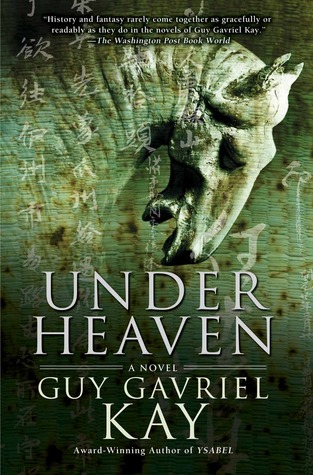
Under Heaven by Guy Gavriel Kay

I am looking forward to reading Guy Gavriel Kay’s new novel, A Brightness Long Ago, which will be published in May, but before starting that one I wanted to finally read a different book by Kay which has been on my shelf unread for a few years now. That book is Under Heaven, the first of two novels (the second is River of Stars) inspired by two different Chinese dynasties, Tang and Song.

Kay writes a type of historical fantasy where the emphasis is usually more on the historical than the fantasy. With most of his novels, I at least have a little bit of familiarity with the period on which his setting is based (Renaissance Italy, medieval Spain, the Vikings etc) but the setting of Under Heaven – a fictionalised Tang China – is one I’ve never read about before and of which I have absolutely no knowledge. That made this particular book a slightly more challenging read for me than the others I’ve read by Kay, but it has also left me wanting to know more about the real history of China during this period.

In the book, China is referred to as Kitai, with Tagur (Tibet) to the west. The novel opens with Shen Tai travelling to the battle site of Kuala Nor, where his father, an army general, once led the Kitan to victory against the enemy Taguran. Now his father is dead and Tai plans to spend the two year mourning period laying to rest the bones of the forty thousand dead, both Kitan and Taguran. It seems an impossible task, but Tai is determined to try anyway:

There were too many. It was beyond hope to ever finish this: it was a task for gods descending from the nine heavens, not for one man. But if you couldn’t do everything, did that mean you did nothing?

To acknowledge his efforts, the Empress of Tagur, once a Kitan princess, promises him two hundred and fifty magnificent Sardian horses as a reward – but Tai is not as delighted as you might expect him to be at receiving such a lavish gift. As he knows, ‘You gave a man one of the Sardian horses to reward him greatly. You gave him four or five of those glories to exalt him above his fellows, propel him towards rank – and earn him the jealousy, possibly mortal, of those who rode the smaller horses of the steppes.’ Imagine the danger a man could be in who possesses not just four or five but two hundred and fifty of these legendary animals! This is a life-changing moment for Tai and on his return journey to the imperial capital of Xinan he finds that he has become the centre of attention, with various factions at court all vying to take possession of the horses for themselves. These include An Li, a powerful military leader; Wen Zhou, the Prime Minister; and Wen Jian, the ‘Precious Consort’ of the elderly Emperor Taizu.

In a parallel storyline, Tai’s sister Li-Mei is being sent north beyond the Long Wall to Bogü (possibly Mongolia) where she is to marry the son of the Bogü leader. Marriage to a barbarian is not what Li-Mei had in mind for herself, but a chance to escape this fate comes when she is rescued by the mysterious Meshag, who takes her across the steppes on a journey as eventful and dangerous as Tai’s.

Kay’s female characters are always strong and interesting and I enjoyed following Li-Mei’s story as much as Tai’s. I’ve already mentioned Wen Jian, the emperor’s consort, who is a match for any of the men when it comes to manoeuvring her way through court politics, but my favourite of the women in the novel is Wei Song, the Kanlin warrior who is sent to protect Tai and takes her duties very seriously, even if it means putting her own life at risk. Of the male characters, apart from Tai himself, I particularly liked Bytsan sri Nespo, his Taguran friend who brings him the message about the Sardian horses, and Sima Zian, the famous poet who accompanies him to Xinan and becomes one of the few men he can trust.

Poetry runs through the novel, as does superstition, myth, legend and political intrigue – but there are only one or two small elements that you could really describe as fantasy (mainly at the beginning, with the ghosts of Kuala Nor – ‘outside in all seasons, moonlit nights and dark, as soon as the sun went down’). Most of the other Guy Gavriel Kay novels I’ve read are set in a world with one white moon and one blue, but the world of Under Heaven has only one (he makes a point of telling us that the poet Sima Zian has often dreamed of having another moon to write about). I’m curious to know why he decided to set this one in a different world to the others, especially as we were back to the two moons again in his most recent book, Children of Earth and Sky.

I will have to find out more about the Tang Dynasty and the An Shi Rebellion, but I’m also looking forward to reading River of Stars which is set four hundred years later, during the Song Dynasty. First, though, on to A Brightness Long Ago!

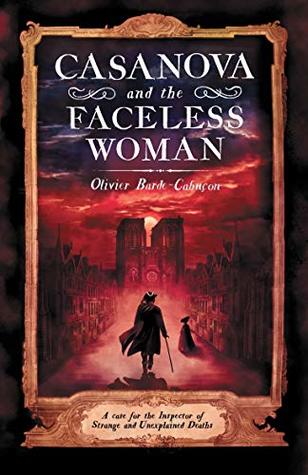
Casanova and the Faceless Woman by Olivier Barde-Cabuçon

Casanova and the Faceless Woman is the first in a series of historical mysteries by French author Olivier Barde-Cabuçon, set in pre-Revolutionary France. There are currently seven books in the series but this one, translated from the French by Louise Rogers Lalaurie, is the first to appear in English. When I was offered a copy for review by Pushkin Vertigo I was immediately intrigued because although I read a lot of historical mysteries I don’t think I’ve read any set in this particular period.

It’s 1759 and Louis XV is on the throne of France. He is not a popular king – unrest is growing amongst those who feel they have been oppressed under his reign and his rumoured liaisons with innocent young girls have not helped his reputation either – and there are several different factions plotting to overthrow or discredit him. Not long before our story begins, Louis had been the target of an assassination attempt and narrowly avoided being stabbed to death thanks to the quick actions of the Chevalier de Volnay. As a reward for his bravery, Volnay has been given the title of Inspector of Strange and Unexplained Deaths, responsible for investigating particularly unusual crimes on the king’s behalf.

One such crime occurs when a young woman is found dead in a dark Paris courtyard with the skin torn away from her face. On arriving at the scene, Volnay removes a sealed letter from the corpse intending to examine it later, but it seems that someone – perhaps several people – have seen him do it. Over the days that follow, as Volnay sets about trying to identify the woman and hunt down her killer, he himself is hunted by those who want to retrieve the letter and will stop at nothing to get it back.

Volnay interested me from the beginning because he is such a mysterious character. We are told very little about him at first, with the secrets of his tragic and eventful past being revealed very gradually as the story progresses. He seems very alone in the world, his only companions being a monk (with whom he forms a fascinating crime-solving partnership) and a tame magpie. There is a sense that he is not somebody who finds it easy to love or to trust others, and so, when he enters into a relationship with the beautiful Chiara D’Ancilla, we worry that he is going to get hurt – especially as his rival in love is the legendary Casanova.

Giacomo Casanova is one of several real historical figures who have important roles to play in the novel; others include Madame de Pompadour, the king’s mistress, and the Comte de Saint-Germain, the alchemist, sorcerer and musician who has fascinated me since I first met him in Diana Gabaldon’s Outlander series. I don’t think Casanova has appeared in any other novels I’ve read, although his career as writer, adventurer, gambler and, most famously, seducer of women, makes him an ideal subject for historical fiction. His character is well developed and convincing here and Barde-Cabuçon explores events from his past in order to explain his present behaviour, but I could never quite warm to him because my sympathies were with Volnay from the start. While Casanova seems to treat his romance with Chiara – and his involvement with the stolen letter and all the intrigue surrounding it – as a game, for Volnay these things are literally a matter of life and death.

I’m not sure whether Louis was really as disgusting and depraved as he is depicted in the novel but his reign certainly wasn’t seen as very successful and I think the author does a good job of conveying the mood in France in the years leading up to the Revolution and the discontent of the people with the king and the aristocracy. However, as a mystery novel, I thought the plot felt a bit more complicated than it really needed to be and the action moved between one set of characters and another too quickly, so that there were times when I struggled to hold on to all the different threads of the story. I also found the ending unnecessarily dramatic with one twist too many – although I had been intrigued by some of the revelations near the end, which left me wanting to read the next book in the series. I hope it’s going to be available in English soon too as I would love to see more of the Inspector of Strange and Unexplained Deaths.

Thanks to Pushkin Press for the review copy.

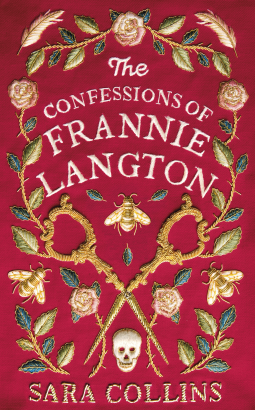
The Confessions of Frannie Langton by Sara Collins

In the author’s note that opens The Confessions of Frannie Langton, Sara Collins remembers reading books like Wuthering Heights and Jane Eyre on the small Caribbean island where she grew up and asking the questions: “Why couldn’t a Jamaican former slave be the star of her own gothic romance? Why couldn’t she be complicated, ambiguous, complex? Why had no one like that ever had a love story like those?’ Frannie Langton is Collins’ attempt to redress the balance and give that Jamaican former slave her very own story in which to star.

The novel opens in 1826 with Frannie – or the ‘Mulatta Murderess’, as she has become known – awaiting trial at London’s Old Bailey for the murders of her employers, George and Marguerite Benham. Frannie, who had been a maid in the Benham household, had been found lying in bed, covered in blood, beside Marguerite’s dead body. She has no idea how she came to be there and is sure she couldn’t possibly have killed her beloved mistress, yet all the evidence suggests that she is guilty. While she waits for her fate to be decided, Frannie looks back on her life and recalls the sequence of events that have led her to this point.

Frannie remembers her childhood, growing up on the Langtons’ sugar plantation in Jamaica (ironically called ‘Paradise’) and describes the circumstances that meant she received an education that would usually be denied to a slave. Later, when Mr Langton returns to England, he takes Frannie with him and she looks forward to new experiences and new opportunities. On their arrival in London, however, she is handed over to the Benhams to become a servant in their home and finds that life is not much better here than it was on the plantation. The one bright spot in her life is her relationship with ‘Madame’ (Mrs Benham), but as we already know from the opening chapter of the book, that relationship will end in tragedy.

The Confessions of Frannie Langton is Sara Collins’ first novel and I’m sure it’s going to be a big success for her. It has been given a beautiful front cover, which stands out even amongst the many other beautiful covers that are around at the moment and the book has already been getting lots of very positive reviews since its publication last week. I didn’t love it as much as most other people seem to have done, but that’s probably because it wasn’t really what I’d expected. I thought the crime element would have been a more important part of the story, but the murder and the trial are confined mainly to the final few chapters, and I’m not sure I would agree with the description of the book as a gothic novel either, although I suppose it would depend on what you consider gothic to mean.

I did find Frannie an interesting and engaging heroine with a strong narrative voice and although there were some parts of her story that I felt I’d read many times before (bearing in mind that I do read a lot of historical novels set in the 19th century), Frannie’s background and unusual circumstances mean that we are seeing things from a slightly different angle. Having one white parent and one black, Frannie never really fits in with the other slaves on the plantation – especially when she is given an education and an enviable position as house slave – but she knows she will never be accepted by most white people either. As you can imagine, she experiences a lot of cruelty and prejudice in her life and this is quite a sad story at times – and also quite disturbing, particularly the descriptions of the ‘scientific experiments’ and research carried out by Frannie’s two masters, Langton and Benham.

Sara Collins writes beautifully and I was struck by sentences like “A man writes to separate himself from the common history. A woman writes to try to join it…” and “A good scientist merely searches for the answer to the question posed, but the one whose name history will record reaches for the questions no one has even thought to ask”. And of course, as a fellow book lover, I appreciated Frannie’s love of literature and her determination to read all the books she could get her hands on. But was Frannie really responsible for the deaths of George and Marguerite Benham? You will need to read her confessions to find out…

Thanks to Penguin/Viking Books for providing a review copy of The Confessions of Frannie Langton and for inviting me to take part in their blog tour.

The Western Wind by Samantha Harvey

When The Western Wind was longlisted for the Walter Scott Prize for Historical Fiction in March, I decided to read my copy of the book before the shortlist was announced so that I could see whether I agreed with its inclusion or omission. Now that I’ve read it, although I can’t really say that I particularly enjoyed it, I wasn’t surprised to see this morning that it has been shortlisted as I found it a complex, multi-layered novel with an unusual structure and some interesting ideas to explore. The sort of book judges usually like, I think!

The Western Wind is, on the surface, a murder mystery set in a small English village in 1491. Oakham in Somerset is an isolated place, cut off from the rest of the world by a river without a bridge. The wealthy Thomas Newman, who understands the importance of trade, has plans to rebuild the bridge, but before work can begin he disappears, presumed to have been swept away by the river and drowned. But was it an accident or was it murder? Lord Townshend, who has been losing some of his lands to Newman, would seem to have the most obvious motive, but he is not the only suspect…

Under pressure from his dean to discover what really happened, village priest John Reve listens to the confessions of his parishioners and is surprised by how many of them are willing to confess to having some involvement in Newman’s death. It is up to Reve to use his judgement and his knowledge of his friends and neighbours to decide who is telling the truth. The story, however, is told in reverse, beginning on day four and then moving back in time to a point just before Newman’s disappearance – and by the time we reach the end of the novel, it has become clear that Reve himself knows much more than he seemed to at first.

Despite the mystery at the heart of this novel, I didn’t feel that it was the main focus of the book. The fate of Tom Newman acts as a starting point from which we – through the eyes of John Reve – explore the daily lives of the people of Oakham, their personalities and relationships, the way their community is structured, and the superstitions and traditions that rule their lives. Social and economic change is another theme; even Newman’s name is symbolic, as he is a relevant newcomer to the village, bringing with him new ideas and new ways of looking at the world.

Although we are told that the book is set in February 1491 (at the beginning of Lent) I would otherwise have found it hard to say exactly when the story is taking place. There are very few references to anything happening in the wider world that give us any clues to the precise time period, but maybe that is the point – news from outside would be slow to reach the isolated, insular Oakham after all. I’m not sure how much importance the author places on historical accuracy in any case; she has acknowledged that the confession box which plays such a big part in the story wouldn’t have arrived in English churches until the following century, but she decided to keep John Reve’s box in her novel anyway. I have to admit, I’ve never given any thought to when confession boxes first came into use – but I am fairly sure that fifteenth century men didn’t wear trousers with waistbands as Herry Carter does in the opening chapter of the book. This is the sort of thing that will either bother you or it won’t, I suppose.

I did like Samantha Harvey’s writing but, as well as the points I’ve made above, there was something about the story that left me feeling slightly dissatisfied. I think part of that was due to the fact that, with the exception of John Reve as our narrator, I struggled to connect with any of the characters. This was probably because the way the novel is structured makes it difficult to tell whether we can trust or rely on anything they say or do, especially as we only witness their words and actions from Reve’s perspective. I’m sure that if I’d taken the time to go back and read the whole book again from the beginning, it would have been a very different experience the second time. I didn’t enjoy the book enough to want to do that, but I think it would have helped me to fully understand and appreciate it.

Thanks to Jonathan Cape for providing a copy of this book for review via NetGalley.

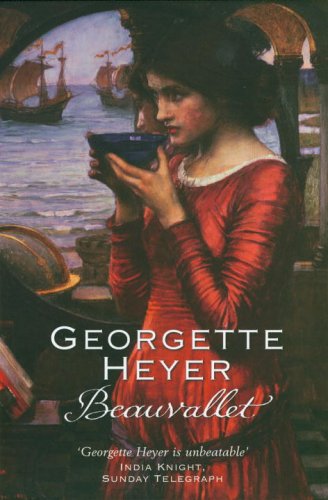
Beauvallet by Georgette Heyer

“All Spain seems to seek me, señor,” answered the stranger merrily. “But who shall slay Nick Beauvallet? Will you try?”

Having read and loved many of Georgette Heyer’s Regency and Georgian romances, I’ve been interested in trying one of her historical novels set in earlier periods – and at the same time, I’ve been a bit wary because they don’t seem as popular or well-liked as the Regencies. I needn’t have worried, though, because I made a good choice with her 1929 novel Beauvallet, set in sixteenth century Spain and England; I can see why it wouldn’t appeal to all Heyer readers, but it was definitely my sort of book!

Sir Nicholas Beauvallet is a notorious English pirate whose name is spoken of in the same breath as Sir Francis Drake’s and at the beginning of the novel his ship, the Venture, is engaged in conflict with the Spanish galleon Santa Maria. The Spanish vessel is captured and the people aboard taken captive, among them the beautiful Doña Dominica de Rada y Sylva and her father, Don Manuel. After a futile attempt to fight off Beauvallet with his own dagger, Dominica knows the situation is hopeless – and so she is very surprised when Beauvallet offers to take them safely home to Spain, swearing to return at a later date to make her his wife. This seems like a ridiculous plan – no Englishman in his right mind would attempt to enter Spain while the two countries are at war – but our hero is not known as ‘Mad Nicholas’ for nothing…

The plot is over the top and not to be taken too seriously, but the book is great fun to read – the perfect way to escape from the pressures of modern day life for a while and retreat into a good old-fashioned adventure story complete with swordfights, sea battles, abductions, imprisonments and daring escapes! Heyer’s attention to period detail is as evident in this novel as in her others, and being set in an earlier century means she has adjusted the language and the dialogue accordingly. While I thought Dominica was quite thinly drawn and not as memorable as many of Heyer’s other heroines, Nick Beauvallet is a wonderful character. He reminded me very much of some of Rafael Sabatini’s irrepressible swashbuckling heroes, particularly Peter Blood – and of course, Captain Blood, another pirate novel, was published just a few years before Beauvallet. As a Sabatini fan, it was probably inevitable that I would enjoy this book!

As a romance, the book is quite predictable; right from their first encounter, where Dominica shouts “I hate you! I despise you, and I hate you!”, it’s easy to guess that her hatred will not last long, especially as Nick is not the sort of man to accept defeat, in love or in anything else. But sometimes predictability is not a bad thing, and there were plenty of other twists and turns along the way to make this an exciting and entertaining read. I would like to read the earlier Simon the Coldheart, about one of Beauvallet’s ancestors, but first I will be heading back to the Regency period as the next Heyer novel I have lined up to read is Sprig Muslin.