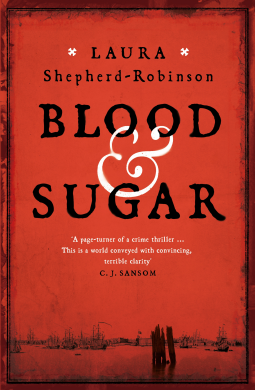
Blood & Sugar by Laura Shepherd-Robinson

This new historical mystery – Laura Shepherd-Robinson’s first novel – deals with one of the darkest subjects in our history. Set in 1781, it follows the investigations of former army officer Captain Harry Corsham into the disappearance of his friend, the lawyer and abolitionist Tad Archer. It seems that Tad had been about to uncover a secret that, once exposed, could damage the reputations of those involved in the British slave trade. Could someone have killed Tad to prevent him from telling what he knows?

Captain Corsham is determined to find out what has happened to his friend, but to do so he will need to continue Tad’s enquiries into a shocking incident which took place onboard a ship carrying slaves across the Atlantic. This brings him into conflict with some very powerful men who could destroy his hopes of a political career. But Harry Corsham is a man with principles and even when he, like Tad before him, begins to receive threatening letters and warnings, he refuses to walk away until he has discovered the truth.

There are many things I liked about Blood & Sugar. The setting and atmosphere are wonderful; with the action taking place partly in London, where Harry Corsham lives with his wife, Caro, and their young son, and partly in the nearby slaving port of Deptford, we see Harry move between both locations in search of answers to his questions. I loved the contrasting descriptions of Deptford, from the elegant homes of the wealthy slave merchants to the notorious dockside alleys with their brothels and opium dens.

We also meet a wide range of characters from very different backgrounds, including magistrates, politicians, mayors and surgeons, prostitutes, innkeepers, sailors and servants. Many of the latter group are black, which is interesting because I think we tend to forget (or are not aware of) how many black people there were living in eighteenth century Britain. It is estimated that there were more than twenty thousand in London alone, yet they rarely appear in fiction set during that period. As for the slavery aspect of the story, there are parts that are not easy to read, as you can probably imagine – particularly when we hear about what happened on the ship, something which is based on a real incident. But unpleasant as it is, we can’t ignore the fact that slavery did happen and I think it’s important that we remember and learn from it.

I was very impressed with this book at the beginning. I liked Laura Shepherd-Robinson’s writing, the mystery seemed intriguing and I was starting to draw comparisons with one of my favourite historical crime authors, Andrew Taylor. However, as the plot continued to develop, I thought it became far too complicated and I struggled to remember who had said what to whom and what the various motives of the characters were. Towards the end, there were so many threads to tie up that everything seemed to take forever to be resolved (and there were one or two revelations which added very little to the overall story and weren’t really necessary, in my opinion). I also felt that as there were so many characters to keep track of, they really needed to be better defined – instead, I thought they were thinly drawn and not very memorable.

I’m disappointed that I didn’t enjoy this book as much as I thought I would at first, but I still think there were more positives than negatives and as this is the author’s first novel I would be happy to read more.

Thanks to Pan Macmillan for providing a copy of this book for review via NetGalley.

The Name of the Rose by Umberto Eco

I can’t remember when I first read Umberto Eco’s The Name of the Rose; it was possibly in the early 2000s – long enough ago to have forgotten most of the story, but recently enough that certain scenes have stayed quite clearly in my mind. I knew I hadn’t understood everything the first time, so when I saw that Annabel of Annabookbel was hosting a readalong in January I thought it would be interesting to read it again. Unfortunately, it was a busier month than I expected and I fell too far behind to be able to participate in the readalong, but I have been re-reading the book anyway and finished a few days ago.

The Name of the Rose is set in 1327 and is narrated by Adso of Melk, a Benedictine novice from Austria. I think the best way I can describe the book is to quote directly from the back cover of my old Picador edition: “Whether you’re into Sherlock Holmes, Montaillou, Borges, the nouvelle critique, the Rule of St. Benedict, metaphysics, library design, or The Thing from the Crypt, you’ll love it. Who can that miss out?” It probably misses out quite a lot of people, actually, but at least that gives you a good idea of the range and number of different topics and influences found in the novel.

The story begins with Adso accompanying a Franciscan friar, William of Baskerville, to a remote Benedictine monastery in the Italian mountains. In a few days’ time, this monastery will host a meeting between an embassy from Pope John XXII and a group of Minorites, but preparations are not going according to plan…Adelmo, a young illustrator known for his beautiful illuminated manuscripts, has been found dead, having supposedly fallen from a window of the Aedificium, the large building which houses the abbey’s renowned library. Was it suicide or was it murder? William, who has already impressed the abbot by successfully locating a lost horse, is asked to investigate.

There’s a reason why Eco has given William the name ‘Baskerville’ – as he moves around the abbey asking questions and uncovering the circumstances behind Adelmo’s death, he uses his powers of deduction just like Sherlock Holmes. Adso, of course, fills the position of Dr Watson, needing William to explain things to him as he goes along (which benefits the reader as well). But when a second death occurs, this one more gruesome than the first, William knows that if he is to have any chance of solving the mystery, he will need to gain access to the library – the secret, forbidden library which only the librarian and his assistant are allowed to enter.

As a murder mystery, The Name of the Rose is quite a good one. Reading it for the second time, I remembered the solution and the culprit, but not every detail of the plot, so I enjoyed watching it all unfold again. There are clues – physical and spoken – there are secrets to uncover, complex relationships to untangle and red herrings which point us in the wrong direction for a while. There are also some wonderful descriptions of the library, a genuinely eerie and sinister place; the scenes in which William and Adso explore its labyrinthine passages and chambers are some of the highlights of the book.

But The Name of the Rose is much more than just a medieval mystery novel. It is also a very detailed and erudite study of the religious history of Europe in the early 14th century, which I think is why some people love the book while others struggle with it. At the time of our story, the papacy has moved from its usual home in Rome to Avignon during a period of conflict between the church and the kings of France. From the very beginning of the novel, we are given page after page of information on the divisions within the church and the various orders and sects, such as the controversial movement led by Fra Dolcino, as well as lots of theological discussions on subjects ranging from poverty to whether Jesus ever laughed. The first time I read the book I found myself skimming over most of this to get to the murder mystery parts; this time, I tried to concentrate and understand the religious detail, but Eco’s style does not make it easy to absorb the facts and I admit there was still a lot that went over my head.

I enjoyed my re-read of this book, although I’m not sure whether I really got much more out of it than I did on my first read. I did love revisiting the library scenes, the descriptions of monastery life, and the characters of William and Adso. I have never tried reading any of Umberto Eco’s other books, but maybe I should. Does anyone have a recommendation?

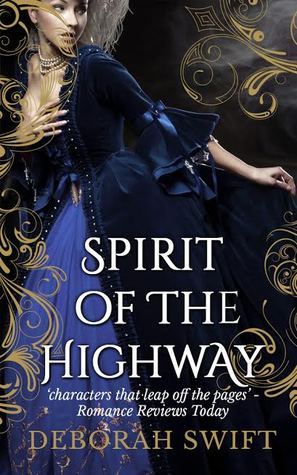
Spirit of the Highway by Deborah Swift

I can hang like a mist, seep through solid walls, slither through keyholes. When you turn to look, you won’t see me, just feel a chill frost ruffle the hairs on your neck. You will sense my presence and stare hard into the dark, but I’ll be already gone, into a past or future where you can’t follow.

We know from the very beginning of Deborah Swift’s Spirit of the Highway that our narrator, Ralph Chaplin, is a ghost – the ghost of a former Roundhead soldier, looking back on his role in the Battle of Worcester and what happened in its aftermath. What we don’t know is when he died and how. To find the answers, we will have to read the whole of Ralph’s story because the truth is only revealed near the end.

The Battle of Worcester takes place in September 1651 and is the final battle of the English Civil War. Having fought on the winning side, Ralph should be triumphant, but instead he is sickened by the bloodshed and shocked by the abrupt death of his father. Accompanied by his army friend, Cutch, he returns home in the hope that at least some good will have come out of the fighting and the world will now be a better and fairer place to live…but with a defeated enemy on his trail, looking for revenge, it seems that things will go no more smoothly for Ralph in peacetime than they did during the war.

The woman Ralph loves – Lady Katherine Fanshawe – was on the other side of the conflict, having married into a Royalist family. Despite their differences in class and background, Kate shares Ralph’s dream of starting a community of Diggers (a movement who believe that land belongs to everyone and should not be enclosed or bought and sold). But although Kate’s Royalist husband is in exile, there is always a chance that he could return, and while he lives, she can never be free.

This is the second book in a trilogy of Highway novels, although the story makes sense on its own if you don’t want to read all three. The previous novel, Shadow on the Highway, does set up some of the storylines which are continued in this book, though, so I think it’s a good idea to read them in order. The first book is narrated by Ralph’s sister Abigail, who is Kate’s friend and maid, and the final novel, Lady of the Highway, is written from Kate’s point of view, which means we will have heard from all three of the trilogy’s main characters by the time we reach the end.

The character of Kate Fanshawe is based on the real life ‘Wicked Lady’, a highwaywoman from the 17th century. The name of Ralph (or sometimes Rafe) Chaplin is mentioned in some versions of the legend, but otherwise nothing is really known about him, which has given Deborah Swift plenty of scope to build an interesting story around him. Ralph’s two sisters, I think, must be completely fictional. I got to know and like Abigail in the previous book, but this time Elizabeth plays a more prominent role – and proves to be entirely different from her sister (not in a good way). As for Ralph himself, I liked him too, although his impulsiveness frustrated me and I wished he would stop and think before acting!

The opening chapter made me think this was going to be more of a ghost story than it actually was, but I didn’t mind that at all. The supernatural elements are quite subtle and confined mostly to the beginning and the end, but I thought they were handled well. I should also point out that this is described as a YA trilogy, but I think they are the sort of books that can be enjoyed by both young and not-so-young adults. I’ll have to read Lady of the Highway soon to see how the story ends.

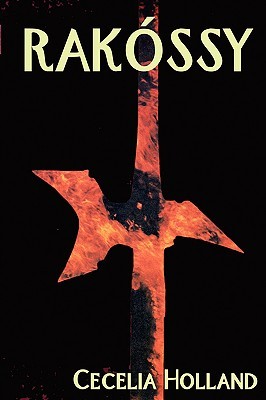
Rákossy by Cecelia Holland

Cecelia Holland’s many historical novels cover a wide range of time periods and settings. So far I have only read two of them: City of God, a story of Rome and the Borgias, and Hammer for Princes, set in 12th century England in the period known as the Anarchy. My third Holland novel, Rákossy, takes place in Hungary during the Ottoman Wars of the 1520s. Not having read many books set in Hungary, I was looking forward to something different and to learning something new.

The title character is János Rákossy, a Magyar border lord trying to protect his lands from the threat of Turkish invasion. He is disappointed with the lack of help from the rest of Europe whom he feels are leaving Hungary to fend for itself and he knows he can’t rely on the support of his neighbouring barons either. All he can do is continue to negotiate treaties, train his knights, carry out raids, try to build alliances, and do whatever else is necessary to defend his castle and his people.

Rákossy is not the sort of man who is easy to like. He is ruthless, cold, cynical and violent towards both men and women. As another character says of him:

“The people in the village think that he sold his soul to the Devil for a charmed life and fortune in battle. The Turks, I’m told, believe so too. I think it’s possibly the only point of agreement between them.”

He does have some good qualities – he’s clever and shrewd and his courage is not in question – but he is certainly not someone I could consider to be a hero. This seems to be normal for a Cecelia Holland protagonist, though; I had similar feelings about Nicholas in City of God and Fulk in Hammer for Princes. She seems to excel at deliberately creating characters who are unappealing, morally ambiguous and whose motives are not always clear. But at least if her central characters are not very likeable, they are still interesting and complex.

Of the other characters in the novel, two stand out. One is Denis, Rákossy’s brother, a sensitive man who prefers books to warfare and doesn’t always approve of or agree with Rákossy’s actions. The other is Catharine de Buñez, believed to be an illegitimate daughter of the King of Aragon, who marries Rákossy early in the novel. As far as I can tell, most of the major characters in the book are fictional, although the story is based on fact, giving us an idea of the situation on the Hungary-Turkey border leading up to the Battle of Mohács in 1526. If you know what the outcome of that battle is going to be, it does affect how you might view Rákossy’s negotiations and military preparations throughout the novel, but either way you can admire what he is trying to do for his country.

I didn’t find this book particularly enjoyable, mainly because I thought it was very bleak and also because it didn’t seem to have any sort of plot beyond a string of raids and battles. It was one of Cecelia Holland’s earliest novels, though – published in 1967 – and based on the others I’ve read I think they do get better. I don’t think she’ll ever become a favourite author as her writing lacks the warmth and emotion I prefer, but I’m still looking forward to reading more of her books because her subjects and settings all sound so intriguing. I have a NetGalley copy of The Soul Thief, which is about to be reissued by Canelo, so I will be reading that one next.

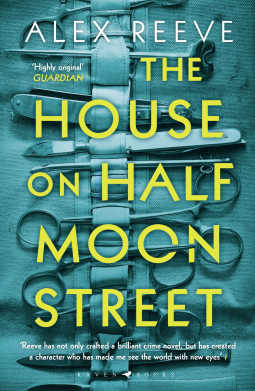
The House on Half Moon Street by Alex Reeve

The House on Half Moon Street is both an interesting historical crime novel set in Victorian London and a sensitive exploration of what it means to be transgender in a less enlightened time. This is apparently the first in a planned series and I will certainly be looking out for the next one.

Our hero, Leo Stanhope, is a coroner’s assistant in 1880s London. As the novel opens, the body of a man washed up by the Thames has been brought to the hospital where Leo works. Identified as Jack Flowers and believed to have fallen into the river accidentally, the man’s death seems to be an unfortunate tragedy, but not something which affects Leo personally. However, the next body to arrive is that of a woman – a woman who happens to be the love of Leo’s life, Maria Milanes, and who appears to have been murdered.

Before her death, Maria was a prostitute at a brothel on Half Moon Street, but that didn’t matter to Leo. He loved her and knew that she loved him. Maria was one of the few people he had trusted with his secret, one of the few people who knew that Leo Stanhope was born Charlotte Pritchard. Now Maria is gone and Leo vows to find out who has killed her. Joining forces with pie maker Rosie, Jack Flowers’ widow, he begins to uncover some links between both deaths – but at the same time he must ensure that his own secret is not uncovered, because the truth could have serious consequences.

On one level, as I’ve said, this is a compelling and well-constructed murder mystery. Although I found the pace a bit slow at times, I did enjoy watching Leo move around Victorian London, looking for clues in the Half Moon Street brothel, playing chess with his friend Jacob and word games with his landlord’s daughter in the pharmacy where he lodges, or paying a visit to the midwife and abortionist Madame Moreau, whom he hopes may be able to shed some light on the situation. All of these people and locations are vividly described and all play their part in Leo’s investigations.

Leo himself is easy to like and to warm to; he narrates his story in the first person, letting us into his mind and his heart. I know things are not perfect for transgender people today and that they still face a lot of prejudice, obstacles and challenges, but I can hardly imagine how difficult life must have been for people like Leo who lived more than a hundred years ago. I admired him for his courage in being true to himself and not just continuing to be someone he was not; I was sorry for the sacrifices he’d had to make in adopting his true male identity and the lack of support he received from those he should have been able to rely on; and I was afraid for him too, because he is in such a vulnerable position.

I should warn you that due to the nature of the story, the type of mystery it is and Leo’s vulnerability, the novel does become very dark in places. Although I didn’t find it unnecessarily graphic or violent, there are still a few scenes which are quite disturbing. The Victorian era was certainly not the safest time in which to live if you were seen as different in any way. I’m sure Leo will have more ordeals to go through as the series progresses, but I hope there will be some happiness in store for him too.

Thanks to Raven Books for providing a copy of this book for review via NetGalley.
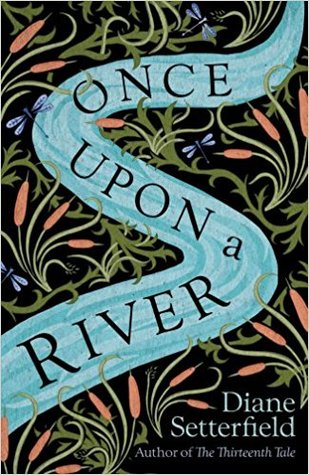
Once Upon a River by Diane Setterfield

The Swan Inn at Radcot on the bank of the Thames is a place famous for its storytelling. Every night the people of the village gather there to drink, to listen to tales of local folklore, myth, magic and history and to entertain their friends with stories of their own. But the old stories are growing stale and the listeners are ready for something new…

On the night of the winter solstice in 1887, a man appears in the doorway of the Swan – injured, wet from the river, and carrying the seemingly lifeless body of a young girl. Rita Sunday, who has some medical knowledge and acts as nurse and midwife for Radcot, is called to the inn and, unable to find a pulse, concludes that the girl is dead. Hours later, after attending to the man’s injuries, Rita looks at the child again and is amazed to find that she has started to breathe. It seems that the little girl will survive after all, but she can’t or won’t speak and tell anyone who she is or where she came from.

For the drinkers at the Swan, the girl’s apparent death and miraculous return to life is a wonderful story in itself, but it also provides a starting point around which many other stories begin to unfold and entwine. What is the girl’s name? Who are her parents? How did she end up in the river? Questions are raised and answers are searched for, theories are suggested and people come forward to claim the child as their own – but what is the truth? Will we ever know? As Rita grows closer to Henry Daunt, the man who pulled the girl from the water, they try to find a solution to the mystery and uncover yet more stories as they do so.

I am tempted to discuss some of those stories here and to talk about the characters who feature in them, but I’m not going to because I would risk spoiling some of the surprises Once Upon a River contains. Instead I’m going to stay on safer ground and discuss the role the river plays in the novel, both physically and metaphorically. The river is a constant presence right from the first chapter and the people in the story live and work on or around it – gravel-diggers, cressmen, bargemen and boat-menders. Their favourite folk tales revolve around the river too, including the legend of Quietly the ferryman who guides people in trouble either to safety or to ‘the other side’. The river and its surroundings give the novel a strong sense of place, although the sense of time is less clear – we are told that it has been five hundred years since the Battle of Radcot Bridge in 1387 but, apart from some references to photography, I felt that the story could have been set at a much earlier time in history.

The story itself flows like a river, carrying the characters – and the reader – gently along with the current. And like the tributaries of a river, there are other stories which began months or years before the girl’s arrival at the Swan and we go back to explore those stories too. This can make the novel feel slow at times and some patience is needed while the backgrounds of the various characters are explored, but I never felt bored. I was prepared to wait and see where the river took me and who the little girl would turn out to be. I was happy with the ending, although I do have one small criticism which is that I thought the way Rita’s story ended was very predictable and I would have preferred her to do have done something different.

I enjoyed Once Upon a River much more than Diane Setterfield’s previous novel, Bellman and Black; possibly more than The Thirteenth Tale too, as I didn’t love that one as much as most people seemed to. If you’ve never read any of her books before, though, I would recommend trying any or all of them to see what you think.

Thanks to Doubleday for providing a copy of this book for review via NetGalley.
An Infamous Army by Georgette Heyer

Georgette Heyer’s 1937 novel, An Infamous Army, is one I was particularly interested in reading because it sounded a bit different from most of her others, being as much a story of the Battle of Waterloo as a Regency romance. It can be read as a standalone novel but it also features characters (or descendants of characters) who appeared in her previous novels These Old Shades, Devil’s Cub and Regency Buck.

Several years have passed since Regency Buck ended and the Earl of Worth is in Brussels with his wife, Judith, and their young son. As the threat of Napoleon draws closer, Brussels has become the centre of fashionable society – a place to entertain oneself with dances, picnics and concerts while the outcome of the Vienna Congress and the arrival of the Duke of Wellington are awaited. Judith is hoping to bring about a match between Worth’s brother Charles Audley and her friend Lucy, but she hasn’t counted on Charles falling passionately in love with Lady Barbara Childe, a beautiful but notorious young widow with a reputation for wildness. Although Barbara – or Bab, as she is known – claims to love Charles too, she shows no sign of changing her ways and Judith is sure her brother-in-law is going to be hurt.

The relationship between Charles and Bab develops throughout the first half of the novel, so that by the time the Battle of Waterloo arrives, we are already emotionally invested in the lives of some of the characters who are going to be affected by the battle in one way or another. Heyer is one of those authors you can always count on to have done her research, but everything in this book feels particularly authentic (she famously claimed that every word she attributes to her fictional Duke of Wellington was either spoken or written by him in real life).

Each stage of the battle is described in an incredible amount of detail, not just the tactics and the military manoeuvres, but also the human cost as lives are lost, men are injured and those on the sidelines wait for news of their loved ones. As I’ve mentioned before, I am not usually a fan of lengthy battle scenes, however well written they are, so although I certainly appreciated the accuracy of Heyer’s account of Waterloo and the quality of her writing, I can’t really say that this has become a favourite Heyer novel. This is just a matter of personal taste though, and I’m sure other people will love this book precisely because it does include long battle scenes (by long, I mean they take up most of the second half of the novel).

As for the Charles and Bab storyline, I enjoyed following the course of their relationship, especially as I thought it was difficult to tell at first how Bab really felt about Charles. She comes across at the beginning as self-centred, reckless and fun-loving, the sort of person who causes a scandal wherever she goes (not that it takes much to cause a scandal in 1815 – painting your toenails gold, for example). It took me a while to warm to her, but when I did I found that she was also kind hearted, compassionate and courageous. Even so, she is not one of my favourite Heyer heroines – although, again, I can see why other readers might love her.

Reading An Infamous Army has inspired me to finally try one of Heyer’s six historical novels (i.e. not the ones that are Regency or Georgian romances). I am currently a few chapters into Beauvallet and enjoying it so far; you can expect to hear more about it soon!