The Poison Bed by E. C. Fremantle

The Poison Bed is a slight change of direction for Elizabeth Fremantle. She has previously written four conventional historical fiction novels set in the Tudor and Elizabethan periods, telling the stories of Katherine Parr (Queen’s Gambit), Katherine and Mary Grey (Sisters of Treason), Penelope Devereux (Watch the Lady) and Arbella Stuart and Aemilia Lanyer (The Girl in the Glass Tower). This, her latest novel, also features the story of a strong and fascinating woman, but includes additional elements of mystery and suspense which give the book the feel of a psychological thriller at times. It’s not entirely different from her other books, but different enough that she obviously felt a slight change in name was appropriate.

The novel opens in 1615 with Frances Howard and her husband Robert Carr imprisoned in the Tower of London, accused of the murder of Thomas Overbury. Overbury had been a friend of Robert’s, but was opposed to his marriage to Frances – is this why he had to die, or could there be another reason? There is certainly plenty of evidence to link both Frances and Robert with his poisoning, but in order to discover the truth, we must go back to the beginning of their relationship and follow the chain of events that led to Overbury’s death.

Robert and Frances take turns to tell their side of the story in alternating chapters headed ‘Him’ and ‘Her’. Robert’s is written as a straightforward first person narrative, while Frances relates her story to a young wet nurse who is sharing her room in the Tower to help take care of her newborn baby. In this way we get to know both main characters, as well as their friends, family members and rivals – but it’s important to remember that at the court of King James I, nobody is ever exactly as they seem.

As one of the ambitious and powerful Howard family, Frances could be seen as a pawn, pushed into making one advantageous marriage after another – first to Robert Devereux, Earl of Essex, and then to Robert Carr. Yet Frances is an intelligent young woman with a mind of her own; she is prepared to do what is necessary to take control of her destiny…but would this include murder?

Robert Carr is the king’s favourite – some would say the king’s lover – and this has enabled him to rise to a much higher position at court than he could otherwise have hoped to achieve. Robert (at least as he is depicted by Fremantle) does not really have the strength of character to take advantage of this, but others, such as Frances’s scheming great-uncle, see getting close to Robert as a way of wielding influence over the king. Robert denies any involvement in Thomas Overbury’s murder, but is he telling the truth?

While Robert and Frances, as our narrators and protagonists, are always at the heart of the novel, there are other interesting characters to get to know too. I particularly liked the portrayal of James I and his relationship with Robert, but I also enjoyed the elements of black magic in the story and the roles played by the astrologer Simon Forman and the physician’s widow Anne Turner. There’s a lot going on in this novel, which makes it quite a gripping read. I found the first half more enjoyable than the second, which is when the thriller aspect becomes more dominant, but that’s just my personal preference.

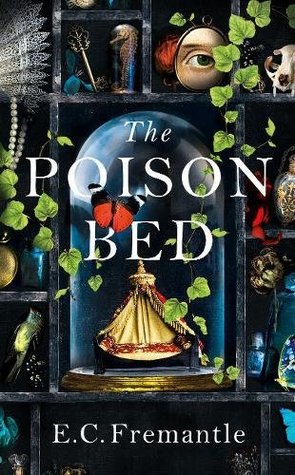
The Poison Bed, in case you’re wondering, is based on a true story – you can find plenty of information on the Overbury Scandal online – but the interpretation of the characters and their motives is Fremantle’s own. If all of this is new to you, I would recommend not looking up any of the facts until after you’ve finished the novel as it’s a story packed with twists, turns and surprises. I have read about the same events before, in Marjorie Bowen’s The King’s Favourite from 1938, but this is a very different book, with a fresh and different approach. I love the cover too!

It seems that the author is currently writing another historical crime novel under the E.C. Fremantle name called The Honey and the Sting. I’m curious to see what it is about.

This is book 3/20 of my 20 Books of Summer.
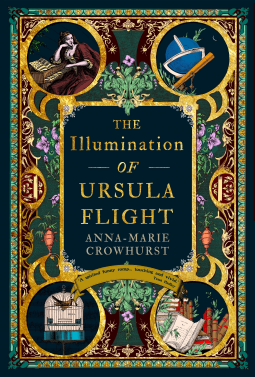
The Illumination of Ursula Flight by Anna-Marie Crowhurst

Yet another new historical fiction novel with a colourful, eye-catching cover! This one looks like an illuminated manuscript, which is quite appropriate, not just because of the title but also because our heroine, Ursula Flight, has a deep love of books, language and the written word.

Ursula is born in December 1664, on the same night that a great comet appears in the sky. It is believed to be an ill omen, bringing with it bad luck and disaster, but for Ursula’s father this is a time to rejoice and to thank God for the safe delivery of his daughter. As Ursula grows into an intelligent and curious young woman, he decides to educate her himself, sharing with her his knowledge of astronomy, Latin and Greek, mathematics, science and literature. At the age of fifteen, however, everything changes: Ursula is married off to the wealthy Lord Tyringham, who is much older and who has different ideas of how a woman should behave.

It is not a happy, loving marriage, but Ursula is able to find solace in her writing – or her scribbling, as her friends call it – and this provides a way for her to express herself and to cope with the difficulties she encounters in her new life. There is nothing she wants more than to write plays and see them performed on stage but, despite her talent and enthusiasm, Ursula will find that this is still very much a man’s world.

Things do not always go smoothly for Ursula and she faces a series of challenges, obstacles, trials and disappointments both in her personal life and in her attempts to establish a career for herself. Told in a different way, it could have been a rather depressing story, but Ursula’s narrative voice is so strong and warm and witty that the novel never becomes too dark. Her sparkling personality suits the lively writing style and the imaginative format of the book.

I am not always a fan of novels that are written in an unusual or unconventional way, but I could still admire the playfulness and creativity of Ursula Flight. Chapters are given titles like In which I am born under inauspicious circumstances and In which I assert my independence at three years old, while Ursula’s narrative is interspersed with other examples of her writing: letters and lists, diary entries, personal notes to herself, definitions of words and even whole scenes from some of her plays. These all provide us with valuable insights into her state of mind or way of life, while also being quite funny at times; I expect Ursula found that writing about certain episodes of her life in this way made it easier to deal with them.

The Illumination of Ursula Flight is an entertaining read; it’s maybe a little bit lighter than I would have preferred, but it’s fun and different. I would probably recommend it to people who have enjoyed books like Dark Aemilia, The Mermaid and Mrs Hancock and Restoration.

Thanks to Atlantic Books for providing a copy of this book for review via NetGalley.

House of Gold by Natasha Solomons

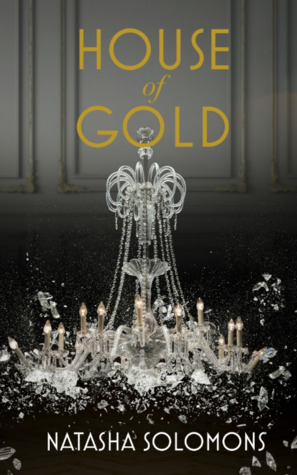
It’s been a long time since I read my first Natasha Solomons book, The Novel in the Viola. Although I enjoyed it, for some inexplicable reason I had never really thought about reading any of her other books until I spotted her new one, House of Gold, which was published in the UK last month. I think it was the simple, elegant cover that caught my attention, at a time when covers in general are becoming increasingly intricate and brightly coloured, but the story sounded appealing too…and it was. I loved it.

House of Gold tells the story of a fictional banking family, the Goldbaums, who are loosely based on the real-life Rothschilds. When we first meet the family in 1911, they are fabulously wealthy and hugely influential, with branches in five European capital cities. In a move intended to strengthen the ties between the Austrian and the British branches, a marriage has been arranged between Greta Goldbaum and her cousin Albert. This is nothing new – Greta has grown up with the knowledge that “the Goldbaum men were bankers, while the Goldbaum women married Goldbaum men and produced Goldbaum children”, but she has no desire to marry Albert and is sure they won’t be compatible. Of course, the wedding must go ahead anyway and Greta is forced to leave her parents’ home in Vienna to start a new life as a married woman in England.

The relationship between Greta and Albert is at the heart of the novel and I enjoyed watching them get to know each other, trying each in their own way to make their marriage work but not always succeeding. It’s not always easy, especially not for Greta, but even when things are at their worst she finds some fulfilment in transforming the gardens of Temple Court, the British Goldbaums’ estate in Hampshire, and as a result of taking on new responsibilities and developing new interests, she is able to grow as a person.

There is much more to the novel than this, though. Within a few short years of Greta’s marriage to Albert, the First World War begins, bringing with it new challenges, new difficulties but also new opportunities. With European governments desperate for money to fund their war efforts, the services of the Goldbaums are as much in demand as ever, but as a Jewish family they find that their position is no longer as secure as it has been in the past. For Greta, there is the additional problem of being stuck in the middle, with different branches of her family on opposite sides of the conflict.

Natasha Solomons takes us right to the centre of the action, with characters such as Greta’s beloved brother Otto and her French cousin Henri becoming directly caught up in the war that is tearing Europe apart. We also learn a lot about the role of money in war; to quote Otto, “Money has no passport and every passport…it has little respect for borders. Money, like water, finds a way.”

There’s so much going on in this novel…so many characters to meet and so many interesting stories to follow. Maybe that’s why, after being completely gripped by the lives and adventures of the Goldbaums, I was slightly disappointed by the unexpectedly abrupt ending and by subplots which seemed to lack a proper resolution. I hope that means Natasha Solomons might be planning a sequel. It would certainly be possible, but if not I will just have to go back and read her earlier novels. I have Mr Rosenblum’s List, The Gallery of Vanished Husbands and The Song Collector to choose from.

The Corinthian by Georgette Heyer

When I posted my review of Friday’s Child a few weeks ago, I mentioned that I had a choice of three Heyer novels to read next and asked for some help in deciding which one to choose. The Corinthian received more recommendations than Faro’s Daughter and An Infamous Army so I knew it would have to be my next Heyer…and what a great choice it was! Published in 1940, it’s one of her earliest Regency novels and although I think she wrote better books, I did find this one thoroughly entertaining and fun to read.

Are you wondering what a Corinthian is? Well, it is defined in the dictionary as “a man about town, especially one who lives luxuriously or, sometimes, dissolutely”. The Corinthian of the title is Sir Richard Wyndham, a twenty-nine-year-old ‘Man of Fashion’ who, at the beginning of the novel, is under pressure from his mother and sister to marry the Honourable Melissa Brandon. Despite their insistence that she will make the ideal wife, Sir Richard knows that Melissa is only interested in his money – a thought which makes him so depressed he goes out and gets drunk (or ‘a trifle disguised’ as Heyer likes to call it).

On his way home, he looks up to see a young man attempting to descend from a window down a rope of knotted bed-sheets. Going to offer his assistance, Richard makes the discovery that the young man is actually a young woman: seventeen-year-old Penelope – or Pen – Creed. Like himself, Pen is being forced into a marriage not of her own choosing and has decided to escape by dressing as a boy and running away to the home of her childhood friend in Somerset. Because he is drunk and because it gives him an excuse to avoid Melissa, Richard finds himself volunteering to accompany her – but he is not prepared for the drama and adventure that awaits them on the journey!

I won’t say too much more about the plot, but you can expect a wonderful blend of comedy, action and mystery as Richard and Pen stumble from one farcical situation to another. Not only do they become entangled with jewel thieves, murderers and Bow Street Runners, they also have several encounters with various members of Pen’s family, as well as Melissa’s brother, the hilarious Cedric. As for Pen and Richard themselves, I found them both very likeable. Richard is sophisticated, bored and cynical, but also kind hearted, intelligent and competent, while Pen may be young and innocent but she’s not lacking in courage and is less silly than some of Heyer’s other very young heroines.

One of the great things about Heyer’s Regency novels is how fully they immerse us in the period. This one is no exception but it does have a different feel from the last Heyer Regency I read, Friday’s Child – that one was set mainly in London, in a whirlwind of masquerade balls, high-stakes card games, visits to the theatre and evenings at Almack’s Assembly Rooms, but this one takes us out of the city, with a lot of time spent on the road travelling towards Somerset. I loved the descriptions of what it was like to undertake a long journey by public stagecoach and the various coaching inns Pen and Richard stayed at along the way.

Having enjoyed this book so much, I am now about to start Faro’s Daughter and hoping it’s going to be another good one!

The Cursed Wife by Pamela Hartshorne

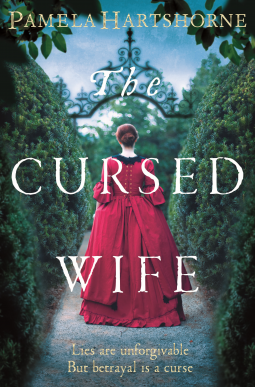
Having previously read Pamela Hartshorne’s time-slip novel The Edge of Dark, I found her latest book, The Cursed Wife, both similar and different. Similar in that they both explore the lives of women in Elizabethan England; different because this one is set entirely in the past, with no modern day storyline and no form of time travel.

The Cursed Wife is written from the perspectives of two women, Mary and Cat, who are both friends and rivals. When we first meet Mary in 1590 she appears to be leading a happy and contented life; she is married to the merchant Gabriel Thorne, and lives with him, their children and their servants in a comfortable house in London. Mary is devoted to her family and her household and has almost – but not quite – managed to forget that she was cursed as a child and predicted to die by hanging.

However, Mary’s whole life is built around lies and deception and she knows that if the truth is ever revealed she could lose everything. One rainy day she sets out to do some shopping in Sopers Lane to replenish her stocks of herbs and medicines, and is shocked to see a face from her past – a face she had expected never to see again. It’s Cat, her childhood friend, who was once as close to her as a sister, but who now possesses the secrets that could ruin Mary’s life…

As I’ve said, I found this a very different sort of book from The Edge of Dark; it doesn’t have such an eerie atmosphere and lacks the touches of the supernatural – although Mary does have a very creepy one-armed wooden doll called Peg. Instead the focus is on the relationship between Mary and Cat. It’s a relationship which changes and transforms itself over the years as the roles of the two women in each other’s lives are reversed, but the links between them are seemingly unbreakable and their stories are very closely entwined.

Cat and Mary take turns to narrate in alternating chapters and although their narrative voices are very similar, the author does use a few techniques to distinguish between the two – for example, Cat’s thoughts are often aimed directly at Mary (‘you say this’ and ‘you do that’). Cat is also a more bitter person than Mary, who can often seem quite naive and slow to understand things that are obvious to the reader. Neither woman is very likeable and although Cat is nastier, I can’t really say that my sympathies were with Mary either.

Pamela Hartshorne has written about the Elizabethan period before, not just in The Edge of Dark, but in other novels too, and she obviously knows it well. We are given lots of little details on domestic life in the late 16th century – the food people ate, the clothes they wore, the tasks carried out by servants in the home – and although historical events happening in the wider world have little direct effect on the story, there’s a sense of how precarious life could be in this period when hanging is a punishment for crime and when the most minor of illnesses can result in death. The novel also looks at the roles of women and the expectations that were placed on them regarding marriage.

The Cursed Wife is an interesting read and the storyline was compelling enough to hold my attention until the end, but I did prefer The Edge of Dark and as her earlier books all seem to be time-slip novels like that one I think I’ll have to investigate them at some point.

Thanks to Pan Macmillan for providing a copy of this book for review via NetGalley.

The English Girl by Katherine Webb

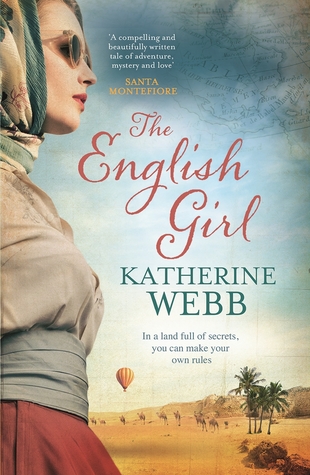
One of the things I love about reading is that it gives me the opportunity to learn about places I have never visited and am probably never likely to. Katherine Webb’s The English Girl is set in Oman, which is not a country I’ve ever read about before. Having previously read only The Misbegotten by Webb, I found this one a very different novel, not least because of the fascinating setting.

The ‘English girl’ of the title, Joan Seabrook, has grown up listening to her father’s stories of Arabia and longing to explore this magical, mysterious land for herself. Now, in 1958, her dreams have come true and she is on her way to Oman with her fiancé, Rory. Foreign tourists are not usually welcome in Oman, but Joan has obtained special permission – with the help of a family friend who happens to be the foreign minister – to visit her brother Daniel, who is stationed there with the British army. Having recently finished studying for her degree in archaeology, Joan is looking forward to investigating some of the sites she has heard so much about.

Arriving in the city of Muscat, Joan is disappointed to discover that the places she really wants to see – Fort Jabrin and Jebel Akhdar (the Green Mountain) – are off limits because of the war which is currently being waged in the mountains of Oman between the supporters of the Sultan and the Imam. She consoles herself with visits to Maude Vickery, the famous explorer who was the first woman to cross the desert known as the Empty Quarter and who has made Muscat her home. Maude was Joan’s childhood heroine and she is thrilled to have the chance to get to know her. Now an elderly woman, Maude is bitter, sharp-tongued and resentful, and not at all what Joan had expected, but when Maude asks her to carry out an important mission on her behalf, Joan is unable to refuse – even if it means putting her own life in danger.

As I’ve said, this is the first book I have read set in Oman, and I loved the beautiful descriptions of the deserts, the mountain ranges, the valleys and forts, and the streets of Muscat. It’s the perfect backdrop for Katherine Webb’s story of adventure, mystery and romance! This is also the first time I’ve read about the Jebel Akhdar War of the 1950s and the conflict between the interior of Oman (the Imamate) and the Sultanate of Muscat. The British army supported the Sultan in the war and as Joan’s brother Daniel is a soldier, this gives the characters in the novel a personal connection to events taking place around them.

Although I found a lot to enjoy, it took me a while to really get into this book and I think that was partly because Joan just didn’t appeal to me as a character. I wasn’t very interested in her relationships with Rory and Daniel and I felt that she kept putting herself into dangerous situations unnecessarily. I hoped I would warm to her eventually, but I didn’t. However, this is not just Joan’s story – it is also Maude’s, and while she is not the most likeable of characters either, she is a fascinating one.

As soon as I began to read about Maude, I thought of the real-life explorer Gertrude Bell, and after finishing the book I wasn’t surprised to see that the author’s note at the end confirmed that she had been the inspiration for the character. About half of the novel is written from Maude’s perspective, taking us back in time to her exciting journey through the Empty Quarter and her determination to get across the desert before her friend and rival Nathaniel Elliot. By the time I reached the end of Maude’s story, I admired her for what she had achieved but I also understood what had shaped her into the bitter, unhappy old woman Joan meets in Muscat.

The English Girl could be thought of as a novel of secrets as everyone seems to be hiding something. Maude, betrayed by someone she thought she could trust, has been trying to hide her pain and heartbreak for most of her life, while Nathaniel has also been concealing something that happened on his own expedition. Both Rory and Daniel are keeping secrets from Joan and there are hints of further mysteries as far back as Joan’s childhood too. Most of all, there are the secrets of Oman and of the desert and seeing these unfold as the setting is brought to life will be my lasting memory of this book.

Templar Silks by Elizabeth Chadwick

In her latest novel, Templar Silks, Elizabeth Chadwick returns to the hero of her earlier books The Greatest Knight and The Scarlet Lion: William Marshal, knight, soldier, statesman and adviser to kings of England. Unlike those other two books, which took us right through William’s life and career, from youth to death, Templar Silks concentrates on one specific episode – William’s journey to the Holy Land – which was mentioned only briefly in The Greatest Knight.

The novel opens in April 1219 with William on his deathbed, surrounded by family and friends at his home in England, Caversham Manor. Before he dies, he asks his squire to bring him the silk burial shrouds he was given by the Templars in the Holy Land thirty years ago. As he waits the arrival of the silks, he looks back on the long-ago adventure that shaped the rest of his life.

In 1183, William was in the service of Henry II’s eldest son, known as the Young King. In need of money to pay his soldiers, the Young King gives orders to raid the shrine of Rocamadour, but falls ill with dysentery shortly afterwards. Aware of the sacrilege he has committed, his dying wish is for William to atone for his sins by taking his cloak to Jerusalem and placing it on Christ’s tomb. Still unmarried at this point and free from the greater responsibilities he will hold in later life, William is happy to undertake the pilgrimage, but the journey proves to be even more eventful and dramatic than he had expected.

William spent three years on his pilgrimage but historians know very little about what actually happened during this period of his life. This allows Elizabeth Chadwick to use her imagination to create William’s story – and with her own knowledge of the medieval world and the political situation in 12th century Jerusalem, she is able to make his actions feel plausible and realistic.

William is accompanied on his journey by a small party of fellow knights and squires, two Templar Knights who act as guides, and his younger brother Ancel. There is no historical evidence that Ancel took part in the pilgrimage – in fact, he is barely mentioned in historical records at all – but the relationship between the brothers was one of my favourite aspects of the book. Ancel and William are very different people, with Ancel depicted as more sensitive, more cautious, and not as quick to learn when it comes to fighting, jousting and other knightly pursuits. There are times when they become frustrated with each other, but the love and loyalty between them is always plain to see.

And William needs all the loyal friends he can find if he is going to survive this difficult mission. After a traumatic experience in Constantinople, he and his men arrive in Jerusalem to find this most holy of cities approaching a moment of crisis. King Baldwin is dying of leprosy and his nephew, his only heir, is too young to rule. Baldwin’s brother-in-law, Guy de Lusignan, is the next most logical contender, but Guy has many rivals and Jerusalem desperately needs strong, united leadership to deal with the threat of Saladin. William has more reason than most to dislike Guy, who was responsible for his uncle’s death several years earlier, but choosing to support another claimant could lead him into even more danger.

Due to the nature of the story, the setting and the focus on politics and the military, most of the main characters in this particular novel are male, but there is one female character who has a large role to play during William’s time in Jerusalem. She is Paschia de Riveri, the beautiful concubine of the Patriarch Heraclius. It is never very clear what Paschia’s motives are or how she truly feels, but as William became more entangled in her schemes, I couldn’t help thinking that it would all end unhappily for him – while hoping, for his sake, that I was wrong.

I enjoyed Templar Silks, with all of its adventure and intrigue, but it does feel a bit different from Elizabeth Chadwick’s other recent novels such as her Eleanor of Aquitaine trilogy and Lady of the English, which are more biographical and cover much longer time periods. It seems that Chadwick is not ready to leave the Marshals behind just yet; her next novel, The Irish Princess, is going to be about the parents of William’s wife, Isabelle de Clare.

Thanks to Little, Brown Book Group UK for providing a copy of this book for review via NetGalley.