The Shogun’s Queen by Lesley Downer

the-shoguns-queen Japan, as I discussed in my recent Historical Musings post, is a country whose history I know very little about. Lesley Downer has written several books about Japan, including a quartet of novels set in the 19th century; I remember reading about one of the others on The Idle Woman’s blog a few months ago, so I was pleased to have the opportunity to read Downer’s latest book, The Shogun’s Queen. This is the final book in the quartet to be published, but it’s the first chronologically so even though I haven’t read the other three I didn’t expect to be at any disadvantage.

After a brief prologue, the novel opens in 1853 with Japan on the cusp of change. Until now, the country has been largely insulated from the outside world and apart from some limited contact with Dutch traders, Japanese ports have been closed to the west. The sight of barbarian ships approaching, then, causes panic, fear and confusion. What do the barbarians (westerners) want and what will they do if Japan refuses to agree to their demands?

It’s during this turbulent period that our heroine, Okatsu, is adopted by the ambitious Lord Nariakira of Satsuma and taken into his household, where she is renamed Atsu. Adoption, in Japan at this time, is a way of raising a woman’s rank and improving her marriage prospects, so a few years later Nariakira arranges for Atsu to be adopted again, this time by his brother-in-law Prince Konoe. His ultimate aim is to marry Atsu to Iesada, the 13th Tokugawa Shogun, and in 1856 this aim is achieved. Nariakira hopes Atsu can use her position as Iesada’s wife to influence the Shogun’s choice of a successor – but as Atsu gets to know her new husband she discovers how difficult that task will be.

The approach of western ships means Japan is facing a new set of threats, dangers and opportunities, so strong leadership is desperately needed. I’m not going to say too much about the character of Iesada, but as soon as he appears on the page it is obvious that he can’t possibly be that strong leader. Poor Atsu; although she does begin to feel affection and even love, of a sort, for the Shogun, it is not a normal or happy marriage and it would be difficult not to have sympathy for her. Iesada’s mother is a cruel, manipulative woman who resents having to relinquish any of her control over her son, and this makes it almost impossible for Atsu to carry out the instructions she has been given by Nariakira.

As if Atsu’s situation wasn’t already bad enough, she has been forced to separate from the man she truly loves, Kaneshige, and doesn’t expect to see him again, knowing that once she enters Edo Castle as the Shogun’s wife she will never be allowed to leave. As I’ve said, I knew nothing about this period of Japanese history before I started reading, and I was fascinated by the descriptions of Atsu’s life, both before her marriage, when she lived in the Satsuma domain, and later, in the confines of the Women’s Palace in Edo (the former name for Tokyo). It was also fascinating to read about the ‘barbarians’ – Americans and Europeans – and how they and their culture appeared when seen through Japanese eyes.

I would have no hesitation in recommending The Shogun’s Queen to readers who, like myself, are looking for an accessible introduction to the history of 19th century Japan. A lack of familiarity with the period is not a problem as Lesley Downer makes everything easy to follow and understand; the book also includes a map, a list of characters and a detailed afterword in which the author provides more information on the historical background and gives us an idea of which parts of the novel are based on fact and which are largely fictional (such as the relationship between Atsu and Kaneshige). First and foremost, though, this is a gripping and entertaining story with characters to love and characters to hate. I enjoyed it and will be exploring Lesley Downer’s other books, as well as continuing to look out for more novels set in Japan.

I received a copy of The Shogun’s Queen from the publisher for review.
Lady on the Coin by Margaret Campbell Barnes

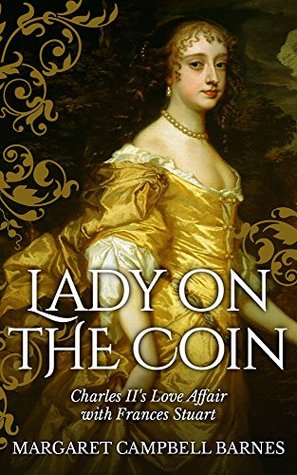
lady-on-the-coin One of the many things I enjoy about reading historical fiction is seeing how different authors choose to interpret the same historical events and people. This is the second novel I’ve read about Frances Stuart, one of the prominent figures at the court of Charles II, and as I remembered being disappointed in Marci Jefferson’s Girl on the Golden Coin, I was curious to find out how Margaret Campbell Barnes had approached the same subject in this novel from 1963.

Lady on the Coin opens with Frances Stuart (or Stewart, but I have gone with the spelling used by Barnes) and her family in exile in Paris where they have been living since the Royalists were defeated in England’s recent civil war. In 1660, the monarchy is finally restored and Charles II, to whom Frances is distantly related, takes the throne. After saying goodbye to her close friend, Henrietta – Charles’ beloved sister, ‘Minette’ – who has married the brother of Louis XIV of France, Frances returns to England to join the household of the new queen, Catherine of Braganza.

With her appealing combination of beauty, enthusiasm and youthful innocence, Frances soon finds herself with many friends and admirers at court, and Charles himself is one of them. Although she enjoys the attention, Frances has no desire to hurt Catherine, so she does her best to resist the King’s attempts to make her his mistress. As she comes under more and more pressure to agree to his demands, a rumour begins to circulate that he is planning to make her his wife should anything happen to Catherine. A chance of escape arrives when she falls in love with the King’s cousin, the Duke of Richmond and Lennox, but there will be more obstacles to overcome before they can find happiness together.

I found this book better written and more satisfying than Marci Jefferson’s. Although the two are very similar in terms of plot (I suppose there’s a limit as to how much could be written about Frances Stuart, after all), I felt that Margaret Campbell Barnes did a much better job of forming a compelling story from the material available and giving her characters depth. Frances is portrayed as frivolous and immature, but she also has a kind heart and I couldn’t help liking her, as did most of the people around her. I say ‘most’ because her popularity at court earns Frances some enemies as well as friends and puts her at the mercy of those who wish to manipulate her for their own ends, such as Barbara Palmer, Lady Castlemaine, the King’s mistress of many years.

Later in the novel, when Frances’ relationship with Lennox begins to develop and she has some important decisions to make, we see a stronger, more serious side to her character. I don’t know enough about the real Frances or Lennox to be able to say whether their relationship has been romanticised here, but I expect it probably has; he is described, by his own admission, as a gambler and heavy drinker, but these problems seem to be brushed aside very easily once he and Frances get together. I did find their romance quite moving, though, and much more interesting to read about than the King and his mistresses!

Frances Stuart’s story is played out during an eventful period of history, but important events such as the plague, the Great Fire of London and the Anglo-Dutch Wars seem to pass by in the background without having much of an effect on the life of our heroine. It’s probably true that Frances would have been very insulated from the outside world by her position at court, but I would still have liked a better balance between her personal story and the wider history of the period in general.

Now, you may be wondering why the title of the book refers to the ‘lady on the coin’. Well, one of Frances Stuart’s claims to fame is that she was apparently the model for Britannia, appearing on a commemorative medal produced after the war with the Dutch and then on various British coins until as recently as 2006.

Lady on the Coin is the second book I’ve read by Margaret Campbell Barnes; the first was Mary of Carisbrooke, which told the story of Charles I’s imprisonment in Carisbrooke Castle on the Isle of Wight. I’m sure I’ll be reading more of her books and the next logical choice is With All My Heart, her novel about Catherine of Braganza.

I received a copy of this book via NetGalley for review.

Revelation by CJ Sansom

revelation After reading Sovereign recently, I was desperate to continue with the next of CJ Sansom’s Shardlake mysteries – and luckily for me, I managed to find a copy of Revelation in the library the next day. I had said that Sovereign was my favourite in the series so far, so I was curious to see whether Revelation could possibly be as good. Well, it is; it’s even better! Before I continue, though, just a quick warning: although I’ve done my best to avoid spoilers here, this is the fourth book in the series and the appearance of certain characters in it will mean you can rule them out as suspects in the previous ones. My recommendation would be to start with book number one, Dissolution, and work through them in order.

Revelation is set in 1543, the year in which Katherine Parr becomes the sixth and final wife of Henry VIII, and after their adventures in York (described in Sovereign), lawyer Matthew Shardlake and his assistant Jack Barak are back in London. Shardlake has no desire to become embroiled in any more mysteries, but when a friend is found dead with his throat cut and his blood turning the water of a fountain red, it seems he will have no choice.

The dead man’s widow, Dorothy, is an old love interest of Shardlake’s, and he promises to help bring her husband’s killer to justice. However, it soon emerges that this is just the latest in a series of bizarre murders and, at the request of Archbishop Cranmer, Shardlake agrees to investigate. His involvement will bring him into contact with a circle of powerful men, including Edward and Thomas Seymour, brothers of the late Queen Jane, who have their own reasons for wanting the killer caught. Meanwhile, Shardlake has also taken on another intriguing case, one which involves a young man whose obsessive praying has resulted in imprisonment in the asylum known as Bedlam and could lead to him being arrested as a heretic.

As a murder mystery, I thought Revelation was excellent. There are plenty of suspects and although my guess turned out to be completely wrong, looking back I think we were given enough clues to at least have a chance of solving the mystery. I loved the way the murders corresponded to passages in the Book of Revelation from the Bible. The deaths are quite gruesome, but I didn’t find the book excessively graphic – although it depends on how high your tolerance is for that kind of thing, I suppose.

Four books into the series, I feel that I’m getting to know Shardlake well and I’m able to settle into his narration from the very first page. I think one of the reasons I find him such an engaging character is that, while he’s generally likeable, he does have flaws and he does make mistakes and lose his temper from time to time. He doesn’t seem to have much luck with women and I wondered if he would find love with Dorothy this time. I won’t tell you whether he does or not, of course! Barak isn’t faring much better in the relationship stakes either. I was quite fond of him in the previous novels and I still am, I think, but his treatment of Tamasin in this book really frustrated me.

Barak is by Shardlake’s side, as ever, as he investigates each murder, but I was pleased to see that another of Shardlake’s old friends, Guy Malton, also has a big part to play in the story. Guy, the former monk from Scarnsea Monastery in Dissolution, is now working as a physician in London and his medical skills prove to be very useful in establishing the causes of the deaths and also in offering assistance to the boy locked in the Bedlam. However, Guy has taken on a new apprentice whom Shardlake dislikes and distrusts from their first meeting, and this puts a big strain on their friendship.

In addition to all of this, we are treated to the usual vivid portrayal of Tudor life I’ve come to expect from Sansom, drawing us into the political and religious debates that marked this stage of Henry’s reign. I found it all fascinating and am looking forward to reading Heartstone, which I hope I’m going to enjoy even more than this one.

Burning Sappho by Martha Rofheart

burning-sappho There are some historical women whose lives have been written about in fiction many times but I think it’s safe to say that Sappho, the Greek lyric poet, doesn’t seem to be one of them. This novel, first published in 1974, is the first I’ve come across that tells her story and much as I do enjoy reading about Tudor queens and medieval princesses, it’s always refreshing to have the opportunity to read about somebody different!

Very little is known for certain about Sappho’s life. We do know that she was born on the Greek island of Lesbos, possibly between 630 and 612BC, and grew up in the port town of Mitylene. We know the probable names of some of her family members and we know that she was exiled from Mitylene twice. Beyond this, most of the information we have about Sappho is unreliable or based on the remaining fragments of her poetry, which may or may not have been autobiographical. It’s enough to build a novel around, though, and in Burning Sappho Martha Rofheart uses the known facts as a starting point to give a possible interpretation of what Sappho’s life could have been like.

We don’t have much factual information about the other characters who appear in the novel either – and I have to admit, I hadn’t even heard of most of them and didn’t know whether they were real or fictional, so Google proved very useful there! Some of the most notable characters include Gorgo, a girl from Sparta who angers Sappho by befriending Andromeda, the Nubian slave purchased by Sappho’s father; Alkaios, a fellow poet and the man Sappho loves; Pittakos, who rules Mitylene after the downfall of the Tyrant, Melanchros; and the famous courtesan Doricha, known as Rhodopis. I was also pleased to see Aesop make a few appearances – one character I had at least heard of!

The novel is divided into five sections; there are two narrated by Sappho herself and one each from the points of view of Alkaios, Doricha/Rhodopis and the sea trader, Kerkylas of Andros. There’s not a lot of difference between the voices of the narrators so it took a while to adjust to each change of perspective, but otherwise I thought the structure worked well. I preferred Sappho’s own narration, but hearing from other people who were close to her helped me to form a more balanced view of her as a person. There seems to be a lot of debate surrounding Sappho’s sexuality (the word lesbian is derived from the name of Sappho’s home, Lesbos), but Rofheart portrays her as having relationships with both men and women. In particular, she is shown to be in love with a girl called Atthis, whose name is mentioned in some of her love poetry.

I always admire people who write fiction set in ancient periods; I think it must be very difficult, when we have such limited knowledge of how people lived in those times. On reading Martha Rofheart’s Author’s Note and list of acknowledgments at the end of the book, I can appreciate the efforts she went to in researching her novel – for example, she states that as the geographical landscape has changed so much over the centuries, she has based her descriptions of the Greek islands on how they appeared in ancient writings rather than modern day ones. However, I still felt that there was something a little bit too ‘modern’ about this book – maybe it was the attitudes of some of the characters and the language they used. It wasn’t a huge problem, but the best way I can explain it is that I was always conscious that I was reading a story written in the 1970s, rather than being completely swept away to another time and place.

Still, I thought this was a fascinating novel and an educational one too. I knew absolutely nothing about this period before I started to read so I don’t feel qualified to comment on the historical accuracy or the choices Rofheart makes, but even if not everything happened as she describes it, I feel that I’ve learned a lot about the history of Lesbos. Although the focus is usually on Sappho and her music, she lived through a time of political turmoil; one of the most memorable scenes in the book describes the overthrow of Melanchros the Tyrant (which is sparked, in Rofheart’s version of events, by Sappho’s performance of a song she has written in protest against the custom of child sacrifice).

Burning Sappho (also published as My Name is Sappho) was an enjoyable read. Although it wasn’t quite as immersive as I would have liked, I thought it was much better than Lionheart, the other Martha Rofheart book I’ve read. She has written several other historical novels, all set in different periods, and I’m looking forward to working my way through them. As for Sappho, I can only find details of one or two other novels about her, but there seems to be plenty of non-fiction, including collections of her surviving writings. Now that I’ve been introduced to this fascinating woman, I’m interested in reading more about her!

Note: The spellings of names and places used in this review are as they appear in the novel and may vary between different sources.

I received a review copy of this book from the publisher via NetGalley.

Rebellion by Livi Michael

rebellion This is the second in Livi Michael’s trilogy of novels telling the story of the Wars of the Roses from the perspectives of Margaret Beaufort and Margaret of Anjou. After reading the first book, Succession, a few months ago I was keen to continue with the trilogy; Rebellion picks up directly where Succession ended, but as long as you have some knowledge of the period, it’s not really essential to have read the previous novel before starting this one. I’m not going to go into the background to the Wars of the Roses here, though; if you’re not already familiar with it, I’ll refer you to my review of Succession so I don’t bore you by repeating myself!

Rebellion begins shortly after the Battle of Towton, often described as the bloodiest battle ever fought on English soil, which ended in disaster for the House of Lancaster and put a new Yorkist king on the throne – Edward IV. The defeated Henry VI and his wife, Margaret of Anjou, have fled to Scotland and from there Margaret travels to France to plead for help from the French king. Determined to win back the throne for Lancaster and secure the inheritance of her young son, Prince Edward, she eventually returns to England to lead an army into battle against York once again.

We also follow the story of another mother, Margaret Beaufort, whose only son, Henry Tudor, has been taken from her to be raised in the household of a guardian, William Herbert, at Raglan Castle in Wales. Margaret wants nothing more than to be reunited with Henry and can’t bear to think of him growing up in someone else’s care – but Henry is also a Lancastrian heir and it seems that there are people more powerful than Margaret who are making other plans for him.

Rebellion has a wide scope, encompassing most of the key events which occur from 1462-1471 and incorporating many important historical figures of the period from Edward IV and his wife, Elizabeth Woodville, to Margaret Beaufort’s husband (her third), Henry Stafford, and the family of the Earl of Warwick, known as the Kingmaker. We also have our first glimpses of Edward’s younger brother, Richard of Gloucester, who I’m sure we’ll be seeing much more of in the final novel. The characterisation is generally quite well done; my only problem was with the portrayal of Edward IV. I know he wasn’t perfect and, like his grandson Henry VIII, is said to have become fat and gluttonous as he approached middle age, but even so, I don’t think we really needed such graphic descriptions of his bodily functions!

As in the first novel, though, the main focus is on the lives of the two Margarets. I think both of these women are great subjects for historical fiction and both have interesting stories to be told; neither is particularly likeable, but their emotions, ambitions and thought processes are convincingly described. I could feel for Margaret of Anjou as she struggled to keep the Lancastrian hopes alive and I could sympathise with Margaret Beaufort as she suffered the pain of being separated from her beloved son.

I preferred this book to the first one, I think; I found it easier to get into, probably because the first few chapters concentrate on one character (Margaret of Anjou) so the narrative is more continuous at the beginning instead of jumping from one perspective to the next – although there’s plenty of that later in the book. The most notable thing about the previous book, Succession, was the use of medieval chronicles, from which quotes are given at the beginning or end of almost every chapter in such a way that they form a large part of the story. The author uses the same method again in this book, but the extracts seem to be used more sparingly than in the first one, so that they add an interesting angle to the novel without being too much of a distraction.

Rebellion, then, has its good points and its bad, but there’s no doubt that it’s set during a fascinating time in England’s history. Something that comes across strongly in this novel is the uncertainty of the period and the way in which fortunes can unexpectedly rise or fall and hopes and dreams can be destroyed in an instant:

“None of this is as we initially planned,” Warwick said, gazing intently at his son-in-law. “And none of it is set in stone.”

I’m looking forward now to reading Accession, the novel which will bring the trilogy to a close.

Thanks to the publisher, Penguin, for providing a review copy of this book.

Orphans of the Carnival by Carol Birch

orphans-of-the-carnival It’s been more than five years since I read Carol Birch’s excellent Jamrach’s Menagerie, an adventure novel set in the Victorian period; I had intended to go back and explore her earlier books, but that never happened, so I was pleased to have the opportunity to read her new one, Orphans of the Carnival. It’s a very different book from Jamrach, but just as fascinating in its own way.

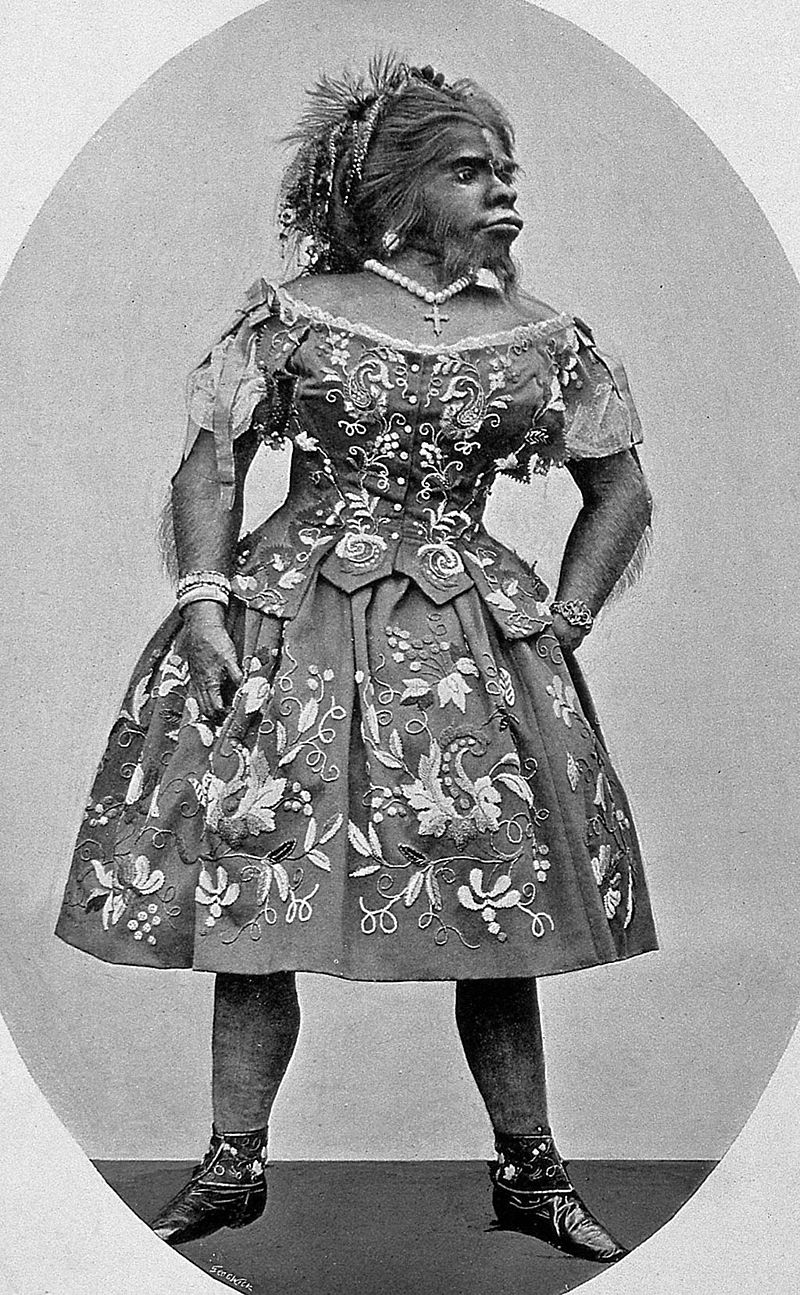
Orphans of the Carnival is the story of Julia Pastrana, a Mexican woman born in 1834 with a rare genetic condition, hypertrichosis terminalis, which has resulted in her face and body being covered in thick black hair. In addition to this, Julia also has a jutting jaw and thick gums and lips, caused by another condition called gingival hyperplasia. Julia is an intelligent, talented woman – as well as speaking three languages, she sings and dances well enough to build a career for herself in the circuses and theatres of 19th century America and Europe. However, she knows that the crowds who come to watch are not really interested in her musical ability; they just want to marvel at her unusual looks.

Interspersed with Julia’s story is the story of another woman, this time one who lives in London in the 1980s. Her name is Rose and she’s a hoarder – she hoards useless items she finds in the street, things that other people have thrown away. Near the beginning of the novel, she brings home an old, discarded doll which she names Tattoo; the doll provides a link between Julia and Rose, but we won’t find out exactly what the connection is until we reach the end of the book.

This is an unusual and moving novel based on the life of a real person. Yes, Julia Pastrana really existed and you can easily find pictures and information about her online. Although I didn’t know anything about Julia before I read this book, it seems that Carol Birch has followed the known historical facts as far as possible while using her imagination to fill in the gaps. The novel is written in the third person but mainly from Julia’s perspective and by the end I felt that I knew her well.

julia-pastrana Julia is a gentle and sensitive woman, and also quite an innocent and vulnerable one, largely because she has spent so much time sheltered from the outside world, living with friends and colleagues from the circus and carnival circuit and hiding her face behind a veil when she does venture out in public. I had a lot of sympathy for Julia; I’m sure there would be medical treatment and support available for someone born with her conditions today, but in the 1800s there was nothing that could be done. I felt bad for her when she reads a review of one of her performances describing her not just as ugly (which she was prepared to accept) but also as ‘an insult to decency’ – and again when her show is closed down on advice from a doctor who claims that the sight of her face could be harmful to pregnant women.

Eventually, Julia meets Theodore Lent, the man who is to become both her manager and her husband. I found it hard to tell what Theo really thought about Julia. He does seem to have some affection for her, but he also appears to be much more interested in the money to be made than he is in Julia as a person. It’s so sad when Julia, who just wants a husband who loves her, says to Theo: “It’s not love though, is it? Not like it is with other people. Real humans.”

Julia’s story is interesting and compelling, but I don’t think the 1980s sections add very much – in fact, they are just a distraction. The characters aren’t developed in anywhere near as much depth as the historical ones and although I did appreciate the eventual shocking revelation which links the two storylines together, I didn’t feel that it was really necessary.

This isn’t a perfect book, then, and it’s also not one that I can say I ‘enjoyed’ as I found it quite uncomfortable to read (not because of what Julia looks like, but because of the way other people treat her and respond to her). It’s certainly worth reading, though, and I’m glad I’ve had the chance to learn a little bit about the life of Julia Pastrana.

Thanks to Canongate Books for providing a review copy via NetGalley.

Two from Georgette Heyer: Regency Buck and Black Sheep

It’s been a while since I read anything by Georgette Heyer and I still have a lot of her books to get through, so I had a nice surprise a few weeks ago when I found two on the library shelf that I hadn’t read yet: Regency Buck and Black Sheep. Neither of these were near the top of my list of Heyer novels to look out for, but I was still pleased to have the opportunity to read them – and I’m even more pleased to say that I enjoyed both.

regency-buck-heyer Published in 1935, Regency Buck was the first of Heyer’s many novels to be set in the Regency period. It follows the adventures of Judith Taverner and her younger brother, Sir Peregrine (Perry), who have recently been orphaned and, under the terms of their father’s will, have been left under the guardianship of his friend, the fourth Earl of Worth. Leaving their home in Yorkshire, the brother and sister set off for London to meet the Earl. It proves to be a more eventful journey than they expected when they have an unpleasant encounter with an arrogant nobleman on the road. Imagine their horror when they discover that this nobleman is none other than Julian St John Audley, who has inherited the title of Earl of Worth from his father and is therefore their new guardian!

Judith is a strong, independent young woman who is used to doing as she pleases; on arriving in London she sets about making a name for herself by refusing to conform to the conventions of society, but Worth has other ideas as to how she should behave. Unable to see eye to eye with her guardian, Judith is grateful for the friendship and support of her cousin Bernard, with whom she has just become acquainted for the first time. Soon, though, Judith has more important things to worry about. It seems that someone is trying to murder Perry – but who can it be?

Although I had my suspicions as to Worth’s true motives, Heyer misleads us so much that we can’t be completely sure whether he is the hero or the villain. I would usually like this type of character, but Worth just never endeared himself to me; I found him unnecessarily patronising and I really felt for Judith and Perry every time they were forced into yet another humiliating conversation with him. I did like Judith – she’s an intelligent, outspoken and rebellious heroine – and I thought Perry was amusing, with all his youthful enthusiasms! As usual, Heyer’s recreation of the Regency period is vivid and immersive and although the main characters are fictional, there are also some real historical figures who make an appearance in the story. I loved the portrayal of the famous dandy Beau Brummell, particularly in the scene where Judith meets him for the first time – a case of mistaken identity!

Regency Buck is set in London and Brighton, which gives it a slightly different feel from the second of the two books I read, Black Sheep, which is set in Bath…

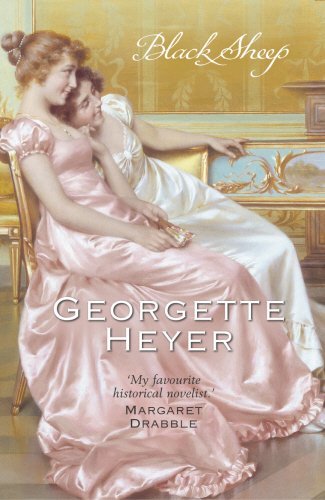
black-sheep At twenty-eight and still single, it is looking unlikely that Abby Wendover will ever marry. Instead, she is concerning herself with the love affairs of her seventeen-year-old niece, Fanny, whose romance with the handsome, dashing Mr Stacy Calverleigh has become the talk of Bath. Although Fanny’s other aunt, Selina, has been taken in by Stacy’s charms, Abby is convinced he is nothing more than a fortune hunter and determines to free Fanny from his clutches. However, when Stacy’s uncle, Miles Calverleigh – the ‘black sheep’ of the family – also arrives in Bath, Abby finds herself drawn into a relationship which is considered even more unsuitable than Fanny’s!

Black Sheep, published in 1966, is a later Heyer novel. It’s one of my favourites so far and that is largely because of its wonderful hero and heroine. I loved both Abby and Miles and found myself looking forward to every scene they were in together. They feel like two people who really would have liked and understood each other, rather than characters who are just being forced together for the sake of the plot – there’s a genuine chemistry between them and the dialogue really sparkles! I liked the fact that Abby is a little bit older than the average Heyer heroine (she reminded me in some ways of Anne Elliot in Persuasion); she’s a sensible, mature woman whose romance with Miles is of a very different nature than Fanny’s with Stacy.

As I said at the start of this post, I enjoyed reading both of these novels. I was particularly relieved to find that I liked Regency Buck as it doesn’t seem to be a very popular book with Heyer fans! I probably wouldn’t recommend that one to readers new to Heyer, though; of these two, I think Black Sheep would be a much better place to start.

Have you read either of these? What are your favourite Heyer novels?