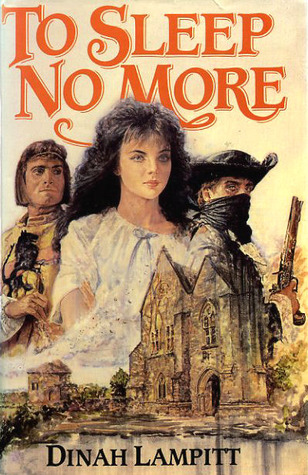
To Sleep No More by Deryn Lake

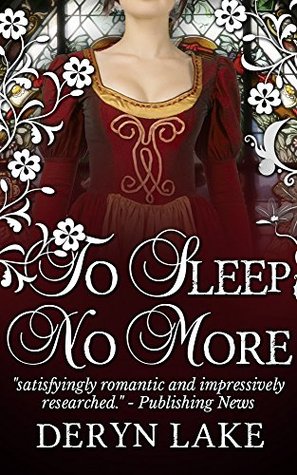
I had never come across Deryn Lake’s books until recently, but it seems that she has written a large number of historical fiction novels, detective stories and romances, published from the 1980s to the present day. I decided to try To Sleep No More, a book which first appeared in 1987 under the name Dinah Lampitt and has now been reissued by Endeavour Press as a Deryn Lake novel. It’s an unusual book as it feels almost like three separate novels in one, but with some very important links between the three and all set in the same small community – the village of Mayfield in Sussex.

We begin in the 14th century with the story of Oriel de Sharndene, whose father marries her off to the innocent and childlike Colin, brother of Archbishop John de Stratford. As she tries to settle into married life at Maghefeld Palace, Oriel finds that although she is fond of her husband and captivated by his extraordinary musical abilities, their marriage is never going to be a very satisfying one. The man she truly loves is Marcus de Flaviel, a squire from Gascony who has recently arrived in England and has been appointed companion to Colin by the Archbishop. Colin likes Marcus almost as much as Oriel does, and for a while the three are quite happy. Eventually, though, Oriel’s relationship with the Gascon squire leads to tragedy and at that point the first part of the novel ends.

Moving forward to the year 1609, we find ourselves in the village of Mayfield (formerly Maghefeld) again – and with a new set of characters to get to know. This time we follow the story of Jenna Casselowe who decides to resort to magic to win the heart of the man she loves, Benjamin Mist. Jenna needs to be careful – if anyone finds out what she has been doing she risks being accused of witchcraft. Finally, there’s a third story set early in the 18th century, when the roads and beaches of Sussex are alive with illegal activity. Lieutenant Nicholas Grey arrives in Mayfield on the trail of highwayman Jacob Challice and a gang of smugglers – could another chain of events be about to be set in motion which will again have tragic consequences?
Three stories which all seem very different at first, but as you continue to read some of the parallels and connections start to emerge, although others are not clear until the end of the book. I don’t think it’s spoiling anything (as it’s clearly stated in the blurb) to say that reincarnation is involved and that characters we meet in one time period correspond with characters from another. It’s not always clear who is who as they don’t necessarily keep the same appearance, sex or position in society from one life to the other, but if you’re patient there are eventually enough clues to be able to fit the pieces together.

I have to admit, when I first started to read To Sleep No More I didn’t expect to be very impressed by it (maybe it was the cover of the new edition that gave me that impression) but I enjoyed it much more than I thought I would. Although it took me a while to adjust to each new story – as I’ve said, it’s almost like reading three different novels in the same book – and a lot of concentration is needed to keep track of the characters and who they may have been in a previous life, it’s not quite as confusing as it all sounds!

Each section of the book has its own sense of time and place reflecting the different era and the changes in language, culture and attitudes over the centuries. It was obvious that the author had done a lot of research into the local history of the area and into each period in general, although I was not convinced by the work of a doctor who, towards the end of the novel, is carrying out experiments involving hypnosis and regression – his methods were surely too scientific for 1721. On the other hand, without that particular plot development it’s difficult to see how else the various threads of the story could have been pulled together.

Reading Deryn Lake’s author’s note at the end of the book, I was surprised to see how many of the secondary characters and events in the three stories were based on historical fact. For example, Alice Casselowe, Jenna’s aunt in the novel, really was accused of witchcraft and there really was a gang of smugglers operating in Mayfield in the 1720s. The author also incorporates the legend of St Dunstan (allegedly Mayfield’s founder) into the story, with several characters seeing ghostly visions of a monk working at a forge. The supernatural elements of the story are usually quite subtle, though, and are used sparingly to add to the eerie atmosphere of the novel.

Have you read any of Deryn Lake/Dinah Lampitt’s novels? What did you think?
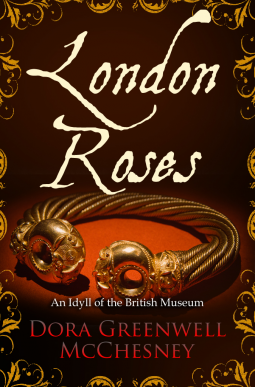
A trio of books: London Roses; The Hurlyburly’s Husband; The King’s Favourite

I’ve been struggling to keep up to date with my reviews recently – I seem to go into each new month with at least four or five books still to write about from the month before – so I thought I would try putting together the occasional multi-book post with slightly shorter reviews than normal.

London Roses by Dora Greenwell McChesney, first published in 1903, follows the stories of a group of people who meet in the Manuscript Room at the British Museum. Rhoda Comstock is a young American woman who has come to London to stay with her English cousin, Una Thorpe, and the two strike up a friendship one day with journalist Stephen Fulford and his brother Thomas, getting together to discuss their research and to engage in lighthearted debate about the differences between life in Britain and America. When Stephen makes the sudden decision to go to South Africa to report on the Boer War, he leaves behind a scandal which puts Thomas in a difficult position and poses a threat not only to the bond between the two brothers but also to their newly formed relationships with Rhoda and Una.

London Roses is packed with interesting ideas and themes – loyalty and friendship; the importance of trust; adjusting to life in a different country – although none of these things are explored in as much depth as they could have been. The characters also had the potential to be a lot more complex and well-developed than they actually were. None of the main four ever came fully to life and I was much more intrigued by the character of Anthony Pettigrew, an old man Rhoda nicknames the Moth, who has spent thirty years coming to the British Museum to research books that he’s never written.

Far too much of the novel is spent discussing the English Civil War, which is apparently a passion of several of the characters (and also of the author – as I know, having read her historical novels Rupert, by the Grace of God and Cornet Strong of Ireton’s Horse), but which felt a bit strange as it had very little to do with the rest of the plot. On a more positive note, there are some nice descriptions of London and the Museum, but overall I was disappointed by this book and was thankful that it was such a short one!

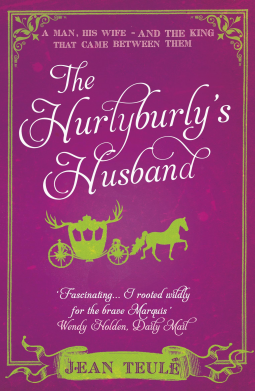
The Hurlyburly’s Husband is an English translation by Alison Anderson of Jean Teulé’s 2008 French novel. Set in 17th century France, it tells the story of the often forgotten husband of Madame de Montespan (mistress of the Sun King, Louis XIV). Louis-Henri, Marquis de Montespan, marries Athénaïs, as she becomes known, after her fiancé flees following a duel. He loves his new wife and believes that she loves him, but it’s not long before Athénaïs goes to court as a lady-in-waiting and takes the place of Louise de la Valliere in the king’s affections. Unlike many cuckolded husbands of the period, Montespan is not interested in using his wife’s position to gain money and titles at court; instead, when it becomes obvious that Athénaïs is lost to him, he chooses to defy the king and take revenge in any small way he can.

A lot has been written about Madame de Montespan, her relationship with the king and her involvement in the Affair of the Poisons, but her husband is usually ignored. It was good to have the chance to read his side of the story and to see how he may have felt about all of this. As Athénaïs is absent from her husband’s life for most of the novel, the focus is always on Montespan himself: his attempts at winning glory on the battlefield, his relationships with his children, and his acts of defiance against the king (adding horns to his coat of arms, for example).

This is an entertaining little novel, as lively, colourful and scandalous as the French court it describes. There are even some illustrations, which are always a nice addition to any book. And in case you’re wondering, the hurlyburly of the title refers to the hairstyle popular in the 17th century known as the hurluberlu.

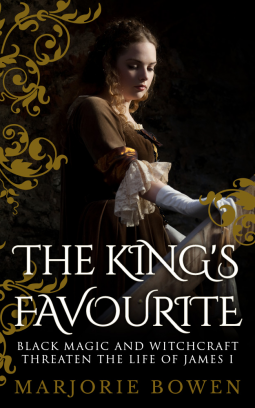
The final book I want to talk about here is The King’s Favourite by Marjorie Bowen (originally published in 1938 under the pseudonym George R Preedy). The King of the title is King James I of England and VI of Scotland – and the Favourite is Robin Carr, a young man who catches the King’s eye when he falls and breaks his leg in the tilt yard. Henry Howard, Earl of Northampton, sees his chance to gain influence at court by pushing his pretty, seventeen-year-old great-niece Frances into an affair with Robin. But Howard is not the only one who is plotting and scheming; Robin’s friend, Tom Overbury, is also keen to encourage the romance between Robin and Frances in the hope of gaining more power for himself.

Nobody expected the two to actually fall in love, but that is what happens. With his plans thrown into disarray, Overbury finds himself caught in the middle of another plot – but this one is directed at himself. The King’s Favourite is based on real events from history, but I was unfamiliar with the details of this particular story. My lack of knowledge meant I had no idea what was going to happen and could enjoy this as a suspenseful true crime novel before looking up the facts after I’d finished and comparing them with Marjorie Bowen’s version.

While the plot (after a slow start) is an exciting, dramatic one, the characters are not particularly strong and not at all sympathetic either! I can’t say that I liked any of them – although I was interested to see that the astrologer and physician Simon Forman plays a prominent part in the story. I remember being intrigued by his appearances in Sally O’Reilly’s Dark Aemilia, so it was good to learn more about him here.

I see that there have been several other novels written over the years that also deal with the Overbury case, including one by Rafael Sabatini (The Minion) which I’m now very interested in reading. The TBR continues to grow!

The Fourteenth Letter by Claire Evans

With its eye-catching cover, Victorian setting and promise of “a labyrinth of unfolding secrets”, Claire Evans’ debut novel The Fourteenth Letter sounded like a book I really needed to read!

The novel opens in June 1881 with the murder of Phoebe Stanbury at a party to celebrate her engagement to Benjamin Raycraft, son of the wealthy Sir Jasper. The killer, a naked man covered in mud with a strange design tattooed on his chest, disappears after committing the crime and it seems that nobody is able to shed any light on his identity or why he may have wanted to kill an innocent young woman. Detective Harry Treadway is given the job of investigating the murder, but the deeper he delves into the mystery, the more bizarre and complex it becomes.

Meanwhile, William Lamb, an inexperienced, timid young lawyer, goes to visit an eccentric client in his partner’s absence – and ends up in possession of a casket of old papers written in Latin and a cryptic message which means nothing to him. His visit is witnessed by Savannah Shelton, an American woman who has been paid to watch the house, but who is employing her and what do they want? At another house in London, Mildred is applying for a position as governess, then changes her mind when the interview doesn’t go as planned. How are all of these events connected? There are no obvious links at first, but slowly the truth is revealed as the story begins to unfold.

When I first started to read The Fourteenth Letter, I was fascinated. There were so many intriguing characters and so many strange things happening all at once. However, the constant switching from one storyline to another made it difficult for me to settle into the story and after a few chapters I began to wish we could spend a little bit longer with one character before moving on to the next. As I’ve said, the various strands of the plot do start to come together eventually but I would have liked it to have happened more quickly.

Being set in the 1880s, the story takes place during an exciting time in history, a time of great advances in science and technology. Sir Jasper Raycraft’s house, Ridgeside, is described as a famous residence with all the latest scientific developments such as electric light. I immediately recognised this as a description of Cragside in Northumberland, a National Trust property I have visited several times, and I was pleased to have this confirmed when I reached the author’s note!

However, for a novel set in Victorian London, I thought there was very little sense of time and place. Although there are references to historical and political events of the period, I never felt fully immersed in the world Claire Evans had created and it didn’t help that I couldn’t quite manage to believe in Savannah Shelton as a convincing character. William Lamb, though, is a great character – not a typical hero at all – and it was interesting to watch him develop and grow as a person over the course of the story.

Although this is certainly a very unusual and imaginative novel, I didn’t like it as much as I’d hoped to. Maybe I was just not the right reader for this particular book; that happens sometimes and it doesn’t necessarily mean that it isn’t a good book. I’ve seen some very positive reviews so clearly other readers are finding a lot to enjoy in The Fourteenth Letter!

Thanks to the publisher for providing a copy of this book via NetGalley for review.

Andrew Hughes: The Coroner’s Daughter

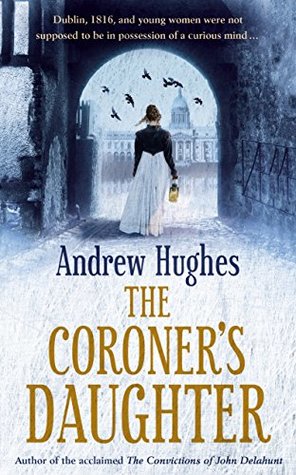
I found so much to love in The Coroner’s Daughter! A strong, resourceful heroine with a passion for science; an interesting historical setting – 19th century Dublin; and a twisting, turning mystery to keep me guessing. Just like Andrew Hughes’ first novel The Convictions of John Delahunt, which I read and loved a few years ago, this is another great book which manages to be both highly entertaining and darkly atmospheric.

The story takes place in 1816, known as the ‘Year Without a Summer’. The city of Dublin is shrouded in fog and when a frosty July is followed by snow in August, people are at a loss to explain what is going on. Eighteen-year-old Abigail Lawless, however, has conducted her own research into the phenomenon, linking the unseasonable weather to a volcanic eruption on the other side of the world. As the coroner’s daughter, Abigail has always possessed a natural curiosity for anything scientific – and is particularly interested in her father’s work, performing autopsies to establish the cause of death.

When a young servant in a neighbouring household is accused of murdering her newborn baby – and is found dead before the inquest can be held – Abigail is sure there is more going on than meets the eye. She easily discovers the identity of the maid’s lover, but this is only the beginning. The strict religious sect known as the Brethren has been increasing in size and power since their influential leader, Mr Darby, arrived in Dublin the previous year. As she continues to investigate, assisted by her father’s young Scottish apprentice, Ewan Weir, Abigail becomes convinced that the Brethren are connected with the death of the maid and her baby. But who else might be involved? And if Abigail becomes too deeply involved herself, could she be putting her own life in danger?

I really enjoyed The Coroner’s Daughter. I think I preferred John Delahunt as the plot seemed more original and unusual, but this book is excellent too. I loved following Abigail around the Dublin of 1816 which, thanks to the gloomy and oppressive weather, is a very atmospheric setting. Our heroine’s investigations take her to a variety of locations from the Lying-In Hospital at the Rotunda to the smart terraced houses of Fitzwilliam Square and a clockmaker’s workshop on Abbey Street – and all of these are vividly described. Although it’s quite a dark story, it’s written with a lot of humour, which was obvious from the very first sentence: For my eighteenth birthday, Father promised me the hand of a handsome young man, which he duly delivered mounted in a glass bell-jar. First sentences can be so important and that one captured my attention immediately!

I found the scientific aspect of the novel particularly interesting. The story takes place at a time when the fanatical religious views of groups such as the Brethren are coming into conflict with the work of scientists such as the astronomer Professor Reeves, a friend of Abigail’s father. As a woman, Abigail faces additional obstacles, as is seen when she is forced to submit one of her reports to a scientific journal under her father’s name in order to get published, and again when she is the only female member of the audience at an astronomy lecture given by Professor Reeves. Mr Lawless does try to encourage his daughter to be more ‘feminine’ but at the same time, not having any sons, there’s the sense that he is only too pleased to have someone to share his knowledge and passion with!

Now I’m hoping Andrew Hughes will write more books about Abigail Lawless. She’s a great character and the way the novel ended makes me think that she could easily be brought back for a sequel. If not, I will look forward to reading whatever he writes next.

Thanks to the publisher for providing a copy of this book for review.

Pamela Belle: Wintercombe and Herald of Joy

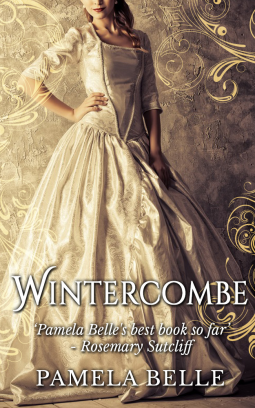
Having read and loved Pamela Belle’s wonderful Heron series, I knew I would also have to try her other series, of which Wintercombe (originally published in 1988) is the first. Although I was looking forward to reading it, I have to admit that after being so captivated by the adventures of the Heron family, I doubted whether I could possibly enjoy this book as much. Of course, I was wrong. What I found was another beautifully depicted setting, another moving story to become absorbed in and another set of characters to fall in love with (or to hate, as the case may be).

Our heroine this time is Silence St. Barbe, whose unusual first name was bestowed on her by her strict Puritan father as it represented one of the qualities he valued in a woman. When we meet Silence at the beginning of the novel, she has been married for several years to another Puritan – George St. Barbe, a man much older than Silence and with little love or compassion for his young wife. With the outbreak of England’s Civil War, George has gone off to fight with the Roundheads, while Silence stays safely behind at Wintercombe, the family’s country estate in Somerset, with her three children and two step-children.

When a troop of Cavaliers descend upon Wintercombe, however, it seems that it is not such a safe haven after all and soon the house is full of noisy, drunken soldiers under the command of the vicious and ruthless Lieutenant-Colonel Ridgeley. As she struggles to keep her family and servants safe and her lovely home intact, Silence is grateful for the help of Captain Nick Hellier who is able to provide some protection from the worst of his Colonel’s cruelty and violence. But much as Silence comes to value Nick’s friendship, she still isn’t sure whether she can trust him…he is one of the enemy, after all.

I have read a lot of novels set during the Civil War but one of the things I liked about Wintercombe (and also The Moon in the Water and The Chains of Fate) is that, although the progress of the war is followed and battles and significant political events are mentioned, the focus is on the lives of ordinary people, showing how, in one way or another, the effects of war eventually touch even those who have stayed at home and aren’t directly involved. A Parliamentarian house being garrisoned by the Royalist army is an aspect of the war that I haven’t read about in fiction before and I really felt for Silence and her family as they tried to prevent their beloved house and gardens from being destroyed. According to the author’s note, the model for Wintercombe is Great Chalfield in Wiltshire. I have never been there but it looks beautiful and is now on my list of places to visit if I’m in that area of the country.

There is also a romantic thread to the story, although I won’t say too much about it other than that I loved both hero and heroine and enjoyed watching their relationship slowly develop, giving them time to get to know each other – and the reader time to get to know both characters. But there are also other relationships which I found it interesting to follow, particularly the ones Silence has with her two teenage stepchildren, the difficult, troubled Rachael and the gentle, loyal Nat.

After finishing Wintercombe I couldn’t wait to continue with the story, so I moved straight on to the second book in the series, Herald of Joy. *Spoiler warning – you may wish to avoid reading the next few paragraphs until you’ve read Wintercombe.*

Herald of Joy takes up the story about six years after Wintercombe ended. Death is approaching for George St. Barbe, Silence’s husband, but it seems that his eldest daughter, Rachael, is the only person at Wintercombe who will truly grieve for him. Silence’s marriage to George has never been a happy one and even in death he manages to cause more problems for her. She and her stepson Nat are dismayed by the contents of his will, which leaves Silence reliant on Nat’s goodwill and Rachael faced with marrying a man who, as the rest of the family can see, is completely unsuitable. To complicate things further, Silence’s younger sister, the inappropriately named Patience, has recently been involved in a plot to restore Charles II to the throne and has been packed off to Wintercombe by their brother, where he hopes she will be kept out of trouble.

For Silence, George’s death means she is now free to be with her lover, Nick Hellier, after six years of separation – but Nick is fighting in Charles’ army at Worcester and is unaware of events at Wintercombe. When the battle ends in defeat for the Royalists, Nick is forced to go on the run. Will he and Silence be reunited at last?

Following Wintercombe’s emotional final chapter, I was hopeful that this novel would have a happier ending. But although some of our characters do find happiness by the end of the book (I’m not saying any more than that, of course) they have to endure more drama, betrayal, heartache and danger before they get to that point! While the story of Silence and Nick is at the heart of the novel again, I also enjoyed catching up with the rest of the St. Barbe family, their servants and friends, and seeing how they had developed and changed during the intervening years. The new characters are great too, particularly the lively, irrepressible Patience, the aristocratic Mervyn Touchet, who bears a striking resemblance to the King, and, best of all, the children’s ‘profane and Royalist’ parrot.

*End of spoilers*

I loved both of these books and will definitely read the other two in the series, A Falling Star and Treason’s Gift. However, I’m aware that they deal with the next generations of the St. Barbe family so I will wait a little while before reading them as at the moment I would probably just want more of Silence and Nick!

Under the Hog by Patrick Carleton

I had been looking forward to reading this book since I first became interested in the Wars of the Roses and decided I wanted to read as much as I could on the subject. First published in 1937, Under the Hog gets good reviews and appears on several lists of recommendations of novels set in this period, so when I settled down to read it I expected something special – and luckily, I wasn’t disappointed.

Under the Hog is a fictional account of the life of Richard III, but along the way we also enter the minds of the other notable men and women of the period, get amongst the action on the battlefield, witness private conferences and murders carried out in secret, and are offered a surprising solution to the mystery of the Princes in the Tower. I don’t think it’s necessary for me to give a synopsis of the plot here, as it does follow the course of real history very closely – and I’ve already written about this period many times before in previous reviews – so instead I’ll just make some general observations about the novel itself.

The approach Patrick Carleton takes is quite unusual. Rather than writing from the perspective of one character or even a few, he writes from many different viewpoints, switching from character to character as the story requires. These include Thomas Wrangwysh, the Mayor of York; the diplomat Philippe Commynes; the scholar Dr Warkworth; Richard III’s close friend Francis Lovell; Margaret of Burgundy, sister of Richard and Edward IV; and Ralph Miller, a young soldier at the Battle of Barnet. So many different voices and personalities, each one coming forward to tell their own part of the story, however big or small, before retreating into the background, in some cases never to be heard from again.

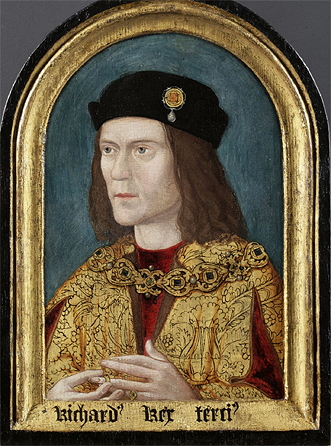
Richard himself is seen mainly through the eyes of other people. It’s only really his wife, Anne Neville, who sees the warm, sensitive man behind the rather grim and austere exterior. Carleton’s portrayal of Richard is largely sympathetic – not a saint, but a human being who sometimes makes mistakes like the rest of us, ruthless when necessary but not needlessly cruel. I appreciated the fact that Carleton takes the time to show us some of the good things Richard achieved during his reign, which are often overlooked, such as his reforms to law and justice. The only thing I didn’t like was his persistence in drawing attention to Richard’s height – or lack of it. When Richard’s skeleton was discovered in Leicester in 2012, it was found that he suffered from scoliosis which would probably have affected his height, but Carleton’s constant descriptions of him as being unusually tiny still seemed a bit strange. He also has Richard continually biting his lip and playing with the rings on his fingers – presumably inspired by the way he has been pictured in his portraits – but again, it was a bit distracting!

The other characters, including the minor ones, are generally very well written. I particularly loved the portrayal of the spiteful, petulant but strangely tragic George of Clarence (I liked the way Carleton tackles the legend of George being drowned in a butt of malmsey) – and of Anthony Woodville, brother of Edward IV’s queen, quietly scheming to keep control of the power his family wield in England. It’s Anthony who, in one of the most memorable scenes in the book, comes up with the idea of murdering the deposed Henry VI in the Tower of London, which I think might be the first time I’ve seen him blamed for that particular incident.

I loved this book, but I don’t think I would necessarily recommend it as a first introduction to Richard III and the Wars of the Roses. The reader is very much dropped straight into the action and it is assumed that you will have at least some background knowledge; names are given their less familiar old-fashioned spellings – Tydder and Wydvylle for Tudor and Woodville – and there are passages of untranslated French. This is probably one to enjoy after you’ve already gained a bit of familiarity with the period.

If I hadn’t known that this was a book from the 1930s I would probably have assumed it was a lot more recent than that, as it has aged very well. It is witty, unromantic and written with a mixture of darkness and lightness. Although it unfortunately seems to be out of print at the moment, if you share my interest in this fascinating period of history, you could do a lot worse than to find yourself a copy of Under the Hog.

The Muse by Jessie Burton

This is Jessie Burton’s second novel, following her very successful debut, The Miniaturist. I had one or two problems with The Miniaturist and didn’t fall in love with it the way so many other people seemed to, but I did like it enough to be interested in reading more of her work.

The Muse is split between two different time periods. In 1967, we meet Odelle Bastien, a twenty-six-year-old woman from Trinidad who is looking for work in London. As she settles into her new job as a typist at the Skelton Institute, a prestigious art gallery, Odelle strikes up an unusual friendship with her employer, the glamorous and secretive Marjorie Quick, who encourages her to follow her ambition of becoming a writer. At a party one night Odelle is introduced to Lawrie Scott, who shows her a painting he has inherited from his mother. A few days later he brings it to the Skelton where it causes a great deal of excitement; it seems that Lawrie’s painting could be a lost masterpiece.

To discover the origins of the painting, we have to go back to Spain in 1936 where Austrian art dealer Harold Schloss and his English wife, Sarah, are living in a rented finca – a country house – in a village near Malaga. The couple’s daughter, nineteen-year-old Olive, has ambitions of her own but is keeping her talents hidden knowing that they wouldn’t be appreciated by her father. When local painter and political activist Isaac Robles and his sister Teresa come into her life, Olive has some big decisions to make; this could finally be her chance to follow her dreams.

What is the truth behind the painting once owned by Lawrie Scott’s mother? What really happened to the artist Isaac Robles, whose final fate is unknown? And is Marjorie Quick really who she claims to be? Like The Miniaturist, The Muse has an element of mystery, but unlike the previous book, it is grounded entirely in reality with no hints of the supernatural. I thought the writing style felt quite different too, especially as this one is written in the past tense instead of the present tense of The Miniaturist. In fact, I would almost go so far as to say that they could have been written by two different authors, which is not necessarily a bad thing as it’s good to see authors trying something new.

I found both threads of the novel interesting to read. In the 1960s, Odelle gives us some insights into what it’s like to be an immigrant from the Caribbean living in Britain and what it’s like to be black in a predominantly white community. However, I couldn’t help thinking that Odelle herself feels almost superfluous to the story; it’s Lawrie who owns the painting and Marjorie Quick who is connected in some way with the events of 1930s Spain. Usually in this type of novel, the modern day (or relatively modern, in the case of this book) narrator has some kind of personal link with the historical characters, but Odelle doesn’t, which seemed a bit strange to me.

The 1930s storyline is where most of the real action takes place. With Spain on the brink of civil war at that time, Spanish politics form a large part of the story – not just as a backdrop, but with a real significance to the lives of the Schloss and Robles families. A lot of care has obviously gone into creating the Spanish setting – the descriptions feel detailed and vivid – but again, my problem was with the characters. None of them came fully to life for me and I struggled to understand their motives and the decisions they made.

Although there were some aspects of the novel I liked – such as the mystery surrounding Marjorie Quick and the exploration of the struggles faced by women in the worlds of art and literature in years gone by – I think of Jessie Burton’s two novels I probably preferred The Miniaturist.