The Devil’s Flute Murders by Seishi Yokomizo (tr. Jim Rion)

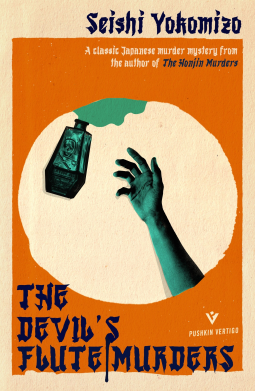
The Devil’s Flute Murders, first published in Japanese in 1953, is the fifth of Seishi Yokomizo’s detective novels to be made available in new English translations by Pushkin Press. I’ve now read all five of them and enjoyed some more than others; I think this is one of the best, along with The Inugami Curse and The Honjin Murders.

In this book, set in 1947, Yokomizo’s dishevelled, nervous, stammering detective, Kosuke Kindaichi, is approached by a young woman who wants him to investigate the disappearance of her father, Hidesuke Tsubaki. Tsubaki, who had been a viscount until the recent abolition of the Japanese aristocracy, was found dead in the woods several weeks after leaving his family home, but although his daughter Mineko was the one to identify the body, she now has reason to believe he isn’t dead at all. There have been sightings of a man closely resembling Tsubaki in the grounds of the family estate and sounds of the haunting flute playing for which he was famous in his lifetime.

That evening, Kindaichi is invited to a séance at the Tsubaki home, which has been arranged by the viscount’s widow in the hope of discovering whether her husband is alive or dead. At the end of the event, a recording of Tsubaki’s final composition, The Devil Comes and Plays His Flute, begins to play by itself – and next morning, Kindaichi hears the news that another family member has been found dead in a locked room during the night. Who is responsible for the murder? Is the viscount’s ghost really haunting the family estate? And what is the meaning of the strange symbol found at the scene of the crime?

Yokomizo’s plots are always clever and fascinating and don’t rely quite as heavily on complex puzzle-solving as some of the books I’ve read by other Japanese classic crime authors. Understanding the relationships between the characters, their family secrets and their personalities and motives is just as important as working out how the crimes were committed. I guessed who the culprit was but didn’t know why they did it – I’m not sure if it would have been possible to know until the backstory of each character was revealed, but maybe I missed some clues.

Something else I like about this series is the insight the books offer into life in Japan during the post-WWII years. In The Devil’s Flute Murders the shadow cast by the war is particularly strong. There are mentions of food shortages, problems with electricity supplies and overcrowded, unreliable public transport. The new constitution drafted by the Allies during the occupation of Japan is the reason why Tsubaki and other members of the nobility have lost their titles, while bombed out houses and damage from fire has led to Tsubaki’s extended family all coming to live on the former viscount’s estate, bringing them together in one place for the events of the novel to play out.

This is the first book in the series to be translated by Jim Rion (the others have been translated by Louise Heal Kawai, Bryan Karetnyk and Yumiko Yamazaki). I think all of the translators have done a good job and I haven’t noticed any real differences in quality or readability between the different translations. My only problem with this one came when Kindaichi’s investigations take him from the Tsubaki home in Tokyo to Awaji Island near Kobe in the west and I found the way Rion chooses to write the western accent slightly odd and jarring. Of course, I appreciate how difficult it must be to capture nuances of accent and dialect in a translation!

I’m already looking forward to the next Kindaichi mystery, The Little Sparrow Murders, which is due to be published next May and sounds just as intriguing as the others.

Thanks to Pushkin Vertigo for providing a copy of this book for review via NetGalley.
Appointment with Death by Agatha Christie

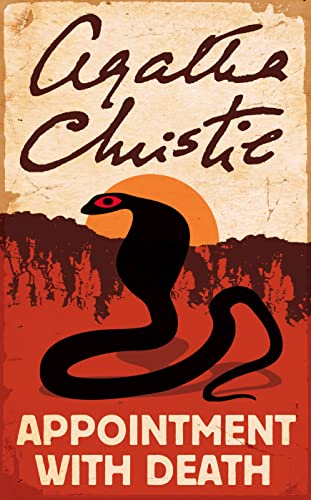
The September prompt for Read Christie 2023 is a motive: hatred. This is obviously a common motive for murder and there are plenty of Christie novels to fit this month’s theme, but the suggested title is Appointment with Death, a 1938 Poirot mystery set in the Middle East.

Newly qualified doctor Sarah King and French psychologist Dr Gerard are relaxing in the lounge of their Jerusalem hotel when their attention is drawn to an American family who have just entered the room. The head of the family is Mrs Boynton, a monstrous woman who takes a sadistic pleasure in controlling the lives of her adult children. Even her eldest stepson Lennox, who is married, is still completely under her thumb. As Sarah and Dr Gerard learn more about the Boyntons, they each begin to develop a personal interest in the family – Sarah because she has become romantically attracted to Lennox’s brother, Raymond, and Gerard because he thinks he has spotted the early signs of schizophrenia in the youngest Boynton child, Jinny.

When the party moves on to Petra, with the additions of British politician Lady Westholme, her spinster friend Amabel Pierce, and a certain Hercule Poirot, a murder takes place. Nobody has much sympathy for the victim, but the murderer must still be caught – and who better to catch them than Poirot? Insisting that he can solve the mystery in twenty-four hours, he sets out to interview the suspects and sort through the available clues, while remembering a conversation overheard from his hotel window one night: “You do see, don’t you, that she’s got to be killed?”

I always enjoy Christie – even her weaker books are entertaining – but this is a particularly good one! The relationship between the members of the Boynton family is fascinating; Mrs Boynton is a truly horrible woman who has ensured that her children and stepchildren have no friends, no freedom and no independence. Why she has allowed them to come on this trip at all is a mystery in itself and one of the questions Poirot will have to answer.

I loved the Middle East setting (a part of the world Christie knew well due to her travels with her archaeologist husband, Max Mallowan) and although the crime is committed amongst the historic sites of Petra, it almost still has the feel of a typical country house mystery with caves and tents taking the place of rooms. I can’t really claim to have solved the mystery, but I did narrow it down to two suspects and one of them was correct! I missed an important clue which would definitely have pointed me in the right direction earlier on if I had picked up on it, but I think Christie is very fair with the reader in this book and all the clues are there to be seen, as long as you’re paying attention.

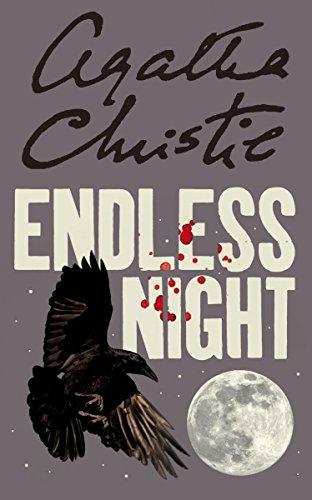
I’m not sure yet whether I’ll be taking part in Read Christie next month, but if not I’m looking forward to reading Endless Night in November.

He Who Whispers by John Dickson Carr

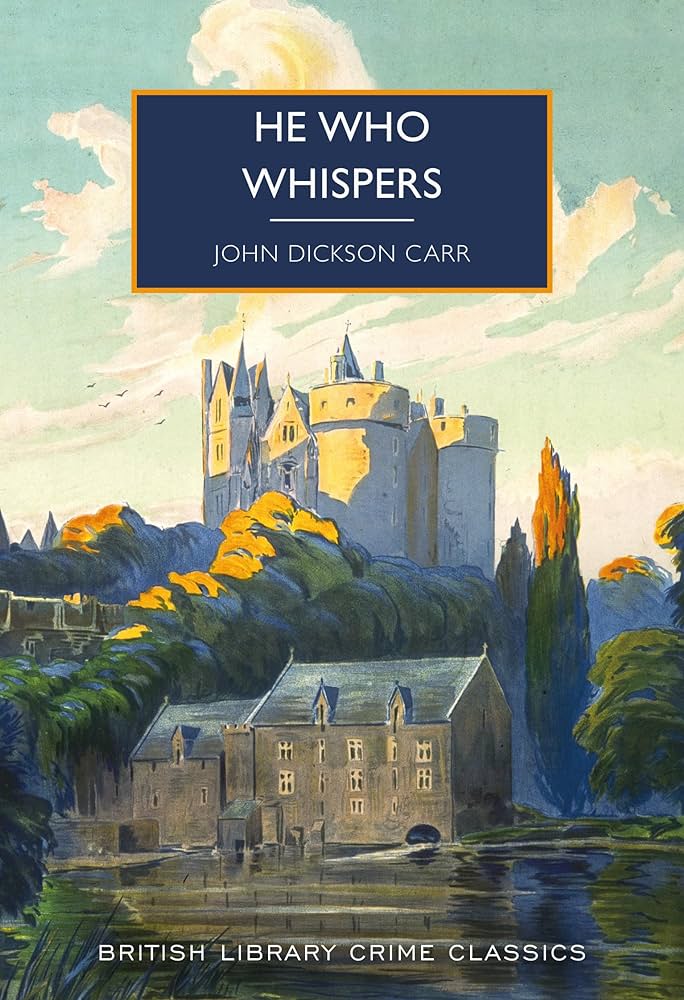
He Who Whispers is one of John Dickson Carr’s Dr Gideon Fell mysteries, originally published in 1946 and recently reissued as a British Library Crime Classic. I read another in the series, The Black Spectacles, earlier this year and loved it, so I had high hopes for this one.

The book is set in the aftermath of World War II and is written from the perspective of Miles Hammond, a Nobel Prize winning historian who has just inherited his uncle’s estate, which includes a house in the New Forest containing a large collection of books. As the novel opens, Miles is in London looking for a librarian to assist with his uncle’s collection, and while there he accepts an invitation to attend a meeting of the Murder Club, a group who get together regularly to try to solve true crime cases. On arriving at the venue, Miles is surprised to find that nobody else is there apart from a young woman, Barbara Morrell, and tonight’s speaker, Professor Rigaud.

Despite only having an audience of two, Rigaud proceeds to tell them the story of a crime which took place in France before the war and is both unsolved and seemingly impossible. It involves the murder of a wealthy Englishman, Howard Brooke, found stabbed with his own sword-stick while apparently alone on top of a high tower with witnesses on three sides and the fourth unreachable as it overlooks the river. Fay Seton, Brooke’s secretary, is suspected of the crime for the dubious reason that she is believed to be a vampire – and only a creature that can fly through the air could have reached the top of the tower!

Miles is intrigued by Rigaud’s story and when Fay Seton turns up in London, he offers her the job of librarian so that he can find out more. Heading for his uncle’s house in the New Forest with Fay and his sister Marion, Miles finds that he is becoming increasingly fascinated by the suspected vampire – but when Marion has a terrifying experience while alone upstairs in her bedroom, does this mean Fay has struck again or is there another explanation for the strange occurrences? Luckily, Gideon Fell arrives that same night and begins to investigate!

I enjoyed He Who Whispers, but not nearly as much as I enjoyed The Black Spectacles and I’m not really sure why this particular book is considered one of Carr’s best (apparently even by Carr himself). Yes, the solution is very clever, but I felt that we, the reader, are given very little chance of solving it ourselves, particularly as we don’t really see any of Fell’s thought processes during the novel. He reveals everything in the denouement at the end, but until then we’re as much in the dark as Miles Hammond. There was also too much focus on the vampire storyline for my taste; I thought the mystery was interesting enough without the supernatural element, but I expect other readers will love that aspect of the plot.

Carr captures the feel of post-war Britain very well; a surprising number of 1940s crime novels barely refer to the war at all, but in this one it’s an integral part of the story. Several of the characters in the novel have served in the war, there are mentions of rationing and bombed-out streets and of the effect all of these things have had on people’s mental health. There’s quite a small cast of characters and Carr takes the time to flesh each of them out, but I never really warmed to our protagonist, Miles – he has two possible love interests throughout the novel and although his final decision could have gone either way, I felt that he made the wrong choice in the end!

I want to read more of the Gideon Fell mysteries, so if you’ve read any of them please let me know which ones you particularly enjoyed.

Ibiza Surprise by Dorothy Dunnett

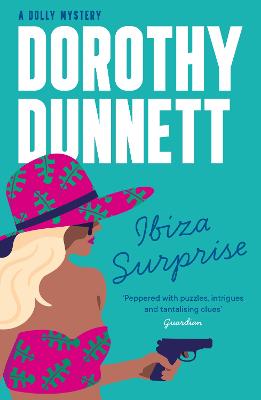
Today (25th August) marks the centenary of one of my favourite authors, Dorothy Dunnett, and to celebrate I decided to read her 1970 mystery novel Ibiza Surprise, which has recently been released in a new edition by Farrago Books. Although Dunnett is better known for her historical novels (The Lymond Chronicles, the House of Niccolò series and King Hereafter, all of which I highly recommend), she also wrote seven of these contemporary mysteries featuring the portrait painter Johnson Johnson and his yacht, Dolly. The original title of this one was Dolly and the Cookie Bird and in the US, Murder in the Round.

Each book in the series is set in a different part of the world and narrated by a different young female protagonist. The narrator this time is Sarah Cassells, the twenty-year-old daughter of Lord Forsey of Pinner, who has been training as a cook since leaving school. Despite her father’s title, he is not a rich man and Sarah is earning a living by providing catering for private parties. When she hears that Lord Forsey has been found dead in an Ibiza boatyard, apparently having committed suicide, she refuses to accept that her father has killed himself. Suspecting murder, she sets off for Ibiza, where she hopes to uncover the truth.

Staying with the wealthy family of a school friend, Sarah finds herself doing the catering while also investigating her father’s death – and at the same time, looking out for a potential future husband. This last task could be easier than expected, as within hours of landing she becomes surrounded by eligible men. However, it appears that at least one of these men may not be all he seems – but which of them can and cannot be trusted?

From a mystery perspective I enjoyed this book more than the previous two – Tropical Issue and Rum Affair – because I found the plot easier to follow. I didn’t solve it all myself, though, and had to wait until the end for everything to be revealed. Sarah is not a character I could particularly like or identify with, but Dunnett perfectly captures her personality through her narrative style: an intelligent but frivolous young woman interested in men, parties, clothes and having a good time. Ibiza, of course, is an ideal place for Sarah to indulge her interest in those things, although I expect it was not quite the same there in 1970 as it is today! Away from the social whirl, there are also some lovely descriptions of the scenery, as well as some insights into the cultural side of life on the island.

We still don’t know a lot about the curiously named Johnson Johnson, apart from the fact that he’s a secret agent of some sort. He is on the peripherals of this particular mystery, although there’s obviously a lot going on behind the scenes that we don’t see. In this series, Dunnett employs the same literary device as in her other books, allowing us to see her heroes only (or mainly) through the eyes of other characters, which leaves a lot open to misinterpretation.

I will get to the other four Johnson mysteries eventually, beginning with the next one, Operation Nassau, which has also just been reissued. Meanwhile, if you think Dunnett’s historical novels could be more to your taste, here’s a post I put together for my Historical Musings series a few years ago on Reading Dorothy Dunnett – and just for fun on what would have been her 100th birthday, some Lines from Lymond!

Death Comes as the End by Agatha Christie

This month’s prompt for Read Christie 2023 is a murder method: ‘a fall from height’. I’ve missed the previous two months of the challenge as I’ve been reading other things, but I decided to take part in this one as the suggested title – Death Comes as the End – was one I hadn’t read before and which has always sounded particularly intriguing to me.

First published in 1944, Death Comes as the End is the only historical novel Christie wrote. Unlike her other books, which are all set in the 20th century, this one takes place in Ancient Egypt, a setting that would have been familiar to Christie through her interest in archaeology. I’ve seen it described as the first full-length historical mystery, although I’m not sure if that’s true.

The novel is written mainly from the perspective of Renisenb, a young widow who, following her husband’s death, has returned to her family home by the Nile. Her father Imhotep, a mortuary priest, is away on business in the north, but Renisenb is reacquainted with the other members of the household: her older brothers Yahmose and Sobek and their wives; her younger stepbrother, Ipy; her grandmother, Esa; and several of the family’s servants, including Henet, the housekeeper and Hori, the scribe. There are already some tensions simmering below the surface, but when Imhotep returns with a new concubine, Nofret, things become much worse.

Nofret is a bitter, spiteful woman who seems determined to cause trouble for everyone else. She attempts to manipulate Imhotep into disinheriting his three sons and her plan seems to be working – until Nofret herself is found dead at the bottom of a cliff. As nobody had liked her, there are plenty of suspects, but the situation quickly becomes more complex when more deaths occur. Some of the family believe that Nofret’s spirit is taking her revenge, while others are convinced that a human hand is behind the murders. Renisenb isn’t sure what to think or who to trust, but she knows that if the murderer isn’t caught soon, her own life could be in danger.

I really enjoyed this book, although I felt that the absence of a detective made it difficult for the reader to solve the mystery as there’s no discussion of clues or questioning of witnesses to point us in the right direction. I’m sure you could still correctly identify the murderer if you were paying attention, though; looking back, there are two moments in particular that hint at who the culprit is, but I didn’t pick up on either of them while I was reading. The pool of suspects is considerably narrowed down by the end of the book as well – there’s such a high body count it started to remind me of And Then There Were None. There’s also a romantic element to the novel and although it only forms a small part of the story, I was pleased with the way it was resolved at the end. I would have made that choice myself!

I was surprised to read in Christie’s foreword that “Both places and time are incidental to the story. Any other place at any other time would have served as well.” On the one hand, I can see what she means, because the plot, the characters, and the relationships between the family members are very much what you would expect to find in one of her 20th century country house mysteries. On the other, it seems a strange thing to say because why choose a particular setting if any other would have done just as well? In any case, much as I love her Poirot and Miss Marple novels, I enjoyed being transported back to Thebes in 2000 BC for this one – it was something different and unusual!

This is book 9/20 of my 20 Books of Summer 2023

This is book 30/50 for the 2023 Historical Fiction Reading Challenge.

The Cat Saw Murder by Dolores Hitchens

This week, Mallika of Literary Potpourri is hosting Reading the Meow, a celebration of books featuring cats. When this event was first announced, I wasn’t sure if I had anything suitable; The Life and Opinions of the Tomcat Murr by ETA Hoffmann would have been perfect, if I hadn’t just read it last year. Then I came across a whole series of books with cats in them (or in the titles, at least): Dolores Hitchens’ Rachel Murdock mysteries, some of which have now been reissued as part of the American Mystery Classics imprint. The Cat Saw Murder, originally published in 1939, is the first and I hoped it would be a good choice for Reading the Meow.

The novel begins with elderly Miss Rachel Murdock going to stay with her adopted niece, Lily Sticklemann, who lives at Breakers Beach near Los Angeles. Lily has hinted that she’s in trouble and needs advice, so Miss Rachel has packed her case and set off by train to see if she can help. Her less adventurous sister Jennifer has stayed behind, but Miss Rachel is accompanied by Samantha, the black cat who once belonged to their other sister, Agatha. Agatha was an eccentric woman and on her death she left her fortune to the cat, meaning that Samantha is now a wealthy heiress in her own right. After meeting Lily and discovering that she is having financial difficulties, Miss Rachel becomes concerned for Samantha’s safety, suspecting that Lily has her eye on the cat’s inheritance. However, Lily herself is the one who is murdered – and it seems that Samantha may have been a witness.

There are plenty of suspects – Lily lives in a boarding house, Surf House, and is murdered in her bedroom, which means all of the other residents of the building immediately come under suspicion. Several also have a motive for the crime, as Lily owes gambling debts to some of them and is thought to have been romantically involved with another. Although this is not a locked-room mystery exactly (we know that the bedroom door opens and closes more than once during the night of the murder), it does share many elements of that kind of mystery, but thankfully never becomes too concerned with the puzzle-solving aspects at the expense of the characters and motives.

Miss Rachel is a great character; I found her very endearing and quite similar to Agatha Christie’s Miss Marple in many ways, although she’s more agile and energetic for her age than Miss Marple is and spends a portion of the book searching rooms and crawling around in the attic. She has a good relationship with the detective investigating the murder, Lieutenant Mayhew, and they both contribute, in their different ways, to the solving of the mystery.

The plot feels slightly disjointed at times and there are some confusing shifts between past and present tense (the book seems to be narrated by someone at an unspecified future date looking back on Mayhew and Miss Rachel’s first case), but otherwise I really enjoyed this book and it did turn out to be a good choice for Reading the Meow. Samantha the cat, although not the main focus of the story, does have a substantial part to play and provides some intriguing clues. The second book in the series is The Alarm of the Black Cat and I think I’ll be tempted to read it soon!

This is book 1/20 of my 20 Books of Summer 2023

Inquest by Henrietta Clandon

Inquest is one of four Henrietta Clandon mysteries available from Dean Street Press. Many of you will have heard the sad news earlier this year of DSP publisher Rupert Heath’s death, but it has been confirmed that the titles currently in print will still be available as long they have the copyrights. I loved the first Clandon novel I read, Good by Stealth, so I thought I would read another one while I still had the opportunity.

Henrietta Clandon was a pseudonym of John Haslette Vahey, a Northern Irish author who also wrote under several other names, most often Vernon Loder. Inquest, originally published in 1933, was the first of his books under the Clandon name. I’ve never read anything else he has written, so I don’t know how much difference there is between the various pseudonyms in terms of writing style or topics.

The novel opens six months after the death of William Hoe-Luss, an English businessman believed to have been poisoned by consuming deadly mushrooms during a house party in France. Now his widow, Marie Hoe-Luss, has assembled all of the original guests – with the addition of Dr Soame, William’s physician – for another house party at Hebble Chase, her estate in England, where she plans to hold a sort of informal ‘inquest’ into her late husband’s death. However, when one of the guests breaks their neck falling from a high window, it seems that the killer may have struck again.

Although the police do eventually arrive on the scene, most of the sleuthing in the book is done by Dr Soame, who also narrates the whole novel. He’s an interesting choice of narrator as his medical knowledge and previous experience as a police surgeon means he works alongside the detectives at times, while also being one of the party, mixing with the suspects. Soame already knows some of the guests through his position as the Hoe-Luss family doctor, but others are new to him which allows the reader to get to know them along with Soame.

I enjoyed the first half of the book, which introduces the characters as they arrive at the estate for Marie’s inquest – an assortment of friends, family members, business partners and former lovers, which means there are plenty of tensions, entanglements and motives for murder. They aren’t the most pleasant bunch of people, but that’s common in Golden Age mysteries so not unexpected and not too much of a problem! However, I felt that later in the book, after the second death takes place, the plot became unnecessarily complicated and I began to struggle to keep everything straight in my mind.

I really wanted to love this book, so I’m disappointed that I didn’t. It’s a good, solid mystery novel, apart from getting a bit confusing towards the end, but there’s nothing to make it stand out from other similar books in the genre, unlike Good by Stealth, which was unusual, witty and clever. I’m not sure whether I’ll read the other two Henrietta Clandon books – I suspect I’ve already read the best one – but maybe I’ll try a Vernon Loder at some point.