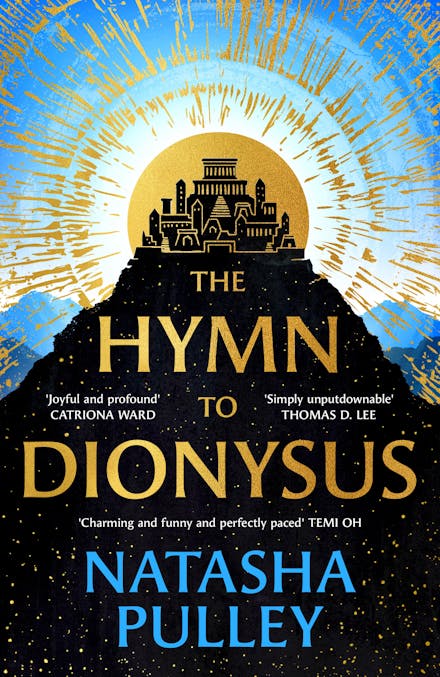
The Hymn to Dionysus by Natasha Pulley

I know what you’re thinking: not another Greek mythology book! There have been so many in recent years, it would be easy to dismiss this one as just more of the same. However, I found it completely different from any of the others I’ve read, and despite the marketing it’s nothing like the Greek retellings written by Madeline Miller or Jennifer Saint.

The Hymn to Dionysus is narrated by Phaidros, whom we first meet as a child being trained as a knight in a Greek legion (knight is the term Pulley uses, but it clearly just refers to a mounted soldier rather than our image of a medieval knight). Phaidros doesn’t know who his parents are, but that’s not considered important in the Theban army, where your duty and loyalty is to your commander – in this case, Helios, who provides all the love, guidance and leadership Phaidros needs. He never questions his commander’s orders until the day when, during a trip to Thebes, Phaidros rescues a blue-eyed baby from a fire at the palace and Helios insists on the baby being abandoned at a temple, never to be mentioned again.

Many years later, Phaidros is a commander himself, training new recruits in Thebes. When Pentheus, the crown prince, disappears, desperate to escape an arranged marriage, Phaidros is drawn into the search, something which leads him to an encounter with a blue-eyed witch, Dionysus. The arrival of Dionysus coincides with an outbreak of madness amongst the knights of Thebes and stories of a mysterious new god. Is there a connection between Dionysus and the baby boy rescued by Phaidros all those years ago?

I read Natasha Pulley’s The Bedlam Stacks, set in 19th century England and Peru, when it was published in 2017 and although it was getting glowing reviews from everyone else at the time, I didn’t like it very much, mainly because I found the language irritatingly modern and anachronistic and the magical realism elements were stronger than I expected. I haven’t tried any of her other novels since then, but I loved one of her short stories which appeared in The Winter Spirits, a ghost story anthology, so I thought it would be worth giving her another chance. I’m glad I did, because I found this book a lot more enjoyable. It’s still written in very modern language, but that doesn’t seem to bother me quite as much when a book is set in the ancient world, although I would find it difficult to explain why.

Although I’ve read other Greek mythology novels in which Dionysus and some of the other characters appear, I don’t really have a very extensive knowledge of the myths surrounding them (I haven’t read Euripides’ play, The Bacchae, in which some of this is covered) and I think this was probably actually a good thing, as it meant I could just enjoy the story without having too many preconceived expectations. As I’ve said, it’s not a typical retelling anyway; as far as I can tell, it draws on various aspects of different myths and blends them together to form an original story. There are elements of magic – ivy that suddenly begins to grow when Dionysus is around; masks that bestow new characteristics on the wearers – but the book never quite becomes full-blown fantasy. I loved Pulley’s descriptions of the giant mechanical statues she calls ‘marvels’ and although I doubt they would have existed in the way she describes, there are examples of automata dating back to Ancient Greece so it could have been possible.

The main focus of the book, though, is on Phaidros and his relationships – particularly the one with Dionysus, which develops slowly as Phaidros wonders whether Dionysus is the baby he rescued all those years ago or whether he isn’t, whether he’s the ‘mad god’ everyone is talking about or whether he is just the witch he claims to be. I liked Phaidros and enjoyed the way he narrated his story, so even though this is a long book I felt that the pages went by quite quickly. I would probably consider reading some of Natasha Pulley’s other books, if anyone has any recommendations.

Thanks to Gollancz for providing a copy of this book for review via NetGalley.
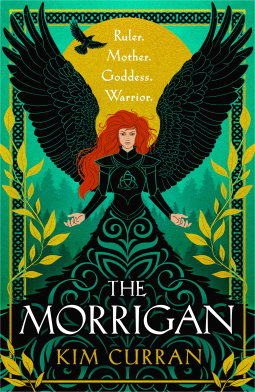
The Morrigan by Kim Curran – #ReadingIrelandMonth25

Trying to tell my story is like trying to hold the smoke of a forest fire in your hands or force an ocean into a cup. I resist. I re-form. How could they succeed when even I didn’t know who I was from one moment to another?

There have been so many Greek mythology retellings recently, it came as a nice surprise to see that this new novel by Kim Curran takes as its subject not another Greek goddess, but an Irish one. In Irish mythology, the Morrigan is known as the goddess of war and fate, a fierce, shapeshifting figure who leads warriors into battle and can foretell whether they will live or die. She is sometimes known as Badb, sometimes as Macha and sometimes as Nemain and often believed to be all three. In The Morrigan, Kim Curran sets out to tell her story.

The novel begins with the Tuatha Dé Danann, the supernatural race to which the Morrigan belongs, returning to Ireland having spent many generations ‘in the north of the world learning arts and magic’. Soon after their arrival, they defeat the Fir Bolg in battle to reclaim Ireland for themselves, only to be defeated in turn by the invading Milesians, who drive them underground. Rather than stay beneath the earth with her own people, the Morrigan goes out into the world where she discovers that even the power of a goddess is limited in a land ruled by men.

The Morrigan is beautifully written and as a debut novel, I thought it was very impressive. Having very little knowledge of Irish mythology, I found it fascinating and particularly enjoyed the first section about the Tuatha Dé Danann, where the writing style, together with the shapeshifting, magical beings and epic battles, makes it feel like a high fantasy novel. The later stages of the book are based on the Ulster Cycle – with the Morrigan crossing paths with Medb, Queen of Connacht; Conchobar, King of Ulaid; and the legendary warrior Cúchulainn – and feel slightly more grounded in reality, but less captivating for me personally. I did love the way Curran incorporates all of the Morrigan’s three parts into the novel, moving seamlessly from Badb to Macha to Nemain, showing how her personality and actions change as she takes on each persona, while at the same time retaining memories of her previous lives and experiences.

However, there was so much happening in this book that I started to feel overwhelmed. There seemed to be no real direction to the plot and it felt like a string of short stories and separate episodes rather than one cohesive narrative. I think there was easily enough material here for a trilogy, rather than trying to pack everything into a single book. Maybe readers more familiar with Irish myth and legend would have found it all easier to follow than I did, but as a newcomer it was just too much for me to process all at once.

I would still highly recommend this book to anyone interested in sampling some Irish mythology – or anyone with existing knowledge who wants to see how Kim Curran approaches the subject. It has certainly left me wanting to look into some of the stories and characters in more depth and wishing more authors would move away from Greek mythology to explore other parts of the world!

Thanks to Michael Joseph for providing a copy of this book for review via NetGalley.
As this book is set in ancient Ireland and the author Kim Curran was born in Dublin, I am contributing this review to #ReadingIrelandMonth25 hosted by Cathy of 746 Books.

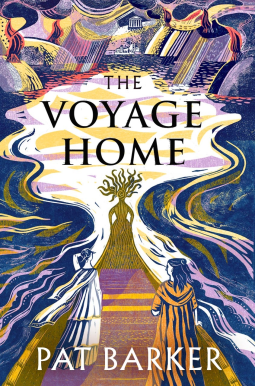
The Voyage Home by Pat Barker

This is the final novel in Pat Barker’s trilogy telling the stories of some of the women involved in the Trojan War. Books one and two, The Silence of the Girls and The Women of Troy, focus on Briseis, who was given to Achilles as a prize of war, although I was surprised by the number of male perspectives that are also included in those two books, considering the titles! In The Voyage Home, we leave Briseis behind to follow three other characters as the victorious Greeks return home from the war.

One of these is Cassandra, the Trojan princess and prophet who is cursed never to be believed. Like Briseis, Cassandra has become a war prize – in her case, she has been taken as a concubine by Agamemnon, King of Mycenae. Then there’s Ritsa, a Trojan slave and healer given the job of accompanying Cassandra on the journey to Mycenae and acting as her personal servant. Finally there’s Clytemnestra, Agamemnon’s wife, who is grimly preparing for her husband’s return. It’s been a decade since Agamemnon sacrificed their daughter Iphigenia to the gods in exchange for a wind to sail to Troy, but Clytemnestra has never forgiven him and is ready to take her revenge.

I enjoyed the first two books in this trilogy and I did like this one as well, but not quite as much. I’ve read several other novels about Clytemnestra and the events of the Oresteia recently (including Elektra by Jennifer Saint and Clytemnestra by Costanza Casati) and I felt that her sections of the novel didn’t offer me much that was new or different. Having said that, the way Barker portrays Clytemnestra’s emotions – her anger, bitterness and grief – was very well done. There are also some atmospheric scenes of ghostly children haunting the palace – although, oddly, chanting British nursery rhymes such as Oranges and Lemons, which pulled me right out of the Ancient Greek setting!

Of the main characters, Ritsa is probably the easiest to like and as a servant, of a lower social status than the others, she has an interesting perspective on the events that unfold. Cassandra is a fascinating, complex character in the unusual position of being both enslaved and the wife of the king. She has already predicted the deaths of herself and Agamemnon but due to the curse she is under, nobody takes her seriously. I would have liked more of the book to have been written from Cassandra’s point of view, but instead Barker concentrates on showing her through the eyes of the other women: Clytemnestra, who views her with suspicion (after all, Agamemnon was her husband first) and Ritsa, who initially resents Cassandra for not being her beloved friend Briseis, who has not accompanied them to Mycenae. Ritsa sees Cassandra as wild and deluded, but gradually starts to have more sympathy for her.

This is a satisfying end to the trilogy, although if you haven’t read the first two books I’m sure you could read this one as a standalone.

Thanks to Hamish Hamilton for providing a copy of this book for review via NetGalley.
Hera by Jennifer Saint

In her previous novels, Jennifer Saint has retold the stories of several women from Greek mythology including Ariadne, Elektra and Atalanta. Her new book, Hera, as the title suggests, is a retelling of the life of Hera, Greek goddess of marriage.

The novel opens with Hera helping her brother Zeus to overthrow their father, the Titan Cronus, in a great war. With Cronus and the other Titans defeated and banished, Zeus divides control of the world between himself and his two brothers, Poseidon and Hades. Hera wants nothing more than to rule beside Zeus, so while her sisters Demeter and Hestia find new roles for themselves as goddesses of the harvest and the hearth respectively, Hera ends up marrying her brother. She isn’t able to gain the power she desires, however, and begins to grow increasingly resentful of Zeus.

Zeus makes Hera the goddess of marriage, presiding over weddings and childbirth, but their own marriage is far from perfect. Zeus is an unfaithful husband, cheating on Hera with nymphs, mortals and other goddesses, producing a multitude of children who either join the gods on Mount Olympus (such as Artemis and Apollo) or become heroes in the mortal world (Heracles and Perseus). Hera is determined to take revenge, but is this really her best route to happiness?

Hera is usually depicted in Greek myths as vengeful, jealous and vindictive and although Jennifer Saint has clearly set out to paint a more nuanced picture of her here, she doesn’t really do much to change that overall impression. I could certainly have sympathy for her as she’s repeatedly betrayed and treated badly by Zeus and struggles to achieve what she sees as her rightful position as his equal, but Saint’s Hera is still not an easy character to like. Her actions often seem petty and spiteful, taking out her frustrations not just on Zeus but on his children and their mothers, despite the fact that most of those women were actually raped or tricked by Zeus.

Hera is involved in many of the key moments and incidents from Greek myths and I felt that Saint tried to include absolutely everything in this book. Some episodes are fascinating and gripping, but I think others could probably have been left out. My favourite parts of the book were Hera’s visits to the caves inhabited by Ekhidna (usually spelled Echidna), the half woman-half snake who is mother to many of the most famous Greek monsters including Cerberus, the Hydra and the Chimera. In this version, Hera is the mother of Typhon, a monstrous snake-like giant, whom she gives birth to secretly and gives to Ekhidna to raise without Zeus’s knowledge.

This isn’t my favourite Jennifer Saint book – that would probably be Ariadne – but I did find it quite enjoyable and it was interesting to see Saint writing from the perspective of a goddess rather than a mortal woman for a change. Ultimately, though, I was left with a feeling of sadness because Hera seemed so bitter and unhappy; I wished she could have carved out her own path in life like Demeter and Hestia instead of allowing Zeus to do it for her. I’ll be interested to see who Saint writes about next; I would love a whole novel about Ekhidna and her monsters!

Thanks to Headline, Wildfire for providing a copy of this book for review via NetGalley.

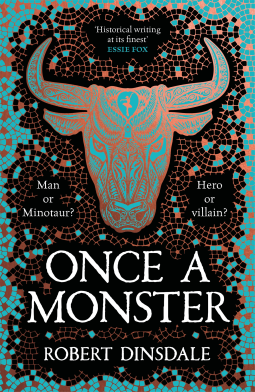
Once a Monster by Robert Dinsdale

Novels inspired by Greek mythology seem to have become very popular in recent years, but Robert Dinsdale’s new book, Once a Monster, is something slightly different. More reimagining than retelling, it’s set in Victorian London and owes as much to Charles Dickens’ Oliver Twist as it does to Greek myth.

Ten-year-old Nell Hart is a mudlark, one of a small group of children, orphaned or otherwise neglected and vulnerable, who spend their days searching through the mud of the River Thames for ‘treasures’ – pieces of coal or iron – to give to their master, Benjamin Murdstone. It’s a difficult life for a child, but Nell has a pair of satin ballet slippers hidden inside her straw mattress, a gift left to her by her seamstress mother, and she is sustained by dreams of one day becoming a ballerina.

One morning, Nell is the first down to the river to begin another day of mudlarking and so she is the first to discover a body washed up on the shore. At first she’s unmoved by the sight – it’s not the first dead body she’s seen – but on closer inspection she discovers that this is the body of no ordinary man. Unusually tall, with enormous hands and feet, there are strange growths on each side of the head, almost like the beginnings of horns. The other mudlarks have arrived and are urging Nell to steal the man’s boots, when she makes another shocking discovery – he is still alive.

His name is Minos and as he returns to consciousness, memories slowly begin to surface of a time long ago and another life as a Minotaur in a labyrinth. But is Minos really the Minotaur of Greek myth or is he just a man after all? What will Murdstone do when he sees what Nell has found for him – and will Nell ever break free of her mudlark existence and learn to dance?

This is the first book I’ve read by Robert Dinsdale so I didn’t know what to expect, but I found it beautifully written and atmospheric. As I’ve mentioned, there’s a strong Dickens influence, from the descriptions of the poorer parts of Victorian London to the portrayal of Mr Murdstone, who is obviously inspired by Fagin, the leader of the gang of pickpockets in Oliver Twist. As the villain of the novel, he’s a very human monster and it quickly becomes clear that a central theme of the story is that every one of us can have a monster inside us as well as a hero. Dinsdale uses the myth of the Minotaur to explore and develop this theory:

“The mythographers were a cowardly lot. Just storytellers, trying to make sense of a world too complex to be distilled in mere words…But when it came to chronicling these stories for the ages, the Minotaur presented them with the thorniest of problems. To look him in the eye and see him for anything other than a base beast must have been like peering into a looking glass. They would have had to acknowledge the monstrosity in all of us.”

I found the relationship between Nell and Minos slightly disturbing; it wasn’t really a romantic relationship but it felt like more than just a platonic friendship or a father/daughter relationship and I kept forgetting that while Minos was an adult (possibly many hundreds of years old), Nell was only a ten-year-old child. The interactions and conversations between the two of them felt more what I would have expected if Nell had been a teenager or young woman rather than a little girl. Apart from that, I did think both characters were interesting; I enjoyed following Nell as she took her first steps towards becoming a ballerina and although I found Minos harder to connect with, I was intrigued by his story and by his memories of his time as the Minotaur.

My main problem with this book was the length; there were too many long and repetitive sections where the pace slowed and nothing really happened to advance the plot. I read the ebook but the print version has over 500 pages and I think that could easily have been cut down to 400 without losing anything important. Still, I did find this an interesting novel overall and would consider trying one of Robert Dinsdale’s earlier books.

Thanks to Pan Macmillan for providing a copy of this book for review via NetGalley.
This is book 43/50 for the 2023 Historical Fiction Reading Challenge.

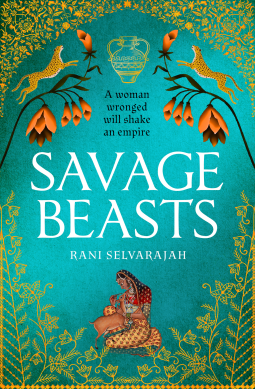
Savage Beasts by Rani Selvarajah

The Greek myth of Medea is transposed to 18th century India in Rani Selvarajah’s debut novel, Savage Beasts. Although I haven’t read very much about Medea – except where she has appeared as a secondary character in other novels I’ve read, such as Madeline Miller’s Circe – it was actually the Indian setting that attracted me to this book rather than the Greek myth aspect and I expect it will have equal appeal to readers of historical fiction and those who enjoy mythology retellings.

The novel opens in 1757 in Calcutta (now known as Kolkata). The East India Company, under the leadership of Sir Peter Chilcott, are advancing on Bengal and war seems inevitable, but James Chilcott, Sir Peter’s nephew, has arrived in Calcutta ready to make a bargain. He is prepared to betray the company and reveal their plans, he says, but he wants something from the Nawab of Bengal in return. Although the Nawab isn’t convinced, his daughter, Meena, is captivated by the handsome young Englishman and agrees to help him. When things go wrong, James and Meena are forced to flee Bengal, leaving a scene of death and devastation in their wake.

So far, I could see the parallels with mythology – Meena in the role of Medea, daughter of King Aeëtes of Colchis, and James as Jason, who comes to Colchis on the Argo in search of the Golden Fleece. When Meena and James leave Bengal, they encounter Meena’s aunt, Kiran, whom I quickly identified with Circe. The later parts of the myth are less familiar to me, but as far as I could tell the novel continued to follow the basic outline, with one or two nice twists towards the end.

What let this novel down for me was the writing. I hate to be too critical of an author’s first novel, but I did find some of the word choices odd or inappropriate. Characters ‘smirk’ all the time, on almost every page – that’s when they’re not ‘sneering’ or ‘scoffing’. I lost count of how many times these words were repeated. I also struggled to believe in Meena as a convincing woman of her time. It seemed unlikely that the daughter of a Nawab (a Mughal ruler of similar status to a prince) would have the freedom to hang around the docks of Bengal on her own, as Meena does in the opening chapter, and her subsequent actions feel more and more anachronistic.

I did like the basic concept of moving the Medea story to 18th century India and the idea of James/Jason as part of a colonial power coming to take what they can from Bengal/Colchis is an intriguing one. For this to work, though, there really needed to be a stronger sense of time and place, but sadly, I couldn’t think of the characters as anything other than modern people in historical costume. Despite my negativity, I stuck with the book to the end and did occasionally become drawn into the story; it’s been receiving a mixture of reviews, including plenty of four and five star ones, so evidently other readers have enjoyed it more than I did. Give it a try if it appeals – and please let me know if there are any other retellings of the Medea myth you can recommend!

Thanks to HarperCollins UK, One More Chapter for providing a copy of this book for review via NetGalley.
This is book 21/50 read for the 2023 Historical Fiction Reading Challenge.

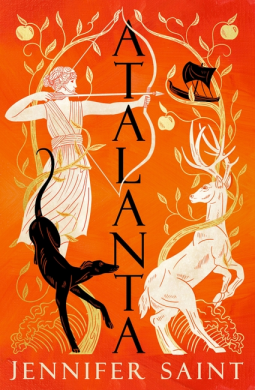
Atalanta by Jennifer Saint

Having enjoyed Jennifer Saint’s first two novels, Ariadne and Elektra, I was looking forward to reading her third one, Atalanta. Like the others, it explores the life of a woman from Greek mythology, in this case Atalanta, famous as a hunter, a runner and the only female Argonaut.

Daughter of the King of Arcadia, the baby Atalanta is left to die on a mountain because her father had hoped for a son. Rescued by bears and raised along with their cubs, Atalanta grows up under the watchful eye of Artemis, goddess of the hunt, who later takes her to live amongst the nymphs in the forest. As she reaches adulthood, it is clear that Atalanta possesses special skills in hunting, shooting and running. Elsewhere, Jason is preparing to set out aboard the Argo on his mission to obtain the Golden Fleece from the King of Colchis. With the blessing of Artemis, Atalanta joins the quest, but it won’t be easy to persuade Jason and his men to accept her as a fellow Argonaut.

I won’t go into all the details of the myth here, but Saint incorporates most of the elements that are often associated with Atalanta: the Calydonian boar hunt, her relationship with the Argonaut Meleager, the footrace and the golden apples. I say ‘often’ because, as with many Greek myths, there are different versions of Atalanta’s story. In some, she isn’t mentioned as part of the Argonaut legend at all; in others, she is the daughter of the King of Boeotia rather than Arcadia. I have read about Atalanta before, in Emily Hauser’s For the Winner, and I think overall I preferred that book which was more of a ‘reimagining’ with lots of extra little touches rather than this one which I would describe as a straightforward ‘retelling’. Still, it’s interesting to see how different authors choose to approach the same myth, what they include and leave out and how they interpret the actions and motivations of the characters.

I liked this book more than Elektra, but not as much as Ariadne. I felt that it was a bit slow to get started – the section set in the woods with the nymphs seemed to last forever – but once Atalanta joined the Argonauts on their quest it all became much more compelling. Although romance isn’t a big part of Atalanta’s story, I also enjoyed following her relationships with first Meleager and then Hippomenes and I appreciated the way Saint found a way to retell the myth from a feminist perspective without portraying all of the men in a negative light. And it’s always good to read a book about Greek mythology that doesn’t involve the Trojan War – not that it’s not interesting, but there have been so many Troy novels in the last few years I don’t think there’s really any need for any more.

This is not my favourite Jennifer Saint book, then, but it’s still an interesting read, particularly if you know nothing about Atalanta and her story. Now I’m looking forward to seeing which Greek heroine Saint will write about next.

Thanks to Headline for providing a copy of this book for review via NetGalley.