Once a Monster by Robert Dinsdale

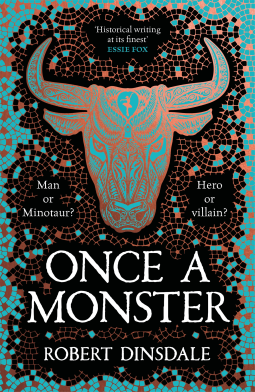
Novels inspired by Greek mythology seem to have become very popular in recent years, but Robert Dinsdale’s new book, Once a Monster, is something slightly different. More reimagining than retelling, it’s set in Victorian London and owes as much to Charles Dickens’ Oliver Twist as it does to Greek myth.

Ten-year-old Nell Hart is a mudlark, one of a small group of children, orphaned or otherwise neglected and vulnerable, who spend their days searching through the mud of the River Thames for ‘treasures’ – pieces of coal or iron – to give to their master, Benjamin Murdstone. It’s a difficult life for a child, but Nell has a pair of satin ballet slippers hidden inside her straw mattress, a gift left to her by her seamstress mother, and she is sustained by dreams of one day becoming a ballerina.

One morning, Nell is the first down to the river to begin another day of mudlarking and so she is the first to discover a body washed up on the shore. At first she’s unmoved by the sight – it’s not the first dead body she’s seen – but on closer inspection she discovers that this is the body of no ordinary man. Unusually tall, with enormous hands and feet, there are strange growths on each side of the head, almost like the beginnings of horns. The other mudlarks have arrived and are urging Nell to steal the man’s boots, when she makes another shocking discovery – he is still alive.

His name is Minos and as he returns to consciousness, memories slowly begin to surface of a time long ago and another life as a Minotaur in a labyrinth. But is Minos really the Minotaur of Greek myth or is he just a man after all? What will Murdstone do when he sees what Nell has found for him – and will Nell ever break free of her mudlark existence and learn to dance?

This is the first book I’ve read by Robert Dinsdale so I didn’t know what to expect, but I found it beautifully written and atmospheric. As I’ve mentioned, there’s a strong Dickens influence, from the descriptions of the poorer parts of Victorian London to the portrayal of Mr Murdstone, who is obviously inspired by Fagin, the leader of the gang of pickpockets in Oliver Twist. As the villain of the novel, he’s a very human monster and it quickly becomes clear that a central theme of the story is that every one of us can have a monster inside us as well as a hero. Dinsdale uses the myth of the Minotaur to explore and develop this theory:

“The mythographers were a cowardly lot. Just storytellers, trying to make sense of a world too complex to be distilled in mere words…But when it came to chronicling these stories for the ages, the Minotaur presented them with the thorniest of problems. To look him in the eye and see him for anything other than a base beast must have been like peering into a looking glass. They would have had to acknowledge the monstrosity in all of us.”

I found the relationship between Nell and Minos slightly disturbing; it wasn’t really a romantic relationship but it felt like more than just a platonic friendship or a father/daughter relationship and I kept forgetting that while Minos was an adult (possibly many hundreds of years old), Nell was only a ten-year-old child. The interactions and conversations between the two of them felt more what I would have expected if Nell had been a teenager or young woman rather than a little girl. Apart from that, I did think both characters were interesting; I enjoyed following Nell as she took her first steps towards becoming a ballerina and although I found Minos harder to connect with, I was intrigued by his story and by his memories of his time as the Minotaur.

My main problem with this book was the length; there were too many long and repetitive sections where the pace slowed and nothing really happened to advance the plot. I read the ebook but the print version has over 500 pages and I think that could easily have been cut down to 400 without losing anything important. Still, I did find this an interesting novel overall and would consider trying one of Robert Dinsdale’s earlier books.

Thanks to Pan Macmillan for providing a copy of this book for review via NetGalley.
This is book 43/50 for the 2023 Historical Fiction Reading Challenge.
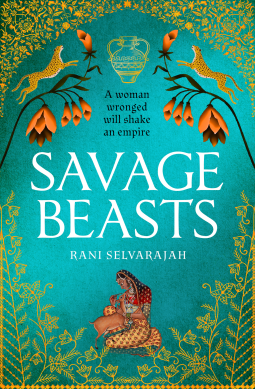
Savage Beasts by Rani Selvarajah

The Greek myth of Medea is transposed to 18th century India in Rani Selvarajah’s debut novel, Savage Beasts. Although I haven’t read very much about Medea – except where she has appeared as a secondary character in other novels I’ve read, such as Madeline Miller’s Circe – it was actually the Indian setting that attracted me to this book rather than the Greek myth aspect and I expect it will have equal appeal to readers of historical fiction and those who enjoy mythology retellings.

The novel opens in 1757 in Calcutta (now known as Kolkata). The East India Company, under the leadership of Sir Peter Chilcott, are advancing on Bengal and war seems inevitable, but James Chilcott, Sir Peter’s nephew, has arrived in Calcutta ready to make a bargain. He is prepared to betray the company and reveal their plans, he says, but he wants something from the Nawab of Bengal in return. Although the Nawab isn’t convinced, his daughter, Meena, is captivated by the handsome young Englishman and agrees to help him. When things go wrong, James and Meena are forced to flee Bengal, leaving a scene of death and devastation in their wake.

So far, I could see the parallels with mythology – Meena in the role of Medea, daughter of King Aeëtes of Colchis, and James as Jason, who comes to Colchis on the Argo in search of the Golden Fleece. When Meena and James leave Bengal, they encounter Meena’s aunt, Kiran, whom I quickly identified with Circe. The later parts of the myth are less familiar to me, but as far as I could tell the novel continued to follow the basic outline, with one or two nice twists towards the end.

What let this novel down for me was the writing. I hate to be too critical of an author’s first novel, but I did find some of the word choices odd or inappropriate. Characters ‘smirk’ all the time, on almost every page – that’s when they’re not ‘sneering’ or ‘scoffing’. I lost count of how many times these words were repeated. I also struggled to believe in Meena as a convincing woman of her time. It seemed unlikely that the daughter of a Nawab (a Mughal ruler of similar status to a prince) would have the freedom to hang around the docks of Bengal on her own, as Meena does in the opening chapter, and her subsequent actions feel more and more anachronistic.

I did like the basic concept of moving the Medea story to 18th century India and the idea of James/Jason as part of a colonial power coming to take what they can from Bengal/Colchis is an intriguing one. For this to work, though, there really needed to be a stronger sense of time and place, but sadly, I couldn’t think of the characters as anything other than modern people in historical costume. Despite my negativity, I stuck with the book to the end and did occasionally become drawn into the story; it’s been receiving a mixture of reviews, including plenty of four and five star ones, so evidently other readers have enjoyed it more than I did. Give it a try if it appeals – and please let me know if there are any other retellings of the Medea myth you can recommend!

Thanks to HarperCollins UK, One More Chapter for providing a copy of this book for review via NetGalley.

This is book 21/50 read for the 2023 Historical Fiction Reading Challenge.
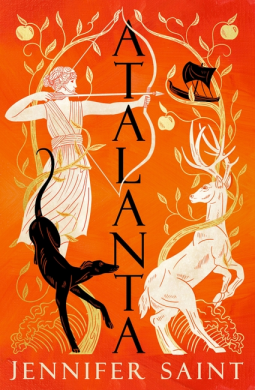
Atalanta by Jennifer Saint

Having enjoyed Jennifer Saint’s first two novels, Ariadne and Elektra, I was looking forward to reading her third one, Atalanta. Like the others, it explores the life of a woman from Greek mythology, in this case Atalanta, famous as a hunter, a runner and the only female Argonaut.

Daughter of the King of Arcadia, the baby Atalanta is left to die on a mountain because her father had hoped for a son. Rescued by bears and raised along with their cubs, Atalanta grows up under the watchful eye of Artemis, goddess of the hunt, who later takes her to live amongst the nymphs in the forest. As she reaches adulthood, it is clear that Atalanta possesses special skills in hunting, shooting and running. Elsewhere, Jason is preparing to set out aboard the Argo on his mission to obtain the Golden Fleece from the King of Colchis. With the blessing of Artemis, Atalanta joins the quest, but it won’t be easy to persuade Jason and his men to accept her as a fellow Argonaut.

I won’t go into all the details of the myth here, but Saint incorporates most of the elements that are often associated with Atalanta: the Calydonian boar hunt, her relationship with the Argonaut Meleager, the footrace and the golden apples. I say ‘often’ because, as with many Greek myths, there are different versions of Atalanta’s story. In some, she isn’t mentioned as part of the Argonaut legend at all; in others, she is the daughter of the King of Boeotia rather than Arcadia. I have read about Atalanta before, in Emily Hauser’s For the Winner, and I think overall I preferred that book which was more of a ‘reimagining’ with lots of extra little touches rather than this one which I would describe as a straightforward ‘retelling’. Still, it’s interesting to see how different authors choose to approach the same myth, what they include and leave out and how they interpret the actions and motivations of the characters.

I liked this book more than Elektra, but not as much as Ariadne. I felt that it was a bit slow to get started – the section set in the woods with the nymphs seemed to last forever – but once Atalanta joined the Argonauts on their quest it all became much more compelling. Although romance isn’t a big part of Atalanta’s story, I also enjoyed following her relationships with first Meleager and then Hippomenes and I appreciated the way Saint found a way to retell the myth from a feminist perspective without portraying all of the men in a negative light. And it’s always good to read a book about Greek mythology that doesn’t involve the Trojan War – not that it’s not interesting, but there have been so many Troy novels in the last few years I don’t think there’s really any need for any more.

This is not my favourite Jennifer Saint book, then, but it’s still an interesting read, particularly if you know nothing about Atalanta and her story. Now I’m looking forward to seeing which Greek heroine Saint will write about next.

Thanks to Headline for providing a copy of this book for review via NetGalley.

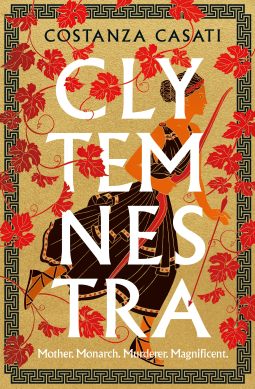
Clytemnestra by Costanza Casati

There are so many Greek mythology retellings around at the moment I thought this one might be too similar to others I’ve read recently (particularly Jennifer Saint’s Elektra) – but I needn’t have worried. With Clytemnestra, Costanza Casati makes a familiar story feel fresh and different, and as a debut novel it’s quite impressive.

Clytemnestra, Helen of Troy’s sister, is most often remembered as the wife of Agamemnon, the King of Mycenae who sacrifices their daughter Iphigenia to summon a wind so he can sail off to join the Trojan War. The heartbroken Clytemnestra takes her revenge on Agamemnon, which in turn provokes their other children, Electra and Orestes, to plot a revenge of their own. Casati’s novel does cover all of this, but a large part of the book is actually devoted to Clytemnestra’s early life as a princess of Sparta, daughter of Tyndareus and Leda, the King and Queen.

Like other Spartan women, Clytemnestra and her sisters are taught to fight, run and wrestle as children and grow up enjoying more independence and freedom than women elsewhere in Ancient Greece. This means that whenever life doesn’t go quite the way they hoped it would, they have the determination and the inner strength to take steps to change things. Early in the novel, a priestess delivers a prophecy that ‘the daughters of Leda will be twice and thrice wed…and they will all be deserters of their lawful husbands’ and over the course of the story we see this prediction begin to come true.

The thing I particularly enjoyed about this novel – and the thing that makes it different from others I’ve read – is that it focuses not just on Clytemnestra and Helen, whose stories are well known, but also on their other siblings. We get to know Castor and Polydeuces (sometimes called Pollux), their twin brothers who go in search of the Golden Fleece with Jason and the Argonauts, their sister Timandra, who marries King Echemus of Arcadia, and the two youngest sisters, Phoebe and Philonoe, who don’t have large parts to play but are not left out of the story either. By spending so much time on Clytemnestra’s childhood and her relationships with her family members, her character is given more depth, so that by the time she is married off to Agamemnon and the familiar, tragic part of her story is set into motion, we have come to know Clytemnestra well and to understand how her environment and upbringing have made her into the person she is.

Something else I found interesting was the portrayal of Clytemnestra’s first marriage to Tantalus, King of Maeonia, shown here to be a marriage made for love, in contrast to her later forced marriage to Agamemnon. Some versions of the Clytemnestra myth don’t make any reference to Tantalus at all, but including him here and showing how Clytemnestra’s life could have followed an entirely different course if he had lived adds another layer to the story.

Clytemnestra is written in present tense, which is never going to be a style I particularly like, but otherwise I found this book very enjoyable. I hope Costanza Casati will write more like this – if so, I think I’ll be adding her to my list of favourite modern Greek mythology authors, along with Natalie Haynes, Madeline Miller and Jennifer Saint.

Thanks to Michael Joseph for providing a copy of this book for review via NetGalley.

The Witch and the Tsar by Olesya Salnikova Gilmore

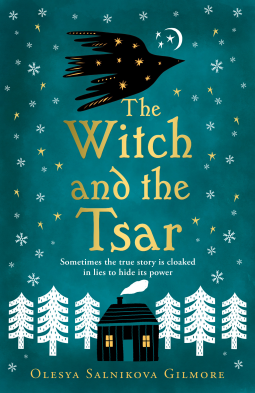
I was drawn to this book by the pretty cover, but also because it sounded similar to Katherine Arden’s Winternight trilogy, which I loved. Set in 16th century Russia, during the reign of Ivan the Terrible, The Witch and the Tsar is a blend of history, fantasy and folklore featuring as its heroine the legendary Baba Yaga. Unlike the traditional idea of Baba Yaga as a ferocious old witch who eats children, however, Moscow-born author Olesya Salnikova Gilmore’s portrayal is something very different.

We first meet Yaga, as she is known, living alone in a forest with her wolf Dyen, owl Noch, and Little Hen, a living hut who stands on chicken legs and has a mind of her own. Half-mortal and half-goddess, Yaga has been badly treated in the past so has chosen a life of solitude, interacting with other people only when they come and seek out her knowledge of healing and potions. She is reluctantly drawn back into society when an old friend, the Tsaritsa Anastasia – wife of Tsar Ivan IV – comes to her to ask for help. Convinced that Anastasia is being poisoned by someone at court, Yaga decides to accompany her friend on the journey back to Moscow to keep her safe.

Returning to the world from which she has hidden away for so long, Yaga is dismayed by the evil she senses all around her. Unsettled by an encounter with a former adversary, Koshey Bessmertny (usually known in Slavic myth as Koschei the Deathless), she is then introduced to Ivan Vasilyevich, the man who will later become Ivan the Terrible, and is struck by his power and volatility. When tragedy strikes the Russian court, Ivan becomes more unstable and launches a campaign of terror with his band of oprichniki burning, raiding and pillaging Russia’s towns and cities. It seems that Yaga is the only one who can stop him, but to do so she will have to learn things about herself and her family that she would prefer not to uncover.

I enjoyed some aspects of The Witch and the Tsar, but others not so much. I wasn’t sure what to think of Yaga herself. On the one hand, it’s good to see a much-maligned character given a more sympathetic interpretation; on the other, Gilmore’s Yaga has so little in common with the mythical Baba Yaga she’s really not the same character at all. Also, we are told that although she has the appearance of a young woman, she has actually lived for hundreds of years – yet she never sounds, thinks or behaves the way I would expect someone with centuries of wisdom and experience to sound, think and behave. She just feels like the young woman she appears to be.

It was interesting to see how Gilmore works characters from other Russian and Slavic myths into the story. As well as Koschei the Deathless, we meet Marya Morevna, Morozko the frost demon, the god Volos, the house spirit Kikimora and others. The fantasy/mythology element becomes very dominant in the second half of the book, more than I would have preferred, but Gilmore does a good job of tying it together with the historical storyline, showing how the actions of the gods and demons are linked to the actions of Ivan and his oprichniki. I was particularly intrigued by the character of Ivanushka, the Tsar’s son and heir; Yaga promises Anastasia she will protect him, but we know from history that his story will take a tragic turn.

I think The Witch and the Tsar is worth reading if you’re interested in Russian history and mythology, but naturally I couldn’t help comparing it to Katherine Arden’s trilogy (beginning with The Bear and the Nightingale) which I found much more enjoyable.

Thanks to HarperVoyager for providing a copy of this book for review via NetGalley.

Recent reads: The Drums of War; Ashes in the Snow; Ithaca

I’m falling behind with my reviews again, so here are my thoughts on three recent reads – all very different books.

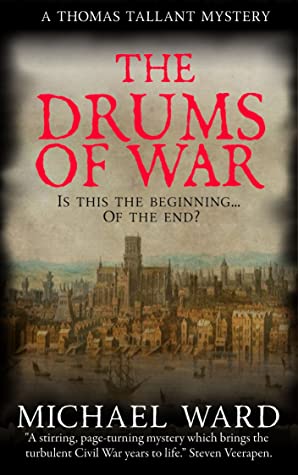
The Drums of War is the third in Michael Ward’s Thomas Tallant mystery series, continuing the story begun in Rags of Time and The Wrecking Storm. It also works as a standalone novel, so don’t worry if you haven’t read the first two in the series.

This third novel opens in London in 1642. With the divisions between King and Parliament becoming greater, England is rapidly heading towards Civil War and spice merchant Thomas Tallant and his friends are being forced to choose sides. Soon Tom finds himself assisting the Puritan leader John Pym in his search for a consignment of stolen gunpowder being smuggled out of London by Royalist forces. Meanwhile, Elizabeth Seymour is carrying out investigations of her own as she sets out on the trail of a mysterious jewel thief. Although Tom and Elizabeth are separated for most of the book and I missed their interactions, I did find both storylines interesting, particularly Elizabeth’s as she suffers a personal trauma and begins to fall back into some of her former bad habits as a result!

As with the first two books in the series, real historical figures appear alongside the fictional ones and as well as John Pym and the commander of the London Trained Bands, Philip Skippon, we also meet the scientist and physician William Harvey and are reacquainted with the intriguing Lucy, Countess of Carlisle. In the second half of the novel, the focus moves away from the mystery-solving for a while to concentrate on the events of the Civil War, particularly the battles of Edgehill and Brentford. This aspect of the story was of less interest to me, but that’s just down to personal taste (I’m not really a fan of battle scenes) and I still found this an enjoyable novel overall.

~

Ashes in the Snow is Oriana Ramunno’s debut crime novel, written in Italian and translated into English by Katherine Gregor. The book is set in Poland during World War II and begins with a young boy, Gioele Errera, finding the body of an SS officer in the snow. The man appears to have choked on an apple, but it soon seems that there is more to his death than that and German criminologist Hugo Fischer is summoned to investigate. Finding the murderer will not be easy, particularly as the dead man’s wife seems reluctant to cooperate, but Gioele agrees to help – if, in return, Hugo will help him to find his family from whom he has become separated.

This is a beautifully written and translated novel but not an easy one to read because, as we quickly discover, Gioele has a twin brother and the two of them have become subjects of the infamous Josef Mengele’s experiments. Of course this sort of thing is not supposed to be pleasant to read about, but I wasn’t really prepared for the level of detail Ramunno goes into in describing this and other parts of Gioele and Hugo’s stories. Hugo is an interesting and likeable character, a man suffering from a degenerative illness who must keep his condition a secret to avoid becoming a target of the Nazi regime himself. He’s an unusual detective and the crime element of the novel works well, but this book wasn’t for me.

~

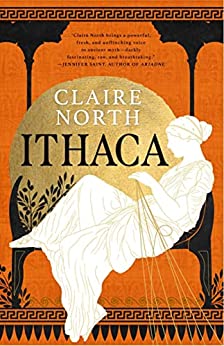
Ithaca by Claire North is the latest of many Greek mythology retellings based on the events surrounding the Trojan War. What makes this one different from the others I’ve read is that it focuses on the story of Penelope as seen through the eyes of the goddess Hera.

It has been seventeen years since Penelope’s husband Odysseus, King of Ithaca, sailed away to war with Troy and although the war is now over, she and her son, Telemachus, are still awaiting his return. Penelope is kept busy running the kingdom with the help of her women, while also trying to defend the island of Ithaca from raiders and fend off the attentions of the crowd of suitors who have descended upon her home in the hope of marrying her if Odysseus never comes back. Meanwhile, Penelope’s cousin Clytemnestra has fled to Ithaca looking for somewhere to hide after murdering her husband, Agamemnon.

Ithaca is quite a long novel and moves at a slow pace; it’s the first in a planned trilogy and Claire North takes her time setting the scene and introducing the characters. I liked the choice of Hera as narrator; she provides a different perspective on a well-known story and I enjoyed her observations of the mortal world and her interactions with other goddesses such as Athena. However, it does mean we are kept at a distance from Penelope herself, which could explain why I found it difficult to form any kind of connection with her – or with any of the other characters. For that reason, I don’t think I’ll be continuing with the second book. Claire North writes beautifully but I needed more than that to sustain my interest and I preferred Margaret Atwood’s The Penelopiad – I didn’t love that one either, but it was a shorter and more memorable read.

Kwaidan: Stories and Studies of Strange Things by Lafcadio Hearn

The next book I’ve read for this year’s R.I.P. XVII event is a fascinating and unusual collection of Japanese short stories, first published in 1904. The writer and translator Lafcadio Hearn was born in Greece and raised in Ireland, before later settling in Japan where he began to collect Japanese legends and folktales which he translated into English. Kwaidan: Stories and Studies of Strange Things contains seventeen of these tales, as well as three essays on insects – one on butterflies, one on mosquitoes and one on ants. These mainly focus on the role of the insects in Japanese and Chinese mythology, art, drama and poetry and are full of intriguing little snippets of information.

The other seventeen pieces are a mixture of ghost stories, fairy tales and strange anecdotes, some of which Hearn translated from old Japanese texts and others which he heard on his travels through Japan and attempted to put into words himself. For example, in his introduction, Hearn states that the story of Yuki-onna, in which a beautiful young woman in white appears to two woodcutters during a snowstorm, was told to him by a farmer in Musashi Province. Although the Yuki-onna character dates back centuries, Hearn’s account is based on this verbal version and not translated from any other source.

The creepier stories in the book are the ones that explore the different kinds of ghosts and monsters that appear in Japanese myth, such as the ‘faceless ghosts’ or noppera-bō, the human-like goblins called rokurokubi with detachable floating heads and the corpse-eating spirits known as the jikininki or ‘hungry ghosts’. These are interspersed with more traditional ghost stories, involving spirits returning after death to look for a loved one or to search for a lost possession. There’s also a great story recounting the legend of Hoichi the Earless, a blind musician who is tricked into playing his biwa (lute) for an audience of ghosts in a cemetery every night. If you want to know what happens to his ears, you’ll have to read the story!

Not all of the stories are particularly spooky, though – some are just, as the title suggests, ‘studies of strange things’. Of a Mirror and a Bell is an account of the legend of the Mugen-Kane bell which was made by melting down old bronze mirrors. Hearn then goes on to explore the Japanese concept of nazoraeru, where one item can be used as a substitute for another, to bring about magical results. There’s also a very short but beautiful story about a pair of oshidori, or Mandarin ducks, and another I enjoyed is The Dream of Akinosuke, about a man who falls asleep and dreams that he is the ruler of his own island province. This story incorporates both butterflies and ants, which makes the insect essays at the end of the book feel more relevant!

Some of the stories are too short or incomplete to be very satisfying, but the collection as a whole is fascinating and I would recommend it to anyone with an interest in Japanese culture and folklore. There’s also a Japanese film version from 1965, also titled Kwaidan, which I haven’t seen, but it seems to be very highly acclaimed and received an Oscar nomination for Best Foreign Language Film.

Have you read this or any other book of Japanese ghost stories?

Book #4 read for R.I.P. XVII