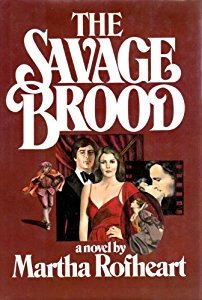
The Savage Brood by Martha Rofheart

Having read two of Martha Rofheart’s other books, Lionheart and Burning Sappho (about Richard I and the poet Sappho, respectively), I decided to try her 1978 novel The Savage Brood next. It sounded different from the others, being a multi-generational family saga and concentrating on fictional characters rather than real historical ones. I liked it enough to finish it but, as I so often find with this kind of book, the earlier sections were the best and I struggled to stay interested as the action moved closer towards the modern day.

The novel follows the fortunes of the Savage family, who have a long history as actors of one sort or another. It is divided into three sections which are set in different periods and work almost as self-contained novellas. We begin in Tudor England where we meet one branch of the family, a group of travelling players who make their living moving from town to town in a horse-drawn wagon and putting on performances for the local people. Finding English law too restrictive, the troupe move to Italy where, under the patronage of Cosimo I de’ Medici, they learn the skills of Commedia dell’Arte.

After a short ‘interval’, the story then jumps forward to 1752 where some of the Italian Savages (or Savaggi, as they have become known in the intervening years), return to London’s Drury Lane to work with the great English actor and producer, David Garrick. Garrick identifies young Miranda Savage as a special talent, but loses her when she moves to America – just in time for the Revolution.

There’s another interval and then we skip forward again, this time to San Francisco in 1906. The Savages have now made a name for themselves as vaudeville entertainers, but this form of theatre is in its final days as the first silent films begin to make their appearance. This section of the novel takes us right through both world wars and follows the careers of comic actor Sammy Savage, showboat musician Solange Sauvage, and Hollywood star JP Savage.

As I said, the first two sections were the most enjoyable, at least in my opinion. The third dragged on for too long, and except for the wartime parts, when the action moves to France for a while, I found the storyline much less interesting. The characters were unlikeable and self-obsessed, lacking the charisma of some of their earlier ancestors and little more than stereotypes of early Hollywood stars. By contrast, I loved the eighteenth century section and was particularly fond of Miranda Savage’s cousin Beau, who rises from humble beginnings to become a stage and fashion icon. Taken as a whole, though, I found the saga of the Savages unconvincing, with too many chance encounters between people who turn out to be distant Savage cousins.

Although Rofheart does acknowledge that women couldn’t act on stage in England until the Restoration, she does depict some of her sixteenth century female characters as acting with a travelling troupe. I didn’t think women were allowed to perform at all during that period (apart from in Italy), so that bothered me while I was reading, although I have since discovered a book on Women Players in England, 1500–1660, which suggests that women may have had more opportunities to act in sixteenth century England than I had imagined, at least on an amateur basis. I really don’t know enough about the subject to comment any further on Rofheart’s historical accuracy.

Despite the problems I had with The Savage Brood, I think it will be a fascinating read for anyone interested in the theatre, incorporating almost every type of acting you can think of – Commedia dell’Arte, Shakespeare, vaudeville, film and more – set against a backdrop of major historical events. I’m not really in any hurry to read the rest of Martha Rofheart’s books, but if anyone has read The Alexandrian, Cry God for Glendower and Fortune Made His Sword I would like to know if you enjoyed them and if you think they’re better than this one?
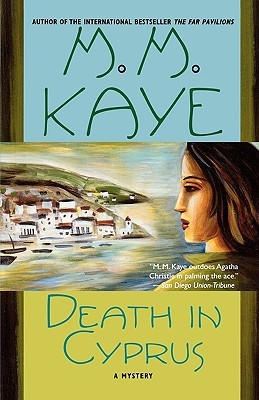
Death in Cyprus by M.M. Kaye

I read this novel from 1956, the third in M.M. Kaye’s Death In… series, in the final days of February and it provided some welcome respite from the freezing temperatures and heavy snow we were experiencing in my part of the country. Lovely, evocative passages like this one took me away from the cold for a while and into the warmth and beauty of Cyprus:

Olive groves, the tree trunks so gnarled and twisted with age that some of them must surely have seen the Crusaders come and go, stood dark against the glittering expanse of blue, and below them the little town of Kyrenia lay basking in the noonday sun like a handful of pearls and white pebbles washed up by the sea.

The setting is not as idyllic as it seems, however: there appears to be a murderer on the loose – someone has already killed once and could kill again. The first death occurs on board the S.S. Orantares on which twenty-one-year-old Amanda Derington is a passenger. Amanda has accompanied her uncle on a business trip to North Africa and has suggested that she could visit Cyprus while he continues his tour of the various offices of the Derington empire. Horrified at the thought of his niece travelling alone, Uncle Oswin arranges for her to be chaperoned on the journey and to stay at the home of one of his managers on her arrival.

Setting sail from Egypt to Cyprus, Amanda gets to know Alistair Blaine and his wife Julia, an unhappy, bitter woman who accuses every other female on the ship of trying to steal her husband. When Julia collapses and dies in Amanda’s cabin after drinking a glass of her favourite lemon water, only Amanda knows that it was not suicide. Taking the advice of her fellow passenger Steve Howard, Amanda keeps her thoughts to herself, and when she finds a bottle of poison hidden behind her pillow she conceals the evidence from the police. After all, she herself would be the prime suspect and could find it difficult to prove her innocence. Unfortunately, this decision puts her in danger of a different kind when they reach Cyprus, where her knowledge of the crime could make her the killer’s next target…

Death in Cyprus is a great murder mystery with plenty of possible suspects. Apart from Amanda herself, I could imagine every one of them being the murderer and my suspicion fell on one, then another, then another, then switched back to the first. Could it be Persis Halliday, the American romantic novelist who has come to Cyprus to look for inspiration? What about Glenn Barton, the Derington employee who was supposed to be Amanda’s host in Nicosia but had to cancel because his wife had left him? Claire Norman, who seems to know far too much about everyone else’s business? Or Lumley Potter, the spiritual, bohemian artist who is Glenn’s wife’s new lover? The eventual solution to the mystery is quite logical and I feel as though I should have worked it out, but I had allowed myself to get too distracted by red herrings!

As this is a book from the 1950s, some of the attitudes are a bit dated, particularly regarding a romance which develops between Amanda and one of the group she travels to Cyprus with (I won’t tell you who he is, even though it’s very obvious from early in the book). There’s a definite sense that he views Amanda as a helpless woman who needs the protection of a man – although, to be fair, she gives that impression herself with her habit of repeatedly putting herself into dangerous situations from which she needs to be rescued, wandering off on her own in lonely places and venturing into strangers’ houses late at night! Of course, Amanda’s reckless actions do have a purpose because they are the reason for most of the suspense in the story.

I love the Death In… novels. I’ve read three so far and enjoyed them all, especially this one and Death in Kashmir. The books all stand alone – they have different settings and different characters – but I have been reading them in publication order anyway, which means Death in Kenya will be next for me.

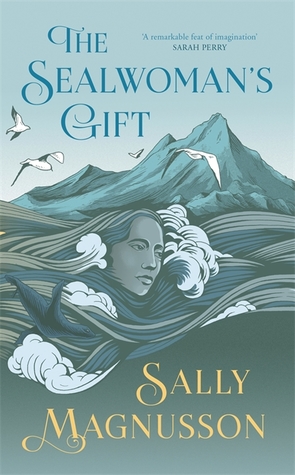
The Sealwoman’s Gift by Sally Magnusson

This is a beautifully written novel based on a little known historical event: the 1627 raid by Barbary pirates on Iceland’s Westman Islands. Around four hundred Icelanders were taken in captivity to Algiers to be sold at the slave markets, among them the priest Ólafur Egilsson, his pregnant wife Ásta Thórsteinsdottir, and two of their children. We know from historical records that Ólafur was released and sent to Denmark to petition the Danish king (Iceland’s ruler in those days) in the hope that he would provide the ransom to free his subjects. His story was preserved in a memoir describing his capture and the voyage there and back, but the story of Ásta, who was not allowed to accompany him on the journey home, has been lost to history.

In The Sealwoman’s Gift, Sally Magnusson has given a voice to Ásta, a woman who, like so many others in centuries gone by, has been ignored and forgotten by history. As we know little or nothing about what happened to Ásta and the other women and children after their arrival on the shores of Algeria, this gives the author the freedom to create an interesting, realistic and believable story to fill in the gaps. She writes with sensitivity and understanding as she describes Ásta’s pain at being separated from her husband and children, her changing feelings for the man who buys her – Ali Pitterling Cilleby – and the agonising decision she eventually has to make.

There’s a lot for Ásta to adjust to in her new life; Algeria and Iceland couldn’t be more different, with very different climates, customs, foods, languages and religions. The religious difference is one of the most difficult for Ásta to accept – as the wife of a Lutheran minister, the possibility of her children having to convert to Islam is not easy for her to come to terms with. We also follow Ólafur on his return to Heimaey in the Westman Islands and see both the short-term and long-term effects the raids have had on the community. With such a small population to begin with, the loss of several hundred of their people has a big impact; it seems that almost everyone has lost a husband or wife, a child or a parent or a friend.

Iceland has a strong tradition of storytelling and some of these myths, legends and sagas are woven into the novel as Ásta finds some solace in remembering the stories of her homeland and narrating them to her master and his wives. This is another aspect of the book that I liked; you can learn a lot about a country from its stories and its folklore.

Sally Magnusson (who is the daughter of the television presenter Magnus Magnusson) has previously written several non-fiction books, but this seems to be her first novel. I liked her writing, apart from the fact that she chose to write in the present tense. I’m really not a fan of present tense and in this case I found it distracting and distancing, which I’m sure is not what the author intended. It’s down to personal taste, I suppose – you either have a problem with it or you don’t. I also thought that, while Ásta, Ólafur and the other Icelandic people are strong, interesting characters, the characters they meet in Algiers feel less well developed. If I’d had a stronger feeling for Cilleby, for example, as a person, I think I would have found the later stages of the story more emotional.

These are just small criticisms and, as I’ve said, are probably just due to my tastes as a reader rather than the book itself, which is getting great reviews and really is a fascinating read.

Thanks to Two Roads for providing a copy of this book for review via NetGalley.

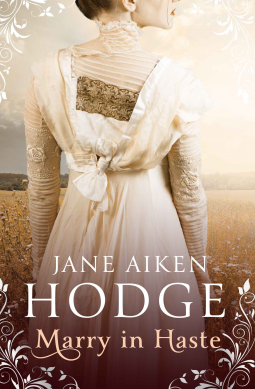
Marry in Haste by Jane Aiken Hodge

This is the third Jane Aiken Hodge novel I’ve read and my favourite so far. Based on an earlier story, Camilla, which was serialised in Ladies’ Home Journal in 1961, Marry in Haste was originally published in 1969 and has just been reissued by Ipso Books. It is set in England and Portugal during the Napoleonic Wars and has just the combination of romance, suspense and history that I am coming to expect from her novels.

The saying “marry in haste and repent at leisure” perfectly describes Camille de Forêt’s situation. Having fled to England with her father, a French Comte, and changed her name to Camilla Forest to distance herself from her French origins, she has spent several years in the home of the Duchess of Devonshire. Following the death of the Duchess, Camilla found a position as governess in another household but when we meet her at the beginning of the novel she has been dismissed from her job and sent away with no money and nowhere to go.

A chance encounter with the Earl of Leominster when his carriage passes her on the road seems to provide the perfect solution to Camilla’s problems. She needs a husband, a home and some money; Leominster (or Lavenham, as he is known to his friends) needs a wife in order to claim his inheritance. In the sort of plot development which will be familiar to readers of Georgette Heyer’s Regency romances, Lavenham proposes to Camilla and she accepts – on the condition that it will be a marriage in name only. Of course, it doesn’t take long for Camilla to discover that she is falling in love with her husband after all…but will Lavenham, who has a distrust of women based on a bad experience in his past, ever return her feelings?

Marry in Haste is an enjoyable and entertaining novel; it’s not particularly original (as I said, it feels quite similar to some of Georgette Heyer’s books, among others) and most of the plot twists are very predictable, but that doesn’t make it any less fun to read. The romance between Lavenham and Camilla is thwarted by misunderstandings, lies and communication problems, which makes it feel very contrived at times, but it’s satisfying overall – and anyway, things which would be likely to annoy me in a more ‘serious’ novel feel much more acceptable in this sort of book. There’s also a secondary romance later in the book, involving Lavenham’s younger sister, the lively and irresponsible Chloe, and I enjoyed this storyline too.

Most of the action takes place in Portugal, where Lavenham is sent early in the novel to carry out secret diplomatic work. Camilla and Chloe accompany him there and promptly find themselves caught up in the conflict involving France, Britain, Spain and Portugal which has been escalating in Europe. There are some lovely descriptions of Portugal and enough historical detail to give the reader a basic understanding of the Peninsular War, but the focus is always on the characters and the relationships between them. I was disappointed that Lavenham kept abandoning his wife and sister for long periods while he was away on undercover work, but I can see that it was necessary for the plot and enabled them to have some adventures of their own while trying to escape the French and make their way back to the safety of England.

I’m looking forward to reading more Jane Aiken Hodge as so far I’ve only read this one, Strangers in Company and Watch the Wall, My Darling (three very different books). I already have a second-hand copy of Red Sky at Night on my shelf as well as another new reissue, First Night, from NetGalley – and I think it’s time I tried her sister, Joan Aiken’s, books too!

Thanks to Ipso Books for providing a copy of this book for review via NetGalley.

Someone at a Distance by Dorothy Whipple

Today would have been Dorothy Whipple’s birthday – and she is the next author in Jane’s Birthday Book of Underappreciated Lady Authors. I have never read any of her books but have been curious about them for a while and I thought a good place to start might be Someone at a Distance, her 1953 novel which seems to be her most popular and which has been published both as a standard dove-grey Persephone and as a Persephone Classic.

On the surface, Someone at a Distance is the simple story of the breakdown of a marriage. At the beginning of the novel, publisher Avery North and his wife, Ellen, seem to be the perfect couple. Having been married for twenty years, they are no longer passionately in love but still have an affectionate relationship and appear to be quite content with their comfortable, middle-class lives. They are devoted to their two children – eighteen-year-old Hugh, who is away on National Service, and fifteen-year-old schoolgirl Anne – and have a lovely house in the countryside with a large paddock for Anne’s beloved pony, Roma. If only Avery’s mother, the elderly Mrs North, hadn’t begun to feel lonely living alone in her big house nearby, and if only she hadn’t decided to look for a companion for the summer…

Old Mrs North responds to an advertisement in The TimesYoung Frenchwoman desires to spend July, August in English home. French conversation. Light domestic duties – and soon Louise Lanier comes to stay. Louise is the daughter of a bookseller in a provincial town in France and sees coming to England as a way of escaping from the humiliation of being rejected by her lover who has recently married another woman. Bored and miserable, Louise sets her sights on Avery North and won’t be satisfied until she has caused as much trouble as possible.

As I’ve said, the plot is a simple one, but Whipple’s writing and the way in which she tells the story give it the additional layers that make it such a compelling read. You can see what is going to happen almost from the start, but you don’t know exactly when or how it will happen – and when the inevitable moment comes, you feel as shocked and upset as the characters themselves. My sympathies were with Ellen; she came across as such a genuinely nice person, who really didn’t deserve the treatment she receives from Avery and Louise. I was impressed by how well she coped with the huge changes in her life…at least until an incident near the end of the book, which disappointed me slightly as I discovered that Ellen didn’t feel quite the way I would have liked her to have felt (sorry for being vague, but I’m trying to avoid too many spoilers).

The reactions of the other characters – the North children, the servants, friends and neighbours, and Louise’s family in France – are also explored. In some ways their thoughts and emotions are timeless, but in others this does feel like a book of its time, for example when Anne is too ashamed to tell her teachers and friends at school about her parents’ separation because she thinks they will view her differently. As for Louise, she is a wonderful character. It would have been easy for Whipple to write her as a one-dimensional villain, who does what she does purely out of spite and nastiness, but instead she takes the time to show us Louise’s life in France and to try to explain what made her such a bitter person. There were times when I could almost, but not quite, feel sorry for Louise – although in the end it was her parents I pitied, as they were forced to come to terms with the sort of woman their daughter was.

Someone at a Distance is a great book, with much more emotional depth and complexity than I expected when I first started to read. Now that I’ve been introduced to Dorothy Whipple, I’m sure I’ll be reading more of her work.

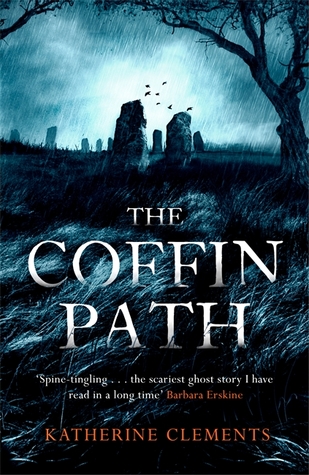
The Coffin Path by Katherine Clements

This is Katherine Clements’ third novel set in 17th century England, but it has a different feel from the previous two. Rather than being a straight historical novel like The Crimson Ribbon and The Silvered Heart, The Coffin Path is a ghost story with a lonely rural setting and this time there is much less focus on the political and social events of the period.

It’s 1674 and there are signs that spring is on its way to the Yorkshire moors. The first lamb of the season is about to make its appearance, but it is a difficult birth and requires human assistance. Mercy Booth of Scarcross Hall, who farms the land and tends the sheep for her elderly father, helps to deliver the lamb into the world but its mother dies in the process – the first of several bad omens. Next, three ancient gold coins go missing from her father’s collection and reappear in unexpected places – and then Mercy begins to hear noises coming from a disused bedchamber upstairs.

Around this time, a stranger arrives looking for work. His name is Ellis Ferreby and although the local people are slow to trust him, he soon proves himself to be a good shepherd and a reliable worker. Ellis, however, is a man with secrets and it seems that he could have reasons of his own for coming to Scarcross Hall.

We slowly get to know both Mercy and Ellis as their stories alternate with each other throughout the novel. We hear what Mercy’s life has been like, growing up without a mother, with only her eccentric father, Bartram, and the servants for company – and we learn of her hopes for the future, which centre around the knowledge that one day, as her father’s only heir, she will inherit her beloved Scarcross Hall. As for Ellis, his background is shrouded in mystery and the truth about both his past and his purpose in being at Scarcross is only revealed later in the novel.

The 17th century is obviously a period which interests Katherine Clements and of which she has a lot of knowledge: The Crimson Ribbon was the story of a servant in the household of Oliver Cromwell, while The Silvered Heart was about a highwaywoman in the aftermath of the English Civil War. The Coffin Path is set just a few decades after those two books yet I felt that the story would have worked just as well if it had been set in almost any other period, either an earlier century or a later one. Although the effects of the recent Civil War do still linger in the lives of our characters, this only has any real significance towards the end of the book – otherwise, perhaps because Scarcross Hall is so isolated from the wider world, there is a general feeling of timelessness.

However, what the novel lacks in sense of time is made up for in sense of place. There are some wonderful descriptions of the moors surrounding Scarcross Hall, bringing to life this harsh but beautiful landscape. We also explore some of the old traditions and beliefs which survive in this remote part of England: the White Ladies is an ancient stone circle which the villagers associate with evil, while the Coffin Path of the title refers to the old track down which coffins would be carried from the moors to the church for burial. It’s no wonder that in a place like this, people like Ellis and Mercy are viewed with suspicion and distrust – Ellis because he is an outsider and Mercy because she is an independent, unconventional woman, still unmarried in her thirties and doing ‘a man’s work’ on the farm.

I enjoyed following the personal stories of both main characters and I liked the supernatural elements too: they were suitably eerie, but at the same time subtle enough to keep me wondering whether there really were ghosts involved or whether something else was happening. My only problem with the book (other than the fact that, like many novels these days, it is written in present tense) was that there were times when the plot seemed to be moving forward very slowly. It didn’t help that the first few chapters are devoted to describing, in great detail, the birth of a lamb; I would have preferred a stronger opening to pull me straight into the story.

Of the three books by Katherine Clements I have read, I think I liked both of the others better than this one, but it’s good to see that she has tried something slightly different here. What will she write next, I wonder?

Thanks to Headline for providing a copy of this book for review via NetGalley.

There Came Both Mist and Snow by Michael Innes

Having enjoyed two of Michael Innes’ Inspector Appleby novels last year – Hamlet, Revenge! and Lament for a Maker – I was drawn to this one next, because I liked the title and thought it would be appropriate as we’ve had some snowy weather here recently. Actually, although the novel is set during the Christmas period and there are a few mentions of snow, it doesn’t have a particularly wintry feel and could be read at any time of year.

It begins with our narrator, Arthur Ferryman, arriving at a family gathering at Belrive Priory, the home of his cousin, Basil Roper. The priory has been in the family for generations and nobody feels a closer affinity with its ancient stone walls, formal gardens and soot-blackened ruins than Arthur does. It comes as a shock, then, when he hears that Basil is planning to sell the estate to finance an expedition. As more members of the Roper family descend, along with various cousins and friends, it becomes clear that Arthur is not the only one unhappy with Basil’s decision. When one of the party is found shot while sitting at the desk in the study, there are plenty of suspects and plenty of motives. With perfect timing, Inspector Appleby arrives at the door just as the body is discovered, having received an invitation from Basil. Can Appleby find the culprit before someone else is hurt?

There Came Both Mist and Snow is my least favourite of the three Innes novels I’ve read so far. The mystery itself was well-constructed; Appleby seems to play a bigger role than in the other two books (certainly than in Lament for a Maker, where he only appeared near the end) and I enjoyed following the course of his investigations, with Arthur Ferryman as a sort of Watson character. There are several possible theories which are put forward by various members of the party and all of them seem plausible, which means the reader is constantly being led in the wrong direction. I would never have guessed the eventual solution; the clues aren’t concealed from the reader, exactly, but it’s definitely not something that is easy to deduce for yourself.

My problem with the book was due mainly to the length of time it took to get started. In the opening chapters we are given a lot of information on the Roper family background, the history of Belrive Priory and the changes that have come to the surrounding area as the neon lights of breweries and factories begin to shine into the priory’s ancient grounds. This information wasn’t completely insignificant, but I felt that it could have been woven more gradually into the story so that we could have reached the crime itself more quickly.

I think I would also have found the book more enjoyable if the characters had not been such an unpleasant and uninteresting group of people! I did like one of them – Arthur’s cousin Lucy Chigwidden, who happens to be a crime novelist, which gives Innes a chance to poke fun at his own profession – but none of the others were what I would consider strong or memorable characters.

I was a bit disappointed by this one, especially after enjoying the others so much, but I will continue to read the Appleby mysteries. I have The Daffodil Affair and Appleby’s End to choose from next.