Strangers in Company by Jane Aiken Hodge

strangers-in-company Published in 1973, Strangers in Company reminds me of Mary Stewart’s romantic suspense novels, or maybe M.M. Kaye’s Death In… series. It is set in Greece and follows the story of Marian Frenche, who is looking for a new job after finding herself at a loose end when her children move away to live with her ex-husband. Marian finds work with an agency who arrange for her to accompany a troubled young woman called Stella Marten on a coach tour of the major Greek archaeological sites. She is given very little information about Stella and her background, apart from a warning that she should be left on her own as little as possible, but after only a few hours in Stella’s company, Marian finds her to be rude, angry and irritable. It’s going to be a difficult trip!

As they set off on their tour, Marian’s time is divided between dealing with Stella’s moods, seeing the sights of Greece and getting to know the other people on the bus. Their fellow passengers include several young schoolteachers, a classics professor, an oddly-matched honeymoon couple and a handsome Greek tour guide. On the surface, they’re just a group of people hoping to enjoy a holiday in the sun and possibly learn something new along the way, but when accidents begin to befall members of the party – too many to be a coincidence – Marian is forced to accept that there could be someone on the tour who is not as innocent as he or she appears. Worse still, it seems that Marian herself could be the next target…

My first introduction to the work of Jane Aiken Hodge came a few years ago when I read and enjoyed Watch the Wall, My Darling, a gothic novel set in 19th century Sussex. Strangers in Company feels very different, having a contemporary setting, but I enjoyed this one even more. I loved the descriptions of Greece and its ancient historical sites, and with the benefit of Google to find pictures of the less famous places the characters visit, I almost felt as though I’d been on the tour myself! I did become very aware of my limited knowledge of more recent Greek history, particularly the period following the civil war of the 1940s, but although I wished I’d read up on this before starting the book, it wasn’t really a problem at all.

I’ve said that this book felt similar to a Mary Stewart novel (some of hers have a Greek setting too) and I think I was right to make that comparison because halfway through the book there’s a scene where Marian spends an afternoon relaxing with a copy of Stewart’s My Brother Michael! I don’t think Jane Aiken Hodge’s writing is as good as Stewart’s, however, and the characters are not as likeable or as well drawn (I found it hard to tell some of the members of the tour group apart). I was also slightly disappointed with the final few chapters of the book – I felt that, as the mystery began to unfold and revelations were made, the plot became very far-fetched and difficult to believe. Otherwise, though, I thought this was a great read!

I have another of Jane Aiken Hodge’s novels, Red Sky at Night, on my shelf still to be read. Has anyone read that one – or any of her others?
The Shadow Sister by Lucinda Riley

the-shadow-sister-lucinda-rileyThis is the third book in Lucinda Riley’s Seven Sisters series based loosely on the mythology of the Pleiades (or ‘seven sisters’) star cluster. There will eventually be seven novels each telling the story of one of the adopted daughters of an enigmatic millionaire known as Pa Salt. The girls, who are all from very different backgrounds and who grew up together in Switzerland on Pa Salt’s Lake Geneva estate, are named after the stars in the cluster – Maia, Alycone (Ally), Asterope (Star), Celaeno (CeCe), Taygete (Tiggy) and Electra. There should have been a seventh sister, whose name would have been Merope, but for some reason which has not yet been revealed only six girls were adopted rather than seven.
The first book in the series, The Seven Sisters, tells Maia’s story, while the second, The Storm Sister, tells Ally’s. In The Shadow Sister, we get to know more about the third sister, Star. This novel works as a standalone, but it also follows a similar pattern to the first two, beginning just after the sisters learn of Pa Salt’s death and each receive a set of clues which he has left behind to help them discover the secrets of their origins. Star’s clues include a black panther figurine and the address of a bookshop in London. As fate would have it, she is about to move into a new London apartment with her sister CeCe, who is due to begin an art course at college. Star, who is a shy, quiet person, would prefer to live a simple life in the countryside, but she and CeCe have always done everything together – which usually means doing whatever CeCe wants.

In London, it’s not long before Star’s curiosity gets the better of her and she finds herself pushing open the door to Arthur Morston Books ready to take the first step towards uncovering the truth about her past. As Star begins to investigate, she learns of a possible connection with Flora MacNichol who grew up at Esthwaite Hall in England’s Lake District in the early 20th century and became a friend of the children’s author Beatrix Potter. With the help of Orlando Forbes, the eccentric owner of Arthur Morston Books, and his brother, the intriguingly named Mouse, Star attempts to piece Flora’s story together and in the process finds the courage to step out of CeCe’s shadow and take control of her own destiny.

I have enjoyed all three books in this series so far, but I think this one is my favourite. How could I not love a book that’s set (at least partly) in a bookshop? The characters Star meets on her journey of discovery are wonderful too – they are all so well drawn, from the melodramatic Orlando and the troubled Mouse to their artist cousin Marguerite and her little boy, Rory, who loves Superman and making chocolate brownies. I couldn’t work out, at first, exactly how Star could be linked to these people, but I wanted, desperately, for her to find a place within this family – and the relationships do all become clear eventually, with a few surprises along the way!

Flora’s story is a fascinating one too, filled with love, betrayal and deception and encompassing some of the most prominent figures in Edwardian society, including King Edward VII himself, and his mistress, Alice Keppel. I was as engrossed in Flora’s storyline as I was in Star’s; usually when a novel is set in more than one time period I find that I prefer one over the other, but with this book I enjoyed reading about both periods equally.

I was sorry that we saw nothing of Maia, Tiggy or Electra in The Shadow Sister, but it was nice to see a few appearances from Ally, the heroine of the previous novel, and to briefly pick up some of the threads from her story again. The title of book four will be The Pearl Sister and it will focus on CeCe. I was intrigued by CeCe’s character in this book – while I initially found her bossy and controlling, I can see now that there’s a lot more to her than meets the eye and I’m looking forward to getting to know her.

Thanks to the publisher for providing a copy of this book for review.

Alathea by Pamela Belle

alathea A few years ago, I read the first two books in Pamela Belle’s Heron series, The Moon in the Water and The Chains of Fate. I loved them but because I didn’t have a copy of the third novel ready to start immediately, I never moved on with the series. The books have recently been reissued by Endeavour Press and I’m pleased to have finally had an opportunity to read the next Heron novel, Alathea (originally published in 1985).

Alathea is the eldest daughter of Francis and Thomazine Heron, whose stories are told in the previous two novels. Although Francis and Thomazine do appear in this book, the focus is firmly on Alathea, which means it wouldn’t be absolutely necessary to have read the first two books before this one. I would still recommend starting at the beginning, though; I think you will get more out of the story if you understand Alathea’s family background and the relationships between the characters.

The novel opens in 1660. Charles II has just been restored to the throne and thousands of Royalists exiled after the recent Civil War are on their way back to England – amongst them Simon Heron, whose return means that Alathea and her family must move out of the Herons’ Suffolk estate of Goldhayes and go back to Ashcott in Oxfordshire. It is there that Alathea meets a boy called John Wilmot for the first time – but it will be several years before their paths cross again.

At the age of eleven, Alathea’s talent for drawing is becoming apparent, and she already has dreams of building a successful career for herself as an artist. Her dreams move a step closer to reality when her parents send Alathea to live with her Aunt Lucy in London in the hope of separating her from her jealous half-brother, Kit. Here Alathea has the opportunity to study with the famous female artist, Mary Beale, and as the years go by she begins to establish herself as a portrait painter.

It is through her painting that Alathea is brought back into contact with John Wilmot, better known as the notorious Earl of Rochester. An attraction quickly forms between the two of them, but Rochester is not the only man interested in our heroine; Jasper, the son of Thomazine’s dearest friend, has decided Alathea is the woman he wants to marry, while Kit is also growing increasingly obsessed with his beautiful half-sister. Will any of them succeed? With Alathea reluctant to sacrifice her independence, she will need to find a way to reconcile her personal life with the career for which she has worked so hard.

I’m actually glad that I waited a while before reading Alathea; I think if I’d read it straight after The Chains of Fate, I would have been disappointed that there wasn’t more of Thomazine and Francis, but allowing some time to pass meant that I was able to enjoy Alathea’s story in its own right. And it is an enjoyable story. Although there are some sad moments and some dramatic ones, there’s also plenty of humour (in particular, I’m thinking of a certain scene involving a dinner party and Rochester’s pet monkey). I’m sure Rochester must have been a fascinating character to write about; I’ve read about him once or twice before, but never in as much detail and never in a way that made him feel so human.

There are some beautiful descriptions of the countryside surrounding Ashcott and Goldhayes, as well as of life in Restoration London – the section set during the Great Fire stood out for me as being particularly vivid. I also loved the way some of Rochester’s poetry is incorporated into the story, and the painting of his famous portrait, complete with monkey. What I found most interesting, though, was the portrayal of a young woman trying to make her own way in a male-dominated world, at a time when it was not at all common or very socially acceptable for a woman to earn a living as an artist.

I didn’t like this book quite as much as The Moon in the Water and The Chains of Fate which I think was simply because I loved following the ups and downs of the romance between Thomazine and Francis, so was more emotionally invested in their story than I was in Alathea’s. I still thought Alathea was a great book and I’m hoping to read Pamela Belle’s other series, Wintercombe, this year too.

The Man in the Iron Mask by Alexandre Dumas

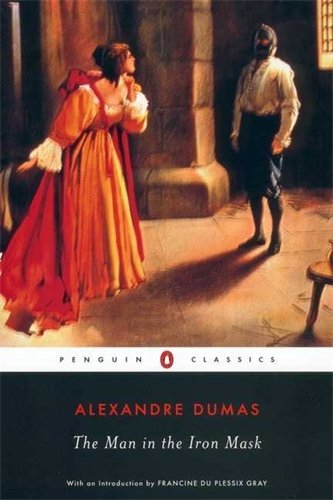
the-man-in-the-iron-mask I had considered starting 2017 by posting some reading plans and resolutions but, to be honest, after failing to keep most of last year’s, I don’t want to make any for this year. I do have one goal for 2017, though: I would like every book I read to be a potential book of the year. That’s unrealistic, I know, but it’s something to keep in mind when I’m choosing which books to read and when I’m deciding whether or not it’s worth continuing with a book I’m not enjoying. And I’m already off to a great start with my first January read – The Red Sphinx by Alexandre Dumas! I’m looking forward to telling you about that one after I’ve finished reading it, but in the meantime here are my thoughts on another Dumas novel I read just before Christmas.

The Man in the Iron Mask is the last book in the d’Artagnan series which began with The Three Musketeers and continued with Twenty Years After, The Vicomte de Bragelonne and Louise de la Vallière. The final three in the series were originally published as one novel, which must have been enormous; it’s easy to see why most publishers now split it into separate volumes! I think most people probably just go straight from The Three Musketeers to The Man in the Iron Mask – after all, they are the two best known and the most often filmed of the d’Artagnan stories – but I don’t regret having taken the time to read the ones in between. I did enjoy them all, particularly Twenty Years After, and it meant that I went into this, the final book, with the background knowledge I needed to be able to get straight into the story.

Unlike The Vicomte and Louise, which deal mainly with the political and romantic intrigues of various members of the 17th century French court, in The Man in the Iron Mask, the focus returns to d’Artagnan and his three friends, Athos, Porthos and Aramis. The first half of the novel revolves around Aramis and a plot involving a man imprisoned in the Bastille who bears a striking resemblance to the King of France. I won’t say too much about this as I wouldn’t want to spoil the story for future readers, but suffice it to say that things don’t go exactly as according to plan and both Aramis and Porthos (who, as usual, has become implicated in the schemes of others while blissfully unaware of what is really going on) find themselves in trouble.

We then catch up with Raoul, the young Vicomte de Bragelonne, who is trying to come to terms with the discovery that his beloved Louise de la Vallière is now the mistress of Louis XIV. Devastated by the loss of Louise, Raoul agrees to accompany the Duc de Beaufort on an expedition to Africa. How will his father, Athos, cope in his absence? D’Artagnan, meanwhile, has remained loyal to the king and for much of this novel he is caught up in the final power struggle between the two rival finance ministers, Fouquet and Colbert. When his duties bring him into conflict with Aramis and Porthos, however, d’Artagnan must find a way to serve his king without betraying his friends.

This is a much more exciting, action-packed book than the two preceding ones. The actual ‘man in the iron mask’ has a relatively small role to play but the plot has serious consequences which are explored throughout the remainder of the novel as we follow our old friends, the musketeers, to the end of their careers. I was pleased to see so much more of d’Artagnan and his friends than we did in the last two books, but I was disappointed by the lack of scenes with all four together (it was the relationship between the four of them, in my opinion, that made the first Musketeers novel such a joy to read) and that Athos’ storyline seemed to barely intersect with the others. Athos was my favourite character in the original Musketeers book and I really dislike the direction Dumas took him in throughout the later books in the series, particularly after Raoul became more prominent in the story. It’s funny that Aramis, my least favourite, ended up being the character I found the most interesting!

Towards the end, The Man in the Iron Mask also becomes a very sad book; after spending so much time with these characters – literally thousands of pages over the last few years – I didn’t want to have to say goodbye to any of them. Dumas ties things up very neatly in the final chapters…a bit too neatly for me; I would have preferred a happier ending with more left to the imagination! Still, I did enjoy this book and was delighted to discover that Dumas had written yet another, often forgotten, sequel to The Three Musketeers. It’s called The Red Sphinx and is being made available in a new English translation this month. I’m reading it now and am pleased to say that so far it’s definitely living up to my expectations!

Mystery Mile by Margery Allingham

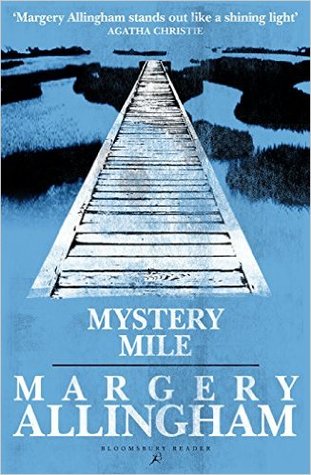
mystery-mile I often seem to be in the mood for reading mysteries at this time of year and as this one had been on my TBR for months, I found myself reaching for it the week before Christmas. I had read Margery Allingham before – one of her standalones, The White Cottage Mystery, which I enjoyed – and was curious to make the acquaintance of her most famous character, Albert Campion. Mystery Mile is the second in the Campion series, but I had been assured that it wouldn’t matter too much if I didn’t read the books in order.

Mystery Mile opens with an American judge, Crowdy Lobbett, sailing across the Atlantic with his son and daughter, having narrowly escaped several recent attempts on his life. When a further attempt takes place aboard the ship – and is thwarted thanks to a young man with a pet mouse – it is obvious that the gang who want Judge Lobbett dead are still on his trail. On arriving in England, the judge accepts the help of Albert Campion, who brings him to stay with his friends, Biddy and Giles Paget, at their home in Mystery Mile, a small, remote village on the Suffolk coast.

Campion hopes that Judge Lobbett and his children – Marlowe and Isopel – will be safe in the Paget’s house, but when a fortune teller pays a visit and shortly afterwards the village rector is found dead, it becomes clear that they are still not out of danger. Campion and his friends must try to interpret a range of intriguing clues including a red knight from a chess set and a suitcase full of children’s books if they are to solve the mystery and deal with the threat to the judge.

I had mixed feelings about my first Albert Campion novel. I loved the beginning, with the opening scenes on the ship – I thought the way in which Allingham introduced Campion into the story was excellent – and I enjoyed watching the story develop as the group arrived in Mystery Mile and one strange occurrence followed another. The setting is perfect: a mist-shrouded village surrounded by dangerous soft mud which acts like quicksand and a lonely manor house with a garden maze in which it appears that people can disappear without trace. Later, though, when the action moves to London for a while and we meet an assortment of criminals and gang members, the novel loses the quirky country-mystery feel it has at the beginning and I found that the second half of the novel has a very different tone from the first.

As for the character of Albert Campion himself, I couldn’t decide what to think of him! I liked the fact that there is clearly a lot more to him than meets the eye – his relationship with the police is never quite explained, and there are even hints that Albert Campion is not his real name. Although there was something about his constant quips and silly behaviour that I found slightly irritating, I was intrigued because it was obvious that his foolish, flippant public persona is designed to hide his true thoughts and his true intelligence. I can see why he is sometimes compared with Dorothy L. Sayers’ Lord Peter Wimsey, but based on what I’ve read of both so far, I prefer Sayers and Wimsey. Still, I’m looking forward to reading more books in this series and to meeting Albert Campion again!

The Black Moth by Georgette Heyer

the-black-moth The Black Moth, published in 1921, was Georgette Heyer’s first novel, written while she was still a teenager. I came to it having already read lots of Heyer’s other novels because I was advised that this was probably not a good place to start and that I would appreciate it more if I was already familiar with her later work. Now that I’ve read it, I think I would agree with that; I did enjoy it (although it hasn’t become a favourite) but I thought it had a slightly different feel from her later books and didn’t seem as polished.

The story is set not in the Regency period with which Heyer is normally associated, but the earlier Georgian period. Jack Carstares, eldest son and heir of the Earl of Wyncham, is a highwayman – though not entirely out of choice. He was accused of cheating at cards six years earlier and forced to leave the country in disgrace, but now he is back in England and trying to make a living in any way he can.

At the beginning of the novel, Jack discovers that his father is dead and that he is now the rightful Earl. He is reluctant to accept his inheritance, however, preferring to leave the estate to his younger brother, Richard. Jack, you see, was never actually guilty at all; he was covering up for Richard, who was the real cheat and who said nothing, allowing his brother to take the blame. Richard is not completely without a conscience, though, and after learning of Jack’s return, he feels increasingly guilty about what he has done – to the disgust of his wife, the beautiful but selfish and petulant Lavinia.

Lavinia is the sister of the Duke of Andover, who is known as ‘Devil’ by friends and foes alike, and who reminds Richard of a black moth. When Andover and Jack Carstares both find themselves drawn to the same woman, the fates of all of these characters become closely entwined once more and a chain of events is set into motion which could change each of their lives forever.

I’ve said that The Black Moth isn’t a favourite, but I did find it fun to read. Unlike some of the later Heyers I’ve been reading recently, such as Black Sheep and Charity Girl, which are more character and dialogue driven, this one is more action-packed and swashbuckling with a plot involving highway robbery, disguises, kidnappings and duels. It’s not as romantic a story as some since the focus is on the relationship between the two brothers, Jack and Richard, although that could be because Heyer was apparently writing this novel to entertain her own younger brother. Jack’s love interest, Diana, is maybe not one of Heyer’s stronger female characters, but I did like her – and was relieved that it wasn’t Lavinia who turned out to be the heroine!

Now that I’ve read The Black Moth, I’m looking forward to reading These Old Shades, which was published several years later and uses updated versions of some of the same characters. It’s one of many Heyer novels I’m hoping to read in 2017!

~

I’m taking a break for a few days, so I would like to take this opportunity to wish all of my blog readers a Merry Christmas! I’ll be back next week with my books of the year and December summary.

The Girl in the Glass Tower by Elizabeth Fremantle

the-girl-in-the-glass-tower One of the things I like about Elizabeth Fremantle’s historical novels is that they deal with women whose stories aren’t told very often: Penelope Devereux in Watch the Lady, Katherine and Mary Grey in Sisters of Treason and Katherine Parr in Queen’s Gambit. In this, her fourth novel, she writes about two more – Arbella Stuart and Aemilia Lanyer.

The Girl in the Glass Tower is set towards the end of the Elizabethan period, with England waiting anxiously for Elizabeth I, growing old with no children of her own, to name her heir. Born in 1575, Lady Arbella Stuart is the granddaughter of Margaret Douglas, Henry VIII’s niece, and therefore a possible claimant to the throne. Her other grandmother, the formidable and ambitious Bess of Hardwick, Countess of Shrewsbury, is determined to make this possibility a reality – and so Arbella grows up in isolation at Hardwick Hall, sheltered and protected from those who might try to plot against her.

Being close to the throne, however, doesn’t bring Arbella happiness and when her cousin, James VI of Scotland, is finally named as Elizabeth’s successor, she feels that her whole life has been wasted waiting for something that now looks unlikely to happen. Sadly, though, there is still more trouble ahead and when she makes the decision to marry William Seymour, who himself has Tudor blood, Arbella finds herself imprisoned again, this time in the Tower of London.

Arbella’s story alternates with the story of the poet Aemilia Lanyer, author of the poetry collection Salve Deus Rex Judaeorum. Aemilia (whom I have read about previously in Dark Aemilia by Sally O’Reilly) is sometimes considered to have been the ‘Dark Lady’ of Shakespeare’s sonnets, but this theory is not the focus of this novel, which concentrates on other aspects of Aemilia’s life instead: how she coped financially after the end of her affair with her rich lover, Lord Hunsdon, and the death of her husband, Alfonso; her work as a poet and as a teacher; and her relationship with her son, Henry.

For both women’s stories, Elizabeth Fremantle sticks to the known historical facts as far as possible, but where details are not known – particularly where Aemilia is concerned – she takes the opportunity to use her imagination. There is no evidence that the two women were friends, for example (although they would probably have been at court at the same time and Aemilia did dedicate one of her poems to Arbella), but Fremantle imagines that they were and that their lives became closely linked.

I loved following Arbella’s story – I’d only read about her once before, in Maureen Peters’ The Queenmaker, which is written from Bess of Hardwick’s perspective, so it was interesting to see things from another point of view, with Bess almost as a villain, controlling and manipulating her granddaughter’s life. I found Aemilia’s sections of the book slightly less absorbing, maybe because I didn’t like the device Fremantle uses of having Aemilia looking back on her relationship with Arbella from a point several years into the future. Still, I thought her story worked well alongside Arbella’s and provided an interesting contrast; unlike Arbella, whose destiny is always in the hands of other people, Aemilia has a much greater degree of freedom, her own struggle being mainly for financial independence and the respect of her son.

I also appreciated the way Fremantle pulls aspects of her previous novels together in this one – Penelope Devereux, the Earl of Essex’s sister from Watch the Lady, has a role to play, and the memory of Katherine Grey from Sisters of Treason is a strong presence in Arbella’s life. The Girl in the Glass Tower is a sad novel, but one that I enjoyed reading – and now I’m wondering who Elizabeth Fremantle will choose to write about next.