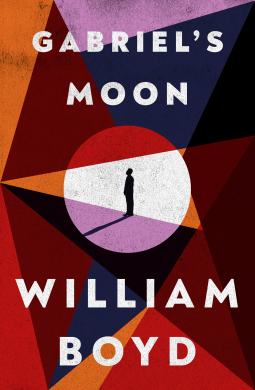
Gabriel’s Moon by William Boyd

William Boyd’s The Romantic was one of my books of the year in 2022, so I was excited about reading his new one, Gabriel’s Moon – although it did sound very different. Unlike The Romantic, which follows the entire life story of its hero, this book is a spy novel set over a much shorter period of time.

It’s 1960 and travel writer Gabriel Dax is visiting what is now the Democratic Republic of the Congo, where he has the opportunity to interview the new Prime Minister, Patrice Lumumba. During the conversation, which Gabriel captures on tape, Lumumba explains that he has enemies who want him dead and he provides the names of the three people he thinks are plotting to kill him. On his return home to London, Gabriel is convinced somebody has been inside his house in his absence and has been searching for something. It seems that somebody wants Gabriel’s tapes of the Lumumba interview – and their attempts to obtain them become more desperate once news emerges that Lumumba has been executed by a firing squad.

His accidental involvement in the Lumumba conspiracy brings Gabriel into contact with the mysterious Faith Green, an MI6 intelligence officer who sends him on a series of missions, the purpose of which Gabriel doesn’t fully understand. In a secondary storyline – which explains the title of the novel – Gabriel decides to consult a psychoanalyst, Dr Katerina Haas, in an attempt to get to the bottom of the mental health issues that have plagued him all his life, ever since his mother was killed in a house fire when he was six years old. The official cause of the fire was given as Gabriel’s night light, a candle inside a moon-shaped globe, but Gabriel’s memories of what actually happened that night are very different.

I enjoyed this book overall, but I found it a bit slow at times and, as a thriller, not particularly thrilling. There’s a lot of travel to various locations in Europe and Africa (all beautifully evoked), with a lot of sitting around in bars drinking and talking, but I never really felt that Gabriel was in much danger. Having said that, I was never bored and became fully drawn into the world of espionage, spies and double agents that Boyd creates, all set against a backdrop of the Cold War. I found it slightly unbelievable that the spies Gabriel meets all speak to him so openly, readily sharing secret information with him – but then, Gabriel doesn’t always know how to interpret that information and it’s his very innocence and gullibility that makes him so useful to Faith Green and MI6. As the story progresses, he eventually decides it’s time to stop being the self-described ‘useful idiot’ and try to take control of his own destiny.

Faith Green remains a bit of a shadowy, enigmatic character throughout the book and because I felt I never really got to know her, I became irritated by Gabriel’s obsessive infatuation with her, particularly as he already has a girlfriend, Lorraine – whom he looks down on because of her working-class background, while at the same time admitting that he’s only with her because he finds working-class women sexually attractive. Although I didn’t dislike Gabriel in general, some of his attitudes leave a lot to be desired!

One of the most interesting aspects of the novel for me was seeing Gabriel work through his hazy memories and his feelings of guilt about the tragic fire that took his mother’s life. Through his psychoanalysis sessions with Dr Haas, Gabriel is inspired to carry out his own investigations into the night of the fire and begins to uncover the truth. I thought this storyline worked well alongside the espionage one and gave us some more insights into Gabriel’s character.

Although Gabriel’s Moon works perfectly as a standalone, there were some loose threads left at the end that made me think this could be the first in a series – and I was pleased to find that William Boyd is indeed working on a second book. I’ll be looking out for it, but I also have lots of Boyd’s earlier novels still to read. I would be happy to hear your recommendations!

Thanks to Viking for providing a copy of this book for review via NetGalley.

Book 53 for the Historical Fiction Reading Challenge 2024
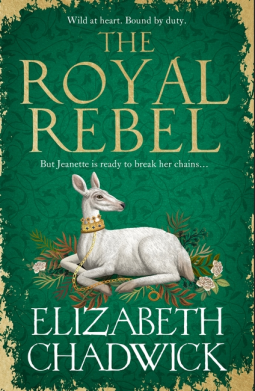
The Royal Rebel by Elizabeth Chadwick

This is the first of a planned pair of novels telling the story of Joan of Kent, cousin of King Edward III. Chadwick refers to her throughout the book as Jeanette because that was the name given to her by the King’s son, Edward (known as the Black Prince), who had it engraved on a silver cup. I’ll do the same in this review to avoid confusion.

The Royal Rebel opens in 1338 with Jeanette preparing to leave her family behind and travel overseas with the royal court for the first time. Jeanette is only twelve years old, so in the absence of her mother she is chaperoned by Katerine, Countess of Salisbury. During the journey to Antwerp, Jeanette is drawn to one of the King’s household knights, Thomas Holland, and once they reach their destination they find opportunities to spend time together away from the watchful eye of the Countess. They continue their relationship for more than a year until Jeanette becomes pregnant and they decide to marry in secret, knowing that they would be unlikely to get the consent of her family or the King.

Soon after the wedding, Jeanette loses the child and then Thomas leaves to go to war. In his absence, Jeanette is forced into marriage with William Montagu, her younger brother’s friend whom she has always disliked. William is the son and heir of the Earl of Salisbury and both Jeanette’s mother and the Countess of Salisbury see it as a wonderful match. Although Jeanette confesses that she is already married and can provide evidence, the two women refuse to acknowledge it and the Montagu marriage goes ahead anyway. The rest of the novel follows Thomas and Jeanette in their long battle to prove the legitimacy of their marriage so that they can live together as husband and wife at last.

I love Elizabeth Chadwick’s books but wasn’t sure I was going to like this one at first. Most of the first half of the novel is devoted to the romance between Jeanette and Thomas and not much else – and with this being the first of two books on Jeanette’s life, Chadwick takes her time in developing this part of the story. Eventually, though, things do get much more compelling as our hero and heroine become embroiled in their mission to have their marriage ruled valid by the Pope. Jeanette’s mother, Margaret Wake, and the Countess of Salisbury are very much the villains here as they destroy evidence, play politics behind the scenes and even imprison Jeanette to ensure nothing interferes with their plans (in reality, it seems unclear whether they were aware of Jeanette’s marriage to Thomas Holland before pushing her into a bigamous marriage with William Montagu).

William is depicted as weak and immature, unwilling to defy his mother and make decisions of his own, but I – and I think Jeanette as well – began to feel sorry for him as the novel progressed, because he was under the control of the Countess just as much as she was and was wasting years of his life trapped in a false marriage to someone who would never love him. Jeanette, on the other hand, is the ‘rebel’ of the title and although, like William, she’s constrained by society and her noble status, she knows what she wants out of life and is determined to find a way to get it, however long it takes. Her brother, John, sums up the situation perfectly:

‘Women, when they gather together in their sewing groups to gossip, arrange marriages for their relatives like stitching secret patterns on their embroideries. I envy you because you have chosen to sew your own colours and to walk away from it all, even at a great cost to yourself and others.’

Jeanette’s age, being barely in her teens at the time of her marriage to the older Thomas, will obviously be problematic to a modern audience so Chadwick chooses not to focus on it too much. Although she does tell us at the beginning how old Jeanette is, she doesn’t make a big thing of it and it’s easy to forget about the age difference as you read. This first novel only covers the early part of Jeanette’s life, ending in 1350, so anyone who knows this period of history will know that there’s a lot more to come in the second novel. There’s no news on its publication yet, but I’ll be looking out for it.

Thanks to Little, Brown Book Group UK for providing a copy of this book for review via NetGalley.

Book 52 for the Historical Fiction Reading Challenge 2024

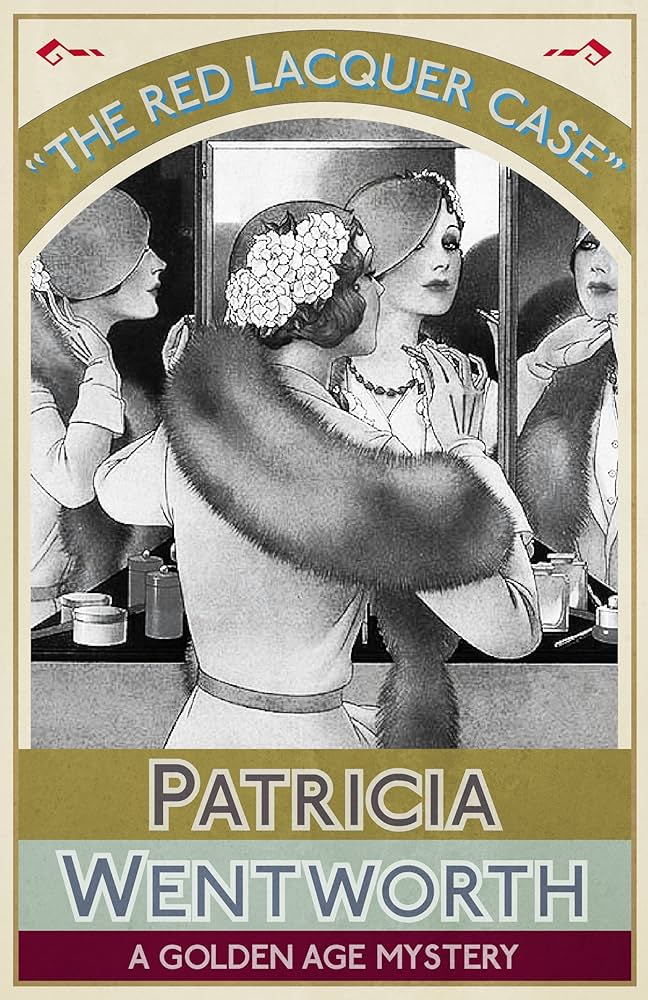
The Red Lacquer Case by Patricia Wentworth – #DeanStreetDecember24

This month, Liz at Adventures in Reading, Running and Working from Home is hosting another Dean Street Press December. I have several books published by DSP that I would like to read but I decided to start with this one, a standalone Patricia Wentworth novel from 1924. I really enjoyed it, so it was a good choice!

The Red Lacquer Case is a spy thriller and like many books of its type it’s probably best not to take it too seriously. Accept it for what it is, though, and it’s great fun. Our heroine is Sally Meredith who, as the novel opens, is listening to her uncle, the scientist Fritzi Lasalle, telling her about a formula he has developed for a potentially dangerous new gas. Lasalle has become paranoid about the formula falling into enemy hands, so he has locked it inside a red lacquer case which has a secret opening mechanism. After showing Sally how it works, he explains that an attempt to open it in any other way will release acid into the case, destroying the contents.

During the night, Lasalle walks out of the house and disappears, leaving behind a note for Sally telling her that the red lacquer case is hidden on a bookshelf. When she goes to look for it, however, she discovers that it’s been stolen. It seems that Lasalle’s worst fears have come to pass and enemy agents now have the case – but they don’t know how to open it and for that they’ll need Sally’s help.

The rest of the novel follows Sally as she tries to evade the enemy, who are determined to capture her and force her to open the case. Unfortunately, although she’s a brave, plucky heroine (thankfully the complete opposite of the infuriating Loveday Leigh in Fool Errant, the only other Wentworth novel I’ve read), she’s too trusting and unobservant and walks straight into every trap set for her. It makes the plot more exciting, I suppose, but it’s also quite frustrating. It’s one of those books where you keep wishing you could jump into the story for a moment and shout “No! Don’t do it!”

Sally has some help from Bill Armitage, a former love interest who now works for the War Office and coincidentally also happens to be on the trail of Uncle Fritzi’s secret formula. He’s not as much help as he could have been, however, because he and Sally spend most of the book embroiled in a series of misunderstandings, being caught out by fake telegrams and other deceptions used by the enemy agents. Luckily for Sally, she find some unlikely allies at the enemy hideout, including a temperamental Polish violinist who conveniently falls in love with her and an elderly aunt who’s completely unaware that she’s sharing her house with spies.

I think you can probably see why I’ve said this isn’t a book to be taken seriously! It’s great escapism, though, and very entertaining. Just be aware that it’s not really the ‘Golden Age mystery’ the cover indicates, as there’s very little mystery involved (although there is a twist at the end, which I didn’t see coming but should probably have guessed). I’m looking forward to reading more of the Patricia Wentworth books available from Dean Street Press!

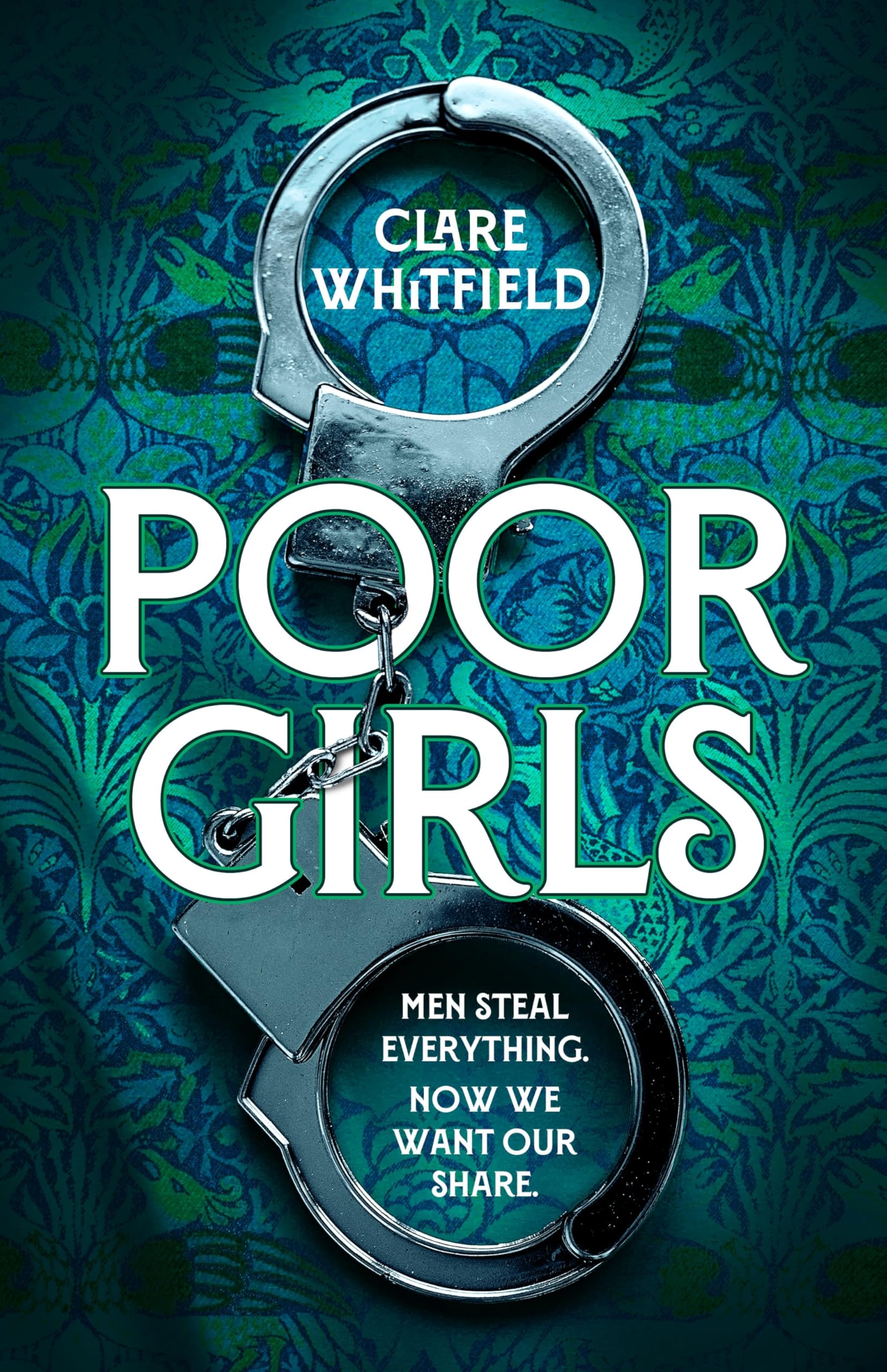
Poor Girls by Clare Whitfield

It’s 1922 and Eleanor Mackridge, like many women, is finding it difficult to adjust to ‘normal life’ now that the war has ended. Compared to working in a munitions factory and feeling that she was doing something important for her country, her new job waitressing at a Brighton hotel is dull and boring. Marriage could offer an escape route, but that doesn’t sound very appealing either, so when Eleanor crosses paths with a member of the all-female crime gang, the Forty Elephants, the temptation to join them is too strong to resist.

Now known as Nell, she moves to London where she is assigned to a cell – a group of four gang members who live and work together – and begins her education in the art of theft. Soon she knows how to steal expensive furs and jewels from London’s grandest department stores, how to conceal her loot in hidden pockets and, most importantly, how to avoid being arrested. Although her conscience troubles her at first, she soon learns to love her new life and her new friends. But what will Nell’s family say when they discover what she is doing? And what will happen if her luck runs out and she gets caught?

Poor Girls is an enjoyable, fast paced novel rooted in historical fact. I wasn’t aware until I finished the book and read the author’s note that the Forty Elephants really existed (the name comes from the Elephant and Castle area of London, where they were based). Although the gang leader, Alice Diamond – known as Queen Alice – was a real person, Nell Mackridge seems to be a fictional character. However, through the stories of Nell and her friends, Whitfield explores some of the factors that may have driven young women like them to turn to a life of crime.

It was fascinating to see how the gang operated and to watch Nell learning all the tricks of the trade – all the cons, deceptions and disguises she needed to be able to avoid detection. Interestingly, women had an advantage when it came to shoplifting as store security were reluctant to stop and search female customers. Also, all those layers of clothing they wore were useful for hiding stolen goods! The success of their operations depended on working together as a team, so trust was necessary between the members of each cell and Nell formed strong bonds with Effie, Lily and Charlie, her partners in crime.

I did have one or two minor criticisms of the book: I felt that the characters of Nell’s three friends could have been more clearly defined – Charlie and Lily, in particular, seemed interchangeable – and there were times when the language felt more 2020s than 1920s. Otherwise, this was a very entertaining novel with a plot not quite like any other I’ve read. I also liked the fact that, although crime is obviously not something we should admire or find glamorous and Whitfield does make the consequences clear, at the same time she isn’t trying to push a moral message onto the reader. The ending of the book isn’t quite what you would expect either, but it’s probably more realistic that way.

It seems that Alice Diamond and the Forty Elephants have been the subject of several recent novels and there’s a non-fiction book available as well. I’m not sure how I’ve missed them all, but will investigate them now. I would also like to read Clare Whitfield’s earlier novel, People of Abandoned Character.

Thanks to the publisher for making a copy of this book available for review via The Pigeonhole.

Book 51 for the Historical Fiction Reading Challenge 2024
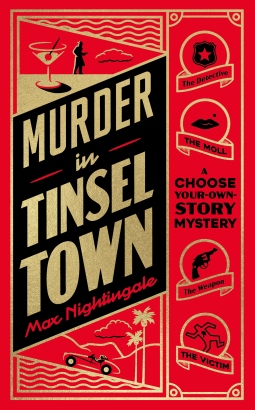
Murder in Tinseltown by Max Nightingale

I used to love Choose Your Own Adventure books as a child – who else remembers them? – so when I saw this new adult version of the same concept, I couldn’t wait to read it. Murder in Tinseltown is set in Los Angeles in the 1950s and the reader takes on the role of a detective investigating the murder of an actress. At various points in the story you’ll have the opportunity to choose your own actions and decide what happens next, either by turning to different numbered pages or, in the Kindle edition I read, simply clicking on a link.

You start your adventure at LAPD headquarters on the weekend of the Golden Star Awards when some of Hollywood’s biggest stars have descended on the city. It’s a busy day in the squad room, but when a disturbing call comes through from the Royal Premiere Hotel – “Trouble…hurt…not my fault…help…it’s them…I’m sorry…” – you head straight to the hotel to investigate. You arrive just in time to learn that one of the waiters has discovered Blanche Aikerman, probably the world’s most famous actress, stabbed to death in her room. After witnessing the dead body for yourself, you accompany the hotel manager to the suite of Peter von Hiltz, Blanche’s director, to give him the news. However, he doesn’t answer the door. What will you do next?

This is where the interactive part of the novel begins. Will you ask the manager to let you into von Hiltz’s room? Will you return to the crime scene to look for more clues? Or would you prefer to interview the waiter who found the body? Each option takes you to a different location in the book and the story continues from there until you reach another turning point and are presented with a new set of choices. It could and should have been a lot of fun working through the book and trying to solve the mystery – unfortunately, there were some problems with the structure which made the whole experience less satisfying than I’d hoped.

Maybe there was one route I could have followed through the novel where the story would have flowed perfectly, but surely somebody should have checked that all of the other possible routes also made sense. Early on, I saw a character die right in front of my eyes at an airport – then I returned to the hotel, where that same character was still walking around alive and well as if nothing had happened. Similarly, I found the murder weapon and then someone else found it again later in the book. Looking at other reviews, it seems that most of us noticed those same two things so I’m not sure how they weren’t picked up on by the author or an editor. Also, there are several outcomes where you die, but instead of the book ending as you would expect, you just come straight back to life and are directed to the ‘correct’ option so the story can continue.

From a nostalgia perspective, it was nice to have the opportunity to read a book like this, but I’m disappointed that it didn’t work as well as it could have done.

Thanks to HarperNorth for providing a copy of this book for review via NetGalley.

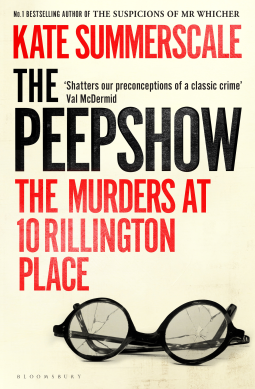
The Peepshow: The Murders at 10 Rillington Place by Kate Summerscale

When I first saw the title of Kate Summerscale’s new true crime book, I wondered if it dealt with the Thompson/Bywaters murder case, the subject of A Pin to See the Peepshow by F. Tennyson Jesse. Then I saw the subtitle and knew this was a book about a different crime – the John Reginald Christie murders at 10 Rillington Place in London. However, I was partly right, because Tennyson Jesse herself was actually involved in this case as well and appears in this book in her role as author and journalist.

In March 1953, John Reginald Christie was arrested following a seven-day manhunt after the bodies of three women were found in his kitchen alcove. The body of his wife, Ethel, was then discovered under the floorboards, as well as the remains of two more women in the garden. Christie admitted to being responsible for all of these deaths and was hanged in July 1953. However, just three years earlier, Timothy Evans, another tenant at the same address, was believed to have killed his wife and baby daughter and was also hanged. Evans had changed his story several times and after withdrawing a confession he had made to the police, he accused Christie of committing both murders. Did the jury get it wrong and hang an innocent man, allowing Christie to go on killing more people?

The Peepshow is a detailed and thorough account of the Rillington Place murders – sometimes a bit too detailed, for example where we are given the personal histories of the most minor of characters or a list of every single reported sighting of Christie in a seven day period. In general, though, it’s all interesting information that adds up to a full picture of not just the crime itself but also the state of British society in the early 1950s. Some of Christie’s victims were prostitutes or from deprived backgrounds and Summerscale spends a lot of time discussing their stories and the sequence of events that brought them into contact with their killer. She also explores the racist attitudes of the period – it seemed that many of the white residents of Rillington Place were so busy complaining about living amongst black people, they failed to notice that they were also sharing the building with at least one murderer. Other topics Summerscale touches upon include illegal abortions (Christie carried these out in his rooms at Rillington Place) and the poor living conditions in multiple-occupancy housing.

To give the book a more personal touch, Summerscale focuses on two people who were investigating the murders from different perspectives. One was Harry Procter, star reporter with the Sunday Pictorial, who arrived at Rillington Place to report on the discovery of the bodies in the kitchen – and remembered that three years earlier he had visited the same house to interview Christie about the Timothy Evans case. Now, with more information available, Procter became convinced that he – and the police – made a terrible mistake and that it was in fact Christie who was responsible for the murders of Beryl and baby Geraldine.

Procter’s theory was shared by the author Fryn Tennyson Jesse, who was researching the case for a new book in the Notable British Trials series. Fryn was dealing with morphine addiction and poor eyesight, but was determined to attend Christie’s trial, where she came to the same conclusion as Procter. However, there was very little appetite from the authorities to look again at the Evans case – the police didn’t want to admit that they failed to identify the correct culprit and it’s believed that the Tory government of the time didn’t want to cast doubt on the justice system as it would strengthen opposition to the death penalty. Although Timothy Evans has now been posthumously pardoned, it seems that we still don’t know for certain what happened to Beryl and Geraldine Evans and if you’re hoping for answers or lots of new evidence, you’re not going to find anything conclusive in The Peepshow. I was left feeling confused about the whole thing, which isn’t really Summerscale’s fault – the confusion was caused by both Evans and Christie confessing to various murders, then changing their stories – but it’s not very satisfying if you prefer everything to be neatly wrapped up at the end of a book.

I did find this an interesting read, although I think it needed more structure; it seemed to jump around a lot, from one topic to another and backwards and forwards in time, which stopped it from flowing as well as it could have done. Still, it was good to learn more about this complex true crime and the social conditions that may have contributed to it.

Thanks to Bloomsbury Circus for providing a copy of this book for review via NetGalley.

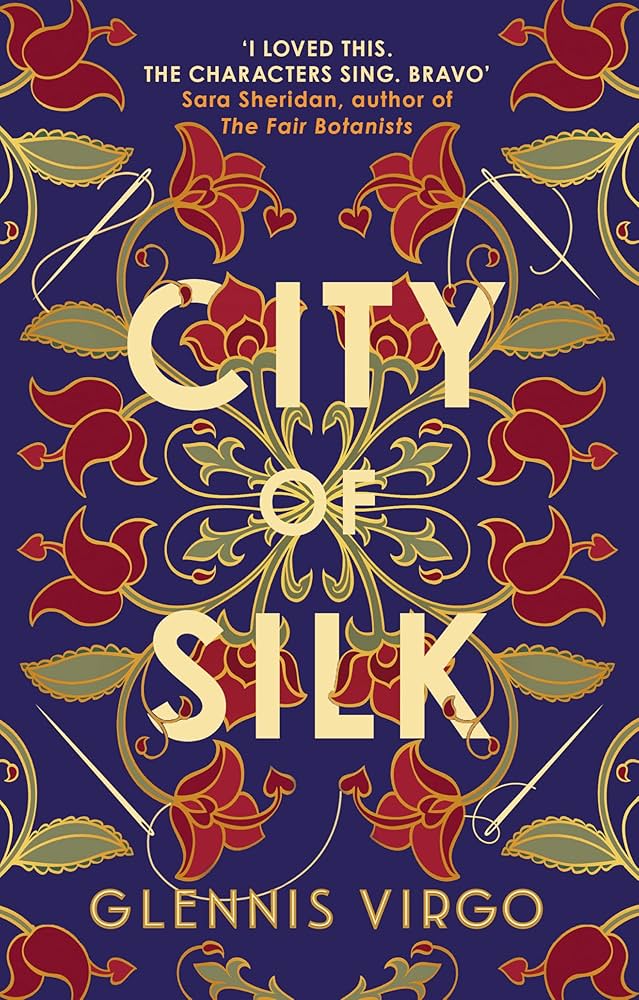
City of Silk by Glennis Virgo

I love reading about Renaissance Italy, but most novels focus on Rome, Florence or Venice, so this one, set in Bologna – famous for its silk industry in the 16th century – was something slightly different.

It’s 1575 and our narrator, Elena Morandi, is working as a seamstress in Signora Ruffo’s workshop. Although she was raised in an orphanage from the age of ten after the death of both parents, Elena remembers the skills she was taught by her father, a tailor, and has proved to have a real talent for needlework. However, she’s bored with sewing women’s gowns and capes and longs to work on men’s clothing and gain the title of tailor rather than seamstress. Sadly, this is not an option for a woman and Elena seems destined to stay with Signora Ruffo – until she flees to escape an arranged marriage.

In need of a new job, Elena decides to pursue her dreams and manages to obtain a lowly position in a tailor’s workshop, sweeping the floor and fetching fabrics and threads for the Maestro, Francesco Rondinelli, and his three tailors. Then, just as she’s settling into her new life, a figure from her past walks into Rondinelli’s workshop to ask for a fitting. This is Antonio della Fontana, benefactor of the orphanage Elena attended and one of the most powerful men in Bologna. He had abused his position of power at the orphanage and it seems that nothing has changed; when even Rondinelli and his friends begin to suffer at the hands of Fontana, Elena decides it’s time to take revenge.

City of Silk is one of several historical novels I’ve read recently that deal with women trying to forge a career for themselves in fields traditionally dominated by men. Tracy Chevalier’s The Glassmaker, Joanne Burn’s The Bone Hunters and Ambrose Parry’s The Spendthrift and the Swallow are three I’ve read just this year (featuring, respectively, a female glassmaker, a female would-be geologist and a woman desperate to become a doctor). This is obviously another and while I admired Elena’s determination and ambition, I would have liked more detail on why she felt it was so important to become a tailor instead of aspiring to be like Signora Ruffo, who was running her own successful business and was financially independent. I’m not sure I really understood why Elena seemed to look down on seamstresses so much or why she considered it so much more rewarding to make clothes for men rather than women.

As mentioned above, I did love the setting. I’ve never been to Bologna, but Virgo’s descriptions brought it to life for me. I also found it interesting to learn about the city’s role as a leading European centre of silk production and what it was like to work in a tailor’s or seamstress’s workshop during that period. Most of the characters are fictional, but Virgo explains in her author’s note at the end that a few of them really existed and another is inspired by a portrait in the National Gallery!

The scheme Elena and her friends come up with to take their revenge on Fontana seemed very unlikely to me – I couldn’t imagine anybody actually doing what they did, particularly not in the 16th century – but otherwise the plot was quite entertaining. This is Glennis Virgo’s first novel (for which she has won the Debut Writers Over 50 Award) and although I’m not sure if I’ll read her next one, I could be tempted depending on the subject.

Thanks to Allison & Busby for providing a copy of this book for review via NetGalley.

Book 50/50 for the Historical Fiction Reading Challenge 2024