The Hidden Girl by Lucinda Riley

When Lucinda Riley died in 2021, it seemed that there would be no new books from her, but since then her son Harry Whittaker has completed her final, unfinished Seven Sisters novel, Atlas, and now has reworked one of her earliest novels which was originally published as Hidden Beauty in 1993 under the name of Lucinda Edmonds. Retitled The Hidden Girl, it’s not clear exactly how much input Harry has had, but he states in the foreword that he has ‘refreshed and updated the text’.

After a brief prologue, we meet our heroine Leah Thompson as a shy teenage girl living with her parents in 1970s Yorkshire. Leah has no big plans for the future – her time is filled with schoolwork and assisting her mother with her job as housekeeper at the big farmhouse owned by Rose Delancey – and she doesn’t consider herself to be anything special. She does have natural beauty, but is overshadowed by more confident girls, like Mrs Delancey’s adopted daughter, Miranda. Yet it’s Leah, not Miranda, who is spotted by a London modelling agency and within a few years has become one of the world’s top models.

In a second timeline, we join the young Rose – or Rosa as she was previously known – and her brother David, who are children in Poland during the Second World War. Rose and David are from a Jewish family and like many Polish Jews they experience some terrible things and are very lucky to survive the war. Some of the tension is lost because we already know that Rose and David are still alive in the late 1970s – we meet Rose in the very first chapter, a semi-retired artist living in Yorkshire with Miranda and her older son, Miles, and we learn that David is a wealthy businessman and a widower with a teenage son, Brett. However, it’s still harrowing to read about the things they had to go through before reaching a more settled status in life.

Although the wartime narrative does have relevance to the lives of the younger generation – in ways that they themselves don’t understand until much later – most of the novel is devoted to the ‘present day’ storyline (the 70s and 80s). At first I thought it was going to be a bit of a shallow story about celebrities leading glamorous lifestyles, but I soon discovered there was more depth to it than that. Riley explores the dark side of stardom and the fashion industry, including the temptations of drugs and alcohol, the pressure to succeed, the internal rivalries and competitiveness, and the men who just want to take advantage of beautiful young women. Some of the things that happen to Leah’s friend, Jenny, in particular, are horrible and I think anyone who picks up this book expecting a light read may be surprised by the topics it covers.

This is actually the third Lucinda Edmonds book to be reissued under a new title, after The Italian Girl and The Love Letter, but those two were rewritten by Lucinda herself and published during her lifetime. I wonder whether any of her other Edmonds novels will be reworked by Harry now as well – or whether he’ll decide to write a book of his own.

Thanks to Pan Macmillan for providing a copy of this book for review via NetGalley.
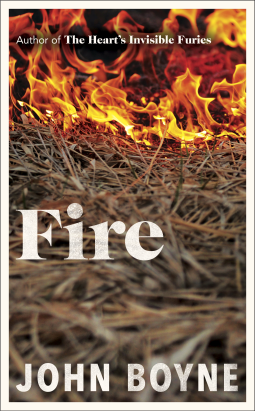
Fire by John Boyne – #NovNov24

This is the third book in John Boyne’s Elements quartet and it’s the darkest and most powerful so far. Each book can be read as a standalone story, but if you’ve read the previous two – Water and Earth – you’ll see some links between the characters and plots. I would still recommend reading them in order if possible, although it’s not essential.

Fire, like the other books, is novella-length – in this case 163 pages – but as usual, Boyne manages to pack a huge amount into those pages, more than you would often find in a much longer novel. Our narrator this time is Freya Petrus, a renowned surgeon who works with burns and skin grafts. She’s only in her thirties but has already established herself as one of the best in her field. What Freya gets up to in her private life, however, is much less admirable…in fact, it’s horrible. To understand what has made her the person she is – both the good side and the bad – we have to go back to Freya’s childhood and witness the traumatic experiences that shaped her future.

It’s difficult to really discuss the issues a book like this raises without spoiling things, so I’ll just say that what Freya experiences as a child leaves her badly damaged and, in her mind, justifies the harm she does to other people as an adult. I did have some sympathy for the young Freya, but that was surpassed by the loathing I felt for the older Freya. John Boyne is never afraid to tackle unpleasant and controversial subjects in his books, but the things Freya does are particularly shocking and I found it a very uncomfortable book to read. It’s also fascinating and completely gripping, so I do recommend it as long as you’re prepared!

As with the themes of water and earth in the previous two books, the element of fire plays a part in this one in several different ways: not only does Freya work with victims of fire, it could be said that she’s also playing with fire in her personal life. Other important themes running through the story include the question of nature versus nurture and which has the biggest role in forming our character, the level of responsibility each of us has to do what we know is right, and the different expectations society has of men and women. It’s a book that leaves you with a lot to think about after reaching the final page.

Although each book in this quartet does work on its own, a minor character from each one becomes the main protagonist of the next. It seems that Aaron, who works with Freya at the hospital, is going to be the star of the final book, Air. It will be published in May 2025 and I’m looking forward to seeing how Boyne brings the series to an end.

Thanks to Doubleday for providing a copy of this book for review via NetGalley.
I’m counting this book towards Novellas in November, hosted by Cathy of 746 Books and Rebecca of Bookish Beck

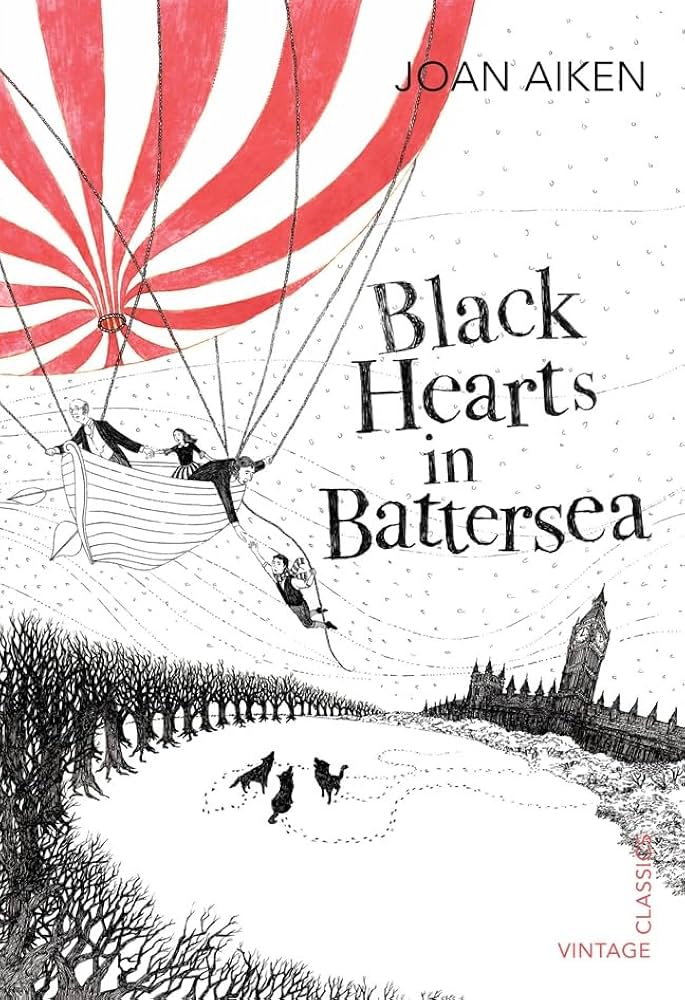
Black Hearts in Battersea by Joan Aiken – #WitchWeek2024

This week Chris of Calmgrove and Lizzie Ross are hosting their annual Witch Week, an event inspired by the Diana Wynne Jones book, Witch Week, and this year they are celebrating the work of Joan Aiken. I’ve had the second book in Aiken’s Wolves Chronicles series on my TBR since reading the first, The Wolves of Willoughby Chase, last year and this seemed like a perfect opportunity to pick it up.

Black Hearts in Battersea was first published in 1964 and while I would recommend reading The Wolves of Willoughby Chase first, you don’t really need to as this book would also work as a standalone story. It begins with Simon (the boy we first met living in a cave in the woods near Willoughby Chase) searching the streets of London for his friend, Dr Field. Simon is hoping to study at the Art Academy in Chelsea and Dr Field has invited him to share his lodgings in Rose Alley. However, Rose Alley proves very difficult to find, and when Simon does eventually stumble upon the right address he discovers there’s no trace of the doctor – the house is inhabited by the rather unpleasant Mr and Mrs Twite and their daughter, Dido, ‘a shrewish looking little creature of perhaps eight or nine’.

What has happened to Dr Field and will Simon manage to track him down? This is only one small part of this imaginative, action-packed novel which, like the previous book, is obviously intended for a younger audience but is still an entertaining read for those of us who are older. There are missing children and mistaken identities, kidnappings, shipwrecks and balloon rides, and a plot to kill the King – the King in this case being James III as we are in an alternate history where the Stuarts are still on the throne in the early 19th century and are the target of Hanoverian conspiracies. The other significant difference between this fictional world and the real one is that a large number of wolves have crossed from Europe into Britain and although we didn’t see much of them in Willoughby Chase, they do get alarmingly close to Simon and his friends on several occasions in this book!

Black Hearts in Battersea feels almost like a Charles Dickens novel for children, with the 19th century London setting and the array of larger-than-life characters – who include Dido and the Twite family, the eccentric Duke of Battersea, the excitable Dr Furneaux, who runs the academy Simon attends, and the book’s main villain, Eustace Buckle. I wish I had read this as a child, but as an adult I still found it a lot of fun and I’m sure I’ll read the next book in the series at some point, particularly as this one ends with Dido’s whereabouts unknown!

Book 49/50 for the Historical Fiction Reading Challenge 2024

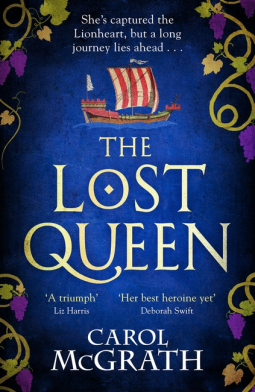
The Lost Queen by Carol McGrath

Berengaria of Navarre is one of the Queens of England I know least about and I’m sure I’m not alone in that as so little has been written about her. I’ve read novels in which she appears briefly as a secondary character, but with the exception of Martha Rofheart’s Lionheart, nothing where she takes a more central role. In The Lost Queen, Carol McGrath builds Berengaria’s story around the small amount of factual information we have about her, taking us through the early days of her marriage to King Richard I and her time spent in the Holy Land, where she accompanied Richard on the Third Crusade.

Like the other McGrath books I’ve read, there’s also a fictional heroine whose story takes place alongside the real historical one. In this case, it’s Lady Avelina of Middleton, whose husband William has disappeared after leaving for Outremer three years earlier to claim his father’s estate. William’s half-brother, Walter, is insisting that William must have become caught up in the Crusades and killed in battle, but Avelina suspects that Walter simply has his eye on herself and Middleton. Avelina is determined to prove that her husband is still alive and sets off to look for him, attaching herself to a party of nuns who are travelling to Jerusalem in search of a religious relic to bring back to their abbey.

During the journey, Avelina’s path crosses with Berengaria’s, who is on her way to her wedding with Richard. Richard’s mother, Eleanor of Aquitaine, escorts Berengaria as far as Sicily, then Eleanor’s daughter Joanna accompanies her from there to Cyprus and then the Holy Land. Avelina and the nuns join them along the way and a friendship forms between Avelina and the new queen.

Berengaria is known as the only English queen never to visit England (although it’s now thought that she may have done after Richard’s death). This means that, apart from a few chapters involving Avelina, most of the novel is set elsewhere in Europe and the Middle East. I particularly enjoyed the descriptions of all the adventures the characters have on the journey: crossing the Alps in the middle of winter; surviving assassination attempts; being shipwrecked off the coast of Cyprus and held prisoner.

As I know so little about Berengaria I can’t really comment on the accuracy of the novel. McGrath does include an author’s note, in which she explains some of her decisions and how she worked with the available information to create the story. We do know that Berengaria never had children, for example, but McGrath suggests that she may have been pregnant with Richard’s child and had a miscarriage. The Avelina chapters of the book obviously allow for a lot more invention and imagination and there are also a few sections here and there narrated by other characters such as Blondel, the troubadour, or Ursula, one of Berengaria’s ladies. I can understand why these perspectives were included, as they fill in some of the gaps, showing us things that Berengaria and Avelina don’t witness for themselves, but I didn’t feel they really added much to the story and we don’t spend enough time with these characters to form any kind of emotional connection.

The book ends before the death of Richard I and I was sorry that we didn’t continue with Berengaria’s later years as it would have been interesting to see how she dealt with being a widow and queen dowager. However, even less is known about that period of Berengaria’s life, so maybe it was the right decision for the book to end when it did. I’ll be looking out for news on which historical figure Carol McGrath is writing about next!

Thanks to Headline Accent for providing a copy of this book for review via NetGalley.
Book 48/50 for the Historical Fiction Reading Challenge 2024

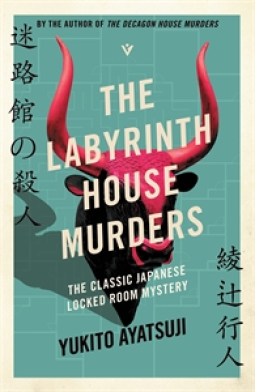
The Labyrinth House Murders by Yukito Ayatsuji

Translated by Ho-Ling Wong

This is a good example of why it’s often worth giving an author a second chance. I was disappointed with Ayatsuji’s The Decagon House Murders, finding the characters very wooden and the plot a poor imitation of And Then There Were None, so I had decided to stick with Japanese crime authors more to my taste, such as Seishi Yokomizo. Then I read lots of glowing reviews of The Mill House Murders, the second in Ayatsuji’s series to be released in a new English translation, so when I saw the third one, The Labyrinth House Murders, on NetGalley I decided to give him another try.

The Labyrinth House, we are told, is the work of the same architect who designed the Decagon House and the Mill House. As its name suggests, the house contains a labyrinth of passageways with the rooms arranged around the edges, so that to get from one room to another it’s necessary to enter the maze. The design is inspired by the Minotaur myth and all of the rooms are named after characters associated with the myth. This very unusual house is the home of the mystery writer Miyagaki Yōtarō.

Miyagaki is in poor health but, as the novel opens, he is preparing for his sixtieth birthday and has invited a group of friends and colleagues to celebrate with him at the Labyrinth House. These include four younger crime authors whom Miyagaki has mentored, a literary critic, his editor Utayama and his wife – and a friend, Shimada Kiyoshi, who is the series detective. As the guests assemble at the house, they are greeted by Miyagaki’s secretary, who gives them the shocking news that their host has committed suicide, leaving them a recorded message to listen to. The recording instructs them not to leave the house or call the police for five days and in the meantime the four authors must each use the time to write a detective story. The four stories will be judged by the other guests and the winner will inherit part of Miyagaki’s fortune.

This book was much more fun than The Decagon House Murders. Although the plot is obviously very contrived, that didn’t bother me and I found it easy enough to just suspend disbelief and accept the premise. Once the story writing competition begins, murders start to take place (in very imaginative ways) and I was completely gripped until the end. My only real criticism is that one of the clues to the solution is something that only a man would think was plausible; Ayatsuji should maybe have discussed it with a woman first before basing a key plot point around it. Sorry to be vague!

I loved the setting of the Labyrinth House and the way so many aspects of the Minotaur myth are worked into the plot. A map of the house is included to help the reader appreciate the layout of the rooms and the labyrinth (and this is where I wished I had a physical copy of the book instead of the ebook). The house has an eerie, unsettling atmosphere and I worried for the characters every time one of them went wandering off on their own! Being originally published in 1988, there are also lots of little details that set the book in that period: the way everyone smokes indoors; the word processors the authors use with floppy disks to save their work; the landline telephones that can so easily (in crime novels, anyway) become cut off from the outside world.

The characters have a bit more depth than the ones in The Decagon House, although I’m finding that characterisation doesn’t seem to be a strong point in any of the older Japanese crime novels I’ve read. Most of the book is written from Utayama’s perspective, although Shimada is the one who does the detective work – and, thankfully, explains some of his deductions to Utayama as he goes along so that the reader can follow what’s happening. And did I manage to solve the mystery? Well, no, I didn’t, but Ayatsuji conceals an important piece of information from us until the end of the book, so I don’t really consider this a fair play mystery anyway. There are also multiple plot twists and a story-within-a-story structure, just to make things even more difficult!

I’m pleased to see that the next book in the series, The Clock House Murders, is being published by Pushkin next year and also pleased that they’re sticking with Ho-Ling Wong as translator, as he’s done such a great job with this one. Meanwhile, I’ll go back and read The Mill House Murders, in the hope that for some reason it was only The Decagon House I didn’t connect with.

Thanks to Pushkin Vertigo for providing a copy of this book for review via NetGalley.
This is my sixth and final book for this year’s RIP XIX challenge.

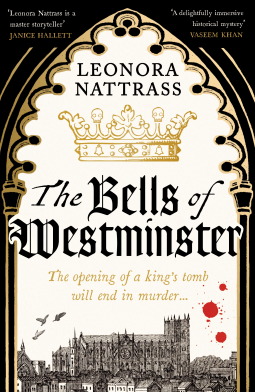
The Bells of Westminster by Leonora Nattrass

I’ve enjoyed all three books in Leonora Nattrass’ Laurence Jago series (Black Drop, Blue Water and Scarlet Town) and was hoping for a fourth, but it seems she’s moved on to other things, at least temporarily. Like the Jago books, The Bells of Westminster is set in the 18th century but is a completely separate story with a new set of characters to get to know.

It’s 1774 and King George III has just given his permission for the Society of Antiquaries to open the tomb of Edward I, who rests in Westminster Abbey. The Society wants to discover whether Edward’s body was embalmed, according to his wishes, and whether he was buried with any valuable artifacts. However, the opening of the tomb sets in motion a series of bizarre events: first, a ghostly figure is seen wearing the dead king’s crown, then one of the Antiquaries is found dead and Edward’s body is stolen. Mr Bell, the Dean of Westminster, is given the job of investigating, but his daughter Susan knows he’s not capable of solving the mystery and it will be up to her to solve it for him.

The novel is narrated by Susan Bell who, at twenty-three, is already considered a spinster. Her father would like her to marry her cousin Lindley, an aspiring scientist who is staying with them at the Deanery, but Susan isn’t sure what she thinks of him – and anyway, she’s quite happy with the company of her talking parrot, Cuthbert. Susan’s narration takes the form of diary entries, through which we see the mystery unfold as well as gaining some insights into life within the confines of Westminster Abbey.

I’ll be honest and say that at first I didn’t think I was going to enjoy this book. I had trouble connecting with Susan’s narrative style, peppered with notes and asides, which seemed to be trying very hard to be clever and witty. It also took a long time for the story to really get started, but once the murder happened about a quarter of the way into the book, I became drawn in. Susan’s narration also grew on me after a while and I found I liked her much more than I thought I would at the beginning.

Nattrass explains in her author’s note which parts of the book are based on fact and which are invented. The opening of Edward I’s tomb in 1774 really happened, for example – although the body wasn’t stolen and a ghost didn’t really appear! The characters are also a mixture of real people and fictional ones (Susan Bell is one of the latter). One thing that’s completely real, of course, is the setting: with the whole book being set within Westminster Abbey and its grounds, there are lots of detailed descriptions of the chapels, arches and galleries as well as the various tombs and shrines.

The eighteenth century was also a time of major scientific developments and Nattrass is able to explore some of these through Lindley’s interest in science. In particular, we see how a knowledge of science can work along with – and sometimes in conflict with – superstitions, religion or fear of the supernatural. This is a fascinating novel, then, and although I would still have preferred another Laurence Jago book, I did enjoy this one once I got past the slow, uncertain start!

Thanks to Viper for providing a copy of this book for review via NetGalley.

Book 47/50 for the Historical Fiction Reading Challenge 2024

The Glassmaker by Tracy Chevalier

Having enjoyed some of Tracy Chevalier’s previous books I was particularly looking forward to this one because of the setting. It takes place on Murano, an island in the Venetian Lagoon which for centuries has been associated with glass making. It begins in the 15th century but doesn’t remain in that time period because, Chevalier tells us, time works differently there – more on that later!

1486 is when we first meet Orsola Rosso, the eldest daughter of a Murano glassmaking family. Working with glass is considered a man’s job, but Orsola feels that glassmaking is in her blood and longs to have the same opportunities as her brothers. When her father is killed in an accident in the workshop and the family begin to struggle both financially and creatively, Orsola comes up with a plan to earn some extra money by making glass beads. Despite bead making being looked down on by men as not ‘real’ glassmaking, it’s difficult, intricate work and takes Orsola a lot of time and effort to master, but eventually she learns the necessary skills and is helping to keep the family business afloat.

In 1574, the Rosso family experience more hardships when plague makes its way across the water from Venice to Murano – but this is where time begins to move strangely. Although many decades have gone by, the characters have barely aged at all and the story just continues within this new setting as if nothing unusual has happened. We jump forward in time several more times throughout the book until we are brought right up to date with the Covid pandemic – and still Orsola and the other central characters remain unaware that they should have been dead for hundreds of years! I don’t think I’ve read another novel that handles time in this exact way; Virginia Woolf’s Orlando has a similar concept, but it only involves one or two characters rather than the entire cast, and she plays with gender as well as age. John Boyne’s The Thief of Time also has a protagonist who doesn’t age, but he is at least aware that something odd is going on. What Chevalier does here is different and I think readers will either dislike it or just accept and enjoy it.

The device Chevalier uses to tell the story has two advantages. The first is that it allows her to give an overview of the history of Venice and Murano from the 1400s to the modern day and explore the ways in which things have changed over the centuries (plagues, two world wars, increasing tourism, competition affecting Venice’s position as a centre of trade). The second is that she can focus on developing one set of characters – including Orsola and her brothers and sisters, her lover Antonio, the German merchant Klingenberg and the African gondolier Domenego – instead of introducing new generations. Still, I think I would have been just as happy if the book had been set entirely in one of the earlier time periods, as they were the ones that interested me most.

A lot of Chevalier’s novels tend to deal with specific crafts or vocations: embroidery and bell ringing in A Single Thread; fossil collecting in Remarkable Creatures; or growing apple trees in At the Edge of the Orchard. Obviously in this book it’s the making of glass and beads and we learn a lot about the skills required, the methods used and the personal touches each individual glassmaker brings to their work. I’m fortunate enough to have visited both Venice and Murano and seen a glass blowing demonstration so I could easily picture some of the things and places Chevalier describes, but even if you haven’t she does an excellent job of bringing them to life. This is a fascinating book and I did enjoy it, even if I wasn’t completely convinced by the time travel element!

Thanks to The Borough Press for providing a copy of this book for review via NetGalley.
Book 46/50 for the Historical Fiction Reading Challenge 2024