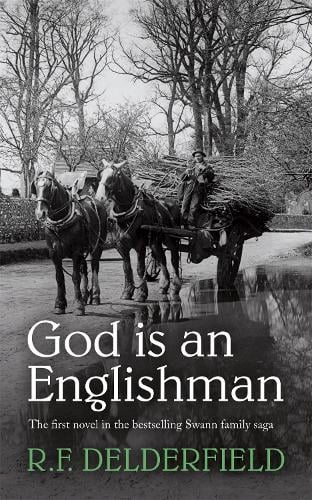
God is an Englishman by RF Delderfield – #1970Club

My final book for this week’s 1970 Club hosted by Simon and Karen is one I was almost certain I would love – and I did! I’ve read several of RF Delderfield’s other books and particularly enjoyed his A Horseman Riding By trilogy, set in rural England during the first half of the 20th century. God is an Englishman, published in 1970, is the first in another trilogy, known as the Swann Saga, which promises to be equally enjoyable.

The novel begins with soldier Adam Swann fighting in India during the Sepoy Mutiny of 1857. In the chaos of the battlefield, Adam stumbles upon a valuable ruby necklace in a broken casket. With no way of finding its rightful owner and reluctant to hand it over to the East India Company, he decides to use it to start a new life for himself. Disillusioned by his experiences with the Mutiny and previously the Crimean War, Adam has been considering resigning from the army anyway and the money from the sale of the necklace will enable him to launch a new business venture.

On his return to England, Adam contemplates investing in railways but a better plan soon begins to emerge. What about the areas of the country that can’t be reached by train? He rides out into the countryside to investigate the possibility of a horse-drawn delivery service and after passing through Seddon Moss, a mill town near Manchester, he has his first encounter with the mill owner’s daughter, Henrietta Rawlinson, who is running away to avoid marriage to a man she doesn’t love. The rest of the novel follows the formation and expansion of Adam’s new business, Swann-on-Wheels, and his relationship with Henrietta as they marry and start a home and family.

At almost 700 pages in the edition I read, this book was quite a commitment, especially as I needed to finish it in time to review this week and should probably have started it earlier. However, once I became absorbed in the story, the pages went by a lot more quickly than I’d expected and I was sorry to reach the end.

While the Horseman Riding By books were set in the countryside with a focus on farming and rural life, this one is set in the very different world of trade, business and industry. It’s fascinating to see how Adam starts with nothing except some jewels and some good ideas and slowly builds up Swann-on-Wheels into a successful haulage company with depots all over the country. Adam gives each region a name (the Border Triangle, the Mountain Square, the Western Wedge…) and each one presents its own unique set of challenges and opportunities depending on the terrain, the existing infrastructure and the industries already operating in that area. He also puts a manager in charge of each area and although some of them are not much more than names on the page, others are brought to life and have adventures of their own.

The broad geographical setting and large number of characters allows Delderfield to address many specific topics and social issues relevant to life in Victorian Britain. Through Henrietta’s father, the miller Sam Rawlinson, we see first the dissatisfaction of the mill workers with their pay and working conditions and later the impact of the reduction in the supply of raw cotton due to the American Civil War. The fate of homeless children and the dangers facing young boys used as chimney sweeps are also explored – and if all of this makes you think of Charles Dickens, there’s a cameo appearance from the man himself as he and several of the Swann family become involved in the Staplehurst rail accident of 1865.
At the heart of the novel, though, is the relationship between Adam and Henrietta and how it develops as both characters grow and change and make discoveries about themselves and each other. Henrietta, being a lot younger than Adam, is immature, innocent and frivolous at the start of the novel and there’s a sense that although Adam loves her he doesn’t fully understand or respect her. It’s only after the introduction of another woman, Edith Wadsworth, into both their lives, that Henrietta begins to take control of her future and Adam comes to see her as more of an equal. Ironically, Edith, the daughter of one of Swann-on-Wheels’ area managers, is in love with Adam herself, but I won’t tell you what happens there or whether she acts on her feelings!

I think some readers will probably enjoy this book more for the Swann family storylines and others for the insights into the building of a business empire. I found both interesting and felt that Delderfield got the balance between the two just about right. I will be continuing with the second book, Theirs Was the Kingdom!

Book 45/50 for the Historical Fiction Reading Challenge 2024
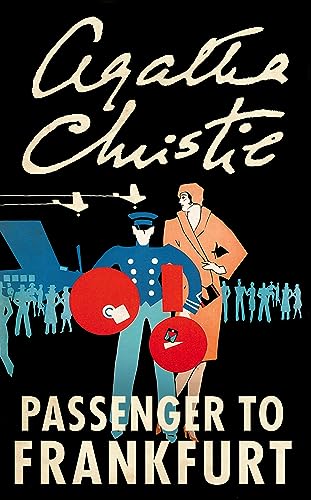
Passenger to Frankfurt by Agatha Christie – #1970Club

My second book for this week’s 1970 Club (hosted by Karen and Simon) also counts towards the Read Christie challenge where, for the final three months of the year, we are focusing on Agatha Christie books from the 1960s and 70s. I was a bit dubious about reading Passenger to Frankfurt as it seems to be widely considered one of her worst novels, but I want to read all of her books eventually anyway, so this seemed as good a time as any.

The novel begins with Sir Stafford Nye being delayed at Frankfurt Airport on his way home to England from a diplomatic mission in Malaya. When he is approached by a young woman who tells him that her life is in danger, Sir Stafford finds himself agreeing to lend her his passport and cloak so she can safely board the next flight to London in disguise. This is to be the first of several encounters Sir Stafford has with this woman; after he returns to London himself, having claimed to have been the victim of a theft, he places an advertisement in the newspaper in the hope of tracking her down, and their paths soon cross again.

None of this may seem particularly plausible, but at least it’s fun. Once Sir Stafford begins to learn more about his new acquaintance and her mission, however, things start to go downhill. He is pulled into a web of espionage and intrigue, which should be exciting but unfortunately isn’t, partly because there’s not much action – instead there are lots of long passages in which various people hold meetings and conferences to discuss the rise in youth movements and rebellions around the world. There are discussions of fascism, neo-Nazis, student protests, anarchy, drugs and weapons; Christie was eighty years old when this book was published and it seems that her view of the future was a very bleak one, in particular regarding the role young people would play.

This could still have been interesting, but Christie doesn’t manage to balance her political commentary with any kind of coherent plot, so all those conversations about youth unrest do become very repetitive and tedious, especially as the various conspiracy theories that arise are too outlandish to take seriously. There’s also a large number of characters, many of whom are introduced and then disappear again a few pages later. Apart from Sir Stafford and his mysterious female friend, the only one who really stands out is Sir Stafford’s Aunt Matilda, one of those no-nonsense old ladies Christie writes so well. Intriguingly, Matilda has an assistant, Amy Leatheran, who I assume is the same character who appeared in Murder in Mesopotamia, although no reference is made to her earlier adventures!

I often enjoy Christie’s thrillers and spy novels (They Came to Baghdad and The Man in the Brown Suit are favourites), but this one was a big disappointment and certainly the weakest of all the Christie novels I’ve read so far. I don’t regret reading it for 1970 Club, though, because, as I’ve said, I was going to read it at some point anyway. Definitely one for completists, in my opinion, and not the place to start if you’re new to Christie’s work.

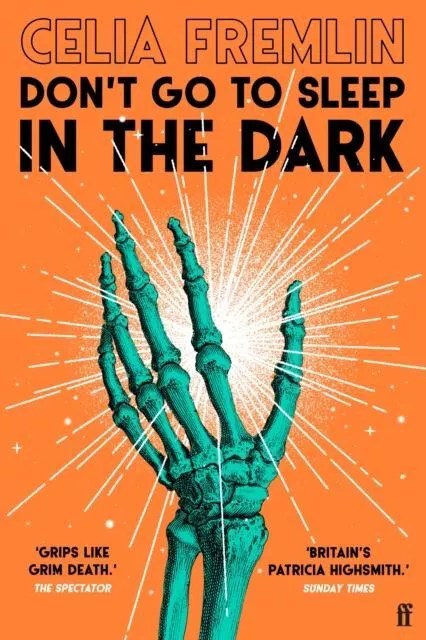
Don’t Go to Sleep in the Dark by Celia Fremlin – #1970Club

Today is the first day of 1970 Club, hosted by Kaggsy’s Bookish Ramblings and Stuck in a Book, and I’ve decided to begin with a book by an author who is rapidly becoming a favourite. I’ve read two of Celia Fremlin’s novels, Uncle Paul and The Long Shadow, and loved both, so I was curious to see what I would think of her short stories. Don’t Go to Sleep in the Dark is a collection first published by Gollancz in 1970 (although some websites say 1972, most say 1970 as do the copyright page and preface of the edition I read) and contains thirteen stories. While some are stronger than others, I can honestly say that they are all excellent.

The stories in this collection all have domestic settings, dealing with topics such as marriage, adultery, motherhood, and ageing, and all of them rely on the power of imagination to create a sense of unease. Although some of the stories hint at the supernatural, they are still grounded in reality. Fremlin has a real talent for taking ordinary, everyday situations and using them to build tension and fear.

The book gets off to a great start with The Quiet Game, the story of Hilda Meredith, a woman living in a flat in a high tower block who is struggling to keep her two young children quiet. Faced with constant complaints from the neighbours who claim they can hear every sound the children make – every shout, every laugh, every footstep – Hilda’s mental health begins to suffer as she desperately searches for games that can be played in silence:

From the point of view of the neighbours, it was she who was the cause and origin of all the stresses. She wasn’t the one who was being driven mad, Oh no. That’s what they would all have told you.

But madness has a rhythm of its own up there so near to the clouds; a rhythm that at first you would not recognise, so near is it, in the beginning, to the rhythms of ordinary, cheerful life.

I won’t tell you what happens to Hilda, but this story sets the tone for the rest of the book. Although the thirteen stories are all different and memorable in their own ways, they could all be described as psychological suspense, taking us deep inside the characters’ minds. At the same time, they have perfectly crafted plots, often with a surprise twist in the final paragraph that changes the way we think about everything that came before.

One of my favourite stories was The Baby-Sitter, in which a mother is persuaded to leave her young daughter with a babysitter for the first time so that she and her husband can spend the evening at the theatre. However, she’s not convinced that the tall, stern-looking Mrs Hahn is the right person to be left in charge of little Sally, who has been having nightmares about a ‘Hen with Great Big Eyes’. Her misgivings about Mrs Hahn grow stronger throughout the evening, but is she worrying about nothing? Yet another parent/child story – and another highlight – is Angel-Face, where a woman becomes exasperated by her stepson’s insistence that he is being visited by an angel every night. Things take a more sinister turn when it emerges that he thinks angels have beaks…

Celia Fremlin was in her fifties when this collection was published and three of her stories share the theme of growing older. In For Ever Fair, a story with a humorous twist, a middle-aged wife becomes jealous of her husband’s infatuation with a younger woman, while The Last Day of Spring and Old Daniel’s Treasure are both poignant tales with elderly protagonists and touch on the subject of dementia. Yet Fremlin writes equally convincingly about young characters: in The Hated House, sixteen-year-old Lorna has been left at home alone for the first time and is looking forward to a night without her father’s shouting and her mother’s obsessive cleaning and tidying. Then the telephone begins to ring continuously and an unexpected visitor arrives at the front door:

It was a light, a very light footstep on the garden path that next caught at her hearing; lightly up the steps, and then a fumbling at the front door. Not a knock; not a ring; just a fumbling, as of someone trying to unlock the door; someone too weak, or too blind, to turn the key.

“Be sure you bolt all the doors…” In her head Lorna seemed to hear these boring, familiar instructions not for the fiftieth time, but for the first… “Be sure you latch the kitchen window…Don’t answer the door to anyone you don’t know…”

There are still another six stories that I haven’t mentioned, but I think I’ll leave you to discover those for yourself if you read the book (which I hope you will as it’s such a great collection). As well as 1970 Club, I’m counting this towards the RIP XIX challenge as many of the stories are very unsettling and perfect for the time of year!

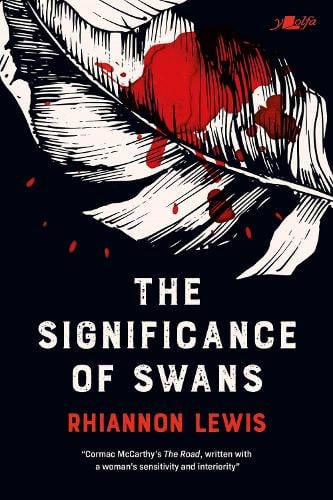
The Significance of Swans by Rhiannon Lewis

In this fascinating new dystopian novella, Rhiannon Lewis expands on a short story from her 2021 collection I am the Mask Maker. When I read that short story, I actually mentioned in my review that it was one I found particularly intriguing and wished was longer, so I was pleased to learn that my wish had come true!

The book begins with Aeronwy visiting her brother at his farm on the Welsh coast. Just before she says goodbye and returns home, they spot the unusual sight of seven swans flying in formation through the winter sky. The next day thousands of disappearances are reported – not just in Aeronwy’s small corner of Wales, but all over the country and beyond.

As the days and weeks go by, the overnight ‘removals’, as they become known in the media, continue. Every morning, people awake to find an empty space in their bed, the impression left by their partner’s body still visible; every morning, adults fail to arrive at work and children fail to attend school. Aeronwy and her husband do their best to continue with their lives, hoping that whoever or whatever is behind the removals will leave them alone, but the rapidly declining population means that public services and infrastructure are affected and soon there’s no more television, no more radio, no way of finding out what’s going on in the outside world. Eventually, the inevitable happens and Aeronwy’s husband is removed. She sets out alone to make the hundred-mile journey to her brother’s farm, in the hope that he might still be alive, but what will she find when she gets there?

I don’t read many post-apocalyptic novels, but I find that most of them tend to tackle the same questions. What caused the apocalyptic event? Is there a reason why some people were able to survive and not others? If we meet another human being, can they be trusted or will they see us a threat to their own survival? Will it be possible to build a better world from the ruins of the old one? In The Significance of Swans, Rhiannon Lewis does explore these things and provides some answers, while leaving other issues open to interpretation. What makes this book different from others I’ve read is the idea of the seven swans, glimpsed by Aeronwy and her brother the day before the removals begin. The swans appear to have some significance, but what is it?

With the whole book being written from Aeronwy’s perspective, this means we only get a limited view of what is going on, particularly once communication with the rest of the world is lost and she finds herself alone with nobody to talk to. Yet it’s fascinating to see things through Aeronwy’s eyes and to watch this ordinary middle-aged woman from Wales try to make sense of her situation. I thoroughly enjoyed this unusual novella and thought it was the perfect length – long enough to develop the themes hinted at in the shorter version from I am the Mask Maker and short enough to keep things moving at a steady pace without ever becoming boring. I received a copy for review courtesy of Y Lolfa, an independent Welsh publisher. You can find out more about this and the other books they publish here.

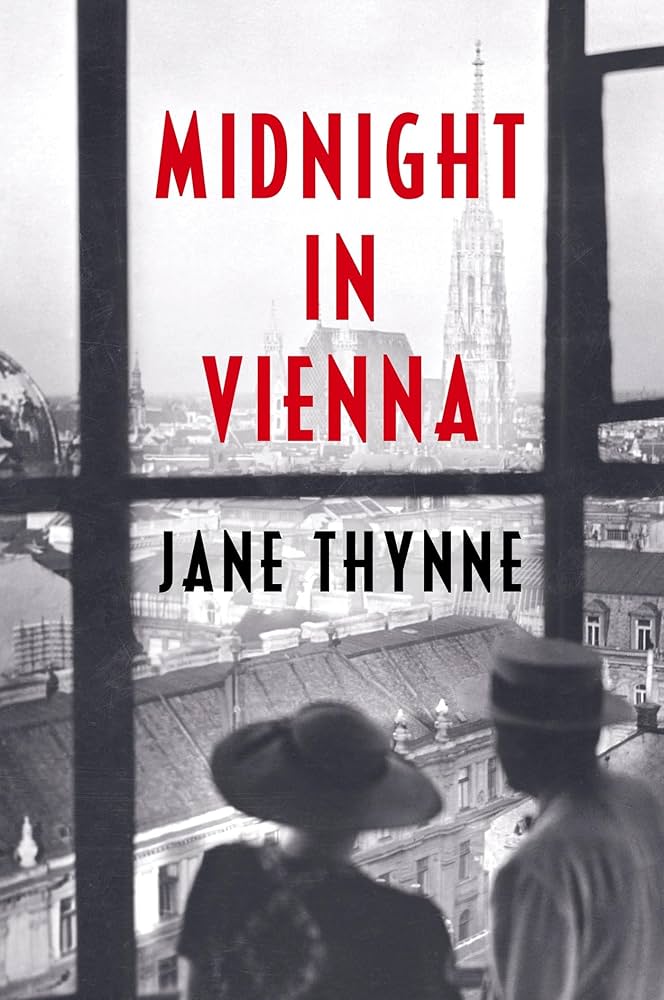
Midnight in Vienna by Jane Thynne

It’s 1938 and Stella Fry has just returned to London from Austria, where she has been working as a private tutor for a Jewish family in Vienna. With the worsening political situation in Europe, the family decided to leave for the safety of New York, and Stella has found herself back home with no job. Famous mystery writer Hubert Newman is advertising for someone to type up his new manuscript and Stella applies for the position. After meeting with Newman and being offered the job, she is shocked when she learns the next day that he has been found dead. Another shock follows twenty-four hours later when she receives the manuscript of his new book, Masquerade, and finds that he has dedicated it To Stella, spotter of mistakes.

Harry Fox is a former Special Branch detective who left the police force under a shadow, but is still carrying out unofficial intelligence work, spying on suspected communists. He has reason to believe that Hubert Newman’s death was not a natural one and when his path crosses with Stella’s and he discovers that she had lunch with the author the day before he died, the two team up to investigate.

I really enjoyed Midnight in Vienna; the only negative thing I can say about it is that Stella was a bit too trusting of strangers and too quick to put herself in dangerous situations without thinking of the consequences. The biggest example comes very early in the novel when, having only just met Harry Fox, she agrees to travel back to Vienna alone on the trail of someone possibly implicated in Hubert’s murder – at a time when everyone else is trying to get out of Austria. However, I can forgive this because the Vienna sections of the book are so well done, perfectly illustrating the mood in Austria during that period which followed the annexation by Nazi Germany.

With Hubert Newman being an author, there’s also a literary element to the novel. Newman (a fictional character, by the way) is a member of the Detection Club, a real-life society of prominent British mystery writers, and Harry Fox’s investigations lead to a meeting with one of the founding members, Dorothy L. Sayers. She only makes a brief cameo appearance but I thought the way Thynne portrayed her character was very convincing. As well as the literary world, we also get a glimpse of the theatrical world of the 1930s through Stella’s actress friend, Evelyn, so there’s a lot going on outside of the central mystery.

This is the first of Jane Thynne’s novels I’ve read. It seems that most of her previous books are similar wartime/espionage thrillers and having enjoyed this one so much I’m sure I’ll be reading more of them. I’m also wondering whether there will be a sequel to this book as I think there’s plenty of scope for some of these characters to return for a second adventure.

Thanks to Quercus for providing a copy of this book for review via NetGalley.

Book 44/50 for the Historical Fiction Reading Challenge 2024

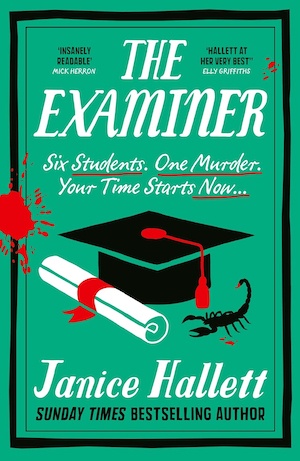
The Examiner by Janice Hallett

It’s September 2023 and six students are preparing to start Royal Hastings University’s new Multimedia Art course. The course is led by Gela Nathaniel who has personally selected her students from different backgrounds to ensure a range of skills and artistic knowledge. There’s Jem Badhuri, an ambitious and enthusiastic young woman who works mainly in sculpture and sound; Alyson Lang, already an experienced and talented artist; Jonathan Danners, whose family own an art gallery; Cameron Wesley, a marketing executive trying to juggle the course with his job; Ludya Parak, a graphic designer and single mother; and finally, Patrick Bright, a man in his fifties who runs an art supplies shop.

Almost as soon as the course gets under way there are hints that something is wrong. Some of the students seem to be hiding secrets and tensions quickly develop between them. Then, five of the group go on an overnight trip to Somerset to visit a museum and it’s not clear whether all five have returned again. Is the missing student still alive or have they been murdered and the others are covering it up? As the course comes to an end, Ben Sketcher, an external examiner responsible for giving an independent assessment of the course and the students’ grades, is given access to all the communications between Gela and her class and must decide whether a crime has been committed.

The Examiner is written entirely in the form of emails, WhatsApp messages and transcripts of chats from the Royal Hastings University messaging app, Doodle. This makes it easy for Hallett to conceal the truth from the reader because each character only reveals what they want the others to know and they aren’t necessarily always being honest. Clues do eventually begin to emerge but the full picture doesn’t become clear until Ben has read every message and every email. Readers of Hallett’s The Appeal or The Mysterious Case of the Alperton Angels will already be familiar with the epistolary format she uses and to be honest I think it’s something you either love and connect with immediately or you don’t. If you didn’t enjoy her other books this one probably won’t change your mind. Personally, I find them unusual and imaginative – and very gripping, as the short length of the emails and chats makes it difficult to stop reading!

The Multimedia Art course is a year long and during that time the students are given various assignments and projects to complete. Their responses to these are provided in the book and although I know very little about multimedia art I enjoyed reading them as they give a deeper insight into each character. I was particularly intrigued by Jem’s work with soundscapes and binaural audio and Patrick’s experiments with resin. Gela’s notes as she examines and grades each project are also interesting as they give us clues about how she views each student and her relationship with them. Why does she show such favouritism to the overqualified Alyson, for example? Why does she make so many allowances for Cameron, who barely attends the course and makes very little effort when he does?

When I eventually discovered what was going on behind the scenes of Gela’s Multimedia Art course I felt slightly let down because it seemed so far-fetched and not what I had expected. Still, the fun was in getting there and watching the dynamics play out between the six students along the way. Although The Twyford Code and The Alperton Angels are still my favourite Hallett novels, I did love this one as well; it’s maybe not the best place to start with her books, but I think existing Hallett fans will enjoy it as much as I did.

I’m counting this as my third book for this year’s RIP challenge.

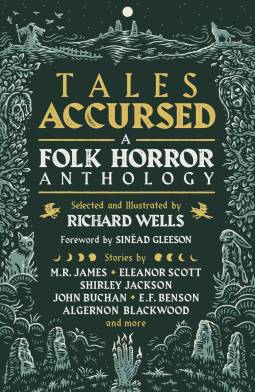
Tales Accursed: A Folk Horror Anthology selected and illustrated by Richard Wells

Folk horror is not a subgenre I’ve ever really taken the time to explore, so I wasn’t sure what to expect from this new anthology selected and illustrated by the artist Richard Wells. What I found was a collection of sixteen stories, most of them from the 19th and early 20th centuries, all blending folklore with elements of the supernatural and lonely rural settings. Each story is accompanied by a beautiful lino print illustration by Wells which I’m sure will look even more impressive in the physical edition of the book than in the ebook version I read.

The stories are arranged chronologically, beginning with Sheridan Le Fanu’s The White Cat of Drumgunniol from 1870 and ending with Shirley Jackson’s The Man in the Woods, published posthumously in 2014. I had read both of these authors before (although not these particular stories) and there were two other authors I’d also read previously – John Buchan and E.F. Benson – but the others were all new to me. In fact, there were several I’d never even heard of until now, so it was good to be made aware of them and to be able to try their work for the first time.

As with most anthologies, the stories vary in quality. However, I found that there wasn’t much variety in terms of plot or setting. Many of them, particularly the older ones, are based on Celtic folklore and have similar structures, with our narrator travelling in an unfamiliar part of the countryside and meeting someone who tells them a story about strange sightings or occurrences, which the narrator then experiences for themselves. Although this did make the collection as a whole feel slightly formulaic and repetitive, there were still some stories that were different and stood out. One of these is Woe Water by H.R. Wakefield, which unfolds in the form of diary entries written by a man with a troubled past who moves into a remote lakeside cabin and begins to struggle with his conscience. I also enjoyed Elinor Mordaunt’s The Country-Side, told from the perspective of a parson’s wife whose relationship with her unfaithful husband takes a sinister turn when she meets an old woman in the village who is said to be a witch.

Ancient Lights by Algernon Blackwood is another highlight – it has a wonderfully eerie atmosphere as the narrator describes his journey through enchanted ancient woodland. The Shirley Jackson story, The Man in the Woods, in which a man accompanied by a stray cat stumbles upon an old house inhabited by three strange people, is also very good. It’s packed with references to mythology and witchcraft and there are lots of layers to unravel, but the open ending left me frustrated and wanting to know more!

Despite the ‘folk horror’ label in the title, I found the stories in this collection creepy or unsettling rather than frightening. I deliberately haven’t said much about any of the individual stories because some of them are very short and it would be easy to spoil them, but overall I did enjoy the book and am interested in reading more by some of these authors.

Thanks to Unbound for providing a copy of this book for review via NetGalley.

I’m counting this as my second book towards this year’s RIP challenge.