Seascraper by Benjamin Wood – #NovNov25

Several bloggers have been reading Benjamin Wood’s Booker Prize longlisted novella Seascraper for Novellas in November after our co-hosts Cathy and Rebecca named it their ‘buddy read’ for the month. I hadn’t decided whether to read it myself but when I discovered that it’s also going to be the starting point for Six Degrees of Separation in December, that helped me make up my mind!

Seascraper is set in an unspecified time period, which I managed to identify as the early 1960s (there are some references to Lawrence of Arabia, which was released in 1962). However, it feels much earlier than that due to the protagonist leading a life largely free of technology and doing a job that was done by his grandfather before him. His name is Thomas Flett and he’s a twenty-year-old man living with his mother in the fictional town of Longferry on the North West coast of England. Thomas has taught himself to play the guitar and dreams of becoming a folk singer, but that seems unlikely to happen because he and his mother rely on the money he makes through his work as a shanker, someone who catches shrimp by scraping the sand at low tide.

Thomas comes home one day to find his mother with a stranger, a man who introduces himself as the American director Edgar Acheson. Edgar is planning to make a new film with the Longferry beach as its setting and he offers to pay Thomas to guide him around the coastline, looking for suitable filming locations. Thomas accepts, as the money is too good to turn down, but when he and Edgar head out to the sea something happens which sets his life on a new course.

This is a quiet, simple story but also a powerful and atmospheric one. The author devotes a lot of time to describing the small, mundane details of Thomas’s daily routines, such as how he prepares his horse and cart for his early mornings shrimp fishing on the beach, so when Edgar Acheson arrives there’s a real sense of something momentous happening. The whole story takes place over a period of less than two days, but the events of those two days change everything for Thomas. Previously his whole world has revolved largely around his mother, who became pregnant with him at fifteen and has been shunned by the community as a result, but his new friendship with Edgar and an unexpected encounter with another person makes him reconsider what he really wants to do with his life.

Seascraper is a beautifully written novella and the coastal setting, with fog hanging over the sea and treacherous sinkpits in the sand, is vividly described. There’s a development later in the book that I would love to talk about, but I can’t really say any more about the plot without spoiling it. I wasn’t sure about this development at first, as it sent things in a direction I wasn’t anticipating, but now that I’ve finished I think it was the perfect way to move Thomas’s story forward. I’m so impressed by this book overall, particularly as it’s not one I was planning to read and I didn’t expect to enjoy it as much as I did.

Air by John Boyne – #NovNov25

This is the fourth book in John Boyne’s Elements quartet. Having enjoyed Water, Earth and Fire, I’ve been very much looking forward to Air and the short length made it an obvious choice to read during Novellas in November (hosted by Cathy of 746 Books and Rebecca of Bookish Beck). Although each book has a different narrator and can be read as a standalone, there are links between all four, sometimes obvious and sometimes more subtle. It’s not essential to read them in order, but I would save this one until last if possible as it ties together some of the loose ends and provides closure for the characters. I’ve avoided spoilers for the first three books in the rest of my review, so don’t worry if you haven’t started the series yet!

Air tells the story of Aaron Umber and his fourteen-year-old son, Emmett, and a large part of the book is set onboard a plane (hence the title). The Umbers also have a family member who is a pilot – Boyne always works the relevant element into the story in multiple ways. At the start of the novella, Aaron and Emmett are at Sydney Airport, preparing to board a flight that will take them from their home in Australia across the world to Ireland, where Aaron hopes to reconnect with his ex-wife – and Emmett’s mother. The only problem is, he hasn’t told her that they’re coming.

As it’s such a long flight from Australia to Ireland (with a change in Dubai), Aaron has plenty of time to think and reflect on the circumstances that have brought him to this point. He looks back on his first encounters with the woman who would become his wife, the problems they experienced during their marriage and the reasons it ultimately ended in divorce. He also confronts his memories of the abuse he suffered as a teenager and his knowledge of the similar ordeals his wife went through before they met. Emmett has grown up unaware of any of this, but he’s beginning to ask questions and Aaron wonders if now could be the right time to tell him the truth.

Like the other books in the quartet, Air is a dark and sometimes disturbing read – although not as much so as the previous books as this one is concerned with moving on from trauma rather than describing the traumatic events themselves. Also, while the previous three narrators were morally ambiguous at best, completely evil at worst, Aaron is much easier to like and have sympathy for. I loved his relationship with his son, Emmett; it felt so real and believable and also very moving, though not in an overly sentimental way.

I have deliberately not revealed the name of Aaron’s ex-wife because she appears in one of the other books and I don’t want to spoil the surprise for anyone wanting to read the series through from the beginning. Other characters also appear again or are referred to, mainly those from Water and Fire. Earth feels less well integrated into the series as a whole, which is slightly disappointing as the other three books tie together so perfectly.

All four novellas are now available in one volume, published under the title Elements, but can still be bought separately as well.

Monstrous Tales: Haunting Encounters with Britain’s Mythical Beasts

This is a great new collection of short stories inspired by British folklore. I was drawn to it because it included several authors whose work I’ve previously enjoyed, but I was pleased to find that the stories by authors who were new to me were just as strong. The book has also given me the opportunity to learn about lots of creatures from British myth that I’d never come across before; only one or two of them were familiar to me.

I’ll start with the three stories by authors I hadn’t tried before. I particularly enjoyed Jenn Ashworth’s Old Trash, set in the Pendle area of Lancashire where a mother has taken her troubled teenage daughter camping for the weekend, hoping to keep her away from the bad influence of an older boyfriend. Ashworth does a wonderful job of creating a creepy atmosphere as darkness falls over the hills and Rachael and Mae listen to tales of the gytrash, a huge black dog thought to be an omen of death. Abir Mukherjee’s The Doctor’s Wife is another highlight, following a doctor and his wife who move to a small village in the Highlands of Scotland. Once there, the doctor becomes obsessed with the fate of his predecessor and a mysterious woman dressed in red. This story combines a British setting with elements of Hindu mythology, which is fascinating and adds some diversity to the book.

Sunyi Dean’s Eynhallow Free didn’t work for me quite as well as the others, which I think is due to the story being written in second person (addressing the reader directly as ‘you’, putting us in the position of the protagonist, a style I never really get on with). I did love the Orkney setting, though; it’s a very eerie story, incorporating figures from Orkney folklore such as the Goodman of Thorodale and the Finfolk. There’s one more story also set in Scotland: These Things Happen by Dan Jones. I’ve read some of Jones’ history books, but this is my first experience of his fiction. I disliked the main character which put me off the story a little bit, but I was fascinated by the descriptions of the Cat Sith, the large black cat of Scottish mythology that walks around on its hind legs.

Welsh folklore is represented by the Fad Felen, or yellow plague, which appears in Rosie Andrews’ story, The Yellow Death. The story is set at the end of the First World War and the Fad Felen can be seen as a metaphor for the yellow of mustard gas. This is one of only two stories in the book with historical settings. The other is Rebecca Netley’s Mr Mischief, in which ten-year-old Bessie moves to a big house on the Yorkshire moors with her Uncle Kit who has a job as gamekeeper. Here she learns about a mysterious being known only as Mr Mischief and the lengths the superstitious locals go to in order to keep him happy.

I think my favourite story in the book was probably Boneless by Janice Hallett, about a writer investigating reports of a giant slug in Derbyshire. Written in Hallett’s usual style incorporating emails, articles, texts etc, it explores issues such as climate and habitat change and how animals are forced to adapt and evolve. The ending is great – I hadn’t expected the story to go in that direction at all. I also liked The Beast of Bodmin by Jane Johnson, which is set, like a lot of Johnson’s work, in Cornwall. Gina moves into a cottage on the edge of Bodmin Moor, hoping to make a new start in life, and almost immediately her black cat, Roxy, goes missing.

The collection is completed by Stuart Turton’s Deaths in the Family. It follows the story of Ben and his family, who gather together for Christmas every year, barricading themselves indoors while an army of grotesque and murderous Redcaps amasses outside. I wasn’t sure what to make of this story as it was so strange and felt different in tone from the others in the book, but it was certainly entertaining!

Nine stories in this collection, then, and although I inevitably enjoyed some more than others, there wasn’t a single bad one here. I’m looking forward to exploring more of Ashworth, Mukherjee and Dean’s work now, so if you can recommend anything please let me know.

Thanks to Raven Books for providing a copy of this book for review via NetGalley.
The Ice Palace by Tarjei Vesaas – #NovNov25

Translated by Elizabeth Rokkan

After reading my first Tarjei Vesaas book, The Birds, in September, I couldn’t wait to read more of his work. Like The Birds, The Ice Palace has recently been reissued by Pushkin Press and as it’s a very short book I decided it would be perfect for this year’s Novellas in November (hosted by Cathy of 746 Books and Rebecca of Bookish Beck).

First published in 1963, The Ice Palace is the story of two young Norwegian girls, Siss and Unn. Siss is popular, outgoing and the leader of her group of friends at school, yet when the shy, quiet Unn arrives in the village to live with her aunt, Siss is immediately drawn to this girl who seems to be her complete opposite. Soon, Unn invites her back to her house after school and Siss accepts – but when she arrives, the evening doesn’t go quite as she expected. The two girls look at each other in a mirror, then Unn persuades Siss, without explanation, that they should both undress. Unn then confesses that she has a secret, something she’s not able to tell her aunt, but she doesn’t say what it is. Uneasy and uncomfortable, Siss quickly leaves and goes home, feeling disturbed by the experience.

The next day, Unn feels embarrassed and decides not to go to school. Instead, she visits the huge frozen waterfall known as ‘the ice palace’. The last we see of her is when she enters the icy caverns behind the frozen water – she doesn’t return to school or to her aunt’s house and no one has any idea what has happened to her. As Unn’s only friend, Siss is put under pressure to tell the adults anything she knows, but Siss is still confused by her own emotions and struggling to come to terms with the whole situation.

This is a beautifully written novel and the cold, icy imagery is hauntingly atmospheric. The chapter in which Unn discovers the ice palace – ‘an enchanted world of small pinnacles, gables, frosted domes, soft curves and confused tracery’ – is particularly vivid and eerie. The book also has a lot to say about grief, loss and loneliness, exploring the impact of Unn’s disappearance on her aunt, on the community and particularly on Siss.

I did find the book very ambiguous, with a lot left open to interpretation. For example, we are never told what the secret was that Unn was trying to share with Siss and it’s not quite clear what exactly happened between the two girls the evening before Unn disappears. It’s strongly implied, of course, that their interactions have sexual connotations, although I found that a bit unsettling as the girls are only supposed to be eleven years old. I felt it would have worked better if they had been a few years older – but on the other hand, Vesaas obviously intended this to be an uncomfortable book to read, so he achieved his aim there.

Of the two Vesaas books I’ve read, I preferred The Birds as I felt a stronger connection with the main character and found his story more moving, but both are excellent. This one is also a novella, which means I’m counting it as my first read for this year’s Novellas in November!

Thanks to Pushkin Classics for providing a copy of this book for review via NetGalley.
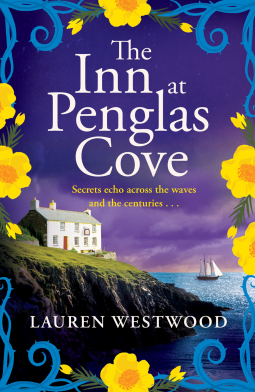
Buckeye by Patrick Ryan

In May 1945, Margaret Salt walks into a hardware store in the small town of Bonhomie, Ohio and asks if they have a radio. Cal Jenkins is working there that day and he accompanies Margaret into the office where they listen to President Truman informing the nation that Germany has surrendered to the Allies. Neither of them knows it, but this brief interaction will go on to have consequences that change both of their lives forever.

In Buckeye, Patrick Ryan explores the stories of Cal and his wife, Becky, and Margaret and her husband, Felix – two couples whose paths cross many times over a period of four decades. We learn more about Cal’s background and the disability that has kept him out of the war and we get to know Becky, who has a gift for communicating with the dead. We also hear about Margaret’s childhood, abandoned as a baby and raised in an orphanage, and we follow Felix as he suffers some traumatic experiences during the war. Later, the focus widens to include their children as we move forward into the 1960s and 70s and another war – Vietnam.

Almost as soon as I started to read I was reminded of Ann Patchett and I’m not suprised to see that other reviewers have made the same comparison. I think if you enjoyed Tom Lake or The Dutch House, there’s a good chance that you’ll enjoy this book as well – but even if you didn’t, give this one a try anyway as despite the similar feel, Patrick Ryan has his own style and a real talent for creating strong, engaging characters. I was particularly fond of Cal’s father, Everett; when we first meet him at the start of the book, he’s a lonely, bitter alcoholic, writing angry letters to the President and still grieving for his wife and daughter who died years earlier, but a crisis sets his life on a different course and Becky takes him under her wing.

I wasn’t sure at first how I would feel about Becky’s work as a spiritualist – I thought a paranormal element wouldn’t fit the tone of the book – but it actually works very well. It provides a source of conflict with Cal, who is not a believer, but Becky isn’t a fraud in any way: she truly wants to give peace and comfort to those who need it and she does seem to have a genuine ability to contact the dead. Margaret Salt is a complex character and her actions are not always very admirable, but learning more about her early life helped me to understand her. I liked Felix, though, and found several parts of his story very moving.

Buckeye is a long book, but family sagas usually are, and although the pace moves slowly at times it’s hard to know what could have been left out. As well as needing time to fully develop the characters, there are also several decades of American history to get through, with major events sometimes happening in the background but in other cases directly impacting the lives of the Jenkins and Salt families. I certainly don’t regret the length of time it took to read it – it’s definitely going to be one of my books of the year.

Thanks to Bloomsbury Publishing Plc (UK & ANZ) for providing a copy of this book for review via NetGalley.
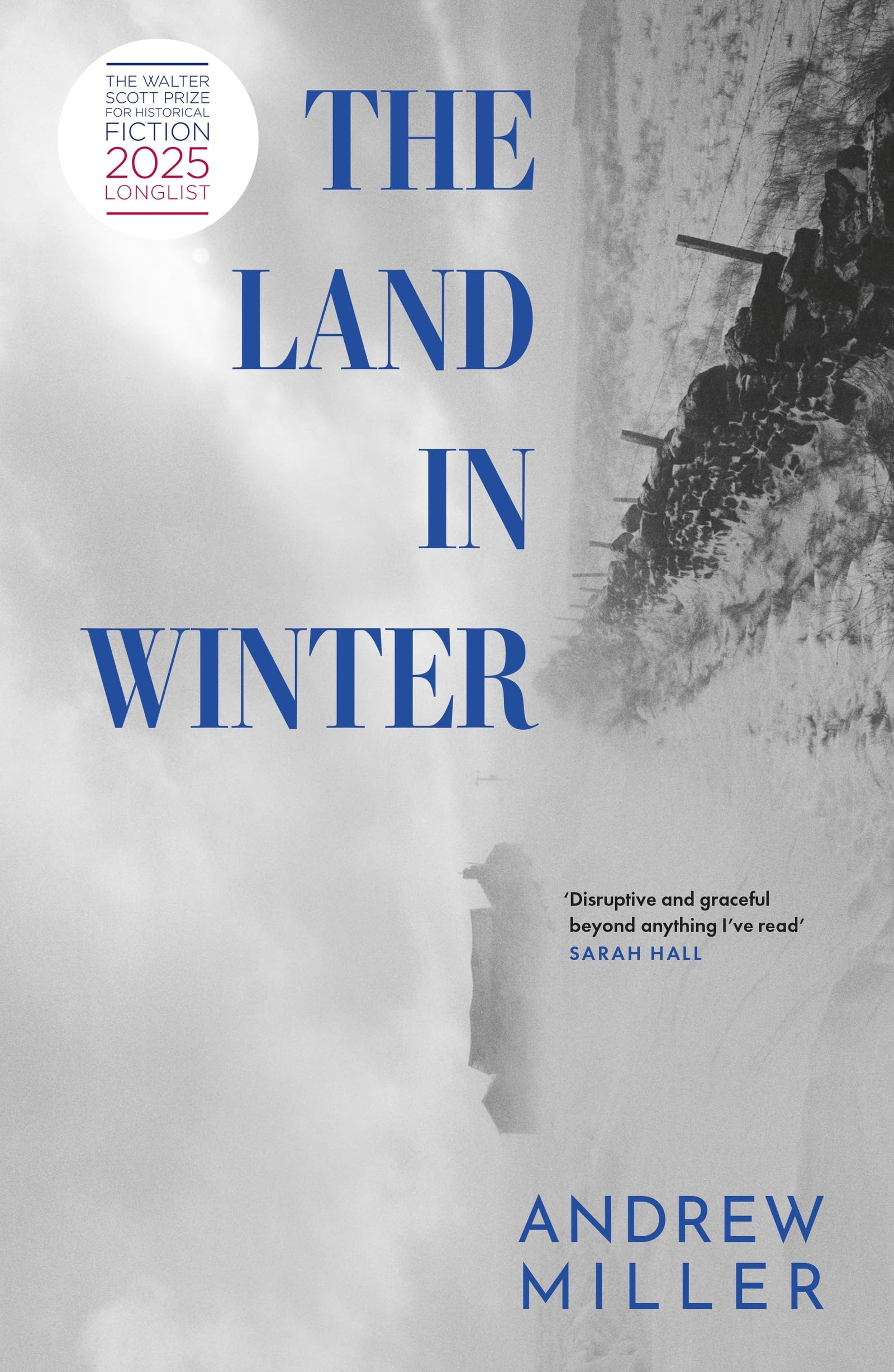
The Odd Flamingo by Nina Bawden

Nina Bawden is someone I’ve always thought of as a children’s author; I know I’ve read a few of her books, athough Carrie’s War and The Finding are the only ones I can remember anything about. I’ve never tried any of her adult novels, but was drawn to this one by the unusual title. It was originally published in 1954 and has been reissued by British Library as part of their Crime Classics series earlier this year. Bawden isn’t really an author I would have expected them to publish – I had no idea she wrote crime.

The Odd Flamingo is the name of a seedy London nightclub frequented by many of the characters in the novel. One of these is Rose Blacker, a young woman of eighteen who appears to have fallen in with the wrong friends. When Rose tells Celia Stone that she is pregnant – and that the father is Celia’s husband, Humphrey – Celia calls on her lawyer friend, Will Hunt, for help. She doesn’t believe Rose’s claims, but she’s concerned about Humphrey’s reputation and how a scandal could affect his job as a school headmaster.

Will has known Humphrey for years and has always liked and admired him, but when he meets Rose for himself and she produces letters written by Humphrey, his confidence in his friend is shaken. Rose seems so sweet and innocent; surely she must be telling the truth? When a woman’s body is found floating in the canal with Rose’s bag nearby, Humphrey is the obvious suspect. Will agrees to do what he can to clear his name but is worried about what he might discover. As he begins to investigate, he finds that everything keeps leading back to the dark, sordid world of The Odd Flamingo and the miserable lives of the people who go there.

As you can probably tell, this is not exactly the most cheerful and uplifting of books! It’s full of people who are lonely, desperate and troubled or have become mixed up with drugs, theft or blackmail. I found it quite depressing, but also realistic – places like The Odd Flamingo have always existed and probably always will. I can’t really say that I liked any of the characters, but again, most of them feel believable and real. Only Piers, Humphrey’s grotesque, slimy half-brother, veers close to being a stereotype.

The book is narrated by Will and I found him an interesting character; he’s very idealistic and almost hero worships Humphrey, so feels disappointed and let down by Rose’s claims – but then he does the same thing with Rose herself, putting her on a pedestal because she’s young and beautiful. Whether Rose really is as innocent as she seems is a question not answered until the end of the book, but it’s obvious that Will is going to be hurt again if it turns out that she’s not.

The Odd Flamingo, although there are certainly some mysteries to be solved, is not really a conventional mystery novel and not a typical British Library Crime Classic. If your tastes tend towards the darker, grittier end of crime fiction, though, or you’re interested in trying one of Nina Bawden’s adult books, I can happily recommend this one.

Murder Most Haunted by Emma Mason

Fifty-five-year-old Midge McGowan is retiring after thirty years as a police detective and her colleagues have given her a very unusual retirement gift: a ticket to spend the weekend before Christmas in a haunted house. The reason? The tour company, Haunting Holiday Excursions, is run by a former police officer, John Rendell, and HR get discounted tickets. Midge doesn’t want to go, especially as it will mean leaving behind her wife, Bridie, who is having chemotherapy, but Bridie persuades her that she’ll be fine for a few days and that it will be a good experience for Midge.

Soon, Midge finds herself getting off the bus at Atherton Hall with a small group of other guests: Dr Mortimer and his invalid wife, Gloria; Noah, who hosts a paranormal podcast; and Rona, a pop star in remission from a drug addiction. The bus driver, Harold, also ends up staying at the Hall with them after heavy snow leaves the roads impassable and cuts them off from the rest of the world. Almost as soon as they arrive, the guests begin to experience sightings of the White Lady of Atherton Moor drifting around the grounds of the estate, although not everyone believes they have truly seen a ghost. When their host, Rendell, is found dead in the bath, however, they have to decide whether ghosts are the culprits or whether there’s a human killer on the loose.

This is the book I thought A Ghost Hunter’s Guide to Solving a Murder was going to be! Unlike that other book (which was good, but not as advertised), this one has an actual ghost hunter in it, in the form of Noah who arrives with his cameras and recording equipment hoping to get new material for his podcast. The book also has an interesting and unusual detective character in Midge, who is quickly dismissed – sometimes very cruelly – by the others as an overweight, middle-aged woman with no fashion sense and no social skills. It was great to see her come into her own and find her own identity away from the slightly overpowering Bridie.

Apart from Midge, the other characters feel like stereotypes at first: Noah, the ‘woke’ young person who clashes with Harold, the racist, sexist older man; Rona, the shallow pop star with a wild lifestyle; the domineering doctor and his fragile wife who takes to her bed at the first sign of danger. However, most of these people turn out to have secrets or hidden depths and aren’t quite what they appear to be on the surface.

The murder mystery element of the book is interesting; Midge never seriously considers Noah’s theory that ghostly activity is responsible, but even she has to admit that there are some spooky similarities between the murders taking place in the present and those described in an old diary belonging to the Atherton family doctor. My only criticism is that I found the killer and the motive too easy to guess, so wasn’t surprised at all when the solution was revealed. Still, this was an entertaining novel and the good news is that it’s the first in a series, with the second Midge McGowan mystery coming next year!

Thanks to Bantam for providing a copy of this book for review via NetGalley.
Book 5 for RIP XX