The Three Witches by Elena Collins

I’ve read other novels inspired by Shakespeare’s Macbeth, but this is the first one that has focused specifically on the characters of the three witches. Although Shakespeare’s witches aren’t thought to have been based on any individual people (he took the idea from Holinshed’s Chronicles which refers to the ‘Weird Sisters’ or ‘nymphs or fairies’), Elena Collins imagines them here as three young women growing up in 11th century Scotland. They are the daughters of Sidheag, a wise woman or healer, and their names are Isobel, Ysenda and Merraid.

In modern day Bristol, Ruthie Reed is attending an audition for a new documentary about Macbeth and the historical Mac Bethad mac Findláech, King of Alba (Scotland), on whom the play is based. Acting is all Ruthie has ever wanted to do, but her career seems to be going nowhere and she’s desperate for a decent role. When she’s offered the part of one of the three witches in the documentary, she hopes this is the opportunity she’s been waiting for and will lead to bigger things. On arriving at Forres in the north of Scotland, however, things don’t go quite according to plan. The cast and crew are plagued with bad luck and disaster – and then Ruthie herself starts to catch glimpses of a mysterious young woman who seems to provide a link between past and present.

Ruthie’s story alternates with the story of Isobel and her sisters, left alone in the world after their mother’s death. Isobel, the youngest, has inherited her skills with herbs and potions, as well as her ability to see the future in the flames of the fire, but in a world where women who are different are viewed with suspicion, these talents could be a curse rather than a blessing. When Isobel falls in love with Lulach, Mac Bethad’s stepson, she believes she has found the security she needs, but Lulach’s mother, Gruoch, has other ideas…

As with most dual time period novels, there was one narrative that I enjoyed more than the other, and in this case it was the historical one. I liked the way the focus was on the fictional characters of Isobel, Ysenda and Merraid and their daily lives in the village rather than on the real historical figures such as Mac Bethad and Gruoch, who appear only occasionally. It was easy to see where Isobel’s story was heading, particularly as we get a hint of it in the prologue, but that didn’t make it any less impactful. Although widespread witch trials and burnings peaked in Scotland in the 16th and 17th centuries, women were obviously being accused of witchcraft much earlier than that, so it’s not impossible that the historical Macbeth could have met women like Isobel and her two sisters – and this is something Ruthie and her friends in the modern day narrative begin to research, believing that the witches (both in the play and in history) deserve to be given more attention after centuries of being interpreted through the lens of misogyny.

I liked Ruthie and enjoyed following the filming of the documentary, but it did feel that her storyline was there mainly to add more context to the historical one and I didn’t become quite as invested in her chapters as I did in Isobel’s. The supernatural element of the book is well done – although it’s not a time travel or timeslip novel, there are moments where past and present seem to merge – but I wasn’t convinced that everyone else would have been so ready to believe Ruthie when she told them what she’d been experiencing! There’s also a romance for Ruthie which seemed to happen very suddenly and not with the person I’d expected it would be with.

Overall, I found this an interesting, engaging read. It’s the first I’ve read by Elena Collins, so I’m looking forward to reading some of her other books.

Thanks to Boldwood Books for providing a copy of this book for review via NetGalley.
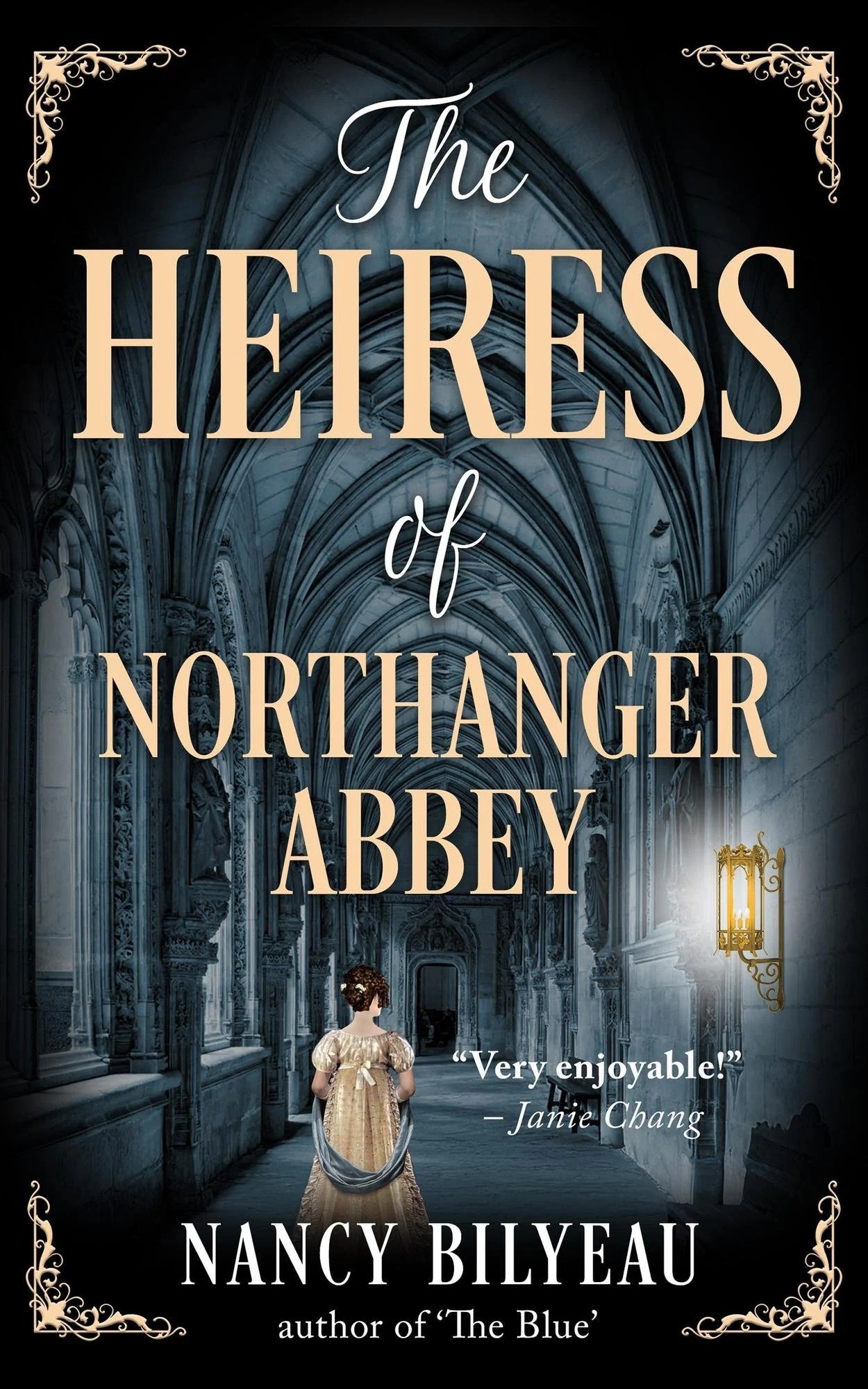
The Astral Library by Kate Quinn

Life has never been easy for Alix Watson. Passed around from one foster home to another, her childhood lacked love and security, and now that she’s an adult she’s living in poverty, juggling three part-time jobs in an attempt to make ends meet. But today has been the worst day of all: she’s lost one of her jobs – the highest paying one; her roommate has thrown her out of their shared apartment because his girlfriend is jealous; and she only has a few dollars left in the world, which she can’t even access because her card has been declined. Homeless and alone, Alix takes refuge in the reading room of Boston Public Library, the only place that has ever felt like home. Stumbling through an open door, she finds herself emerging into the Astral Library – a place where time stands still and where the desperate, the lonely and the abused can find sanctuary, literally, inside a book.

Many of us have probably wondered what it would be like to live in one of the fictional worlds described in our favourite books, but in the Astral Library people get the chance to really do exactly that. Alix just needs to decide which literary world to choose – Austen’s Regency? Dickens’ London? The possibilities are endless (as long as the book is in the public domain). Eventually Alix makes her decision, but before she can step inside her book and begin her new life, an urgent message arrives. Someone already within another book is in danger and it seems the future of the Astral Library itself could be under threat.

The Astral Library is a change of direction for Kate Quinn as she has previously only written historical novels, some of which I’ve read and enjoyed. I don’t read a lot of modern fantasy, but was curious to see how Quinn would handle such a completely different genre. First of all, I loved the concept of people being able to enter a book and make it their new home, interacting with the characters and watching the well known storylines play out. I was looking forward to seeing which book Alix would choose and what would happen to her once she’d entered it. However, the novel goes in a direction I wasn’t expecting and instead of Alix becoming immersed in one fictional setting, she jumps constantly from one to another as she and the Librarian are called on to rescue other library users. We only get brief glimpses of most of these books, which is a shame as a lot of them are books I’ve read and enjoyed – such as Jane Eyre, Dracula and The Three Musketeers – and it would have been nice to have spent longer exploring them!

There’s some interesting worldbuilding in terms of the Astral Library itself and the many rules that govern it – rules on who can and can’t enter, which books you can live inside and what you’re allowed to do once there, what to do about suitable clothing, the different privileges granted to the Librarian and her assistants, and much more. The Librarian is a great character; Alix finds her a bit unwelcoming at first, but gradually gains respect for her when she discovers what lengths the Librarian will go to in protecting those who have sought sanctuary in the library and how valiantly she’s been battling the bureaucracy of the Library Board who disagree with the way the library is being run. I was intrigued by the addition of two more characters, the Gallerist and the Programmer, but I won’t say any more about those!

I found The Astral Library mostly entertaining, although not quite what I’d wanted and expected it to be. Later in the book, though, it becomes clear that it’s a novel with a message – a message about the many threats facing libraries today. Libraries all over the world are at risk of closure, in need of more funding and increasingly focusing on offering other things rather than just books. Quinn also explores the topics of book banning and censorship. Towards the end of the book, it did seem that these messages were starting to dominate and become more important than the plot and the characters, but still, I enjoyed the book overall. I would prefer Kate Quinn to go back to writing historical fiction, which I think she does better, but it’s always interesting to see authors trying something different.

Thanks to HarperCollins for providing a copy of this book for review via NetGalley.
Embers by Sándor Márai

Translated by Carol Brown Janeway

When I saw that Stu at Winstonsdad’s Blog was hosting Hungarian Lit Month this February, I wasn’t sure if I’d be able to find anything I wanted to read. Of course, I came up with a whole list of titles that interested me, but knew I’d only have time for one this month and decided on Embers by Sándor Márai.

The book was first published in Hungarian in 1942 as A gyertyák csonkig égnek, which means ‘candles burn until the end’. The English translation is by Carol Brown Janeway, who translated it from a German version, Die Glut. Although I’m not able to read it in its original Hungarian, this translation seems to have captured all of the elegance and beauty of the writing.

The story takes place in a castle at the foot of the Carpathian mountains, home to Henrik, who was once a general in the Austro-Hungarian army and continues to be referred to as the General for most of the book. As the novel opens, he is preparing for a visit from an old friend, Konrad, whom he hasn’t seen for more than forty years. Before Konrad arrives at the castle, we are taken back to the early days of their friendship when they meet as boys attending a prestigious military school together. Although the two are inseparable, Konrad in particular is always conscious of the differences between them – Henrik comes from a wealthy, privileged background whereas Konrad’s parents have had to make huge sacrifices for their son’s military training. And unlike Henrik, Konrad doesn’t really even want a military career – he would rather be a musician.

By the time Konrad arrives for the candlelit dinner the General has prepared, we’ve learned a lot about their friendship, but there’s one thing we still don’t know and that’s the reason why it ended. We know that something bad must have happened, bad enough to keep them apart for forty-one years, but we don’t find out what it was until the General sits down at the table and lays out what he knows, or thinks he knows, about the events leading to Konrad’s disappearance. Although we do get some answers, there are still some questions remaining at the end of the novel; it’s not a book with a tidy conclusion or a happy ending, but maybe that’s the point. It doesn’t really matter whether the General’s questions (or ours) are answered – the most important thing is what he’s always believed and how it has affected the way he’s chosen to live his life.

Embers is a short novel, but as there’s very little actual plot, I don’t think it really needed to be much longer. The whole second half consists of the General delivering a monologue about Konrad’s character and his betrayal of their friendship, during which Konrad is barely given a chance to speak or explain himself. This feels unnatural and I think if it had gone on for much longer or been less well written I would have lost interest. However, Márai managed to hold my attention until the end and although I didn’t particularly love the book, I did find it fascinating.

Although the General’s late wife Krisztina plays an important part in the story, she never appears directly and the novel focuses almost entirely on the two main characters. It’s interesting to see how the author writes about the topic of male friendship and whether such a close bond formed in youth can ever truly be broken. He also explores and contrasts the differences between the two and the General can be seen as representing the final days of the Austro-Hungarian Empire, which ended in 1918. While Konrad is the one who left and tried to build a new life for himself, the General became a recluse, rarely leaving his castle and clinging to a world and a way of life that has gone. This interpretation gives extra meaning to the title, with the candles burning out as the General talks, leaving embers behind at the end.

I see some of Sándor Márai’s other books are also available in English; if you’ve read any of them, let me know which you would recommend.

Mrs McGinty’s Dead by Agatha Christie

The February theme for this year’s Read Christie challenge is ‘beloved characters’ and Christie’s 1952 novel, Mrs McGinty’s Dead, fits that theme perfectly, featuring not only Hercule Poirot but also another of my favourite recurring characters, Ariadne Oliver!

The book begins with Poirot being visited by an old friend, Superintendent Spence, who tells him about a crime that has been committed recently in the village of Broadhinny. It involves the murder of an elderly charwoman, Mrs McGinty, found dead in her own home. A small amount of money has been stolen, seemingly providing a motive for the crime. Mrs McGinty’s lodger, James Bentley, who was behind with his rent, has been arrested and found guilty of murder, but Spence isn’t convinced. His intuition tells him that Bentley is innocent, so he asks Poirot to help him find the true culprit before the wrong man is hanged.

In order to find out more about the crime and the people involved, it’s necessary for Poirot to spend some time in Broadhinny, and he finds himself lodging in a guesthouse run by a young couple, Mr and Mrs Summerhayes. This allows Christie to introduce some humour into the book as Poirot finds that, although Maureen Summerhayes is pleasant and friendly, she is also extremely disorganised, forgetful and untidy – the complete opposite of himself! I’m sure Christie must have had fun writing about Poirot’s experiences in the chaotic house – and also the scenes involving Ariadne Oliver, who just happens to be visiting the same village because a local playwright, Robin Upward, is planning to turn one of her novels featuring the detective Sven Hjerson into a play.

Christie’s crime novelist character, Ariadne Oliver, is thought to be based on Agatha herself and provides lots of opportunities for self-parody. I’m sure Christie must have had a certain Belgian detective in mind every time she has Mrs Oliver complain about Sven Hjerson…

“How do I know why I ever thought of the revolting man? I must have been mad! Why a Finn when I know nothing about Finland? Why a vegetarian? Why all the idiotic mannerisms he’s got? These things just happen. You try something — and people seem to like it — and then you go on — and before you know where you are, you’ve got someone like the maddening Sven Hjerson tied to you for life.”

The mystery itself is an interesting one, with Poirot discovering that days before her death Mrs McGinty had been reading a newspaper article about four female criminals and had claimed to know that one of them was now living in Broadhinny. The question is which one – and this forms the basis of Poirot’s investigations for the rest of the book. There are lots of suspects and I thought I’d guessed the correct one, but of course I got it wrong and needed to wait for Poirot to explain it all at the end.

Although this has all the ingredients of a great Christie novel, it hasn’t become a personal favourite – but when an author has written as many books as she has, they’re not all going to be favourites! I did enjoy it and am hoping to join in with some more of the monthly reads for Read Christie throughout 2026.

The Wandering Queen by Claire Heywood

Dido, Queen of Carthage, also known as Elissa, is a character who has always interested me, particularly since I had the chance to visit Carthage myself during a trip to Tunisia in 2004. The most famous depiction of Dido is obviously in Virgil’s epic poem, the Aeneid, but in this new retelling, Claire Heywood brings her to the forefront of the story and gives her a voice of her own.

The Wandering Queen begins in Tyre with the young Elissa being summoned by her father, the King of Tyre, who believes he is dying and is composing his will. Elissa has a close relationship with her father, who has instilled in her the qualities he considers important in a future queen – fairness, honesty and a desire to see justice done. His son, Pygmalion, Elissa’s half-brother, is still just a young child, so the king decrees that Elissa and Pygmalion will succeed him as joint rulers. Not everyone at court is pleased about that, however, and when the king dies and the will is read, Elissa is shocked to find that her name is not even mentioned – a new will has been forged and Pygmalion will rule alone.

At first, Elissa tries to guide her brother, but the influence of the men around him is too strong. As the years go by and both Elissa and her husband Zakarbaal find themselves targets of Pygmalion’s cruelty, Elissa decides that the only option left open to her is to flee Tyre altogether and start a new life somewhere else. The story of her time in Tyre alternates throughout the novel with the story of the older Elissa, now known as Dido, as she settles in Carthage and encounters a Trojan called Aeneas whose ship has been blown off course by a storm…

This is the first book I’ve read by Claire Heywood and I was very impressed. It’s well written and Heywood made me really care about the characters and connect with them on a personal level, something that doesn’t always happen when I read mythology retellings. I also liked the way she keeps this a very human story, not introducing supernatural elements or having gods and goddesses intervening and controlling Dido’s fate. It reminded me of Babylonia by Costanza Casati, which is written in a similar way and which I also enjoyed.

I think I would have preferred a chronological format, but having said that, the way the two storylines were intertwined worked well, with the use of Dido’s two names helping to distinguish between the young Elissa and the queen she would become. The portrayal of Aeneas is fair and balanced; he is shown as having some good qualities, which explains why Dido falls in love with him, but there are also signs from the beginning that their romance is probably doomed (such as Aeneas’s account of abandoning his wife, Creusa, during the fall of Troy, his growing sense of pride causing him to become increasingly dissatisfied with taking second place to Dido in the hierarchy of Carthage, and his talk of wanting to visit Italy).

There are two different endings to Dido’s story suggested by the two main sources, Virgil and Justinus, but the way Claire Heywood chooses to end her story here is not quite the same as either of those. I won’t say any more about that as I wouldn’t want to spoil it! In her author’s note, Heywood also explains some of the other choices she made in the book, including using the name Zakarbaal for Elissa’s husband rather than the usual Sychaeus or Acerbus and moving the setting back to the Late Bronze Age to make the timelines work.

I really enjoyed The Wandering Queen and will have to look for Claire Heywood’s previous two books. Also, if anyone can recommend any other retellings of Dido’s story, I would love to hear about them.

Thanks to Hodder & Stoughton for providing a copy of this book for review via NetGalley.
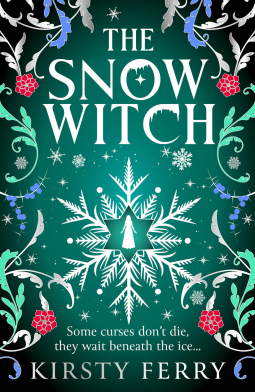
The Final Problem by Arturo Pérez-Reverte – #ReadIndies

Translated by Frances Riddle

It’s June 1960 and actor Ormond Basil has found himself trapped on the small island of Utakos, near Corfu. He has been invited to join a film director on his yacht to discuss a new project, but stormy weather means they are unable to leave the island until conditions improve. Luckily, there’s a hotel on Utakos where they and a small group of other guests and staff can take shelter until the storm has passed. However, there are no police on the island, so when one of the guests, British tourist Edith Manders, is found dead under suspicious circumstances, it’s up to the others to investigate until help can arrive.

Because Ormond Basil famously played the part of Sherlock Holmes on screen many times, he’s nominated to lead the investigation. No matter how much he explains that he’s only an actor and not really the great detective, everyone else insists that he must know more about solving mysteries than they do. And despite his protests, he does seem to know what he’s doing. With one of the other guests, Spanish crime author Paco Foxá, as his Watson, Basil begins to look for clues and question the suspects – but can he find the killer before another death takes place?

You may have guessed that Ormond Basil is closely based on the real life actor Basil Rathbone, who is for many people the quintessential Sherlock Holmes. I’ve talked before about not liking the current trend for using real people as detectives, but this is slightly different as the character is semi-fictional which gives Pérez-Reverte more scope to have him say and do things that the real Basil may not have done. He’s so obviously supposed to be Basil Rathbone, though, that it seems a bit pointless to pretend that he’s not. Either just calling him Rathbone or creating a completely fictional character would have worked better for me.

The novel is well plotted and the locked room mystery has a solution which is clever without being overly complex. With only a small number of suspects due to the setting, I thought I had guessed who the murderer was, but I was wrong and there was a nice twist towards the end that I hadn’t seen coming. For all Basil’s insistence that he’s not the real Sherlock Holmes, he does turn out to be an excellent detective, with powers of observation and deduction almost as good as the character he played for all those years!

However, I felt that there was far too much name-dropping of other famous actors and directors Basil had worked with, and too many long discussions between Basil and Foxá on the subject of Sherlock Holmes, in which both of them quote constantly from the books and adaptations. This all became a bit tedious and detracted from the mystery. I had a similar problem with the other Pérez-Reverte novel I’ve read, The Dumas Club, in which we’re bombarded with references to Alexandre Dumas’ books, so maybe this is just the way he writes.

I’m not sure if The Final Problem is going to be left as a standalone or if it’s intended as the start of a series; I don’t know if I would want to read any further adventures for Ormond Basil, but I did enjoy this one overall because of the interesting murder mystery. This edition of the novel is available from Atlantic Books, translated into English from the original Spanish by Frances Riddle. As Atlantic Books is an independent publisher, I’m counting this towards Read Indies, hosted this month by Karen of Kaggsy’s Bookish Ramblings.

The Killer Question by Janice Hallett

I love Janice Hallett; her books have an unusual style and format that I know doesn’t work for everyone, but it does for me and I’ve enjoyed all of her adult novels so far. The Killer Question is another good one, this time with a plot revolving around one of the staples of British culture: the pub quiz.

Mal and Sue Eastwood have recently become landlords of a country pub called The Case is Altered (the name refers to a new piece of evidence that emerges in court and could change the outcome of a case). The pub is in a lonely location at the end of a road that leads nowhere and previous landlords have struggled to attract customers, but the Eastwoods are sure they can make a success of it. One of their plans is to start hosting a weekly quiz – Mal loves trivia and is looking forward to compiling his own sets of questions.

Mal’s Monday night quizzes prove popular and soon several teams are coming back week after week to join in. Some of them just see it as a chance to have fun with their friends, but others are much more competitive. Then, one night, a new team arrives, calling themselves The Shadow Knights, and they win the quiz with an almost perfect score. They win again the next week and the next, until Mal becomes convinced that they must be cheating – if only he could find a way to prove it. But soon Mal and Sue will have bigger things to worry about, because a man’s body has been pulled from the nearby river and the police have come to question them…

Like Hallett’s previous novels, this one is written entirely in the form of texts, emails, WhatsApp messages, transcriptions of conversations and other forms of media. Having read other reviews, this definitely seems to be something people either love or hate, and as her books are all written in the same way I think trying one or two of them should be enough to give you an idea of whether her style is for you or not. Personally I find it very clever, because only getting to know the characters through what they choose to reveal of themselves in a text or an email allows for all sorts of surprising twists and revelations. And the twists come one after another throughout the second half of this book, none of which I saw coming in advance!

Although there is a subplot set several years earlier, involving a kidnapping and a police investigation known as Operation Honeyguide, I found this book less complex than some of Hallett’s others so it could be a good place for new readers to start. I also loved the quiz element of the story, seeing how seriously some of the teams take their performances and the lengths they go to in their efforts to win. The arrival of the mysterious Shadow Knights causes a lot of disruption, with some of the existing players becoming angry and determined to beat them. There’s also a lot of humour; I particularly liked the WhatsApp group formed by Mal, Sue and the other local pub landlords, where they share one-star reviews posted by disgruntled customers!

I certainly won’t be giving this book a one-star review as I thought it was excellent – maybe slightly too long, but the format made it a quicker read than it would otherwise have been. I’m looking forward to her next book, The Silent Appeal, coming later this year.