The Undetective by Bruce Graeme – #ReadIndies

It’s good to see so many forgotten Golden Age crime authors being brought back into print by various publishers. Bruce Graeme (Graham Montague Jeffries) is another I had never heard of until my eye was caught by the bright and colourful cover of this recent reissue of The Undetective. Graeme appears to have been very prolific, particularly during the 1930s and 40s, but this is a later novel from 1962. It’s a real gem and I highly recommend it to classic crime fans! Along with several of Graeme’s others, it’s published by Moonstone Press, which makes it a perfect choice for Karen and Lizzy’s #ReadIndies month.

Our narrator, Iain Carter, has abandoned a career in law to become a crime writer, but is finding it less profitable than he expected. Luckily, his brother-in-law, Edward, happens to be a police detective who is often indiscreet when discussing his work with his family, and Iain decides to use Edward’s inside knowledge as the basis for a new series of books. He creates a superintendent character based on Edward’s boss, whom he portrays as a bumbling idiot incapable of solving any crimes – more of an ‘undetective’ than a detective!

In order to avoid getting Edward into trouble, Iain publishes under a pseudonym – John Ky. Lowell – and goes to great lengths to ensure that nobody can ever trace Lowell back to him. The new series proves to be a huge success and everything is going well for Iain…until a man is found murdered and it emerges that the main suspect is John Ky. Lowell! Can Iain divert suspicion away from his alter ego without making himself a target?

I found this an entertaining read from beginning to end. As an author himself and a founding member of the Crime Writers’ Association, Graeme pokes fun at the publishing industry and his fellow CWA members, namedropping people like John Creasey, Christianna Brand and Julian Symons (who writes a bad review of one of Iain Carter’s books). He also offers some interesting insights into the world of publishing, the royalties an author could expect in 1962, and the reasons for writing under a pseudonym. The schemes Carter comes up with for trying to hide Lowell’s true identity are ingenious!

Although a murder does take place, this is not really a conventional murder mystery, and it’s not a police procedural either as we only hear about the police investigations and theories from Iain’s perspective, due to his friendship with Edward. Iain is not really interested in trying to solve the mystery – he just wants to make sure that neither he nor the non-existent Lowell can be connected with it. With the help of his wife, Susan, he begins planting false clues and red herrings to try to lead the police in the wrong direction and part of the fun is in wondering how long this can go on before he eventually makes a mistake and gets caught out!

I enjoyed this book so much I’m definitely planning to read more by Bruce Graeme, as well as maybe trying some of the other authors available from the same publisher.

Moonstone Press is a member of the Independent Publishers Guild and focuses on “detective, crime and humorous fiction published before 1965”.

Cuddy by Benjamin Myers

Cuddy is a nickname given to St Cuthbert, the Anglo-Saxon monk, bishop, hermit and saint who lived during the 7th century. He is associated with the island of Lindisfarne (Holy Island), where he spent many years of his life, and with Durham Cathedral, where he is buried, and these are both places I have visited several times, which is what drew me to this novel by Benjamin Myers. The publisher’s description of it as “a bold and experimental retelling of the story of the hermit St. Cuthbert” made me reconsider, as I’ve discovered over the years that experimental books usually aren’t for me, but I decided to give it a chance anyway.

The first section of the book is set in 995, more than three hundred years after the death of St Cuthbert, and is told from the perspective of Ediva, a young woman who accompanies a group of monks as they transport Cuddy’s remains to his new resting place in Durham. We then move forward several centuries in time and join the masons who are repairing the cathedral stonework in 1346. The third section is a ghost story set in 1827 when an Oxford professor, Forbes Fawcett-Black, is invited to attend the opening of Cuthbert’s tomb. Finally, the last part of the book introduces us to Michael Cuthbert, a young man living in a village near Durham in 2019 who is offered a job as a labourer during restoration work at the cathedral.

Each of the four parts could work as a standalone story, but there are also several links between the four, some of which are easy to spot and some that are more obscure. There’s always an ‘Ediva’-type character – one who fills the role of cook or healer, who sees visions and hears the voice of Cuddy – and there’s always a young man with owl-like eyes:

He has brilliant wide eyes that peer into your very
centre
Eyes that seem not to blink. Eyes that one day are
blue
and the next jade, then anthracite and once, red.

The quote above, describing the ‘Owl Boy’, is an example of the writing in the first section of the book, which takes the style of a narrative poem. I don’t think I could have read a whole book written like this, but could cope with it for a few chapters and I thought it was quite effective in creating a mystical, dreamlike atmosphere that suited the time period and the story being told. Myers also finds an appropriate voice and style for each of the other parts of the novel – for example, the 19th century ghost story, The Corpse in the Cathedral, is told through the diary entries of the Professor and is written in a very formal style which suits his character.

My favourite part of the book was actually the modern day story at the end. I loved Michael Cuthbert, who is struggling to care for his dying mother at home while trying to support them both by taking whatever work he can get, and I enjoyed watching him form a friendship with Evie, a kindhearted young woman who works in the cathedral restaurant. I found Michael and Evie’s story very moving and would have been happy to have read a whole book about them!

As for St Cuthbert himself, his own story is related to us through brief excerpts from a wide range of sources including books, essays and articles which are all acknowledged at the end of the book. It’s a lot to take in and digest and I think to really understand who Cuthbert was and why he is significant you would probably need to read some of those sources in full. However, this is a good introduction!

Thanks to Bloomsbury Publishing Plc for providing a copy of this book for review via NetGalley.

Book 4/50 for the Historical Fiction Reading Challenge 2024

Fear Stalks the Village by Ethel Lina White

The village was beautiful. It was enfolded in a hollow of the Downs, and wrapped up snugly — first, in a floral shawl of gardens, and then, in a great green shawl of fields. Lilies and lavender grew in abundance. Bees clustered over sweet-scented herbs with the hum of a myriad spinning-wheels.

With its Tudor cottages and cobbled streets, the village depicted in Ethel Lina White’s 1932 novel seems at first sight to be an idyllic place to live. There’s no poverty or unemployment, an endless round of tea parties and tennis games, and once settled there, people find that they never want to leave. Joan Brook is a relative newcomer to the village, having arrived to take up a position as companion to Lady d’Arcy, and she has already fallen under its spell.

When a novelist friend from London comes to visit, she entertains herself and Joan by imagining the secret scandals taking place behind closed doors. Perhaps the village doctor is poisoning his wife, she says, and the saintly Miss Asprey is bullying her companion; the Rector is leading a double life, and Miss Julia Corner, President of the local Temperance Society, is a secret drinker. The visit is a brief one and the friend soon returns to London, but when the inhabitants of the village begin to receive anonymous poison pen letters, it seems that the scenarios she had imagined were not so far from the truth after all.

Fear Stalks the Village is an unusual crime novel; although there are several deaths, it is not a murder mystery and the plot revolves entirely around finding out who is writing the spiteful letters threatening to expose the private lives of the villagers. Other reviews compare it to The Moving Finger by Agatha Christie, but as I haven’t read that one yet it reminded me most of Henrietta Clandon’s Good by Stealth. There’s lots of witty, satirical humour and a large cast of strongly drawn characters, all of whom appear at first to be happy, well-adjusted people…until the letters begin to arrive. The question the novel raises is whether the cracks have always been there beneath the surface or whether they have been created by the letters and the suspicion and anxiety they cause.

The mystery is quite a clever one, with some red herrings to throw us off the track, and I didn’t guess who was sending the letters. However, it took me a while to get into this book as the pace is quite slow and, despite the title, I didn’t feel that there was any real sense of fear or menace. Still, this is the second book I’ve read by Ethel Lina White, the first being The Wheel Spins (the book on which Alfred Hitchcock’s The Lady Vanishes is based) and I think it’s my favourite of the two – probably because with the other book I couldn’t help comparing it unfavourably to the film, which I love! I would be happy to try more of her books so let me know if there are any you would recommend.

The Spendthrift and the Swallow by Ambrose Parry

I loved the first four novels in Ambrose Parry’s Raven and Fisher mystery series and although there doesn’t currently seem to be any news of a fifth, I was pleased to come across this digital short story available free for Kindle. It fits into the series chronologically between the third and fourth books but if you come to it late, as I did, it doesn’t matter at all as it works as a standalone story.

Ambrose Parry is a pseudonym used by the crime author Chris Brookmyre and his wife Dr Marisa Haetzman, a consultant anaesthetist. Marisa’s knowledge is crucial to the series, which is set against the backdrop of the medical world of 19th century Edinburgh. Our two main characters are Dr Will Raven, assistant to the renowned Scottish obstetrician Dr James Simpson, and Sarah Fisher, who also assists at Simpson’s clinic but is struggling to find a way to achieve her own dream of becoming a doctor. Each book in the series features a mystery to be solved, as well as details of Victorian medical procedures and treatments.

The Spendthrift and the Swallow is only 52 pages long, including a preview for Voices of the Dead, and can easily be read in about twenty minutes. The story is set in January 1853 and we follow Will and Sarah as they investigate the death of one of Dr Simpson’s patients, Cora Carlton, the wife of an entrepreneur. The circumstances of Cora’s sudden death could raise questions over the doctor’s medical abilities, so Will and Sarah hope to uncover the truth quickly enough to save his reputation. Meanwhile, Simpson has begun experimenting with the increasingly popular science of mesmerism and places a loud and difficult patient under hypnosis with startling results. I was interested to read in the author’s note at the end of the book that both of these incidents were based on real historical cases.

If you’re new to the Raven and Fisher books, reading this story first wouldn’t be a problem as it doesn’t really spoil anything from the main series and it’s a satisfying mystery in its own right. However, it’s too short for any character development or any background information to help you understand the relationship between Sarah and Will and what has happened to them up to this point. My recommendation is to start with the first full-length novel, The Way of all Flesh. For existing Parry readers, though, this is an entertaining little book and provides an introduction to the mesmerism storyline that will play such a big part in Voices of the Dead.

Book 3/50 for the Historical Fiction Reading Challenge 2024

The Beholders by Hester Musson

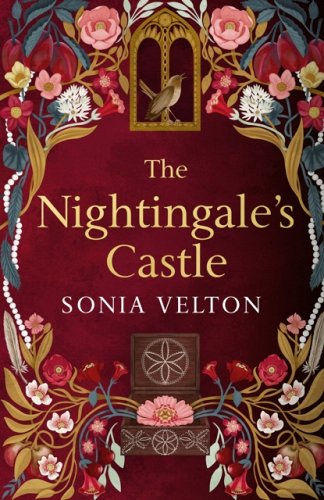
‘Beauty is in the eye of the beholder’ and the cover of this debut novel by Hester Musson is certainly a beautiful thing to behold.

We begin in June 1878 with Clara Gethin on trial at London’s Old Bailey for the murder of her own child, whose body has been pulled from the River Thames. As the wife of a highly respected politician who has provided evidence against her, things look very bleak for Clara, but there’s one person who believes – or at least wants to believe – in her innocence. This is Harriet Watkins, her lady’s maid and the only friend she has in the world.

We then go back several months to Harriet’s arrival in Clara’s household following the death of her previous employer. Her mother wants her to return home to marry her fiancé, but Harriet isn’t at all convinced that William is the man she wants to spend her life with, so instead she accepts a new position as housemaid at Finton Hall, the Gethins’ Hertfordshire estate. When Harriet begins her new job, she quickly senses that something is very wrong at Finton Hall. The housekeeper is hostile and unwelcoming, the footman seems to be hiding secrets, and the master, although largely absent, casts a shadow over the entire household. Harriet makes an effort to befriend her new mistress and is rewarded with promotion to lady’s maid, but she is concerned by Clara’s lack of affection for her baby son and her habit of dismissing servants seemingly on a whim.

The story unfolds through the pages of Harriet’s diary as she gives her account of her early days at Finton Hall and the things she experiences and observes there. The diary entries are long and detailed – sometimes more detailed than they really need to be – but otherwise the format is a good way to convey Harriet’s growing sense of unease as she learns more about what is really going on within the Gethin household. However, I think I’ve read too many similar books recently, because I found it easy to guess what was happening and wasn’t surprised at all when it was revealed. It also seemed to take far too long to reach that point – the first half of the book consists of a lot of very slow build-up and there were times when I struggled to stay engaged.

The pace picks up in the second half as the action finally moves outside the confines of the house and we learn more about the fate of Clara Gethin’s baby. This part of the book felt more original and I was less able to predict what was going to happen; I also liked the romantic storyline which developed towards the end – although it felt slightly rushed, the love interest was not the person I’d expected earlier in the book and I was glad the author hadn’t gone in that direction. Overall, I think my feelings about The Beholders are more positive than negative; I just wish it hadn’t taken so long for the plot to emerge!

Thanks to Fourth Estate for providing a copy of this book for review via NetGalley.

Book 2/50 for the Historical Fiction Reading Challenge 2024

The Secret of Chimneys by Agatha Christie

I’m taking part in Read Christie again this year and the theme for 2024 is Agatha Christie: Through the Decades. Each quarter will focus on a different decade or decades – 20s, 30s, 40s/50s and 60s/70s. For my January read, I have chosen The Secret of Chimneys, which was published in 1925.

The Secret of Chimneys is the first of five novels featuring Superintendent Battle and is more of a thriller than a traditional murder mystery. I usually enjoy the lighter, more adventurous feel of Christie’s thrillers and although this one hasn’t turned out to be a favourite, I did find it very enjoyable. It involves political intrigue in the fictitious Balkan country of Herzoslovakia where attempts are under way to restore the monarchy.

The novel begins in Africa, where Anthony Cade is working as a tour guide when he meets an old friend, James McGrath, in Bulawayo. Anthony agrees to carry out two important tasks for McGrath – firstly, to deliver the manuscript of a memoir written by Count Stylptitch of Herzoslovakia to a London publisher, and secondly, to return a packet of letters to a woman who is being blackmailed. As soon as he arrives in England, however, he discovers that there are other people interested in both the manuscript and the letters, and they will stop at nothing – including murder – to get what they want.

Most of the action takes place at Chimneys, a country estate belonging to Lord Caterham, who invites Anthony to attend a house party at the request of George Lomax, a politician hoping to get his hands on the Stylptitch memoir. With a large and varied group of people gathered at Chimneys – including a beautiful widow, a French governess, a representative from a British oil syndicate and an American collector of rare books – there’s no shortage of suspects when a murder occurs and Superintendent Battle is called in to investigate.

As I’ve said, this is not just a straightforward murder mystery and Christie throws all sorts of things into the plot, from treasure hunts and coded letters to secret societies and international jewel thieves. It’s fun to read, but does need some suspension of disbelief! You also need to be prepared for a lot of racist language, which isn’t unexpected in a Christie novel – or many other 1920s novels – but it seems more excessive in this particular book, maybe because of the large number of characters of other nationalities and races. Other than that, this is an entertaining, fast paced read, written in a light and humorous style that reminded me of PG Wodehouse.

Although Anthony Cade seems to do a lot of the detecting in this book, Battle himself has a larger role than in some of the others in which he appears. He’s certainly no Poirot or Miss Marple, being rather stolid and unimaginative, with what is described as an ‘expressionless face’, but he gets on with his job quietly and unobtrusively and plays a small but important part in the final solving of the mystery. Did I solve it myself? Well, yes and no. I guessed the identity of the jewel thief, King Victor, but there were other revelations that took me by surprise.

This was a good start to a new year of Christie reading! Next month I’m hoping to read The Seven Dials Mystery, another 1920s novel which features some of the same characters.

Silence by Shūsaku Endō

Translated by William Johnston

One of my resolutions for 2024 is to read more historical fiction in translation and where better to start than with a book for the Japanese Literature Challenge (hosted by Dolce Bellezza throughout January and February).

First published in Japanese in 1966 and in English in 1969, Shūsaku Endō’s Silence is set in the 17th century and tells the story of a Portuguese Jesuit priest, Sebastian Rodrigues, who travels to Japan to investigate claims that his old mentor, Father Ferreira, has committed apostasy – in other words, renounced his faith. Rodrigues and his friend Francisco Garrpe, another priest, can’t believe that their teacher would do such a thing. Certain that there must be some mistake, the two set out from Lisbon on the long journey to Japan, where they hope to learn what has really happened to Ferreira.

Rodrigues and Garrpe reach Japan in 1639 and quickly discover that the local Christian communities are being persecuted and forced to hide their religion from the authorities. Anyone the officials suspect of being a Christian is told to trample on an image of Christ, known as a fumie, and if they refuse they are imprisoned and tortured by being suspended upside down over a pit. On his arrival in Japan, Rodrigues goes into hiding with the other Christians, carrying out his missionary work and helping them to worship in secret, but he knows it’s only a matter of time before he is caught and has his own faith put to the test.

Silence is both beautifully written and beautifully translated. From beginning to end, I was completely immersed in another time and place; there’s no jarringly modern language to pull the reader out of the story and everything feels authentic and real. I was intrigued by Endō’s decision to write the novel from the perspective of Rodrigues (first in the form of letters written by the priest and then in the third person) rather than the Japanese Christians and it was interesting to see how Endō viewed his country, its people and its customs through the eyes of a stranger.

I am not a particularly religious person but you don’t need to be to be able to appreciate this novel. I was very moved by the internal struggles Rodrigues faces as he begins to question why God is remaining silent in the midst of so much torture and persecution and whether renouncing his faith, under certain circumstances, could actually be the right thing to do if it helps alleviate the suffering of others. As you can imagine, it’s quite a bleak story, but I loved it and although it’s only been a few days since I finished it, I don’t think it’s a book I’ll ever forget. I would like to try more of Endō’s work and am pleased to see that some of his other novels are also available in English translations.

I read this book for the Japanese Literature Challenge 17 and the Historical Fiction Reading Challenge.