Once a Monster by Robert Dinsdale

Novels inspired by Greek mythology seem to have become very popular in recent years, but Robert Dinsdale’s new book, Once a Monster, is something slightly different. More reimagining than retelling, it’s set in Victorian London and owes as much to Charles Dickens’ Oliver Twist as it does to Greek myth.

Ten-year-old Nell Hart is a mudlark, one of a small group of children, orphaned or otherwise neglected and vulnerable, who spend their days searching through the mud of the River Thames for ‘treasures’ – pieces of coal or iron – to give to their master, Benjamin Murdstone. It’s a difficult life for a child, but Nell has a pair of satin ballet slippers hidden inside her straw mattress, a gift left to her by her seamstress mother, and she is sustained by dreams of one day becoming a ballerina.

One morning, Nell is the first down to the river to begin another day of mudlarking and so she is the first to discover a body washed up on the shore. At first she’s unmoved by the sight – it’s not the first dead body she’s seen – but on closer inspection she discovers that this is the body of no ordinary man. Unusually tall, with enormous hands and feet, there are strange growths on each side of the head, almost like the beginnings of horns. The other mudlarks have arrived and are urging Nell to steal the man’s boots, when she makes another shocking discovery – he is still alive.

His name is Minos and as he returns to consciousness, memories slowly begin to surface of a time long ago and another life as a Minotaur in a labyrinth. But is Minos really the Minotaur of Greek myth or is he just a man after all? What will Murdstone do when he sees what Nell has found for him – and will Nell ever break free of her mudlark existence and learn to dance?

This is the first book I’ve read by Robert Dinsdale so I didn’t know what to expect, but I found it beautifully written and atmospheric. As I’ve mentioned, there’s a strong Dickens influence, from the descriptions of the poorer parts of Victorian London to the portrayal of Mr Murdstone, who is obviously inspired by Fagin, the leader of the gang of pickpockets in Oliver Twist. As the villain of the novel, he’s a very human monster and it quickly becomes clear that a central theme of the story is that every one of us can have a monster inside us as well as a hero. Dinsdale uses the myth of the Minotaur to explore and develop this theory:

“The mythographers were a cowardly lot. Just storytellers, trying to make sense of a world too complex to be distilled in mere words…But when it came to chronicling these stories for the ages, the Minotaur presented them with the thorniest of problems. To look him in the eye and see him for anything other than a base beast must have been like peering into a looking glass. They would have had to acknowledge the monstrosity in all of us.”

I found the relationship between Nell and Minos slightly disturbing; it wasn’t really a romantic relationship but it felt like more than just a platonic friendship or a father/daughter relationship and I kept forgetting that while Minos was an adult (possibly many hundreds of years old), Nell was only a ten-year-old child. The interactions and conversations between the two of them felt more what I would have expected if Nell had been a teenager or young woman rather than a little girl. Apart from that, I did think both characters were interesting; I enjoyed following Nell as she took her first steps towards becoming a ballerina and although I found Minos harder to connect with, I was intrigued by his story and by his memories of his time as the Minotaur.

My main problem with this book was the length; there were too many long and repetitive sections where the pace slowed and nothing really happened to advance the plot. I read the ebook but the print version has over 500 pages and I think that could easily have been cut down to 400 without losing anything important. Still, I did find this an interesting novel overall and would consider trying one of Robert Dinsdale’s earlier books.

Thanks to Pan Macmillan for providing a copy of this book for review via NetGalley.
This is book 43/50 for the 2023 Historical Fiction Reading Challenge.


The Nonesuch by Georgette Heyer – #1962Club

When looking for books to read for this week’s 1962 Club (hosted by Karen and Simon), I hoped there would be a Georgette Heyer I hadn’t read yet – and there was! Like Agatha Christie and Georges Simenon, you can nearly always rely on Heyer to have had at least one book published in whatever the current club year is. The Nonesuch was published in 1962 and I’ve managed to read it just in time to squeeze in my review on the final day!

A nonesuch can be defined as ‘a person or thing without equal’ and Sir Waldo Hawkridge, hero of Heyer’s novel, certainly fits that description – at least in the eyes of fashionable Regency society. Being rich, handsome, athletic and an eligible bachelor, his sudden arrival in the quiet Yorkshire village of Oversett causes quite a stir. He has recently inherited the estate of Broom Hall and has come to inspect it, accompanied by his younger cousin, Lord Lindeth. Ancilla Trent, governess to the beautiful Tiffany Wield, has already formed an opinion of the Nonesuch before she even meets him, but is surprised to find that he’s not really what she expected at all. Ancilla is quickly won over by Sir Waldo’s kindness and calm, sensible nature and he in turn is drawn to the quiet, unassuming governess. However, they are both alarmed when Lindeth seems to be falling for the charms of the lovely but spoiled Tiffany!

The Nonesuch doesn’t really have a lot of plot – unlike many of Heyer’s other novels, there are no encounters with highwaymen, no duels, no masked balls, no abductions or elopements – and the focus instead is on country life and the relationships between the two or three Yorkshire families at the heart of the story. Heyer is often compared to Jane Austen, of course, but I found this book particularly reminiscent of Pride and Prejudice. I tend to prefer her livelier, funnier stories, like The Corinthian or Sprig Muslin, but I did still enjoy following Ancilla and Sir Waldo and watching their relationship develop. Heyer does throw in a misunderstanding to stir things up, but otherwise their romance is completely believable and it’s easy to see why each would be attracted to the other.

In contrast to Ancilla Trent, whom I liked very much, Tiffany Wield is an awful character – selfish, vain, and prone to throwing tantrums when things don’t go her way. It was such a relief when it became clear that she wasn’t going to be the novel’s ‘heroine’, so I didn’t need to try to like her. And I did find myself enjoying her storyline later in the book, after Sir Waldo’s other young cousin, Laurence Calver, arrives from London and Tiffany finds she has met her match!

The Nonesuch doesn’t rank as a favourite by Heyer, but I’m still pleased I managed to fit it in for 1962 Club. I did love the rural Yorkshire setting, which made a change from the more common Regency novel settings of London or Bath.

This is book 42/50 for the 2023 Historical Fiction Reading Challenge.
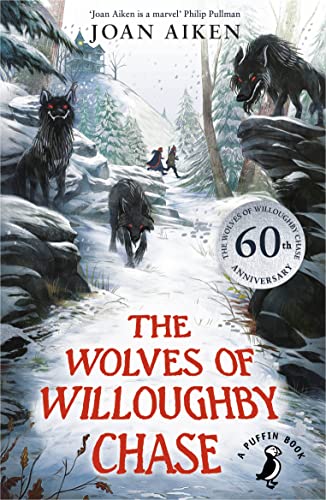
The Wolves of Willoughby Chase by Joan Aiken – #1962Club

I’ve read and enjoyed several of Joan Aiken’s adult novels over the last few years – my favourite so far is Castle Barebane – but until now I’ve never read the book for which she’s most famous, The Wolves of Willoughby Chase. It was first published in 1962, which makes it a perfect choice for this week’s 1962 Club hosted by Simon and Karen.

This is obviously a book aimed at younger readers and I’m sure I would have loved it if I’d read it as a child; however, I was pleased to find that it also has a lot to offer an adult reader. I’m definitely planning to continue with the next book in the series.

The Wolves of Willoughby Chase is set in England in an alternate history where the Stuarts are still on the throne in the 19th century. It’s 1832, early in the reign of King James III, and a tunnel between Dover and Calais has recently been completed, allowing the migration of a large number of wolves from Europe. In reality, of course, the Channel Tunnel wouldn’t open until 1994, so Joan Aiken really was ahead of her time – although obviously the idea had existed in theory for much longer! Other than the tunnel and the presence of wolves, the world described in this book doesn’t seem very different from the real world of 1832, but I’m assuming the alternate history element becomes more significant later in the series.

Being a children’s book, the story is told from the perspectives of two children – Bonnie and Sylvia Green. Sylvia, an orphan, lives in London with her elderly Aunt Jane, but at the beginning of the novel she travels north by train to Willoughby Chase to stay with her cousin Bonnie. Bonnie’s parents, Sir Willoughby and Lady Green, are going abroad for health reasons and have engaged a governess, Miss Letitia Slighcarp, to take care of the children while they are away.

Left alone with Miss Slighcarp, the girls discover that their new governess is not what she claims to be and has another motive for coming to Willoughby Chase. Soon Bonnie and Sylvia are sent off to a horrible school for orphans run by the cruel Gertrude Brisket. Hungry and miserable, they begin to plan a daring escape, but will they succeed – and if so, where will they go? Will their friend, Simon the goose-boy, be able to help them? And what exactly is Miss Slighcarp planning to do now that she is in full control of Willoughby Chase?

Now that I’ve read this book I can see why it is considered a children’s classic and has been so popular with generations of younger readers over the years. It has an exciting plot, child protagonists to relate to, kindly adult characters to love and villainous ones to hate, and an atmospheric setting with snowy, icy landscapes and packs of wolves roaming the countryside. Speaking of the wolves, they play a big part in two memorable scenes near the beginning of the book, but are barely mentioned after that as the human ‘wolves’ come to the forefront of the story instead. The influence of Victorian literature on Aiken’s writing is also very obvious, from the Dickensian names of the characters – Letitia Slighcarp, Josiah Grimshaw, Mr Gripe, Mr Wilderness – to the portrayal of Mrs Brisket’s school, surely inspired by Lowood School in Jane Eyre.

I thoroughly enjoyed this book and just wish I hadn’t come to it so late! I’m already looking forward to reading the second one in the series, Black Hearts in Battersea.

This is book 41/50 for the 2023 Historical Fiction Reading Challenge.
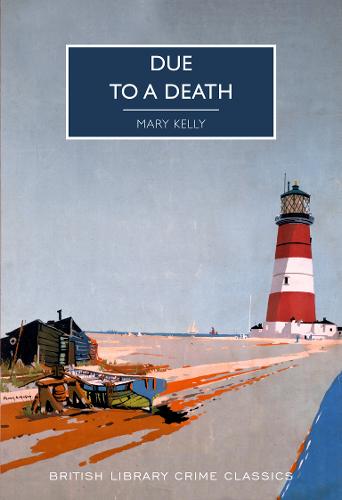
Due to a Death by Mary Kelly – #1962Club

This week Karen of Kaggsy’s Bookish Ramblings and Simon of Stuck in a Book are hosting another of their club weeks, where we all read and write about books published in the same year. This time, the year is 1962 and what a great year for publishing it has turned out to be! There were lots of tempting books to choose from, but I decided to start with one from the British Library Crime Classics series by an author who is new to me: Mary Kelly.

Due to a Death is a very different kind of BLCC book; it’s not really a detective novel, not really a thriller, not a country house or locked room mystery – not even much of a mystery at all. Although there is an element of crime, I would describe this more as a character study and an exploration of the lives of women in a small community in the early 1960s.

Our narrator, Agnes, lives in Gunfleet, a fictional village in the marshlands of Kent. Agnes used to be a teacher but her marriage to Tom meant she was no longer expected to work. It’s not a very happy or satisfying marriage and Tom, who works in a museum, spends most of his free time with his friends, Ian (who is also his stepbrother) and Tubby. Agnes appears to have no friends of her own so Tubby, Ian, and their wives Carole and Helen (whom she doesn’t particularly get along with), form her entire social circle. When Hedley Nicholson, a newcomer to the village, joins their little group he seems to sense that Agnes is lonely and bored and begins to spend more and more time with her, teaching her to drive – something she hopes will provide independence and freedom.

In the opening chapter, we learn that the body of a young woman has been found in the marshes. The rest of the novel is then told in the form of a flashback as Agnes sits in a church, thinking back over the events of the summer. The identity of the dead woman and her connection with the other characters is slowly revealed, but the focus of the book is always on Agnes and her relationships with Hedley, Tom, Ian and Tubby. It’s an interesting study of how, despite living in a small, claustrophobic community where everybody knows everybody else’s business, it’s still possible to feel isolated and alone.

I was very impressed with this book and although it has a slow pace, I found it difficult to put down. However, everything about it is relentlessly bleak, from the desolate marshland setting to the dreary lives of the characters and the tragic motive behind the young woman’s death. I liked it but, as I’ve said, it’s not a typical crime novel, so be prepared!

I hope to have at least one more 1962 review for you later in the week. Meanwhile, here’s my list of other 1962 books previously read and reviewed on my blog.

Night Train to Marrakech by Dinah Jefferies

Night Train to Marrakech is the third and final book in Dinah Jefferies’ Daughters of War trilogy, but if you haven’t read the previous two books that shouldn’t be a problem as I think this one would also work well as a standalone. While Daughters of War and The Hidden Palace followed the stories of the three Baudin sisters, Hélène, Élise and Florence, during World War II, this third novel moves forward to the 1960s to focus on Élise’s daughter, Vicky.

In July 1966, Vicky Baudin arrives in Morocco to visit her grandmother for the first time. Having lost her father during the war, Vicky has only recently discovered that his mother, Clemence, is still alive and living in the mountains outside Marrakech. Vicky has just received a diploma in fashion design from a London art college, so this seems like a good time to travel abroad before beginning a postgraduate course in Paris. As her train arrives at Marrakech station, Vicky is looking forward to getting to know Clemence – and is determined to find a way to meet her hero, the French designer Yves Saint Laurent, who also lives in Marrakech.

In her mountain home, the Kasbah du Paradis, Clemence is awaiting her long-lost granddaughter’s arrival with mixed emotions. Vicky will want to know why she played no part in her son’s life and Clemence doesn’t feel ready to explain. However, she’s forced to confront the memories she’s tried so hard to forget when a man from her past reappears, threatening to reveal her secrets. Meanwhile, Vicky and her cousin Bea also stumble into trouble when they become witnesses to a crime.

Night Train to Marrakech has a much stronger thriller element than the previous two books, which I found quite surprising. The novel is set against a backdrop of rising political tensions – a few months before the novel begins, the Moroccan revolutionary Mehdi Ben Barka is abducted in Paris (a real life incident) – and although this doesn’t form a large part of the plot, it does give a sense of the danger for two young women who unintentionally become mixed up in a situation they don’t fully understand. The descriptions of Morocco itself – the scenery, the buildings, the food, the sounds and smells – are also beautifully done.

The three sisters from the first two books (Vicky’s mother, Élise, and her two aunts, Hélène and Florence) do eventually make an appearance in this one, but I was disappointed that we don’t see very much of them. This is very much Vicky’s story and Clemence’s, and although having two completely new characters to get to know so late in the trilogy unsettled me slightly, I did warm to them later in the book. I found Clemence in particular an intriguing character as she seems so cold and secretive at first but as more and more of her story unfolds, the reason for this becomes clear and by the end of the book I had gained a lot of respect and sympathy for her.

I didn’t enjoy this book as much as Daughters of War and The Hidden Palace – as the third in a trilogy I would have preferred it to be more closely linked with the first two books rather than moving on to the next generation – but the gripping plot and evocative setting still made it worthwhile. As for whether or not Vicky achieves her dream of meeting Yves Saint Laurent, you’ll have to read the book to find out!

Thanks to HarperCollins for providing a copy of this book for review via NetGalley.

This is book 40/50 for the 2023 Historical Fiction Reading Challenge.

Appointment with Death by Agatha Christie

The September prompt for Read Christie 2023 is a motive: hatred. This is obviously a common motive for murder and there are plenty of Christie novels to fit this month’s theme, but the suggested title is Appointment with Death, a 1938 Poirot mystery set in the Middle East.

Newly qualified doctor Sarah King and French psychologist Dr Gerard are relaxing in the lounge of their Jerusalem hotel when their attention is drawn to an American family who have just entered the room. The head of the family is Mrs Boynton, a monstrous woman who takes a sadistic pleasure in controlling the lives of her adult children. Even her eldest stepson Lennox, who is married, is still completely under her thumb. As Sarah and Dr Gerard learn more about the Boyntons, they each begin to develop a personal interest in the family – Sarah because she has become romantically attracted to Lennox’s brother, Raymond, and Gerard because he thinks he has spotted the early signs of schizophrenia in the youngest Boynton child, Jinny.

When the party moves on to Petra, with the additions of British politician Lady Westholme, her spinster friend Amabel Pierce, and a certain Hercule Poirot, a murder takes place. Nobody has much sympathy for the victim, but the murderer must still be caught – and who better to catch them than Poirot? Insisting that he can solve the mystery in twenty-four hours, he sets out to interview the suspects and sort through the available clues, while remembering a conversation overheard from his hotel window one night: “You do see, don’t you, that she’s got to be killed?”

I always enjoy Christie – even her weaker books are entertaining – but this is a particularly good one! The relationship between the members of the Boynton family is fascinating; Mrs Boynton is a truly horrible woman who has ensured that her children and stepchildren have no friends, no freedom and no independence. Why she has allowed them to come on this trip at all is a mystery in itself and one of the questions Poirot will have to answer.

I loved the Middle East setting (a part of the world Christie knew well due to her travels with her archaeologist husband, Max Mallowan) and although the crime is committed amongst the historic sites of Petra, it almost still has the feel of a typical country house mystery with caves and tents taking the place of rooms. I can’t really claim to have solved the mystery, but I did narrow it down to two suspects and one of them was correct! I missed an important clue which would definitely have pointed me in the right direction earlier on if I had picked up on it, but I think Christie is very fair with the reader in this book and all the clues are there to be seen, as long as you’re paying attention.

I’m not sure yet whether I’ll be taking part in Read Christie next month, but if not I’m looking forward to reading Endless Night in November.

The Appeal by Janice Hallett

I loved Janice Hallett’s most recent novels, The Twyford Code and The Mysterious Case of the Alperton Angels, so I was looking forward to going back and reading her first book, The Appeal. I know Hallett’s style is not one that works for all readers (to be honest, I’m very surprised that it works for me), but if you enjoyed either of those other two novels, I can almost guarantee that you’ll enjoy this one as well.

The Appeal begins in the small English town of Lower Lockwood where the members of an amateur dramatics society, The Fairway Players, are preparing for their upcoming production of All My Sons by Arthur Miller. The Players are led by Martin Hayward and his wife Helen, a couple who also own the local golf club and are highly respected within the community, as well as members of several other prominent Lockwood families. On the fringes of the group and desperate to be accepted into the Haywards’ social circle is Isabel Beck, a young nurse who convinces her new friends Sam and Kel Greenwood to join the Players.

Before the group even begin rehearsals, disaster strikes: Martin and Helen’s two-year-old granddaughter, Poppy, has developed a rare form of brain cancer which is unlikely to be cured with conventional chemotherapy. Poppy’s parents have placed all their hopes in a new experimental treatment which is not yet available in the UK. Determined to obtain this very expensive new drug from America, the Haywards and their friends launch a fundraising appeal, ‘A Cure for Poppy’. At first, everything seems to be going well, but when one of the Fairway Players is found murdered, questions are raised not just regarding the killer but the appeal itself. Does the doctor responsible for obtaining the new treatment really have Poppy’s best interests at heart? Why did Sam leave her last nursing position in Africa so suddenly? And who is the mystery donor who promised a large sum of money then changed his mind?

Roderick Tanner QC has set his two law students, Femi and Charlotte, the task of looking through the documents associated with the Lockwood case. Someone has already been sentenced for the murder, but Tanner believes they are innocent and he wants the students to confirm his opinion as he prepares to appeal the decision. The novel is presented entirely in the form of emails sent to and from the various characters involved in the case, as well as several WhatsApp discussions between Femi and Charlotte as they try to make sense of the evidence. As I’ve said, this is probably something you’ll either love or hate, but for me it’s very effective – I find that the short length of each email makes the book very immersive and compelling as it’s easy to think ‘I’ll just read one more!’ It also allows a lot of misdirection as every character could be considered an unreliable narrator; we can never be sure who they really are or how they really feel because all we see is the way they choose to present themselves in an email or on social media. Some suspension of disbelief is required, though, as most people aren’t sending constant emails to each other all day long!

The weakest aspect of The Appeal for me was actually the murder mystery. The murder doesn’t take place until late in the novel and then we learn that Tanner has been withholding information from us, which makes it very difficult to solve the mystery for ourselves. I also wasn’t sure why he wanted help from Charlotte and Femi, as he already seemed to know everything anyway. Apart from that, I enjoyed following the progress of the Poppy campaign and correctly guessed some of the twists in that storyline! There’s a large cast of characters to get to know, but I found that most of them had their own very distinctive personalities – from needy, eager to please Isabel to practical, no-nonsense professional fundraiser Sarah-Jane – so I had no problem keeping track of them all.

Of the three Janice Hallett books I’ve read, this is my least favourite, but it still kept me entertained from beginning to end. I’m looking forward to reading her new novella, The Christmas Appeal, coming in October!