Henry VIII: The Heart and the Crown by Alison Weir

Henry VIII: The Heart and the Crown is the second book in Alison Weir’s new Tudor Rose trilogy: three novels exploring the lives of Elizabeth of York, Henry VIII and Mary I, three generations of the Tudor family. It also works as a companion to her earlier Six Tudor Queens series, which told the stories of Henry’s six wives.

This novel is quite unusual because it’s the first I’ve read by Weir to be written from a male perspective. So many of today’s historical fiction authors are choosing to focus on historical women, particularly those who have been forgotten or neglected, I feel that famous male figures like Henry VIII are currently less ‘fashionable’ subjects. As there’s also been so much written about him in the past, I wondered whether this book would have anything new to offer.

The novel takes us through Henry’s life in chronological order, beginning with his childhood and his unexpected change in status after the death of his older brother and then moving on to look at his six marriages, the religious changes that took place during his reign and all the political intrigue of the Tudor court. His relationships with advisers such as Cardinal Wolsey, Thomas More and Thomas Cromwell – and his court jester, Will Somers – are covered, as well as his rivalry with King Francis I of France and finally his declining health and his death in 1547.

I remember mentioning in some of my Six Tudor Queens reviews that Weir’s depiction of Henry was surprisingly positive throughout that series. All six of his wives are shown to have some genuine love and affection for him and his cruel actions are usually excused as being the fault of somebody else. She portrays him in a similar way in this book, showing how easily he is manipulated by people around him and trying to make him a more sympathetic character than you would usually expect, while not ignoring his obvious flaws – his jealousy, insecurity and hot temper. Weir does a particularly good job of showing how important it was to Henry to have a legitimate heir to carry on the Tudor dynasty founded by his father and the panic that he felt every time he suffered an illness or accident, knowing that if he died he would be leaving the future of his kingdom at risk.

Another unusual thing about this book is that I somehow found it both too long and too short at the same time! I read it on my Kindle, but the paper version has over 600 pages, so it’s a big book and not one that can be read very quickly. On the other hand, the six novels in the Six Tudor Queens series were all nearly as long and this single book on Henry has to cover a lot of the same information, so I felt that it didn’t really have the same level of depth, particularly where Henry’s later wives were concerned. About half of the book is devoted to Henry’s marriage to Katherine of Aragon and the ‘Great Matter’ that arises when he attempts to have the marriage annulled so he can marry Anne Boleyn. This means his relationships with his other four wives are squeezed into the remainder of the book, along with major events like the sinking of the Mary Rose, which is covered in just a few paragraphs.

Overall, I found this an interesting read, if a bit dry at times, but I don’t really feel that I learned anything new from it – and, as I’ve said, a lot of the material is repeated from the earlier six novels. If you don’t have much knowledge of Henry VIII and the Tudors, though, I think this would be a good alternative to non-fiction to start you on your journey and introduce you to this period of history. Be aware that the US title of this book is The King’s Pleasure: A Novel of Henry VIII – I don’t want anyone to buy the same book twice!

Thanks to Headline Review for providing a copy of this book for review via NetGalley.
This is book 39/50 for the 2023 Historical Fiction Reading Challenge.
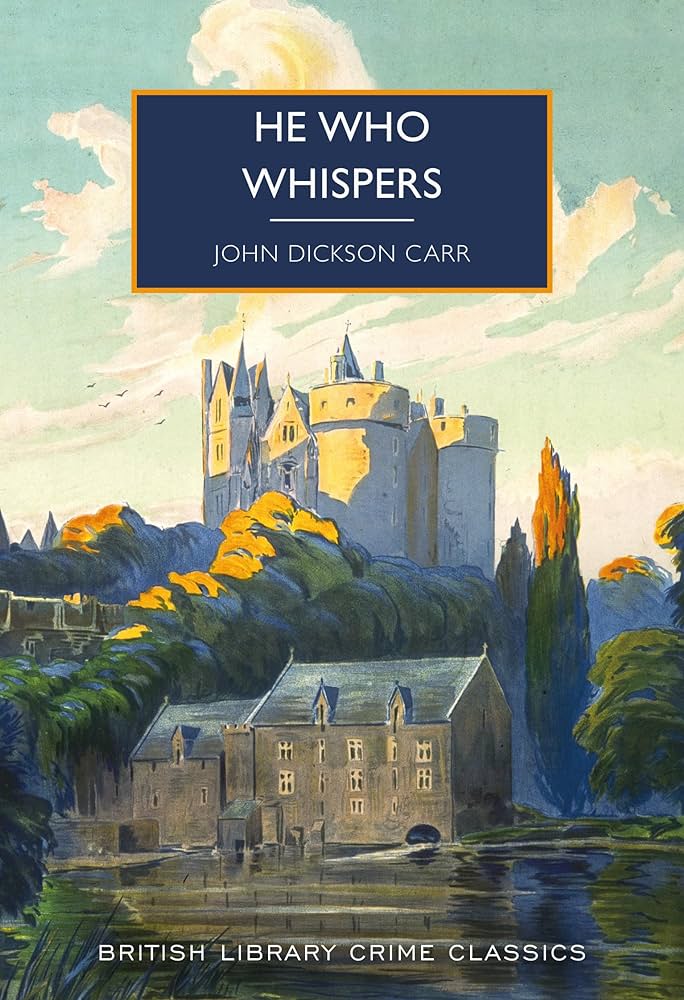
He Who Whispers by John Dickson Carr

He Who Whispers is one of John Dickson Carr’s Dr Gideon Fell mysteries, originally published in 1946 and recently reissued as a British Library Crime Classic. I read another in the series, The Black Spectacles, earlier this year and loved it, so I had high hopes for this one.

The book is set in the aftermath of World War II and is written from the perspective of Miles Hammond, a Nobel Prize winning historian who has just inherited his uncle’s estate, which includes a house in the New Forest containing a large collection of books. As the novel opens, Miles is in London looking for a librarian to assist with his uncle’s collection, and while there he accepts an invitation to attend a meeting of the Murder Club, a group who get together regularly to try to solve true crime cases. On arriving at the venue, Miles is surprised to find that nobody else is there apart from a young woman, Barbara Morrell, and tonight’s speaker, Professor Rigaud.

Despite only having an audience of two, Rigaud proceeds to tell them the story of a crime which took place in France before the war and is both unsolved and seemingly impossible. It involves the murder of a wealthy Englishman, Howard Brooke, found stabbed with his own sword-stick while apparently alone on top of a high tower with witnesses on three sides and the fourth unreachable as it overlooks the river. Fay Seton, Brooke’s secretary, is suspected of the crime for the dubious reason that she is believed to be a vampire – and only a creature that can fly through the air could have reached the top of the tower!

Miles is intrigued by Rigaud’s story and when Fay Seton turns up in London, he offers her the job of librarian so that he can find out more. Heading for his uncle’s house in the New Forest with Fay and his sister Marion, Miles finds that he is becoming increasingly fascinated by the suspected vampire – but when Marion has a terrifying experience while alone upstairs in her bedroom, does this mean Fay has struck again or is there another explanation for the strange occurrences? Luckily, Gideon Fell arrives that same night and begins to investigate!

I enjoyed He Who Whispers, but not nearly as much as I enjoyed The Black Spectacles and I’m not really sure why this particular book is considered one of Carr’s best (apparently even by Carr himself). Yes, the solution is very clever, but I felt that we, the reader, are given very little chance of solving it ourselves, particularly as we don’t really see any of Fell’s thought processes during the novel. He reveals everything in the denouement at the end, but until then we’re as much in the dark as Miles Hammond. There was also too much focus on the vampire storyline for my taste; I thought the mystery was interesting enough without the supernatural element, but I expect other readers will love that aspect of the plot.

Carr captures the feel of post-war Britain very well; a surprising number of 1940s crime novels barely refer to the war at all, but in this one it’s an integral part of the story. Several of the characters in the novel have served in the war, there are mentions of rationing and bombed-out streets and of the effect all of these things have had on people’s mental health. There’s quite a small cast of characters and Carr takes the time to flesh each of them out, but I never really warmed to our protagonist, Miles – he has two possible love interests throughout the novel and although his final decision could have gone either way, I felt that he made the wrong choice in the end!

I want to read more of the Gideon Fell mysteries, so if you’ve read any of them please let me know which ones you particularly enjoyed.

The Ionian Mission by Patrick O’Brian

I’m continuing my very slow journey through Patrick O’Brian’s Aubrey-Maturin series and have now reached book eight, The Ionian Mission. As usual, I seem to have let a gap of about three years go by since reading the previous book, completely unintentionally! Fortunately, I always find it easy enough to get back into the story even after a long break – O’Brian often recaps some of the most important plot points in the first chapter and if not I can refer to the very detailed summaries of each book on Wikipedia to help refresh my memory.

The series is set during the Napoleonic Wars and follows the adventures of Captain Jack Aubrey of the Royal Navy and his close friend, the ship’s surgeon and spy Dr Stephen Maturin. If you haven’t yet read the first seven novels, be aware that the rest of this post could contain spoilers you would prefer to avoid!

The Ionian Mission picks up the story from The Surgeon’s Mate, which ended with Stephen marrying Diana Villiers at sea. They are now at home in London, but although they seem happy with their relationship, it’s certainly not a conventional marriage and the two are already living separately. Anyway, they don’t have long to experience married life before Stephen is off again, accompanying Jack on a mission in the Mediterranean, blockading the French fleet at the port of Toulon. It’s a boring, tedious job and Jack is unimpressed with the ship he has been given, HMS Worcester.

Because of the nature of the blockade duty, there’s a sense that, for a large portion of the book, we and the crew of the Worcester are just passing time, waiting for something to happen. The lack of any real naval action gives O’Brian a chance to explore the various ways the members of the crew attempt to amuse themselves while at sea, such as rehearsing an oratorio, holding a poetry contest and trying to stage a performance of Hamlet. However, none of this made for particularly gripping reading and I was pleased when the tedium was relieved for a while by Stephen going ashore to carry out his spying duties.

Later in the novel, Jack is transferred to command of his old ship, his beloved HMS Surprise, and is sent on a new mission to the Ionian Islands where he must decide which of three Turkish rulers would prove the strongest ally for Britain in that region of the Mediterranean. I found this part of the book, where political intrigue comes to the forefront, much more interesting and I enjoyed the descriptions of Kutali, the place Britain hopes to use as a naval base. Unfortunately, this all came too late in the book to change my overall impression of it as one of the weaker entries in the series so far. I was also sorry that we saw so little of Diana, after she had played such a big part in the previous few books, and nothing of Jack’s wife and children either.

Although this one hasn’t become a favourite, I’m still looking forward to moving on to book nine, Treason’s Harbour!

This is book 38/50 for the 2023 Historical Fiction Reading Challenge.
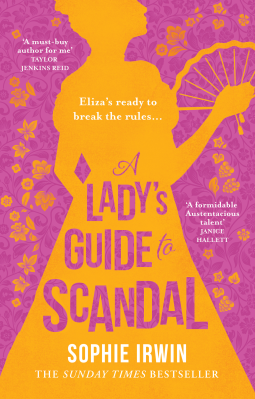
A Lady’s Guide to Scandal by Sophie Irwin

I loved Sophie Irwin’s first novel, A Lady’s Guide to Fortune-Hunting, which I read last year and was looking forward to reading her new one. Despite the similar title, A Lady’s Guide to Scandal is not really a sequel as it features completely different characters, but both books are set in Regency England and I think if you enjoy one of them you’ll probably enjoy the other.

Eliza, Countess of Somerset, has just been widowed at the age of twenty-seven and has inherited her late husband’s fortune – on the condition that she avoids becoming the subject of any scandal. Eliza didn’t love her husband – the man she had really wanted to marry was his nephew, Oliver Courtenay, whom her parents dismissed as unsuitable ten years earlier – but she obediently dresses in black and prepares to observe the traditional period of mourning, living quietly in Bath with her cousin, Margaret. Of course, now that’s she financially independent for the first time in her life, the temptation to go out and enjoy herself is very strong…and grows even stronger with the arrival of the roguish poet Lord Melville and his equally unconventional sister.

As soon as the charismatic Melville appeared on the scene (a character who must surely be inspired by Lord Byron) I thought I knew how the rest of the novel would play out. However, it’s not long before Oliver Courtenay, who has now inherited his uncle’s title of Lord Somerset, also turns up in Bath. It’s clear that Eliza still has feelings for Oliver – maybe even still has hopes of the marriage that was denied them all those years earlier – so the story is not as predictable as it seemed to be at first. I knew which man I wanted Eliza to choose but there are enough twists and turns in the plot that I couldn’t be completely sure she would make the right choice.

Although I found Kitty Talbot in Fortune-Hunting more fun to read about, I did enjoy watching Eliza’s character develop throughout this book. When we first meet her at the reading of her husband’s will, she has spent her whole adult life trying to be a good wife and daughter and conforming to society’s expectations, but through her friendships with Melville and his sister Caroline, she begins to find the courage to make her own decisions and live her life the way she wants to live it. At the same time, her actions are still quite believable within the context of the Regency setting and she doesn’t feel too anachronistically modern. As well as the lively Melvilles, there are lots of strong and memorable secondary characters including Somerset’s awful relatives, who have their eye on Eliza’s fortune, and her cousin Margaret, who becomes involved in a secret romance of her own.

Like the first book, this is very reminiscent of Georgette Heyer’s novels and also has some similarities with the plot of Austen’s Persuasion. However, Irwin does have her own style and is not just imitating other authors. I’ll be looking out for her next book, whether it’s another Lady’s Guide or something else!

Thanks to HarperCollins for providing a copy of this book for review via NetGalley.

This is book 37/50 for the 2023 Historical Fiction Reading Challenge.
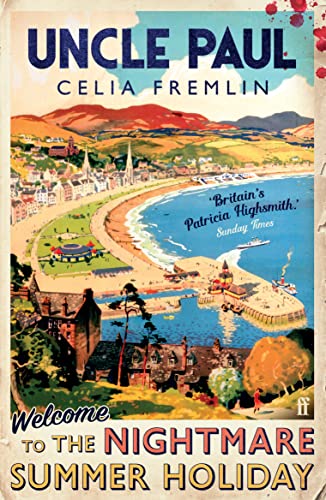
Uncle Paul by Celia Fremlin

I know they say never to judge a book by its cover, but I have to confess, the cover is what made me want to read this book before I even knew what it was about! Luckily, the story lived up to the cover and you can expect to see Uncle Paul on my books of the year list in December, without a doubt.

First published in 1959, this is a recent reissue by Faber. It’s Celia Fremlin’s second novel but the first I’ve read and I was delighted to find that she wrote fifteen more. If any of them are even half as good as this one then I have some great reading ahead of me!

Uncle Paul is written from the perspective of Meg, the youngest of three sisters but in many ways the most mature. She is leading her own independent life in London with a job, a flat and a new boyfriend, Freddy, a pianist who is both charming and secretive. The novel opens with Meg receiving a telegram from her older sister Isabel, who is spending the summer holidays in a caravan at the seaside with her family. Isabel is concerned about their half-sister Mildred, who is twenty years older and helped to bring them up as children. Mildred has left her husband and come to stay at a nearby cottage – the same cottage where she spent her honeymoon with her first husband, Paul, fifteen years earlier.

Meg and Isabel had been very young at the time of Mildred’s marriage to Paul – they knew him as ‘Uncle Paul’ – but they remember the scandal that occurred when it emerged that he was guilty of both bigamy and attempted murder. Paul was given a long prison sentence after Mildred went to the police, but she is convinced that he has now been released and is coming to take his revenge. Believing that her sisters are panicking about nothing, Meg sets off for the coast intending to tell them to stop being foolish, but when she finds herself spending the night at Mildred’s cottage listening to footsteps moving around in the dark she begins to wonder whether Uncle Paul really has come back after all.

Uncle Paul is an excellent psychological thriller, but I think what I actually loved most about it was the setting – the portrayal of a typical British seaside holiday in the 1950s. Fremlin does a great job of bringing to life Isabel’s rickety caravan, trips to the beach and walks along the pier, the challenges of keeping children amused on a wet day and the friendships that inevitably begin to form with the other guests – in this case, the gallant old Captain Cockerill and a mother with her son, Cedric, an irritating little boy who thinks he knows everything (and often does). The characters are all very well drawn, even the minor ones like these, but I found the three sisters particularly interesting, with their very different personalities: the sensible, level-headed Meg who, despite being the youngest, is the one the others rely on to take control of every situation; the rich, dramatic and often irrational Mildred (her decision to stay on her own in an isolated cottage where she could easily be found by Paul being one example of her illogical behaviour); and the nervous, anxious Isabel, the sort of person who worries about anything and everything.

The psychological elements of the story are very well done, so that we can never be quite sure whether the strange occurrences and the noises in the middle of the night are real or just a figment of our characters’ imaginations. Even when one alarming incident is proven to have an innocent explanation, the suspense begins to build all over again, convincing us that this time Meg and her sisters really are in danger! Similarly, Fremlin creates enough mystery around the characters of Isabel’s husband and Meg’s boyfriend that neither we nor Isabel and Meg themselves know whether they really are who they claim to be.

Having been kept guessing all the way through this wonderful novel, I found the ending both unexpected and clever. Definitely one of my favourite books of the year so far and I can’t wait to try another one by Celia Fremlin.

A Song for Summer by Eva Ibbotson

Before summer draws to an end (not that it’s been much of a summer here anyway – I started writing this during a thunderstorm), I decided to read the appropriately titled A Song for Summer, Eva Ibbotson’s last adult novel, first published in 1997. It has more recently been reissued and remarketed for a YA audience but, like Ibbotson’s The Secret Countess and The Morning Gift, I think it’s a book that could be equally enjoyed by both adults and young adults.

Ellen Carr is the daughter of a suffragette and a solicitor who was killed during World War I. Raised by her mother and two aunts, also former suffragettes, Ellen is expected to go to university and then pursue a suitably impressive career – a politician, perhaps, or the first female President of the Royal Academy. However, it quickly becomes obvious that Ellen’s talents and ambitions lie in another direction. What she really wants to do is cook and clean, so she heads for Austria to take up a position as housekeeper at the experimental Schloss Hallendorf School.

As Ellen tries to settle into her new job and home in the beautiful Austrian countryside, she discovers that the school is not the idyllic place she had hoped it would be. There are lots of eccentric misfits among the staff, as well as several troubled children with difficult family lives whose parents have either sent them to boarding school because they don’t have time for them or because they’re not able to care for them. With her warm, maternal nature, Ellen sets out to solve everyone’s problems and bring some happiness to Schloss Hallendorf.

Although this book was published in 1997, Ellen is not really what you could describe as a ‘modern’ heroine. She rejects a university education and the chance to be a pioneer for women’s rights like her mother and aunts because she prefers to bake and sew and clean. There’s nothing wrong with that, of course, as long as it’s a woman’s own choice rather than something she feels is her duty, but not many of today’s historical fiction authors would choose to write about a woman like Ellen and this book does at times feel more like one written in the 1930s, when it is set, than in the 1990s.

There’s a love interest for Ellen, in the form of the Czech gardener and fencing teacher, Marek Tarnowsky. As we discover early in the novel, there’s a lot more to Marek than meets the eye; not only is he a talented composer and conductor, he is also working undercover to help Jews flee the Nazi regime. The story of Ellen’s domestic life at Hallendorf is interspersed with accounts of some of Marek’s missions, including a daring attempt to rescue his best friend, a Jewish violinist, and eventually Ellen also becomes involved in helping him. However, although I’m sure we are all supposed to love Marek as much as Ellen does, I never really warmed to him and this took away some of the emotional impact of the story.

Although I liked this book, mainly for its portrayal of Austria on the brink of war, I found it the weakest of the four Ibbotson novels I’ve read so far (my favourite is probably Madensky Square). I’ll continue to read her books and hope that I’ll enjoy the next one I read more than this one.

This is book 15/20 of my 20 Books of Summer 2023

This is book 36/50 for the 2023 Historical Fiction Reading Challenge.

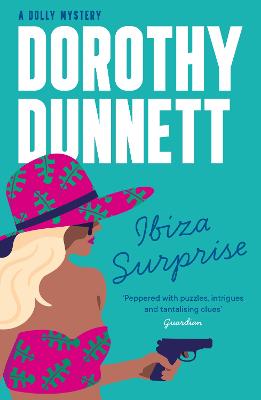
Ibiza Surprise by Dorothy Dunnett

Today (25th August) marks the centenary of one of my favourite authors, Dorothy Dunnett, and to celebrate I decided to read her 1970 mystery novel Ibiza Surprise, which has recently been released in a new edition by Farrago Books. Although Dunnett is better known for her historical novels (The Lymond Chronicles, the House of Niccolò series and King Hereafter, all of which I highly recommend), she also wrote seven of these contemporary mysteries featuring the portrait painter Johnson Johnson and his yacht, Dolly. The original title of this one was Dolly and the Cookie Bird and in the US, Murder in the Round.

Each book in the series is set in a different part of the world and narrated by a different young female protagonist. The narrator this time is Sarah Cassells, the twenty-year-old daughter of Lord Forsey of Pinner, who has been training as a cook since leaving school. Despite her father’s title, he is not a rich man and Sarah is earning a living by providing catering for private parties. When she hears that Lord Forsey has been found dead in an Ibiza boatyard, apparently having committed suicide, she refuses to accept that her father has killed himself. Suspecting murder, she sets off for Ibiza, where she hopes to uncover the truth.

Staying with the wealthy family of a school friend, Sarah finds herself doing the catering while also investigating her father’s death – and at the same time, looking out for a potential future husband. This last task could be easier than expected, as within hours of landing she becomes surrounded by eligible men. However, it appears that at least one of these men may not be all he seems – but which of them can and cannot be trusted?

From a mystery perspective I enjoyed this book more than the previous two – Tropical Issue and Rum Affair – because I found the plot easier to follow. I didn’t solve it all myself, though, and had to wait until the end for everything to be revealed. Sarah is not a character I could particularly like or identify with, but Dunnett perfectly captures her personality through her narrative style: an intelligent but frivolous young woman interested in men, parties, clothes and having a good time. Ibiza, of course, is an ideal place for Sarah to indulge her interest in those things, although I expect it was not quite the same there in 1970 as it is today! Away from the social whirl, there are also some lovely descriptions of the scenery, as well as some insights into the cultural side of life on the island.

We still don’t know a lot about the curiously named Johnson Johnson, apart from the fact that he’s a secret agent of some sort. He is on the peripherals of this particular mystery, although there’s obviously a lot going on behind the scenes that we don’t see. In this series, Dunnett employs the same literary device as in her other books, allowing us to see her heroes only (or mainly) through the eyes of other characters, which leaves a lot open to misinterpretation.

I will get to the other four Johnson mysteries eventually, beginning with the next one, Operation Nassau, which has also just been reissued. Meanwhile, if you think Dunnett’s historical novels could be more to your taste, here’s a post I put together for my Historical Musings series a few years ago on Reading Dorothy Dunnett – and just for fun on what would have been her 100th birthday, some Lines from Lymond!