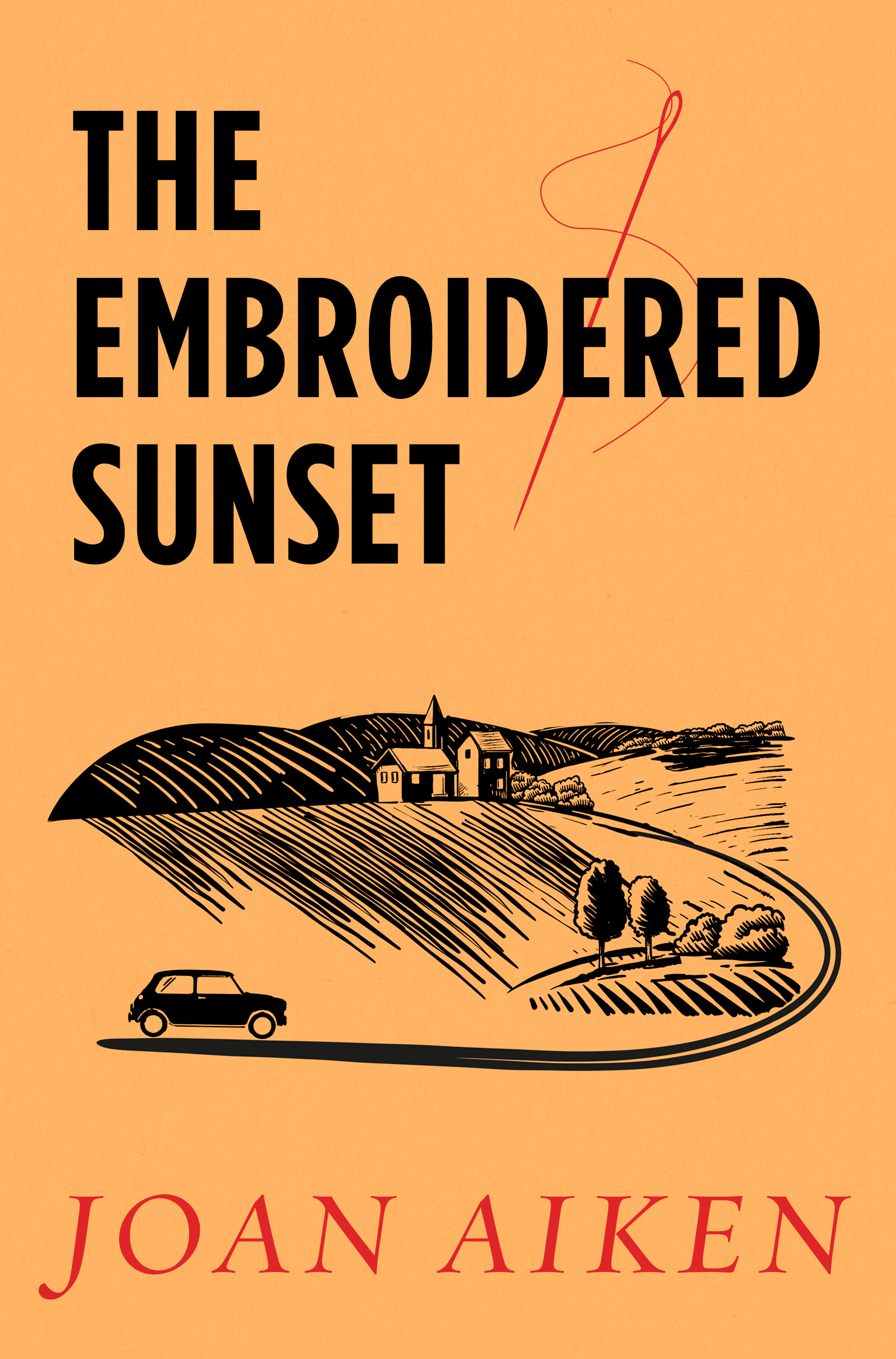
The Embroidered Sunset by Joan Aiken

This is the second of Joan Aiken’s contemporary suspense novels I’ve read; I enjoyed The Butterfly Picnic which I read last year, but I found the plot very bizarre and I was curious to see whether this one would be the same. Well, I can tell you that it’s maybe not quite as over-the-top, but it does come close!

First published in 1970, The Embroidered Sunset begins by introducing us to Lucy Culpepper, a young Englishwoman who has been raised in America by her Uncle Wilbie and Aunt Rose following her parents’ deaths. Lucy is a talented musician who dreams of being taught by the renowned pianist Max Benovek, but her hopes are shattered when Uncle Wilbie confesses that he has spent her inheritance and there’s no money left to pay a piano teacher.

Cleaning the attic later that day, Lucy discovers some beautiful embroidered biblical pictures, the work of Wilbie’s Aunt Fennel who lives in England and used to write regularly, but hasn’t been heard from for a long time. Reminded of the pictures, Wilbie comes up with a plan: if Lucy goes to England and obtains more of Aunt Fennel’s pictures, he will pay her a commission for each one she locates and she can spend the money on piano lessons. While there, she can also try to find Aunt Fennel herself – if the old lady is still alive, that is.

If The Butterfly Picnic felt like a homage to Mary Stewart, this one is packed with references to the Brontës. As well as being set in Yorkshire, there’s a Thrushcross Grange and a Wildfell Hall and even a Colonel Linton and a Cathy Earnshaw, while another character refers to Lucy as Lucy Snowe, the heroine of Villette. However, that’s where the Brontë similarities end; this book has a lively, contemporary feel (for 1970) and while there are some elements that could probably be described as Gothic – an abandoned house, an escaped prisoner, rainy weather – they are woven very lightly into the plot.

I really enjoyed the first half of the novel, with Lucy arriving in Aunt Fennel’s small Yorkshire village, getting to know the eccentric residents and searching for her missing relative. When Lucy does eventually find the old lady, she can’t even be sure whether she really is Aunt Fennel or somebody else, and Aiken keeps us questioning this for the entire book, in a way that I thought was very cleverly done. I felt that the plot lost its way slightly in the second half and the ending seemed to come out of nowhere, with a very surprising fate for one main character and a romance that certainly wasn’t resolved as I’d expected. Still, this is an entertaining novel and perfect escapism, if that’s what you’re looking for!

My favourite Aiken novel so far is still Castle Barebane, but I’ll continue to explore her other books and am hoping to read The Wolves of Willoughby Chase soon.

This is book 3/20 of my 20 Books of Summer 2023
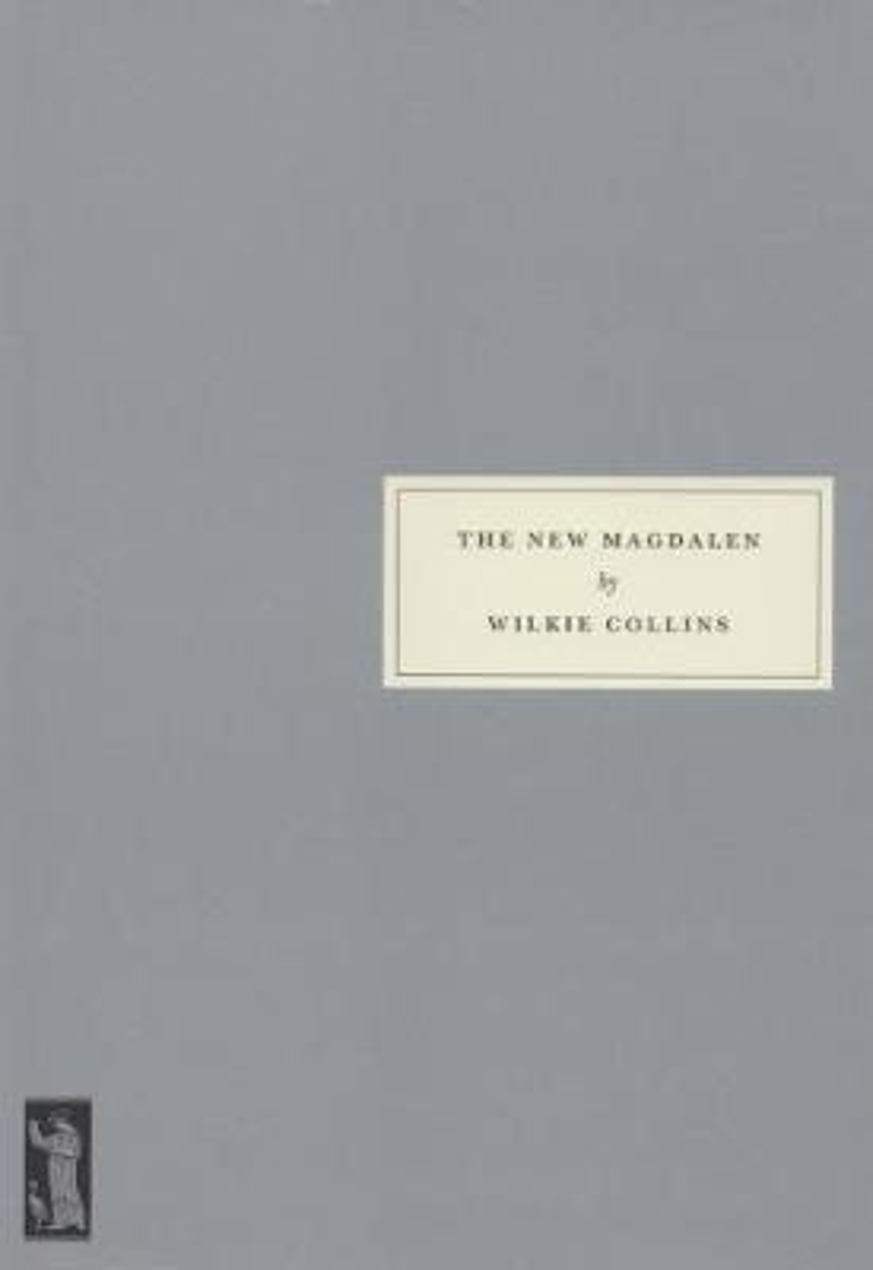
The New Magdalen by Wilkie Collins

Wilkie Collins is one of my favourite Victorian authors, but I feel that I haven’t featured him very often on my blog – probably because I read so many of his books pre-blog, including all of his most famous ones (and I don’t re-read very often these days). Even so, there are still some that I haven’t read yet and I was intrigued when I noticed a few years ago that The New Magdalen was being reprinted by Persephone Books, as they’re a publisher associated more with women authors (although there are a small number of Persephones by male authors as well). It has taken me a while to get round to reading it, so I decided to put it on my 20 Books of Summer list to make sure it didn’t linger on my TBR any longer.

First published in 1873, the novel opens during the Franco-Prussian War in a small cottage in France where Mercy Merrick is working as a Red Cross nurse. As the Germany army draws closer, Mercy has taken shelter in the cottage to nurse some wounded French soldiers and has been joined by another young woman, Grace Roseberry. Grace is on her way to England following the death of her father in Rome; she has spent most of her life in Canada and doesn’t know anybody in England, but she is carrying a letter of introduction from her father to a Lady Janet Roy, a wealthy woman whom she hopes will employ her as a lady’s companion. Grace shares this information with Mercy, who in turn tells Grace her own story – that she is a ‘fallen woman’ who has had a difficult past, eventually ending up in a women’s refuge before volunteering as a nurse.

As the two women talk, the cottage suddenly comes under fire from the advancing army and receives a direct hit from a shell. Grace is badly wounded and is declared dead by a French surgeon. Finding herself alone with Grace’s lifeless body, it occurs to Mercy that she could take Grace’s papers, dress herself in Grace’s clothes and present herself to Lady Janet Roy under the name Grace Roseberry. Desperate to escape from her own troubled past and start a new life, Mercy is unable to resist the temptation and goes through with the plan. It proves to be a huge success and soon Mercy is living as Lady Janet’s adopted daughter and even receives a marriage proposal. Before the marriage can take place, however, Mercy makes a shocking discovery – it seems that the real Grace Roseberry may still be alive and looking for revenge!

Wilkie Collins was known for his sensation novels, a genre that takes elements of Gothic melodrama and places them in an ordinary, often domestic setting. His books typically feature family secrets, disputed inheritances, intercepted letters, stolen jewels, mistaken identities and amazing coincidences. The New Magdalen is less sensational than some of his others, but still falls firmly into the genre so you can expect a very entertaining novel. I’ve always found Collins’ writing to be the most readable of all the Victorians and that, in addition to this being a relatively short book for a 19th century classic, makes it a gripping and surprisingly quick read.

I can see why Persephone chose to add this book to their collection as Collins does write such strong and sympathetic female characters and with Mercy’s story he highlights some of the injustices women faced in Victorian society (and in some ways still do today). I think my favourite Collins novels will always be The Woman in White and Armadale, but this is still a great book and would probably be a good introduction to his work if you didn’t want to commit to a longer one.

This is book 2/20 of my 20 Books of Summer 2023 and book 40/50 from my second Classics Club list.
The Other Side of Mrs Wood by Lucy Barker

Mrs Wood is the most successful medium in Victorian London. Together with her assistant, Miss Newman, she hosts spectacular séances that have made her the talk of the town and brought the rich and famous to her door requesting private consultations. Of course, Mrs Wood can’t really communicate with spirits, but she doesn’t feel too guilty about what she’s doing – after all, a widow has to make a living somehow and this is the work she’s been raised to do. Recently, however, things have started going wrong. There are reports from America of mediums promising to materialise full spirits and although Mrs Wood disapproves of such things, she worries that her own more traditional shows are losing their spark. When she hears the unmistakable sound of a yawn during one of her séances, she knows she has to take action.

The answer to Mrs Wood’s problems arrives in the form of sixteen-year-old Emmie Finch, who wants nothing more than to become a medium. Impressed by the girl’s talent and enthusiasm, Mrs Wood agrees to take her on as an apprentice. Miss Finch is an instant hit with Mrs Wood’s friends and clients, but is she really the sweet, innocent young woman she appears to be or has Mrs Wood made a big mistake?

The Other Side of Mrs Wood is Lucy Barker’s debut novel and a very enjoyable one! It took me a few chapters to get into the story as the beginning was quite slow, but by the middle of the book I had been completely drawn in. At first I wasn’t sure whether I liked Mrs Wood, but I quickly warmed to her. It was nice to have an older, more mature heroine, who is starting to worry about greying hair and aching bones, has already been married and divorced before the story begins and is devoting herself to her career rather than looking for romance. The beautiful young Emmie Finch, on the other hand, is portrayed as the novel’s villain, but whether she really is trying to cause trouble or whether it’s all in Mrs Wood’s mind is something you’ll have to read the book to find out!

Apart from a subplot featuring Mrs Wood’s assistant Miss Newman, who is involved in the early women’s rights movement, this is not really a book that tackles a lot of deep issues and I enjoyed it primarily for its entertainment value. However, that doesn’t mean it’s a silly, frothy book in any way – it’s well written, evocative of the Victorian era, and I learned a huge amount about the 19th century fascination with spiritualism. It was interesting to read about the techniques used by mediums to produce dramatic effects, the etiquette of hosting a meeting of the Circle, and the preparations that go into holding a Grand Séance. What I found particularly intriguing was that although Mrs Wood, like her rival mediums, lives in fear of being caught out and exposed, she doesn’t actually view herself as a fraud or a con artist. She believes she is using her skills to bring comfort to other people and although she has no qualms over using trickery to ‘apport’ (transport using spiritual means) small objects and even herself, she feels that materialising full spirits is a step too far!

The Other Side of Mrs Wood was fun to read (except when I became infuriated by the actions of certain characters!) but I can’t agree with the publisher’s description of the book as an ‘irresistible historical comedy’. It was amusing in places but not particularly funny and definitely not what I would call a comedy. Misleading description aside, it’s an impressive first novel with a great twist at the end and I’m already looking forward to Lucy Barker’s next book.

Thanks to Fourth Estate for providing a copy of this book for review via NetGalley.

This is book 25/50 read for the 2023 Historical Fiction Reading Challenge.

The Square of Sevens by Laura Shepherd-Robinson

Laura Shepherd-Robinson’s books are getting better and better! This one will be on my books of the year list in December, without a doubt.

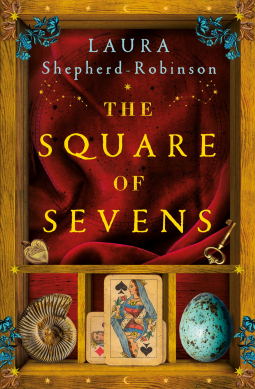
A standalone novel set in the first half of the 18th century, The Square of Sevens is the story of Red, the daughter of a Cornish fortune teller or ‘cunning-man’. Red can’t remember her mother and has spent the first seven years of her life moving from village to village with her father, telling fortunes using an ancient method of cartomancy known as the Square of Sevens. They need to keep on the move, her father says, to avoid being caught by enemies who wish them harm.

Life changes abruptly for Red when her father dies of a sudden illness and she becomes the ward of a respectable gentleman, Mr Antrobus. Going to live with him in his elegant home in Bath, Red finds herself thrust into society for the first time. Raised by Mr Antrobus and his kindly housekeeper, she settles into her new life while entertaining the people of Bath by reading their cards for them. It’s through her gift for card-reading that Red crosses paths with the wealthy De Lacy family, whom she believes hold the key to the secrets of her own past. And so a sequence of events are set in motion that take Red from Bath to London’s Bartholomew Fair and a grand house in Devon in search of answers.

It’s not really possible for me to say much more about the story without spoiling it, but if I tell you it includes family secrets, disputed inheritances, stolen documents, and lots of surprising twists and turns you’ll get the idea! It’s very entertaining, with the feel of a Charles Dickens novel at times, and I was often reminded of Charles Palliser’s The Quincunx (another great Dickensian novel with an inheritance at the heart of the plot).

I found Red a very engaging narrator; I initially had a lot of sympathy for her, as she struggles to uncover the secrets of her family background and find her place in the world, while others around her try to prevent her from learning the truth at all costs. However, I soon discovered that Red can be just as ruthless herself and is not above doing some plotting and scheming of her own in order to get what she wants. As she tells us at one point in the novel, If you’d wanted a saint, then you should have read a different book. There are plenty of other interesting and memorable characters to get to know – I was particularly intrigued by Lazarus Darke – and what makes the book so fascinating to read is that we can never be quite sure who can be trusted and who can’t.

The ‘Square of Sevens’ method of card reading was described in an 1897 book by Edward Irenaeus Stevenson and Shepherd-Robinson incorporates it throughout the novel. Red tells the fortunes of many of the characters she meets and the fortune-telling theme is carried further with each chapter heading including a picture of a playing card and an interpretation of that card’s meaning. Reading the author’s note at the end of the book, a lot of thought went into choosing the correct card for each chapter and I feel a bit guilty that I didn’t always pick up on the significance of that choice.

If you’ve read and enjoyed Laura Shepherd-Robinson’s two previous novels, the Georgian mysteries Blood and Sugar and Daughters of Night, I’m sure you’ll enjoy this book too – I think it’s even better. If you’re yet to try any of her books then this would be a great place to start!

Thanks to Mantle for providing a copy of this book for review via NetGalley.

This is book 24/50 read for the 2023 Historical Fiction Reading Challenge.

Random Harvest by James Hilton

“Sometimes I have a feeling of being — if it isn’t too absurd to say such a thing — of being half somebody else. Some casual little thing — a tune or a scent or a name in a newspaper or a look of something or somebody will remind me, just for a second — and yet I haven’t time to get any grip of what it does remind me of — it’s a sort of wisp of memory that can’t be trapped before it fades away…”

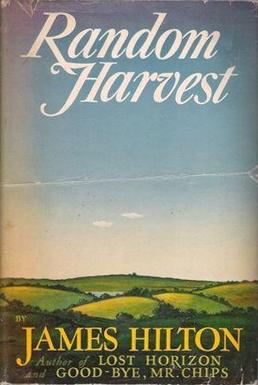
After enjoying Lost Horizon and Goodbye, Mr Chips, I decided that the next James Hilton book I read would be his 1941 novel Random Harvest. I knew very little about it except that it was very popular at the time it was published and that the film starring Greer Garson and Ronald Colman is one of my mother’s favourites. I haven’t seen it, but I think reading the book first was the right decision anyway, for reasons I’ll explain later.

The novel opens in 1937 with our narrator, Mr Harrison, falling into conversation with a stranger, Charles Rainier, whom he meets on a train to London. Rainier is now a successful businessman and politician, but he confesses to Harrison that since returning from fighting in World War I twenty years ago a whole chunk of memory has been lost to him. He remembers being injured in the trenches of France in 1917 and he remembers waking up in Liverpool one day in 1919, but can recall nothing at all of what happened in between – a period of two years which are now a complete blank to him.

When the train arrives at the station, the two men go their separate ways, but their paths soon cross again and Rainier offers Harrison a job as his secretary. As they get to know each other better, Rainier tells his new friend the story of his life since that day in Liverpool and gradually his earlier memories begin to return, with surprising results.

This book wasn’t quite what I’d expected; I thought it was going to be more of a romance, but although it does have a very moving love story at its heart, there’s much more to Random Harvest than that. It can be considered an anti-war novel, with it’s theme of loss that runs through the story from beginning to end – not just the obvious loss of memory, but also lost opportunities, lost or broken relationships, lost innocence and, on a wider scale, a way of life that has been lost forever as the world moves on from one war and heads straight for another:

It all depended whether one were tired or eager after the strain. Most of us were both — tired of the war and everything connected with it, eager to push ahead into something new. We soon stopped hating the Germans, and just as soon we began to laugh at the idea of anyone caring enough about the horrid past to ask us that famous question on the recruiting posters — ‘What did you do in the Great War?’ But even the most cynical of us couldn’t see ahead to a time when the only logical answer to that question would be another one — ‘WHICH Great War?’

The book has an unusual structure, divided into five long sections with no chapter breaks and moving backwards and forwards in time, piecing together Rainier’s memories as they begin to flood back. However, it’s always easy enough to follow what’s happening. The plot never becomes confusing and the story is structured the way it is for a good reason, allowing Hilton to obscure whole episodes in Rainier’s life from the reader and also from Rainier himself until it’s the right time to reveal them. And when the final revelation comes, right at the end of the book, I was taken completely by surprise as I hadn’t seen it coming at all. Apparently the film is structured differently, with the truth obvious from the beginning instead of being saved for the end, which is why I’m so glad I’ve read the book first and could experience everything as Hilton intended it.

This is a great book, possibly even better than Lost Horizon, and I’ll definitely be looking for more by James Hilton.

This is book 39/50 read from my second Classics Club list.

Voices of the Dead by Ambrose Parry

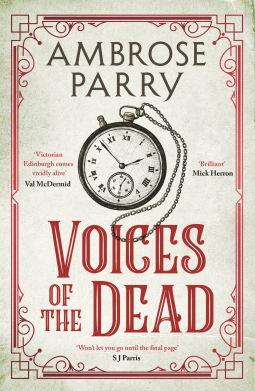
This is the fourth book in Ambrose Parry’s series of crime novels set in the medical world of 19th century Edinburgh – and it’s my favourite so far. Ambrose Parry is a pseudonym of Dr Marisa Haetzman, a consultant anaesthetist, and her husband, the crime author Chris Brookmyre, and they each bring their own set of skills and knowledge to the writing of these books. The series follows Dr Will Raven, assistant to the great Scottish obstetrician James Simpson (a real historical figure), and Sarah Fisher, who dreams of one day becoming a doctor herself, so each book includes a wealth of medical detail as well as a murder mystery to be solved.

In Voices of the Dead, set in 1854, Will is now married with a child and another on the way, but he doesn’t have much time to enjoy being a husband and father – not only is he struggling to move out from under the wing of Dr Simpson and establish his own reputation, he has also become mixed up in yet another murder case. Parts of a dismembered body have been turning up in random places around Edinburgh and Will’s friend, Dr Henry Littlejohn, has asked for his help in identifying the victim.

Meanwhile, Sarah Fisher’s plans to study medicine and follow in the footsteps of Dr Elizabeth Blackwell have had to be put on hold. Disappointed and frustrated, she turns instead to the emerging science of mesmerism, which is beginning to grow in popularity. An American mesmerist has just arrived in Edinburgh and Sarah is keen to learn more about the possible uses of mesmerism in healing patients. Will Raven, however, has a low opinion of such things and, not for the first time, he and Sarah find themselves in conflict. Eventually, however, Sarah is also drawn into the murder investigation and she and Will must work together again to find the culprit.

If you’re new to this series you may be wondering whether you could start here without having read the previous three books. Well, this one does work as a standalone mystery, but I would recommend reading all four in order if you can, starting with The Way of All Flesh. Will and Sarah have a complex relationship – made even more complex by the addition of Will’s wife, Eugenie – and it would be best to get to know them both from the beginning. There are also lots of recurring characters who develop throughout the series; in this book, I particularly enjoyed being reacquainted with Gregor the giant. Like the real life Irishman Charles Byrne (whom I read about recently in Hilary Mantel’s The Giant, O’Brien), Gregor’s size has made him the target of unscrupulous men who hope to acquire his body for exhibition after his death.

As well as the usual details of Will’s work as an obstetrician, I found it fascinating to read about the public displays of mesmerism, hypnotism and spiritualism being staged across Edinburgh and the differing views people held towards them. Were the mesmerists and spiritualists really just frauds preying on gullible victims, as Will believed, or were they acting with the best intentions, trying to provide comfort to people who needed it? This storyline introduces some colourful new characters, including a magician of whom I became quite fond and am hoping we’ll meet again.

Every book in this series has been very enjoyable, but I think this one is the best yet. I’m looking forward to the next one and hope we won’t have to wait too long for it!

Thanks to Canongate for providing a copy of this book for review via NetGalley.

This is book 23/50 read for the 2023 Historical Fiction Reading Challenge.

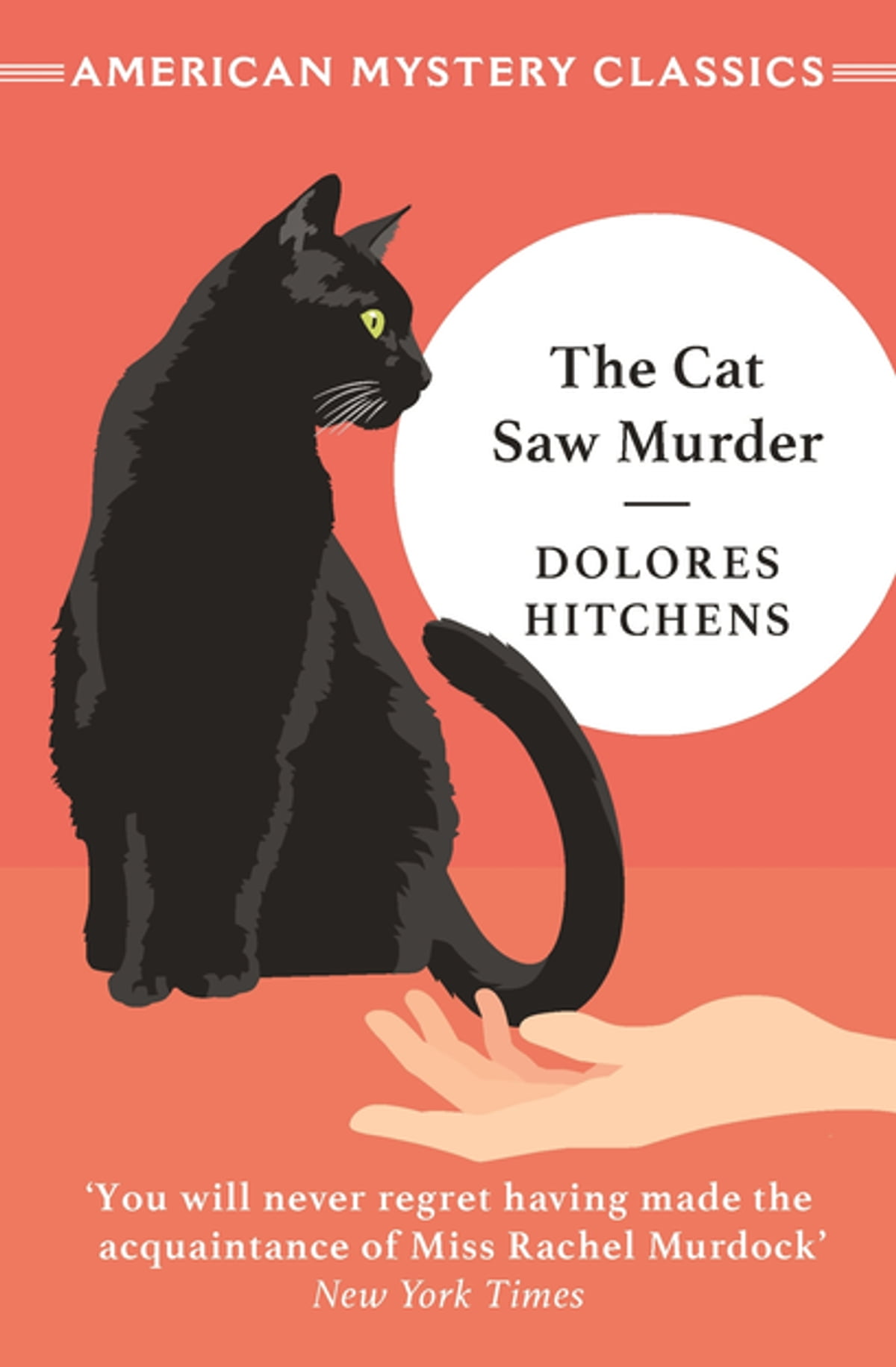
The Cat Saw Murder by Dolores Hitchens

This week, Mallika of Literary Potpourri is hosting Reading the Meow, a celebration of books featuring cats. When this event was first announced, I wasn’t sure if I had anything suitable; The Life and Opinions of the Tomcat Murr by ETA Hoffmann would have been perfect, if I hadn’t just read it last year. Then I came across a whole series of books with cats in them (or in the titles, at least): Dolores Hitchens’ Rachel Murdock mysteries, some of which have now been reissued as part of the American Mystery Classics imprint. The Cat Saw Murder, originally published in 1939, is the first and I hoped it would be a good choice for Reading the Meow.

The novel begins with elderly Miss Rachel Murdock going to stay with her adopted niece, Lily Sticklemann, who lives at Breakers Beach near Los Angeles. Lily has hinted that she’s in trouble and needs advice, so Miss Rachel has packed her case and set off by train to see if she can help. Her less adventurous sister Jennifer has stayed behind, but Miss Rachel is accompanied by Samantha, the black cat who once belonged to their other sister, Agatha. Agatha was an eccentric woman and on her death she left her fortune to the cat, meaning that Samantha is now a wealthy heiress in her own right. After meeting Lily and discovering that she is having financial difficulties, Miss Rachel becomes concerned for Samantha’s safety, suspecting that Lily has her eye on the cat’s inheritance. However, Lily herself is the one who is murdered – and it seems that Samantha may have been a witness.

There are plenty of suspects – Lily lives in a boarding house, Surf House, and is murdered in her bedroom, which means all of the other residents of the building immediately come under suspicion. Several also have a motive for the crime, as Lily owes gambling debts to some of them and is thought to have been romantically involved with another. Although this is not a locked-room mystery exactly (we know that the bedroom door opens and closes more than once during the night of the murder), it does share many elements of that kind of mystery, but thankfully never becomes too concerned with the puzzle-solving aspects at the expense of the characters and motives.

Miss Rachel is a great character; I found her very endearing and quite similar to Agatha Christie’s Miss Marple in many ways, although she’s more agile and energetic for her age than Miss Marple is and spends a portion of the book searching rooms and crawling around in the attic. She has a good relationship with the detective investigating the murder, Lieutenant Mayhew, and they both contribute, in their different ways, to the solving of the mystery.

The plot feels slightly disjointed at times and there are some confusing shifts between past and present tense (the book seems to be narrated by someone at an unspecified future date looking back on Mayhew and Miss Rachel’s first case), but otherwise I really enjoyed this book and it did turn out to be a good choice for Reading the Meow. Samantha the cat, although not the main focus of the story, does have a substantial part to play and provides some intriguing clues. The second book in the series is The Alarm of the Black Cat and I think I’ll be tempted to read it soon!

This is book 1/20 of my 20 Books of Summer 2023