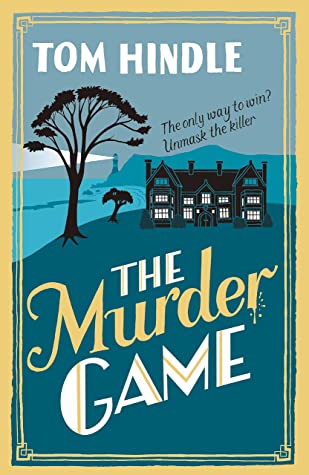
The Murder Game by Tom Hindle

I loved Tom Hindle’s first novel, A Fatal Crossing, a mystery set on a cruise ship in the 1930s, so I was excited about his new book, The Murder Game. I was expecting something similar – another historical mystery written in the style of the Golden Age – but was surprised to find that this one has a contemporary setting, although still with many of the tropes of a classic crime novel.

In The Murder Game, a group of people have assembled for a New Year’s Eve murder mystery evening at Hamlet Hall, a hotel in the small seaside town of Hamlet Wick. The arrangements are all in place – a fictional murder has been invented, roles have been assigned to each of the guests and actors have been brought in to play the supporting characters – but before the game can even begin, a real murder takes place at Hamlet Hall.

There’s no shortage of suspects; the victim was not a popular person and most of the others have a motive for the murder. PC Fay arrives on the scene and begins to investigate, hoping to solve the mystery herself to further her career, but her progress is slow and in the meantime tensions are increasing between the guests, actors and hotel staff. The atmosphere grows more hostile as they argue about a controversial project to renovate the local lighthouse – the site of a tragic accident several years earlier – and with no phone signal and everyone forbidden to leave the hotel, the residents of Hamlet Hall could find themselves in danger if the killer decides to strike again.

The Murder Game got off to a good start, but it didn’t really sustain my interest all the way through and I found it less enjoyable than A Fatal Crossing. I had loved the idea of a novel set during a murder mystery evening and was disappointed that the game never had time to begin before the real murder took place! The group of people gathered at the hotel for the evening are an unpleasant bunch, but that’s nothing unusual in this sort of novel – however, I felt that the story moved from one character’s perspective to another so often that I didn’t have a chance to get to know any of them very well.

The plot is quite complex and centres around two previous cases of people being killed under suspicious circumstances in Hamlet Wick. After we unravel the truth about those two deaths, which took place years before the novel begins, the events of the present day begin to make more sense – although I had already guessed who the culprit was, having picked up on one or two clues. I don’t often solve mysteries correctly, so it was nice to see that I had got it right for once! I couldn’t really see the point of the police officer character, though, as she seemed to have little impact on the story and we aren’t given much insight into her thought processes so can’t try to solve the murder along with her.

I found parts of the novel entertaining but my expectations were probably too high after enjoying A Fatal Crossing so much. I’ll still be looking out for a third novel from Tom Hindle and will be interested to see what setting he chooses next.

Thanks to Century for providing a copy of this book for review via NetGalley.
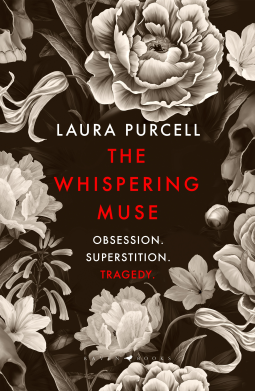
The Whispering Muse by Laura Purcell

This is the second book I’ve read by Laura Purcell; I liked, but didn’t love, the first one I read, Bone China, so was hoping for better things from this one. It certainly sounded good – a Gothic novel set in the theatres of Victorian London – and I wasn’t disappointed at all. I was gripped from start to finish!

Our narrator is Jenny Wilcox, a young woman who has been left to support herself and her younger siblings after her brother Gregory ran off to America with an actress, taking the family savings with him. Jenny is deeply grateful when Gregory’s former employer, Mrs Dyer of the Mercury Theatre, offers her a job as dresser to the new leading lady, Lilith Erikson. Before she even begins work, however, Jenny discovers that Mrs Dyer has not just offered her the position out of kindness – she believes that her husband is having an affair with Lilith and she wants Jenny to spy on them.

At first, Jenny shares Mrs Dyer’s dislike of Lilith, but gradually she becomes concerned about the behaviour of the beautiful young actress. Why is she so obsessed with a watch engraved with the face of Melpomene, Muse of Tragedy – a watch that once belonged to the actor Eugene Grieves, who died on stage while performing Dr Faustus? Could Lilith have formed some sort of pact with Melpomene, to help her achieve her dream of becoming London’s greatest tragic actress? And if so, what will Melpomene demand in return?

The Whispering Muse is divided into five acts, mirroring the five tragedies performed by the Mercury Theatre Company over the course of the novel, beginning with Macbeth. Theatrical settings are usually atmospheric and this one is no exception! I loved the insights we are given into what goes on behind the scenes and the descriptions of Lilith’s powerful stage performances are so vivid I could almost imagine I was watching them from a seat in the front row. The book is wonderfully creepy in places – and a bit gory in others, although not excessively so. What makes it so compelling is that we’re never quite sure whether Lilith really has made a pact with her muse and supernatural forces are at work within the Mercury Theatre or whether the strange events that begin to take place have a more human explanation.

As well as enjoying the fascinating plot, I also found it interesting to see how Jenny’s relationships with the other characters change over the course of the novel. Although I didn’t always agree with Jenny’s decisions, I had some sympathy for her situation – she needs to keep Mrs Dyer happy in order to stay in her job and earn money to support her younger brothers and sister, but the closer she becomes to Lilith the more she starts to feel that Mrs Dyer’s hatred of the actress is unreasonable and the more her conscience begins to bother her. The dynamics between these three characters add extra depth to the story and make it something special. I loved it and look forward to reading Laura Purcell’s other books!

Thanks to Raven Books for providing a copy of this book for review via NetGalley.
This is book 5/50 read for the 2023 Historical Fiction Reading Challenge.

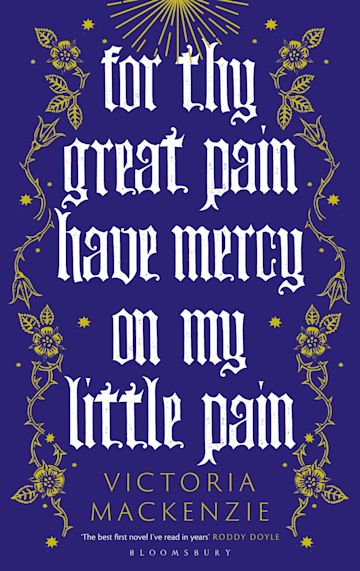
For Thy Great Pain Have Mercy on My Little Pain by Victoria MacKenzie

I had thought I was ready for the life of an anchoress. I had wanted to prolong each moment of my life, to get closer to experiencing time as God experiences it: not the instantly dissolving moment, but something larger and more encompassing. A stillness that doesn’t pass as soon as you think yourself into it.

Victoria MacKenzie’s new novella, For Thy Great Pain Have Mercy on My Little Pain, is set in Norfolk in 1413 and imagines a meeting between two real-life women: Julian of Norwich and Margery Kempe. If these names are familiar to you, you’ll know that they were both English mystics of the medieval period and were also both authors. Julian’s Revelations of Divine Love is thought to be the first English work we can be sure was written by a woman, while Margery’s The Book of Margery Kempe is considered to be the first autobiography in the English language.

The stories of the two women only converge towards the end of the book in a meeting which did take place according to Margery herself in The Book of Margery Kempe, but maybe not exactly as it is described here. Victoria MacKenzie recreates the events leading up to their encounter and the sort of conversation they may have had, but before reaching that point she explores the backgrounds of both women, with the perspective alternating between Margery and Julian as they follow very different paths through life.

Little is known of the real Julian’s early life, but MacKenzie suggests here that she may have lost her family to an outbreak of plague and that this, along with an illness during which she experienced visions or ‘shewings’ of Christ, influenced her decision to become an anchoress, secluded in a cell for twenty-three years. Margery, in contrast, doesn’t lock herself away, but remains in the secular world, a wife and mother of fourteen. Like Julian, she begins to have religious visions, but while Julian’s faith is personal and private, Margery prays, weeps and preaches in public, drawing attention to herself and leading to accusations of heresy.

This is Victoria MacKenzie’s debut novel and I admire her for writing something so unusual and original, but although I did like it, I couldn’t quite manage to love it. I found the structure and pacing very unbalanced, with the first section, telling the two separate tales in parallel, being by far the longest and the actual meeting at Julian’s cell being dealt with in just a few pages near the end. Maybe if I was a more religious person myself I would have appreciated this book more, but I could still find a lot to interest me in this story of two medieval women whose different personalities and different journeys through life shape the nature of their relationships with God and each other.

Thanks to Bloomsbury Publishing for providing a copy of this book for review via NetGalley.
This is book 4/50 read for the 2023 Historical Fiction Reading Challenge.

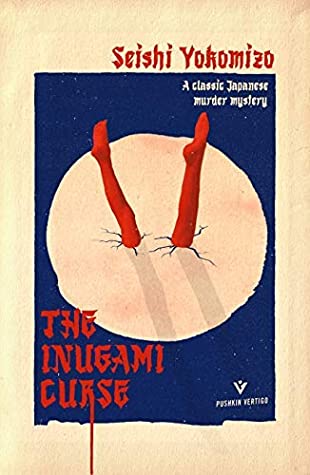
The Inugami Curse by Seishi Yokomizo

Translated by Yumiko Yamazaki

My choice for this year’s Japanese Literature Challenge (hosted by Dolce Bellezza) was easy as I only had one unread Japanese novel on my TBR. The Inugami Curse is one of a series of detective novels by Yokomizo that I’ve been enjoying over the last few years since discovering that they were being released in English translations by Pushkin Vertigo. This book was originally published in 1951 and features the private detective Kosuke Kindaichi. It’s the fourth in the series that I’ve read and one of my favourites – it’s certainly stronger than Death on Gokumon Island and The Village of Eight Graves and maybe even better than The Honjin Murders.

The Inugami Curse is set in the 1940s in post-war Japan. Kosuke Kindaichi, our unassuming, stuttering, head-scratching detective, has been summoned to the lakeside town of Nasu by the lawyer of a wealthy businessman who has recently died. The will is about to be read and the lawyer is afraid that it will cause trouble amongst the heirs. Already one of the young women who is set to benefit has been the target of several suspicious ‘accidents’ and things seem likely to get worse once the full conditions of the will become clear.

The dead man, Sahei, was the head of the Inugami family and as his children, grandchildren and other members of the household gather at the family home for the reading of the will, Kindaichi discovers that Mr Wakabayashi, the lawyer who had requested his presence, has been found dead after smoking a poisoned cigarette. This is only the first of several murders because, as Wakabayashi had predicted, Sahei’s fiendishly clever will sets the family members against each other. But which of them is prepared to kill to get what they think they deserve? There is one obvious suspect – Sahei’s eldest grandson, Kiyo, was repatriated from Burma just a few days earlier and has returned to the Inugami home with his face hidden by a mask, having been severely wounded in the war. Is it really Kiyo behind the mask? Kindaichi is sure that if he can establish the identity of the masked man, he will hold the key to the mystery.

This is a very enjoyable novel and unlike some of the other Japanese mysteries I’ve read, which are excessively puzzle-orientated, this one focuses as much on characters, motives and family secrets as it does on the methods behind the crimes. However, those methods are still very clever. Yokomizo is quite fair with the reader – the clues are there and it’s possible to work out parts of the solution – but I doubt anybody would be able to deduce exactly how each of the murders were committed. I was happy to wait for Kosuke Kindaichi to explain everything at the end! The murders themselves are bizarre and often gruesome – this book is definitely more graphic and more macabre than most British detective novels from that period – but also dramatic and filled with symbolism.

As well as the entertaining plot, the book touches on various aspects of Japanese culture and history, portraying a country in the aftermath of war, with many families like the Inugamis awaiting the repatriation of the Japanese soldiers. There are also descriptions of koto (zither) music and displays of chrysanthemum dolls. With each book in this series I feel I’m learning a little bit more about Japan. I can’t wait to read The Devil’s Flute Murders, another Kindaichi mystery being published in English later this year.

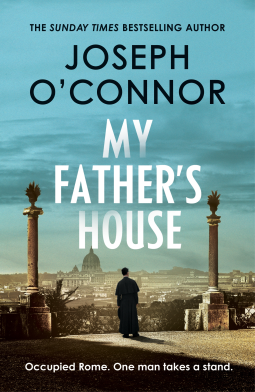
My Father’s House by Joseph O’Connor

Joseph O’Connor’s new novel My Father’s House, published in the UK today, is based on the true story of Hugh O’Flaherty, a Catholic priest who helped thousands of Jews and Allied prisoners of war to escape from Italy during World War II. This is the third book I’ve read by O’Connor (the others are Shadowplay, about the author Bram Stoker and the actors Henry Irving and Ellen Terry, and Ghost Light, which explores the relationship between the playwright John Millington Synge and the actress Molly Allgood) and I think it’s the best of the three.

The main part of the novel is set in 1943. Born and raised in Ireland, Monsignor Hugh O’Flaherty is serving in Vatican City during the war – a neutral territory within Nazi-occupied Rome. As an official Vatican visitor to Italy’s prisoner of war camps, Hugh has been trying to improve conditions for the prisoners, but his actions mark him out as an Allied sympathiser and his superiors prevent him from carrying out any more visits in case he makes the Vatican a Nazi target. However, Hugh won’t be stopped that easily and soon he has set up an Escape Line, successfully smuggling Jews and escaped prisoners out of Rome right under the eyes of the Nazis.

The biggest escape mission yet – the ‘Rendimento’ – has been arranged for Christmas Eve, 1943. In the hope that the Gestapo will be less vigilant on this particular night, Hugh and his group of courageous volunteers have put elaborate plans in place to move a large number of people out of the city under the cover of darkness. As we count down the days and hours leading up to the mission, we also get to know each member of Hugh’s team and how they came to be involved in the Escape Line.

The group use the cover of meeting for ‘choir practice’ and this is where they discuss their plans and receive their instructions – carefully coded, of course, as the Nazis have eyes and ears everywhere. One Nazi in particular is getting too close for comfort; he is Obersturmbannführer Paul Hauptmann, who already has his eye on Hugh due to the camp visits and is starting to close in on the Choir and the Rendimento. But although Hauptmann is our villain, O’Connor gives him a surprising amount of depth, describing his home life and his relationship with his wife and children. This reminder that Nazi officers were often also family men leading normal domestic lives just makes Hauptmann’s behaviour feel even more chilling and shocking.

As the clock ticks down on Christmas Eve, the suspense increases as we are kept wondering whether the mission will succeed. However, the chapters describing the build-up to the Rendimento are interspersed with other chapters in which each member of the Choir introduces themselves and their background and tells us how they met Hugh and joined his group. I wasn’t very keen on this structure as I felt that it broke the flow of the story and took away some of the tension, but it was still interesting to hear their different voices (some of which I found more convincingly written than others). They included Sir D’Arcy Osborne, the British envoy to the Holy See, and his butler John May, diplomat’s wife Delia Kiernan, and escaped soldier Sam Derry – all of whom were real people.

I had never read anything about Hugh O’Flaherty and his work until now, so I’m pleased to have had the chance to learn something new. I see he was the subject of a 1983 film, The Scarlet and the Black, starring Gregory Peck, which I’ve never come across either. Although My Father’s House is a complete novel in itself, it’s apparently the first in an Escape Line trilogy – I’ll be looking out for the next one and will be interested to see if it’s going to focus on a different member of the group this time.

Thanks to Harvill Secker for providing a copy of this book for review via NetGalley.
This is book 3/50 read for the 2023 Historical Fiction Reading Challenge.

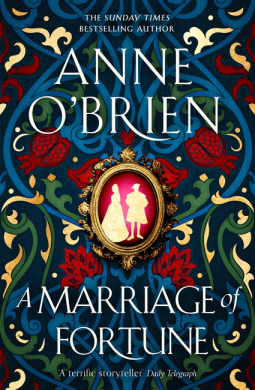
A Marriage of Fortune by Anne O’Brien

This sequel to The Royal Game continues the story of the Paston family. The Pastons were an influential Norfolk family during the 15th century and left behind a collection of private correspondence, known as the Paston Letters, which are a valuable source of information on life in England at this time. In this novel and her previous one, Anne O’Brien brings the story of the Pastons to life, using their letters to provide the outline of the plot. You could read this book as a standalone if you wanted to, but I would recommend reading both in order if you can.

A Marriage of Fortune is again narrated by several of the Paston women. First there’s Margaret Mautby Paston, now a widow with seven children. Her eldest son, Sir John, is now head of the family following the death of his father, but Margaret still takes an active part in managing the household, arranging the marriages of her younger children and continuing the ongoing feud against the Duke of Norfolk over the ownership of Caister Castle. Margaret’s priority is seeing that the Pastons continue to rise through the ranks of society, so she is furious when her eldest daughter Margery announces that she is in love with the family bailiff, Richard Calle. She refuses to allow a marriage between the two, but is unprepared for the lengths to which Margery is prepared to go.

The relationship between Margaret and Margery is very sad to read about. Margery is another of our narrators, which means we get to know exactly how she feels about her mother’s refusal to accept her love for Richard and the family estrangement that occurs as a result. Margaret believes that a daughter’s first duty should be to her parents and that Margery has no right to consider her own happiness, but there’s always a sense that she might come to regret taking this stance and we are kept wondering whether mother and daughter will be reconciled in the end.

We also hear from Margaret’s sister-in-law, Elizabeth Paston Poynings, whose husband has been killed fighting on the Yorkist side at the Second Battle of St Alban’s, leaving her a widow with a young son. Like Margaret, Elizabeth has found herself facing a struggle to hold on to her late husband’s estates, which are being claimed by the powerful Percy family. A fourth narrator is Anne Haute, cousin of Elizabeth Woodville, Edward IV’s queen. Anne is betrothed to Margaret’s son, Sir John Paston, but with the rapidly changing political situation in England – Edward IV on the throne one minute, Henry VI the next – it seems that Sir John is reluctant to either make the marriage official or release her from it. I had a lot of sympathy for poor Anne when she begins to discover that she’s wasted years of her life on a man who clearly doesn’t really love her.

I enjoyed A Marriage of Fortune; this is one of my favourite periods to read about, but I still haven’t read the original Paston Letters or Helen Castor’s non-fiction account of them, Blood and Roses, despite having had the latter on my TBR pile for several years now. This was maybe a good thing as far as this novel was concerned, as it meant that although I was familiar with the historical background – the kings and queens, the battles and rebellions – I didn’t know the personal stories of the individual Paston family members, so I never knew what was going to happen to them next. However, I do think this novel, like the first one, was slightly too long, with a lot of information packed into it. It may have been better to have focused on fewer characters; Elizabeth Poynings’ story, in particular, felt very separate from the others and could possibly have been left out.

I’m not sure whether there will be a third book on the Pastons or whether Anne O’Brien will be moving on to something else now. Either way, she always chooses interesting historical women to write about so I know it will be worth looking forward to.

Thanks to Orion for providing a copy of this book for review via NetGalley.

This is book 2/50 read for the 2023 Historical Fiction Reading Challenge.

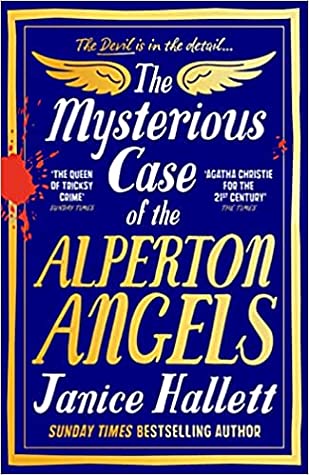
The Mysterious Case of the Alperton Angels by Janice Hallett

Imagine you find a box of documents that make up the research material for a true crime book. After reading them, you see that the book will shed new light on the eighteen-year-old case of the Alperton Angels – but what will you do next? Destroy the documents? Or hand them over to the police? This is the premise of Janice Hallett’s new novel, The Mysterious Case of the Alperton Angels. It’s fascinating, but Hallett has a style all of her own which can take a while to get used to. I knew what to expect as I loved her previous novel, The Twyford Code – one of my favourite books of 2022 – and I think I enjoyed this one even more.

The case of the Alperton Angels involved a cult led by a man who called himself the Angel Gabriel, two vulnerable teenagers and a baby they believed to be the Antichrist. When true crime writer Amanda Bailey is commissioned to write a book for a new series re-assessing historic crimes, she decides to write about the Alperton Angels from the perspective of the baby, who is now about to turn eighteen. The only problem is, she has no idea where the baby is – or even who they are. Even worse, she discovers that one of her rivals, Oliver Menzies, is working on the same book from the same angle. Who will find the baby first and uncover the truth behind the Alperton Angels?

The whole novel is presented as Amanda’s collection of research material: emails, letters, WhatsApp messages, and even excerpts from books and film scripts. Where she has met and interviewed people involved in the case, these conversations are transcribed by her assistant Ellie, who adds her own amusing observations and asides. This modern, multimedia style of storytelling is not something that would usually sound appealing to me, but in Janice Hallett’s hands I love it. And actually, when I think about it, it’s really just an updated form of the classic epistolary novels I’ve always enjoyed, so there’s no reason why I shouldn’t like it!

Despite the fragmentary style, I could still get a feel for the personalities of the main characters – Amanda persistent and tenacious, Oliver gullible and easily led, and Ellie witty and down to earth – but there’s also a sense that there’s a lot we’re not being told. How much can you trust what someone says in an email or in an interview where they know they’re being recorded? Similarly, the facts behind the case of the Alperton Angels are unravelled very slowly, one little piece of information at a time, and with many of the suspects and witnesses following their own agenda, we don’t even know if what we are reading is true or will be proved false later in the book. Things do eventually start to come together and make sense – and if you continue to the end, you’ll be rewarded with some great twists!

I found The Mysterious Case of the Alperton Angels completely gripping and difficult to put down, particularly as there are no traditional chapter breaks so no logical places to stop. Now I’m looking forward to reading Janice Hallett’s first novel, The Appeal.

Thanks to Viper for providing a copy of this book for review via NetGalley.