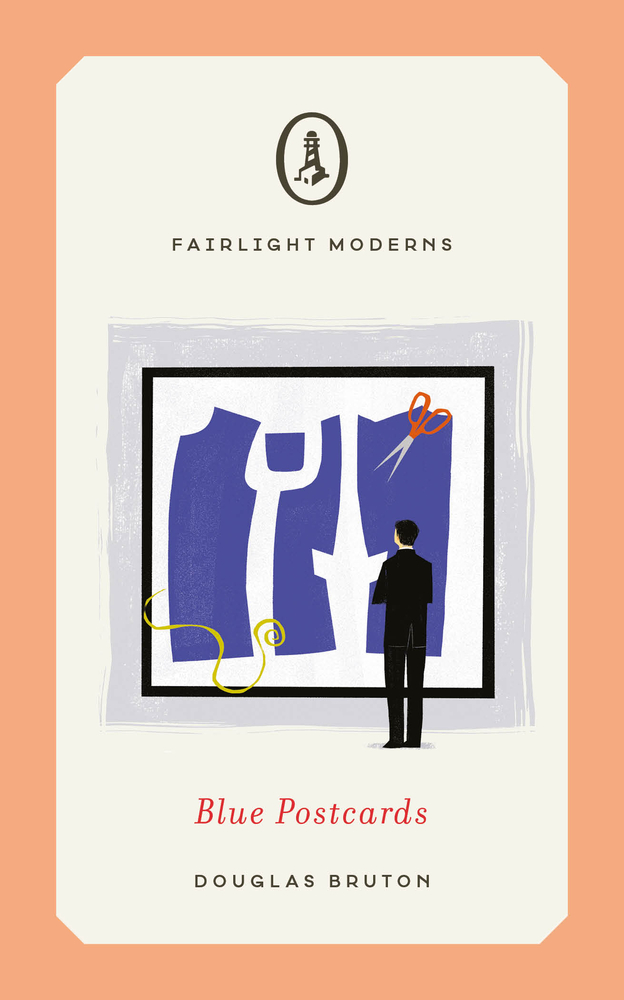
Blue Postcards by Douglas Bruton – #NovNov22

This little book published by Fairlight Moderns came to my attention when it was longlisted for the Walter Scott Prize earlier this year. I wasn’t sure it would be my sort of book but it sounded intriguing and at only 160 pages I knew it would be perfect for Novellas in November.

The book opens in the present day with our unnamed narrator buying a postcard from a Parisian market stall beside the Eiffel Tower. The postcard is completely blue on one side and date stamped 1957. The young woman who sells it to him has no idea of its significance, but the narrator knows exactly what it is: an invitation to an exhibition of the French artist Yves Klein’s monochrome paintings which was held in that year. He takes the card away with him but is drawn back to the stall again and again hoping to find more blue postcards and slowly a relationship begins to develop between the narrator and Michelle, the postcard seller.

Two other narratives are woven into the story. In one, we follow the career of Yves Klein, who becomes famous as the creator of International Klein Blue (IKB), an intense shade of aquamarine. In the other we meet Henri, a Jewish tailor – the only one left on what was once called the Street of Tailors. Henri also has a connection with blue: he sews a blue thread, in a shade known as ‘tekhelet’ in Hebrew, into the leg of every suit he makes in the belief that it will bring good luck to the wearer. One day, Yves Klein visits the tailor to order a suit and so the three separate parts of the novel fit together like the pieces of a jigsaw puzzle.

There was something to interest me in each of the three storylines. In the modern day one it was the unreliability of the narrator who admits that some of the things he is telling us didn’t necessarily happen and that memories can change over the years. The most compelling parts of Henri’s story involve his memories of the 1930s when he and his family were victims of the Night of Broken Windows. And I was struck by the descriptions of Klein’s monochrome exhibition where he displayed eleven identical blue (IKB) squares, placed at different angles and priced differently because he argued that the experience of viewing each one was different. I knew nothing about Klein before reading this book and his art is not really the kind I like, but it was good to learn a little bit about him.

What makes this book unusual, however, is the structure – and as I suspected, it wasn’t entirely successful with me! There are five chapters and each chapter is made up of one hundred numbered paragraphs, some only one or two sentences long but all what you could describe as ‘postcard-sized’. The three narratives alternate rapidly throughout the book, so we have one or two paragraphs telling the narrator’s story then one or two telling Henri’s or Yves Klein’s. I found it easy enough to follow but it does feel fragmented and meant I didn’t have time to become invested in one story before switching back to another.

Bruton has also set himself the challenge of including the word ‘blue’ at least once in every single paragraph, so we have characters with blue eyes, clothes with blue ink stains, mussels with blue shells, memories lost in the blue mists of time, and so on. Add to this the narrator’s obsession with finding blue postcards, Klein’s obsession with creating blue artworks and Henri’s obsession with blue threads and I started to feel overwhelmed with blue. There’s no doubt that it’s all very cleverly done and can’t have been an easy book to write, but I personally prefer books that allow me to become fully absorbed in the story without any distractions. I wasn’t the ideal reader for this book, but I knew that before I started and wanted to try it anyway, so I don’t have any complaints!

Have you read anything by Douglas Bruton – or any of the other books in the Fairlight Moderns collection?
I’m counting this book towards Novellas in November hosted by 746 Books and Bookish Beck.

Book #59 read for the Historical Fiction Reading Challenge 2022.
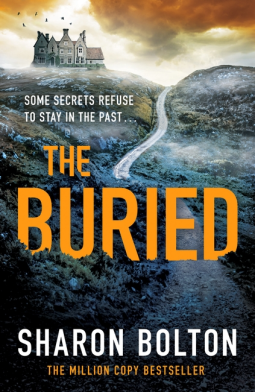
The Buried by Sharon Bolton

Two new Sharon Bolton books in one year! I loved The Dark, the latest in Bolton’s Lacey Flint series, which was published in the spring – and now, with The Buried, she returns to her Florence Lovelady series. I’ve been waiting for this sequel since I read The Craftsman in 2018 and had almost given up hope of it ever appearing, but here it is at last. It was definitely worth the wait!

The Buried begins in the summer of 1999, with Florence Lovelady visiting Larry Glassbrook in prison. Florence, now a senior police officer with the London Met, was responsible for Larry’s conviction thirty years earlier for the murder of three teenagers in Sabden, Lancashire. Now the remains of four more children have been discovered and Florence is confused. Are these more of Larry’s victims or are the remains more recent, meaning that the real killer is still on the loose? Also, the bodies were found in the grounds of Black Moss Manor Children’s Home, which Florence had helped to close down in 1969 after finding evidence of neglect and cruelty. What does this mean and how can she discover the identity of the children?

Soon after Florence’s visit, Larry Glassbrook dies of cancer and preparations are made for his funeral. His daughter Cassie returns to Sabden after a long absence and immediately sets her sights on John Donnelly, whom she loved as a teenager and who is now a married man with children. Cassie herself has become a successful songwriter, but she has never quite managed to put the past behind her and still has questions about some of the things that happened in Sabden thirty years ago.

The first section of the book alternates between Florence and Cassie during the build up to Larry’s funeral and I have to admit, I felt very confused. I found that I’d forgotten most of The Craftsman and I kept coming across references to people and events I couldn’t remember at all. Who was Marigold? What was Florence’s involvement with Black Moss Manor? I had no memories of those things at all, but they were obviously important. Then I discovered that I wasn’t supposed to remember them as they didn’t actually form part of the plot of The Craftsman. I just needed to be patient because the second section of the novel takes us back to 1969 and my questions about Marigold and Black Moss Manor were answered. The shifting timelines with various parts of this book set both before and after the events of The Craftsman means it works as both a sequel and, in a way, a prequel.

The 1969 storyline (which forms the main part of the novel) is excellent – Sharon Bolton at her best. I was completely gripped by Florence’s investigations into the allegations of abuse at the children’s home and the obstacles she faces in trying to get anybody to take her concerns seriously. The 1960s setting allows Bolton to explore the sexism and misogyny Florence faces as she tries to do her work; the other police officers are exclusively male – local men from Sabden who resent Florence’s university education, southern accent and the fact that she is a woman doing what they consider a man’s job. Meanwhile, we get to know Sally Glassbrook, Cassie’s mother, who is struggling to cope after Larry’s arrest and imprisonment. As the family of a convicted murderer, Sally and her daughters are in a vulnerable position and find themselves having to fend off the unwanted attentions of Roy Greenwood, Larry’s former business partner.

Finally, I need to mention the supernatural elements! The way The Craftsman ended made me think these were going to be a major part of the second book, but things didn’t go quite as far in that direction as I’d expected and the crimes committed are all very human ones. We do see more of the coven of witches who are operating in Sabden (Pendle Hill, site of the famous 17th century witch trials, casts its shadow over the town), the influence of the mysterious and sinister group known as the Craftsmen, and Florence’s own seeming ability to communicate with the dead, but I didn’t think these elements dominated the story too much. However, they are there and won’t appeal to everyone. I would say these books are closer in tone to Bolton’s early standalones such as Sacrifice and Awakening than they are to the Lacey Flint novels or her other recent thrillers.

I loved this book once I managed to get back into the story, but I would definitely recommend reading The Craftsman first – or re-reading it if, like me, you read it several years ago and can’t remember the details.

Thanks to Orion for providing a copy of this book for review via NetGalley.

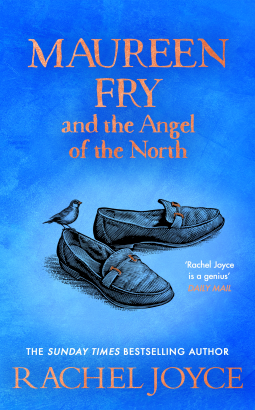
Maureen Fry and the Angel of the North by Rachel Joyce – #NovNov22

Almost ten years ago I read Rachel Joyce’s first novel, The Unlikely Pilgrimage of Harold Fry, in which a man sets out to walk almost the entire length of England, from his home in Devon to a hospice in Berwick-upon-Tweed, to visit an old friend who has been diagnosed with cancer. A second book followed – The Love Song of Miss Queenie Hennessy, written from the friend’s perspective – but I didn’t read that one. Maureen Fry and the Angel of the North is the final part of the trilogy and I wondered whether I would struggle with it because of not having read the middle book first, but luckily that wasn’t the case.

At only 133 pages, Maureen Fry is a short, quick read but contains an entire journey, both physical and psychological. This time, though, it’s not Harold who is making the journey, but his wife, Maureen. It’s been several years since Queenie Hennessy’s death but the garden she created in Embleton on the Northumberland coast has become a tourist attraction. Hearing that the garden contains a memorial to her own son, David, who committed suicide, Maureen decides to go and see it for herself. It’s something she wants to do alone so, leaving Harold behind, she prepares to head north – not on foot like her husband, but by car.

I found the title of the book intriguing because the obvious reference is to the Angel of the North, Antony Gormley’s sculpture of the same name that stands on a hill overlooking the A1 in Gateshead, just south of Newcastle upon Tyne. I was at Newcastle College on the day it was erected in 1998 and remember watching from the tenth-floor window! Maureen Fry does see the Angel as she drives past, but it’s only mentioned briefly and there are several other possible meanings of the title (although I won’t tell you who or what the other Angels of the North could be). The US version doesn’t refer to angels in the title at all and is simply Maureen, just in case anyone thinks they are two different books!

Maureen’s journey is very different from Harold’s, not just because she chooses to drive instead of walk but also because she has a very different personality. While her husband was easy to like, she is not. She’s rude, unpleasant and unlike Harold, who made new friends during his pilgrimage, Maureen seems to make only enemies. It took me a long time to warm to her at all, but eventually I began to understand the reasons for her behaviour. For such a short book, there’s a lot of emotion within its pages as Maureen begins to face up to the grief she’s been trying to suppress for so many years.

If you’re new to this trilogy, I would definitely recommend reading Harold’s story before Maureen’s. I didn’t feel that I’d missed anything essential by not having read Queenie’s, but I would like to go back and read it now anyway – as well as all the other Rachel Joyce books I still haven’t read!

Thanks to Doubleday for providing a copy of this book for review via NetGalley.

I’m counting this book towards Novellas in November hosted by 746 Books and Bookish Beck.

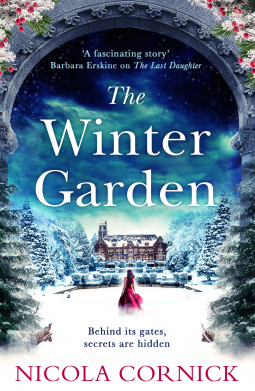
The Winter Garden by Nicola Cornick

Remember, remember, the Fifth of November,
Gunpowder, treason and plot,
For I see no reason why gunpowder treason,
Should ever be forgot

There are different variations on this rhyme, but that’s the version I grew up with. It refers, of course, to the Gunpowder Plot of 1605, a failed attempt to blow up the Houses of Parliament. The name most often associated with the plot is Guy Fawkes, the man caught in the cellars below Parliament on November 5th preparing to ignite the gunpowder, but the leader of the conspirators was actually the less well known Robert Catesby. Nicola Cornick’s new novel The Winter Garden tells the story of not just Catesby himself but also his wife, Catherine, and mother, Anne.

Like Nicola Cornick’s other recent books, this one is set in more than one time period. In the present day, we meet Lucy Brown, a young woman suffering from the long-term effects of a viral infection that have left her unable to continue her promising career as a violinist. Not yet ready to return to her home in London and face up to a life without her beloved music, Lucy accepts an offer from an aunt to go and stay in her cottage in Oxfordshire while she recuperates. Gunpowder Cottage, as it is now known, was once the home of Robert Catesby and almost as soon as Lucy arrives she begins to have visions of a woman dressed in Tudor clothing. Could this be Catherine Catesby and if so what is she trying to tell Lucy?

The other thread of the novel begins in the late 16th century and is written from the perspective of Anne Catesby. The Catesby family are recusant Catholics – they remained loyal to the Catholic church after the Reformation and refuse to attend Church of England services. In 1593, Anne’s son, Robert, marries Catherine Leigh, the daughter of a wealthy Protestant family, who begins to create a beautiful garden in the grounds of her new home. Anne is pleased to see her son and daughter-in-law settling into married life, but the happy times don’t last for long and soon Robert is deeply involved in treason and conspiracy.

There’s so much going on in this novel: an archaeological dig aimed at finding and restoring Catherine’s vanished winter garden, rumours of hidden treasure dating back to the days of the Knights Hospitaller, and a mystery surrounding the death of one of the experts working on the garden project. There’s also a romance for Lucy, which, although it was completely predictable as soon as the love interest made his first appearance, felt believable and never came to dominate the plot. If you’ve read Nicola Cornick’s The Forgotten Sister, there’s a small part in this book for Johnny Robsart, whom you’ll remember was Amelia Robsart’s psychic brother. There are some paranormal elements in this novel too, but they provide the link between the two time periods and again, don’t really dominate.

When a book has two separate storylines set in different periods, there is usually one I like more than the other and in this case it was the historical one. I felt a stronger connection with Anne Catesby than I did with Lucy, maybe because Anne’s story was narrated in the first person while Lucy’s was written in the third. Although there wasn’t as much focus on the actual Gunpowder Plot as I’d expected, I found it interesting to read about the female influence on Robert Catesby’s life and how events at home may have led to him becoming involved in the conspiracy.

Have you read any other books about the Gunpowder Plot or Robert Catesby? I would love to hear about them!

Thanks to HQ for providing a copy of this book for review via NetGalley.

Book #58 read for the Historical Fiction Reading Challenge 2022.
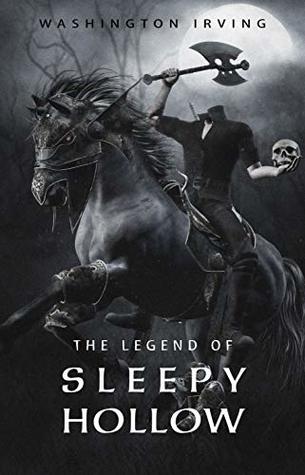
The Legend of Sleepy Hollow by Washington Irving

I’ve never read anything by Washington Irving but The Legend of Sleepy Hollow appears in an anthology of classic ghost stories I bought for my Kindle a few years ago and Halloween seemed like the perfect time of year to read it. I thought I already knew the story from the 1999 Tim Burton film but of course it turns out that it’s only very loosely based on Irving’s original work, which is often the case with adaptations. It’s also not very scary, so if horror stories make you nervous, don’t worry – this one isn’t likely to give you nightmares!

Irving begins by describing the valley of Sleepy Hollow, an old Dutch settlement in New York State steeped in legend and superstition.

A drowsy, dreamy influence seems to hang over the land, and to pervade the very atmosphere…Certain it is, the place still continues under the sway of some witching power, that holds a spell over the minds of the good people, causing them to walk in a continual reverie. They are given to all kinds of marvellous beliefs, are subject to trances and visions, and frequently see strange sights, and hear music and voices in the air.

The most famous of Sleepy Hollow’s legends involves a ghost known as the Headless Horseman, said to be a Hessian soldier who lost his head in battle and goes on a nightly ride through the Hollow in search of his missing head. When Ichabod Crane, an outsider from Connecticut arrives in the valley to take up the position of schoolmaster, he is fascinated by this story. A believer in witchcraft, Ichabod is naturally superstitious and enjoys listening to the tales of local ghosts and goblins.

Soon Ichabod sets his sights on the beautiful Katrina Van Tassel, daughter and only heir of a wealthy farmer. However, he faces stiff competition for Katrina’s hand in marriage in the form of Brom Bones, a ‘burly, roaring, roystering blade…the hero of the country round’. After being rejected by Katrina during a party at the Van Tassels’ home one night, the disappointed Ichabod rides off alone into the night – only to find that he is being pursued by a mysterious figure on horseback…

There’s not much more I can say about this story without spoiling it. It’s a short one, so if you want to read it for yourself it shouldn’t take up too much of your time. Published in 1820, it’s easy to read and to follow and although Irving’s descriptive writing provides a lot of Gothic atmosphere, it’s a fun and entertaining ghost story rather than a terrifying one. It also has a wonderfully ambiguous ending!

I’ll have to read more of Washington Irving’s stories at some point. The only other one I’m familiar with is Rip Van Winkle, but obviously he has written a lot more than that!

This is my seventh and final read for R.I.P. XVII

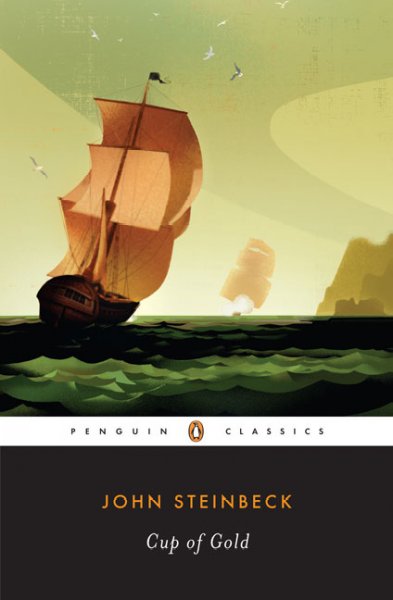
Cup of Gold by John Steinbeck – #1929Club

It’s always interesting, when an author has become famous for books written later in their career, to go back to the very beginning and read their earliest work. Cup of Gold, John Steinbeck’s first novel, was published in 1929 and is my second choice for this week’s 1929 Club hosted by Simon and Karen.

I’ve previously only read two of Steinbeck’s books (East of Eden and The Pearl) and hadn’t even heard of this one until I started to look at options for 1929 Club. I was intrigued because it sounded so completely different from his other books – not the sort of plot or genre I would have associated with Steinbeck at all. It’s also a short novel (just over 200 pages) so I could easily fit it into my busy October reading schedule!

Cup of Gold opens in 17th century Wales where a fifteen-year-old boy, Henry Morgan, lives on a farm with his parents and his grandmother, Gwenliana, who claims to have second sight. Growing up in a remote part of the Welsh countryside, Henry is growing restless to leave home and see more of the world. When Dafydd, an old farmhand who left many years earlier to go to sea, returns to the farm to tell the family of his adventures, Henry becomes determined to do the same. His mother, who still considers him a child, tells him not to be ridiculous, but his father accepts that this is something his son must do and sends him off with his blessing.

Before leaving, Henry consults the wise, white-bearded poet known as Merlin, who lives alone with his red-eared dog in the hills above the Morgans’ valley. Merlin makes the following observation, words Henry will remember for the rest of his life:

“You are a little boy. You want the moon to drink from as a golden cup; and so, it is very likely that you will become a great man – if only you remain a little child. All the world’s great have been little boys who wanted the moon; running and climbing, they sometimes caught a firefly. But if one grow to a man’s mind, that mind must see that it cannot have the moon and would not want it if it could – and so, it catches no fireflies.”

Arriving in Cardiff – the first time he has seen a large town – Henry secures passage on a ship to Barbados, where he finds himself indentured to a plantation owner. This is not what Henry had been hoping for, but he knows it will only be for a few years and then he’ll be free again to achieve his dream of becoming a buccaneer and making his fortune.

If the name Henry Morgan is familiar to you, then you’ve probably already guessed that this is the story of the notorious pirate of the Caribbean, a real historical figure (and the inspiration for Captain Morgan rum). In fact, the full title of the novel is Cup of Gold: A Life of Sir Henry Morgan, Buccaneer, with Occasional Reference to History. ‘Occasional reference’ is not an exaggeration because it seems that very little of Steinbeck’s account has anything to do with historical fact – although, to be fair, there are lots of gaps in our knowledge of Morgan’s early life and career so plenty of scope for an author to use their imagination. It’s unclear whether I should even be referring to Morgan as a pirate; many sources describe him as a privateer, although the only difference I can see is that one is declared ‘legal’ by the government who stands to gain from their raiding and pillaging and the other isn’t.

The ’cup of gold’ of the title, which Merlin compares to reaching for the moon, refers to two things – Panama, which Henry sees as the ultimate prize just waiting to be captured from the Spanish, and a beautiful woman known as La Santa Roja (the Red Saint). Henry’s yearning for both of these is what drives him – and the narrative – forward. Yet I found this book to be neither the swashbuckling adventure novel nor the romance I’ve seen it described as and it’s certainly not as much fun as Georgette Heyer’s Beauvallet or Rafael Sabatini’s Captain Blood. It’s a more serious novel than either of those and never loses sight of its central themes: the quest for happiness and the question of whether we can ever be truly content with what we have or will go on searching for something that’s always out of reach. However, I discovered that I didn’t really care about Henry’s happiness as I found it so difficult to relate to somebody who deliberately set out on a life of piracy and committed so many terrible acts! That was a bit of a problem with so much of the story told from Henry’s perspective.

This is a beautifully written novel, though, and the sections set in Wales – or Cambria, as Steinbeck usually calls it – feel mystical and dreamlike. The inclusion of Merlin in the plot is intriguing: are we supposed to believe that he is really the legendary magician, alive in the 17th century, or is he just an eccentric old man who believes he is Merlin? Either way, Arthurian legend is obviously something that interested Steinbeck and he would later go on to write The Acts of King Arthur and His Noble Knights, which was posthumously published in 1976.

I wouldn’t describe this as a must-read classic, but it’s worth reading if the subject or setting appeal or if you’re interested in experiencing the work of a famous author at the very start of his career.

I’m also counting this as book #57 for the Historical Fiction Reading Challenge 2022.
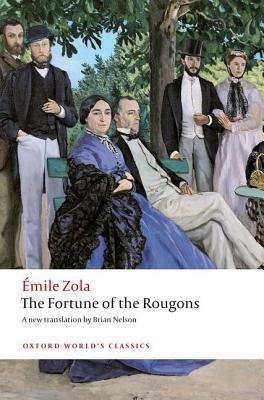
The Fortune of the Rougons by Émile Zola

La Fortune des Rougon, originally published in French in 1871, is the first novel in Émile Zola’s twenty-volume Les Rougon-Macquart cycle. It’s also the book selected for me in the recent Classics Club Spin and the edition I read is an English translation by Brian Nelson.

I’ve already read one of the later books from the cycle – The Ladies’ Paradise – but rather than continue picking them out at random, I thought it might be more sensible to go back to the beginning of the series and try to read them in order. I was a bit hesitant about reading this first book, however, because it sounded as though it was mainly concerned with setting things up for the rest of the series – and that was the case, up to a point, but I found that there was still enough plot to make this an interesting novel in its own right.

The Fortune of the Rougons is set in the fictional French town of Plassans and opens on a Sunday night in December 1851 with two young lovers, Silvère and Miette, joining up with an army of insurgents. It’s the eve of Louis Napoleon’s coup d’état which will result in the formation of the Second Empire under Napoleon III. Silvère wants to give his support to the Republicans who are opposing the coup and thirteen-year-old Miette finds herself coming along to carry the flag.

We then leave Silvère and Miette behind for a while so that Zola can take us back several generations and introduce us to Adelaide Fouque who, through her marriage to the peasant Rougon and a later relationship with the alcoholic smuggler Macquart, is the ancestor of most of the other major characters in the novel. He then follows the lives of Adelaide’s three children – her eldest son, Pierre Rougon, and his illegitimate half-brother and sister, Antoine and Ursule Macquart – as they grow into adults and embark on a family feud. Finally we meet Adelaide’s grandchildren (of whom Silvère is one) and see how they all fit into the events of the formation of the Second Empire.

Once Pierre, Antoine and Ursule have married and had children of their own, the number of characters in the novel quickly multiplies and I’m glad my copy of the book included a family tree as I found myself constantly needing to refer to it. The Rougon-Macquart family are largely an unpleasant group of people – Pierre Rougon tricks his mother into signing over her house to him, depriving his brother of his inheritance, while Antoine Macquart is a violent, aggressive drunk – but there are still some characters with traits I could admire and some I could pity. It seems that Zola’s aim in writing the series was to explore the effects of heredity, so in this book the legitimate Rougon branch of the family are shown to be scheming, avaricious social-climbers while the Macquarts, descended from a rogue, are leading miserable, sordid lives.

The history of the coup d’état and the Second Empire is quite complicated, particularly if, like me, you come to the book with no prior knowledge of these events. With Plassans (based on Aix-en-Provence, where Zola himself grew up) being so far from the action, information comes to the Rougons via the eldest son, Eugène, who lives in Paris, and the people of the town gather in the Rougons’ yellow drawing room to discuss the latest developments. This keeps the reader at a bit of a distance and it took me a while to get everything straight in my head, but later in the book when we rejoin Silvère and Miette marching with the army we get a little bit closer to some of the action.

I didn’t really love The Fortune of the Rougons, but there were parts that I enjoyed very much and I’ll look forward to meeting some of the characters again in the other books in the cycle. I wish I had read this one before jumping straight into The Ladies’ Paradise as I would then have had more understanding of Octave Mouret’s background (he is another descendant of Adelaide Fouque).

Have you read any of the Rougon-Macquart novels? Did you read them in order or at random and do you think it makes any difference?

This is book 33/50 from my second Classics Club list.