Kwaidan: Stories and Studies of Strange Things by Lafcadio Hearn

The next book I’ve read for this year’s R.I.P. XVII event is a fascinating and unusual collection of Japanese short stories, first published in 1904. The writer and translator Lafcadio Hearn was born in Greece and raised in Ireland, before later settling in Japan where he began to collect Japanese legends and folktales which he translated into English. Kwaidan: Stories and Studies of Strange Things contains seventeen of these tales, as well as three essays on insects – one on butterflies, one on mosquitoes and one on ants. These mainly focus on the role of the insects in Japanese and Chinese mythology, art, drama and poetry and are full of intriguing little snippets of information.

The other seventeen pieces are a mixture of ghost stories, fairy tales and strange anecdotes, some of which Hearn translated from old Japanese texts and others which he heard on his travels through Japan and attempted to put into words himself. For example, in his introduction, Hearn states that the story of Yuki-onna, in which a beautiful young woman in white appears to two woodcutters during a snowstorm, was told to him by a farmer in Musashi Province. Although the Yuki-onna character dates back centuries, Hearn’s account is based on this verbal version and not translated from any other source.

The creepier stories in the book are the ones that explore the different kinds of ghosts and monsters that appear in Japanese myth, such as the ‘faceless ghosts’ or noppera-bō, the human-like goblins called rokurokubi with detachable floating heads and the corpse-eating spirits known as the jikininki or ‘hungry ghosts’. These are interspersed with more traditional ghost stories, involving spirits returning after death to look for a loved one or to search for a lost possession. There’s also a great story recounting the legend of Hoichi the Earless, a blind musician who is tricked into playing his biwa (lute) for an audience of ghosts in a cemetery every night. If you want to know what happens to his ears, you’ll have to read the story!

Not all of the stories are particularly spooky, though – some are just, as the title suggests, ‘studies of strange things’. Of a Mirror and a Bell is an account of the legend of the Mugen-Kane bell which was made by melting down old bronze mirrors. Hearn then goes on to explore the Japanese concept of nazoraeru, where one item can be used as a substitute for another, to bring about magical results. There’s also a very short but beautiful story about a pair of oshidori, or Mandarin ducks, and another I enjoyed is The Dream of Akinosuke, about a man who falls asleep and dreams that he is the ruler of his own island province. This story incorporates both butterflies and ants, which makes the insect essays at the end of the book feel more relevant!

Some of the stories are too short or incomplete to be very satisfying, but the collection as a whole is fascinating and I would recommend it to anyone with an interest in Japanese culture and folklore. There’s also a Japanese film version from 1965, also titled Kwaidan, which I haven’t seen, but it seems to be very highly acclaimed and received an Oscar nomination for Best Foreign Language Film.

Have you read this or any other book of Japanese ghost stories?

Book #4 read for R.I.P. XVII
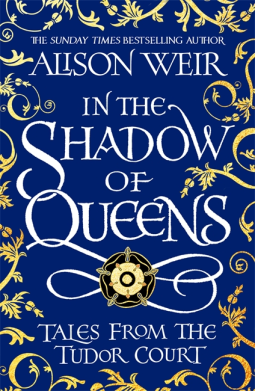
In the Shadow of Queens: Tales from the Tudor Court by Alison Weir

This is a collection of thirteen short stories and novellas written by Alison Weir over the last few years to accompany her Six Tudor Queens series of novels. The stories were released as individual ebooks one by one as they were written, but are now available all together in one volume.

I have read all six of the full-length novels in the Six Tudor Queens series, each one exploring the life of one of the wives of Henry VIII. These short stories fill in the gaps between the novels, providing more insights or looking at things from a different perspective. They are arranged in roughly chronological order, starting before Henry’s marriage to Katherine of Aragon and ending after the death of Katherine Parr. I had already read one of them – The Tower is Full of Ghosts Today, about a Tower of London tour guide with a strange resemblance to Anne Boleyn – but the rest were all new to me.

Several of the stories are written from the perspectives of members of the Tudor dynasty whose voices weren’t heard in the main series. Arthur: Prince of the Roses, about Henry VIII’s ill-fated elder brother Arthur Tudor, The Unhappiest Lady in Christendom, narrated by the future Mary I, and The Princess of Scotland, about Henry’s niece Margaret Douglas, all fall into this category. Others provide more background and depth to the stories of the six wives themselves – for example The Chateau of Briis: A Lesson in Love explores Anne Boleyn’s years at the French court as maid of honour to Queen Claude and her potential link with a tower at Briis-sous-Forges called the Donjon Anne Boleyn.

The stories that were of most interest to me were the ones that follow characters on the periphery of the Tudor court or those who are living ‘in the shadow of queens’, as the title suggests. I particularly enjoyed reading about the court painter Susannah Horenbout, sent to Cleves to investigate the background of a potential bride for the King, and Lady Rochford, wife of George Boleyn, who was instrumental in the downfalls of both Anne Boleyn and Katherine Howard. Naturally, given the time period and subject matter, some of the stories are quite sad, involving executions, imprisonments, betrayals and infant deaths. If you’re of a squeamish disposition, be aware that the final story, In This New Sepulchre, describes in graphic detail the shocking desecration of Katharine Parr’s tomb and corpse.

My favourite story in the collection was probably The Curse of the Hungerfords, which introduces us to Agnes Cotell, the second wife of Sir Edward Hungerford, who becomes involved in a 16th century murder case. Her narrative alternates with that of Anne Bassett, whom many people believed would become one of Henry VIII’s wives, although obviously that never happened. Weir keeps us waiting to see how the lives of these two women are connected and I thought this could easily have been developed into a longer novel, which would have allowed for more depth and detail.

I haven’t discussed all of the thirteen stories here, but I hope I’ve given you a good idea of what the book contains. I would have been disappointed if I’d paid for some of these stories individually in the e-short format, but as a collection I found this a worthwhile read. If you’ve read some or all of the Six Tudor Queens series it works well as a companion volume, but it’s not essential to have read any of those books before reading this one. Alison Weir’s next novel, Henry VIII: The Heart and the Crown, will be published in 2023, but in the meantime I have her latest non-fiction book, Queens of the Age of Chivalry, to read.

Thanks to Headline for providing a copy of this book for review via NetGalley.

This is book 52 read for the Historical Fiction Reading Challenge 2022.

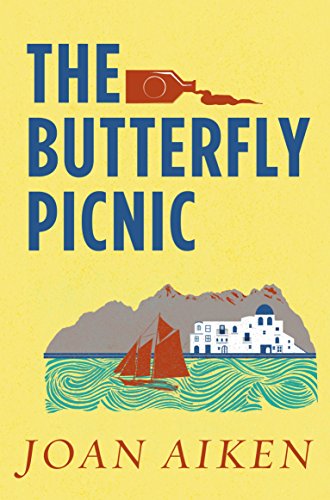
The Butterfly Picnic by Joan Aiken

Although Joan Aiken is best known for her children’s novel The Wolves of Willoughby Chase, she also wrote lots of books for adults. I read one of them, Castle Barebane, last year and enjoyed it so much I knew I would have to read more of them. Unlike Castle Barebane, which was a Gothic historical novel set in Scotland, The Butterfly Picnic, first published in 1972, is contemporary and has much more in common with the suspense novels of Mary Stewart. The characters even reference Stewart’s My Brother Michael once or twice!

The Butterfly Picnic is narrated by Georgia Marsh, a Greek-Chinese-Russian-French orphan with six older brothers, all of them scientists. Georgia has been summoned to the beautiful Greek island of Dendros by her cousin Sweden, another scientist. With no idea why Sweden wants to meet her so desperately, she makes her way to her cousin’s boat which has just sailed into the harbour – and is just in time to witness Sweden’s murder. Unfortunately, Georgia doesn’t see the killer’s face and when she reports the incident to the local police they show very little interest in catching him. In fact, they seem to think Georgia has imagined the whole thing and insist on sending her off on the next plane home. Luckily, the plane is promptly hijacked by Palestinian liberators disguised as priests and Georgia persuades them to return her to the island so she can continue to investigate Sweden’s death.

At this point I was beginning to wonder what on earth I was reading. The plot seemed too ridiculous for words and quickly became even more bizarre…

The plane lands Georgia on the other side of the island where she finds herself accepting a teaching job at a very unusual school inside a castle belonging to a millionaire described as ‘the wickedest man on the island’. However, it seems that someone is determined to prevent Georgia from discovering the truth, and she suffers a series of mishaps including being locked inside a kiln and falling through a trapdoor into an oubliette. While lost in a maze of underground tunnels, Georgia asks herself what Esther Summerson in Dickens’ Bleak House would do: Esther would have bustled up and down the passages doing a great many household errands and embroidering half a dozen yards of ornamental work and jingling her bunch of keys.

The Butterfly Picnic is fun to read and quite a page-turner, but definitely shouldn’t be taken too seriously! As I mentioned above, there are some similarities with Mary Stewart’s novels (the Greek setting, the brave and capable young heroine), while the scientist storyline also reminded me of Agatha Christie’s Destination Unknown, but this is clearly intended to be a parody of those genres of books. As long as you go into it expecting a book that’s more of a comedy rather than a conventional thriller or suspense novel, you’ll probably find it entertaining.

Although I can’t really say that I loved this book as the plot was just a bit too silly, I will continue to try more of Joan Aiken’s novels. The next one I have on my TBR is The Embroidered Sunset and I’m curious to see what it’s like. One final note – be aware that the US title of this book is A Cluster Of Separate Sparks. I wouldn’t want anyone to buy the same book twice!

Book #3 read for R.I.P. XVII

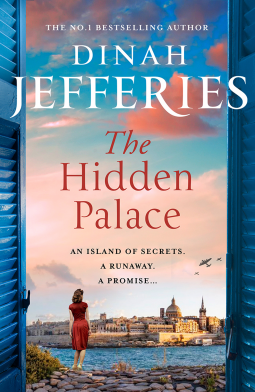
The Hidden Palace by Dinah Jefferies

This is the second book in Dinah Jefferies’ new World War II trilogy which began last year with Daughters of War. Although I think it’s always best to read a series in order if you can, I don’t think it would be a problem if you wanted to start with this book. People and events from the first book are alluded to, but are not essential to understanding the plot of this second novel.

Of the three Baudin sisters we met in Daughters of War, The Hidden Palace only focuses on one of them – the youngest sister, Florence, who has left occupied France for the safety of the English countryside. In England, Florence is reunited with her estranged mother, Claudette, who asks for her help in finding her sister Rosalie – Florence’s aunt – who ran away from home as a teenager and hasn’t been seen or heard from for years. Claudette believes that Rosalie may be in Malta, but with war still raging across Europe, no one is able to go there to look for her.

In an alternating storyline, we go back to the 1920s and follow Rosalie’s adventures when, after an argument with her father, she leaves home and finds work as a dancer in a nightclub in Malta. As the years go by, she builds a new life and identity for herself on the island, which makes Florence’s task much more difficult when, once the war is over, she is able to travel to Malta to begin her search. Accompanied by Jack, the Baudin sisters’ friend who worked for the British Special Operations Executive during the war, Florence is determined to find her aunt – but will her aunt want to be found?

I enjoyed The Hidden Palace overall, although I missed the other two sisters from the first book, Hélène and Élise, who stay behind in France and appear only briefly. Florence was not initially my favourite of the sisters so I wasn’t sure how I would feel about this book focusing mainly on her, but I did warm to her after a while – although I had mixed feelings about the development of her romance with Jack, knowing that he had originally been Hélène’s love interest. I also found the sections of the book set in England slightly lacking in atmosphere; you would hardly think the war was still taking place, as the lives of the characters seem largely unaffected and there’s no sense of any real hardship.

The chapters set in Malta were of much more interest to me, particularly as I have been to Malta and enjoyed revisiting, through Rosalie’s eyes, the vibrant streets of the capital Valletta and the peaceful stillness of Mdina, the ‘Silent City’. Malta was very badly hit during the war, due to its strategic importance as a base in the Mediterranean between Europe and North Africa, and it was the target of thousands of German and Italian air raids, making it one of the most heavily bombed places in the world. This is where Rosalie spends the war years, so as you can imagine, her story is a lot more dramatic than Florence’s in the Devon countryside! However, Rosalie also becomes caught up in a scandal involving human trafficking and I couldn’t see the point in this storyline as it didn’t seem to lead anywhere.

The novel has a satisfactory ending, but not everything is fully resolved, so I’m looking forward to finding out what happens in the final part of the trilogy. The third book, Night Train to Marrakech, is due next year.

Thanks to HarperCollins for providing a copy of this book for review via NetGalley.

This is book 51 read for the Historical Fiction Reading Challenge 2022.

The Bookseller of Inverness by S G MacLean

The Scottish author SG MacLean is best known for her Seeker series and before that, the Alexander Seaton series originally published under the name Shona MacLean. I haven’t read any of those books (although I do own The Redemption of Alexander Seaton), but when I saw that her new novel, The Bookseller of Inverness, was a standalone, it seemed like a good place to start.

Set in Scotland in the aftermath of the 1745 Jacobite Rising, the ‘bookseller’ of the title is Iain MacGillivray, a survivor of the Battle of Culloden. Six years have now passed since he was wounded on the battlefield and although he escaped with his life, his face has been left badly scarred. Still traumatised by the death of his cousin Lachlan, Iain has been living quietly since the failed rising, selling books and running a small public library in Inverness. One day, Iain notices a stranger searching through the shelves, opening and closing books; he won’t tell Iain what he is looking for and only leaves when the shop is shut for the night.

The next morning, Iain opens up the shop again to find the stranger dead on the floor, his throat cut and beside him a sword with a white cockade on the hilt – the symbol of the Jacobites. The murder coincides with the reappearance of Iain’s father Hector, a prominent Jacobite who fled Scotland years earlier but still hasn’t given up hope of seeing a Stuart king on the throne once more. When more murders follow, Iain and Hector begin to search for a missing book containing the names of traitors to the Jacobite cause – a book they believe could hold the key to finding the killer.

Although the search for the book and the murderer drives the plot forward, I didn’t think the mystery was a particularly strong one. I was more interested in the historical detail, the descriptions of everyday life in 18th century Inverness and the insights into the mood, politics and changing loyalties in the years following Culloden. I’ve read about the Jacobites many times before and would prefer authors to explore other periods of Scottish history, but MacLean’s enthusiasm for this subject and setting shine through and her very detailed author’s note shows that a huge amount of research went into the writing of this novel. I’m glad I already had some knowledge of this period, though, as I think I might have found the twists and turns of the story a bit difficult to follow otherwise. MacLean also incorporates some subplots that touch on wider topics such as the slave trade and indentured servitude.

Most of the characters in the book are fictional, although many of them, as I discovered from the author’s note, are based on the lives and experiences of real people. One historical figure who plays an important part in the story without actually appearing in it is Simon Fraser, Lord Lovat – known as the ‘Old Fox’ – who readers of Diana Gabaldon’s Outlander series will remember as Jamie Fraser’s grandfather. Iain MacGillivray himself is an engaging character with an interesting past; I enjoyed getting to know him and reading about the work he and his assistants put into collecting, restoring and selling – or lending – books to the people of Inverness.

I’m pleased to have finally read something by MacLean. The Redemption of Alexander Seaton will be next!

Thanks to Quercus Books for providing a copy of this book for review via NetGalley.

This is book 50/50 read for the Historical Fiction Reading Challenge 2022.

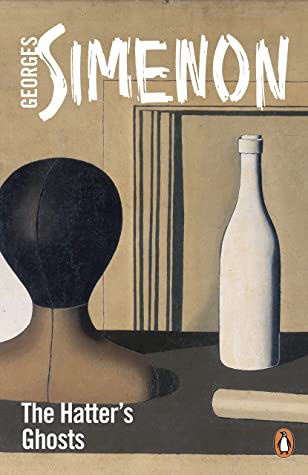
The Hatter’s Ghosts by Georges Simenon (tr. Howard Curtis)

This standalone novel by Belgian author Georges Simenon was originally published in 1949 as Les Fantômes du chapelier and is now available from Penguin Classics in an English translation by Howard Curtis. Although Simenon is better known for his series of Maigret detective novels, he also wrote many books like this one – short psychological thrillers, some of which he referred to as romans durs, or ‘hard novels’. I have read a few of them and my favourite so far has been The Venice Train; this one has some similar plot elements, but is a much darker story.

The novel is set in La Rochelle during a wet and miserable December. It has been raining for twenty days, ever since an old lady was found murdered near the canal. Since then, more bodies have been discovered, all of them elderly women and all of them strangled with a cello string. The newspapers are full of speculation over who the murderer might be, but the reader knows from the opening pages exactly who is responsible – and so does the tailor Kachoudas, who has seen something that has convinced him of the killer’s identity. As the rest of the story unfolds, we are kept wondering whether Kachoudas will go to the police or whether he’ll be the murderer’s next victim.

Although we know from the beginning who the culprit is, there’s still a sense of mystery because we have no idea why he has set out to kill so many women and how he has chosen his victims. The truth is eventually revealed and we discover exactly what is going on behind closed doors, but as this is just a short novel (as many of Simenon’s seem to be), I can’t really go into the plot in any more detail without spoiling it. Anyway, the mystery is only one aspect of the story; the real interest is in following the thought processes of the murderer as he tries to justify his actions to himself and deal with his conflicted thoughts and emotions. I was reminded very much of In a Lonely Place by Dorothy B. Hughes, another novel where we know the killer’s identity from the beginning and spend the rest of the book inside his mind, wondering whether he will give himself away.

The Hatter’s Ghosts is an atmospheric, unsettling novel and I loved the descriptions of the dark, rainy streets of La Rochelle. The Howard Curtis translation is clear and accessible and feels quite modern, while also preserving the tone of the 1940s. If you’re new to Simenon, or have only read his Maigret books, I can definitely recommend any or all of the romans durs I’ve read so far – as well as this one and The Venice Train, I have read The Man from London and The Strangers in the House and am looking forward to investigating some of his others.

Thanks to Penguin Classics for providing a copy of this book for review via NetGalley.

Book #2 read for R.I.P. XVII

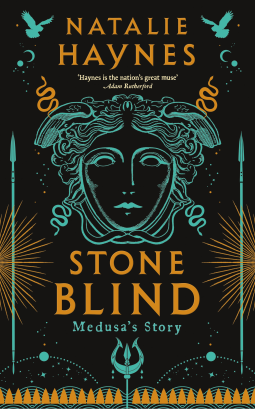
Stone Blind by Natalie Haynes

It’s always good to come across a Greek mythology retelling that has nothing to do with the Trojan War! There have been so many over the last few years (Natalie Haynes’ A Thousand Ships being one of the best I’ve read) that it makes a refreshing change to read about other characters and other myths.

Stone Blind is subtitled Medusa’s Story but is actually written from the perspectives of many different characters, all coming together to tell the tale of the Gorgon Medusa and Perseus’ quest to capture her head. In traditional accounts of this myth, Perseus is seen as the hero, bravely slaying the monstrous snake-haired Medusa whose eyes can turn living creatures to stone. This version looks at things from a different angle, questioning whether it’s really fair to refer to Medusa as a monster and painting Perseus as, if not exactly a villain, a thoughtless, dim-witted boy who ends up completing his quest almost by accident.

While part of the story is told from Medusa’s point of view, we also hear the voices of many other gods, mortals and mythical beings including the other two Gorgons, their sisters the Graia, who share one eye and one tooth between them, the Ethiopian princess Andromeda, who is chained to a rock as a sacrifice, and even the olive trees of Athens. Some have a lot to say, others appear only for a few pages, but each one has an important contribution to make. This is the same style Natalie Haynes used in A Thousand Ships, but I found it more effective here. Whereas in the previous book the various characters’ narratives felt as though they were appearing in a random order, almost like a collection of separate short stories, here they are ordered in a way that makes chronological sense, with each new voice helping to move the story forward.

Medusa, as she is portrayed here, is a very sympathetic character. The only mortal Gorgon of the three and therefore the most vulnerable, she is raised by her two older sisters, Sthenno and Euryale. Medusa’s monstrous features only appear after she is raped by Poseidon in Athena’s temple and the angry goddess punishes her by transforming her hair into a seething mass of snakes and cursing her with the ability to turn everything around her to stone. Condemned to a life of blindness, afraid to uncover her eyes in case her gaze should fall upon one of her beloved sisters, Medusa’s story is very sad – and we know that it is only going to get worse because, far away, Polydectes, King of Seriphos, has challenged Perseus to bring him the severed head of a Gorgon. Fortunately, Haynes doesn’t dwell on the Gorgon-slaying episode, moving straight on with other parts of the myth.

Despite the tragic elements of the plot, the story is told with plenty of humour, particularly in the scenes dealing with the petty squabbling of Zeus, Hera, Athena, Hermes and the other Olympian gods. Haynes does an excellent job of capturing their fickle, petulant natures and the childish rivalries between them. In fact, I can’t really say anything negative about this book, other than that the title is slightly misleading as this is so much more than just Medusa’s story. I’m looking forward to future books by Natalie Haynes and must also go back and read her earlier novel, The Children of Jocasta.

Have you read any other retellings of this myth? If so, I would be interested in any recommendations.

Thanks to Mantle for providing a copy of this book for review via NetGalley.