Elizabeth of York: The Last White Rose by Alison Weir

When Alison Weir’s Six Tudor Queens series came to an end last year with Katharine Parr: the Sixth Wife, I discovered that she would be moving further back in time for her next novel, The Last White Rose, which would tell the story of Elizabeth of York. Elizabeth lived through – and played a role in – one of my favourite periods of history, the Wars of the Roses, so of course I wanted to read this one!

Born in 1466, Elizabeth of York is the eldest child of King Edward IV and his wife, Elizabeth Woodville. With plans for a marriage to the Dauphin of France, Elizabeth’s future looks bright – until her father’s sudden death in 1483 sends everything into turmoil. Her younger brother, now Edward V, succeeds him, but before he can be crowned he is deposed by their uncle, the Duke of Gloucester, who reigns in his place as Richard III. Along with Elizabeth’s other brother, Richard of York, Edward soon disappears from public view completely. With marriage to the Dauphin now out of the question, Elizabeth discovers that Richard III is thinking of marrying her himself – something she is prepared to consider, despite the possibility that he may have been responsible for the disappearance of her brothers.

Then comes the Battle of Bosworth and another change of monarch; Richard is dead and Henry Tudor – Henry VII – has taken the throne. Henry is keen to unite his house of Lancaster with Elizabeth’s house of York by taking her as his wife, which means Elizabeth becomes queen at last! The years that follow will continue to be eventful, however, as she and Henry face rebellion from the Yorkist noblemen, the threat of various pretenders to the throne – and the birth of another future king, their son Henry VIII.

I enjoyed this book, with a few reservations which I’ll mention below. It’s very similar, of course, to the non-fiction book Alison Weir wrote several years ago (Elizabeth of York: A Tudor Queen and Her World), which is not surprising as most of the source material will obviously be the same. If you’ve read one you may feel that you don’t need to read the other, but I’m happy to have read both as this is a period of history that particularly interests me. I do think that as factual information on Elizabeth is quite limited, her story perhaps works better in fictional form where it’s more acceptable (in my opinion) for the author to put forward personal theories, interpretations and assumptions.

My main problem with this book was the bias towards Henry VII and against Richard III – although I was expecting that, as Alison Weir hasn’t made any secret of her views on this subject in her previous books! Just to be clear, I’m happy to keep an open mind on the disappearance of the Princes in the Tower, in the absence of any real evidence, but I certainly can’t share Weir’s absolute conviction that Richard was definitely the culprit. Loving The Sunne in Splendour as I do makes it hard to think of him in a negative light, I suppose! And to be fair, I was impressed by the way Weir writes about Elizabeth’s feelings towards both Richard and Henry in this novel – her uncertainty over which of them, if either, has killed her brothers and how she reconciles that with the idea of first one, then the other, as a potential husband. I would have preferred the matter to have been left like that, but instead, developments towards the end of the book take away all the doubt and ambiguity.

I found Weir’s portrayal of the Woodville family interesting; Elizabeth clearly loves her mother and her Woodville aunts and uncles, but is not blind to their faults, questioning whether some of their actions, such as her mother’s decision to flee to sanctuary immediately that Richard took control of the young king, may have made things worse rather than better. This is such a long book, though! I read the ebook version but the print copy has over 600 pages. It gets off to a slow start with a lot of time spent on Elizabeth’s childhood, but by the middle of the book the pace picks up and it becomes much more compelling.

Elizabeth of York: The Last White Rose is the first in a planned trilogy. The second book will be about Henry VIII and the third about Mary I. I’m looking forward to the one on Henry, as it should provide a very different perspective on the stories told in the Six Tudor Queens series!

Thanks to Headline for providing a copy of this book for review via NetGalley.

This is book 35/50 read for the Historical Fiction Reading Challenge 2022.
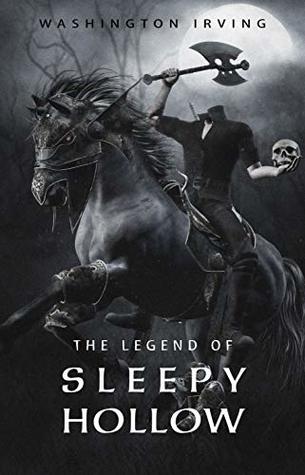
Death and the Conjuror by Tom Mead

Death and the Conjuror is a homage to the great locked room mysteries of the Golden Age and a clever and entertaining novel in its own right. I’m hoping it’s the first in a series as I would love to see more books like this from Tom Mead.

The novel is set in London in the 1930s where the renowned psychiatrist Anselm Rees has been found dead in his study. The door is locked, there’s no sign of a murder weapon and there’s no way for the killer to have escaped without being seen. Inspector Flint of Scotland Yard is baffled by this seemingly impossible murder and calls on retired magician Joseph Spector in the hope that he can use his knowledge of illusions and deceptions to help solve the mystery.

As the detective and the magician begin their investigations, they uncover another intriguing crime – an equally impossible theft – which seems to have links to Dr Rees’ death. Could one of the psychiatrist’s patients be responsible for one or both of these crimes? And can Flint and Spector catch the culprit before another murder takes place?

As with any good mystery novel, there are plenty of suspects, an assortment of clues and lots of red herrings! Suspicion falls not only on the doctor’s own household – including his daughter and her fiancé – but also on three of his patients, celebrities who are referred to as Patients A, B and C, to protect their identities. Each patient has been seeing Dr Rees for help with a specific problem, which we learn more about as the story unfolds. The psychiatric element of the plot is fascinating and reminded me very much of Helen McCloy’s Dr Basil Willing mysteries. It came as no surprise to me, then, to learn that McCloy is one of many classic crime novelists Tom Mead has named as an influence on his writing – along with John Dickson Carr, Ellery Queen, Nicholas Blake and others.

I loved the idea of a magician working alongside the police; Spector has lots of specialist knowledge when it comes to the sort of tricks a murderer or a thief might use to create confusion and cover their tracks. As a locked room mystery it was very satisfying and although I didn’t manage to solve it myself, I enjoyed following the progress of the investigations and was happy for Spector to explain it all for me at the end. As a tribute to the Golden Age mystery I thought it was equally successful. I could almost have believed I really was reading a book from the 1930s, as the author seemed to have made an effort to avoid inappropriately modern language and modern sensibilities. The characters in the book even discuss and reference some of the detective novels of the time, but in such a way that the plots of those books aren’t spoiled for those of us who haven’t read them yet.

This was a great read and I will be hoping for another mystery for Joseph Spector to solve soon.

Thanks to Penzler Publishers, Mysterious Press for providing a copy of this book for review via NetGalley.

This is book 34/50 read for the Historical Fiction Reading Challenge 2022.

Pied Piper by Nevil Shute

Nevil Shute is an author I’ve been intending to try for a long time. His 1942 novel, Pied Piper, is on my Classics Club list and I decided to also put it on my 20 Books of Summer list to give me some extra motivation to pick it up and read it sooner rather than later! I have no idea whether this was the best Shute novel to begin with – A Town Like Alice and On the Beach are probably better known; however, it turned out to be a good choice for me.

The ‘pied piper’ of the title is John Sidney Howard, an elderly Englishman who goes to France in the spring of 1940 to spend some time fishing, relaxing and trying to come to terms with the death of his son whose plane came down in the Battle of the Heligoland Bight. It may seem a strange time to be taking a holiday in Europe, but Howard believes the situation in France is stable and that he won’t be in any danger. However, when the Nazis begin to advance much more quickly than he expected, Howard decides to return home immediately. His departure is delayed when an English couple staying in the same hotel ask him to take their two young children with him to the safety of England, but soon Howard, accompanied by little Sheila and Ronnie, is boarding the train to Paris for the first stage of his journey.

Of course, things don’t go according to plan and Howard and the children find themselves facing one obstacle after another, including sickness, cancelled trains and German bombing raids. Along the way, Howard collects more lost or orphaned children and together they try to avoid the rapidly advancing German army and make their way to safety.

I usually enjoy novels with World War II settings, but I find it particularly interesting when they were actually written during the war itself. It makes a book feel very different when you know that at the time of writing, the author had no idea what would happen next or how the war would eventually end. It’s intriguing to think of how a 1942 reader may have viewed a book like this compared to those of us who are reading it today with the benefit of hindsight and a knowledge of history.

Another thing which makes Pied Piper different from a lot of other wartime novels is that Shute’s protagonist is so ordinary – not a soldier or a spy or a romantic young lover, but a quiet, unassuming old man who becomes a hero unintentionally through a mixture of circumstance and his own basic decency and humanity. The only link between Howard and the sinister ‘Pied Piper of Hamelin’ (apart from the obvious connection with children) comes when we see Howard making whistles from hazel twigs for his young companions to play with.

Although Howard and the children witness and experience some terrible things during their journey, they also encounter several people who offer kindness and generosity, so the novel shows us both the best and the worst of human nature. The book is structured using a framing narrative where Howard is relating the story of his adventures in France to a friend in a London club during an air raid several weeks into the future. This means we know almost from the first page that Howard has survived to tell the tale, yet there’s still plenty of suspense and I was genuinely afraid for him and for the children at various points throughout the novel!

Which of Nevil Shute’s books should I read next?

~

This is book 7/20 from my 20 Books of Summer list.

~

This is also book 29/50 from my second Classics Club list.

Joan by Katherine J. Chen

Against all odds, fate has brought us together. You, who are your kingdom’s future, and I who am no one.

It wasn’t until I started reading this impressive new novel by Katherine J. Chen that I realised how little I know about Joan of Arc; she’s someone I’ve always been aware of, obviously, and I knew a few basic facts but apart from where she has appeared in the background in other historical novels, I’ve never read anything where Joan is the main focus of the book.

After a brief description of the political situation in France in the early 15th century, the novel opens in Domrémy, the small French village where Joan was born. It’s 1422 and France is currently engaged in the Hundred Years’ War, a conflict with England over the succession to the French throne. In quiet Domrémy, Joan grows up far away from the fighting, but faces conflict of her own – with her father, Jacques d’Arc, a violent and abusive bully who has never got over his disappointment that Joan was born a girl and not a boy. Then, one day, the village is attacked and burned by the English, Joan’s sister is raped, and Joan is left swearing revenge on the men she now sees as her enemies: the future Henry VI of England, his regent the Duke of Bedford and Philip, Duke of Burgundy.

A lot of time is devoted to these early years of Joan’s life and I did wonder when we would leave the child Joan behind and meet the warrior Joan, leading her troops into battle – but I can see why it was necessary to cover Joan’s childhood in so much detail. Only by reading about her treatment at the hands of her father, the stories told to her by her beloved uncle, her anger at the fate of her sister and her desire for revenge can we understand what made Joan the strong, determined and inspirational young woman she became. And eventually, of course, we do see Joan meeting the Dauphin of France and riding off with his army to lift the siege of Orléans.

What we don’t see at any point in this novel are miracles, visions or any other religious phenomena of any sort. Katherine J. Chen explains in her author’s note that this was a deliberate decision; her portrayal of Joan is a personal one rather than a traditional one and is a ‘reimagining’ of her life. Removing the religious aspects from Joan’s story makes her feel human, flawed and real, but at the same time the 15th century was a period in which religion was an important part of most people’s daily lives and taking this away from the story of a woman who has been declared a saint seems a bit odd.

This is a beautifully written novel and although I wish authors would stop using the present tense, it does work quite well here, as it did in Annie Garthwaite’s Cecily (a book this one is being compared with – and I would definitely agree with that comparison). It was good to have the opportunity to learn a bit more about Joan of Arc, even if this is only one author’s interpretation and a largely fictional one; if anyone has read any other books about her, I would love to hear your recommendations.

Thanks to Hodder & Stoughton for providing a copy of this book for review via NetGalley.

This is book 33/50 read for the Historical Fiction Reading Challenge 2022.

The Trial of Lotta Rae by Siobhan MacGowan

Sometimes the books that are the most difficult to read are also the most compelling. This was one of those books; although I was horrified by what I was reading, I was so engrossed in the story I didn’t want to put it down.

Charlotte Rae – known to her family and friends as Lotta – is an ordinary young woman working in the office of a London brewery in the early 1900s. After an argument with her boyfriend at the brewery Halloween party, Lotta wanders outside for some fresh air, where she is approached by an older man, Henry Allen Griffiths. Pretending that he has come to comfort her, Griffiths takes her arm, leads her down a secluded street and then rapes her. With the support of her parents, who report the crime to the police, Lotta decides to testify against her attacker in court. She has faith in the justice system and is sure her lawyer, William Linden, will do his best to defend her.

Once the trial is over and a verdict has been reached, Lotta tries to move on with her life, joining the Suffragette movement and working towards fairness and equality for women. Then she makes the unpleasant discovery that William Linden had betrayed her during the trial and her world falls apart again. Unable to forgive William for what he has done, Lotta begins to search for a way to take her revenge.

Although Lotta Rae, as far as I can tell, is a fictitious character, the description of her trial seemed so real I was convinced it must have been a true story! I have rarely felt so angry and frustrated when reading a novel as I did here; all the odds are stacked against Lotta from the beginning and some of the developments in court are disgusting and shocking to read about, even if not entirely surprising. During and after the trial things go from bad to worse for poor Lotta and her story is truly heartbreaking.

I found the second half of the book slightly weaker than the first, which is understandable after such a powerful opening. It does provide some fascinating insights into the suffragette movement, particularly as we see this partly through the involvement of William Linden’s son, Raff, one of a group of men actively campaigning for women’s suffrage. Lotta’s feelings for Raff are complicated because she loves him for the person he is, but hates the fact that he is the son of her corrupt lawyer, and this adds another interesting angle to the story.

There’s a supernatural element that feels a bit out of place and I wished the story could have ended in a different way, but otherwise I loved this book, despite it being so sad and infuriating! I wasn’t aware until after I’d finished the book that Siobhan MacGowan is the sister of Shane MacGowan from The Pogues, as well as a successful journalist and musician in her own right. This is her first novel and I hope she’ll be writing more.

This is book 32/50 read for the Historical Fiction Reading Challenge 2022.
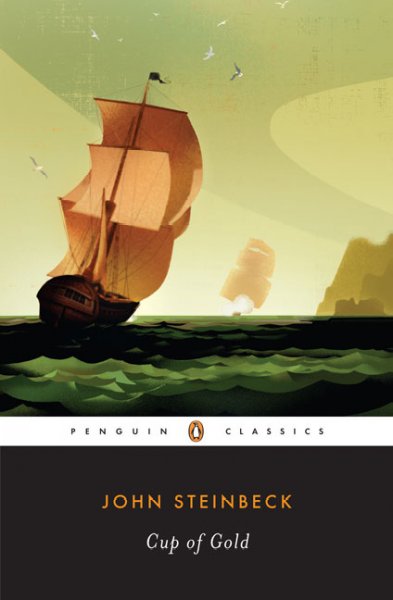
Godmersham Park by Gill Hornby

I enjoyed Gill Hornby’s previous novel, Miss Austen, about the life of Jane Austen’s sister Cassandra. Her new one, Godmersham Park, is also inspired by the Austens, telling the story of Anne Sharp, who became one of Jane’s closest friends after taking up the position of governess to her niece, Fanny.

We first meet Anne in 1804 on the day of her arrival at Godmersham Park, the estate in Kent that is home to Edward Austen Knight, his wife Elizabeth and their many children. (If you’re in the UK and have a current £10 note to hand, Godmersham Park is the house depicted on the back beside the portrait of Jane Austen). At thirty-one years old, Anne has no experience of teaching or caring for children, but following the death of her mother she has found herself in need of employment and somewhere to live. This change of circumstances comes as a shock to Anne and it takes her a while to settle into her new job and way of life.

When Anne’s eleven-year-old charge, Fanny, shows her the letters she has been receiving from her Aunt Jane (yes, that Jane), Anne finds them charming and immediately decides that Jane is her ‘favourite Austen’. Anne will have to wait a long time for her chance to meet this mysterious letter-writer, but first she makes the acquaintance of another Austen – Jane and Edward’s brother Henry, who comes to stay at Godmersham Park and quickly befriends the new governess.

This is a lovely novel and, like Miss Austen, although it doesn’t self-consciously try to recreate the style of Jane Austen’s work, the language still transports you back to the early years of the 19th century. There are no glaring anachronisms that I noticed and it even feels like the sort of story Austen herself could have written. The pace is slow and apart from a subplot involving a mystery surrounding the whereabouts of Anne’s father, nothing very dramatic happens, yet I was drawn in by the characters and the setting and found it quite absorbing. It was particularly interesting to read about Anne’s experience of working as a governess and how she struggled to find her place within the household, not being fully accepted either as one of the family or one of the servants.

The novel is inspired by the diaries kept by Fanny Austen Knight, letters exchanged between Anne Sharp and Jane and Cassandra Austen, and a first edition of Emma that Jane signed for Anne. All of these things add to our knowledge of Anne’s life and personality and provide evidence of her close friendship with Jane Austen. However, almost nothing is known of Anne’s background before she arrived at Godmersham Park and Gill Hornby explains in her author’s note that she had to use her imagination to create a backstory for Anne. The overall result is a convincing blend of fact and fiction, which I really enjoyed.

Thanks to Century for providing a copy of this book for review via NetGalley.

This is book 6/20 from my 20 Books of Summer list.

This is book 31/50 read for the Historical Fiction Reading Challenge 2022.
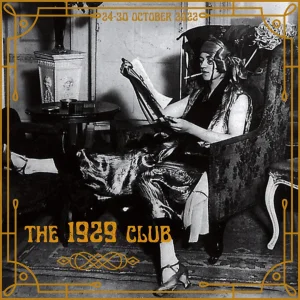
Summerhills by D.E. Stevenson

Summerhills, first published in 1956, is the second book in D.E. Stevenson’s Ayrton family trilogy which began with Amberwell. I knew it had been a few years since I read the first book but was shocked to find that it was actually more than six years! I was worried that I’d left it so long I would struggle to get back into the story, but that turned out to not be a problem; although I could barely remember what happened in Amberwell, Stevenson provides enough of a recap in the opening chapters that I could easily pick up all the threads again.

The book begins with Roger Ayrton, now an officer in the Army, returning to his family home in Scotland for a visit. The house, Amberwell, is where Roger and his brothers and sisters grew up before the outbreak of World War II and it still holds a special place in his heart. Some of the family have moved on, but Amberwell is still home to Roger’s stepmother and his younger sister Nell, who has been taking care of his son, Stephen, since his wife’s death. Stephen is now eight years old and Roger thinks it’s time he was sent away to school, but Nell objects, wanting him to stay close to home. As there are no suitable schools near Amberwell, Roger comes up with what he thinks is the perfect plan – he’ll open a school of his own!

At first it seems that the creation of the school – which becomes known as Summerhills – is going to be the main focus of the book, but the plot soon branches off into several different directions. Roger finds himself unexpectedly falling in love, as does Nell, while his youngest sister, Anne, whose first marriage ended unhappily is trying to move on from her traumatic past and has become housekeeper to an elderly neighbour. A new cook arrives at Amberwell, adding a touch of humour to the story, and there’s also a new governess, Georgina Glassford, who enjoys running and is always looking for someone to time her mile. Although most of the main characters in the book are very likeable, I did find their treatment of Georgina very unkind, particularly as their dislike of her seems to be based on the fact that she wears trousers and gets up early to exercise.

I enjoyed the glimpse of life in post-war Scotland – even though the lifestyles of the Ayrton family seem largely unchanged thanks to Roger receiving a large inheritance on his wife’s death, all around them other once-wealthy families are having to sell their country houses as they can no longer afford to maintain them or pay for servants. This is how Roger manages to acquire a large house to convert into a school (of course there’s no question of an Ayrton boy being sent to an ordinary day school – it must be a boarding school – and there’s no mention of the girls being allowed to go either). At least he does promise to charge reduced fees so that less fortunate boys can attend and gives the job of headmaster to his friend Arnold Maddon (one of my favourite characters), who has lost a foot during the war and has been struggling to find work.

I would have liked Anne’s storyline to have had a proper conclusion – it was left very open-ended – and I was sorry that we saw very little of the other Ayrton sister, Connie, and nothing at all of their brother Tom, who has become a doctor. There’s also a strange subplot in the middle of the book where Roger goes to Rome in search of Aunt Beatrice; I couldn’t really see the point of this as it didn’t have much relevance to the rest of the novel. Still, Stevenson’s writing style is so readable that even pointless episodes like this are quite enjoyable. There is a third novel, Still Glides the Stream, which is described as the final book in the Ayrton trilogy, but seems to be about a completely different family. Have any of you read that one?

This is book 5/20 from my 20 Books of Summer list.