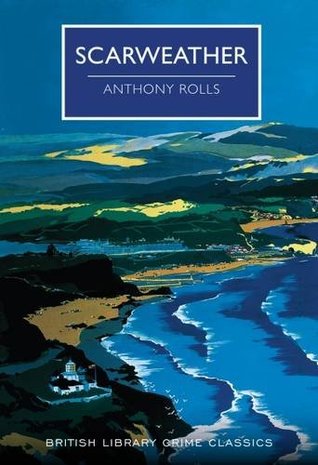
Scarweather by Anthony Rolls

I didn’t think I had anything suitable to read for Paula’s Reading Wales Month, then I discovered that Anthony Rolls (a pseudonym of Colwyn Edward Vulliamy) was a Welsh author born in Glasbury, Radnorshire in 1886. He wrote several crime novels under the Anthony Rolls name, two of which are available as British Library Crime Classics – and luckily I had one of them, Scarweather, on my TBR.

Originally published in 1934, Scarweather is narrated by John Farringdale, who is a young man of twenty-one when the story begins in 1913. Farringdale has always been close to his cousin Eric, so when Eric meets the famous archaeologist Professor Tolgen Reisby, he can’t wait to introduce Farringdale to him. Although Farringdale is proud to see his cousin on good terms with such a renowned and impressive man as the Professor, he feels uneasy about Eric’s obvious interest in Reisby’s young wife, Hilda. When an opportunity arises to visit the Reisbys himself at their home, Scarweather, in the north of England, he accepts the invitation and heads north, taking his friend, Frederick Ellingham, with him.

All appears to be well at Scarweather and Farringdale wonders whether he has been worrying unnecessarily, but Ellingham, being older and more perceptive than his friend, hints that the Professor may not be all he seems. And so when Eric disappears, believed to have been involved in a sailing accident, Ellingham decides to investigate. However, war soon breaks out in Europe, meaning that the investigation will take a lot longer than expected. We rejoin the characters fifteen years later, when it seems that the secrets of Scarweather are about to be revealed at last!

Scarweather is an unusual mystery novel, because there’s really no mystery at all. The solution is obvious to the reader from early on – in fact, Farringdale himself remarks once or twice that he supposes we’ve already guessed the truth. There are no clever twists, no real surprises and very little ‘detecting’. Ellingham and Farringdale are clearly a Holmes and Watson pairing, with Ellingham in the role of Holmes, but because we only see him through the eyes of Farringdale – who seems to be completely oblivious to everything that is going on – we don’t get a chance to watch any of his detective work or hear much about his theories until the very end of the book. And the ending, when it comes, seems very morally questionable.

Yet, despite all of this, I still think this book is worth reading, particularly if you’re more interested in archaeology than I am. Rolls’ writing really comes alive whenever he moves onto the subject of archaeologists and their work; this was obviously a passion of his and something he was very knowledgeable about. There’s also a strong sense of place: Scarweather is located in a remote coastal area and the harshness of the landscape and the sea makes the setting an atmospheric one. Even though knowing the solution to the mystery takes away all the suspense, there’s still a feeling of darkness and foreboding.

Although I didn’t love this book, I would be happy to read more by Anthony Rolls. The other book of his published as a British Library Crime Classic, Family Matters, sounds better than this one.
Booth by Karen Joy Fowler

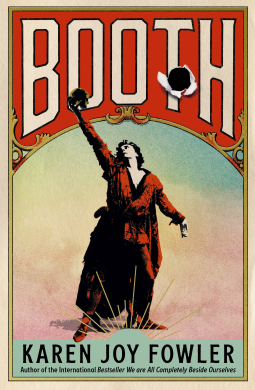
This fascinating new novel by Karen Joy Fowler tells the story, in fictional form, of the Booths, the 19th century theatrical family who produced two of America’s most acclaimed actors, as well as one infamous killer – John Wilkes Booth, the man who assassinated Abraham Lincoln.

Although John Wilkes is, unfortunately, the best known Booth and probably the reason many readers will be drawn to this novel – to find out more about his background and what drove him to commit such a terrible crime – this is not just his story. In fact, he plays no bigger a part in it than several of the other Booths. For much of the first half of the book, the focus is on his father, the Shakespearean actor Junius Brutus Booth, who will have an important influence on the lives of each of his children – despite the fact that they rarely see him, as he spends so much time away on tour while the family stay at home on their farm near Baltimore.

Junius Brutus is a talented and successful stage actor, but as the years go by his alcoholism and eccentric behaviour make him increasingly unreliable, damaging his reputation and his financial situation. Still, he remains the centre of his children’s lives, and when three of his sons – Junius Jr (or June), Edwin and John Wilkes – follow in his footsteps and become actors themselves, they face a lifelong battle to avoid comparisons with him and with each other. It is Edwin who emerges from his father’s shadow to become one of the leading actors of his time and it is from Edwin’s perspective that we see part of the story unfold.

There are also two Booth daughters who survive to adulthood, Rosalie and Asia – and these are the other characters whose perspectives we see throughout the novel. Rosalie is the eldest and her viewpoint is particularly important early in the novel as she has experiences and memories that her younger siblings do not. As Rosalie grows into a sensitive woman who remains unmarried and close to her mother, she becomes known to the family as ‘poor Rosalie’, a sad and slightly tragic figure. Her younger sister Asia, a stronger personality who will become an author later in life, also offers some interesting insights into the dynamics of the Booth family; she has good relationships with both Edwin and John and feels caught in the middle as tensions begin to grow between the two brothers.

The murder of Abraham Lincoln doesn’t take place until near the end of the novel and there’s not much time left after that to explore the impact this terrible event has on the rest of the Booth family. Neither are we given any real answers as to what went wrong with John Wilkes Booth and what led him to carry out the assassination. It’s hard to say why, coming from a family who were loyal to the Union and largely anti-slavery, it is only John who ends up supporting the Confederacy and opposing abolition. All we can do is make our own assessment based on the information we are given, through the eyes of his siblings, about his childhood, his relationships, his education and his political views.

The novel has clearly been thoroughly researched (although in her author’s note, Karen Joy Fowler explains that as there’s very little information available on Rosalie Booth, it was necessary to use her imagination to fill in the gaps where Rosalie’s character is concerned). However, the book is incredibly detailed and this does slow the plot down a lot, particularly in the middle. We are also given some biographical information on Abraham Lincoln himself and on the events that lead to the Civil War and his presidency. These sections are interspersed with the Rosalie, Edwin and Asia chapters and are presented as non-fiction, which I didn’t really like as I felt it disrupted the flow of the story.

Despite the negative points I’ve just mentioned, I loved this novel. Even the use of present tense and heavy foreshadowing didn’t put me off. I enjoyed learning about a group of historical figures I’d previously known almost nothing about – I particularly liked the parts about the colourful theatrical careers of Edwin and Junius Brutus – and every time I picked the book up I looked forward to finding out what would happen to the family next. I haven’t read anything else by Karen Joy Fowler, not even We Are All Completely Beside Ourselves, but having enjoyed this book so much I’ll consider reading some of her others now.

Thanks to Serpent’s Tail for providing a copy of this book for review via NetGalley.

This is book 13/50 read for the Historical Fiction Reading Challenge 2022.

Who’s Calling? by Helen McCloy

This is the fourth novel in American mystery writer Helen McCloy’s Dr Basil Willing series. I have read and enjoyed all of the previous three – Dance of Death, The Man in the Moonlight and The Deadly Truth – but it’s not necessary to read them in order as each mystery stands alone.

Who’s Calling? was first published in 1942 and begins with a young doctor, Archie Cranford, becoming engaged to Frieda Frey, a glamorous nightclub singer. Although he knows his mother won’t be happy to hear the news, Archie arranges to bring Frieda home to Willow Spring, near Washington, to meet his family and friends. Just before Frieda sets off from New York, she receives an anonymous phone call warning her not to go to Willow Spring. Deciding to ignore this threat, she goes ahead with the visit only to find herself the victim of more sinister calls, as well as other strange phenomena. Could this be the work of a poltergeist or is there a more rational reason for what is going on?

At a dinner party held by the Cranfords’ friends, Senator Mark Lindsay and his wife Julia, a murder takes place which may or may not be connected with Frieda’s ghostly experiences. It’s time to call in psychiatric consultant Dr Basil Willing in the hope that he can solve the crime and identify the murderer.

This is another entertaining Basil Willing mystery – although Willing himself doesn’t make an appearance until halfway through the book. The first half is devoted to setting the scene and introducing the characters, the most memorable being the Cranfords’ cousin, Chalkeley Winchester, an annoying, self-absorbed man described by the others as a ‘spoiled child grown up’ and a ‘male old maid’. I also found the relationship between the Lindsays interesting, as we soon discover that Senator Lindsay is bored and disillusioned with his work and that it’s actually his wife Julia who is the driving force behind his political career.

McCloy begins each of her books with a list of ‘Persons of Interest’, briefly describing the characters who will appear in the novel, and then a second list of ‘Objects of Interest’ – in other words, some of the clues or significant happenings you need to look out for. In this book the objects of interest are particularly intriguing and include ‘a loud KNOCK on the front door – and nothing more’, ‘a BEAD CURTAIN which rustles for a while after a murderer passes’ and ‘a KNITTING BAG that moves without being touched.’ Being given this information in advance doesn’t help at all with solving the mystery, though, and doesn’t really have much purpose other than to add a bit of fun to the book!

I quickly narrowed the suspects down to two, and then correctly guessed which one was the culprit, but I couldn’t work out exactly why they had done it. The solution relies on Basil Willing’s psychiatric knowledge and I don’t think it’s something that would occur to most readers, so I was left feeling that McCloy hadn’t been very fair to us this time. Still, I did enjoy this book and will look forward to reading more from the series.

Thanks to Agora Books for providing a copy of this book for review via NetGalley.

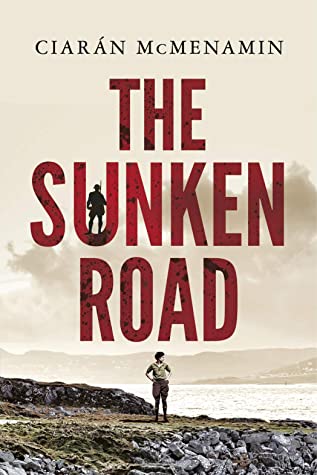
The Sunken Road by Ciarán McMenamin

I became aware of this book when it appeared on the Walter Scott Prize longlist in February and thought it would be a good choice for this month’s Reading Ireland Month (hosted by Cathy of 746 Books). Ciarán McMenamin is a Northern Irish actor and writer and The Sunken Road is his second novel.

The Sunken Road follows the story of Francis Leonard, known as Francie, who goes off to fight in the First World War with his best friend, Archie. Before he leaves, he promises Archie’s sister, Annie, that he will take care of her brother and bring him safely home when the war is won. Six years later, Francie is back in Ireland and has joined the IRA, fighting this time for his country’s independence. Finding himself a wanted man, pursued by Crozier, his former commander on the Western Front and now a member of the Ulster Special Constabulary, Francie is forced to go on the run. But what has happened to Archie and why has he not returned to Ireland? How will this affect Francie’s relationship with Annie, just when he needs her help more than ever? And what has he done to make Crozier hate him so much?

These questions are answered gradually as the story moves back and forth between 1915-16 on the battlefields of France and Belgium and 1922 in County Fermanagh and County Donegal, with occasional flashbacks to Francie’s childhood years, showing the beginning of his friendships with Archie and Annie. I found the jumping around in time a bit confusing at first, but as I got to know the characters better I was able to keep one timeframe separate from the other in my head and settle into the story. Although only six years have passed between the two periods, we can see how his experiences in the trenches have changed Francie, leaving him damaged, violent and desperate. Some of his actions since returning to fight in Ireland have been cruel and brutal and he is not an easy character to like, yet his interactions with Annie show that he is still capable of some tenderness and the fact that Annie – despite her heartbreak over what happened to her brother – doesn’t give up on Francie suggests that she thinks the man he once was is still there somewhere.

This book wasn’t entirely to my taste; I found it very violent, even for a war novel, and there’s a lot of focus on fighting, shooting and military life, things that I don’t particularly enjoy reading about. However, I was still gripped by the story and the very moving ending, although I wished I had a better knowledge of the history surrounding the formation of the Irish Free State as McMenamin doesn’t provide a lot of background information and just drops us straight into the action. If you do like a well-written war story and are looking for one set in Ireland, The Sunken Road would be an excellent choice. It’s written from such an interesting perspective – an Irish Catholic who fights in the 36th Ulster Division of the British Army against the Germans, then just a few years later finds himself fighting against the British for Ireland.

There are two other Irish novels also longlisted for the Walter Scott Prize: The Ballad of Lord Edward and Citizen Small by Neil Jordan and The Magician by Colm Tóibín. It will be interesting to see if any of them make the shortlist when it is announced in April.

Go Tell the Bees That I am Gone by Diana Gabaldon

Sometimes I wonder why I’m continuing to read this series. This is the ninth Outlander novel and the last one that I really enjoyed was the sixth; since then, each book has felt longer and less substantial than the one before. In this book, the final sequence – 100 pages or so – is excellent, but to get there you have to persist through 800 pages of irrelevant subplots that seem to lead nowhere and minor characters we barely know suddenly given large storylines of their own. As I’ve mentioned in previous reviews, though, part of my problem is that I’ve never been a fan of the Lord John Grey spin-off series, and Lord John and his family have played an increasingly large part in these most recent novels when I would prefer to be reading about other characters. I don’t mind Lord John himself but have very little interest in Hal, Ben, Amaranthus, Dottie or Percy!

Anyway, if you’re new to the series, should you start with this book? My answer would be no – definitely not! Start at the beginning, when 1940s nurse Claire Randall first steps inside a stone circle in Scotland and finds herself transported to the 18th century, then read the books in order, otherwise you’re going to be very confused.

Go Tell the Bees That I am Gone picks up where Written in My Own Heart’s Blood left off. It’s 1779 and the Revolutionary War is drawing ever closer to Fraser’s Ridge, the settlement in North Carolina where Claire lives with her husband, Jamie Fraser. Although Jamie had resigned his commission in the Continental Army after the Battle of Monmouth, with tensions growing between his tenants on the Ridge he knows he won’t be able to stay away from the action for long. Elsewhere, Jamie’s son William is still trying to come to terms with the discovery of his true father’s identity while also continuing the search for his missing cousin, Ben.

Meanwhile, Roger is finally about to achieve his dream of being ordained as a minister, but he and Brianna are becoming convinced that they are being pursued by someone from another time and are questioning whether they’ve made the right choices to keep their children safe. We also catch up, briefly, with Fergus and Marsali, who are discovering that printing newspapers can be a dangerous occupation in times of war, and we follow Ian, Rachel and Jenny as they travel north in search of Ian’s first wife.

It may sound as though a lot is happening in this book, but the things I’ve mentioned above are not enough to fill 900 pages and there seems to be a huge amount of padding: Frances Pocock, the orphan rescued from a brothel in the previous novel, trying to adjust to her new life at Fraser’s Ridge; William’s friend John Cinnamon searching for his father; a young girl, Agnes Cloudtree, escaping from an abusive stepfather; Silvia Hardman, Jamie’s Quaker friend, making a shocking discovery about her husband; and the usual assortment of difficult births, medical procedures, hunting expeditions, and all the minutiae of daily life on the Ridge. The focus on Claire and Jamie and their immediate family members, the relationships that made the earlier books so compelling, has been lost and the new characters just aren’t as interesting.

With no overarching plot to drive the story forward, it’s not until near the end that the pace eventually begins to pick up and I was reminded of why I used to love Diana Gabaldon’s books. We end on a cliffhanger which gives me hope that the next book will get off to a more exciting start! Book ten is apparently going to be the last and I suspect we could have another very long wait (the previous one was published in 2014, a seven year gap). I’ll definitely read it – I couldn’t not find out how it all ends after coming this far! – but I hope it will be better than this one and will concentrate on giving the main characters we know and love the ending they deserve.

This is book 11/50 read for the Historical Fiction Reading Challenge 2022.

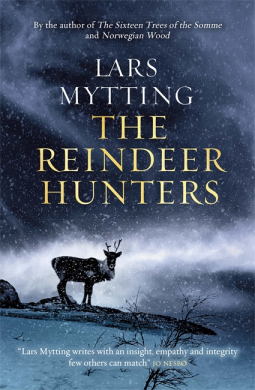
The Reindeer Hunters by Lars Mytting

Translated by Deborah Dawkin.

This is the second book in Norwegian author Lars Mytting’s Sister Bells trilogy. I loved the first, The Bell in the Lake, so was looking forward to visiting the village of Butangen again and finding out how the story would continue.

The Reindeer Hunters begins in 1903, more than twenty years after the events of the first novel. Kai Schweigaard, once a newcomer to Butangen, has settled into his role as village pastor, but is still haunted by memories of Astrid Hekne, the woman he had hoped to marry. He also feels guilt over his involvement in the removal of the two bells which once hung in the bell tower of the local church, commemorating Gunhild and Halfrid Hekne, the conjoined twin sisters who were two of Astrid’s ancestors. When Kai hears about a legendary tapestry woven by the sisters – the Hekne Weave – he sets out to search for it, hoping in some way to make amends for what happened in the past.

In the hills just outside Butangen, Astrid’s son Jehans is leading a lonely life, supporting himself through fishing and hunting, having withdrawn from the rest of the community. One day he finds himself in dispute with another hunter when they both claim to have shot the same reindeer, but this marks a turning point in Jehans’ life as he gets to know the other hunter, an Englishman called Victor Harrison, and an uneasy friendship begins to develop.

This, like the first book, is beautifully written and translated. The setting – a remote Norwegian village steeped in superstition and tradition – is vividly described, making this the kind of historical novel where you can become truly immersed in another time and place. Towards the end of the book, though, we see that scientific progress and new technology are finding their way even to Butangen in the form of electricity, improved travel and advances in dairy farming. Events in the wider world also touch the lives of our characters, including the dissolution of the Norway-Sweden union, the First World War and, finally, the flu pandemic of 1918:

There, on the church steps, Schweigaard had put all his accumulated knowledge into his advice. Mass was cancelled indefinitely. Auctions and public dances were best avoided. Folk ought not to visit other villages. They should maintain a distance from strangers. And always veer on the side of prudence.

I enjoyed reading about Kai Schweigaard’s daily life, his duties as pastor and his relationships with the other villagers and I was completely absorbed in his search for the Hekne Weave and what it might reveal. I was much less interested in the details of Jehans’ hunting and fishing expeditions and, later, Victor’s work as a pioneer of aviation, although other readers will probably find those things more enjoyable than I did! For this reason, I didn’t like this book as much as the first and every time the perspective switched to Jehans or Victor, I found myself wanting to return to the village and continue with Kai’s storyline. I did, however, come to love one of the new characters, Kristine, a young woman who doesn’t have an easy life but displays an inner strength and determination that I really admired.

I’ll be looking out for the final book in this trilogy and will be interested to see where the story will go next.

Thanks to Quercus Books, MacLehose Press for providing a copy of this book for review via NetGalley.

This is book 10/50 read for the Historical Fiction Reading Challenge 2022.

The Clockwork Girl by Anna Mazzola

The Clockwork Girl is Anna Mazzola’s third novel and, I think, her best so far. Not only is the cover beautiful, the setting is also wonderfully dark and atmospheric and the story is fascinating.

The year is 1750 and Madeleine Chastel, daughter of a Parisian brothel owner, is about to start a new job as a maid in the household of Dr Reinhart, a Swiss clockmaker. Madeleine is pleased to have an opportunity to escape from her mother’s clutches, but this particular job is not one she has chosen for herself – she has been forced to take it by the chief of police, who wants her to spy on Dr Reinhart and report back on any suspicious activities she witnesses. But although Madeleine soon becomes convinced that the police are correct and something strange is going on in the Reinhart household, she finds that she is growing fond of the clockmaker’s daughter, Veronique, and is reluctant to betray her new friend.

The novel is written from the perspectives of three different characters: Madeleine is one, Veronique is another and the third is Jeanne Poisson, better known as Madame de Pompadour, mistress of King Louis XV. I found the choice of narrators very effective as it means we are given insights into every level of Parisian society – the working class, the bourgeoisie or middle class, and the aristocracy. Our story takes place several decades before the French Revolution would begin, but you can see the foundations being laid here as tensions start to simmer. The various locations in which the novel is set are vividly described, with sharp contrasts between the dark, dirty streets where the poor people live in squalor and the luxury and opulence of the royal palaces of Versailles and the Louvre.

Although The Clockwork Girl is a work of fiction, it is inspired by several real historical events. First, the disappearance of children from the streets of Paris in 1750, a scandal known as ‘The Vanishing Children of Paris’. And secondly, the technological advances during the 18th century in the creation of automata – clockwork dolls, animals and other machines with moving parts. Anna Mazzola weaves both of these things into the plot and the result is an engaging and unusual novel that I thoroughly enjoyed reading.

If this book doesn’t appeal, you may prefer Anna Mazzola’s first book, The Unseeing, based on a true crime (the Edgware Road Murder) or The Story Keeper, a novel set on the Isle of Skye. I enjoyed both of them.

Thanks to Orion for providing a copy of this book for review via NetGalley.

This is book 9/50 read for the Historical Fiction Reading Challenge 2022.