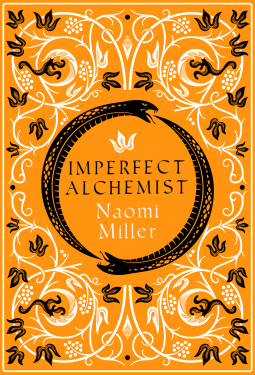
Imperfect Alchemist by Naomi Miller

Mary Sidney may not be as well known as her brother Sir Philip Sidney, the Elizabethan poet who wrote Astrophel and Stella, but she was a successful and accomplished author in her own right – and one of the first Englishwomen to publish under her own name. In Imperfect Alchemist, Naomi Miller brings Mary’s story to life in fictional form, beginning in 1575 when Mary is summoned to court to attend the Queen. Marriage follows a few years later to Henry Herbert, Earl of Pembroke, and although it is an arranged marriage rather than one based on love, Henry at least seems to accept his new wife’s intelligence and learning and allows her the freedom to pursue her literary interests, leading to her eventually establishing a literary circle at their home, Wilton House.

Mary’s story, which is written in the third person, alternates with a first person narrative from the perspective of another young woman, Rose Commin. Rose, a fictional character, comes from a very different background, having grown up in the countryside, the daughter of a cloth merchant and a herbalist. After her mother is put on trial for witchcraft, Rose is sent away to the safety of Wilton House, where she becomes maid to Lady Catherine Herbert, Countess of Pembroke, who encourages her to develop her talent for drawing, as well as teaching her to read and write. Sadly, Lady Catherine dies shortly after Rose’s arrival, but when Henry Herbert marries again and brings his young wife, Mary Sidney, to Wilton House, a friendship begins to form between Rose and her new mistress.

Before reading Imperfect Alchemist, I knew almost nothing about Mary Sidney. Her brother Philip has appeared in one or two books I’ve read (such as Towers in the Mist by Elizabeth Goudge and Watch the Lady by Elizabeth Fremantle) but I can’t remember ever reading anything about Mary. As well as shedding some light on her personal life, the novel explores her involvement with alchemy and medicine, her relationships with other historical figures such as Sir Walter Raleigh, Ben Jonson and Aemilia Lanyer, and her major literary achievements. Not only does Mary prepare and publish an edition of her brother’s The Countess of Pembroke’s Arcadia, she produces new translations of the Psalms and her version of the Antony and Cleopatra story is thought to inspire Shakespeare’s famous play.

Although Mary is, on the surface, the more interesting character, I think I preferred Rose’s sections of the book – possibly because Rose narrates her chapters herself, making her easier to identify with and to warm to. However, I’ve read a few other historical novels recently that have alternated a real woman’s story with an invented one (usually a lady’s maid), and along with the ‘healer being accused of witchcraft’ theme, which also seems to be an increasingly common trend in historical fiction, I didn’t feel that this book had anything very new or different to offer. As an introduction to the life and work of Mary Sidney Herbert, though, it’s excellent and I was certainly able to learn a lot from it. This is Naomi Miller’s first novel and apparently the first in a projected series of novels about early women authors, so I’ll be interested to see who she writes about next.
Book 17/50 read for the 2021 Historical Fiction Reading Challenge.
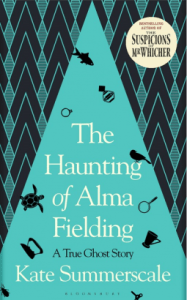
The Haunting of Alma Fielding by Kate Summerscale

I’ve had mixed experiences with Kate Summerscale’s books so far: I loved The Suspicions of Mr Whicher, liked The Wicked Boy and gave up on Mrs Robinson’s Disgrace after a few chapters. I didn’t know what to expect from The Haunting of Alma Fielding, then, but I hoped it would be another good one!

Like Summerscale’s others, this is a non-fiction book based on a true story, in this case the story of an ordinary thirty-four-year-old woman, Alma Fielding, who becomes the centre of paranormal activity in her London home. The book follows Nandor Fodor of the International Institute for Psychical Research as he investigates Alma’s claims, desperately hoping that this time – after being disappointed by a long line of frauds – he has finally come across a genuine haunting.

At first, having witnessed for himself the smashed glasses, spinning teacups, moving furniture and broken eggs, Fodor is convinced that a poltergeist is at work in the Fielding household. The more he learns about Alma’s abilities, which include producing live animals out of thin air and transporting herself from one area of London to another, the more intrigued he becomes…until, eventually, he begins to have doubts. Is this a real paranormal phenomenon he is investigating or is Alma haunted by something very different?

I found some parts of this book fascinating. Although I was sure Alma must have been involved in some sort of elaborate hoax and that there must have been logical explanations for the things she claimed were happening to her, I didn’t know exactly what she was doing or how she was doing it. I was amazed to see the lengths Alma went to in her efforts to prove that her psychic abilities were real and the lengths Fodor and the other ghost hunters went to in their efforts to verify them. Some of the methods they used to investigate Alma’s claims were quite harmless, such as conducting word association tests, but others were intrusive and cruel, and although I didn’t like Alma it made me uncomfortable to read about the way she was treated – particularly as Fodor believed that her powers were the products of various traumas she had suffered earlier in life.

At times, Summerscale widens the scope of the book to put Alma’s story into historical context, to discuss the influence of novels and films of that period, and to look at some of the other things going on in society at that time. The ‘haunting’ and the investigation took place in 1938, when the world was on the brink of war and Summerscale suggests that people were turning to spiritualism as a distraction:

The ghosts of Britain, meanwhile, were livelier than ever. Almost a thousand people had written to the Pictorial to describe their encounters with wraiths and revenants, while other papers reported on a spirit vandalising a house in Stornoway in the Outer Hebrides, and on a white-draped figure seen gliding through the Hawker aircraft factory in Kingston upon Thames. The nation’s phantoms were distractions from anxiety, expressions of anxiety, symptoms of a nervous age.

However, although I found plenty of things to interest me in this book, I did have some problems with it. I felt that it became very repetitive, with endless descriptions of Alma’s various manifestations and detailed accounts of the researchers’ experiments. I thought Summerscale also devoted too much time to anecdotes about other alleged psychics and spiritualists, which didn’t really have much to do with Alma. It seemed that Alma’s story on its own wasn’t really enough to fill a whole book, so a lot of padding was needed.

I didn’t like this book as much as Mr Whicher or The Wicked Boy, but Kate Summerscale does pick intriguing topics and I’ll look forward to seeing what she writes about next.

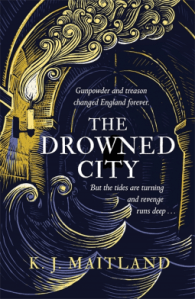
The Drowned City by KJ Maitland

I had already been drawn to The Drowned City, the first in a new series of historical mysteries set in the 17th century, before it dawned on me that KJ Maitland was Karen Maitland, an author whose books I’ve enjoyed in the past. All the more reason to want to read it, then!

In January 1606, exactly a year after the execution of the conspirators who tried to blow up Parliament in the failed Gunpowder Plot, a towering wave sweeps up the Bristol Channel, leaving a scene of devastation. Whole families are drowned, buildings are swept away and farmland is destroyed. As the survivors try to come to terms with what has happened, rumours begin to arise. Some say the wave was summoned by witches, others that it was God’s way of taking revenge for the executions. The King’s most trusted adviser, Charles FitzAlan, fears that it’s all part of another Catholic conspiracy and decides to send someone to Bristol to investigate. Luckily, he knows just the man for the job…

That man is Daniel Pursglove, currently languishing in Newgate Prison awaiting what seems to be certain death. Daniel’s particular background and skills have brought him to FitzAlan’s attention and when he is offered his freedom in return for carrying out some investigations in Bristol, he jumps at the chance. Arriving in the city, Daniel begins his search for the missing Catholic conspirator known as Spero Pettingar, but almost immediately finds himself caught up in another mystery – a series of murders. Are they all part of the same plot or is something else going on in the flooded city?

Like Maitland’s earlier novels, this is a dark and atmospheric story with an interesting historical setting. I’ve never read anything about the Bristol Channel Floods of 1607 (or 1606; Maitland uses the old Julian calendar rather than the Gregorian), so that was something completely new for me. The descriptions of the devastated city in the aftermath of the wave are vivid and even quite eerie and almost otherworldly. It’s always refreshing to read historical novels with a setting other than London, and the flooded Bristol, in a superstitious age when natural disasters were often attributed to witchcraft or messages from heaven, was the perfect choice for this particular story.

Although there a few real historical characters in the book, notably Robert Cecil, most are fictional. Daniel Pursglove, the central character in this and presumably the rest of the series, intrigued me as we know so little about him at first. What is his background? How did he come to be a prisoner? What are the special talents that make him so suitable for this task? As the story unfolds, so does our understanding of Daniel and gradually some of our questions are answered. I’m sure we’ll be learning more about him in future books.

Where this book was less successful, in my opinion, was with the mystery element; once Daniel arrives in Bristol the plot takes off in so many different directions I kept forgetting what his original purpose was in going there. Had it been shorter and more tightly focused, I think I would have enjoyed it much more; instead, I found myself struggling to keep track of what was happening at times. Still, this is a promising start to a new series and I’m definitely interested in reading the second book.

Thanks to Headline for providing a review copy of this book via NetGalley.

Book 16/50 read for the 2021 Historical Fiction Reading Challenge

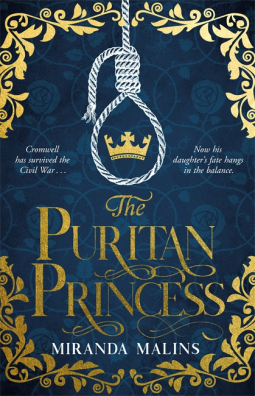
The Puritan Princess by Miranda Malins

As someone who reads a lot of historical fiction, it’s always nice to come across books featuring historical figures I’ve never read about before. The Puritan Princess, Miranda Malins’ debut novel, tells the story of Frances Cromwell, youngest daughter of Oliver Cromwell. Despite the title, Frances never actually became a princess, but the book covers the period from 1657 to 1658 when this looked as though it could be a possibility.

Following years of civil war and the execution of King Charles I, Oliver Cromwell has been named Lord Protector of the Commonwealth of England, Scotland and Ireland…but for some of his supporters, this is not enough. In 1657, Parliament offers him the crown, leaving Cromwell facing a dilemma. On the one hand, accepting might bring about stability, which is what Parliament hopes, but on the other, having recently been involved in abolishing the monarchy, he is reluctant to become monarch himself. History tells us that he will eventually turn the offer down, but while it is under consideration Frances wonders what his decision will mean for her and what implications it could have for her marriage. Frances is in love with the young courtier Robert Rich, whose father supported the opposite side in the recent civil war; they already face difficulties in persuading Cromwell to allow them to marry and any change in Frances’ status could make it even less likely.

As well as her relationship with Robert, the relationships Frances has with her sisters also form an important part of the story. Her eldest sisters, Bridget and Elizabeth are much older; they reached adulthood before their father rose to power and can remember a different way of life; Mary, though, is only a year older than Frances and the two are very close, to the extent that Mary is prepared to sacrifice her own happiness for her sister’s sake. Less attention is given to Cromwell’s sons, but they do appear in the novel now and then – Richard, who will succeed his father as Lord Protector, and Henry, who is Lord Deputy of Ireland.

Oliver Cromwell himself is shown in a much more positive light than usual. Seen through his daughter’s eyes, he is depicted as a loving father and husband, fond of art, music and hunting – very different from the image most people have of the strict Puritan opposed to all forms of enjoyment. However, although it’s good to see a different side of Cromwell, because the story is narrated by Frances and she is clearly biased in favour of her father, I don’t think it’s a very balanced portrayal.

I found the first half of the book slightly slow and repetitive as it is mainly concerned with whether or not Frances will marry Robert Rich and whether or not Cromwell will accept the crown, but I’m glad I kept going as the plot does become more gripping later on. I previously knew very little about the final years of Cromwell’s Protectorate and, as I’ve said, I had never read about Frances until now, so I do feel that I’ve learned something new from The Puritan Princess and I’m already looking forward to Miranda Malins’ next book.

Book 15/50 read for the 2021 Historical Fiction Reading Challenge.
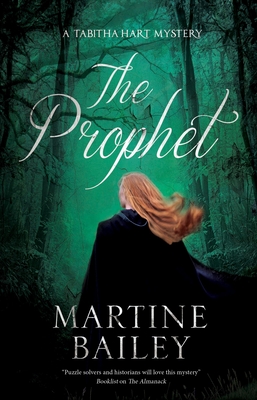
The Prophet by Martine Bailey

When I finished reading Martine Bailey’s The Almanack last year I didn’t know there was going to be a sequel and didn’t expect one, so it was a nice surprise to come across The Prophet and to reacquaint myself with characters I hadn’t thought I would meet again. This book does work as a standalone, though, so if you haven’t read The Almanack yet, don’t worry!

The story begins in 1753, on Old May Day – eleven days were ‘lost’ the year before when Britain changed over from the Julian calendar to the Gregorian calendar – and Tabitha De Vallory and her husband Nat have decided to ride into the forest to see the giant Mondrem Oak which has been decorated for the occasion. Tabitha also has a special reason of her own for wanting to visit the oak; she is pregnant and wants to ask the tree spirit for a safe childbirth. However, she and Nat are unprepared for what they actually find beneath the tree – the dead body of a young woman, brutally murdered.

The woman’s death has coincided with the arrival of a group of people who are on their way to America to start a new life in Pennsylvania and have set up camp in the forest before continuing their journey to the coast. Led by a charismatic young preacher known as Baptist Gunn, the group deny all knowledge of the murder, but are they telling the truth? Could the dead woman be linked to Gunn’s prophecy predicting the coming of a second messiah on Midsummer’s Day?

I enjoyed being back in Netherlea, the Cheshire village in and around which these books are set. It’s a small community steeped in tradition and folklore, where people’s lives are still ruled by ancient superstitions and rituals, making them suspicious of things that are new and unfamiliar – the perfect setting in which a religious cult like Baptist Gunn’s can take root and develop. The conflict between new and old is also explored through the themes of pregnancy and childbirth as Tabitha looks forward to the arrival of her baby with both excitement and anxiety.

The mystery element of the novel is also interesting; both Tabitha and Nat have a personal connection to the dead woman which makes it even more important for them to find out what happened to her. In addition to the prophet Gunn, there are several other suspects and some of the revelations towards the end of the book surprised me! As well as trying to solve the mystery, Tabitha is trying to put her past behind her and adjust to a new way of life as the lady of Bold Hall, with all the changes in status her marriage has brought her.

Of the two books, I think I preferred The Almanack, mainly because I loved the little riddles at the start of every chapter which aren’t included in this one, but The Prophet was still an enjoyable, if unsettling, read.

Thanks to Severn House for providing a copy of this book for review via NetGalley

Book 14/50 read for the 2021 Historical Fiction Reading Challenge.
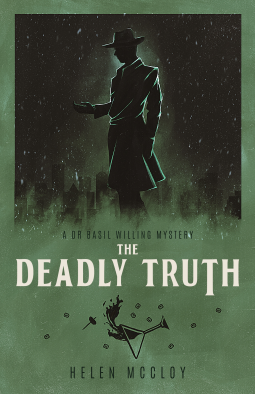
The Deadly Truth by Helen McCloy

First published in 1941, this is the third book in Helen McCloy’s Dr Basil Willing mystery series. Although I’ve been reading the books in order so far, it’s really not necessary and you could start anywhere. I think the first one, Dance of Death, is still my favourite but this one comes close.

The Deadly Truth begins with biochemist Roger Slater being visited in his laboratory by the glamorous Claudia Bethune and telling her about a new drug he is developing: a ‘truth serum’ based on scopolamine. After Claudia departs, Roger discovers that one of the tubes containing the drug has disappeared; aware of Claudia’s love of practical jokes and of the drug’s dangerous properties, he sets off in pursuit but, by the time he catches up with her, it’s too late. Guests are arriving at Claudia’s house for a dinner party – and are about to be served a very special cocktail.

Later that night, Dr Basil Willing, who is renting a beach hut on Claudia’s land, thinks he can see flames through the window of the Bethunes’ house and decides to investigate. It turns out there is no fire, but what he does find inside the house is just as shocking – Claudia, slumped at the table, strangled by her own emerald necklace. As the details of the dinner party begin to emerge, Basil learns that, having had their drinks spiked with the truth serum, each guest had revealed truths about themselves that they would have preferred to keep secret. Now that the effects of the drug have worn off, can Basil separate the truth from the lies and identify the murderer?

Helen McCloy’s novels all have such unusual and intriguing plots! They may seem far-fetched and unlikely at first, but really the murder in each one is just a starting point for McCloy to introduce some fascinating psychological and scientific themes and ideas; in this book, as well as the discussions of truth and lies, there’s also an interesting exploration of sound and deafness. As a New York psychiatrist, Basil Willing solves the crimes through his understanding of the human mind, looking at personalities and motives rather than spending too much time on technicalities such as alibis, and this is the kind of mystery novel I prefer. Basil does have some specialist knowledge which plays an important part in the solution of this particular mystery, but even without this knowledge the clues are there for an observant reader to pick up on. Unfortunately, I was not observant enough and allowed the red herrings McCloy drops into the story to lead me away from the correct suspect!

I think Helen McCloy is one of the best of the ‘forgotten’ crime authors I’ve discovered recently. She also seems to have been quite prolific; there are ten other Basil Willing novels and lots of standalones, so I’m looking forward to reading more of her work.

Thanks to Agora Books for providing a copy of this book for review via NetGalley.

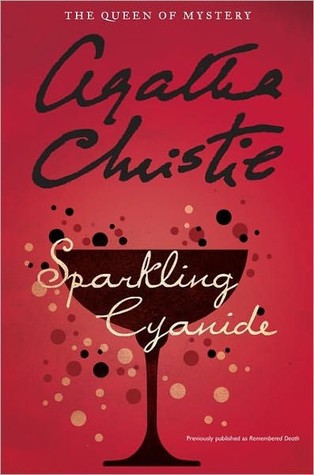
Sparkling Cyanide by Agatha Christie

The March theme for the Read Christie 2021 challenge is ‘a story featuring a society figure’. I had narrowed my choices down to the Poirot novel Lord Edgware Dies and the Colonel Race mystery Sparkling Cyanide. As I had just read a Poirot in February and have another one lined up for April, I decided to go with this one, Sparkling Cyanide. First published in 1945, the novel is an extended version of one of Christie’s short stories, Yellow Iris, which I haven’t read – but apparently the culprit is someone different in that story, so both are worth reading.

The novel begins one year after the death of Rosemary Barton, a beautiful heiress who had been celebrating her birthday at the Luxembourg restaurant with friends and family. The cause of death was believed to be cyanide in Rosemary’s champagne and it was assumed that she had committed suicide due to depression following an illness. Her husband George accepted the verdict at the time but has now received some anonymous letters stating that Rosemary was actually murdered. Sure that the murderer must have been one of the other people at the table, George decides to recreate the dinner party by inviting the same guests to the same restaurant in the hope that he will be able to identify the culprit. However, things don’t go according to plan and the evening ends with a second death…

The characterisation in this book is very strong and Christie begins by giving us one chapter from the perspective of each of the six dinner party guests, so that the nature of their relationship with Rosemary and their thoughts and feelings about her are clear from the start. It is quickly established that each of them had a possible motive for wanting Rosemary dead, but it doesn’t seem at first that any of them actually had the opportunity to carry out the murder. With the second death, things become even more complicated as this murder appears to be an almost impossible crime. I very rarely manage to solve an Agatha Christie mystery, but this is one that I found particularly difficult, despite paying close attention to the descriptions of the seating plans in the restaurant and even sketching a few diagrams! The eventual explanation, when it comes, seems quite unlikely and relies on a certain sequence of events that could easily have happened in a different way with a different result. However, I didn’t feel cheated as I don’t think any clues were withheld from us – I just didn’t put them together correctly!

The detective in this novel is Colonel Race rather than one of Christie’s more famous detectives such as Poirot or Marple – not that he really seems to do a lot of detecting. In fact, one of the suspects makes a bigger contribution to the solving of the mystery than he does. Still, Race is a straightforward, unobtrusive character who just quietly gets on with his investigations, makes mistakes now and then and isn’t afraid to admit that he has got things wrong. This is the first book I’ve read in which he appears; I think there are only three others, but as I’m hoping to read or re-read all of Christie’s novels eventually I’ll be meeting him again at some point.