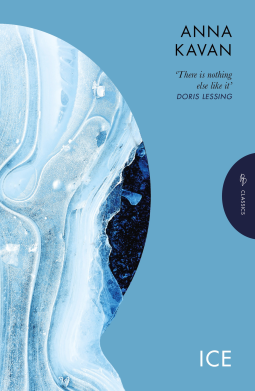
Ice by Anna Kavan

This is a strange book and I’m not sure I’ll be able to describe it adequately! It’s probably not something I would normally have chosen to read, but this new edition from Pushkin Press caught my eye and as I’ve enjoyed other books from their Classics range, I decided to try it.

Ice was first published in 1967, the last of Anna Kavan’s books to be published before her death a year later. It follows an unnamed narrator who has developed an obsession with a pale young woman with silver-white hair. The girl is also unnamed and described as delicate, glass-like and under the control of her sinister husband, who later becomes known as ‘the Warden’. Our narrator pursues her from place to place, hoping to rescue her from the Warden, occasionally catching up with her and then losing her again. There’s not much more to the plot than that – Christopher Priest in his foreword to this edition calls the novel ‘virtually plotless’ – but the book still has multiple layers that make it an interesting and worthwhile read.

First, there’s the setting. The narrator’s pursuit of the white-haired girl takes place against a backdrop of apocalyptic scenes as the planet rapidly becomes engulfed by ice. I’ve seen this referred to as an allegory of Anna Kavan’s own addiction to heroin, although I don’t know enough about her to comment on that. It could also be seen as a warning of climate change, more relevant than ever today, of course. Either way, there are some beautiful descriptive passages as Kavan writes about the coldness, the glittering snow and the giant walls of ice closing in on the girl, the narrator and the world.

Another notable thing about the novel is the way the reader (and the narrator himself) can never be quite sure of the boundaries between reality and a dreamlike or hallucinatory state. Sometimes the girl will appear seemingly from nowhere, just out of reach or about to be enclosed by the ice – only to disappear again just as suddenly, leaving us wondering whether she was ever really there at all. These shifts in reality occur repeatedly throughout the book, which is very unsettling! The Warden also never feels entirely real, but is always there as a threatening, oppressive presence; the narrator sees himself as trying to free the girl from the other man’s control, but his own infatuation with her gradually begins to feel just as disturbing.

In the foreword, Priest describes the book as ‘slipstream’, which Wikipedia defines as ‘speculative fiction that blends together science fiction, fantasy, and literary fiction, or otherwise does not remain within conventional boundaries of genre and narrative’. It’s certainly not a conventional novel and I have to be honest and say that I didn’t enjoy it as much as I’d hoped to – after the first few appearances and disappearances of the girl, I began to find it repetitive – but it’s also a unique and powerful one. The cold, icy imagery will stay with me for a long time.

Thanks to Pushkin Press Classics for providing a copy of this book for review via NetGalley.

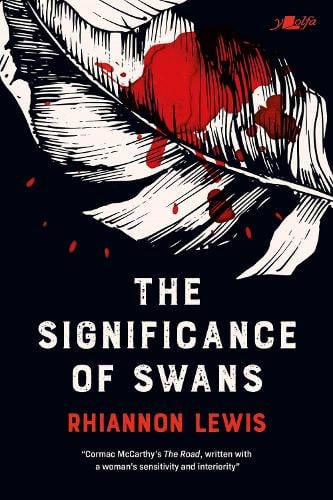
The Significance of Swans by Rhiannon Lewis

In this fascinating new dystopian novella, Rhiannon Lewis expands on a short story from her 2021 collection I am the Mask Maker. When I read that short story, I actually mentioned in my review that it was one I found particularly intriguing and wished was longer, so I was pleased to learn that my wish had come true!

The book begins with Aeronwy visiting her brother at his farm on the Welsh coast. Just before she says goodbye and returns home, they spot the unusual sight of seven swans flying in formation through the winter sky. The next day thousands of disappearances are reported – not just in Aeronwy’s small corner of Wales, but all over the country and beyond.

As the days and weeks go by, the overnight ‘removals’, as they become known in the media, continue. Every morning, people awake to find an empty space in their bed, the impression left by their partner’s body still visible; every morning, adults fail to arrive at work and children fail to attend school. Aeronwy and her husband do their best to continue with their lives, hoping that whoever or whatever is behind the removals will leave them alone, but the rapidly declining population means that public services and infrastructure are affected and soon there’s no more television, no more radio, no way of finding out what’s going on in the outside world. Eventually, the inevitable happens and Aeronwy’s husband is removed. She sets out alone to make the hundred-mile journey to her brother’s farm, in the hope that he might still be alive, but what will she find when she gets there?

I don’t read many post-apocalyptic novels, but I find that most of them tend to tackle the same questions. What caused the apocalyptic event? Is there a reason why some people were able to survive and not others? If we meet another human being, can they be trusted or will they see us a threat to their own survival? Will it be possible to build a better world from the ruins of the old one? In The Significance of Swans, Rhiannon Lewis does explore these things and provides some answers, while leaving other issues open to interpretation. What makes this book different from others I’ve read is the idea of the seven swans, glimpsed by Aeronwy and her brother the day before the removals begin. The swans appear to have some significance, but what is it?

With the whole book being written from Aeronwy’s perspective, this means we only get a limited view of what is going on, particularly once communication with the rest of the world is lost and she finds herself alone with nobody to talk to. Yet it’s fascinating to see things through Aeronwy’s eyes and to watch this ordinary middle-aged woman from Wales try to make sense of her situation. I thoroughly enjoyed this unusual novella and thought it was the perfect length – long enough to develop the themes hinted at in the shorter version from I am the Mask Maker and short enough to keep things moving at a steady pace without ever becoming boring. I received a copy for review courtesy of Y Lolfa, an independent Welsh publisher. You can find out more about this and the other books they publish here.

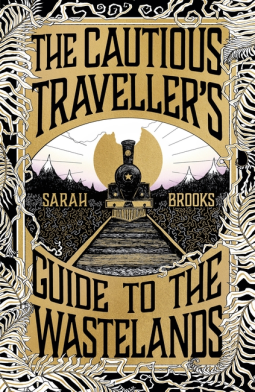
The Cautious Traveller’s Guide to the Wastelands by Sarah Brooks

It’s 1899 and passengers are boarding the Trans-Siberian Express, a twenty-carriage luxury train which will take them from Beijing to Moscow in time to attend the Great Exhibition. The four thousand mile journey will travel through the Wastelands, an abandoned wilderness where the landscape and wildlife seem to be undergoing strange changes and mutations. Since the changes were first recorded several decades earlier, Walls have been built to separate the Wastelands from the rest of Russia and China and passengers are not allowed to leave the train in the area between the Walls. On the previous journey, something went wrong: the glass in the windows cracked, exposing the train to the dangers of the Wastelands. The Trans-Siberian Company blamed the glassmaker and have assured passengers that the train is now safe, but doubts still remain.

The story of the 1899 Trans-Siberian crossing is told from the perspectives of several of the passengers. First, there’s Marya Petrovna, who has boarded the train under a false name and disguised as a mourning widow. At first we don’t know who Marya is or why she is hiding her identity, but we do know that she believes an injustice has been done and has come on this journey in search of answers. Then there’s Dr Henry Grey, an English naturalist whose latest theories have been disproved and who hopes to restore his reputation by studying the Wastelands. Finally, Zhang Weiwei is a sixteen-year-old girl known as ‘the child of the train’ because she was born in the Third Class sleeping car and has spent her whole life travelling backwards and forwards on the train. There are many other people onboard the train, but these are the central three around whom the novel revolves.

The Cautious Traveller’s Guide to the Wastelands is an unusual, imaginative novel and there were many things I enjoyed about it. I’ve read several other books set on trains, but usually, even in Murder on the Orient Express, the train simply provides a way of bringing a group of people together in close confines or of getting them from one destination to another. In this book, the train itself is an important part of the story and could even almost be viewed as another character. Sarah Brooks’ worldbuilding is very impressive; the novel has been compared to Susanna Clarke’s Piranesi and Erin Morgenstern’s The Night Circus and it did make me think of the latter in particular. So much attention to detail goes into describing the various carriages and compartments, the history of the train and its earlier crossings, and the fictional travel guide which gives the novel its name. The Wastelands themselves are less clearly described and although it’s suggested that life there has become tainted in some way, we don’t really know how or why, and much of the mystery still remains at the end of the book, which I’m sure was deliberate – but quite frustrating!

However, I felt that the setting and atmosphere came at the expense of the plot. The pace was very slow, with more than half of the novel devoted to setting the scene and introducing the characters, and it seemed to end just as things were starting to happen. I also would have preferred an explanation for what was happening in the Wastelands and was left wondering what we were intended to take away from the book. Was there a message in there about climate change and the environment – or migration, with walls being built to keep people out (or in)? I think we’re definitely supposed to question whether it’s best to travel cautiously or curiously, embracing change or turning away from it.

The Cautious Traveller’s Guide… is a fascinating alternate history novel, then, with lots to think about and debate. I didn’t find it completely satisfying, but I’m sure the right reader will love it.

Thanks to Orion Publishing Group for providing a copy of this book for review via NetGalley.

This is book 6/20 of my 20 Books of Summer 2024.

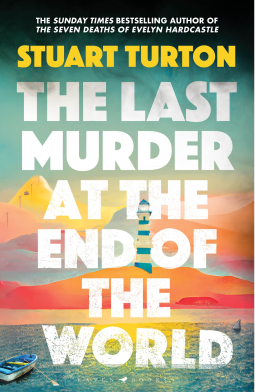
The Last Murder at the End of the World by Stuart Turton

Stuart Turton is, in my opinion, one of the most original and imaginative authors writing today; although I know his style doesn’t work for everyone, I loved his first book, The Seven Deaths of Evelyn Hardcastle, which was unlike anything else I’ve ever read. His second novel, The Devil and the Dark Water, a mystery set aboard a 17th century Dutch trading ship, disappointed me, but I recently read his short story, The Master of the House and loved that one too, so I was curious to see what this, his newest novel, would be like.

The Last Murder at the End of the World combines a murder mystery with a post-apocalyptic setting. The world as we know it has been destroyed by a black toxic fog that has swept across the planet, killing everyone it touches. The only place the fog hasn’t reached is a small Greek island, home to the Blackheath scientific research facility. The island is inhabited by one hundred and twenty-two villagers and three scientists from Blackheath, who have become known as the Elders. While the scientists continue their research into the fog and the security system that is holding it back from the island, the villagers farm the land and obey the rules set out for them by the scientists, while being discouraged from thinking too deeply for themselves.

Disaster strikes when one of the scientists is murdered and the barrier keeping the fog at bay is broken down. If the islanders can solve the murder within ninety-two hours, the barrier will be restored – if not, the fog will envelop the entire island. One of the villagers, Emory, is more resourceful than the others; rather than just accepting the situation and her place in society, she has always been curious and eager to learn. The task of investigating the crime, then, falls mainly to Emory – but to make her job even more difficult, the security system has also wiped the memories of the villagers, so someone could be a murderer without even knowing it.

The Last Murder at the End of the World is a difficult book to write about without spoiling too much. From the beginning, we are faced with lots of intriguing questions. Why do none of the villagers live past the age of sixty? Who or what is ‘Abi’, the omniscient voice who is present in everyone’s mind? Are the three Elders working with the villagers or against them? Everything is explained eventually but I won’t discuss the plot in any more depth here. I think if you’ve read other dystopian/post-apocalyptic novels you’ll already have an idea of the sort of things being explored, such as why some people survived and not others and whether society can be rebuilt to make the new world a better place than the last one.

The murder mystery element is interesting mainly because of the limitations that are placed upon it – the short period of time in which Emory has in which to solve the mystery and the fact that nobody can remember anything they may have done or witnessed on the night of the crime. There are also some surprising plot twists and revelations that meant I was constantly questioning and re-evaluating everything I thought I had figured out. However, this is definitely a book where the characters take second place to the plot; the three scientists are particularly difficult to like and, apart from Emory, the villagers are bland and not easily distinguished from each other. For this reason, The Last Murder at the End of the World is a novel I enjoyed from an intellectual perspective but not from an emotional one.

Thanks to Raven Books for providing a copy of this book for review via NetGalley.

The Empty World by D.E. Stevenson

Did you know that D.E. Stevenson had written a post-apocalyptic novel? I didn’t, until I read the description of this one and was intrigued by how different it sounded from her usual light romances and family sagas. First published in 1936, it’s available in ebook format from independent publisher Lume Books. I’m not sure whether ebooks count towards Karen and Lizzy’s #ReadIndies month, but this book seems to be currently out of print in physical form.

The Empty World begins with historical novelist Jane Forrest and her secretary, Maisie, boarding a flight from New York to London. Jane is prepared for a turbulent journey, but she and the other passengers are alarmed when a particularly violent electrical storm seems to knock them off course and cut off communication with the world below. Finally managing to land in Glasgow, the passengers and crew immediately sense that something is horribly wrong – the airport is eerily deserted and nobody comes to meet the plane. And it’s not just the airport…the city of Glasgow itself also appears to be completely empty of people, animals, birds and any other form of life. Eventually, Jane and her companions are forced to face the possibility that they could be the only human beings left in the whole world.

I don’t want to go into the plot in too much more detail as part of the enjoyment of reading this book was first in wondering what had happened to destroy life on earth and then in wondering how Jane and the other survivors would react. It would be nice to think that if a disaster threw you together with a random group of people you would all work together and cooperate, but of course that’s not what happens here and divisions and tensions within the group are apparent from the start. Some of these are romantic tensions, due to there being seventeen men in the group and only five women. Others arise from different views over how their new society should be run and whether everyone should be allowed to be part of it.

It seemed at first that the whole book would be written from Jane’s perspective and I did find her a likeable heroine, but we also get to know the other people who survived the disaster – thirteen passengers and nine crew members – and some of them go off and have adventures of their own as the novel progresses. As well as Jane and her secretary, these include newspaper proprietor Sir Richard Barton, who becomes the de facto leader of the group, Hollywood actress Iris Bright and her bullying manager, two elderly spinster sisters, and an assortment of pilots and engineers.

A few pages into the book, it began to occur to me that something didn’t feel quite right. I eventually looked back at the first page and discovered that although the book was published in 1936, the story is actually set in 1973, Stevenson’s future. That obviously hadn’t registered with me when I first started reading, although the description of a transatlantic flight only taking twelve hours should have told me it wasn’t the 1930s! To be fair, the setting is only vaguely futuristic and overall it does feel much more like the 30s than the 70s.

I don’t read a lot of post-apocalyptic fiction, but Stevenson seems to explore most of the issues that are usually raised in this kind of novel. Why did some people survive and not others? How should they go about rebuilding their lives and how will each survivor fit into the new community that begins to emerge from the ruins? Which ideas, inventions and customs of the former civilisation are worth preserving and which should be consigned to history? Money, for example, no longer has any meaning when you can walk into an abandoned shop and take whatever you need.

I loved the eerie atmosphere Stevenson creates as she describes a world without life, with inanimate objects frozen in place exactly as they were when the catastrophe struck. Trying to travel anywhere is an ordeal as the roads are blocked with crashed or stationary vehicles (although I don’t think Stevenson had fully appreciated how much busier the roads would have become between the 1930s and 1970s – and can you imagine how bad this problem would be in 2023!). I found it particularly poignant when three members of the party take a small plane and fly to Europe, only to find that the places they’d always dreamed of visiting – Rome and Venice, for example – have completely lost their magic now they are devoid of life. At least you can have the museums and galleries all to yourself!

It’s sad that The Empty World seems to have been almost forgotten and has never received the attention or acclaim of other dystopian novels. Maybe it was just too different from Stevenson’s other work to appeal to her existing readers while her reputation as an author of gentle, domestic fiction may have led to the book being overlooked by science fiction fans. I loved it anyway and found it a fascinating, thought provoking read. I would definitely recommend trying it if you can get hold of it – if you need it in physical format, used copies seem to be quite rare and expensive but maybe you’ll be lucky. The book has also been published in the US under the title of A World in Spell.

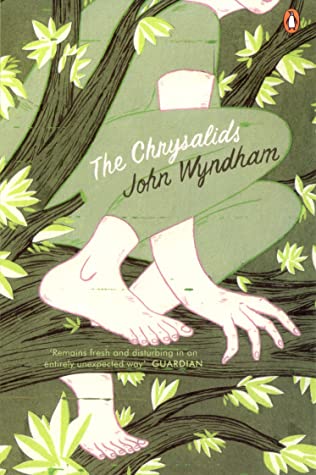
The Chrysalids by John Wyndham

The Chrysalids is the book that was chosen for me in the recent Classics Club Spin. The deadline for posting our Spin book reviews was supposed to be yesterday, but I got confused with the dates and am a day late! Anyway, after enjoying all of the books I’ve previously read by John Wyndham – The Midwich Cuckoos, Chocky and The Day of the Triffids – I had high hopes for this one and wasn’t disappointed. It’s another fascinating, exciting and thought-provoking novel – although not quite what I’d been expecting.

I deliberately tried not to read too much about this book before I started it, so I assumed the Chrysalids must be some sort of monstrous alien beings similar to the Triffids. However, this is not really that kind of book at all; it’s a post-apocalyptic novel exploring the changes in society brought about by an unspecified (though presumably nuclear) disaster known as the ‘Tribulation’. There are no monsters, although some of the characters view their fellow humans that way.

Our narrator, David Strorm, was born many years after the Tribulation in rural Labrador, a part of the world where normal life has resumed to some extent, although the ‘Old People’ have been almost forgotten and their technological advances have been lost in the mists of time. The people of Labrador are living an almost medieval existence, ruled by religious zealots who believe that as God created humans in his image, all human life should conform to a set of strict specifications. Anyone who is found to deviate from this in any way is considered a blasphemy and exiled to the Fringes, a wild and lawless region to the south. Unfortunately, as a result of the nuclear apocalypse, mutations have become very common.

David is still a child when his best friend Sophie is banished to the Fringes after her shoe comes off, revealing a sixth toe. Having witnessed Sophie’s fate, David becomes aware of the importance of keeping his own mutation – the power of telepathy – a secret. A mental abnormality should be easier to hide than a physical one, but the very fact that he and his telepathic friends look just like everyone else makes them a bigger threat to the religious leaders who are determined to identify and drive out every blasphemy. Can David and the others continue to keep their special ability hidden – and what will happen if they get caught?

What makes The Chrysalids so interesting is that although it was published in 1955 and set in some distant point in the future, the themes and ideas it explores are still very relevant to our lives today. Intolerance, bigotry and prejudice have sadly not gone away and there is still a tendency for some groups to judge others for not being ‘people like us’. The Chrysalids raises the interesting question of what being normal actually means and why any of us should have the right to decide whether another person is normal or not. Later in the novel another community is introduced who also consider their own way of life to be superior and to them it’s the religious fundamentalists of Labrador who are seen as primitive and savage.

Like the other Wyndham novels I’ve read, the science fiction elements in this one are really quite understated; the main focus is on the changes in society and in daily life caused by an apocalyptic or paranormal incident. I think this is why I enjoy reading Wyndham so much even though I don’t consider myself a big fan of science fiction in general. However, although I loved most of this book and found it quite gripping, I felt that the message became a bit unclear towards the end, possibly intentionally, with the introduction of that other community (it’s difficult to discuss it properly here while trying to avoid spoilers). Still, I was left with a lot to think about, which is always a good thing, and I wished there had been a sequel, or at least a few more chapters, as it seemed there was a lot more to learn about this world and our characters’ place in it. If you’ve read this book I would love to hear your thoughts!

This is book 31/50 from my second Classics Club list.

The Testaments by Margaret Atwood

I read The Testaments at the beginning of March, when life still felt relatively normal, and I’m glad I did because now that I feel as though I’m living inside the pages of a dystopian novel I’m not sure I would have been in the mood for reading one! I hope everyone is staying safe and coping with this strange and unfamiliar world we’ve found ourselves in. It’s been another stressful week for me – on Monday I started working from home and was just settling into a new routine when I was informed yesterday that I was being placed on furlough, so now I won’t be able to work at all until further notice and will only receive 80% of my salary during that time. Not great, but I’m hoping this at least means the company will be able to stay afloat and I will still have a job to go back to once all of this is over. On the plus side, I’m going to have plenty of time for reading and blogging now – if I could only get out of the slump I’ve been in for the last few weeks!

Anyway, back to The Testaments. I loved The Handmaid’s Tale, Margaret Atwood’s classic dystopian novel from 1985, but for some reason I didn’t feel any immediate compulsion to read the sequel when it was published last year, not even after it was named joint winner of the Booker Prize. I knew I would get around to reading it eventually, though, and as I’ve mentioned, I finally picked it up earlier this month.

The first thing I will say is that I do think you should read The Handmaid’s Tale before starting The Testaments as otherwise you will be making it difficult for yourself to fully understand what is happening. Even leaving a gap of several years, as I did, made it difficult to get straight back into the story – I should really have found time for a re-read of The Handmaid’s Tale first.

Both books are set in the fictional state of Gilead (formerly the USA), where a patriarchal regime has risen to power and restricted women to a small number of clearly defined roles: Wives – women from higher ranking families who are married off to men known as ‘Commanders’; Handmaids – fertile women tasked with bearing children for Commanders whose Wives are unable to conceive; Marthas – domestic servants; and Aunts – women who have sacrificed the chance of marriage and childbirth and devoted themselves to the running of Gilead. In The Handmaid’s Tale, we saw Gilead through the eyes of Offred, a Handmaid, but The Testaments gives us a different perspective…three different perspectives, in fact.

The first narrator is Aunt Lydia, one of the founding Aunts of Gilead, who has helped to create the rules women must follow in this grim, oppressive society. Lydia’s story unfolds in the form of a secret manuscript describing her work as an Aunt and offering insights into the inner workings of Gilead and the corruption at its heart. The other two testaments are told in the voices of two young women who have led very different lives. One, Agnes, is the adopted child of a Gilead family and has been raised to become the Wife of a Commander. The other, Daisy, has grown up across the border in Canada with all the freedoms and opportunities that have been denied to Agnes.

These three testaments, taken as a whole, give us a much wider view of Gilead than we received from Offred’s rather limited perspective in The Handmaid’s Tale. I found Lydia’s the most interesting, as she has the best understanding of how things work in Gilead, but Agnes’ first-hand account of what it is like to grow up there is valuable too, as is Daisy’s account of how Gilead is viewed by the outside world. What struck me about the latter two narratives is that some (though not all) of the things Daisy sees as wrong and terrible about Gilead are things that Agnes considers right and reasonable. It made me wonder what sort of things any of us could come to accept as normal after years of being conditioned to think a certain way.

I didn’t find this book quite as powerful as The Handmaid’s Tale – and there were some plot developments towards the end that I found a little bit unconvincing. Like its predecessor, though, this is the sort of book that leaves you with a lot to think about.