Review: Basil by Wilkie Collins

In 19th century literature, a man can approach a girl’s father, ask for permission to marry her and be given that permission, all without the girl having any say in the matter whatsoever. Sometimes the potential husband has only actually spoken to the girl once or twice; sometimes not at all – and they certainly haven’t had time to get to know each other properly. Basil by Wilkie Collins is a good example of why these arrangements were often doomed to failure and caused unhappiness both for the husband and the wife.

Our narrator, the Basil of the title, is the son of a rich gentleman who is proud of his family’s ancient background and despises anyone of a lower social standing. When Basil meets Margaret Sherwin on a London omnibus he falls in love at first sight and becomes determined to marry her. Unfortunately Margaret is the daughter of a linen-draper, the class of person Basil’s father disapproves of most of all, so he decides not to tell his family about her just yet.

Mr Sherwin agrees to Basil marrying Margaret – but he insists that the wedding must take place immediately and that Basil must then keep the marriage secret for a whole year, not even seeing his wife unless Mr or Mrs Sherwin are present. This unusual suggestion should have told Basil that something suspicious was going on but he’s so blinded by love that he doesn’t care – until it’s too late…

Basil was one of Collins’ earliest novels and it shows, as it’s just not as good as his more famous books such as The Woman in White. The story took such a long time to really get started, with Basil introducing us to the members of his family, giving us every tiny detail of their appearance, personality and background. The second half of the book was much more enjoyable, filled with action, suspense and all the elements of a typical sensation novel including death, betrayal and adultery (Victorian readers apparently found the adultery scenes particularly shocking). There are lots of thunderstorms, people fainting and swooning, fights in the street, and everything you would expect from a Victorian melodrama.

All of Collins’ books are filled with strong, memorable characters and this was no exception. There’s Basil’s lively, carefree brother Ralph, his gentle, kind hearted sister Clara, the poor, frail Mrs Sherwin and the sinister Mr Mannion. However, I thought the overall writing style of this book was slightly different to what I’ve been used to in his later books – although I can’t put my finger on exactly what the difference was. This is not a must-read book but if you like the sensation novel genre, you’ll probably enjoy this one.
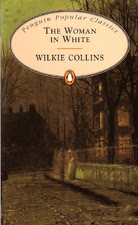

Review: The Woman in White by Wilkie Collins

There, in the middle of the broad bright high-road – there, as if it had that moment sprung out of the earth or dropped from the heaven – stood the figure of a solitary Woman, dressed from head to foot in white garments, her face bent in grave inquiry on mine, her hand pointing to the dark cloud over London, as I faced her.

I first read The Woman in White in 2006 – it was the first Wilkie Collins book I ever read and the one that turned me into a huge fan of his work. I just wish I had discovered him sooner!

The Woman in White was the most popular book of the 1860s; when it was originally serialised in Charles Dickens’ periodical All The Year Round large crowds gathered outside the newspaper offices every time the latest edition went on sale; you could buy Woman in White perfume, bonnets and shawls and dance the Woman in White waltz…and all of this was 150 years before Harry Potter!

So what is it about? I won’t go into the plot in too much detail, as I don’t want to spoil the fun for those of you who haven’t read it yet. The story begins with drawing master Walter Hartright’s meeting on a lonely London road with a mysterious woman dressed all in white who has escaped from an Asylum. The next day Walter takes up a teaching position at Limmeridge House in Cumberland where he finds that one of his students, Laura Fairlie, bears a striking resemblance to the woman in white…

The novel follows an epistolary style, meaning it is narrated by several different characters in turn, sometimes in the form of journal entries or letters. I love the way Collins gives each of his narrators a unique ‘voice’ – he really makes the characters come alive. Another thing I love about Wilkie Collins’ writing is his sense of humour…some of the scenes involving Laura’s hypochondriac uncle Mr Fairlie are hilarious!

Marian Halcombe, Laura Fairlie’s sister, is one of my favourite female characters in literature. Contrary to the usual portrayal of 19th century women, she is a brave, intelligent, courageous person who on several occasions puts herself in danger in order to protect her sister Laura. Another great character is Count Fosco. One of the most unusual and memorable villains I’ve ever encountered in any book, he’s an old, fat, opera-loving Italian completely devoted to his pet canaries and white mice. I remember being surprised when I first read the description of Fosco, as he wasn’t what I had been expecting at all!

The Woman in White is an example of the genre known as sensation fiction – including elements such as forgery, identity theft and insanity. Although it was written in the 19th century it’s as exciting and gripping as a modern day thriller – even when reading the book for the second time and knowing what was going to happen! It’s a long book (569 pages in my Penguin Popular Classics version) but there’s enough tension and suspense to keep the reader interested right through to the end.

There are some classics that are a struggle to read but you persevere with them simply because they’re classics and you feel as if you should. The Woman in White does not fall into that category – yes, it’s a classic but it’s also one of the most readable and enjoyable books I’ve ever read.

If you liked this book I would recommend you read The Moonstone, Armadale or No Name next. As I mentioned at the start of this review, I am a big fan of Wilkie Collins so you can expect to see more of my reviews of his work coming soon!

Highly Recommended

Genre: Classics – Sensation Fiction/Pages: 576 pages/Publisher: Penguin Popular Classics/Year: Originally published 1859/Source: Purchased new from Amazon.co.uk

This review is part of my Great Books series.