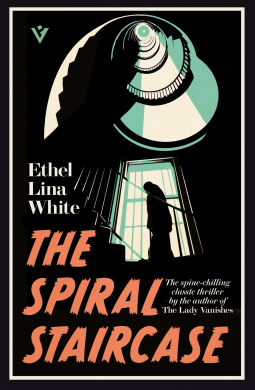
The Spiral Staircase by Ethel Lina White

Originally published as Some Must Watch in 1933, this is a reissue by Pushkin Vertigo under the title The Spiral Staircase – the name of the 1946 film adaptation. I’ve previously read two other novels by Ethel Lina White – The Wheel Spins and Fear Stalks the Village – and enjoyed both, although I found the former slightly disappointing in comparison with Alfred Hitchock’s wonderful The Lady Vanishes, which is based on it. This book has turned out to be my favourite of the three!

Almost the entire novel is set within the walls of the Summit, a lonely country house near the Welsh/English border. Adding to the sense of tension and claustrophobia, the main events of the story also take place over the course of a single evening. As the novel opens, we learn that four murders have recently been committed – the first two in the nearest town, which is over twenty miles away, the next slightly closer, and the fourth in another country house just five miles from the Summit. All four victims were young women and their deaths are on Helen Capel’s mind as she returns to the Summit after her afternoon off and is convinced that she sees a man hiding behind a tree in the dark.

Helen has just started a new job as ‘help’ to the Warren family – Miss Warren and her brother, known as the Professor, and their elderly, bedridden stepmother, Lady Warren. At the start of the novel, the Professor’s son and his wife are staying at the house, as is a student of the Professor’s, Stephen Rice. The rest of the household is made up of two more domestic servants, Mr and Mrs Oates, and the newly arrived Nurse Barker, who has been employed to look after Lady Warren.

When news of another murder, closer than ever this time, reaches the family, the Professor orders that all the doors are locked and everyone stays inside until morning. These should be easy enough instructions to follow, yet for a variety of reasons, one person after another leaves the house or becomes otherwise incapacitated. As a storm rages outside and the tension builds inside, Helen is forced to confront the idea that one of the remaining people in the house could be the murderer.

This book is good fun, but you do need to be able to suspend disbelief now and then (Helen is one of those heroines typical of this genre of book, who, despite knowing there’s a murderer on the loose, tries to open the front door every time someone knocks and spends most of the night wandering around the house on her own, along dark passageways and up and down dimly-lit staircases). Still, Ethel Lina White does a great job of creating an atmosphere of foreboding and fear, not just through stormy weather and shadows, but also through hints that various characters may not be as they seem. Is Lady Warren really unable to walk – and why does she have a gun in her room? And what if Nurse Barker isn’t really a nurse?

I found this a quick, entertaining read, let down slightly by the ending because the killer’s identity wasn’t particularly surprising and their motive was unconvincing. If you’re looking for a cleverly plotted mystery, I think you’ll be disappointed as I would describe this as much more of a psychological horror/suspense novel than a crime novel. It reminded me a lot of Benighted by J.B. Priestley and I think if you enjoyed one there’s a good chance you would enjoy the other. After finishing this book, I watched the film for the first time (it’s currently available on YouTube) and while it’s worth watching in its own right, I didn’t feel that it had much in common with the book!

Thanks to Pushkin Vertigo for providing a copy of this book for review via NetGalley.

Book 8/20 for 20 Books of Summer 2025.
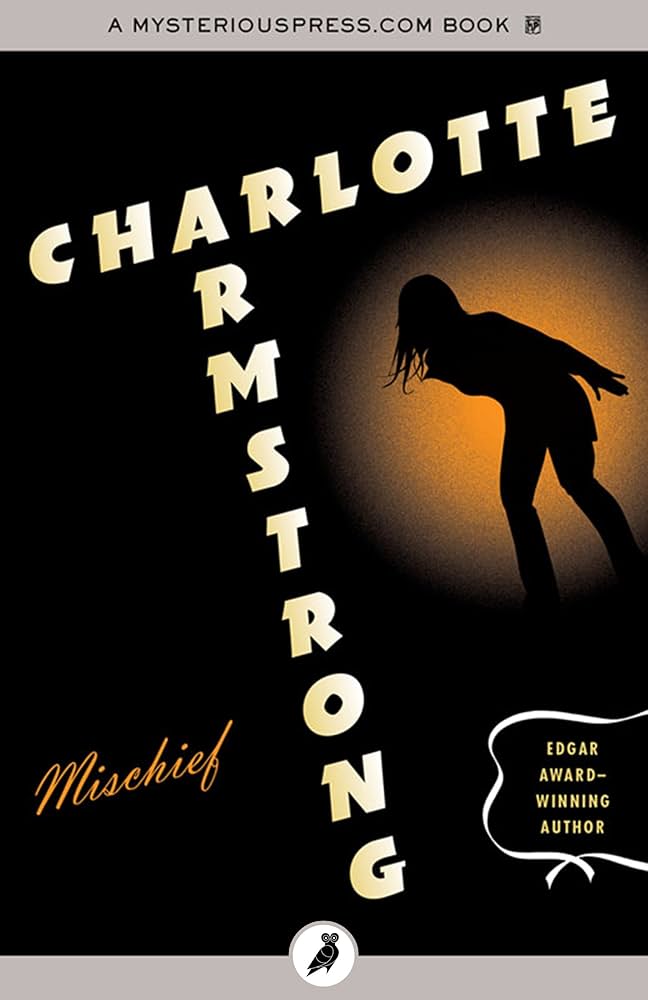
Mischief by Charlotte Armstrong

I read this last month and it would have been perfect for Novellas in November, but I’ve been behind with my reviews. At 170 pages, this was a quick read but also quite an intense one. It was first published in 1950 and adapted for film two years later under the title Don’t Bother To Knock, starring Marilyn Monroe in the role of Nell. I haven’t seen it so don’t know how the plot and characters differ between page and screen.

Mischief begins with Peter and Ruth Jones in their New York hotel room preparing to leave for a convention where Peter will be giving an important speech. Unfortunately, they’ve been let down by their babysitter for the evening and urgently need a replacement. The hotel elevator operator, Eddie, comes to the rescue, volunteering the services of his niece, Nell, and assuring them that nine-year-old Bunny will be safe in her care. When Nell is brought up to their room, Ruth finds that there’s something about the young woman that makes her feel uneasy, but she can’t put her finger on what it is. Anyway, she tells herself that it’s only for one evening and Bunny will be going to bed soon, so what could possibly go wrong?

Meanwhile, Jed Towers is enjoying a night out with his girlfriend, Lyn – until a difference of opinion over giving money to a homeless person blows up into a huge argument and Jed goes back to his hotel room alone. Looking into a window on the other side of a courtyard he sees Nell, who catches his eye and invites him up for a drink. Still angry with Lyn, Jed accepts the invitation in the hope that he can still have some fun despite what has happened. However, he gets much more than he bargained for as his evening quickly goes from bad to worse.

I don’t want to say too much about what takes place inside Room 807 that night, but you won’t be surprised to hear that Ruth’s misgivings about the babysitter are proved correct. Nell is a terrifyingly psychopathic character, cold and heartless, seemingly lacking normal human emotions and empathy. Once in the room with her, Jed becomes increasingly uncomfortable, particularly when he becomes aware of Bunny’s presence in the adjoining bedroom. He wants to get himself out of the situation he has found himself in, but senses that Nell shouldn’t be left alone with the child. It seems to him that the problem with Nell is that she lives entirely in the present, not thinking about the consequences of her actions:

“What if the restraint of the future didn’t exist? What if you never said to yourself, ‘I’d better not. I’ll be in trouble if I do’? You’d be wild, all right. Capricious, unpredictable…absolutely wild.”

The tension builds throughout the book as one thing spirals into another and various hotel guests and staff members gradually become concerned about what is going on. I was genuinely worried for Bunny, especially as everyone seemed content to stand around talking about what might be happening in Room 807 and frustratingly slow to actually come and investigate!

As an example of mid 20th century American noir, I think this compares well to books I’ve read by Dorothy B. Hughes and Patricia Highsmith. I would like to read more of Charlotte Armstrong’s books and it seems she was quite prolific, so there are plenty to choose from.

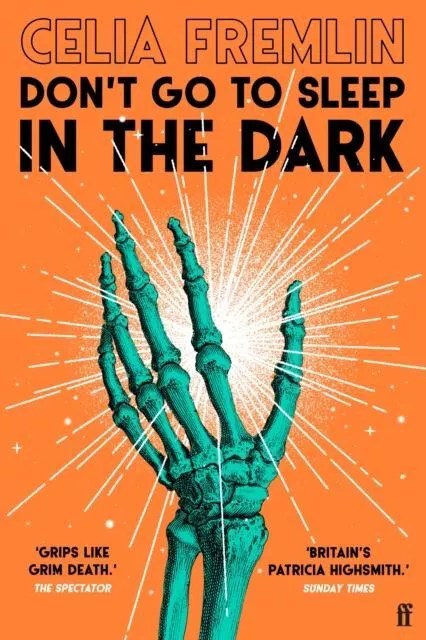
Don’t Go to Sleep in the Dark by Celia Fremlin – #1970Club

Today is the first day of 1970 Club, hosted by Kaggsy’s Bookish Ramblings and Stuck in a Book, and I’ve decided to begin with a book by an author who is rapidly becoming a favourite. I’ve read two of Celia Fremlin’s novels, Uncle Paul and The Long Shadow, and loved both, so I was curious to see what I would think of her short stories. Don’t Go to Sleep in the Dark is a collection first published by Gollancz in 1970 (although some websites say 1972, most say 1970 as do the copyright page and preface of the edition I read) and contains thirteen stories. While some are stronger than others, I can honestly say that they are all excellent.

The stories in this collection all have domestic settings, dealing with topics such as marriage, adultery, motherhood, and ageing, and all of them rely on the power of imagination to create a sense of unease. Although some of the stories hint at the supernatural, they are still grounded in reality. Fremlin has a real talent for taking ordinary, everyday situations and using them to build tension and fear.

The book gets off to a great start with The Quiet Game, the story of Hilda Meredith, a woman living in a flat in a high tower block who is struggling to keep her two young children quiet. Faced with constant complaints from the neighbours who claim they can hear every sound the children make – every shout, every laugh, every footstep – Hilda’s mental health begins to suffer as she desperately searches for games that can be played in silence:

From the point of view of the neighbours, it was she who was the cause and origin of all the stresses. She wasn’t the one who was being driven mad, Oh no. That’s what they would all have told you.

But madness has a rhythm of its own up there so near to the clouds; a rhythm that at first you would not recognise, so near is it, in the beginning, to the rhythms of ordinary, cheerful life.

I won’t tell you what happens to Hilda, but this story sets the tone for the rest of the book. Although the thirteen stories are all different and memorable in their own ways, they could all be described as psychological suspense, taking us deep inside the characters’ minds. At the same time, they have perfectly crafted plots, often with a surprise twist in the final paragraph that changes the way we think about everything that came before.

One of my favourite stories was The Baby-Sitter, in which a mother is persuaded to leave her young daughter with a babysitter for the first time so that she and her husband can spend the evening at the theatre. However, she’s not convinced that the tall, stern-looking Mrs Hahn is the right person to be left in charge of little Sally, who has been having nightmares about a ‘Hen with Great Big Eyes’. Her misgivings about Mrs Hahn grow stronger throughout the evening, but is she worrying about nothing? Yet another parent/child story – and another highlight – is Angel-Face, where a woman becomes exasperated by her stepson’s insistence that he is being visited by an angel every night. Things take a more sinister turn when it emerges that he thinks angels have beaks…

Celia Fremlin was in her fifties when this collection was published and three of her stories share the theme of growing older. In For Ever Fair, a story with a humorous twist, a middle-aged wife becomes jealous of her husband’s infatuation with a younger woman, while The Last Day of Spring and Old Daniel’s Treasure are both poignant tales with elderly protagonists and touch on the subject of dementia. Yet Fremlin writes equally convincingly about young characters: in The Hated House, sixteen-year-old Lorna has been left at home alone for the first time and is looking forward to a night without her father’s shouting and her mother’s obsessive cleaning and tidying. Then the telephone begins to ring continuously and an unexpected visitor arrives at the front door:

It was a light, a very light footstep on the garden path that next caught at her hearing; lightly up the steps, and then a fumbling at the front door. Not a knock; not a ring; just a fumbling, as of someone trying to unlock the door; someone too weak, or too blind, to turn the key.

“Be sure you bolt all the doors…” In her head Lorna seemed to hear these boring, familiar instructions not for the fiftieth time, but for the first… “Be sure you latch the kitchen window…Don’t answer the door to anyone you don’t know…”

There are still another six stories that I haven’t mentioned, but I think I’ll leave you to discover those for yourself if you read the book (which I hope you will as it’s such a great collection). As well as 1970 Club, I’m counting this towards the RIP XIX challenge as many of the stories are very unsettling and perfect for the time of year!

The Long Shadow by Celia Fremlin

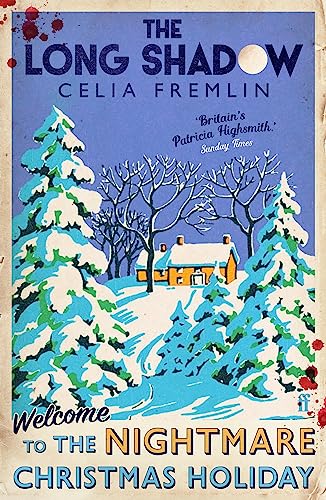
With its snowy cover welcoming us to ‘The Nightmare Christmas Holiday’, I wondered if I had left it too late to read this book and should have waited for December to come around again, but I needn’t have worried – there’s actually very little mention of Christmas and the cover is clearly just a marketing device by the publisher. It worked perfectly for me as an early January read and has helped my 2024 get off to a great start. It’s not really surprising that I enjoyed it as Fremlin’s earlier novel, Uncle Paul, was one of the best books I read last year.

First published in 1975, The Long Shadow opens two months after Imogen Barnicott’s husband, Ivor, is killed in a car accident. As a renowned Professor of Classics, Ivor’s death causes an outpouring of grief from students, academics and colleagues from around the world – in fact, Ivor seems to be mourned more by people who barely knew him than by members of his own family. Imogen’s own feelings certainly appear to be mixed; she can’t help reflecting on how much Ivor would have loved the attention that comes with being dead and how annoyed he must be that he’s not around to enjoy it! While she misses Ivor’s presence around the house, she also welcomes having the freedom to do whatever she wants at last. However, this freedom is very short-lived because, as Christmas approaches, her adult stepchildren descend upon the house with their partners and children in tow, as does one of Ivor’s ex-wives, who has just arrived from Bermuda.

Imogen just wants to move on with her life, but that’s going to be difficult with so many uninvited guests. And when she receives a late night telephone call from a stranger accusing her of Ivor’s murder, it seems that someone else is determined to stop her from moving on as well. As New Year comes and goes, there are more unexplained incidents: one of Ivor’s books is found open on the arm of his chair, the grandchildren insist they’ve seen a ‘wizard’ in Grandpa’s room…and Imogen’s anonymous caller refuses to leave her alone. Does Imogen know more about her husband’s death than she’s prepared to admit?

The Long Shadow is a slower paced book than Uncle Paul and although there’s plenty of dark humour, it’s not quite as funny either. However, like Uncle Paul, it has a wonderfully unsettling atmosphere and a sense of increasing suspense and tension. Fremlin does an excellent job of making the reader question everything we are being told. Is Imogen being completely honest with us or could she be an unreliable narrator? Is there a logical explanation for what is happening or a supernatural one? And is Ivor even really dead? Fremlin leads our thoughts in first one direction and then another until we’re not really sure what to think or believe.

Although there are elements of mystery, this is not really a ‘crime novel’ – we don’t even know whether a crime has actually been committed; ‘psychological thriller’ is a better description, but even then it’s not a conventional thriller either. What it is more than anything is an examination of widowhood, the process of grieving and all the little complexities that follow a death in the family. Imogen finds it particularly difficult to cope because she isn’t given the space to mourn alone; not only does she have letters of condolence to answer from all corners of the globe (How he would have loved to watch the letters pouring in, day after day, by every post, in their tens and in their dozens, each one a tribute to himself…), she also has her neighbour Edith constantly regaling her with tales of her own late husband, Darling Desmond, as well as a house full of lodgers and family members all outstaying their welcome.

The plot becomes quite gripping towards the end, when it seems that the truth is about to be revealed – but although we do get answers to most of our questions, the final sentence provides one last, surprising twist! I’m glad I picked such an enjoyable book to start the year with and I see my library has The Hours Before Dawn, so I could be tempted to read more Celia Fremlin soon.

Uncle Paul by Celia Fremlin

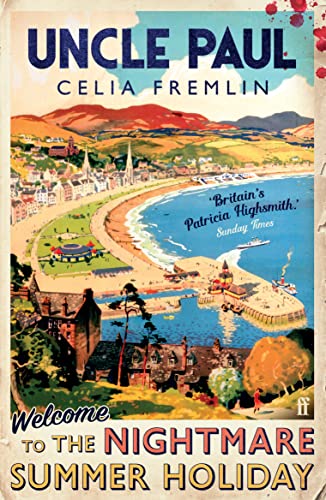
I know they say never to judge a book by its cover, but I have to confess, the cover is what made me want to read this book before I even knew what it was about! Luckily, the story lived up to the cover and you can expect to see Uncle Paul on my books of the year list in December, without a doubt.

First published in 1959, this is a recent reissue by Faber. It’s Celia Fremlin’s second novel but the first I’ve read and I was delighted to find that she wrote fifteen more. If any of them are even half as good as this one then I have some great reading ahead of me!

Uncle Paul is written from the perspective of Meg, the youngest of three sisters but in many ways the most mature. She is leading her own independent life in London with a job, a flat and a new boyfriend, Freddy, a pianist who is both charming and secretive. The novel opens with Meg receiving a telegram from her older sister Isabel, who is spending the summer holidays in a caravan at the seaside with her family. Isabel is concerned about their half-sister Mildred, who is twenty years older and helped to bring them up as children. Mildred has left her husband and come to stay at a nearby cottage – the same cottage where she spent her honeymoon with her first husband, Paul, fifteen years earlier.

Meg and Isabel had been very young at the time of Mildred’s marriage to Paul – they knew him as ‘Uncle Paul’ – but they remember the scandal that occurred when it emerged that he was guilty of both bigamy and attempted murder. Paul was given a long prison sentence after Mildred went to the police, but she is convinced that he has now been released and is coming to take his revenge. Believing that her sisters are panicking about nothing, Meg sets off for the coast intending to tell them to stop being foolish, but when she finds herself spending the night at Mildred’s cottage listening to footsteps moving around in the dark she begins to wonder whether Uncle Paul really has come back after all.

Uncle Paul is an excellent psychological thriller, but I think what I actually loved most about it was the setting – the portrayal of a typical British seaside holiday in the 1950s. Fremlin does a great job of bringing to life Isabel’s rickety caravan, trips to the beach and walks along the pier, the challenges of keeping children amused on a wet day and the friendships that inevitably begin to form with the other guests – in this case, the gallant old Captain Cockerill and a mother with her son, Cedric, an irritating little boy who thinks he knows everything (and often does). The characters are all very well drawn, even the minor ones like these, but I found the three sisters particularly interesting, with their very different personalities: the sensible, level-headed Meg who, despite being the youngest, is the one the others rely on to take control of every situation; the rich, dramatic and often irrational Mildred (her decision to stay on her own in an isolated cottage where she could easily be found by Paul being one example of her illogical behaviour); and the nervous, anxious Isabel, the sort of person who worries about anything and everything.

The psychological elements of the story are very well done, so that we can never be quite sure whether the strange occurrences and the noises in the middle of the night are real or just a figment of our characters’ imaginations. Even when one alarming incident is proven to have an innocent explanation, the suspense begins to build all over again, convincing us that this time Meg and her sisters really are in danger! Similarly, Fremlin creates enough mystery around the characters of Isabel’s husband and Meg’s boyfriend that neither we nor Isabel and Meg themselves know whether they really are who they claim to be.

Having been kept guessing all the way through this wonderful novel, I found the ending both unexpected and clever. Definitely one of my favourite books of the year so far and I can’t wait to try another one by Celia Fremlin.

The Embroidered Sunset by Joan Aiken

This is the second of Joan Aiken’s contemporary suspense novels I’ve read; I enjoyed The Butterfly Picnic which I read last year, but I found the plot very bizarre and I was curious to see whether this one would be the same. Well, I can tell you that it’s maybe not quite as over-the-top, but it does come close!

First published in 1970, The Embroidered Sunset begins by introducing us to Lucy Culpepper, a young Englishwoman who has been raised in America by her Uncle Wilbie and Aunt Rose following her parents’ deaths. Lucy is a talented musician who dreams of being taught by the renowned pianist Max Benovek, but her hopes are shattered when Uncle Wilbie confesses that he has spent her inheritance and there’s no money left to pay a piano teacher.

Cleaning the attic later that day, Lucy discovers some beautiful embroidered biblical pictures, the work of Wilbie’s Aunt Fennel who lives in England and used to write regularly, but hasn’t been heard from for a long time. Reminded of the pictures, Wilbie comes up with a plan: if Lucy goes to England and obtains more of Aunt Fennel’s pictures, he will pay her a commission for each one she locates and she can spend the money on piano lessons. While there, she can also try to find Aunt Fennel herself – if the old lady is still alive, that is.

If The Butterfly Picnic felt like a homage to Mary Stewart, this one is packed with references to the Brontës. As well as being set in Yorkshire, there’s a Thrushcross Grange and a Wildfell Hall and even a Colonel Linton and a Cathy Earnshaw, while another character refers to Lucy as Lucy Snowe, the heroine of Villette. However, that’s where the Brontë similarities end; this book has a lively, contemporary feel (for 1970) and while there are some elements that could probably be described as Gothic – an abandoned house, an escaped prisoner, rainy weather – they are woven very lightly into the plot.

I really enjoyed the first half of the novel, with Lucy arriving in Aunt Fennel’s small Yorkshire village, getting to know the eccentric residents and searching for her missing relative. When Lucy does eventually find the old lady, she can’t even be sure whether she really is Aunt Fennel or somebody else, and Aiken keeps us questioning this for the entire book, in a way that I thought was very cleverly done. I felt that the plot lost its way slightly in the second half and the ending seemed to come out of nowhere, with a very surprising fate for one main character and a romance that certainly wasn’t resolved as I’d expected. Still, this is an entertaining novel and perfect escapism, if that’s what you’re looking for!

My favourite Aiken novel so far is still Castle Barebane, but I’ll continue to explore her other books and am hoping to read The Wolves of Willoughby Chase soon.

This is book 3/20 of my 20 Books of Summer 2023

Fool Errant by Patricia Wentworth – #1929Club

This week Karen and Simon are hosting 1929 Club, the latest of their biannual events where we all read and write about books published in the same year. 1929 turns out to have been a particularly great year for publishing, with lots of tempting titles to choose from, but I decided to start with a book by an author I had never read but had been intending to try for a long time.

Patricia Wentworth is better known for her Miss Silver mystery series, but Fool Errant is the first of four novels featuring a different crime-solving character – Benbow Collingwood Horatio Smith. Named after three famous British admirals, the mysterious Mr Smith lives in London with his very talkative parrot, Ananias, and carries out some sort of espionage work for the Foreign Office. We learn little more than that about him in this book – in fact, he only makes two or three brief appearances and remains an eccentric, shadowy character in the background.

The novel opens with a nervous, stammering young man, Hugo Ross, arriving at Meade House, the home of the inventor Ambrose Minstrel. He is hoping to apply for the position of secretary and is surprised when Minstrel immediately offers him the job despite his lack of qualifications and experience. Before he even starts work, however, he has an encounter with a young woman in the street who is running away from home to avoid marriage with a distant cousin. When she hears that Hugo is planning to join Minstrel’s household, she is horrified and advises him to leave at once, but rushes off to catch her train before Hugo can ask for an explanation.

Taking up his new position as Minstrel’s secretary, Hugo soon begins to feel that something is not quite right at Meade House. Following a series of strange occurrences – and another warning from the young woman, whose name he discovers to be Loveday Leigh – Hugo decides to consult his brother-in-law’s uncle, Benbow Smith. It seems that he has stumbled upon a plot that could have serious implications for the government – and for his own safety if Minstrel finds out that he has guessed the truth. With the help of Smith and Loveday, Hugo must try to foil the plot while convincing Minstrel and his accomplices that he really is the timid, gullible idiot they believe him to be.

Fool Errant turned out to be a good choice for my first Patricia Wentworth novel; I expect it’s quite different from the Miss Silver books, being much more of a thriller than a mystery, but it was fun to read and the exciting plot kept me turning the pages. My only real problem was with the ridiculous characterisation of Loveday Leigh who, although she saves the day on one or two occasions, behaves like a child, is unable to have a serious conversation and expects kisses at the most inappropriate moments. Women like Loveday are quite common in books from that era, of course, but she has to be one of the worst I’ve come across!

This probably isn’t a book I’ll want to read again, but I did enjoy it and will look forward to reading the other three Benbow Smith novels…eventually!

~

Other 1929 books previously reviewed on my blog:

A Room of One’s Own by Virginia Woolf

A Farewell to Arms by Ernest Hemingway

Beauvallet by Georgette Heyer

Dickon by Marjorie Bowen

Partners in Crime by Agatha Christie

~

This is also book #6 read for R.I.P. XVII