Sufferance by Charles Palliser

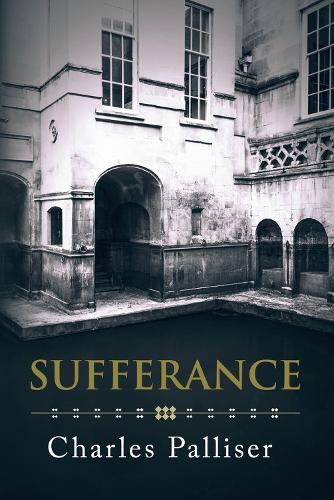
Charles Palliser is probably best known as the author of The Quincunx, a long and twisty Dickensian novel which I read and loved years ago, but he has also written five more books including The Unburied and this new one, Sufferance.

Sufferance is a strange novel as none of the characters are named – not even the narrator – and we are not told where or when the story is set. However, it’s obvious enough that we are reading about an occupied European city during the Second World War and at the start of the novel, the Enemy has divided the city into Western and Eastern Zones. We also know that our narrator is a respectable, law-abiding man who works for the government and has a wife and two teenage daughters.

When the narrator’s youngest daughter brings a friend home from school and explains that the girl’s parents have become trapped in the other zone, unable to return to their house, he thinks he is doing the right thing by inviting her to stay with them until her parents come back. He doesn’t expect it to be for long – and it seems that the girl’s parents are wealthy people, who might repay the family for their kindness when they return. Unfortunately, a series of government announcements makes it clear that the girl belongs to a ‘protected community’, who are gradually having their rights taken away and are being closely monitored by the Enemy occupiers.

As the weeks and months go by with no news of the girl’s parents, our narrator and his wife become increasingly anxious and afraid. What will happen if the authorities discover that they are sheltering one of the protected community? To make things worse, the girl has proved to be a selfish, manipulative person who seems ungrateful for the help she has been given and completely unaware of the danger all of them are facing. Tensions within the family start to build as they struggle to agree on how to deal with the situation, but things are only going to get worse the longer they wait.

This is an excellent novel; the vagueness surrounding names, dates and places, which I could have found irritating in another book, is used very effectively here to create a sinister, unsettling atmosphere. Although the historical parallels are very obvious, we are left with the impression that the things described could happen anywhere, at any time and to anybody. The sense of fear and desperation felt by the narrator comes across very strongly, as with the introduction of identity cards, rationing and new laws regarding the girl’s community, he becomes aware that he is committing a crime.

Sufferance is a fascinating exploration of how each decision we make can have serious consequences and how quickly things can spiral out of control. I loved it and really must find time to re-read The Quincunx!

Thanks to Guernica Editions for providing a copy of this book for review via NetGalley.

The Long Shadow by Celia Fremlin

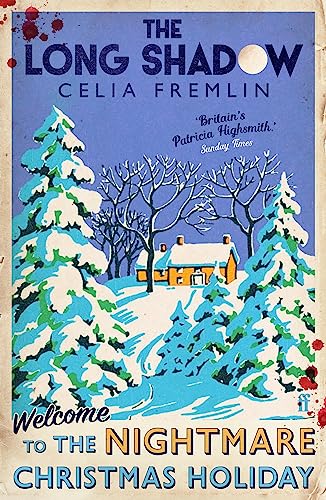
With its snowy cover welcoming us to ‘The Nightmare Christmas Holiday’, I wondered if I had left it too late to read this book and should have waited for December to come around again, but I needn’t have worried – there’s actually very little mention of Christmas and the cover is clearly just a marketing device by the publisher. It worked perfectly for me as an early January read and has helped my 2024 get off to a great start. It’s not really surprising that I enjoyed it as Fremlin’s earlier novel, Uncle Paul, was one of the best books I read last year.

First published in 1975, The Long Shadow opens two months after Imogen Barnicott’s husband, Ivor, is killed in a car accident. As a renowned Professor of Classics, Ivor’s death causes an outpouring of grief from students, academics and colleagues from around the world – in fact, Ivor seems to be mourned more by people who barely knew him than by members of his own family. Imogen’s own feelings certainly appear to be mixed; she can’t help reflecting on how much Ivor would have loved the attention that comes with being dead and how annoyed he must be that he’s not around to enjoy it! While she misses Ivor’s presence around the house, she also welcomes having the freedom to do whatever she wants at last. However, this freedom is very short-lived because, as Christmas approaches, her adult stepchildren descend upon the house with their partners and children in tow, as does one of Ivor’s ex-wives, who has just arrived from Bermuda.

Imogen just wants to move on with her life, but that’s going to be difficult with so many uninvited guests. And when she receives a late night telephone call from a stranger accusing her of Ivor’s murder, it seems that someone else is determined to stop her from moving on as well. As New Year comes and goes, there are more unexplained incidents: one of Ivor’s books is found open on the arm of his chair, the grandchildren insist they’ve seen a ‘wizard’ in Grandpa’s room…and Imogen’s anonymous caller refuses to leave her alone. Does Imogen know more about her husband’s death than she’s prepared to admit?

The Long Shadow is a slower paced book than Uncle Paul and although there’s plenty of dark humour, it’s not quite as funny either. However, like Uncle Paul, it has a wonderfully unsettling atmosphere and a sense of increasing suspense and tension. Fremlin does an excellent job of making the reader question everything we are being told. Is Imogen being completely honest with us or could she be an unreliable narrator? Is there a logical explanation for what is happening or a supernatural one? And is Ivor even really dead? Fremlin leads our thoughts in first one direction and then another until we’re not really sure what to think or believe.

Although there are elements of mystery, this is not really a ‘crime novel’ – we don’t even know whether a crime has actually been committed; ‘psychological thriller’ is a better description, but even then it’s not a conventional thriller either. What it is more than anything is an examination of widowhood, the process of grieving and all the little complexities that follow a death in the family. Imogen finds it particularly difficult to cope because she isn’t given the space to mourn alone; not only does she have letters of condolence to answer from all corners of the globe (How he would have loved to watch the letters pouring in, day after day, by every post, in their tens and in their dozens, each one a tribute to himself…), she also has her neighbour Edith constantly regaling her with tales of her own late husband, Darling Desmond, as well as a house full of lodgers and family members all outstaying their welcome.

The plot becomes quite gripping towards the end, when it seems that the truth is about to be revealed – but although we do get answers to most of our questions, the final sentence provides one last, surprising twist! I’m glad I picked such an enjoyable book to start the year with and I see my library has The Hours Before Dawn, so I could be tempted to read more Celia Fremlin soon.

The Fake Wife by Sharon Bolton

I very rarely choose to pick up a contemporary crime novel, but I’m always happy to make an exception for Sharon Bolton. I think I’ve read all of her novels but one and have loved nearly all of them, so I had high hopes for her newest book, The Fake Wife, published last month.

The novel begins on a snowy evening just before Christmas when Olive Anderson, on her way home from a business trip, is staying at a hotel in Hexham, Northumberland. She has managed to get a table in the busy hotel restaurant, but when she enters the dining room she is surprised to see another woman sitting in her place. With no other tables available, Olive agrees to dine with the stranger, but is even more surprised when the woman tells the waiter that she and Olive are a married couple. For some reason even Olive can’t explain, she finds herself going along with the story and accompanying her ‘wife’ back to her hotel room after the meal.

PC Garry Mizon has twice tried and failed to qualify as a detective and has had to settle for a job with the traffic police, patrolling the roads at night and in bad weather. When politician Michael Anderson reports his wife, Olive, missing, Garry is ordered to accompany DS Lexy Thomas to interview him. Believing Olive may have had an accident on the country roads after leaving her hotel, Garry and Lexy head out into the snow to see if they can track her down. Olive, however, isn’t the first woman connected with Michael Anderson who has gone missing and to get to the truth behind her disappearance, Garry and Lexy will need to delve into the politician’s past and the story of his first wife, Eloise.

When I first started to read The Fake Wife, I wasn’t at all sure that I was going to like this particular Bolton novel. Those opening scenes in the hotel seemed ridiculously contrived – Olive’s reaction to having a strange woman stealing her table then pretending to be her wife certainly wasn’t the way I would have reacted! – and as I read on, other parts of the plot felt very implausible as well. It was also clear from early on that there was going to be a lot more sexual content in this book than you normally get from Bolton, something which I don’t really enjoy. Somewhere after the first few chapters, however, I became immersed in the story and then it didn’t really matter how far-fetched the beginning had been. I’m glad I didn’t abandon it, because otherwise I would have missed out on all the twists and turns of the plot as the novel headed towards its conclusion – and I wouldn’t have got to know Garry Mizon.

Garry is a wonderfully endearing character, one of my favourites in all of Sharon Bolton’s books. He’s one of those people who always try their best, yet nothing ever seems to go right for them, as we see at the beginning of the book when he makes a catastrophic and embarrassing mistake during a raid. Having proved yet again his unsuitableness for detective work, he is only asked to drive Lexy to the Andersons’ because nobody else is available, but as the investigation begins to unfold, we quickly discover that he is much more intelligent and resourceful than his superiors think he is – as well as being a genuinely nice person. He and Lexy make a great team and I would love to meet them again in a future book, although I suspect this is probably just going to be a standalone.

This book isn’t a favourite by Bolton, then, but the characters made it worthwhile. It’s also the perfect novel to read at this time of year, as so much of it is set outdoors in the snow. I’ll look forward to her next book, but meanwhile I really need to find time to go back and read Blood Harvest, which I think is the only one I still haven’t read!

Thanks to Orion for providing a copy of this book for review via NetGalley.

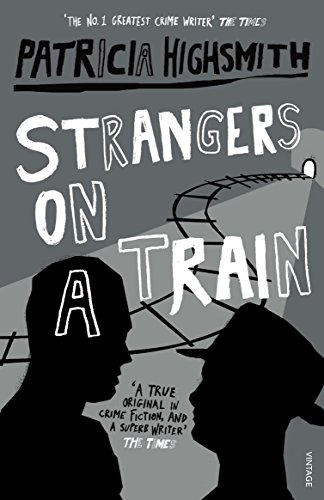
Strangers on a Train by Patricia Highsmith

Patricia Highsmith’s 1950 novel Strangers on a Train begins, as you might expect, with two strangers meeting on a train. One is Guy Haines, an aspiring architect who is on his way home to Metcalf, Texas to see his wife, Miriam, from whom he’s been separated for the last three years. Guy is hoping to secure a divorce from Miriam so that he can start a new life with Anne, the woman he loves. Although Miriam has so far been reluctant to agree to a divorce, she is now pregnant with another man’s child and Guy is optimistic that this will be a chance for both of them to move on.

The other stranger is Charles Bruno, a young man from a wealthy Long Island family. After falling into conversation on the train, Bruno invites Guy to come and eat with him in his private dining compartment. Guy doesn’t particularly like his new companion, but soon finds himself telling Bruno about his troubles with Miriam. In turn, Bruno confesses that he hates his father – and then makes a shocking suggestion. If Bruno were to kill Miriam on Guy’s behalf, there would be nothing to link him to the crime. Guy could then kill Bruno’s father and again there would be no motive and no connection. Two perfect murders! Horrified, Guy refuses to have anything to do with the plan and when the train reaches his destination he leaves Bruno behind, hoping he’ll never see him again. However, when Miriam is later found dead, Guy quickly begins to suspect the truth. Has Bruno gone ahead with the plan – and is he waiting for Guy to uphold his side of the bargain?

This is the first book I’ve read by Patricia Highsmith; I thought it would be a good idea to start with one of her most famous novels and this one proved to be a great choice. It reminded me very much of In a Lonely Place by Dorothy B. Hughes, another classic psychological thriller I read recently. Although I didn’t love this one quite as much, I did still enjoy it very much and found it a real page-turner, despite the fact that Highsmith often slows down the pace to concentrate on exploring the thought processes of Bruno and Guy as they each try to deal with the situation in their own way.

The novel is written from the perspectives of both men and although they are both interesting characters, Highsmith doesn’t make it easy for us to like either of them, particular the spoiled, immature and constantly drunk Bruno. We can have some sympathy for Guy at first, as he tries to resist getting involved in Bruno’s schemes, but he has his resolve gradually worn away as he comes under more and more pressure to carry out the murder and in turn becomes less likeable as the story progresses. The secondary characters are less well drawn – Anne and Miriam never fully come to life and we don’t get to know the other potential murder victim, Bruno’s father, at all, which lessens the emotional impact of the book. From a psychological point of view, however, I found this a fascinating novel.

If you’ve read any other Patricia Highsmith books, please tell me which one you think I should read next!

This is book 11/20 of my 20 Books of Summer 2023

It’s also book 41/50 from my second Classics Club list.

Rogue Male by Geoffrey Household

Geoffrey Household’s 1939 novel, Rogue Male, was the book selected for me in the recent Classics Club Spin. Not knowing much about it, I had added it to my Classics Club list after seeing it included in The Guardian’s Top 10 novels of the 1930s. It sounded very like The Thirty-Nine Steps by John Buchan, which I thought was fun, if a bit repetitive, but while there are definitely some similarities, I found Rogue Male a more satisfying book.

The novel opens in 1938 just after our narrator has been caught aiming a gun at the dictator of an unspecified European country. Despite insisting that he wasn’t planning to pull the trigger and was just enjoying the thrill of ‘hunting the biggest game on earth’, the narrator is tortured and thrown over a cliff, where he is left to die. Somehow, he survives and manages to make his way back to London. On his arrival, he discovers that agents of the dictator he’d tried to shoot have followed him to England. Staying in London is obviously now out of the question, so he heads for the Dorset countryside where he is sure his pursuers will never be able to find him.

The identity of the protagonist’s target is kept carefully hidden, with very few clues throughout the novel, but it’s not difficult to guess who it was supposed to be and Household later confirmed that it was Hitler. As the book was published just before the start of World War II, it’s easy to see why he decided to be vague about it. His reasons for also leaving the narrator unnamed are less clear, but it does add an extra layer of mystery to the novel; while the narrator hides himself from the enemy agents, he also reveals very little of himself to the reader, leaving us wondering who he really is and what his true motives were for carrying out the assassination attempt.

For such a short book (around 200 pages), there’s a lot of plot packed between its covers and the tension builds as we wait to see whether he can continue to evade his pursuers. There’s a sinister villain, Major Quive-Smith who, like everything and everyone else in the book, is shrouded in mystery: we don’t know his nationality, his background or who he represents – all we do know is that he’s determined to force a confession from the narrator that the British government was behind the assassination attempt, something the narrator continues to deny even while his real motives are slow to emerge. Yet although I did enjoy the book, I still felt that there was something missing. The vagueness of it all, and the guarded and secretive nature of the protagonist, made it difficult for me to care what happened to him on an emotional level and this meant I found the story slightly less thrilling than I would have liked.

This book was adapted for film in 1941, under the title Man Hunt, and again as a BBC adaptation, Rogue Male, in 1976. The BBC version stars Peter O’Toole, with Alastair Sim as the Earl (a character who doesn’t appear in the book). It’s on YouTube and definitely worth watching. I’ve also discovered there’s a sequel to this novel called Rogue Justice, published much later in 1982, which is more open about the target being Hitler. I’m not sure if I want to read that one as the reviews aren’t very positive, but it seems Household was quite a prolific author, with more than twenty books published for adults and young adults, so I’ll see if any of his others appeal.

This is book 37/50 read from my second Classics Club list.

Destination Unknown by Agatha Christie

August’s theme for the Read Christie 2022 challenge is ‘a story set in a hot climate’, so the recommended title, Destination Unknown, which is set in North Africa, was the perfect choice. I was a bit apprehensive about reading this one because it doesn’t seem to get very good reviews and it’s certainly not one of Christie’s better known novels (in fact it’s one of only four of her books never to have been adapted for TV or film), but I found it entertaining enough.

We first meet our heroine, Hilary Craven, in a Casablanca hotel room, preparing to commit suicide. Her daughter has died, her marriage has broken down and she feels she has nothing to live for. Before she can go through with her plans, however, she is interrupted by Jessop, a British secret agent. Jessop has noticed a resemblance between Hilary and another woman, Olive Betterton, who has been fatally injured in a plane crash, and he has an interesting suggestion to make…

It is believed that Olive was on her way to Morocco to join her husband, Thomas Betterton, a renowned nuclear physicist who recently went missing in Paris. Betterton is one of several scientists from around the world who have all disappeared without trace. Jessop wants Hilary Craven to impersonate the dying woman in the hope that she will be able to locate Betterton and the other missing scientists. With nothing to lose, Hilary agrees.

As you can probably tell from my synopsis of the plot, this is not a murder mystery like most of Christie’s other books and it does not feature any of her famous characters such as Hercule Poirot, Miss Marple or Tommy and Tuppence. It’s much more of a thriller, with elements of spy/espionage fiction. I really enjoyed the first half of the novel – although the plot is undoubtedly a bit far-fetched and unlikely, I do like a good impersonation story and was interested to see how Hilary would cope with her task and where following Betterton’s trail would lead her to. I also loved the descriptions of Morocco and wished we could have spent more time in Casablanca and Fez before Hilary’s adventures took her off into the High Atlas mountains:

All about her were the walls of old Fez. Narrow winding streets, high walls, and occasionally, through a doorway, a glimpse of an interior or a courtyard, and moving all around her were laden donkeys, men with their burdens, boys, women veiled and unveiled, the whole busy secret life of this Moorish city. Wandering through the narrow streets she forgot everything else, her mission, the past tragedy of herself, even her life.

As is typical of Christie, the plot takes lots of twists and turns, there are some surprises and we are never sure which of the many characters Hilary meets can and cannot be trusted. However, later in the book, when we discover what has happened to the missing scientists, it all becomes quite bizarre and I felt that the motive behind the disappearances was quite weak and implausible. Remembering that the book was published in 1954, though, the world war which ended less than ten years earlier must have been on Christie’s mind, as well as post-war politics and the Cold War; there are references to creating a ‘new world order’ and a mysterious figure whose charisma and power of oration makes Hilary think of Hitler.

Hilary herself is less engaging than the heroines of some of Christie’s other thrillers, such as Anne Beddingfield in The Man in the Brown Suit and Victoria Jones in They Came to Baghdad, and the book overall is not as much fun as those two. I find the thrillers a nice change from the mysteries, though, and I did enjoy this one despite finding the first half much stronger than the second. I’m not sure whether I’ll take part in Read Christie in September – the theme is ‘a story with a female adventurer’ and the group read is They Came to Baghdad which, as I’ve just mentioned, I’ve already read (and loved, but don’t want to read again just yet). I might see if there’s an alternative title I could read to fit that theme instead, or maybe I’ll wait and join in again in October.

This is book 13/20 from my 20 Books of Summer list.

The Man from London by Georges Simenon – #NovNov

I’ve been struggling to concentrate on longer novels for most of the year, despite having more time than ever before to read them! This month’s Novellas in November (hosted by Cathy of 746 Books and Rebecca of Bookish Beck, ) seemed like a perfect opportunity for me to get through some of the shorter books on my TBR, beginning with this one – a Belgian classic from 1934 reissued today by Penguin Classics.

The Man from London is my first Georges Simenon book (I haven’t read any of the Maigret novels, though I feel that I should have done by now), so I didn’t really know what to expect from it. I was pleased to find that it was suspenseful, atmospheric and, in this translation by Howard Curtis, very readable.

The story begins on a cold, foggy night in Dieppe, where railway signalman Louis Maloin is sitting alone in his watchtower, looking down on the docks at the ferry just arriving from England. It’s a sight Maloin observes every day, but tonight something is different: he watches one of the newly arrived passengers fight with another man and knock him into the water, along with the suitcase he is holding. Aware that he appears to be the only person who has seen this happen, Maloin retrieves the case from the water when nobody is around and takes it home with him. When he discovers what the case contains, the decision he makes could have consequences that will change his life forever.

Although there is an element of mystery to the book, with questions over the identities of the two men and where the contents of the case came from, this is really more of a psychological thriller than a crime novel. The fight Maloin witnesses and his reaction to it provides a starting point for an exploration of the state of Maloin’s mind as the process he has set in motion spirals out of control. He experiences every conceivable emotion over the course of the story, ranging from guilt at not telling the police what he has seen and allowing a murderer to walk free, excitement at gaining possession of the case for himself, and terror, knowing that someone could discover what he has done at any minute.

The atmosphere Simenon creates is wonderful, with the tension building and building as Maloin tries to go about his normal life, while being confronted at every turn by the face of the man he has come to think of as ‘the man from London’. The wet, foggy December weather adds to the overall mood, as do the descriptions of the places and people Maloin encounters as he moves around Dieppe trying to avoid the murderer and the police.

The short length of the book meant it held my interest from beginning to end and although I think the potential was here for a longer and more complex novel, I still found it quite satisfying. I’m glad my first experience of Georges Simenon’s work was a good one and I’m definitely interested in reading more of his books now.

Thanks to Penguin Classics for providing a copy of this book for review via NetGalley