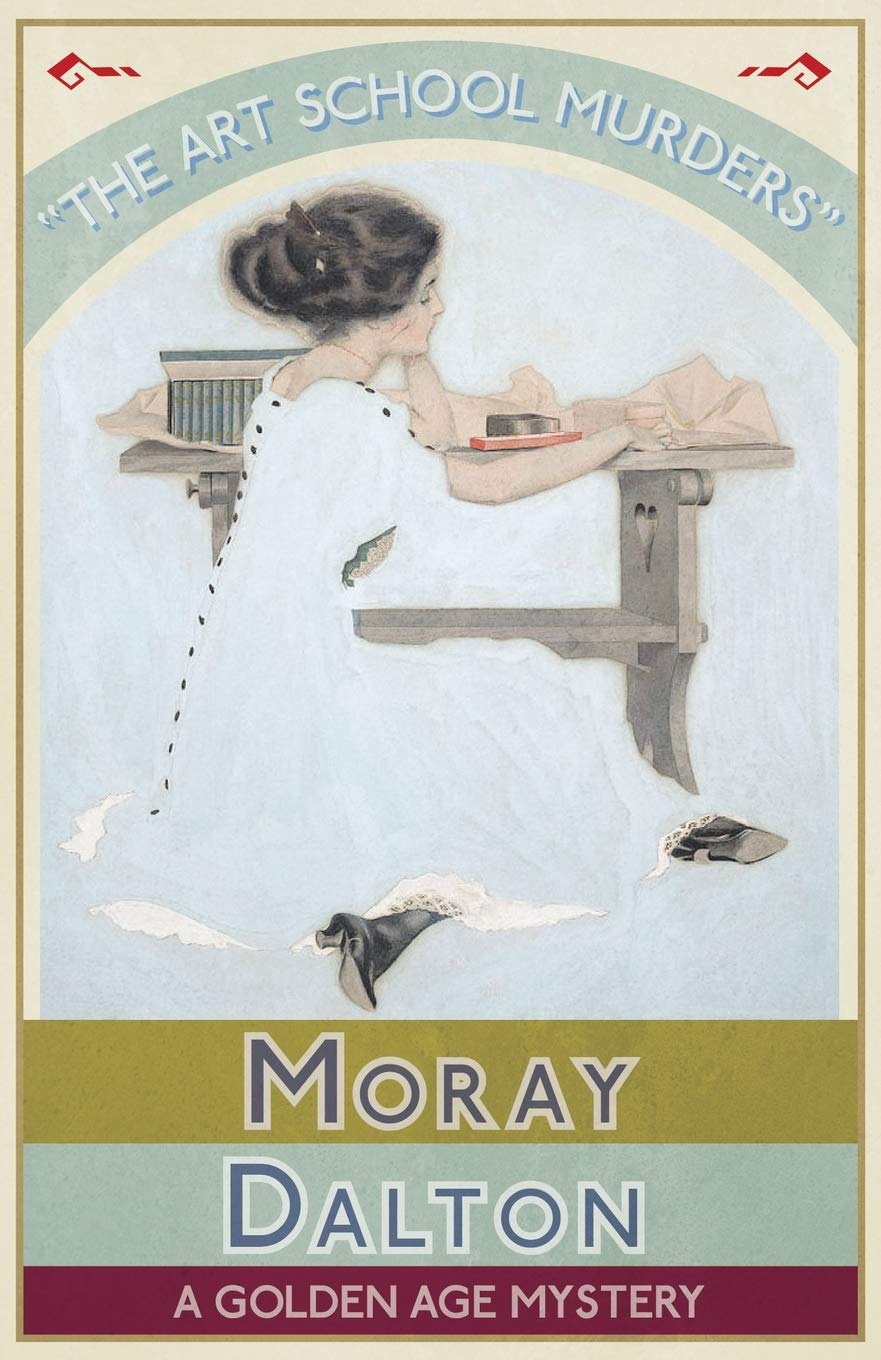
The Art School Murders by Moray Dalton – #DeanStreetDecember25

Dean Street Press December is back, hosted again by Liz of Adventures in Reading, Running and Working From Home. The rules are simple – just read and write about at least one book published by Dean Street Press during the month of December! I have several DSP books on the TBR and decided to start with a detective novel by Moray Dalton, a new author for me although I’ve seen other bloggers give her books very positive reviews.

The Art School Murders opens with the murder of Althea Greville, an artists’ model who has been employed to pose for the students at Morosini’s School of Art. Althea had briefly worked at the school the year before, causing a stir and capturing the hearts of many of the young male students, but on arriving for her second engagement she appeared very different: old, tired and desperate for money and opportunities. When the caretaker’s wife finds Althea’s body behind a screen in the life classroom one November morning, Inspector Hugh Collier of Scotland Yard is called in to investigate.

Assisted by Sergeant Duffield, Collier begins to question the staff and students, looking for any clues that will point him towards the murderer. That same evening, however, another girl from the art school is found dead in the darkened balcony of a cinema. Convinced that she must have been silenced by Althea’s killer to prevent her from giving information to the police, Collier now has two murders to solve – and if he doesn’t hurry, the killer could strike again.

The Art School Murders is the tenth of fifteen books featuring Hugh Collier, but it works perfectly as a standalone and it’s definitely not necessary to have read any of the previous books – although, having enjoyed this one, I will be doing so now! I liked Collier as a detective; he may not be as interesting as a Poirot or a Holmes, but he’s polite, good-natured and intelligent, handling his investigations with fairness and compassion.

Originally published in 1943, this book uses the war as a backdrop very effectively. The story is set in a village a short drive away from London, and nightly blackouts are in force, making it easier for crimes to be committed under the cover of darkness. It’s November, when the days are short and the nights are long, and Dalton makes good use of this to show what it’s like walking through the streets at dusk when the light you would normally see shining from windows is blacked out and invisible.

I enjoyed this book as much or more than some of the Golden Age mysteries I’ve read by better known authors. My only criticism is that the solution seemed to come out of nowhere and I doubt many people would have guessed the culprit based on the information we are given, but otherwise Dalton held my interest from beginning to end. It’s sometimes hard to know why some authors fade into relative obscurity while others remain popular, so well done to Dean Street Press for rescuing Moray Dalton’s books and making them available to a new audience!

Top Ten Tuesday: Books set in snowy places

This week’s topic for Top Ten Tuesday (hosted by That Artsy Reader Girl) is “Books Set in Snowy Places”.

I love books with snowy settings! Here are ten I’ve read and reviewed on my blog:

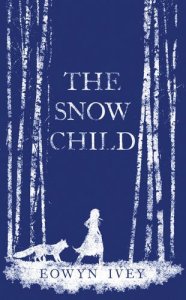
1. The Snow Child by Eowyn Ivey -The first book to come to mind is definitely Eowyn Ivey’s beautiful retelling of The Snow Maiden set in 1920s Alaska.

2. The Sittaford Mystery by Agatha Christie – This very enjoyable standalone mystery is set in a small village cut off from the outside world by snow.

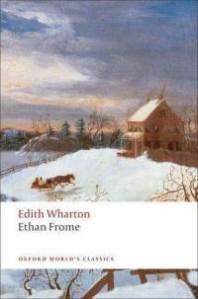
3. Ethan Frome by Edith Wharton – I loved all the winter imagery in Wharton’s classic novella – it reflects the bleakness of the plot as the title character falls in love with his wife’s cousin.

4. Winter Siege by Ariana Franklin and Samantha Norman – Set in 1141 during the period of English history known as the Anarchy, heavy snowfall and a long winter siege both play a big part in the story.

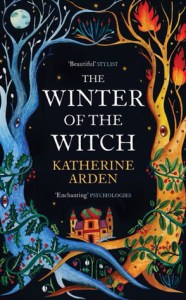
5. Winternight Trilogy by Katherine Arden – I loved all three books in this historical fantasy trilogy set in a wintry medieval Russia (The Bear and the Nightingale, The Girl in the Tower and Winter of the Witch).

6. The Ringed Castle by Dorothy Dunnett – This book, the fifth in Dunnett’s Lymond Chronicles, is set mainly in 16th century Russia where the cold, bleak landscape matches Lymond’s own state of mind as he deals with the traumas of the previous four novels.

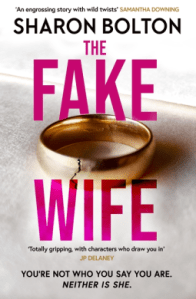
7. The Fake Wife by Sharon Bolton – A large part of this novel is set outside on a snowy night as the police search for a woman who has gone missing after leaving her hotel.

8. White Corridor by Christopher Fowler – I reviewed this book, part of the Bryant and May mystery series, just last week. Our two elderly detectives become stranded in a line of cars during a snowstorm with a killer on the loose!

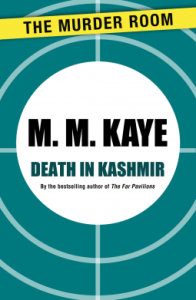
9. Death in Kashmir by M.M. Kaye – My favourite of Kaye’s Death In… romantic suspense novels is set at a ski resort in Kashmir, which makes for a very atmospheric and eerie setting.

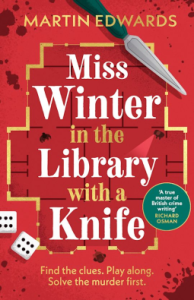
10. Miss Winter in the Library with a Knife by Martin Edwards – A recent read set in the tiny, remote village of Midwinter where a group of people are taking part in a murder mystery game during a period of heavy snow.

~

Have you read any of these? Which other books set in snowy places have you enjoyed?

Rainforest by Michelle Paver

When Dr Simon Corbett, a British entomologist, arrives in the Mexican rainforest in 1973 he has two goals in mind: first, to study the rare mantids that live there – and also to try to make contact with Penelope, the woman he loved. However, both of these things prove very difficult. The mantids live in the sacred ceiba trees and Simon’s guide is reluctant to let him touch them. As for Penelope, she’s dead and Simon is hoping to obtain a special Mayan drug that will allow him to summon her spirit. No one seems prepared to cooperate with him on this either, but Simon is determined to get what he wants, one way or another.

Rainforest is written entirely from Simon’s perspective in the form of diary entries. He tells us that his doctor has advised him to keep a journal to help him cope with the ‘thoughts going round and round like angry wasps’ – although this doesn’t seem to work, as Simon’s thoughts simply become more and more unstable and obsessive as the book progresses. Simon is a man consumed by grief, remorse and guilt, yet he’s such an unlikeable narrator I found it impossible to feel any real sympathy for him. He’s also not being completely honest with the reader, even in his own journal, because the impression he initially gives of his relationship with Penelope is very different from the truth that emerges later in the novel.

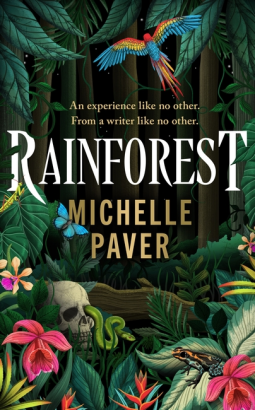
This is the second book I’ve read by Michelle Paver, the first being Wakenhyrst, a Gothic novel set in the Suffolk Fens. Although I enjoyed Wakenhyrst, I remember being surprised that it wasn’t scarier, having heard her previous novels Dark Matter and Thin Air described as very creepy horror novels. Rainforest is also not a particularly scary book, despite the cover claiming that it’s a ‘terrifying supernatural tale’. I think it’s best to know that going into it, as some people may be disappointed that it’s not more terrifying, while others will be pleased! Like Wakenhyrst, though, it is still very atmospheric; the rainforest is beautifully described – Paver mentions in her author’s note that she has visited rainforests herself – but, seen through Simon’s eyes, it becomes an oppressive, claustrophobic, menacing place.

Rainforest is a fascinating novel in many ways. As well as the setting which I’ve already mentioned, Paver also explores the arrogance of the white explorer and the lack of respect for the environment and the indigenous people – referred to specifically as the Yachikel, a term Paver says she made up and based on other Mayan peoples. I also learned more about Simon’s beloved mantids than I ever knew I needed to know! Simon being such an unpleasant character, though, meant that I struggled to care about what happened to him and this stopped me from engaging with his story as much as I would have liked. Despite this, I did enjoy the book overall and will catch up with her earlier ones at some point.

Thanks to Orion for providing a copy of this book for review via NetGalley.

Six Degrees of Separation: From Seascraper to The Night Circus

It’s the first Saturday of the month which means it’s time for another Six Degrees of Separation, hosted by Kate of Books are my Favourite and Best. The idea is that Kate chooses a book to use as a starting point and then we have to link it to six other books of our choice to form a chain. A book doesn’t have to be connected to all of the others on the list – only to the one next to it in the chain.

This month we’re starting with Seascraper by Benjamin Wood. I read it last month for Novellas in November and loved it. Here’s what it’s about:

Thomas lives a slow, deliberate life with his mother in Longferry, working his grandpa’s trade as a shanker. He rises early to take his horse and cart to the grey, gloomy beach to scrape for shrimp; spending the rest of the day selling his wares, trying to wash away the salt and scum, pining for Joan Wyeth down the street and rehearsing songs on his guitar. At heart, he is a folk musician, but it remains a private dream.

When a striking visitor turns up, bringing the promise of Hollywood glamour, Thomas is shaken from the drudgery of his days and begins to see a different future. But how much of what the American claims is true, and how far can his inspiration carry Thomas?

Haunting and timeless, this is the story of a young man hemmed in by his circumstances, striving to achieve fulfilment far beyond the world he knows.

~

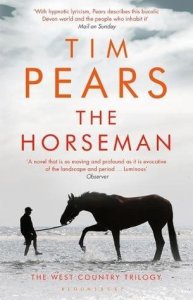
Seascraper reminded me very much of The Horseman by Tim Pears (1), first in a trilogy of novels set in Devon in the early 20th century. They are both quiet, gentle novels with rural settings and descriptions of the protagonist’s daily work (catching shrimp for Thomas, farming tasks for Leo in The Horseman). Horses also play an important role in both novels. I still haven’t continued with the trilogy and haven’t decided if I want to as I didn’t enjoy the first book as much as I’d hoped.

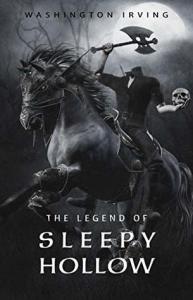
The title of the Tim Pears book made me think of the headless horseman in Washington Irving’s classic short story The Legend of Sleepy Hollow (2). First published in 1820, it’s set in an old Dutch settlement in New York and revolves around the legend of a ghostly soldier who lost his head in battle and rides through Sleepy Hollow every night in search of his missing head. You may have seen the 1999 Tim Burton adaptation, but the original story is definitely worth reading as well.

Another book with the word ‘hollow’ in the title is The Hollow by Agatha Christie (3). The Hollow is the name of a country house where a group of people have gathered for the weekend when a murder takes place. This is a Poirot novel although he doesn’t play as big a part in it as he usually does and Christie herself described it as “the one I ruined by the introduction of Poirot”.

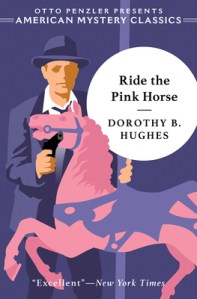
The Hollow was published in 1946 and so was Ride the Pink Horse by Dorothy B. Hughes (4). The novel is set in Santa Fe during the Fiesta festival, which ends with the burning of Zozobra, a wooden effigy symbolic of worries and gloom. The story follows Sailor, a blackmailer on the trail of a senator whose wife has been murdered. I loved this book mainly for the setting but was also gripped by the plot.

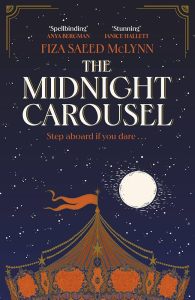
The cover of the Hughes novel brings to mind the carved wooden horses on the carousel in Fiza Saeed McLynn’s The Midnight Carousel (5). The carousel of the title was built for the Grand Exhibition in Paris by Gilbert Cloutier and gains a sinister reputation when Gilbert disappears immediately afterwards. As the years go by and more people disappear while riding the carousel horses, Detective Laurent Bisset begins to investigate. I read this book earlier this year and really enjoyed it.

The Night Circus by Erin Morgenstern (6) is the obvious next link. Both books have fairground/circus settings and a similar magical atmosphere, although this one is more fantasy whereas the Saeed McLynn is a mystery. Although I found the plot and characters slightly disappointing, I loved the vivid descriptions of Le Cirque des Rêves, or the Circus of Dreams, and wished I could visit it myself!

~

And that’s my chain for December! My links have included: rural life, horsemen, the word ‘hollow’, books published in 1946, carousel horses and fairground/circus settings.

Nest month is a wildcard to begin the year. We can either start with the book we finished this month’s chain with or, if we didn’t participate in December, begin with the last book we read.

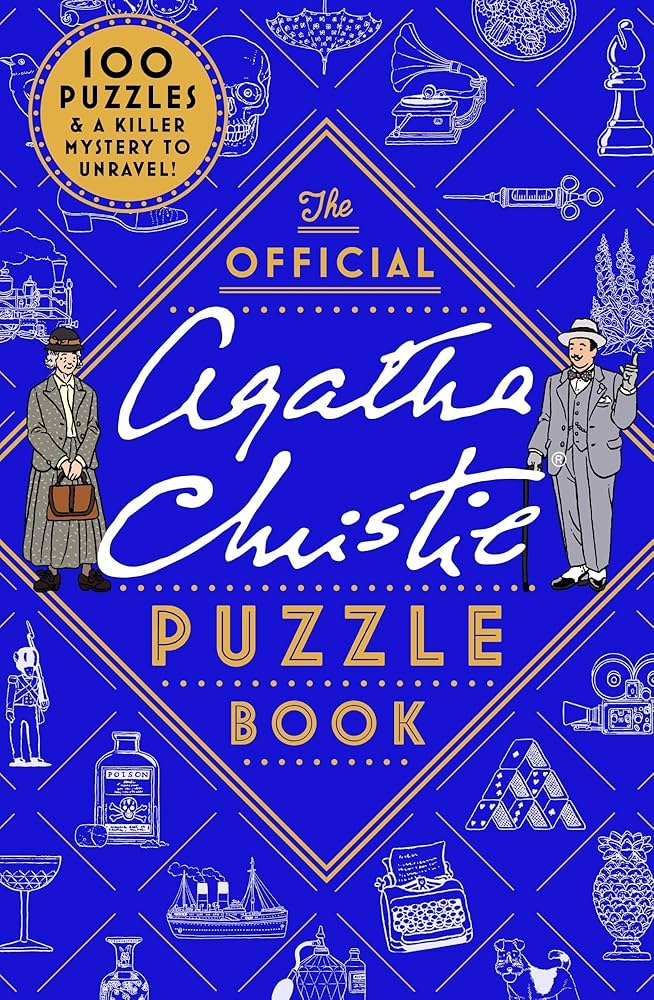
The Official Agatha Christie Puzzle Book

This is a book I received last Christmas (a present from my sister) and now that I’ve completed all of the puzzles in it, and with Christmas almost here again, I thought I would post a short review. It would make a great gift for any friends or family members who are Agatha Christie fans.

The book is divided into sections, with each one themed around a different Christie novel. For example, Chapter 5 is based on The ABC Murders, so many of the puzzles involve the alphabet or the letters A, B and C, while Chapter 9, Murder on the Orient Express, has puzzles about trains and snow. A few of them do require a knowledge of the original novel, but the majority could be solved even if you’d never read Christie before.

The puzzles in the book are nicely varied and range from crosswords and wordsearches to anagrams, logic puzzles and many more. I found some of them very easy to solve, but others were much more challenging. There are solutions included at the back of the book if you get stuck!

Each chapter ends with a letter written by Charles, a new librarian at Greenway, Christie’s old holiday home which is now a museum owned by the National Trust. The letters are addressed to his Aunt Mary and relate to the disappearance of the former librarian, Mrs Ashmore, who has gone missing, leaving behind a bundle of puzzles for Charles to solve. This framing story helps to tie the whole book together, as the mystery of Mrs Ashmore’s disappearance can only be solved once you’ve completed all of the other puzzles in the book.

If you already own this book, or if it doesn’t appeal, maybe you would prefer The Offical Poirot Puzzle Book, which has just been released in time for Christmas. There’s also The Official Agatha Christie After School Detectives Club aimed at children aged 8 and up, so something for all the family!

The Twelve Days of Christmas by Susan Stokes-Chapman

I’ve previously only read one short story by Susan Stokes-Chapman (in the anthology The Winter Spirits) and I was interested in reading more of her work. This seemed like the perfect time of year to read her new book, The Twelve Days of Christmas!

The book is loosely based on the Christmas carol of the same name, with each chapter inspired by one of the gifts traditionally mentioned in the song – for example, Chapter 1 features pear trees and a character called Miss Partridge (“a partridge in a pear tree”) and Chapter 6 revolves around a game involving hidden goose eggs (“six geese a-laying”). In some cases this is done quite subtly, but in others it’s more heavy-handed; I can appreciate that it’s probably not easy to work all of these references into a novel without it beginning to feel unnatural!

Each chapter feels almost like a separate story (a few of them probably would work as standalones), but they are also linked together through shared characters and a shared setting. That setting is the little English village of Merrywake during the Regency period, with the Napoleonic Wars playing out in the background. Beginning on Christmas Day and ending on Twelfth Night, we join Viscount Pepin of Wakely Hall and his family, friends and servants as they celebrate the festive season. There’s a lovely Christmassy atmosphere as we watch the characters decorate the house, kiss under the mistletoe, open gifts, write and solve riddles, and prepare for the grand Twelfth Night Ball. But although it may all sound idyllic, not everyone at Wakely Hall is having a happy Christmas…

Stokes-Chapman explains in her author’s note that this book is her tribute to Jane Austen and Georgette Heyer and you can definitely see the influence of both. The Viscount and Viscountess Pepin (the name also has links to the song The Twelve Days of Christmas) with their five daughters immediately made me think of Austen’s Pride and Prejudice – the chapter based on “five gold rings” deals with the five girls and their hopes of marriage. The servants, though, are given just as much attention as the upper classes: there are stories about Loveday Lucas, the new kitchen maid, who can’t seem to do anything right; Will Moss the under-gardener, who appears to have fallen in love with someone completely unsuitable; and Mrs Wilson, the cold, strict housekeeper who is shocked to find that her staff consider her heartless.

I loved the world Stokes-Chapman created at Wakely Hall, but it was also nice to get some insights into the lives of the other residents of Merrywake, such as the village toymaker whose son, a drummer in the British army, has failed to come home from France. The toymaker’s story was one of the highlights of the book for me and together with the chapter that follows, about another army musician (a piper, as you may have guessed), it shows that the impact of the Napoleonic Wars is being felt all over the country, in even the smallest of communities.

The Twelve Days of Christmas is a lovely book and despite it obviously being very contrived in places, I found it completely absorbing. I particularly liked the way so many different characters from such varied backgrounds are all given their chance to shine, while each chapter also cleverly builds on the one before. I was sorry to say goodbye to the people of Merrywake and would love a sequel so we could catch up with them again in the summer!

Thanks to Random House UK, Vintage/Harvill for providing a copy of this book for review via NetGalley.

White Corridor by Christopher Fowler

This is the fifth book in a series I started over a decade ago. My slow progress doesn’t mean I’m not enjoying the books, because I am, but I do feel ashamed that when I reviewed the fourth book, Ten-Second Staircase, I claimed that I would “be continuing soon with book number five, White Corridor” – and that was in 2016!

Anyway, the series follows the investigations of Arthur Bryant and John May, a pair of octogenarian detectives who work for London’s Peculiar Crimes Unit. Some of the books have contemporary settings while others deal with cases from earlier in the careers of Bryant and May. White Corridor is one that’s set in the present day (around 2007, when the book was published). At the beginning of the novel, Raymond Land, the Unit Chief, has decided to close the unit for a week in February due to a lack of work and because the team had worked throughout the Christmas holiday period. Bryant has chosen to spend his time off attending a spiritualist convention in Dartmoor and May finds himself agreeing to accompany him.

As the two elderly detectives set off by car on their journey, heavy snow begins to fall and they quickly become stranded in a blizzard along with lots of other drivers. Meanwhile, back at the PCU, pathologist Oswald Finch has been found dead in his own locked mortuary. Four other PCU members have keys to the door, so all four become suspects, but the investigation is made difficult by the fact that the unit is temporarily closed and their two best detectives are miles away, trapped in a snowstorm. Bryant and May must try to solve the mystery by phone, but first, they have another killer to catch – one who is hiding somewhere within the snowy ’white corridor’ of abandoned cars.

This second killer is on the trail of a woman and her young son in another car, having pursued them all the way from France. Now he’s finally caught up with them and thanks to the snow they’re not going to be able to escape. Throughout the book, the perspective switches between the mother and child, desperately trying to evade their pursuer, Bryant and May, trying to solve both crimes while avoiding freezing to death, and the PCU staff back in London. With Bryant and May not around, Detective Sergeant Janice Longbright takes charge of things and it was good to see her coming to the forefront of the story and developing as a character.

Compared to the first four books in the series, this one has quite a different feel, with Bryant and May taken out of their usual environment and the rest of the unit left on their own. Some things never change, however, such as Arthur’s arcane knowledge and useful friendships with the most unexpected people, in this case a white witch, and of course, the PCU being threatened with closure yet again! This time they are facing a royal visit, so needless to say, their pathologist being murdered is not exactly the best way to prepare.

This isn’t one of my favourite books in the series, as I think I prefer to see Arthur and John on home ground and working with the rest of the team, but it was still quite entertaining. I’m looking forward to reading the next book, The Victoria Vanishes, and will try not to leave it so long this time!