My Commonplace Book: November 2025

A selection of quotes and pictures to represent November’s reading:

commonplace book
noun
a book into which notable extracts from other works are copied for personal use.

~

Over centuries, literature has served as a refuge for the weary, a space where individuals could confront their fears, process trauma, or simply escape into a world kinder than their own.

100 Books to Live By by Joseph Piercy (2025)

~

‘Yes, ’tis a powerful thing, fear. But never forget that loneliness gives you strength. You can spend your life observing others, on the outside looking in. You end up learning a lot about human nature that way.’

The Last Love Song by Lucinda Riley (2025)

~

The classic Cluedo board layout

‘God, Elva, I could kick myself. It’s the first rule of detective fiction – never delay questioning a suspect, because they’re bound to be bumped off before you get to them.’

The Christmas Clue by Nicola Upson (2025)

~

Stupidity is the same as evil if you judge by the results.

Surfacing by Margaret Atwood (1972)

~

‘I do,’ I say. ‘Art is generally about love, one way or another, don’t you think? Every book. Every song. Every film. All of us trying to live with it. Or get over it. Or wonder why we’ve never had it. Not necessarily love in a sexual sense. Love between parents and children. Love for a place.’

Air by John Boyne (2025)

~

Lotus blossoms had to rise from the depths of murky waters in order to bloom. They were survivors. And so was she.

Ghosts of Grayhaven by Amy Newbold and Lark Wright (2025)

~

Illustration of “Twelve Lords a Leaping”, from Mirth Without Mischief

But, as is often the case, some people do not take the advice solicited so passionately from their loved ones, yet find themselves considering the same advice if offered to them by another party…

The Twelve Days of Christmas by Susan Stokes-Chapman (2025)

~

Fear can resemble a crackling sound in a frozen ditch.

The Ice Palace by Tarjei Vesaas (1963)

~

“Is it a ruin now? I love ruins. The ancient sadness of them – the knowledge one is treading through history.”

All of Us Murderers by KJ Charles (2025)

~

Some people are so righteous in their minds they can’t accept mistakes in others. They would rather cradle condemnation at their breasts than help someone in trouble. He can’t understand that kind of bitterness at all.

Seascraper by Benjamin Wood (2025)

~

How had she reached such a state, Cheryl wondered, as they made their laborious way down the stairs, when a few kindly meant words of a stranger were all that stopped her sinking to the floor in despair.

The Token by Sharon Bolton (2025)

~

Jason and Medea by John William Waterhouse (1907)

All love is war, if you are one of the weapons.

No Friend to This House by Natalie Haynes (2025)

~

If one man does not make a move, the other must, and by permitting the adversary to make the attack one learns something about him.

The Big Four by Agatha Christie (1927)

~

With all my heart, I envied those to whom the night was nothing. A fleeting mind full of dreams and nothing, nothing more. Rest and refreshment. The quiet lost hours of the night. But for me it was not so.

The Inn Closes for Christmas by Cledwyn Hughes (1947)

~

There is an old German saying: there are always grounds for hope, it just has to be the right hope.

Tales from the Underworld by Hans Fallada (2014)

~

Favourite books read in November:

The Twelve Days of Christmas and Seascraper

Authors read for the first time in November:

Nicola Upson, Joseph Piercy, Benjamin Wood, KJ Charles, Cledwyn Hughes, Amy Newbold and Lark Wright

Places visited in my November reading:

England, Ancient Greece, Norway, US, Canada, Ireland, Germany, Wales, France, Italy

~

Reading notes: I’ve read a lot more this month than I have over the last few months, which is largely due to Novellas in November. I read five novellas, all of which I enjoyed to varying degrees. One of them counted towards Margaret Atwood Reading Month too and I also managed to read books for German Literature Month and Nonfiction November, as well as joining in with all the nonfiction weekly topics. Other than that, I read a few Christmas books and some review copies from my NetGalley shelf.

There are two more events coming up in December – Doorstoppers in December hosted by Laura Tisdall, a chance for us to read some of the bigger books on our shelves after a month devoted to the shorter ones in November, and Dean Street Press December, hosted as ever by Liz. December and the end of the year also means I’ll be posting my annual preview of upcoming historical fiction releases for the year ahead, as well as revealing my books of the year for 2025 – so look out for both of those posts later in the month!

~

What did you read in November? Do you have any plans for your December reading?

The Big Four by Agatha Christie

The November theme for the Read Christie 2025 challenge is spies. I’ve already read the recommended book, Cat Among the Pigeons, and most of the suggested alternatives – I don’t want to read Postern of Fate yet as it’s the final Tommy and Tuppence book and I’m working through that series in order – so I looked for one I hadn’t read that featured international intrigue and espionage. The Big Four seemed suitable but I was a bit wary about reading it as it seems to have a bad reputation. I needn’t have worried, though, because although it’s clearly not one of her better books, I still enjoyed it!

The novel is narrated by Arthur Hastings, which is always a good thing – I love Hastings! – and he plays a big part in the story, having adventures of his own, not just as narrator and sidekick to Poirot. The book begins with a man arriving unexpectedly in Poirot’s doorway, appearing feverish and exhausted. Unable to speak, he writes the number 4 several times on a sheet of paper, and when he recovers he explains that he was referring to an international crime ring consisting of the Chinese mastermind Li Chang Yen, an American, a Frenchwoman and a mysterious fourth person known only as ‘the Destroyer’. Together they form the Big Four, a group trying to cause global unrest so that they can take over the world.

The rest of the book takes the format of a series of loosely connected episodes, as Poirot, with the help of Hastings, tries to identify the other three members of the Big Four. Of course, with their own spies and agents in every corner of the world, the Big Four know that Poirot and Hastings are on their trail and set various traps for them, some of which they fall into and some they don’t. Poirot attempts to set traps of his own, but although he manages to identify the American and the Frenchwoman fairly quickly, Number Four proves much more elusive.

I found The Big Four more entertaining than I expected, considering that Christie herself described it as “a rotten book”. It’s understandable why she would feel that way as the book was published in 1927, during a time when Christie was struggling financially and emotionally and had disappeared from her home for several days. She felt she had to force herself to complete this book and the next one, The Mystery of the Blue Train. This also explains the episodic nature of the book, because it was based on twelve previously published short stories which Christie reworked into a full-length novel rather than trying to come up with a completely original idea while she wasn’t in the right frame of mind to do so.

Despite the book’s origins and its silly, far-fetched plot, I think it’s better than some of her later thrillers, such as Destination Unknown, but I can see why it’s not well regarded and it certainly doesn’t feel like a typical Poirot novel. As I’ve said, though, it has Hastings in it, which is always a bonus, and we also get to meet – sort of – Poirot’s twin brother, Achille! It was a fun, undemanding read for me in this busy month of November, but probably not one I’ll want to revisit.

Nonfiction November: Week 5 – New to my TBR

The host for week 5 of Nonfiction November is Deb of Readerbuzz and here is this week’s topic:

It’s been a month full of amazing nonfiction books! Which ones have made it onto your TBR? Be sure to link back to the original blogger who posted about that book!

Here are some of the books I’ve seen other bloggers mention during Nonfiction November that I would be interested in reading:

Moonlight Express: Around the World by Night Train by Monisha Rajesh
(Frances at Volatile Rune)

An account of the author’s travels by sleeper train.

Monsterland by Nicholas Jubber
(Shelleyrae at Book’d Out)

A book exploring myths and legends about monsters.

The Notebook: A History of Thinking on Paper by Roland Allen
(Heather at Based on a True Story)

A history of the humble notebook.

Islands of Abandonment by Cal Flyn
(Margaret at BooksPlease)

A book exploring some of the world’s most abandoned places.

Raising Hare by Chloe Dalton
(Deb at Readerbuzz)

An account of raising an abandoned baby hare.

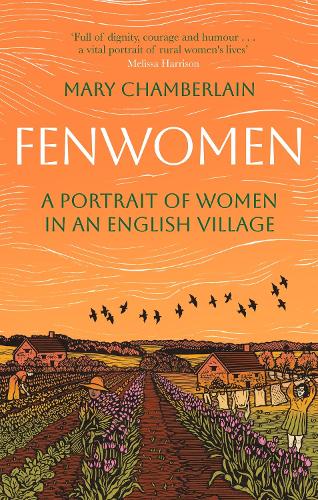
Fenwomen by Mary Chamberlain
(Kay at What? Me Read?)

A group of women look back at their lives in a village in the Cambridgeshire Fens.

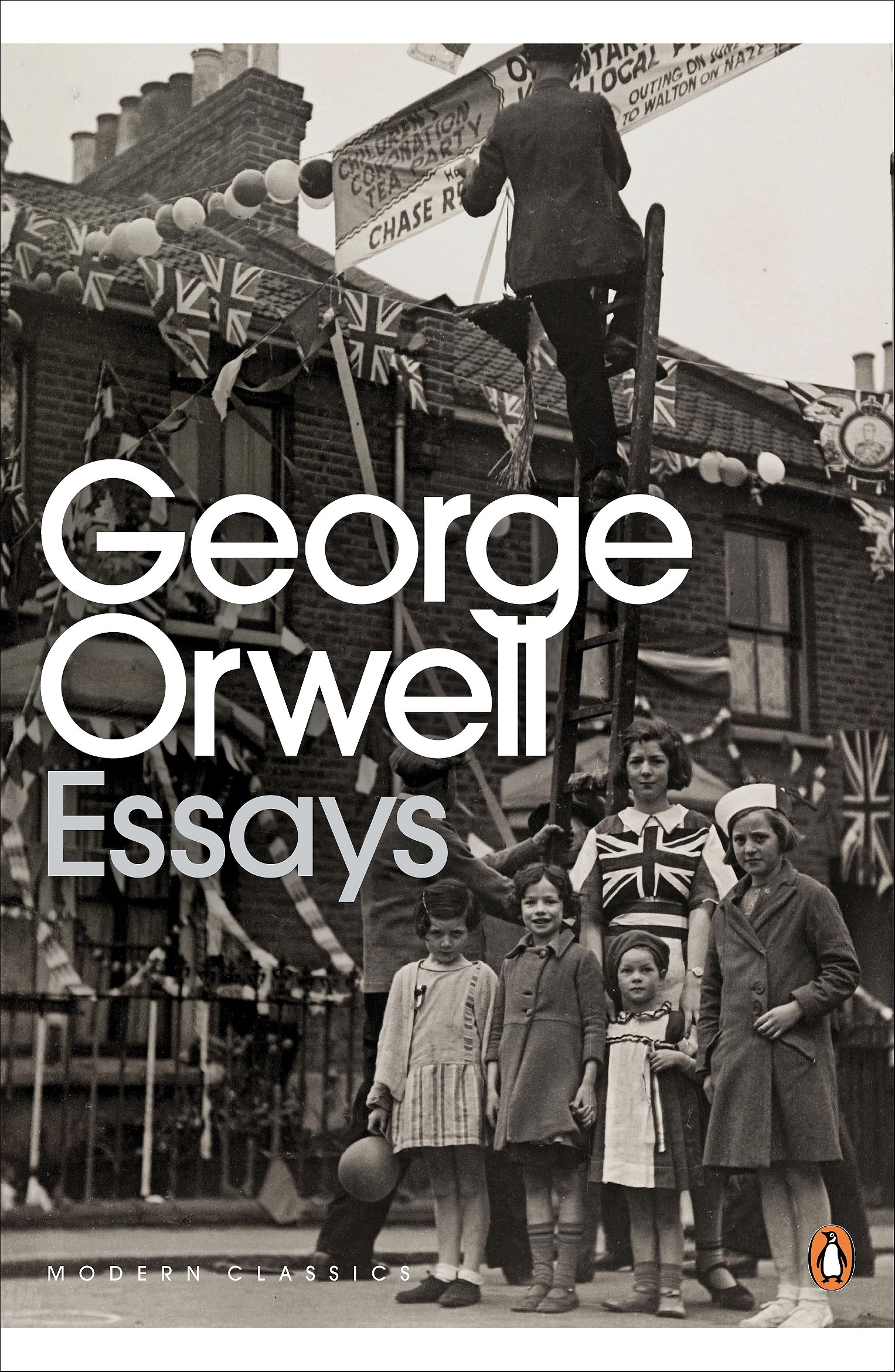
Essays by George Orwell
(Elle at Elle Thinks)

A collection of Orwell’s essays on a variety of subjects.

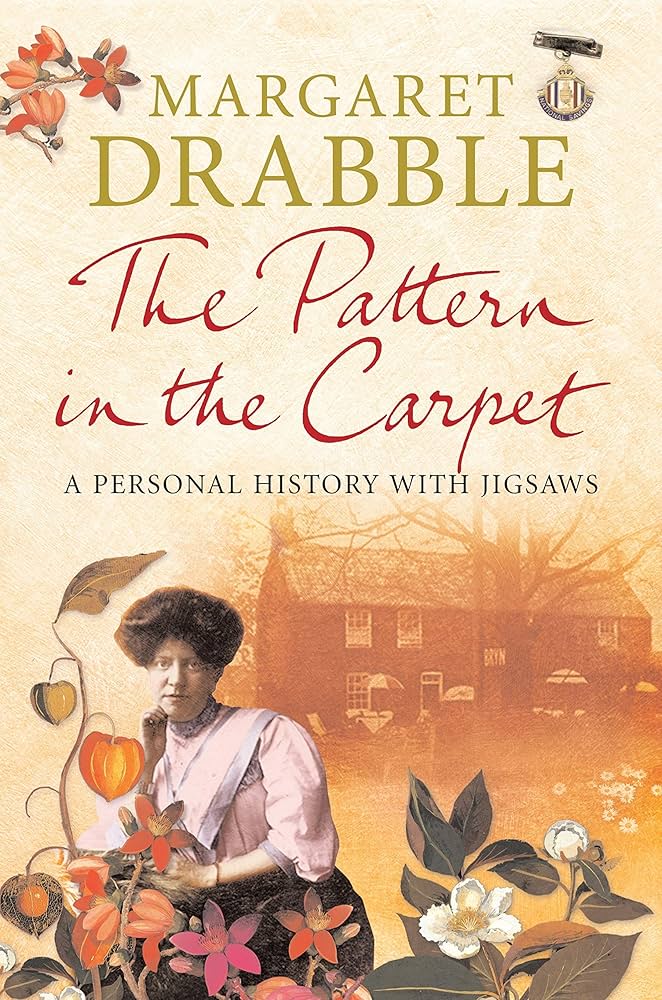
The Pattern in the Carpet by Margaret Drabble
(Margaret at BooksPlease)

A history of the jigsaw and Drabble’s own memories of completing jigsaws with her aunt as a child.

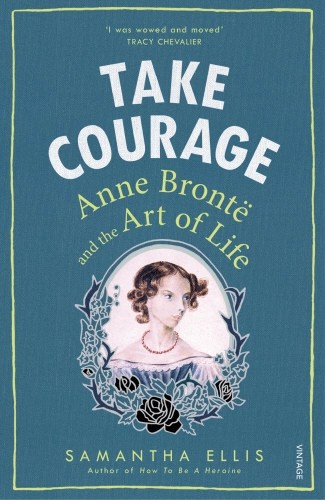
Take Courage by Samantha Ellis
(Cathy at What Cathy Read Next)

A look at the life and work of Anne Brontë.

~

Have you read any of these? What have you added to your TBR during Nonfiction November?

The Christmas Clue by Nicola Upson – #NovNov25

I’m sure most of us are familiar with the board game Cluedo (or Clue, if you’re in America), but do you know who invented it? I didn’t, but thanks to Nicola Upson’s new novel, The Christmas Clue, I now know that it was invented in the 1940s by Anthony and Elva Pratt, a married couple from Birmingham. Upson tells the story of the game’s creation while also imagining a fictional murder mystery for the couple to solve.

It’s Christmas 1943 and Anthony and Elva are on their way to the Tudor Close Hotel in Rottingdean on the south coast of England. Although he’s currently working in a weapons factory, Anthony is a pianist and before the war he and Elva regularly provided entertainment for hotels, both of the musical sort and also hosting murder mystery events. They’ve been invited to host one of these at the Tudor Close over the Christmas weekend but, on arriving at the hotel, they quickly discover that the war has made things more challenging than usual – there are no actors available to play the various roles in the game and interact with the guests, so the Pratts are going to have to come up with a new format.

Before the game even begins, however, the couple find themselves with a real mystery to investigate. Stopping at their old friend Miss Silver’s shop in the town to collect a box of cigars for Anthony’s Christmas present, they discover Miss Silver’s body in the storeroom apparently beaten to death. The dead woman’s sister works at the Tudor Close and as Anthony and Elva look for more connections, they start to suspect that the killer could be one of the guests staying at the hotel.

The Christmas Clue is a very short book (novella length at 140 pages), but despite its shortness, Upson manages to create a satisfying murder mystery – I found some of the developments a bit far-fetched, but it was fun to read overall, despite taking a darker turn towards the end. I liked the hotel setting, although Elva and Anthony find it very different from their memories of visiting before the war: shortages of staff, no money for decent Christmas decorations, and a group of Canadian soldiers billeted nearby.

I’ve learned some interesting little facts about the game of Cluedo, both from the book itself and from feeling inspired to look things up while reading. For example, the name Cluedo is a pun on Ludo, another popular board game – which is less well known in America (though Parcheesi is similar) and that’s why the name was simplified to Clue. If Elva and Anthony had their way, it would have been called Murder at Tudor Close and was originally supposed to include additional rooms, weapons and characters. Elva was a talented artist and designed the artwork for the board.

This is the first book I’ve read by Nicola Upson, mainly because most of her other novels are mysteries where the sleuth is the real life author Josephine Tey. I’ve never felt entirely comfortable with the recent trend for using real people as detectives – and of course, Upson is doing the same in this book with Anthony and Elva Pratt. I wondered how the Pratts’ family might feel about it, so I was pleased to read Upson’s acknowledgments at the end where she says she has been in contact with Anthony and Elva’s daughter, Marcia Lewis, who gave her best wishes to the project. I think she can certainly be happy with the way her parents are portrayed in this book – they seem like a really lovely couple!

Thanks to Faber & Faber for providing a copy of this book for review via NetGalley.

Tales from the Underworld by Hans Fallada – #GermanLitMonth

Translated by Michael Hofmann

November is always a busy month with lots of events taking place in the book blogging world, so for German Literature Month (hosted by Caroline of Beauty is a Sleeping Cat and Tony of Tony’s Reading List) I decided to read a short story collection that I could dive into now and then throughout the month in between reading other things. Hans Fallada is probably my favourite German author so I thought Tales from the Underworld would be a good choice.

This collection was published by Penguin Modern Classics in 2014 and contains a large number of Fallada’s short stories which were originally published between 1925 and 1946. The stories have been translated from the original German by Michael Hofmann, who has also translated other Fallada books including Alone in Berlin and A Small Circus. Many of the stories are semi-autobiographical, which I would have guessed from the small amount I know about Fallada’s life, but this is covered in more detail in the foreword by Jenny Williams.

As the title of the book suggests, the focus is on the darker side of life – some of the stories are about thieves, prisoners or drug addicts, while others deal with subjects such as poverty and unemployment. You’re probably thinking that it all sounds very bleak and depressing, but Fallada’s lively, conversational style and sense of humour means it’s much less miserable and much more entertaining than it could have been in the hands of a different author. I think my favourite story was Fifty Marks and A Merry Christmas, a lovely, touching story about a young couple, Mumm and Itzenplitz, who are struggling to make ends meet but determined to have a happy Christmas despite their financial problems. This one reminded me very much of the novel Little Man, What Now? which was published in the same year.

The stories range from the very short, such as the sequence titled Calendar Stories, written in the style of fables with an obvious moral, to the more substantial, such as Short Treatise on the Joys of Morphinism, in which an addict desperately tries to acquire enough morphine to get through the day, looking for pharmacies that will accept fake prescriptions. The addict’s name is Hans, because this is one of the autobiographical stories – Fallada and his wife were both addicted to morphine, which also inspired his 1947 novel, Nightmare in Berlin.

The impact of the two world wars is felt in several of the stories, including The Returning Soldier, where a man comes home from the war with a wounded arm and finds that his father is less sympathetic than he had hoped. Some of the stories deal with urban life – for example War Monument or Urinal? is a satire on the politics and bureaucracy that holds back progress in a small town – while others, such as The Good Pasture on the Right have rural settings and explore the problems facing farmers and the importance of owning land. Fallada also looks at different aspects of marriage and parenthood, with stories like Happiness and Woe, where an unemployed father is tempted into spending the family’s rent money, and The Missing Greenfinches, in which a father tries to teach his young son to value the lives of even the smallest creatures.

I haven’t mentioned even half of the stories here, but I hope I’ve given an idea of how fascinating and varied this collection is. I think it would be a good introduction to Fallada’s work, but if, like me, you’ve already read some of his books, it’s interesting to see how many of these topics come up again in his longer fiction and how many are drawn from his own life. It was a good choice for German Literature Month, just as I hoped it would be!

100 Books to Live By: Literary Remedies for Any Occasion by Joseph Piercy

I’m sure we’ve all turned to books in times of need, whether for advice and support or simply for comfort and distraction from the realities of life. 100 Books to Live By is Joseph Piercy’s guide to the books he believes can help with various problems and difficult situations. It’s part of a planned series from Michael O’Mara Books which will also include 100 Poems to Live By and 100 Speeches to Live By.

After an introduction in which Piercy describes the meaning of bibliotherapy – “the practice of using literature as a tool for emotional and psychological healing” – he then provides his 100 recommendations, prefacing each one with the condition or situation it is intended to remedy. Processing a Divorce, Questioning One’s Faith/Sexuality, Feeling Lost in the World, Learning Lessons from the Past and Valuing Friendship are just a few examples. Following each ‘prescription’, we are given one or two alternative remedies – just in case our TBR wasn’t already long enough!

Many of the books recommended here are classics from the 19th and 20th centuries, but Piercy does also include some contemporary titles and translated works to add variety and diversity. Sometimes the book suggestion seems an obvious match for the condition it’s remedying, such as Wuthering Heights for the Perils of Forbidden Love and the Folly of Vengeance or As I Lay Dying for Facing the Inevitability of Death, but other times I was surprised by the choice of book. Piercy explains his reasons for his decisions and you can see that a lot of thought has gone into choosing appropriate books, but be aware that although he does usually avoid giving away major plot points, if you haven’t already read the book you may come across things you would prefer not to know.

As well as the specific ‘prescriptions’ and ‘remedies’, Piercy also includes books he describes as ‘medicine cabinet essentials’ – in other words, they cover several different problems and issues. Anna Karenina, Madame Bovary and I Know Why The Caged Bird Sings are some examples of these. His discussion of each book is very short, usually just a page or two, and I think if you were hoping for a more in-depth analysis of bibliotherapy you would need to look elsewhere, but this is a quick, fun read and I can almost guarantee you’ll end up with a long list of titles you can’t wait to explore!

Thanks to Michael O’Mara Limited for providing a copy of this book for review via NetGalley.

Surfacing by Margaret Atwood – #MARM2025 #NovNov25

This isn’t the book I really wanted to read for this year’s Margaret Atwood Reading Month (hosted by Marcie of Buried in Print) – that would have been The Blind Assassin, but it’s such a long book I knew I wouldn’t be able to finish it in time. Surfacing is much shorter – in fact, at just under 200 pages in my edition, it also qualifies for Novellas in November – so I decided to read it instead. I suspect I would have enjoyed The Blind Assassin more, though; I found a lot to interest me in Surfacing, but I can’t say that I particularly loved it.

First published in 1972, the book is narrated by an unnamed woman who travels to her childhood home on a remote island in northern Quebec in search of her father, who has gone missing. She’s accompanied by her boyfriend, Joe, and another couple – her friend Anna and her husband, David. The narrator has never been back to the island since getting divorced years earlier as she felt too ashamed to talk to her parents about her marriage and why it ended. Now her mother is dead and her father’s old friend, Paul, has contacted her to tell her that her father has disappeared from his cabin by the lake.

Joe and David have brought a camera along with them, hoping to find some interesting scenes to film for a documentary they’re making called Random Samples. While they focus on that, the narrator tries to find out what has happened to her father, but it’s clear that even if she finds him she doesn’t particularly want to speak to him and that the whole experience is bringing back memories she has been trying to forget.

Suppressed memories coming back to the surface could be one explanation for the title of the novel; another is the psychological resurfacing of the narrator as she tries to move on from the past and go forward with her life. The lake which forms such a big part of the setting is also symbolic of hidden depths and things rising to the surface. As the book progresses we begin to see just how much the narrator has been hiding from us, from her friends and even from herself.

This is a sad, poignant story in many ways and the narrator is obviously deeply damaged by the traumatic events of her past. All she tells us about her marriage at first is that she had a husband once and there was a child, but it eventually emerges that there was more to the situation than she has revealed – and her failure to come to terms with what happened is impacting her new relationship with Joe. Meanwhile as we learn more about Anna and David, we see that their marriage is not a happy one either and is quite disturbing on several levels. There also seems to be a strong anti-American sentiment running through the book, with the narrator and her friends very hostile towards any Americans they meet; it’s not really explained why they feel like that, but I’m assuming the book is a product of its time. I did like the Quebec setting as I’ve read very little fiction set there and I was interested in the way Atwood writes about the barriers to communication between French and English speakers and how the narrator feels like an outsider in her father’s community because of her inability to speak fluent French.

I got quite a lot out of this book, then, but I also felt that there was a lot I didn’t really understand and didn’t know how to interpret. I found the insular, unreliable narrator difficult to connect with as much as I would have liked to and the other characters were either unpleasant or held at arm’s length by the narrator. It’s definitely not a favourite Atwood novel, but I’m still glad I read it and will look forward to reading The Blind Assassin when I have more time!