Six Degrees of Separation: From The Bass Rock to The Last Summer

It’s the first Saturday of the month which means it’s time for another Six Degrees of Separation, hosted by Kate of Books are my Favourite and Best. The idea is that Kate chooses a book to use as a starting point and then we have to link it to six other books of our choice to form a chain. A book doesn’t have to be connected to all of the others on the list – only to the one next to it in the chain.
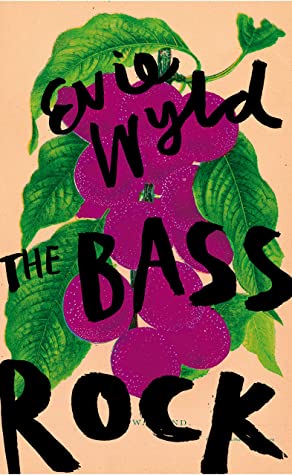
This month we’re starting with The Bass Rock by Evie Wyld. I haven’t read this book, but it sounds like one I might enjoy:

Surging out of the sea, the Bass Rock has for centuries watched over the lives that pass under its shadow on the Scottish mainland. And across the centuries the fates of three women are linked: to this place, to each other.

In the early 1700s, Sarah, accused of being a witch, flees for her life.

In the aftermath of the Second World War, Ruth navigates a new house, a new husband and the strange waters of the local community.

Six decades later, the house stands empty. Viv, mourning the death of her father, catalogues Ruth’s belongings and discovers her place in the past – and perhaps a way forward.

Each woman’s choices are circumscribed, in ways big and small, by the men in their lives. But in sisterhood there is the hope of survival and new life. Intricately crafted and compulsively readable, The Bass Rock burns bright with anger and love.

I’m not feeling very creative this month, so I have chosen an obvious link to start with: witchcraft. Thornyhold by Mary Stewart (1) is the story of Gilly Ramsey, who inherits a cottage in the countryside which belonged to her mother’s cousin. On arriving at the cottage, Thornyhold, Gilly discovers that Cousin Geillis had a reputation as a witch and has left behind her collection of magic spells and herbology books. Despite the witchcraft theme, though, this is a lovely, gentle read!

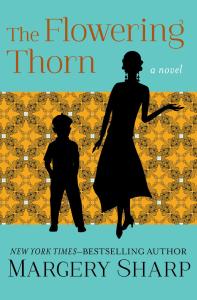
Lesley Frewen, the heroine of The Flowering Thorn by Margery Sharp (2) also relocates to the countryside. Lesley is a London socialite who finds herself volunteering to adopt Patrick, a four-year-old orphan, and decides to start a new life for them both in a cottage in Buckinghamshire. I had already linked to this book through the country cottage setting before I noticed that the title also contains the word ‘thorn’ – a double link!

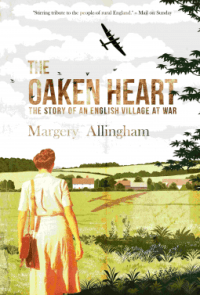
The next book in my chain is by another author called Margery. The Oaken Heart (3) is crime writer Margery Allingham’s memoir in which she writes about life in her village (Tolleshunt D’Arcy in Essex, renamed ‘Auburn’ in the book) during World War II. I found it particularly interesting that the book was written in 1941, so Allingham would have had no idea while she was writing it how much longer the war would last and what else might happen to the people of Auburn before it was over.
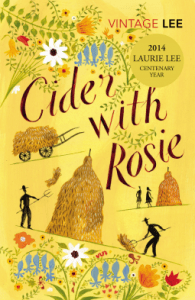
I don’t read a lot of authors’ memoirs, but another that does come to mind is Cider with Rosie by Laurie Lee (4), the first in Lee’s autobiographical trilogy. I still haven’t read the other two books, but in this first volume he looks back on his childhood, his school, his friends and family and the village of Slad in which he grew up. It’s a beautiful portrayal of a world on the brink of change and a way of life about to disappear forever.

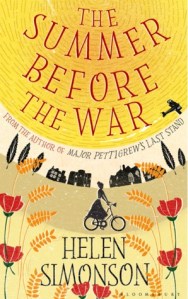
The cover of Cider with Rosie reminded me of the cover of The Summer Before the War by Helen Simonson (5) – similar colours, pictures of nature, figures in silhouette. The war referred to in the title is the First World War and the novel follows the story of Beatrice Nash, a young woman who starts a new job as a school Latin teacher in the summer of 1914.

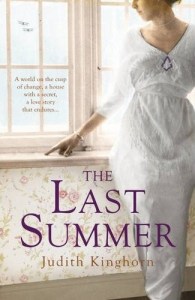
The Last Summer by Judith Kinghorn (6) is also set during that same idyllic summer with war just on the horizon. Through the story of seventeen-year-old Clarissa Granville, the novel shows us the effects the outbreak of war will have on society, class structure and the life Clarissa has always known. Although I didn’t do it deliberately, it has just occurred to me that all of the books in my chain this month are about people starting new lives or seeing the world around them beginning to change.

~

And that’s my chain for June! My links have included: witchcraft, moving to the countryside, the name Margery, memoirs, similar covers and the summer of 1914.

Next month we’ll be starting with Eats, Shoots and Leaves by Lynne Truss.

My Commonplace Book: May 2021

A selection of words and pictures to represent May’s reading:

commonplace book
noun
a book into which notable extracts from other works are copied for personal use.

~

In the corner sat the old fellow as he always sat, astride a childish stool, sharpening the horseshoe nails a Crocker son had cut from an iron rod; hunched over an ancient anvil this gatfer sat beneath a window festooned with cobwebs, and put a point on the nails with a small hammer. Did the old man ever move from that spot, night or day, or was he welded to it? Perhaps he had been there for ever, tapping at the nails since the first horses were shod a thousand years ago, crouching with his little hammer like a hobgoblin smith at the oldest forge in the known world.

The Horseman by Tim Pears (2017)

~

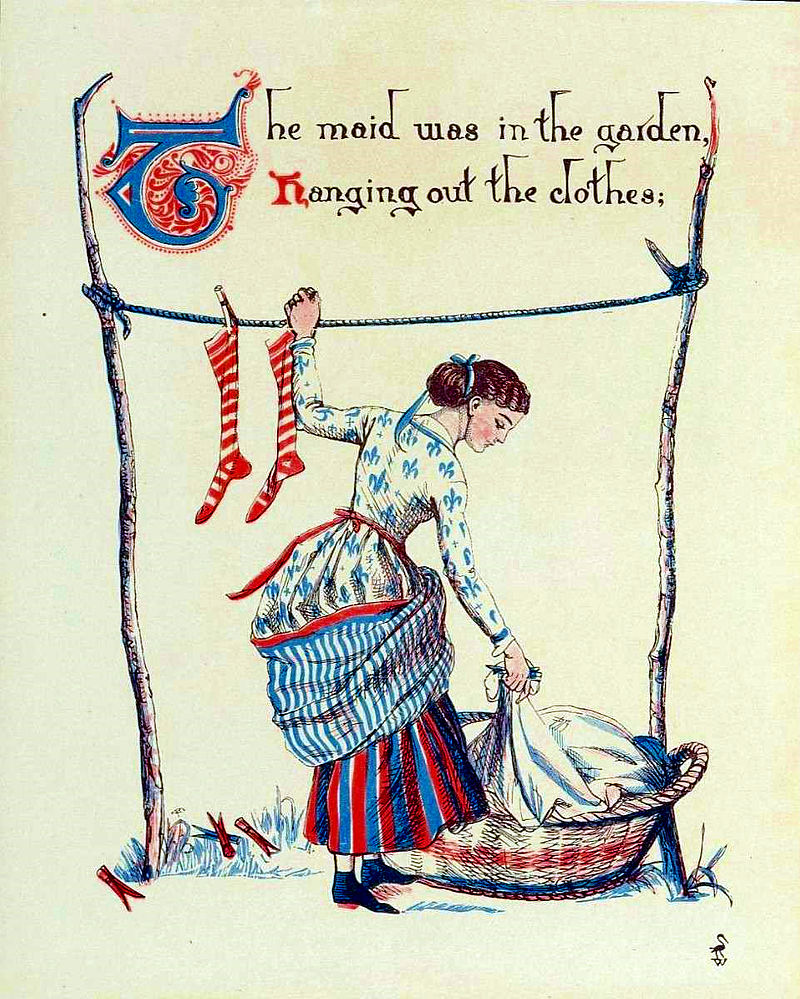
Illustration by Walter Crane: “Sing a song of sixpence”

“Is St. Mary Mead a very nice village?”

“Well, I don’t know what you would call a nice village, my dear. It’s quite a pretty village. There are some nice people living in it and some extremely unpleasant people as well. Very curious things go on there just as in any other village. Human nature is much the same everywhere, is it not?”

A Pocket Full of Rye by Agatha Christie (1953)

~

The lane twisted, turned, then became narrower as we drove towards Clogagh.

At this moment, I felt it was a metaphor for my life:

What if I was to turn left instead of right in my own life at this moment? Is all life simply a series of twisting and turning paths, with a crossroads every so often when fate allows humanity to decide their own destiny…?

The Missing Sister by Lucinda Riley (2021)

~

Daphne du Maurier

The child destined to be a writer is vulnerable to every wind that blows. Now warm, now chill, next joyous, then despairing, the essence of his nature is to escape the atmosphere about him, no matter how stable, even loving. No ties, no binding chains, save those he forges for himself. Or so he thinks. But escape can be delusion, and what he is running from is not the enclosing world and its inhabitants, but his own inadequate self that fears to meet the demands which life makes upon it.

Myself When Young by Daphne du Maurier (1977)

~

Favourite book read in May:

The Missing Sister

Authors read for the first time in May:

Tim Pears

Places visited in my May reading:

England, Ireland, New Zealand

~

This hasn’t been a great month of reading for me, due to a combination of health problems over the last week (nothing too serious, I hope) and being in the middle of several very long books at the same time. I’m sure I’ll be back to my normal reading and blogging routine soon.

Have you read any of these? What did you read in May and do you have any plans for June?

The Pact by Sharon Bolton

A new book from Sharon Bolton is always something to look forward to and she very rarely disappoints. Her latest one, The Pact, is a real pageturner; although I wouldn’t rank it amongst my favourite Bolton novels, it does have a typically gripping plot with lots of twists and turns and I read most of it in one day.

The novel begins with six teenagers – Felix, Daniel, Talitha, Amber, Xavier and Megan – awaiting their exam results. As six of the top students at the prestigious All Souls School, they are all expected to get the perfect As they need to go to Oxford and Cambridge Universities. Despite having such bright futures ahead of them, the six of them have spent the summer drinking, taking drugs and playing a dangerous, reckless game of dares that, if it went wrong, could leave those bright futures in ruins. And that is exactly what happens the night before they are due to receive their results: there’s an accident and innocent people are killed. Eighteen-year-old Megan volunteers to take the blame, leaving her friends free to get on with their lives – but in return, each of them will owe her a favour when she gets out of prison.

Twenty years later, we catch up with Dan, Felix, Tal, Xav and Amber, now all adults with successful careers, some married and some with children. Although the events of that fateful night have left their scars, the five friends have moved on and Megan has been almost forgotten. Megan, however, has not forgotten about them – and now that she has been released, she is coming back to remind them of their pact…

As I’ve said, The Pact kept me gripped from beginning to end, which is an impressive feat as I didn’t like or care about a single character! Five of the group are spoiled and privileged and admit themselves that they are not nice people, and even the sixth, Megan, a scholarship student from a much poorer background, is not much easier to like than the others. I felt that I should at least feel some sympathy for Megan because of her twenty years in prison – and I usually did find myself siding with her against the other characters – but I struggled to believe that anyone would really have made such a sacrifice in the first place! In fact, the whole plot seemed unlikely and implausible, although that didn’t stop me from enjoying it and hoping each of the characters would get what they deserved in the end.

As the end approaches, there are some of those typical Sharon Bolton twists and turns I mentioned earlier, but I found them too easy to predict which was disappointing when I think of how genuinely shocked I was by the surprises and revelations in most of her earlier books. In this case, I think I would also have preferred fewer twists, as the original direction in which the story was heading was excellent and I felt that it fizzled out slightly towards the end. Despite these reservations, though, this was an exciting, fast-paced read and kept me entertained for a day or two. I don’t read a lot of contemporary crime fiction so it’s always good to pick up one of Sharon Bolton’s books and immerse myself in something different for a while!

Thanks to Trapeze for providing a copy of this book for review via NetGalley.

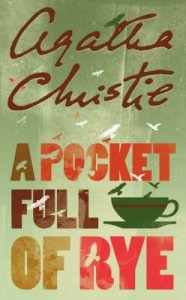
A Pocket Full of Rye by Agatha Christie

The May prompt for the Read Christie 2021 Challenge is ‘a story featuring tea’.  I would have had no idea which Christie novels fit that theme, but as ever the challenge hosts provided a list of suggestions and this one, A Pocket Full of Rye, turned out to be perfect.   

First published in 1953, the novel opens with London businessman Rex Fortescue being served his morning tea in his office by his secretary.  When Fortescue dies in hospital shortly afterwards and the cause of death is said to be taxine, a poison found in yew trees, the tea is naturally blamed.  However, the autopsy suggests that the poisoning must have actually taken place earlier that morning, while Fortescue was eating breakfast at his home, Yew Tree Lodge.  This widens the circle of potential suspects to include his wife, his three children and their spouses, and an assortment of servants.  Inspector Neele is brought in to lead the investigation, but his only real clue is a handful of rye found in Fortescue’s pocket.

Neele believes he is close to identifying the culprit, but a second murder forces him to think again.  It is only when Miss Marple arrives at Yew Tree Lodge, having read about the murders in the newspaper, that a connection is spotted with the popular children’s rhyme, “Sing a song of sixpence, a pocket full of rye”.  Inspector Neele may be a clever man with a sharp mind, but it will take Miss Marple’s knowledge of Mother Goose, blackbirds and human nature to solve this particular mystery.

I usually seem to prefer Christie’s Poirot novels to her Miss Marple ones, but I really enjoyed this book; it’s one of my favourite Marples so far, along with A Murder is Announced. I loved the nursery rhyme element – although it’s maybe not all that relevant to the overall solving of the mystery, it does add some fun to the plot. I can’t say that I loved the characters, but as Neele himself describes them as “all very unpleasant people”, we’re obviously not supposed to – and the fact that they are so unpleasant means that there are plenty of suspects. For once, I did correctly identify who was behind the murders, but I think it was really just a lucky guess; I certainly didn’t work everything out and I needed Miss Marple to explain all the details for me. Sadly, though, we don’t spend a lot of time with her in this book. She doesn’t appear until almost halfway through and then we don’t see very much of her actually investigating the mystery…which makes it all the more impressive that she manages to solve it ahead of Inspector Neele!

I’m enjoying taking part in Read Christie this year. I’ve read five great books in the first five months and am looking forward to another one in June!

20 Books of Summer – 2021

20 Books of Summer, hosted by Cathy at 746 Books, is a very simple idea: make a list of twenty books (there are also ten and fifteen book options) and read them during the summer months. However, it’s more difficult than it sounds, and although this will be my fifth year of taking part, I have still never managed to read all twenty books on my list!

This year’s 20 Books of Summer starts on Tuesday 1st June and finishes on Wednesday 1st September. I have listed below the books I would like to read, but I don’t expect to have time for all of them and will probably end up reading lots of books that aren’t on the list instead! These are a mixture of review copies, books from my Classics Club list and books that have been waiting on my TBR for a long time. I will also have three books to read for an Agatha Christie challenge I’m participating in, but I don’t know what they will be yet.

~

1. Still Life by Sarah Winman
2. Death in Zanzibar by MM Kaye
3. A Corruption of Blood by Ambrose Parry
4. The Green Gauntlet by RF Delderfield
5. The Women of Troy by Pat Barker
6. Jane and Prudence by Barbara Pym
7. The Lily and the Lion by Maurice Druon
8. Fool’s Assassin by Robin Hobb
9. The Ionian Mission by Patrick O’Brian
10. The Last Daughter by Nicola Cornick
11. These Old Shades by Georgette Heyer
12. The Echo Chamber by John Boyne
13. The Reckoning by Sharon Penman
14. The Infernal Riddle of Thomas Peach by Jas Treadwell
15. High Rising by Angela Thirkell
16. Confusion by Elizabeth Jane Howard
17. Red Adam’s Lady by Grace Ingram
18. St Martin’s Summer by Rafael Sabatini
19. Goodbye, Mr Chips by James Hilton
20. The Sussex Downs Murder by John Bude

~

Have you read any of these? Which one should I read first? And will you be joining in with 20 Books of Summer this year?

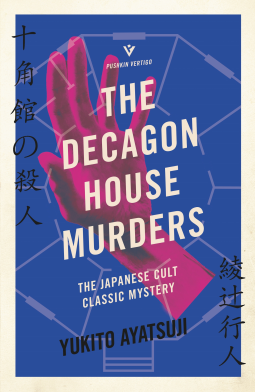
The Decagon House Murders by Yukito Ayatsuji

This Japanese murder mystery was originally published in 1987 and is now available from Pushkin Vertigo in an English translation by Ho-Ling Wong. Having recently read two other reissued Japanese classic mysteries, The Honjin Murders by Seishi Yokomizo and Murder in the Crooked House by Soji Shimada, I jumped at the chance to read this one, especially when I saw comparisons with one of my favourite Agatha Christie novels, And Then There Were None.

After a brief prologue, the book begins with seven students, all members of their university Mystery Club, arriving on the lonely island of Tsunojima, where they are planning to spend the week. It’s the perfect location for a group of crime lovers because a series of unsolved murders took place there the year before, so the students are looking forward to exploring the island and using their skills as amateur detectives to investigate the mystery. Soon after their arrival, however, they discover that someone is planning to murder them one by one – but is the killer one of the seven or is someone else hiding on the island?

This is an interesting novel and a quick one to read; although it takes a while to get started, the pace rapidly picks up once the first murder takes place. The action switches between the island and the mainland, where Kawaminami, an ex-member of the Mystery Club, is carrying out some investigations of his own, having received a letter which leads him to question what really happened on Tsunojima Island the year before. The alternating narratives add some tension to the story as we wait to see whether Kawaminami will solve the mystery before everyone on the island is dead.

The similarities with And Then There Were None were obvious as soon as I started to read, but sadly this book doesn’t come close to the brilliance of the Christie novel – and the eventual solution and motive are quite different anyway. However, it’s clear that Yukito Ayatsuji must have been an admirer of Golden Age crime novels and he pays homage to them in various ways all the way through the book. The seven members of the Mystery Club have all taken the names of classic crime writers and are known as Ellery, Agatha, Leroux, Carr, Van Dine, Poe and Orczy, while Kawaminami’s nickname is Conan – or sometimes Doyle!

The characters themselves, though, never really come to life at all and feel interchangeable, with very little to differentiate one from another. This leads to a lack of emotional involvement and I found that I didn’t really care who was murdered or who the culprit was. I felt completely detached from what was happening and although I could appreciate the cleverness of the plot, it wasn’t a story that I could become fully absorbed in. To be fair, this seems to be typical of Japanese mystery novels in general, particularly the subgenre known as honkaku, of which this book is said to be a classic example. Honkaku books have been described as traditional plot-driven ‘puzzle mysteries’ with complex solutions and appear to be less concerned with character development.

Still, I found things to enjoy in this novel. The revelations at the end took me completely by surprise and, if I hadn’t had so many other books waiting to be read, I would have been tempted to go back and re-read at least the first few chapters to see how I could have missed the clues. And I loved the descriptions of the Decagon House, the building in which the students stay during their time on the island – a decagonal building with decagonal rooms, decagonal tables and even decagonal cups!

Thanks to Pushkin Vertigo for providing a copy of this book for review via NetGalley.

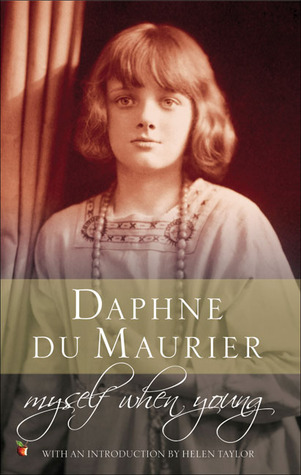
Myself When Young by Daphne du Maurier – #DDMReadingWeek

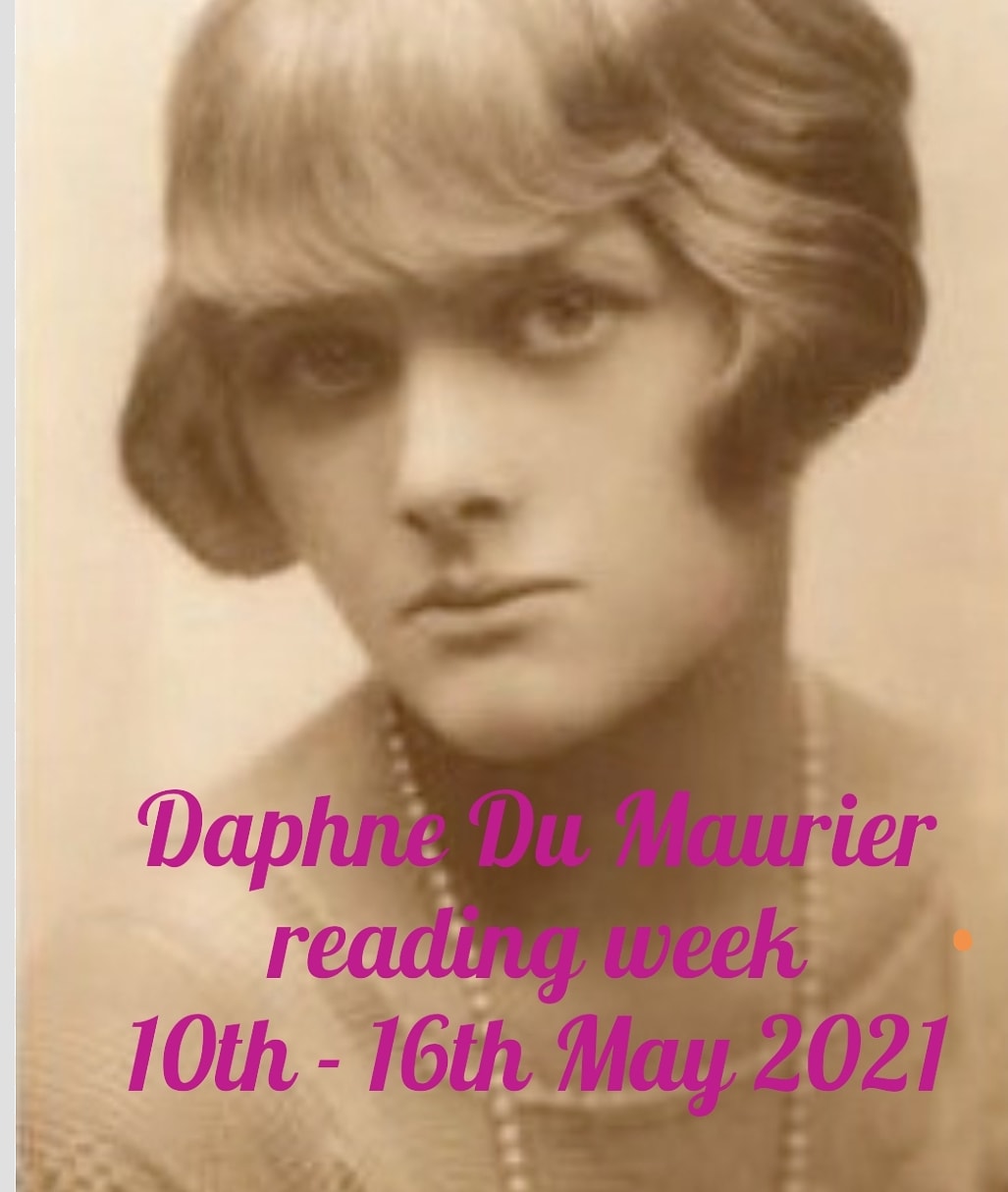
This is my second contribution to Ali’s Daphne du Maurier Reading Week. As I mentioned in my first post, I have now read all of du Maurier’s novels and short story collections, but still have plenty of her non-fiction books to read. This one, originally published in 1977 as Growing Pains: The Shaping of a Writer, was written towards the end of her career but based on diaries kept throughout her childhood and into her twenties. A lot of the information in this book was already familiar to me through a biography I read a few years ago, Daphne du Maurier and Her Sisters: The Hidden Lives of Piffy, Bird and Bing by Jane Dunn, but it was still interesting to read it again in du Maurier’s own words this time.

Daphne and her two sisters, Angela and Jeanne, were part of a famous theatrical and artistic family – both of their parents, Gerald du Maurier and Muriel Beaumont, were actors and their grandfather, George du Maurier was a cartoonist and author, best known for creating the character Svengali in his 1894 novel Trilby. Daphne undoubtedly had a privileged childhood, being educated privately by governesses before being sent to finishing school in France, but it’s clear that she didn’t always feel very comfortable with the sort of lifestyle into which she’d been born. As a shy and solitary child – the book begins with a vivid description of four-year-old Daphne being ushered into the drawing room with a group of ladies who had come to visit baby Jeanne and being frightened and overwhelmed by the noise – she retreated into a world of imagination, spending her time reading, writing and performing in plays with her sisters. From an early age, Daphne found herself drawn to male roles, eventually creating her own alter ego, Eric Avon, a character whom she said would emerge again later (in different forms) as the male narrator of five of her novels – I’ll Never Be Young Again, My Cousin Rachel, The Scapegoat, The Flight of the Falcon and The House on the Strand.

She talks a lot about her childhood homes in London – Cumberland Terrace, Regent’s Park and Cannon Hall, Hampstead – and the influence they had on her early life:

Who can ever affirm, or deny that the houses which have sheltered us as children, or as adults, and our predecessors too, do not have embedded in their walls, one with the dust and cobwebs, one with the overlay of fresh wallpaper and paint, the imprint of what-has-been, the suffering, the joy? We are all ghosts of yesterday, and the phantom of tomorrow awaits us alike in sunshine or in shadow, dimly perceived at times, never entirely lost.

Later, of course, when the family bought a holiday home in Cornwall, she would fall in love with that part of the country, and in this book she describes her first sight of Menabilly, the house that would appear in The King’s General and as Manderley in Rebecca, and her first trip to Bodmin Moor, where she discovered the old coaching inn that would inspire yet another of her famous novels, Jamaica Inn.

As well as places, she writes about the people who had important roles to play in her life; her adoration of her charismatic father comes through strongly, although her feelings for her mother are less clear, while she also devotes a lot of time to discussing her various love affairs, including her flirtations with her much older married cousin Geoffrey, a brief romance with the film director Carol Reed, and her very close relationship with Fernande Yvon, one of the teachers at her Paris finishing school. Right at the end of the book, she meets her future husband, Tommy ‘Boy’ Browning, who had read her novel The Loving Spirit and sailed to Fowey in Cornwall in search of its author. A few months later they get married but this is where the book ends and as there is no sequel, we aren’t given the opportunity to read her thoughts on her married life.

I enjoyed Myself When Young, particularly the first half where she writes about her childhood, the houses she lived in, the games she played with her sisters and her thoughts on the books she read. I wasn’t quite as interested in the later chapters, apart from where we were given some insights into the writing of her early novels and short stories – such as the difficulties she had in writing Parts Three and Four of The Loving Spirit or where she was when the character of Julius popped into her head. I would have liked more of this, but I suppose it wasn’t really the purpose of the book. Still, it was lovely to learn more about one of my favourite authors and I’m looking forward to reading the rest of her non-fiction.